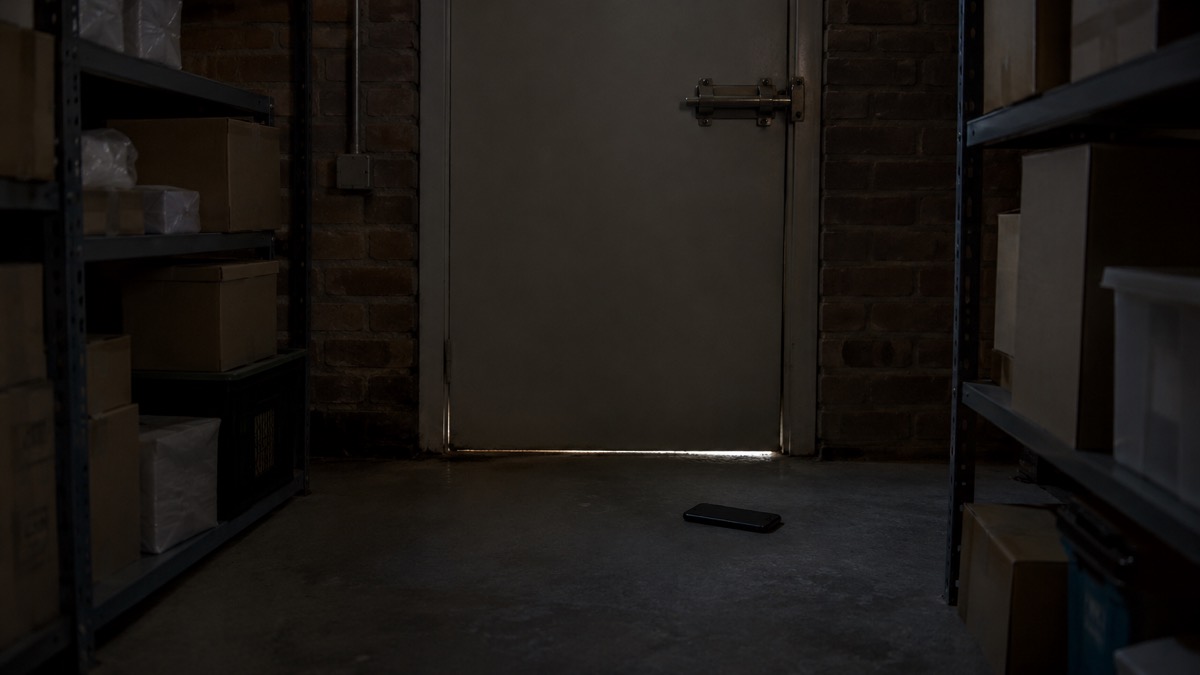
If you are caught up in a gun or knife attack, the first thing to do is get away if you can. The official advice is to run to a place of safety if there is a safe route, and only to hide if you cannot get away1. Running is described as a far better option than surrendering or negotiating1. If you cannot run, find a lockable room away from the danger, lock or barricade yourself in, move away from the door, be quiet, silence your phone and turn off vibrate3. Call 999 when it is safe to do so2.
The advice is known as Run, Hide, Tell. It applies to a marauding terrorist attack, where the attacker is moving through a place and people are in immediate danger3. The same steps apply whether the attack involves a gun or a knife2. The most important thing to understand is that hiding is a fallback, not a first choice. If there is a way out that does not expose you to greater danger, take it.
This guide explains how to choose a hiding place, how to stay hidden once you are there, when and how to call for help, and what to expect when armed police arrive. It is written for an ordinary household with no training, and it follows the published guidance from the police and the NHS.
Run first, hide only if you cannot get away
The order matters. Run, Hide, Tell puts running first because getting away from the danger is the surest way to survive. The official guidance says to escape if you can, consider the safest options, and ask whether there is a safe route3. If there is, run. If not, hide3.
When you run, leave your belongings behind2. Do not stop to collect a bag or a phone. Insist that others come with you, but do not let their indecision slow you down2. Do not attempt to film the incident4. The guidance is clear that running to a place of safety is a far better option than to surrender or negotiate1.
The decision is not always easy. You may be in a building you do not know, or separated from people you came with. The guidance asks you to consider whether you can get to safety without exposing yourself to greater danger2. If the only route out takes you towards the attacker, that is not a safe route. If it takes you away, take it.
"Running is always the best option if there's a safe route to do so"
Hiding is what you do when running is not possible. It is not a failure and it is not passive: a well-chosen hiding place, properly secured, buys time until the police can reach you. The rest of this guide is about doing it well.
Cover from gunfire versus cover from view
Not all hiding places are equal. The guidance distinguishes between cover that can stop a bullet and cover that only stops you being seen. Cover from view does not mean you are safe5. Bullets go through glass, brick, wood and metal4. You must still hide even if you are behind a locked door5.
The advice is to find cover from gunfire, such as substantial brickwork or heavy reinforced walls3. If you can see the attacker, they may be able to see you2. That single rule is the best test you have: if you have a line of sight to the danger, you are exposed.
The same principle appears in guidance on suspicious items, which advises staying behind hard cover such as concrete or brick, keeping away from glass such as windows and skylights, and keeping out of line of sight7. You are better protected from fragmentation if you are behind hard cover and cannot see the item8. The reasoning carries across: hard, solid material between you and the threat is better than a thin partition or a pane of glass.
| Type of cover | What it does | What to look for |
|---|---|---|
| Hard cover | Can stop or slow a bullet or fragmentation | Substantial brickwork, heavy reinforced walls, concrete3 |
| Cover from view | Stops you being seen, not being hit | Curtains, furniture, thin partitions, glass5 |
| Poor cover | Neither stops nor hides reliably | Windows, skylights, glass doors7 |
Where to hide: a lockable room away from the danger
The best hiding place is a room you can lock, as far from the danger as you can get, with solid walls between you and the attacker. The guidance says to lock or barricade yourself in and move away from the door3. A room with a door you can secure and a solid wall facing the danger is better than an open space or a corridor.
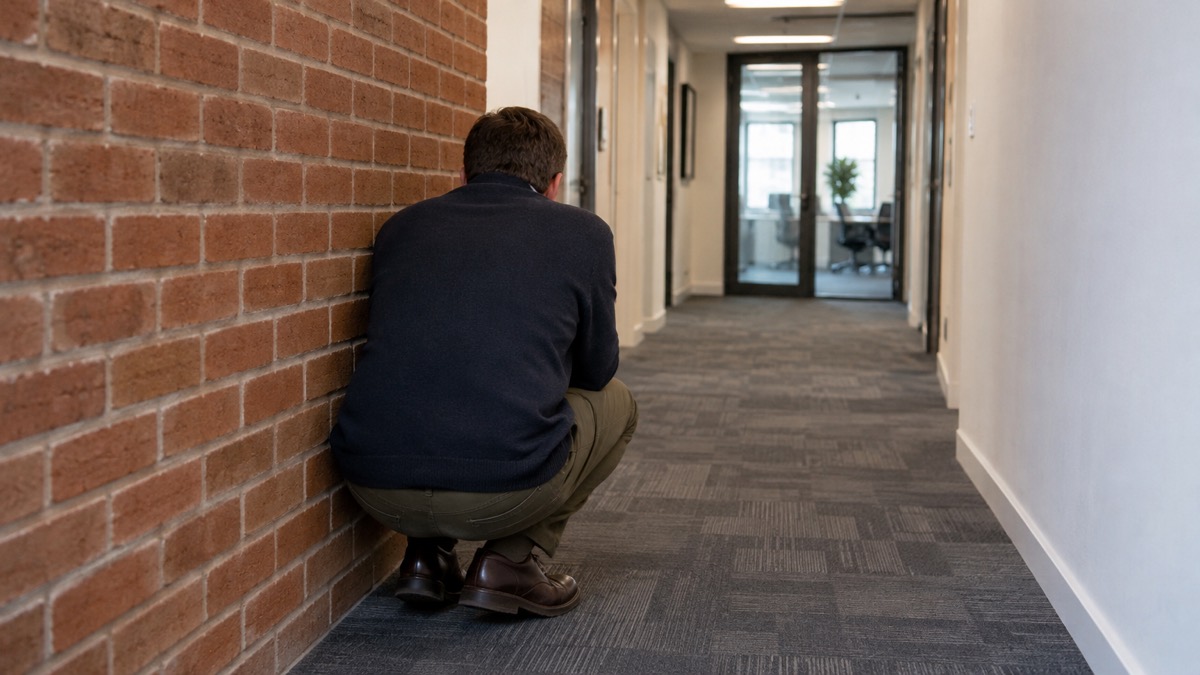
Fire safety guidance offers a useful model for choosing a room when you are trapped. A safe room should be as far as possible from any fire or smoke, with a window if possible9. If your escape route is blocked, stay inside a room that is clear of smoke, ideally with a window that opens, and call 99911. Go to the safest room with a window and close the door12. The same logic applies to an attack: put distance and solid structure between you and the threat, and choose a room you can close off.
A window matters for two reasons. It gives you a way to be seen and to call for help, and it gives you light. But a window is also glass, and glass does not stop bullets4. If you hide in a room with a window, keep below the sill and away from the glass, and use the window to signal and to call, not to watch.
Be aware of your exits and try not to get trapped3. A room with one door is easier to defend but harder to leave. A room with a second exit gives you options if the situation changes. Weigh both before you commit.
How to stay hidden: silence your phone, barricade, keep away from the door
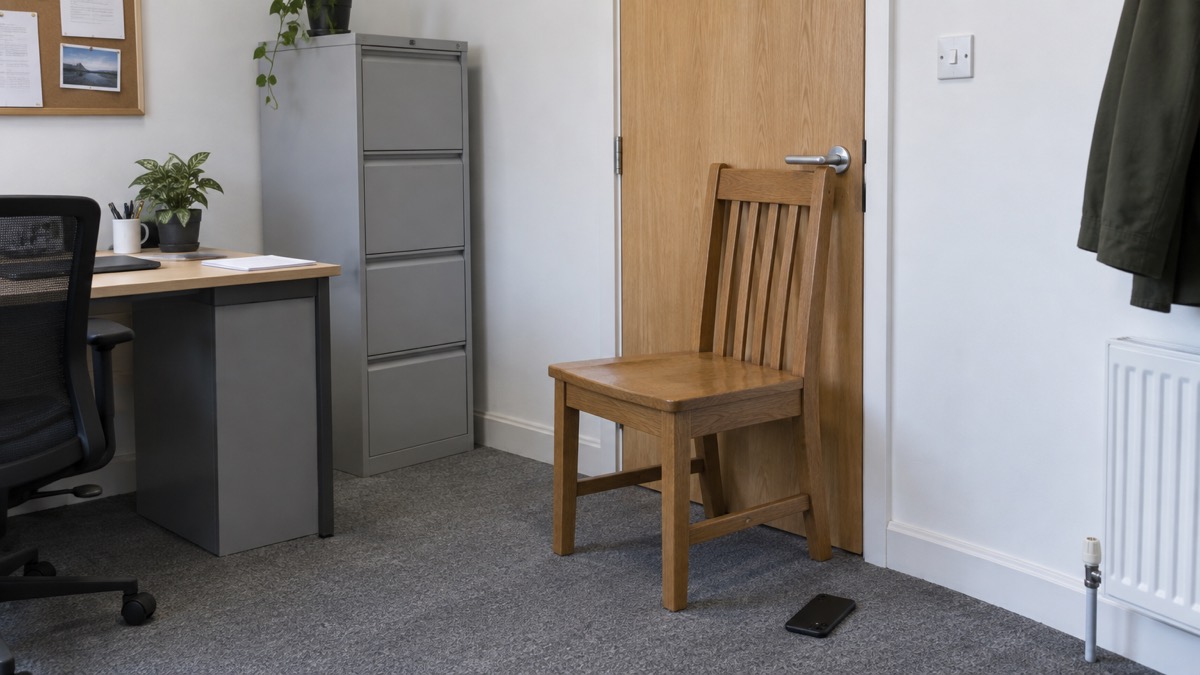
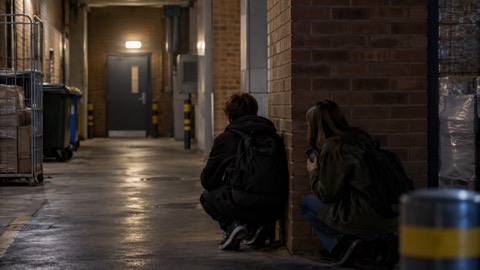
Once you are in the room, the guidance is specific. Be quiet, silence your phone and turn off vibrate3. Lock or barricade yourself in3. Move away from the door3. These four actions are the core of hiding well.
Silencing your phone is not a small detail. A ringtone or a vibration can give away your position in a quiet building. Turn the ringer off and turn off vibrate, and keep the screen dimmed. If you need to use the phone to call 999, do it when it is safe and keep your voice low.
Barricading buys time. Push furniture against the door, but do not exhaust yourself or make noise doing it. The aim is to make entry slow and noisy for anyone trying, not to build a fortress. Move away from the door once it is secured, so that you are not directly behind it if someone tries to force it.
Keep everyone in the room calm and quiet. If you are with children, keep them close and speak softly. Do not open the door to anyone until armed police tell you to. Do not leave the room to investigate a noise or to look for others once you are hidden.
Tell: call 999 when it is safe to do so
Calling for help is the third step, and the timing matters. The guidance says to call the police on 999 when it is safe to do so2. Do not call while you are running or while the attacker is close enough to hear you. Call once you are hidden and secure, or once you are safely away.
When you call, the police will want specific information. The guidance lists what to give: the nature of the incident, what is happening; the location, with an address or general location; where the suspects are; the direction you last saw them; descriptions of the attackers, including numbers, features, clothing and weapons; and further information such as casualties, type of injury, building information, entrances, exits and hostages3.
| What to tell 999 | What it means |
|---|---|
| Nature of the incident | What is happening3 |
| Location | An address or general location3 |
| Suspects | Where the suspects are3 |
| Direction | Where you last saw them3 |
| Descriptions | Numbers, features, clothing, weapons3 |
| Further information | Casualties, injuries, building layout, entrances, exits3 |
Speak slowly and clearly when you call13. If you cannot speak safely, dial 999 and stay silent, and listen for the operator's instructions. The emergency services can trace the call and will try to establish what you need. Only make the call when making it will not put you in greater danger.
If you are with someone who is injured, tell the operator. Keep the casualty lying down on a blanket or rug if there is one nearby, to protect them from the cold, and raise and support their legs above the level of their heart to improve blood supply to the vital organs14. Keep them comfortable and reassure them that help is on the way16. Do not move someone with serious injuries unless staying put is more dangerous.
When armed police arrive
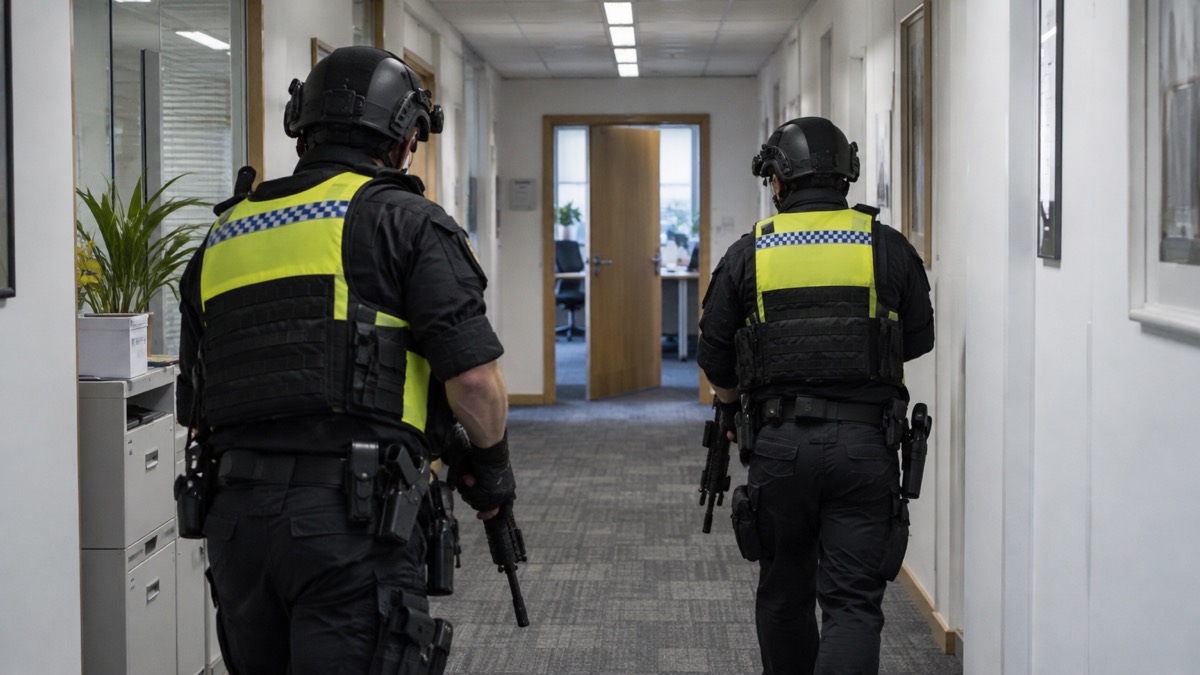
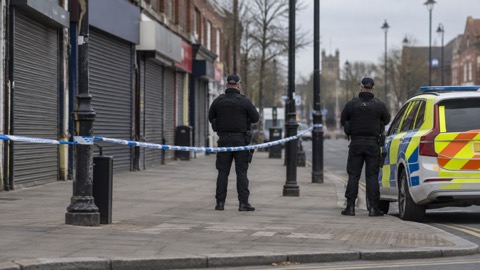
Armed police may not be able to distinguish you from the attacker17. They may point guns at you, treat you firmly and question you17. This is not a judgement on you; it is how they keep everyone safe while they search for the threat. Officers will evacuate you when it is safe to do so17.
When they arrive, follow their instructions immediately6. Remain calm, avoid sudden movements that may be considered a threat, and keep your hands in view5. The guidance given to people found hiding is to put their hands on their heads and avoid sudden movements until they are evacuated to safety6.
If you have children with you, tell them before the police arrive that officers may shout and point guns, and that they must keep their hands visible and do as they are told. A calm, quiet explanation beforehand is better than a surprise.
Hiding with children, and helping others
Children take their cue from the adults around them. Keep them with you, keep them quiet, and explain in simple words what is happening and what they must do. The core actions are the same: stay away from the door, stay low, and stay silent3. If you have a phone, keep it on silent and use it only to call 999 when it is safe2.
If you are with someone who is injured, help only if it does not expose you to the attacker. The first aid guidance for shock and severe bleeding is to keep the casualty lying down and warm and to raise and support their legs above the level of their heart14. Keep them comfortable and reassure them16. Do not attempt medical treatment beyond basic first aid.
If you are in a shopping centre or another public building, the same Run, Hide, Tell steps apply3. The official training film, The story of Nur, Edih and Llet, shows three friends caught up in a gun and knife attack in a shopping centre who escaped unharmed6. The characters' names are Run, Hide and Tell backwards6. The film is available with subtitles and in a British Sign Language version6.
For more on what to do in the wider incident, see Run, Hide, Tell: What to Do in a Weapons or Terror Attack and What to Do When Armed Police Arrive. If you are caught up with your family, Caught Up in an Attack With Your Family covers that situation, and What Young People Should Do in a Terror Attack is written for younger readers.
Sources (17)
- Terrorism, Prepare campaign, 2026-10-12
- Run, Hide, Tell, ProtectUK, 2026-05-21
- Protect yourself: terrorist attack, Lancashire Prepared, 2026-10-29
- Staying safe from a terrorist incident, East of England Ambulance Service NHS Trust
- Physical threats, ProtectUK, 2022-10-06
- Run Hide Tell guidance and lesson plans, Counter Terrorism Policing, 2017-11
- Unattended and suspicious items, ProtectUK, 2022-03-01
- Unattended and suspicious items, ProtectUK, 2022-03-01
- Escape plan, Devon and Somerset Fire and Rescue Service, 2026
- Fire safety in flats and high-rise buildings, Devon and Somerset Fire and Rescue Service, 2026
- High-rise living, South Wales Fire and Rescue Service, 2026-07-29
- High-rise homes, flats and apartments, Cheshire Fire and Rescue Service, 2026-05-20
- Making a home escape plan, Warwickshire County Council, 2026-10-29
- Shock first aid, NHS inform, 2026-07-24
- Severe bleeding first aid, NHS inform, 2026-07-24
- Stroke first aid, NHS inform, 2026-07-24
- Marauding terrorist attack: Run, Hide, Tell, ProtectUK, 2022-03-01
 Bomb Threat Calls
 Radiation Checklist First Hour
 Power Cut Kit Checklist
 When Armed Police Arrive
 Young People in a Terror Attack
 Family Caught in an Attack
 Suspicious Letters and Parcels
 Reporting Terrorist Content
 Corrosive Attack First Aid
 Tap Water Safety
 Shelter or Evacuate
 Collecting Children at School
 Food After a Nuclear Accident
 Martyn's Law at Venues
 Sellafield Emergency Advice