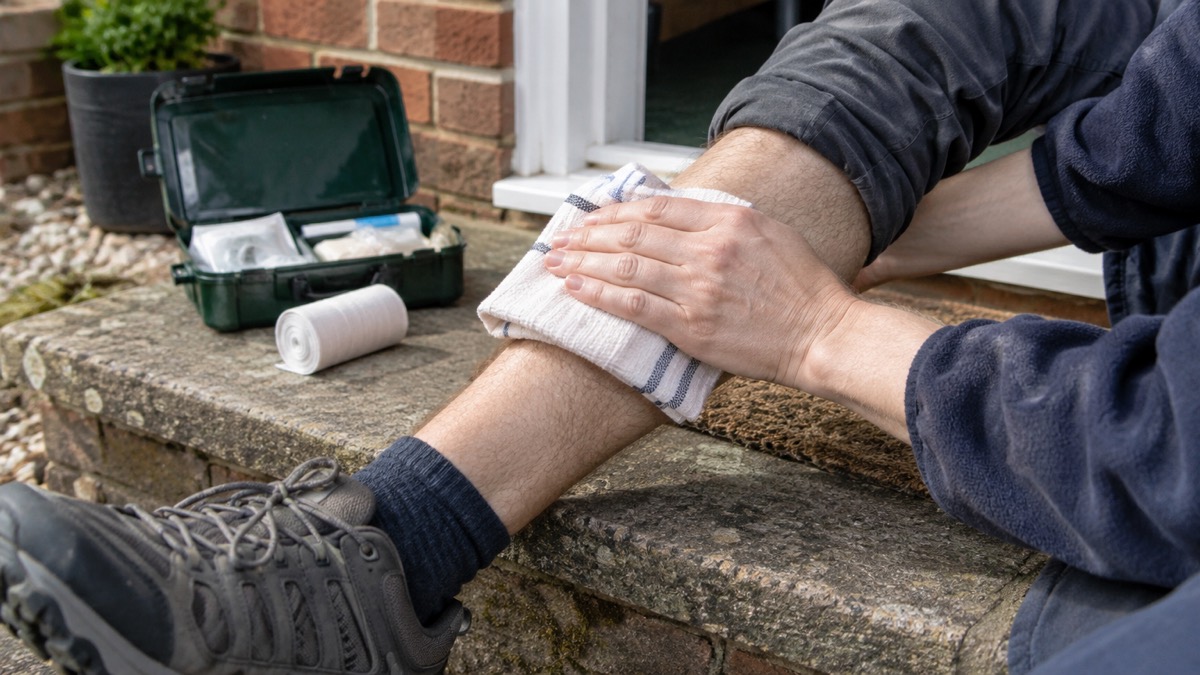
If someone is bleeding heavily, the single most important thing you can do is press firmly on the wound and keep pressing. If there is lots of blood and it will not stop, ring 999 straight away and do exactly what the person on the other end of the phone tells you1.
Everything else on this page supports that one action. You can use whatever is to hand if you have no dressing: a clean non-fluffy cloth such as a tea towel or flannel, a t-shirt, or even the person's own hand2. If blood soaks through, add another layer rather than lifting the soaked one off4. If an object is stuck in the wound, press around it, never on it, and never pull it out5.
Severe bleeding is one of the conditions the ambulance services list as a reason to call 9997. The advice is the same across the UK, though the ambulance service you reach differs in Scotland, Wales and Northern Ireland. This page sets out what to do in order, what to use, how to keep going while help comes, and the signs that the person is deteriorating.
Press hard on the wound with a sterile dressing or clean cloth
The first step is direct pressure. NHS inform advises using a sterile wound dressing or a clean cloth pad to apply direct pressure to the wound with your fingers or the palm of your hand5. The pressure needs to be firm and steady, straight down onto the point where the blood is coming from, and it needs to stay there.
If you have a first aid kit, a sterile dressing pad is ideal. If you do not, the NHS advises pressing firmly on the wound with a dressing or clean, non-fluffy cloth, such as a tea towel or flannel, and using your fingers if you do not have a clean cloth2. Non-fluffy matters: a cloth that sheds fibres into the wound makes cleaning it harder later. The British Red Cross puts it simply: put pressure on the wound with whatever is available to stop or slow down the flow of blood, whether that is your hand, a cloth, or some clothing10.
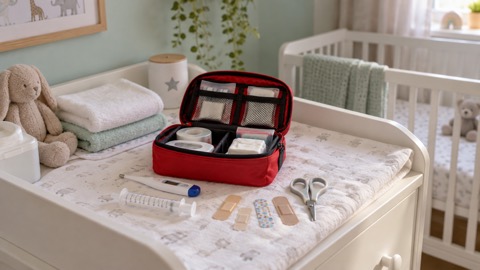
For a baby or child, the same principle applies. St John Ambulance advises applying direct pressure to control the bleeding, using a sterile dressing, a clean cloth, or the child's own hand11. Once the bleeding is under control, secure a wound dressing with a bandage, firm enough to maintain pressure without restricting circulation11.
If you have a trauma dressing or a haemostatic dressing, the Resuscitation Council UK advises applying a standard or ideally a haemostatic dressing directly to the bleeding injury, then applying firm direct pressure, which at some sites may require the dressing to be packed into the wound12. That is advanced kit and training; for an ordinary household, firm pressure with a clean pad is the priority.
What to use if you have no dressing
You do not need a first aid kit to help someone who is bleeding heavily. The British Red Cross advises that if you do not have dressing pads, you can use a t-shirt, a tea towel, or the person's own hand, and all of these will help to stop or slow the flow of blood3. The NHS gives the same guidance for children: a clean, non-fluffy cloth such as a tea towel or flannel, or your fingers if you have no clean cloth2.
| What you have | What to use it for | Source |
|---|---|---|
| Sterile dressing pad | Direct pressure on the wound | 5 |
| Clean non-fluffy cloth (tea towel, flannel) | Direct pressure when no dressing | 2 |
| T-shirt or clothing | Direct pressure when nothing else is to hand | 10 |
| The person's own hand | Direct pressure if they are able | 3 |
| Clean plastic bags | Barrier if you have no gloves | 14 |
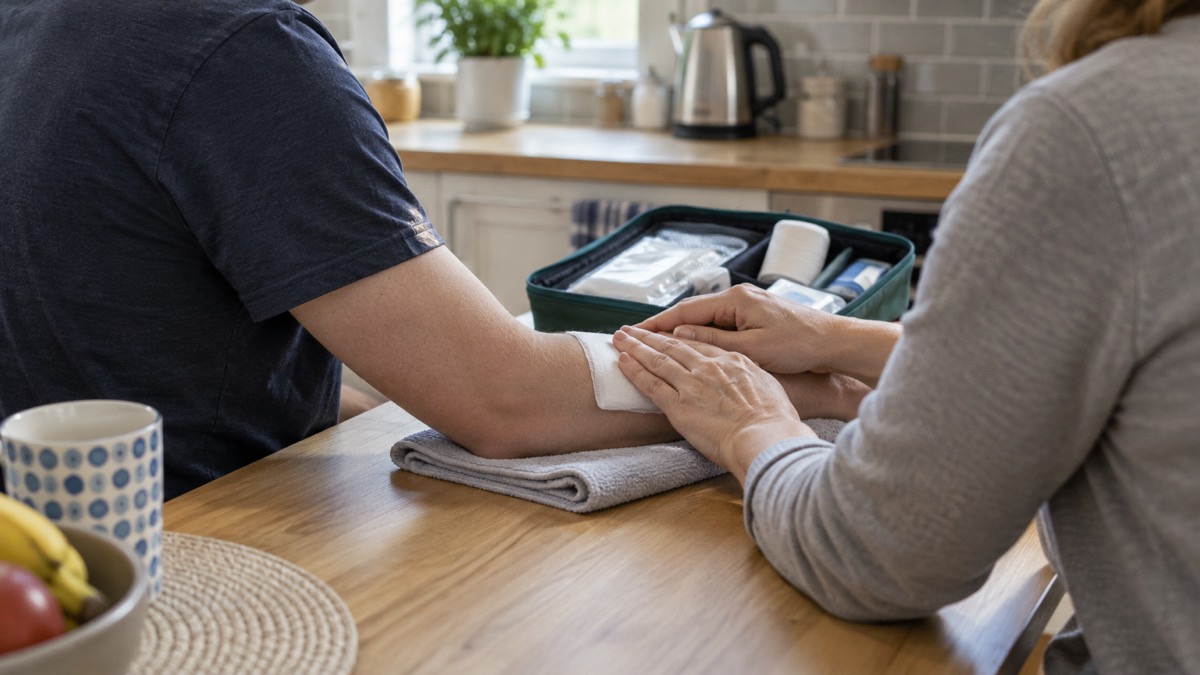
Gloves are worth having, but they are not a reason to delay. St John Ambulance advises that if you do not have any gloves, you could use clean plastic bags or ask the casualty to dress the wound if they are able14. Protecting yourself is sensible, and you can read more in Protecting Yourself When Helping: Gloves, Masks and Needle Injuries. But a heavily bleeding wound needs pressure now, not a search for gloves.
A household kit that covers this is set out in First Aid Kits for the Home: Contents and How to Choose and the Bleeding Control Kit Checklist. For what each type of dressing does, see Dressings, Bandages and Plasters: What Each One Is For.
Keep pressing: what to do while help comes
Once you have pressure on the wound, the instruction is to keep it there. The British Red Cross advises keeping pressure on the wound until help arrives, for both adults and children15. The North West Ambulance Service puts it plainly: press it against wherever the blood is coming from and do this until the bleeding stops1.
If the person is bleeding severely, NHS inform's primary survey guidance says to deal with this first: apply direct pressure to the wound before managing their airway16. That ordering matters. Severe bleeding can become life-threatening faster than an airway problem, so pressure comes first.
While you wait, there are things you can do to help:
- Keep the pressure steady. Do not lift the dressing to check. Add another layer if blood comes through4.
- Talk to the person. Keep them calm and still, and reassure them.
- Keep them warm. Wrap them in coats or a blanket if you can6.
- Keep pressing until help arrives. Continue to apply pressure to the wound to stop the blood coming out9.
- Do not give them anything to eat or drink. They may need surgery.
If the person becomes unresponsive and stops breathing normally, you will need to start CPR. See How to Do CPR: Hands-Only Steps for Adults and What to Do First: Danger, Response, Airway and Breathing.
If blood soaks through the dressing
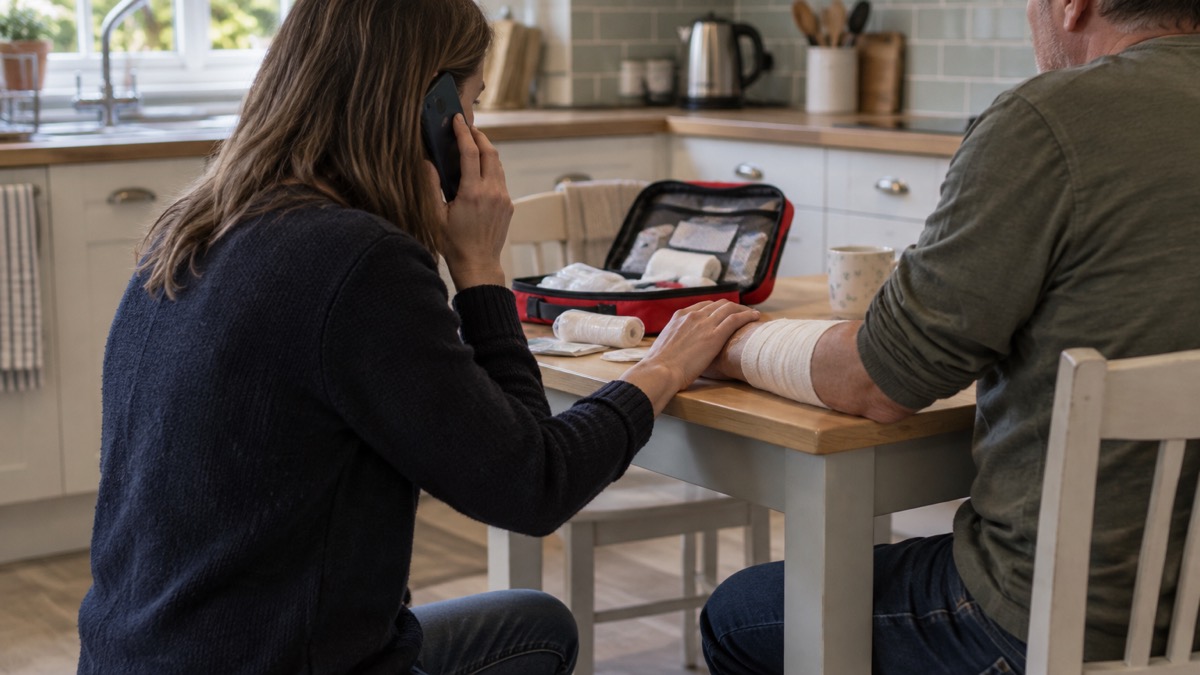
A soaked dressing can be alarming, but the advice is clear: do not take it off. The NHS in Wales advises that if blood soaks through the dressing, you should not remove it; instead, apply a large dressing over the top as a second layer4. St John Ambulance gives the same instruction: if blood comes through the dressing, remove it and reapply pressure with a new dressing or pad, then secure the new dressing with the bandage, tying the knot over the wound17.
The two pieces of advice differ on whether to remove the soaked dressing. The safer reading, and the one that avoids disturbing a forming clot, is to leave the soaked dressing in place and add another on top. If you have no spare dressing, press a clean cloth over the top and carry on. Either way, the pressure must not stop.
If the bleeding is heavy and will not stop despite firm pressure, ring 999 if you have not already1. The call handler can talk you through what to do next.
Objects stuck in the wound
If there is an object embedded in the wound, such as a piece of glass or metal, the rule is the same across all the first aid bodies: do not pull it out. NHS inform advises not pressing directly on the object5. The British Red Cross explains why: an embedded object may be acting as a plug to reduce the bleeding, so instead apply pressure on either side of the object to push the edges of the wound together. St John Ambulance warns that removing the object can make the bleeding much worse6.
The practical steps are:
- Leave the object where it is. Do not attempt to remove it5.
- Press on either side. Apply pressure around the object, pushing the edges of the wound together6.
- Build up padding around it. Pack dressings on either side so the pressure is maintained without pushing the object in further.
- Ring 999. An embedded object needs hospital treatment5.
For a baby or child, the same applies: do not place direct pressure over, or attempt to remove, an embedded object13. The NHS advises pressing around the edges of the object rather than directly on it2. There is more detail in Should You Remove an Object Stuck in a Wound?.
Raising the injured limb and the signs of shock
Raising an injured limb is sometimes suggested to slow bleeding, but the evidence in UK guidance is mainly about shock, not about the wound itself. The main thing that stops severe bleeding is direct pressure, kept up until help arrives15. If the person is showing signs of shock, however, lying them down and raising their legs can help.
NHS inform advises raising and supporting the casualty's legs above the level of their heart to improve blood supply to the vital organs19. The British Red Cross gives the same advice for a baby or child with heavy bleeding: continue to apply pressure to the wound, call 999 if you have not already, cradle or lie them down and lift their feet higher than the rest of their body, and comfort them and wrap them in coats or a blanket to keep them warm6.
Shock is a life-threatening emergency caused when the body does not have sufficient blood circulating to supply the vital organs with oxygen. Severe internal or external bleeding is one of its causes9. If severe bleeding is not controlled, shock can develop and the person may become unresponsive5.
If the person is going into shock, the NHS advises seeking help immediately19. Keep them warm, keep pressure on the wound, and raise their legs if they have no injury that would make that unsafe. There is more in Shock: Signs and What to Do While Help Comes.
When to call 999
Ring 999 straight away if someone is bleeding heavily and it will not stop, or if there is lots of blood1. Severe bleeding is listed by ambulance services as a reason to call 9997. In Scotland, the reason given is severe bleeding that cannot be stopped20. The emergency number is 999 or 112.
The North East Ambulance Service advises calling 999 when someone is seriously ill or has life-threatening injuries, for example severe blood loss21. The South Western Ambulance Service lists severe bleeding among the conditions for which you should call 9997.
There are specific thresholds for pregnancy. The London Ambulance Service advises calling 999 if bleeding is heavy, meaning soaking through a sanitary pad in less than an hour, or if there are signs of heavy blood loss such as a rapid heart rate, breathing problems, dizziness or fainting22. The Northern Ireland Ambulance Service advises calling 999 for fresh and heavy bleeding, more than an egg-cup full and continuing23.
When you call, try to stay calm24. Tell the handler where you are, what has happened, and that the person is bleeding heavily. Follow their instructions exactly. For more on what happens after you call, see How Ambulance Services Prioritise 999 Calls and Response Times and Information to Have Ready for the Ambulance Crew.
Sources (24)
- Heavy bleeding, North West Ambulance Service, 13 March 2025
- What to do if your child has an accident, NHS, 18 December 2025
- No first aid kit? No problem, British Red Cross, 2026
- First aid kit, NHS 111 Wales, 2021
- Severe bleeding first aid, NHS inform, 24 July 2026
- Bleeding heavily in babies and children, British Red Cross, 29 October 2026
- When to call 999, South Western Ambulance Service, 29 October 2026
- Get the right help and support, South Western Ambulance Service, 29 October 2026
- Shock, St John Ambulance, 28 October 2026
- Bleeding heavily, British Red Cross, 2026
- Severe Bleeding First Aid | St John Ambulance, St John Ambulance
- Resuscitation guidelines, Resuscitation Council UK, 27 October 2025
- Baby and child first aid booklet, First Aid Training, August 2025
- Duties and responsibilities of first aiders, St John Ambulance, 28 October 2026
- Bleeding heavily, British Red Cross, 25 October 2026
- How to do a primary survey, NHS inform, 24 July 2026
- How do I apply plasters and other dressings?, NHS, 28 April 2025
- Adult first aid booklet, First Aid Training, August 2025
- Shock first aid, NHS inform, 24 July 2026
- When should you call 999?, Scottish Ambulance Service, 29 October 2026
- 999, North East Ambulance Service, 29 October 2026
- Advice if you are due to give birth, London Ambulance Service, 30 September 2026
- 999 and pregnancy, Northern Ireland Ambulance Service, 29 October 2026
- Calling 999, NHS 111 Wales, 2021
 Baby and Child Kit Checklist
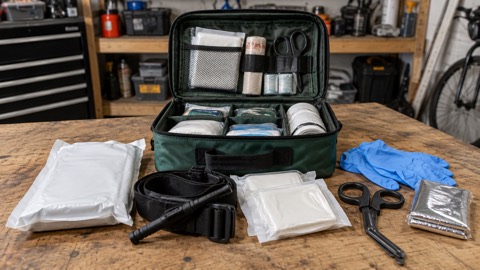 Bleeding Control Kit Checklist
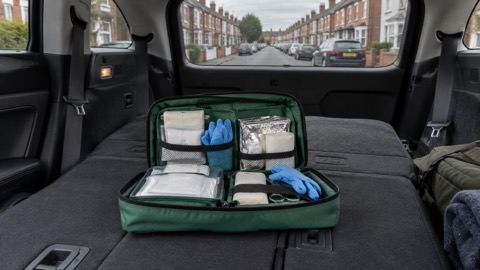 Car Kit Checklist
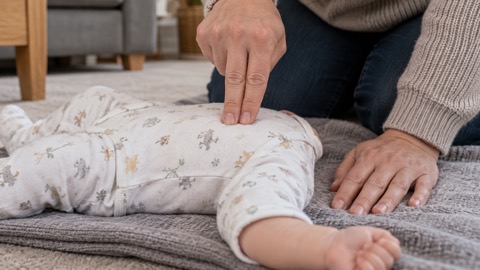 CPR on a Baby
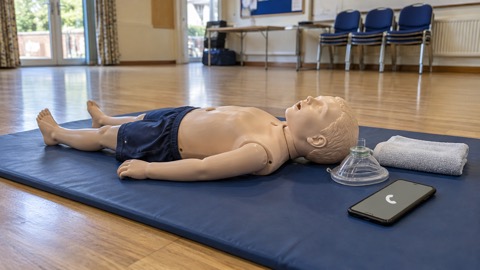 CPR on a Child
 Chest Compression Rate and Depth
 Rescue Breaths or Hands-Only CPR
 Checking Breathing
 Agonal Breathing and CPR
 Breathing During CPR
 Recovery Position and Spine
 Cardiac Arrest vs Heart Attack
 Heart Attack First Aid
 Defibrillator Pad Placement
 Defibrillator on a Child