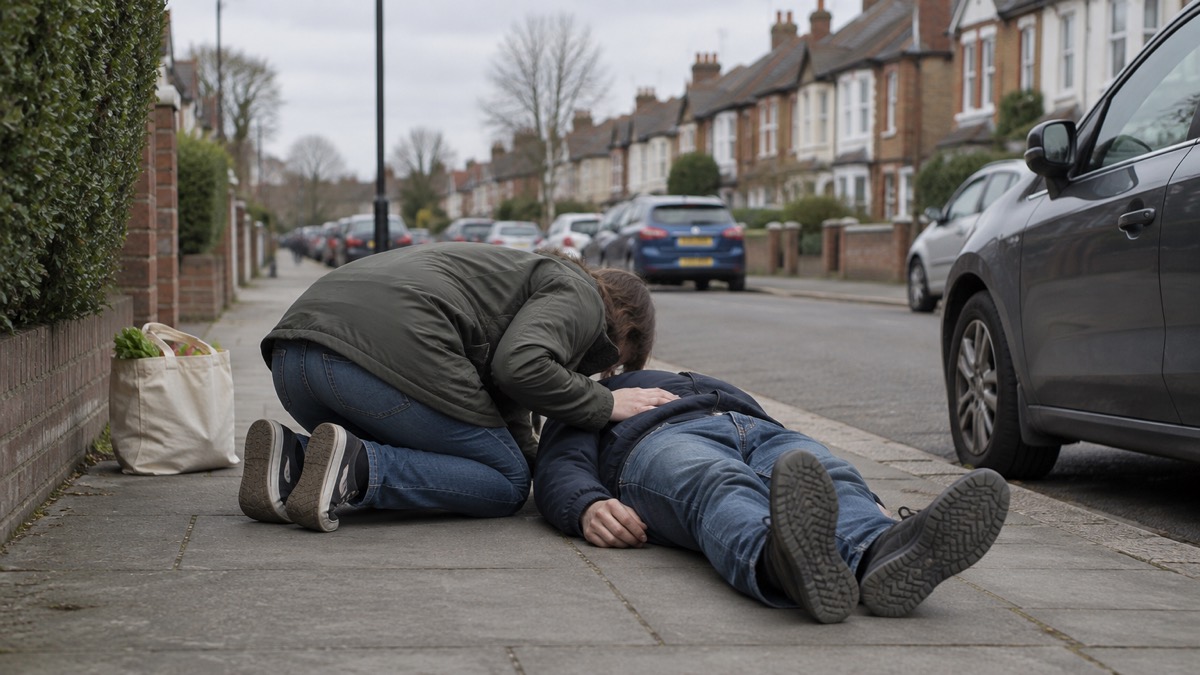
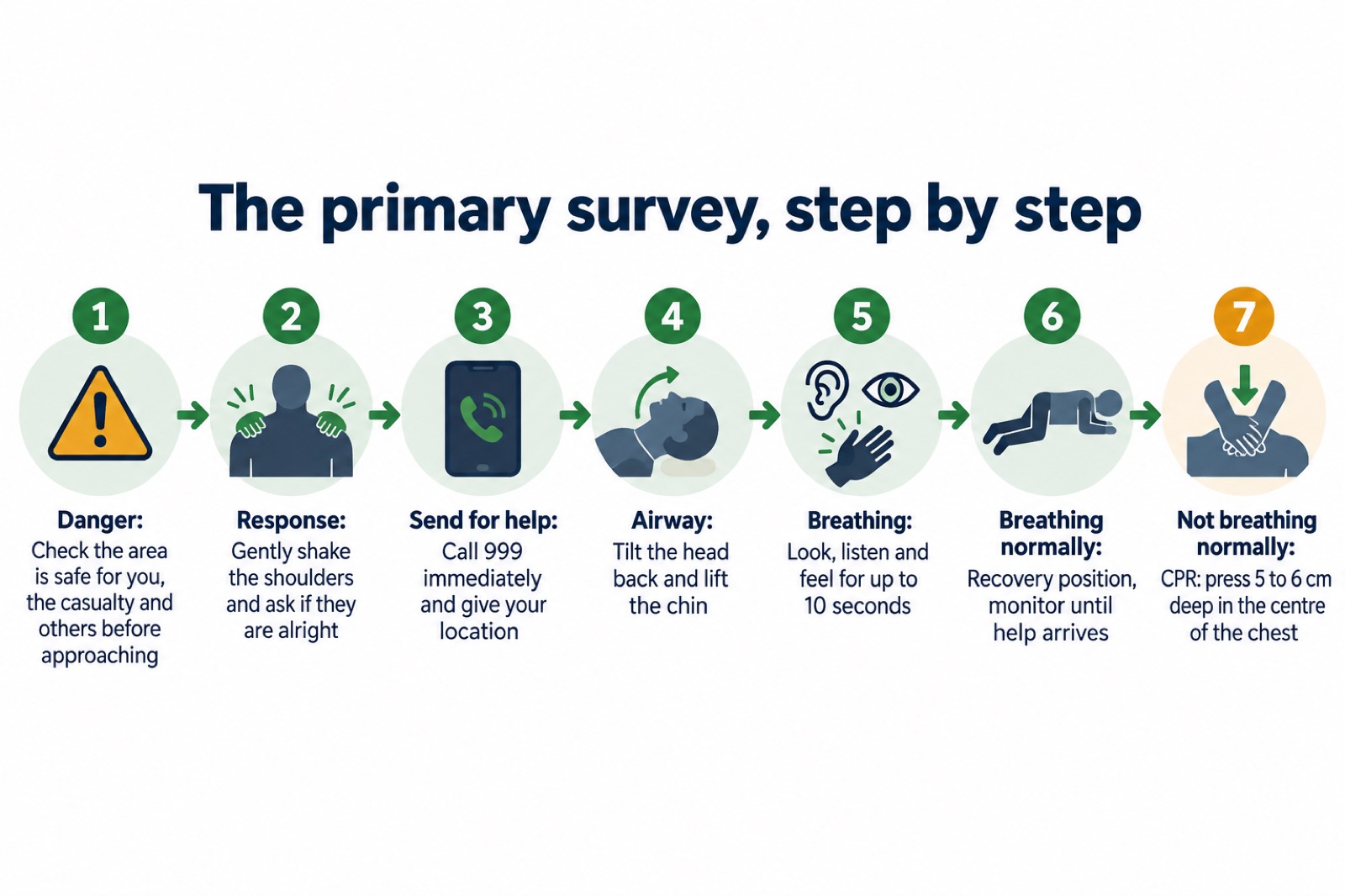
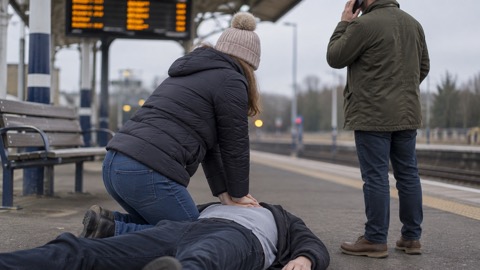
When someone collapses, is hurt, or does not answer you, the first minute matters more than any kit you own. The check you do in that minute is called the primary survey, and it follows a fixed order: danger, response, airway, breathing, and sending for help. NHS inform's guidance is blunt about the first rule: "Before approaching a casualty, always make sure the area is safe."1 After that, you check whether the person responds, open their airway by tilting the head back and lifting the chin, and look, listen and feel for normal breathing for no more than 10 seconds1. If they are not breathing normally, you call 999 and start chest compressions, pressing down about 5 to 6 cm in the centre of the chest2.
The order is not accidental. Each step either removes a threat to you, or finds the one problem that will kill the person fastest, a blocked airway or absent breathing, before anything else you might notice. A bleeding leg, a broken arm or a burn can wait a few minutes. Breathing cannot. This page walks through each step for an adult, notes where children and babies differ, and shows where each answer sends you next, whether that is CPR, the recovery position, or another page in this guide.
Danger: check before you go near the person
The first letter of the sequence stands for danger, and it comes first for a simple reason: a second casualty helps nobody. The Scottish Ambulance Service's cardiac arrest guidance opens with the instruction to check for danger before approaching the person7, and London Ambulance Service's DRSABCD steps frame it as checking "for danger to yourself, the patient and others before approaching"4. Look for live electricity, traffic, fire, smoke, water, chemicals, falling objects or an aggressive person before you take a single step towards them.
Household preparedness guidance repeats the same point from the other direction. Greater Manchester's resilience advice tells households to check for injuries and help yourself before attempting to help others, and never to put yourself or others in danger8. Northumberland's local resilience forum advice says that when checking for injuries to yourself or others, always attend to yourself first9. If you are cut, burned or overcome by smoke, you cannot help anyone, and you have added to what the ambulance service must deal with.
Some hazards need specific handling. If someone has had an electric shock, NHS inform's guidance says to look at the area before treatment and not to touch the injured person if they may still be in contact with the electrical source, because you risk electrocution yourself10. The same guidance says not to move a person with an electrical injury unless they are in immediate danger and no longer in contact with the electricity10. In a terrorist incident or similar attack, the emergency services' advice is that you should only give first aid to others if it is safe for you to do so, and if they tell you to leave the area when they arrive, follow their instructions11. If you are trapped by fire, the advice is to call 99912.
Once the area is safe, or you have made it safe by switching off power, stopping traffic or moving away from smoke, you can approach. If you cannot make it safe, stay back, call 999, and tell the call handler what the danger is so the right responders are sent.
Response: talk to them and gently shake their shoulders
Kneel beside the person and check whether they respond. NHS inform's adult CPR guidance says to gently shake the casualty's shoulders and talk to them, or ask them if they are ok2. North West Ambulance Service's version for children puts words to it: shake their shoulders and shout "are you alright?"5. For a child aged one or over, NHS inform says to gently shake the child's shoulders and talk to them or ask them what has happened13.
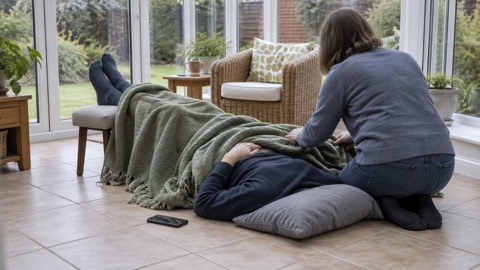
Speak loudly and clearly. A person who opens their eyes, answers, groans, or moves on purpose is responsive, and your next step depends on what is wrong with them: a heart attack, a seizure, severe bleeding or something else. If there is no response, the next steps in the sequence are to shout for help and open the airway. Shouting serves two purposes: it may bring a passer-by who can call 999 or take over compressions, and it tells you whether the person reacts to sound at all.
Do not shake a baby or a small child. For a child aged 1 or over, the response check follows the same pattern as for an adult: gently shake the child's shoulders and talk to them or ask them what's happened13; the baby CPR page covers that check separately. Also avoid shaking anyone whose injury pattern suggests a fall from height or a road collision, where the neck may be hurt; speak to them and watch for a response instead.
Send for help: call 999 and give your location
The next letter in the sequence is send for help. London Ambulance Service's DRSABCD steps say to call 999 immediately and provide your location4. If someone is in immediate danger, the East of England Ambulance Service says to call 999 or 1126. Both numbers reach the same emergency services in the UK; 112 is the international equivalent and works on the same networks.
Say clearly where you are, as precisely as you can: a street name and door number, a landmark, a motorway junction, or what3words if your phone offers it. Then say what has happened: "a man has collapsed and is not breathing" is enough to start with. The call handler will ask questions and may talk you through what to do next, including CPR over the phone. Stay on the line unless they tell you to hang up.
If other people are nearby, use them. Send one specific person to call 999 rather than asking the crowd generally, and send another to fetch a defibrillator if there is one nearby. The East of England Ambulance Service notes that in some cases an alternative first response from within the community may urgently attend the patient to deliver first aid at the scene6, so help can arrive in forms other than an ambulance.
Airway: tilt the head back and lift the chin
An unresponsive person's tongue can fall back and block their throat. Opening the airway fixes this, and it takes a few seconds. NHS inform's primary survey guidance says: to open an adult's airway, place one hand on the forehead and tilt the head back, then use two fingers from your other hand to lift the chin1. The adult CPR guidance describes the same movement: one hand on the forehead, gently tilt the head so the mouth falls open, then the fingertips of the other hand on the chin to lift it2. London Ambulance Service's DRSABCD step is to open the airway by tilting the head back and lifting the chin4.
For a child over one year, the NHS says to open the airway by tilting the head back with a hand on the forehead and lifting the chin with fingertips under the point of the chin14. The movement is the same as for an adult, just gentler.
Two situations call for care. If you suspect a neck injury, for example after a fall or a dive into shallow water, NHS guidance for children says to tilt the head carefully a small amount at a time until the airway is open, and it is explicit about the priority: "Opening the airway takes priority over a possible neck injury."14 For a suspected spinal injury in an adult who is not breathing normally, NHS inform's recovery position guidance says to place your hands on either side of their head and gently lift their jaw with your fingertips, taking care not to move their neck15. The reason is the same in both cases: an open airway comes first, because without it the person cannot breathe at all.
Breathing: check for up to 10 seconds
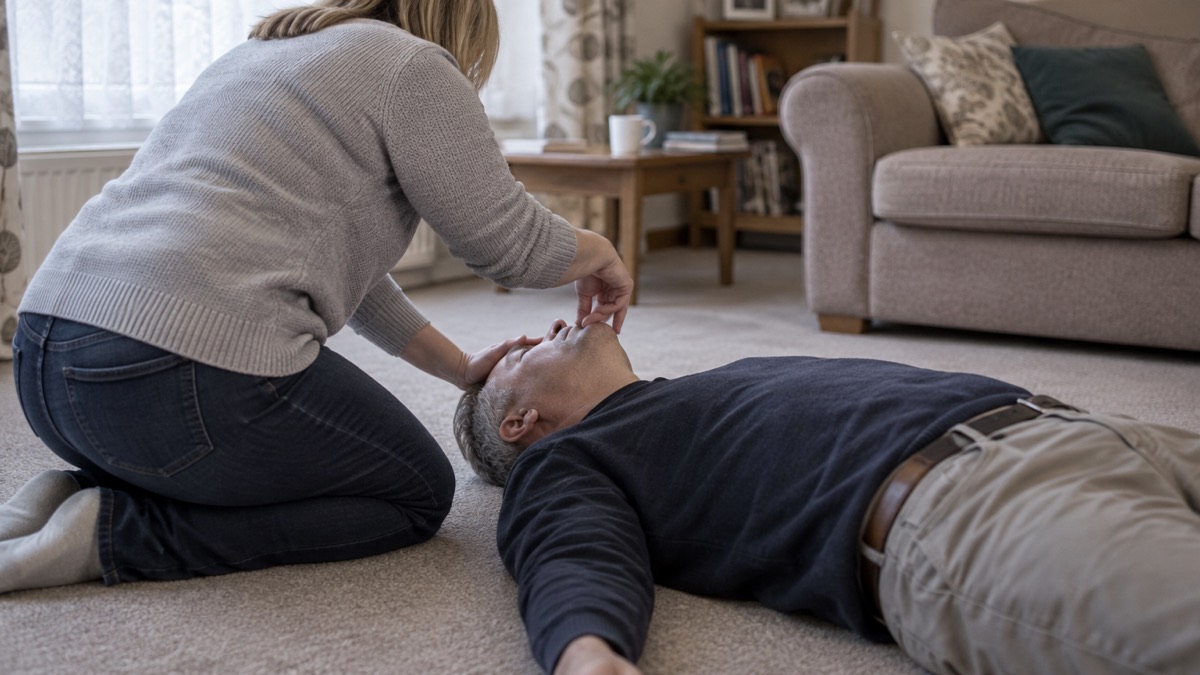
With the airway open, check for breathing. NHS inform's adult CPR guidance says to look, listen and feel for signs of breathing, for no more than 10 seconds2. London Ambulance Service's DRSABCD step is to check for normal breathing for up to 10 seconds4. For children and babies, the NHS says to look, listen and feel for no more than 10 seconds before deciding that they are not breathing14. NHS guidance on CPR adds one crucial detail: ignore occasional, irregular gasps, because these are common in a person whose heart has stopped and do not count as normal breathing3.
What you are doing in those seconds is simple. Look at the chest to see whether it rises and falls. Listen at the mouth and nose for breath sounds. Feel for air on your cheek. NHS inform's adult CPR guidance also describes looking at the casualty's chest for 5 seconds to see if it rises and falls16; whichever way you count it, the check is short, and it must be, because every extra second is a second without compressions if the heart has stopped.
The answer splits into three paths:
- Breathing normally: roll them into the recovery position to keep the airway open and let fluid drain, then stay with them and monitor until help arrives17
- Not breathing normally, or only occasional gasps: call 999 if you have not already, and start CPR immediately16
- Unsure: treat as not breathing normally and start CPR; the agonal breathing page explains why gasps fool people
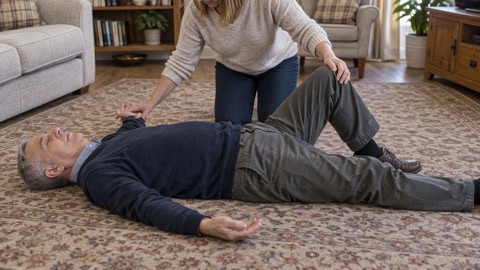
If the person is breathing normally but unresponsive, Devon and Somerset Fire and Rescue Service's water safety guidance describes the sequence: having done a primary survey and established that the casualty is unresponsive but breathing normally, they should be placed in the recovery position, and the head tilted back so the airway stays open17. NHS inform's recovery position guidance adds that tilting the head and chin back keeps the airway open and allows fluid to drain from the mouth15.
Not breathing normally: start CPR
If the person is not breathing normally, the problem is their heart, and the only thing that keeps blood moving to the brain is you pressing on their chest. NHS guidance on CPR says to press down hard, to a depth of about five to six centimetres, before releasing the pressure and allowing the chest to come back up3. NHS inform's adult CPR guidance says to lean directly over the casualty's chest and press down vertically for about 5 to 6 cm2, and London Ambulance Service's DRSABCD step is arms straight, pressing 5 to 6 cm deep4.
The technique, from North East Ambulance Service's CPR guidance: kneel beside the patient, place the heel of your hand in the middle of the person's chest with your other hand over the top, and press down hard and fast using your body weight, then release and allow the chest to return to its normal position18. London Ambulance Service adds two points on form: put your hands on the centre of the chest, one hand on top of the other, and let the chest recoil before pressing down again4. The recoil matters as much as the press, because it is in the release that the heart refills.
The full CPR sequence, including rate, rescue breaths and what to do for children and babies, is on the CPR page, with the depth and speed question covered in how fast and how deep compressions should be. If someone has nearly drowned, Devon and Somerset Fire and Rescue Service's guidance says a person who is not breathing needs five rescue breaths and then CPR, 30 chest compressions followed by two rescue breaths, continued until help arrives17; the near-drowning page covers that in full.
One more thing while you work: if you have to give rescue breaths and there are chemicals on the casualty's mouth, for example after certain poisonings, NHS inform's poisoning guidance says to use a face shield or mask19. The protecting yourself page covers gloves, masks and shields in more detail.
DRSABCD and the ABCDE approach
The sequence on this page is most often taught as DRSABCD: Danger, Response, Send for help, Airway, Breathing, CPR, and Defibrillation. It is the bystander's check: short, fixed in order, and designed so that an untrained person can do it correctly under stress.
The ABCDE approach covers the same opening letters, airway, breathing, circulation, and then continues into a fuller structured assessment of the whole casualty. It is the method used by trained first aiders, clinicians and ambulance staff once the immediate life threats have been dealt with, and it goes beyond what a household member needs or should attempt at the roadside. The Health and Safety Executive's first aid at work poster reflects the overlap: it provides a visual step-by-step guide covering the first aider's priorities in an emergency, checking for a response from a casualty, checking airways and breathing, and performing CPR with chest compressions20. In other words, the trained workplace first aider's opening priorities are the same steps as the bystander's DRSABCD.
For a household, the practical point is this: learn DRSABCD as your first minute, and let the ambulance service and the 2025 resuscitation guidelines set the clinical detail beyond it.
Why people hold back, and why the first minute is worth learning
Many people hesitate at a collapsed stranger: fear of doing the wrong thing, fear of infection, or simply not knowing where to start. The primary survey answers the last of those, because it tells you exactly where to start and in what order. It is also designed to be safe to attempt: shaking shoulders, tilting a head and pressing a chest are unlikely to harm someone whose heart has stopped, and doing nothing is what kills.
The timing argument is the strongest one. In a cardiac arrest, the minutes before the ambulance arrives are the minutes in which a bystander's compressions matter most. The East of England Ambulance Service's note that a community first responder may sometimes attend ahead of the ambulance6 underlines the same point: help takes time to arrive, whoever provides it.
The same guidance appears across the UK's preparedness advice. The "Are You Ready" booklet says a simple first aid course can provide you with basic skills that could help you save the life of a family member or friend21. ProtectUK's guidance on first aid provisions, dated June 2026, notes that learning first aid and CPR is one of the most useful things you can do, that training is provided by a number of charities and commercial organisations, and that you can find the right training by searching online for first aid training11. The odds are also personal: the person you are most likely to use these skills on is someone in your own household.
First aid training across the UK
Training is available everywhere in the UK, from several kinds of provider. The NHS's child accident guidance says St John Ambulance, British Red Cross and your local NHS ambulance service run first aid courses, and your health visitor or local children's centre may also run courses22. The "Are You Ready" booklet names the same two charities, with St John Ambulance courses at sja.org.uk/courses and British Red Cross training at redcrossfirstaidtraining.co.uk21. In Northern Ireland, nidirect says the Red Cross and St John Ambulance offer first aid training courses23.
A typical course covers more than this page does. Nidirect's household emergency kit guidance lists what first aid training includes: dealing with an emergency, how to do CPR and put someone in the recovery position, dealing with head injuries, severe bleeding, burns and broken or sprained bones, what to do in cases of seizures, heart attacks or strokes, and what to do if someone chokes, has a severe allergic reaction or has a diabetic emergency23. St John Ambulance says its advice pages cover everything from the basics of emergency first aid such as CPR and the recovery position, to advice on treating common conditions at home, plus specialist advice for treating children and babies24, and it delivers certified training courses to companies, local authorities, schools, community groups and individuals24.
Who checks the advice? St John Ambulance says its clinical team, who include qualified health care professionals, ensure that the first aid advice given is accurate, and that it is regulated and monitored by the Care Quality Commission24. The first aid courses page compares course types and lengths, and learning CPR free online covers the options that cost nothing.
What to keep ready: kits at home and in the car
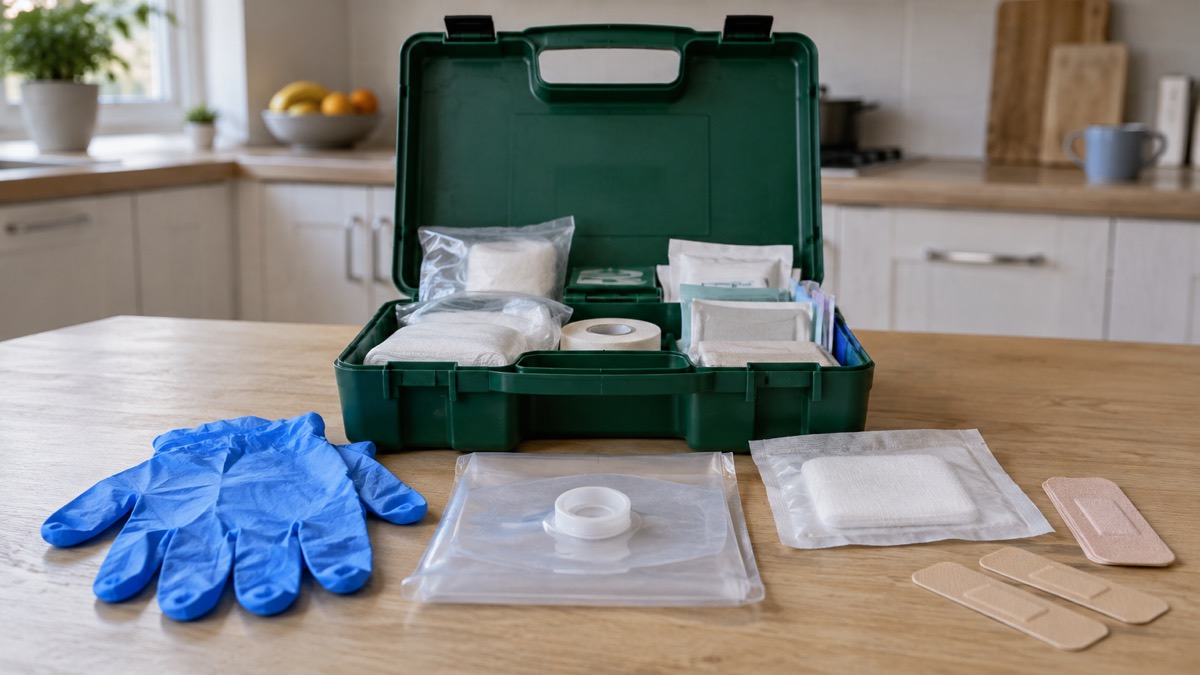
The primary survey needs no equipment at all, which is the point: your hands and your phone are enough. But official preparedness advice across the UK consistently says to keep a first aid kit where you can reach it, at home and in the car, so that the steps you know how to take are not held up by a missing dressing or a missing bandage.
At work, the Health and Safety Executive says the contents of your first aid kit should be based on your first aid needs assessment, and gives a minimum for low-risk, desk-based work: a leaflet with general guidance on first aid, individually wrapped sterile plasters of assorted sizes, sterile eye pads, individually wrapped triangular bandages preferably sterile, safety pins, large and medium-sized sterile individually wrapped unmedicated wound dressings, and disposable gloves25. That list is a reasonable starting shape for a household kit too, though a home kit is your own choice rather than an assessment. The first aid kits page covers contents in detail, and the emergency kit section covers the wider household bag.
*A household first aid kit: keep it reachable in the dark and replace anything used or out of date.
Where each answer leads next
The primary survey is a fork, not a destination. Each answer sends you to a different page in this guide:
| What you find | What to do | Where to read more |
|---|---|---|
| Danger present | Do not approach; make safe or call 999 and wait | Electric shock, major incidents |
| Responsive | Treat what is wrong; monitor and stay calm26 | Heart attack, seizure, severe bleeding |
| Unresponsive, breathing normally | Recovery position; tilt the head back so the airway stays open17 | Recovery position |
| Not breathing normally | Call 999, start CPR, 5 to 6 cm deep4 | CPR, defibrillators |
| Breathing stops later | Check breathing again and be prepared to start CPR27 | What to do if someone starts breathing during CPR |
Two of those rows deserve a note. NHS inform's heart attack guidance says to monitor the casualty until help arrives and stay as calm as possible to reduce their stress, and if they become unresponsive, open their airway and check their breathing26. Its anaphylaxis guidance says the same in shorter form: if the person becomes unresponsive, check their breathing and be prepared to start CPR27. The survey is not a one-off: someone who is breathing now may stop, so keep checking while you wait.
If you want one page to hold in your head, hold this one: danger, response, send for help, airway, breathing, CPR. Everything else in this guide hangs off those six steps.
Sources (27)
- How to do a primary survey, NHS inform, 2026
- How to give an adult CPR, NHS inform, 2026
- CPR, NHS, 2026
- Remember these steps to learn how to save a life, London Ambulance Service, 2026
- What to do when someone isn't breathing, North West Ambulance Service, 2025
- Using 999, East of England Ambulance Service, 2026
- Cardiac arrest, Scottish Ambulance Service, 2026
- Prepare yourself, Greater Manchester Combined Authority, 2026
- Northumbria Local Resilience Forum, Northumberland County Council, 2026
- Electric shock first aid, NHS inform, 2026
- Staying safe from a terrorist incident, East of England Ambulance Service, 2026
- If you are trapped by fire, Essex Prepared, 2026
- How to give a child CPR, NHS inform, 2026
- How to resuscitate a child, NHS, 2026
- How to put someone in the recovery position, NHS inform, 2026
- How to give an adult CPR, NHS inform, 2026
- Water safety, Devon and Somerset Fire and Rescue Service, 2026
- CPR guidance, North East Ambulance Service, 2024
- Poisoning first aid, NHS inform, 2026
- Basic advice on first aid at work - HSE, Health and Safety Executive (HSE)
- Are You Ready booklet, Culham Parish Council, 2025
- What to do if your child has an accident, NHS, 2025
- Household emergency kit, nidirect, 2026
- First aid, NHS, 2026
- What to put in your first aid kit, Health and Safety Executive, 2026
- Heart attack first aid, NHS inform, 2026
- Anaphylaxis first aid, NHS inform, 2026
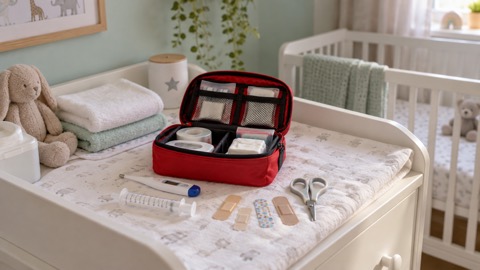 Baby and Child Kit Checklist
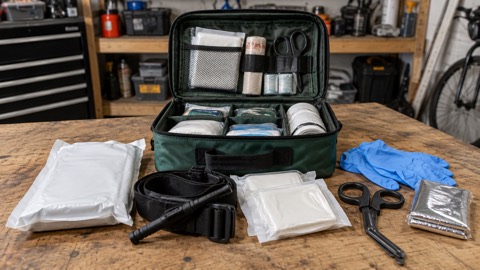 Bleeding Control Kit Checklist
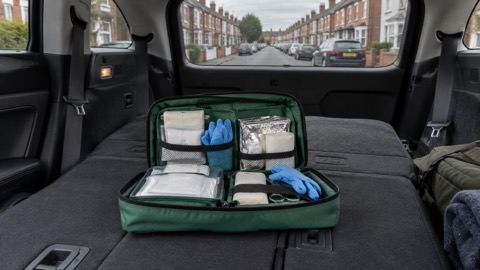 Car Kit Checklist
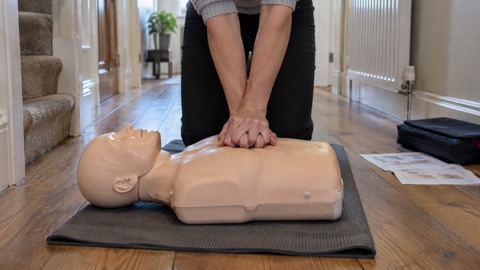 CPR Steps for Adults
 2025 Resuscitation Guidelines
 Defibrillators (AEDs)
 Public Access Defibrillators
 Choosing a Defibrillator
 The Recovery Position
 Choking First Aid
 Cuts, Grazes and Wounds
 Burns and Scalds
 Adrenaline Auto-Injectors
 Sepsis Signs to Act On
 Shock Signs and What to Do