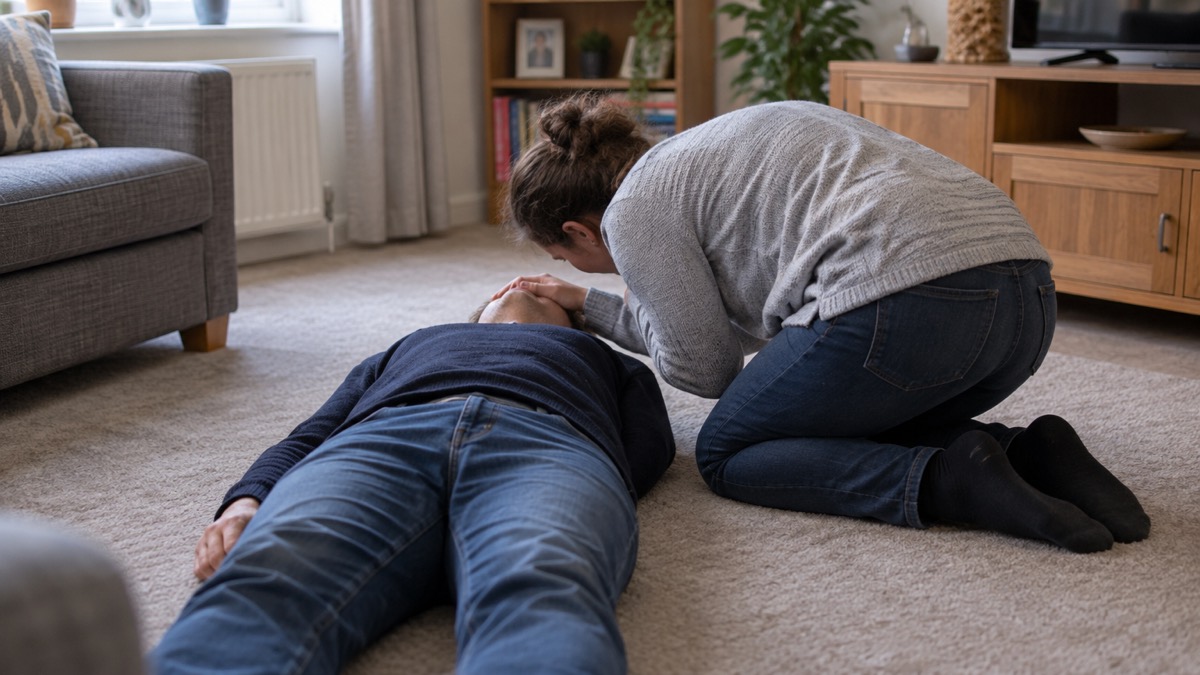
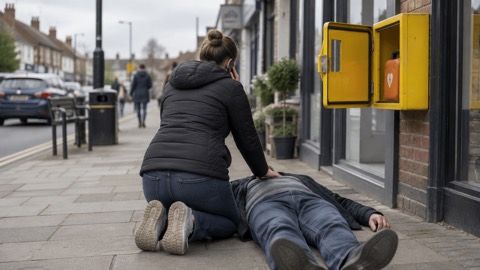
If someone is unresponsive, the single question that decides what you do next is whether they are breathing normally. Tilt their head back, then look, listen and feel for breaths for no more than 10 seconds1. If their chest is not moving and you cannot hear or feel breath, call 999 and start chest compressions2. If they are breathing normally, keep them safe and keep checking until help arrives3.
The check is quick and uses nothing but your eyes, ears and cheek. Tilt the head back to open the airway, watch the chest for movement, listen at the mouth and nose, and feel for air on your cheek2. Ten seconds is the limit: any longer and you are losing time that someone in cardiac arrest cannot spare4.
The commonest mistake is mistaking gasping for breathing. Occasional gasps, noisy or irregular breathing are usually a sign the heart is not working properly, and you should treat the person as not breathing3. Ambulance services say the same: patients in cardiac arrest will often take occasional gasps, and this is a sign of cardiac arrest, not them trying to breathe5.
Tilt the head back, then look, listen and feel
An unresponsive person's muscles relax, and their tongue can fall back and block the airway, so they can no longer breathe6. Tilting the head back lifts the tongue clear. That is why the check always starts with the tilt, not with watching from a distance.
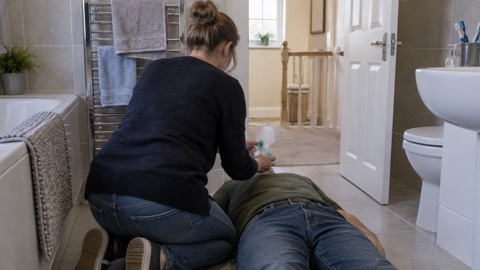
Once the head is tilted, use three senses at once. Look at the chest to see whether it rises and falls7. Listen at the mouth and nose for breathing sounds. Feel for air moving against your cheek8. The British Red Cross puts it as a single question: tilt their head back, is their chest moving, and can you hear, see or feel them breathing? If the answer is no, they are not breathing2.
Do this for no more than 10 seconds1. Ten seconds is long enough to be sure and short enough not to delay compressions. If you are still uncertain at the end of it, treat them as not breathing and move on6.
Watch the chest or stomach for movement
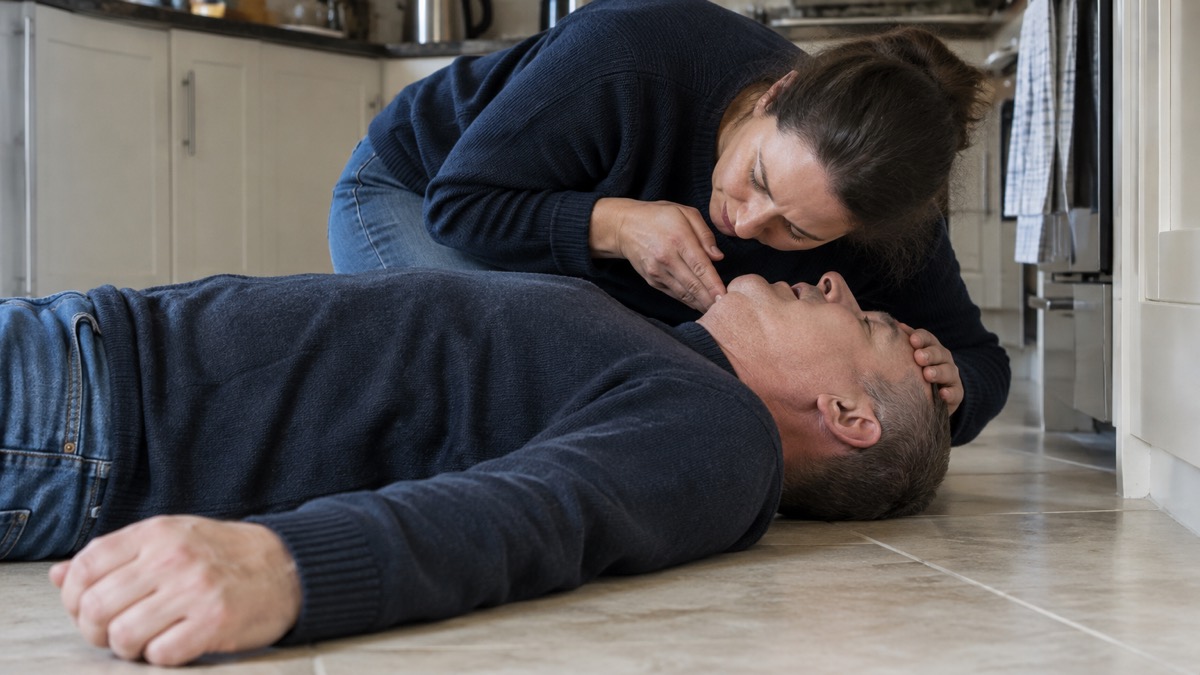
The chest is the main thing to watch. Look for the rise and fall of the chest, and the ambulance call handler will help you check for signs of normal breathing once you are on the phone7. A hand resting lightly on the chest or upper stomach can help you feel a faint movement you might miss by eye alone.
Normal breathing is quiet, regular and effortless. What you are looking for is a steady rhythm, not a single movement. If the chest rises once and then nothing follows, that is not normal breathing.
The check is the same whatever the cause of the collapse. If someone has fainted, for example, the NHS advises checking they are breathing by listening for at least 10 seconds before laying them on their back and raising their legs9. If someone has swallowed something harmful, keep checking they are breathing, and if they are awake keep talking to them so you know they have not lost consciousness10.
Strange sounds are not normal breathing
Noise is where people most often get this wrong. Noisy, irregular breathing or gasping is usually a sign the heart is not working properly, and you should start chest compressions2. The British Red Cross is blunt about it: this is usually a sign that their heart and lungs are not working properly, and you should treat them as an unresponsive person who is not breathing3.
The Scottish Ambulance Service explains why gasps mislead. Patients in cardiac arrest will often take occasional gasps, and this is a sign of cardiac arrest and not them trying to breathe5. A gasp looks and sounds like effort, which is exactly why a worried bystander waits. Waiting is the danger.
"Patients who are in cardiac arrest will often take occasional gasps, this is a sign of cardiac arrest and not them trying to breathe."
Seizures are another trap. Resuscitation guidance advises bystanders to be suspicious of cardiac arrest in any patient presenting with seizures, and to assess carefully whether the person is breathing normally11. If in doubt, treat them as not breathing.
If they are not breathing: call 999 and start CPR
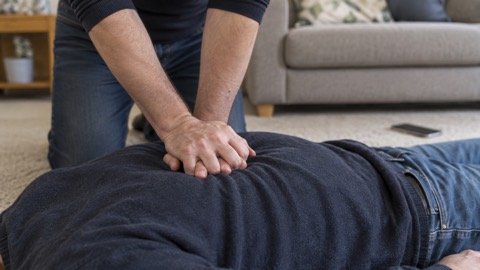
The moment you decide they are not breathing normally, two things happen together: the call and the compressions. Phone 999 and begin chest compressions1. If someone else is there, ask them to call while you start, or put your phone on hands-free and call yourself12. Ask someone nearby to fetch a defibrillator4.
The call taker will ask first whether the patient is breathing and conscious, and where you are, so your 10 second check means you can answer immediately13. Ambulance services list difficulty breathing among the reasons to call 99914, and so do the other services across the UK15.
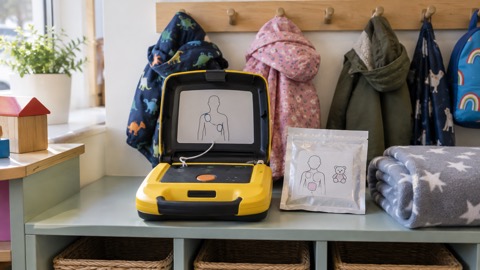
If you are helping a child, the sequence differs slightly. If the child is not breathing, ask someone to phone 99916. If you are alone, the NHS advises calling 999 and starting CPR straight away for a baby or child who is unresponsive and not breathing normally4.
If they are breathing: keep them safe and keep checking
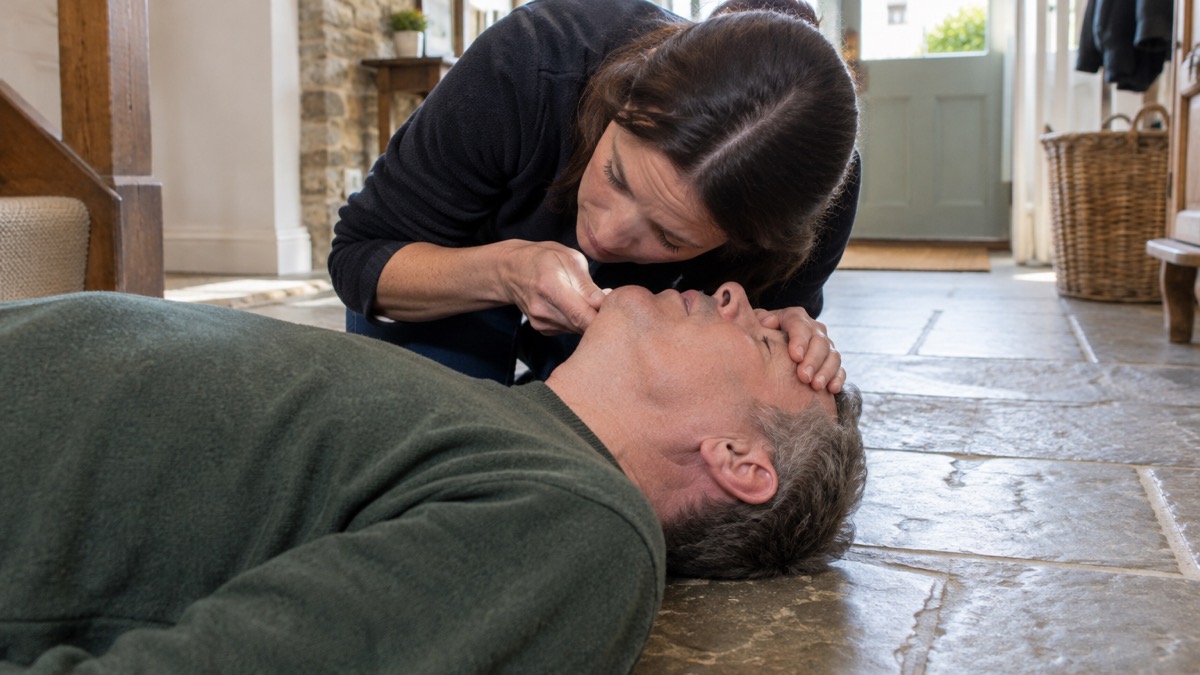
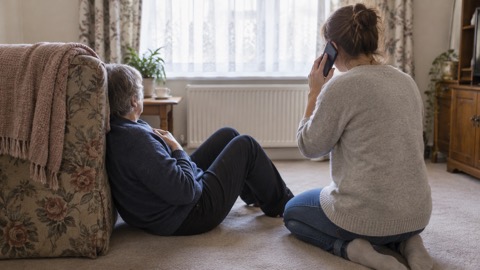
Normal breathing changes your job, not ends it. If the casualty is breathing normally, check for any signs of severe bleeding4. Keep checking their level of response until help arrives, and if they stop breathing at any time, call 999 or 112 and prepare to give CPR17.
If they are breathing but unresponsive, the recovery position protects the airway while you wait. Keep them warm, stay with them, and watch for any change in their breathing.
If they are breathing and conscious, keep them still and comfortable and keep talking to them. For someone who has fainted, the NHS advises that once you have confirmed they are breathing normally, you lay them on their back and raise their legs9.
Where the breathing check fits in DRS ABC
The breathing check is the B in DRS ABC, the primary survey taught across the UK. In that survey, B means asking whether the person is breathing8. Each step exists to get you safely to the next.
Start with danger: make sure it is safe to approach12. Then check for a response by talking to the person and gently shaking their shoulders18. If there is no response, send for help and open the airway by tilting the head back. Only then do you check breathing2.
The order matters because each step makes the next possible. You cannot check breathing reliably with a blocked airway, and you cannot decide to start CPR until you have checked. The primary survey page walks through the whole sequence.
Using a defibrillator once you have decided
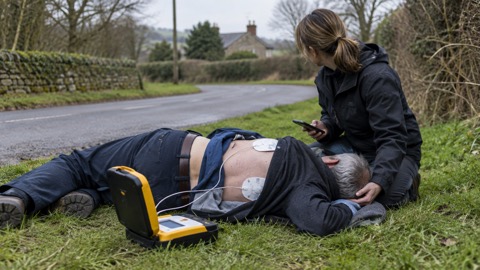
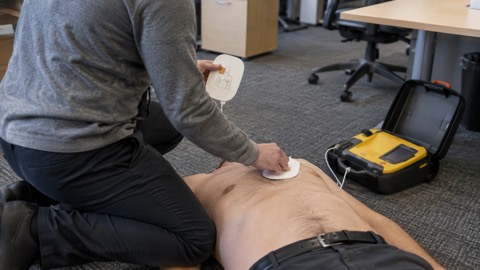
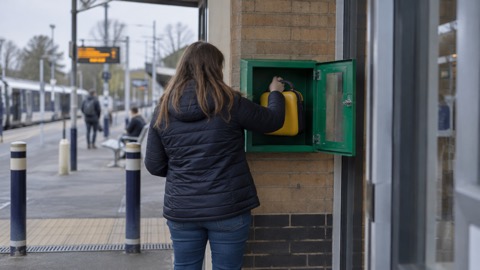
A defibrillator does not replace the breathing check; it follows it. If you see someone in cardiac arrest, call 999, start chest compressions and ask someone to find a defibrillator19. Once the pads are on, the machine analyses the heart rhythm and decides whether a shock is needed20. The device checks the rhythm and will only advise a shock if one is needed, so attaching it cannot harm someone whose heart is still beating19.
Do not touch the patient while the machine analyses the rhythm20. Keep compressions going until the defibrillator tells you to stop, and follow its spoken prompts. The defibrillators page covers pad placement and what each prompt means.
When the person is in the water
If someone has been rescued from water and is unresponsive, check breathing as you would on land, but only once you are both safe. The advice from the fire and rescue service is to call 999 or 112 for emergency help, keep checking their level of response, and if they stop breathing at any time, call 999 or 112 and prepare to give CPR17. Never enter the water yourself to reach them; throw something that floats and wait for trained help.
Sources (20)
- How to give an adult CPR, NHS inform, 8 September 2026
- Unresponsive and not breathing: first aid skill, British Red Cross, 2026
- Unresponsive and breathing: adult first aid, British Red Cross, 2026
- How to resuscitate a child, NHS, 21 May 2026
- Cardiac arrest, Scottish Ambulance Service, 2026
- Unresponsive and not breathing during Covid-19, British Red Cross, 2026
- How do I perform CPR, Resuscitation Council UK, 2026
- First aid facts leaflet, North West Ambulance Service, 2019
- Fainting, NHS, 17 August 2026
- Poisoning, NHS, 12 June 2025
- Adult basic life support and automated external defibrillation, East London NHS Foundation Trust, 2022
- CPR, NHS, 2026
- 999 emergency, Scottish Ambulance Service, 2026
- When to call 999, Northern Ireland Ambulance Service, 2026
- Summer safety advice, North East Ambulance Service, 2026
- How to give a child CPR, NHS inform, 24 July 2026
- Water safety, Devon and Somerset Fire and Rescue Service, 2026
- Remember these steps to learn how to save a life, London Ambulance Service, 2026
- Defibrillators, London Ambulance Service, 12 August 2026
- Emergency heart care, London Ambulance Service, 30 September 2026
 Baby and Child Kit Checklist
 Bleeding Control Kit Checklist
 Car Kit Checklist
 CPR on a Baby
 CPR on a Child
 Chest Compression Rate and Depth
 Rescue Breaths or Hands-Only CPR
 Agonal Breathing and CPR
 Breathing During CPR
 Recovery Position and Spine
 Cardiac Arrest vs Heart Attack
 Heart Attack First Aid
 Defibrillator Pad Placement
 Defibrillator on a Child
 Defibrillator Without Training