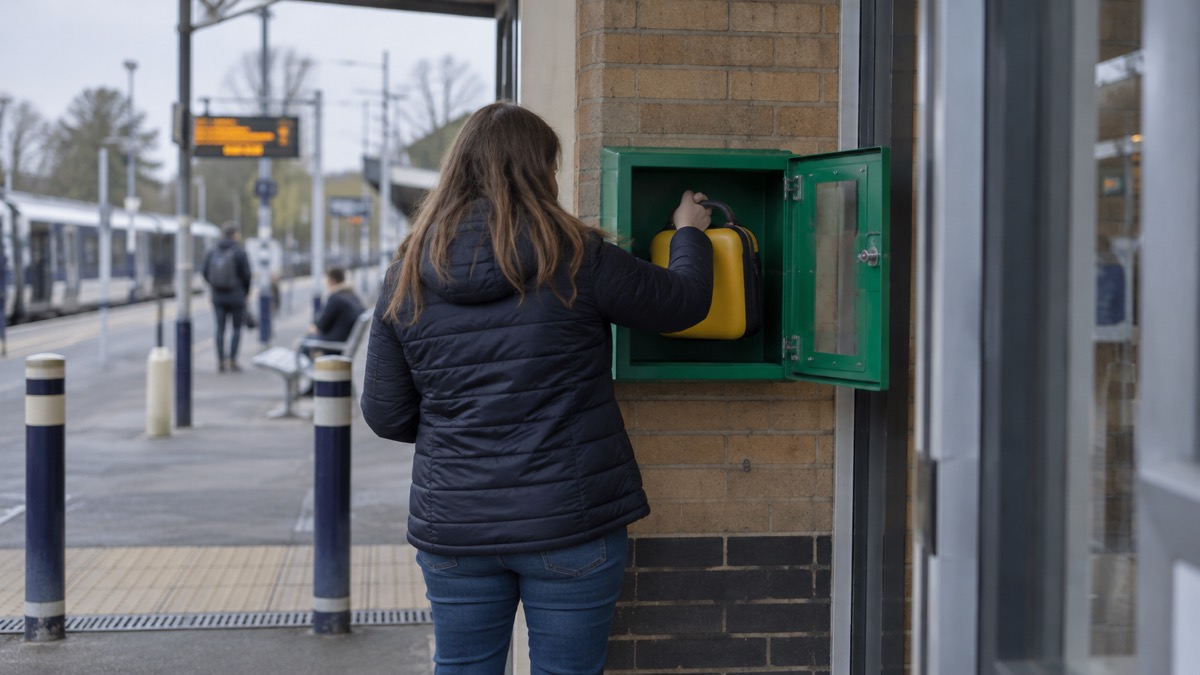
If someone has collapsed and is not breathing normally, you can use a defibrillator even if you have never been trained. NHS Inform states plainly that automated external defibrillators "can be used without training"1, and the North East Ambulance Service puts it just as directly: "Anyone can use a defibrillator. You do not need training"2. There are no legal restrictions on using one in the United Kingdom, and using it on someone who is unconscious and not breathing normally cannot make their condition worse3.
The machine does the thinking. Switch it on and it gives clear step-by-step voice instructions, with many models also showing pictures2. It analyses the heart rhythm and advises a shock only if one is needed, then either delivers it automatically or tells you to press a button5. Your job is to start CPR, send someone for the nearest defibrillator, and follow the prompts when it arrives.
The one thing that matters most is speed. Do not wait for someone more qualified, and do not hold back because you are unsure. The Scottish Ambulance Service says you "should never hesitate to use one in an emergency"6. This page sets out what the machine will ask of you, why you cannot get it wrong in a way that harms someone, and how to get free practice before you ever need it.
You don't need training to use a defibrillator
The advice from every official body is the same: training helps, but it is not a condition of using a defibrillator. The Resuscitation Council UK says anyone can use an automated external defibrillator, and no training is needed10. The Scottish Ambulance Service states that no prior training is required to use an AED6. St John Ambulance describes defibrillators as "very safe, they tell you what to do, and you don't need specific training to use one"4.
There is no legal barrier either. The Resuscitation Council UK's guidance for communities is clear that "in the United Kingdom, there are no legal restrictions to the use of a defibrillator"11. There are no statutory laws relating to resuscitation or the provision of a defibrillator, and the Health and Safety Executive does not mandate that any employer or organisation must provide one, though some professional organisations require them in their own settings11. That legal position has been settled for well over a decade: the 2010 Resuscitation Council (UK) guidelines recorded that an AED can be used safely and effectively without previous training, and that its use should not be restricted to trained rescuers12.
What that means in practice is that the question "am I allowed to use this?" has a simple answer. You are. The device is designed for members of the public with no formal medical training, and it provides clear, step-by-step instructions so it can be used safely by them13. The British Heart Foundation's poster campaign makes the same point: anyone can use a defibrillator, it is easy to use, and it is for use on an unconscious person who is not breathing normally14.
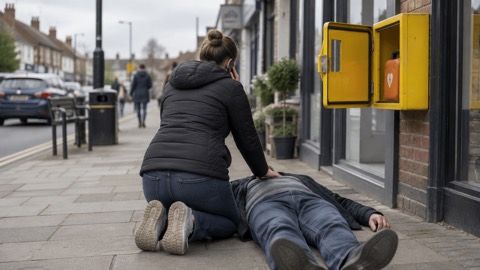
The only real restriction is on the device itself, not on you. A public access defibrillator should not have restricted access, and should be kept in an unlocked cabinet so people can get to it quickly in an emergency11. If you find one locked, ring 999: the call handler can give you the code. There is more on that in our guide to getting the code for a locked defibrillator cabinet.
Switch it on and follow the voice instructions
The whole process is designed to be led by the machine. When you switch a defibrillator on, it provides clear instructions and talks you through what you need to do15. It will analyse the patient's heart rhythm and advise a shock if one is required15. Some devices have an on and off button, while others turn on when their case is opened4. Either way, once it is on, it takes over.
Here is the sequence in the order it happens.
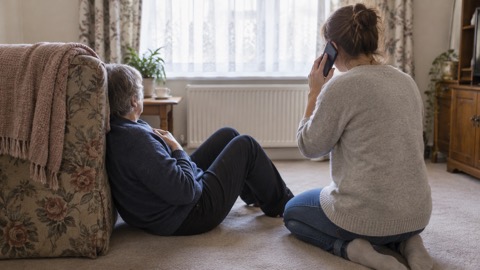
- Ring 999 and start CPR. Send someone else to fetch the nearest defibrillator while you continue chest compressions8. If you are alone, ring 999 and put the phone on speaker.
- Switch the machine on as soon as it arrives, and take the pads out while you keep doing CPR16.
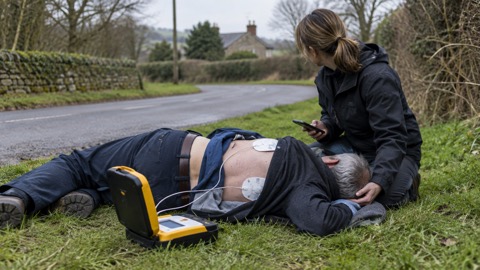
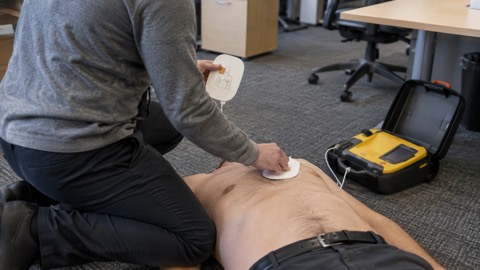
- Apply the pads to the bare chest, as shown in the pictures on the pads themselves5.
- Do not touch the patient while it analyses. The machine will analyse the heart and determine whether it needs to shock5.
- Stand clear and follow the prompt. If a shock is needed, the machine either delivers it automatically or tells you to press a button5.
- Carry on with CPR when told. Follow its instructions carefully while you continue to give CPR17.
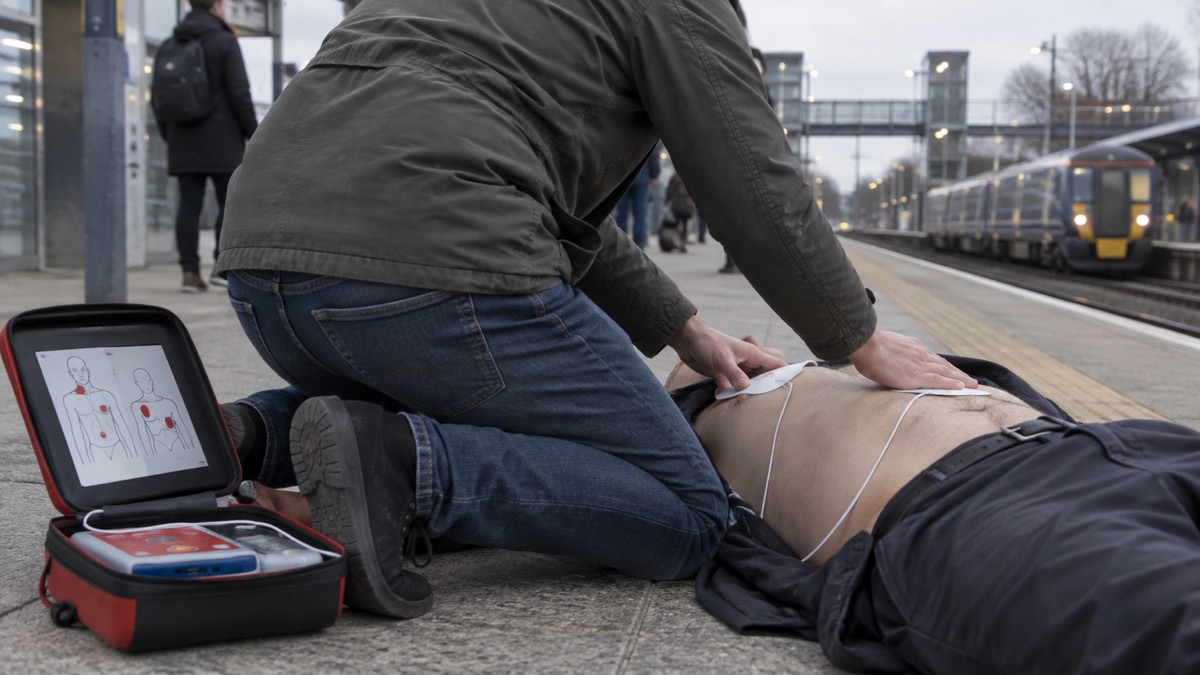
Public access defibrillators are built to a minimum specification that includes voice prompts in English, including a safety message, and simple controls that a non-expert can understand11. That is why the machine talks you through it rather than expecting you to read a manual. If you are helping someone who has been rescued from water, the same applies: ask the helper to switch the defibrillator on and follow the voice prompts while you continue CPR18.
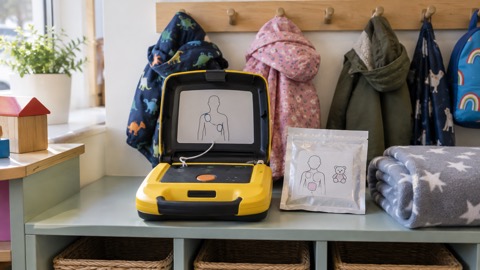
For a child or baby, the steps are the same with one addition. Place the pads on immediately and turn the machine on, then follow its instructions. Some defibrillators have a child mode button as well as child sized pads, so use them if they are available. If you do not have a defibrillator, keep doing CPR19. Our page on using a defibrillator on a child or baby covers the pad positions in more detail.
Never hesitate to use a public access defibrillator in an emergency
Hesitation is the main thing that stands between a bystander and a working defibrillator. The Scottish Ambulance Service addresses it head on: you do not need to be medically trained, and you should never hesitate to use one in an emergency6. London Ambulance Service makes the case for more devices in public places on the grounds that they are safe and simple to use and can significantly increase a person's chances of survival20.
The reason speed matters is the nature of cardiac arrest. A defibrillator is used on someone who is unconscious and not breathing normally14. In that situation, doing nothing is not neutral. Starting CPR and getting the machine on as soon as possible is the action that gives the person the best chance, and the machine will only advise a shock if the rhythm calls for one15.
If you take a public access defibrillator from its cabinet, tell the ambulance service. The Northern Ireland Ambulance Service is explicit: "It is important to never take a PAD without notifying the ambulance service"21. This is not bureaucracy. It means the control room knows the device has gone, can direct the next caller elsewhere, and can arrange for it to be replaced and checked. The same call that gives you the cabinet code is the one that records that you have taken it.
There is a wider point about community devices. The Resuscitation Council UK describes public access defibrillators as equipment that can be used anywhere, by anyone, to try to save the life of a person who has a cardiac arrest22. That "by anyone" is deliberate. It is not a piece of clinical equipment reserved for clinicians. It is a household-level piece of safety equipment, like a fire extinguisher, that ordinary people are expected to pick up and use.
Training is not required but is recommended
Not needing training is not the same as not benefiting from it. The Resuscitation Council UK calls the defibrillator a simple piece of equipment that is easy to use and doesn't require training23, but familiarisation makes the first minute calmer. The South Western Ambulance Service runs community CPR and defibrillator familiarisation sessions, and no prior medical knowledge is needed to attend24. Its own description of automatic or semi-automatic defibrillators is that they are easy and safe to use by anyone with little or no training, because the device talks and displays what you need to do, and many also show pictures25.
| What you want | Where to get it | Who it suits |
|---|---|---|
| Free online awareness training in CPR and defibrillator use | British Heart Foundation RevivR26 | Anyone in the UK who wants basic awareness, aimed at those over 1827 |
| Free community familiarisation session | South Western Ambulance Service community sessions24 | Local residents who want hands-on practice with no prior medical knowledge needed |
| Workplace training and annual refresher | Part of the HSE's First aid in work guidance3 | Workplace first aiders, who the HSE strongly recommends refresh their training each year3 |
| Formal AED training | Royal Life Saving Society UK advises individuals and organisations to take it28 | Anyone over 16 who wants a recognised course28 |
The British Heart Foundation's RevivR is a free online course in CPR and defibrillator use, intended for anyone living in the UK who wants basic awareness training, and targeted at those over 1827. It is the lowest-effort way to move from "I think I could" to "I have practised the steps". The British Heart Foundation also offers RevivR for teams at work, so an employer can put a whole staff group through it26.
For workplaces, the Health and Safety Executive's First aid in work guidance includes familiarisation and training in the use of a defibrillator, and the HSE strongly recommends that workplace first aiders receive annual refresher training to maintain competency3. That is a recommendation, not a legal duty to provide a device: there are no statutory laws in the UK relating to resuscitation or the provision of a defibrillator, and the HSE does not mandate that any employer must provide one11. Some professional organisations do mandate defibrillators within their own settings, and there may be potential consequences for some employers under common law if a defibrillator is not provided11.
If you are thinking about a device for a home, club or village, our guide to choosing a defibrillator sets out the options, and the defibrillator guardian checklist covers the routine checks an owner needs to carry out.
Who can use one, and what the machine will tell you
Anyone can use a defibrillator, and it can be used on any aged person, following the instructions given and visible29. The Royal Life Saving Society UK puts the age for its AED training programme at anyone over 16, and advises individuals and organisations to take the training so they feel confident28. That is a training recommendation, not a restriction on who may use a device in an emergency.
What the machine tells you is the same set of prompts wherever you are in the UK. It will provide clear instructions and talk you through what you need to do, analyse the heart rhythm, and advise a shock if it is required15. The minimum specification for a public access defibrillator requires voice prompt ability in English including a safety message, plus visual prompts and simple controls that a non-expert can understand11. In practice that means spoken instructions, pictures on the pads, and a machine that will not let you shock someone whose heart does not need it.
The chain of survival is the same in all four nations, and bystanders are the first link. In Scotland, the Save a Life for Scotland campaign sets out the chain of survival and the role of early CPR and defibrillation15. The Scottish Ambulance Service maintains a public access defibrillator programme and encourages communities to register their devices6. In Northern Ireland, the Northern Ireland Ambulance Service registers AEDs and its community first responders are trained to use an AED as part of their role21. In Wales, the Welsh Ambulance Service is part of the same picture, and its winter health guidance notes that free training is also provided for naloxone, alongside other community lifesaving skills31. In England, NHS England publishes tools and resources for improving outcomes in cardiac arrest, including the importance of public access defibrillators being kept in unlocked cabinets9.
Wherever you are, the practical steps do not change. Ring 999, start CPR, send for the nearest device, switch it on, and follow the voice. If you want to find the device nearest to you before you ever need it, our guide to public access defibrillators explains how they are mapped and registered. If you want to build confidence in the CPR that runs alongside the defibrillator, start with how to do CPR and our guide to learning CPR free online.
Sources (31)
- How to use an AED, NHS Inform, 2026-09-28
- Defibrillator and CPR guidance, North East Ambulance Service, 2024-11
- AED guide, Resuscitation Council UK, 2026
- How to use a defibrillator, St John Ambulance, 2026-10-28
- Emergency heart care, London Ambulance Service, 2026-09-30
- Public access defibrillators, Scottish Ambulance Service, 2026-10-29
- Cardiac arrest, Scottish Ambulance Service, 2026-10-29
- Remember these steps to learn how to save a life, London Ambulance Service, 2026-08-12
- Improving outcomes in cardiac arrest: tools and resources, NHS England, 2026-10-29
- Adult basic life support guidelines, Resuscitation Council UK, 2025-10-27
- Public access defibrillators: A guide for communities, Resuscitation Council UK, 2025-10
- AED guidelines, Resuscitation Council (UK), 2010
- Cardiac arrest, East of England Ambulance Service, 2026-10-29
- Defibrillator sign and poster, British Heart Foundation, 2026-10-29
- Chain of survival, Save a Life for Scotland, 2022-12-08
- Cardiac arrest, St John Ambulance, 2026-10-28
- How to do CPR, British Heart Foundation, 2026-10-29
- Drowning, St John Ambulance, 2026-10-28
- How to do CPR on a child or baby, British Heart Foundation, 2026-10-29
- Defibrillators, London Ambulance Service, 2026-08-12
- AED, Northern Ireland Ambulance Service, 2026-10-29
- A guide to automated external defibrillators, Resuscitation Council UK, 2026
- Defibrillation, Resuscitation Council UK, 2026
- CPR and defibrillator training, South Western Ambulance Service, 2026-10-29
- Defibrillators, South Western Ambulance Service, 2026-10-29
- CPR training for the workplace, British Heart Foundation, 2026-10-29
- Learn CPR in 15 minutes: FAQs, British Heart Foundation, 2026-10-29
- Automated external defibrillator (AED), Royal Life Saving Society UK, 2026-10-29
- How to do CPR, North West Ambulance Service, 2025-03-13
- First responders, Northern Ireland Ambulance Service, 2026-10-29
- Your Health Guide Winter 2025, NHS Western Isles, 2025-12
 Baby and Child Kit Checklist
 Bleeding Control Kit Checklist
 Car Kit Checklist
 CPR on a Baby
 CPR on a Child
 Chest Compression Rate and Depth
 Rescue Breaths or Hands-Only CPR
 Checking Breathing
 Agonal Breathing and CPR
 Breathing During CPR
 Recovery Position and Spine
 Cardiac Arrest vs Heart Attack
 Heart Attack First Aid
 Defibrillator Pad Placement
 Defibrillator on a Child