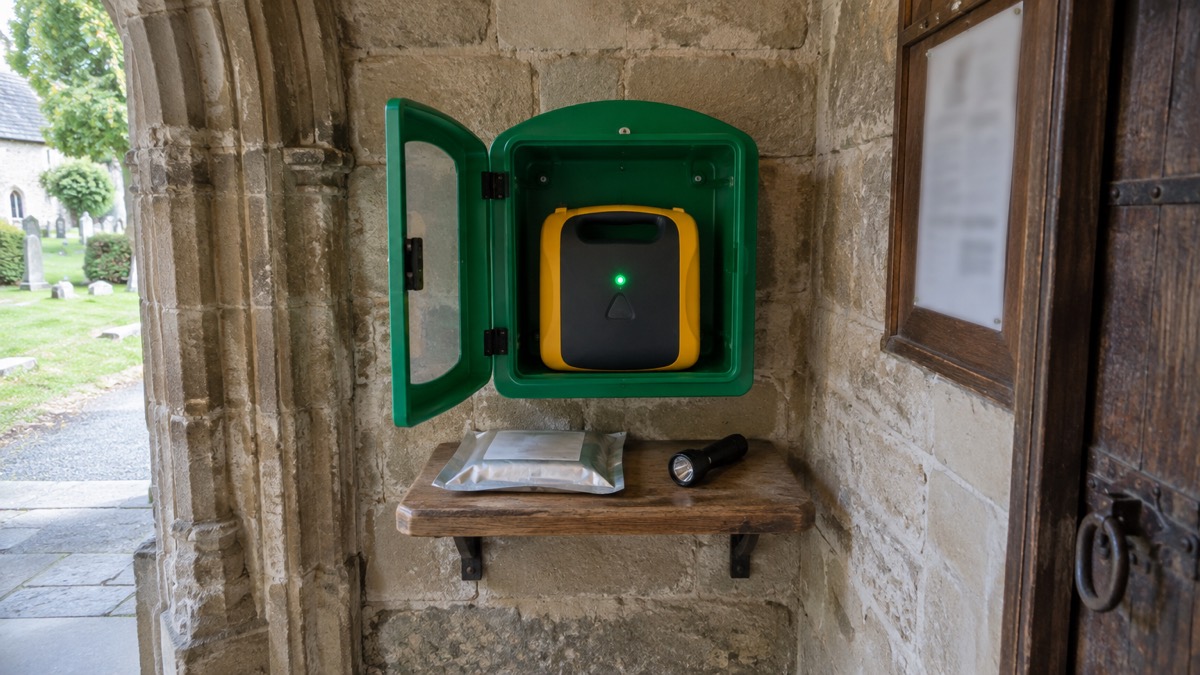
If you look after a community defibrillator, your job is to keep it rescue ready: charged, stocked with in-date pads, easy to reach and recorded on the national database so the ambulance service can send someone to it. Resuscitation Council UK's guidance for communities is that a named defibrillator guardian should carry out the routine checks, replace the battery when necessary, replace used or out-of-date pads, razors and gloves, and record every check on The Circuit1.
The stakes are simple. A defibrillator that is not rescue ready, because its pads have not been replaced, are missing or it has a fault, cannot save a life1. A device that is registered, visible and ready is the one that gets used: all public access defibrillators should be registered on The Circuit, and if yours is not registered, the ambulance service will not know it exists2.
This checklist sets out what to check, how to keep the battery and pads in date, how the cabinet should work, and what to do the moment the defibrillator comes back from an incident.
The guardian checklist: battery, pads, cabinet and status
Work through these four items every time you check the defibrillator, and record the result on The Circuit. The Circuit sends email reminders to check the device and lets you know when the pads expire, so the reminders give you the rhythm6.
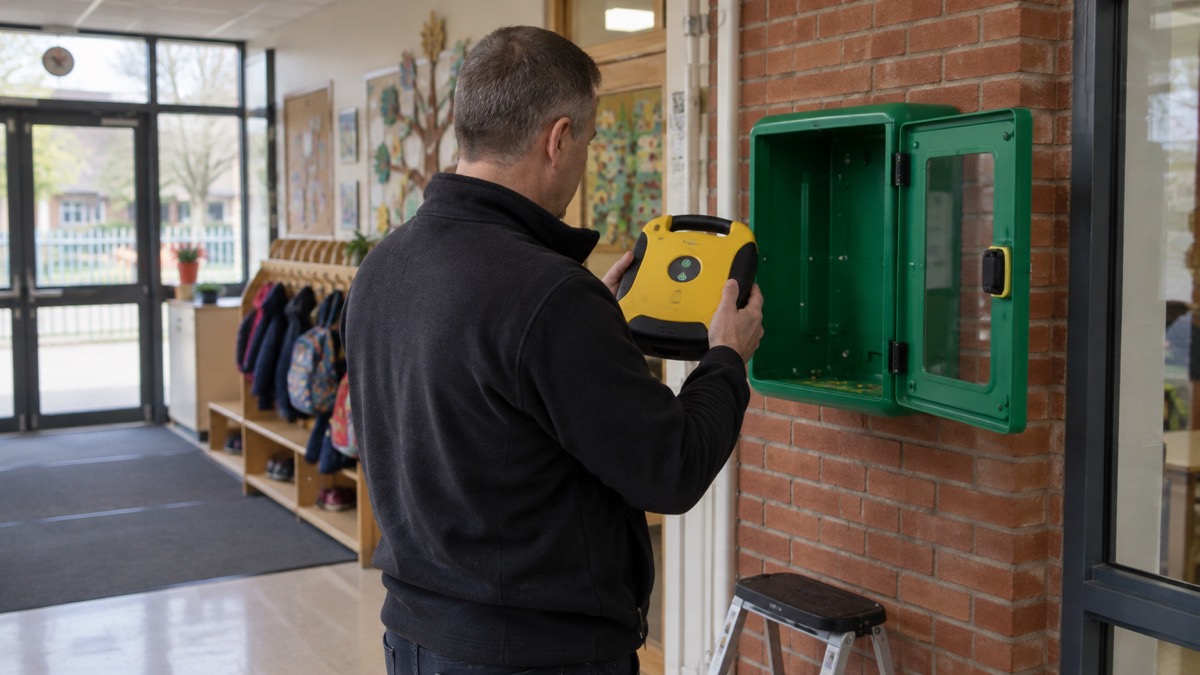
The guardian's wider role is set out by South Central Ambulance Service: guardians register the AED on the national database, carry out basic checks, monitor pad and battery expiry dates and funds for replacements, and return the device to a response ready state after use3. Resuscitation Council UK adds that a guardian should be nominated to undertake these tasks and receive alerts from The Circuit, with an agreement or policy to ensure the role continues if the guardian is absent1. A single volunteer with no cover is a weak point: agree who steps in before you need them.
Checks should be carried out as per manufacturer guidance and your risk assessment, with a process to ensure this is maintained and recorded2. All defibrillators need to be checked regularly to ensure they are response ready7. The guidance does not set one interval for every device, so the manufacturer's instructions for your model and your own risk assessment decide the frequency, and The Circuit's reminders help you keep to it1.
Battery: replace it when the status check says so
The battery is the item most likely to let a defibrillator down quietly, because a device with a flat battery looks exactly like a ready one until someone opens the lid. Resuscitation Council UK's instruction is direct: owners or guardians must carry out routine checks, replace the battery when necessary, and follow the manufacturer's instructions1. The status indicator on the device, read at each check, is what tells you when that moment has come.
- Read the status indicator at every check and act on what it shows1.
- Replace the battery when the device indicates it is needed, using the maker's instructions for your model1.
- Record the check and any battery change on The Circuit5.
- Plan and budget for replacement batteries as part of the ongoing cost of the device1.
That last point matters for community groups. Resuscitation Council UK advises considering how you will fund the initial and ongoing cost of maintenance, the storage cabinet, directional signage, replacing consumables, insurance premiums, and replacement of batteries and pads1. A defibrillator bought with a grant but with no plan for its battery is only ready for as long as the first one lasts.
Pads: replace them once used or past their expiry date
Electrode pads are single use. South Central Ambulance Service's information pack is clear that the electrode pads and items like scissors and razors are single use and will need replacing before the AED can be response ready again, and that some items have a limited shelf life3. Once a pad has touched a patient it is finished, and an expired pad may not stick or conduct properly.
- Check the expiry date printed on every set of pads at each check3.
- Replace pads once they have been used, and replace any that are past their expiry date1.
- Replace the other single-use items, such as scissors, razors and gloves, at the same time1.
- Keep the pads expiry date up to date in the device's registration details8.
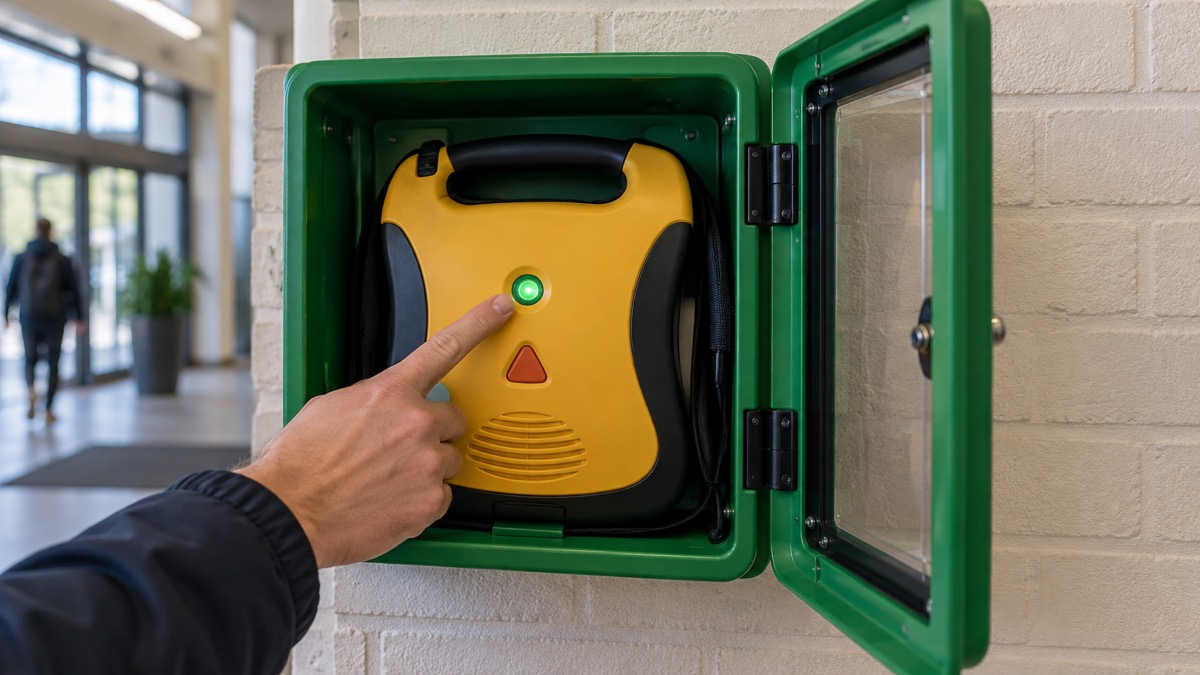
The Circuit helps here by sending guardians reminders such as when pads are due to expire and to regularly check their defibrillator and update The Circuit6. When you register a defibrillator with the Northern Ireland Ambulance Service, the pads expiry date is one of the details recorded8, which is why keeping that date current matters: it is how the system knows when your device is about to fall out of date.
A defibrillator that is not rescue ready, for example because pads are not replaced, is missing or has a fault, cannot save a life1. That is the whole reason for the pad check.
Cabinet access: unlocked by default, locked only with care
Resuscitation Council UK's recommendation is that defibrillator cabinets should not be locked, because locked cabinets may create significant delays1. The Scottish Ambulance Service recommends an unlocked outdoor cabinet so that the defibrillator is easy to get in an emergency, and says that if you do choose a locked cabinet, you can add the access code when you register the defibrillator on The Circuit4. The South Western Ambulance Service also says lockable cabinets are not recommended7.
The fear that drives people to lock cabinets is largely misplaced. Resuscitation Council UK reports that theft and vandalism are rare, and that missing defibrillators are generally a result of deployment to an emergency rather than theft1. Data from The Circuit suggests that many occasions where cabinets are forced open are neither vandalism nor theft, but people responding to genuine emergencies struggling with the lock or the code1. An earlier consensus statement reached the same view: despite widespread use of unlocked cabinets, instances of theft and vandalism are relatively uncommon9.
| Cabinet type | What it means in an emergency | What the guidance says |
|---|---|---|
| Unlocked cabinet | Immediate access, 24 hours a day, 365 days a year | Recommended by Resuscitation Council UK and the ambulance services1 |
| Locked cabinet | The caller must be given the code by the 999 call handler | Not recommended; if used, the code must be recorded on The Circuit1 |
If a locked cabinet is used, ensure the lock is simple to operate and well maintained with a suitable lubricant recommended by the cabinet supplier, the keypad is visible and well lit at night, and the unlocking code is accurately recorded on The Circuit so the emergency call handler can provide it to bystanders1. A decision to place a public access defibrillator in a locked cabinet should be made only on the basis of careful risk assessment in that specific location9. If a guardian wishes to convert a locked cabinet into an unlocked one, they should follow the manufacturer's guidance for disabling or removing the lock10.
After use: getting the defibrillator back and ready again
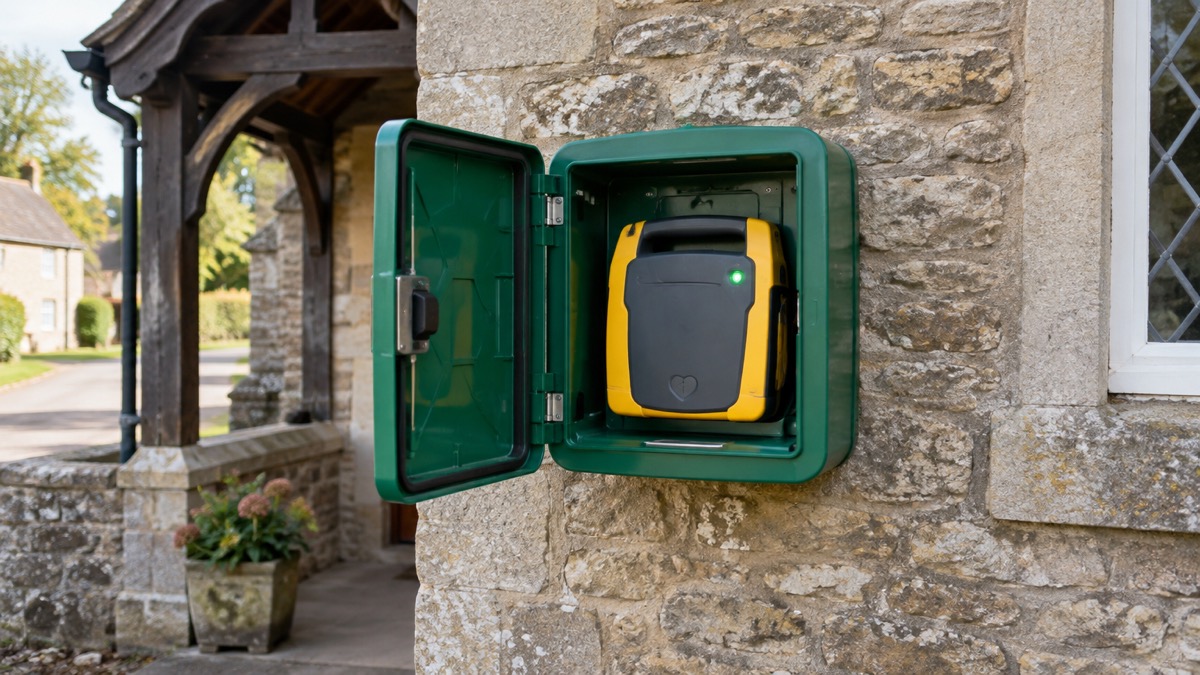
When a Circuit-registered defibrillator is deployed by the ambulance service, the guardian will receive an email immediately to let them know1. That email is your cue to start the return process, and The Circuit provides stickers with spaces to enter a contact number, location (using postcode, What3Words or a location name) and, if needed, the cabinet unlocking code; if you do not have a Circuit sticker, tie on a label or use an indelible marker to write the same information directly onto the case2.
Once the device is back:
- Sanitise it. Clean the defibrillator before it goes back into service1.
- Replace the used disposables, especially the pads, and any scissors, razors or gloves that were used1.
- Return it to its usual place in the cabinet1.
- Update its status on The Circuit, so the ambulance service knows it is emergency rescue ready again1.
Registering with the ambulance service, and where to get help
Registration is the step that makes a defibrillator findable. Resuscitation Council UK says registration is quick and free to do, and registered defibrillators become visible to the ambulance service on a 999 call and available on the DefibFinder website5. The South Western Ambulance Service says all public access defibrillators should be registered on The Circuit, and that if your defibrillator is not registered, they will not know it exists7. The Welsh Ambulance Services University NHS Trust directs owners to register via The Circuit11, and the Northern Ireland Ambulance Service records details including the pads expiry date8.
To check whether a device is registered, Resuscitation Council UK's ResusReady guidance says to visit DefibFinder: if your defibrillator does not appear, it is not registered12. Recording a status check takes just a few minutes and provides ambulance services with the confidence that the defibrillator is ready to use in an emergency5.
For a community group starting out, the British Heart Foundation has offered free, BHF-funded public defibrillators to eligible community groups, with applications reopening in summer 202513. Funding the device is only part of it: plan for maintenance, the cabinet, signage, consumables, insurance and replacement batteries and pads1.
If you are the person who would use the defibrillator rather than look after it, our guides to public access defibrillators and how to use an AED cover the steps at the scene. If you are choosing a device for a village hall or club, see choosing a defibrillator and indoor or outdoor defibrillator cabinet. For the wider household picture, start with First Aid at Home.
Sources (13)
- AED Guide, Resuscitation Council UK, 2026
- Public access defibrillators: A guide for communities, Resuscitation Council UK, October 2025
- Public Access Defibrillator Information Pack, South Central Ambulance Service, August 2026
- Purchasing a public access defibrillator, Scottish Ambulance Service, 2026
- The Circuit, Resuscitation Council UK, 2026
- The Circuit: the new defibrillator database, North West Ambulance Service, July 2025
- Defibrillators, South Western Ambulance Service NHS Foundation Trust, 2026
- AED, Northern Ireland Ambulance Service, 2026
- AED Guide, Resuscitation Council UK, November 2019
- A consensus statement on AED cabinets, Resuscitation Council UK, August 2024
- Register your defibrillator, Welsh Ambulance Services University NHS Trust, 2026
- ResusReady FAQs, Resuscitation Council UK, 2026
- National Defibrillator Network: The Circuit, British Heart Foundation, June 2025
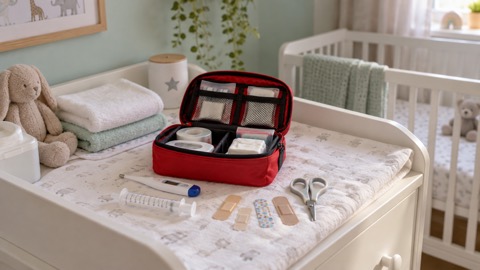 Baby and Child Kit Checklist
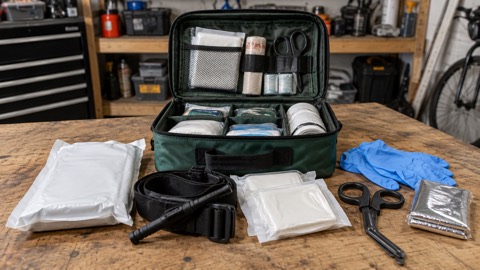 Bleeding Control Kit Checklist
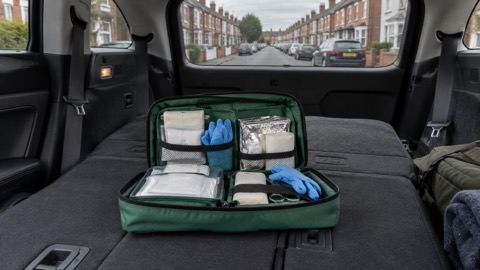 Car Kit Checklist