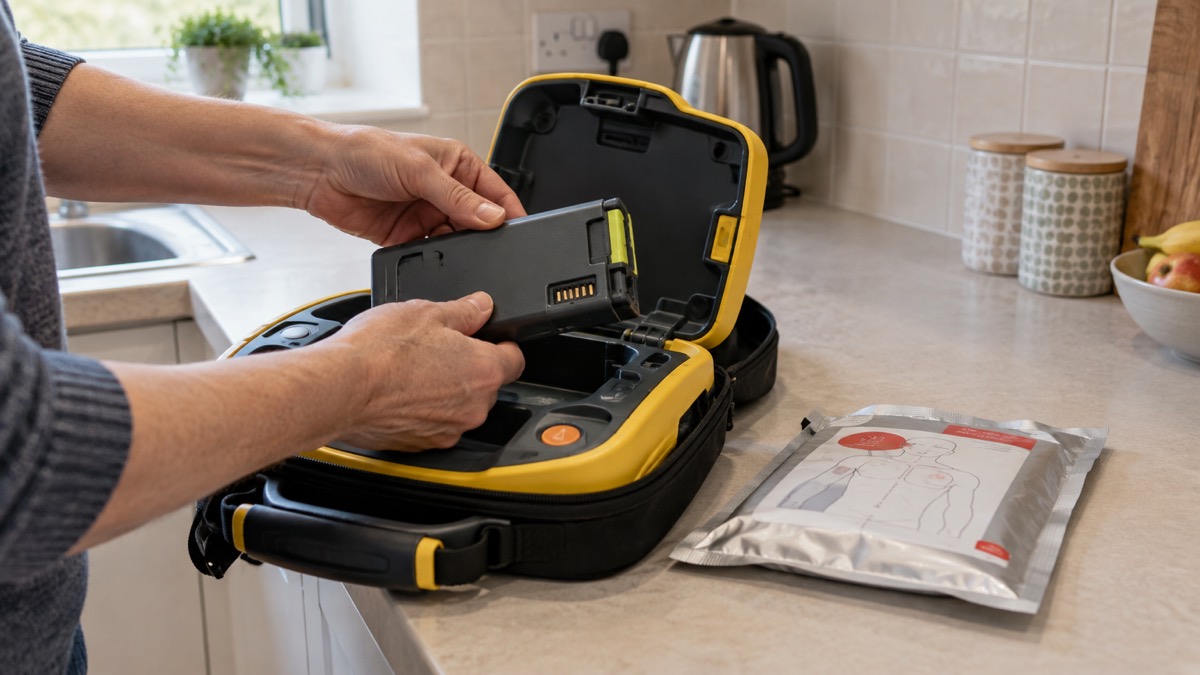
If you look after a defibrillator, the two parts that run out are the battery and the pads. How long they last depends on the make and model: official guidance puts the shelf life of batteries and pads at between 2 and 5 years depending on the AED model1. Some makers give a single figure for their own device. The iPAD SP1, for example, has a disposable lithium battery with an expected 5-year lifetime in standby2.
The practical answer is not to memorise a number but to check the dates on your own device. Pads carry an expiry date, and it is one of the details recorded when a defibrillator is registered on the national database3. Batteries are replaced on a schedule the maker sets, or sooner if the device has been used a lot. Routine checks, replacing the battery when necessary and replacing used or out-of-date pads are the owner's job, following the manufacturer's instructions4.
This page sets out what the makers say about their own batteries and pads, how to check a device is ready, what to do after it has been used, and where to get help. It covers the common public access models, including those from ZOLL and HeartSine.
Battery and pad life depends on the make and model
There is no single answer to how often an AED battery needs replacing, because the makers design their devices differently. The shelf life of batteries and pads runs from 2 to 5 years depending on the model1. Within that range, each maker publishes its own figures, and those are the ones to follow for your device.
| Device or part | Maker's stated life | Source |
|---|---|---|
| AED batteries and pads generally | 2 to 5 years depending on model | 1 |
| iPAD SP1 battery | 5 years in standby, 200 shocks capacity | 2 |
| HeartSine Samaritan PAD 350P battery | Up to 4 years with weekly self-test | 5 |
| ZOLL AED Plus batteries | 5 years standby | 7 |
| ZOLL AED 3 battery | 5 years standby with weekly maintenance | 6 |
| ZOLL Powerheart G3 IntelliSense battery | Replace at least every 5 years even if unused | 8 |
The pattern is that most public access devices are built around a battery that lasts several years in standby, kept topped up by the device running its own tests. The ZOLL AED Plus, for instance, uses 10 Duracell 123a lithium batteries with a 5-year shelf life and a stated standby life of 5 years7. The ZOLL AED 3 battery pack gives 5 years standby with weekly maintenance6.
Pads follow a similar pattern but are replaced more often in practice, because they are single use. The ZOLL AED Plus adult electrodes, the CPR-D Padz, have a 5-year shelf life7. The HeartSine Samaritan 350P comes with a single battery and electrode cartridge with a combined expiration date, so the two parts are replaced together5.
What affects life most is use. A device that has been used in an emergency, or for training, will need its battery sooner than the calendar suggests. The maker of the ZOLL Powerheart G3 IntelliSense battery advises replacing it at least every five years even if unused, and sooner if used extensively or if the defibrillator indicates low power8. The same maker notes that frequent use for emergencies or training may mean replacement before the 4-year mark8. Where a maker gives two figures like this, follow the shorter interval if your device has seen use.
HeartSine: now part of Stryker
HeartSine is now part of Stryker, and that affects what you can buy and who you contact. If the device has been used, report it to Stryker at aedevent@stryker.com, and sending the event data may make you eligible for a free replacement Pad-Pak5. That is the maker's own instruction for its own product.
For existing owners, the HeartSine Samaritan PAD 350P has a battery life of up to 4 years with weekly self-test5. It comes with a single battery and electrode cartridge with a combined expiration date, so battery and pads are replaced as one unit5. The device carries an 8-year limited warranty5.
HeartSine also asks owners to report use of the AED to Stryker at aedevent@stryker.com, and sending event data may make you eligible for a free replacement Pad-Pak9. That is worth knowing after an incident: the used cartridge needs replacing anyway, and reporting the event is part of the maker's process.
If you own a HeartSine, the practical steps are the same as for any device: check the status indicator, note the combined expiry date on the cartridge, and replace the Pad-Pak when it expires or after use. The HeartSine Pad-Pak page explains the combined battery and electrode cartridge in more detail.
ZOLL defibrillators for public access
ZOLL has a legacy of over 25 years in resuscitation technology and is trusted by first responders and rescuers worldwide7. Its public access models differ in how their batteries and pads are managed, so check which one you have.
The ZOLL AED Plus is semi-automatic. It uses 10 Duracell 123a lithium batteries with a 5-year shelf life and a stated standby life of 5 years7. Its charge time is less than 10 seconds with new batteries7. It runs a weekly default self-test7. The adult electrodes, CPR-D Padz, have a 5-year shelf life7. The device comes with a 7-year warranty, standard five years extended to seven when registered with ZOLL7.
The ZOLL AED 3 is fully automatic. Its battery pack gives 5 years standby with weekly maintenance6. It provides up to 140 defibrillator discharges at maximum energy (200 joules)10. It also gives 6 hours of continuous monitoring with 2-minute CPR periods10. The self-test is configurable, defaulting to every 7 days6. Charge time is less than 7 seconds with a new battery6. Battery status is reported to the AED's onboard management system and can be viewed on the touchscreen in Management Mode or via the INFO button10.
The ZOLL Powerheart G3 IntelliSense battery is a separate case. The maker advises replacing it at least every five years even if unused, and sooner if used extensively or if the defibrillator indicates low power8. The battery does not require manual checking, because the AED tests it automatically when connected on a daily, weekly and monthly basis8. A different Powerheart G3 Pro battery is stated to provide up to 12 hours of continuous use, suiting environments where the AED is likely to see frequent use11.
Checking your defibrillator is ready to use
A defibrillator that is not ready is worse than useless, because someone may rely on it in an emergency. The good news is that most devices check themselves, and your job is to look at what they report and keep spare parts.
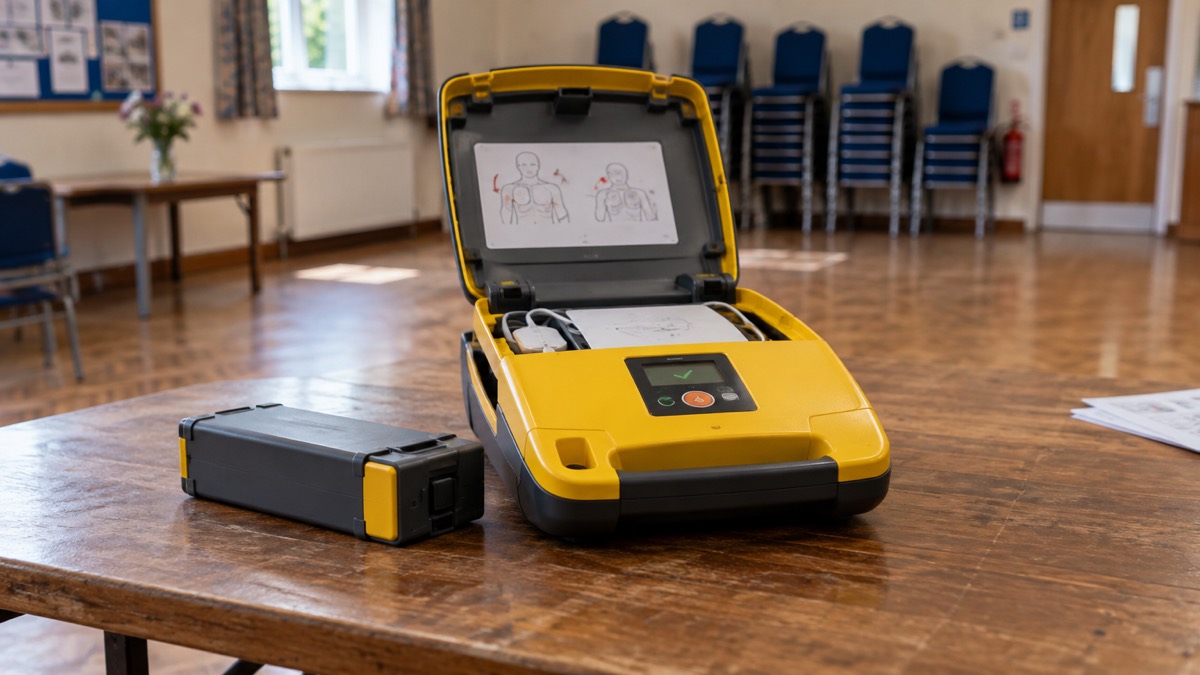
Different models show readiness in different ways. The iPAD SP1 has a visual indicator that displays the battery life, unit status and pad status2. The ZOLL AED 3 reports battery status on its touchscreen in Management Mode or via the INFO button10. The LIFEPAK CR2 checks in automatically once each month12. Philips AEDs perform self-tests on a daily, weekly and monthly basis, checking pads, circuitry and the battery13.
The routine is straightforward:
- Look at the status indicator or screen and confirm the device reports itself ready2.
- Check the expiry dates on the pads and battery, and note them1.
- Replace the battery when necessary and replace used or out-of-date pads, following the manufacturer's instructions4.
- Record the check, as the guidance expects checks to be recorded4.
- Keep a spare battery so the device is always ready for use, reducing the risk of downtime during a cardiac emergency14.
Replacing a battery is usually simple. On the Schiller FRED Easy, you remove the old battery and insert the new one, and the defibrillator then performs a self-test to confirm it is operating correctly14. The FRED Easy battery is a non-rechargeable lithium replacement designed to power the FRED Easy and Easy Life AEDs14.
Where to get help with a defibrillator
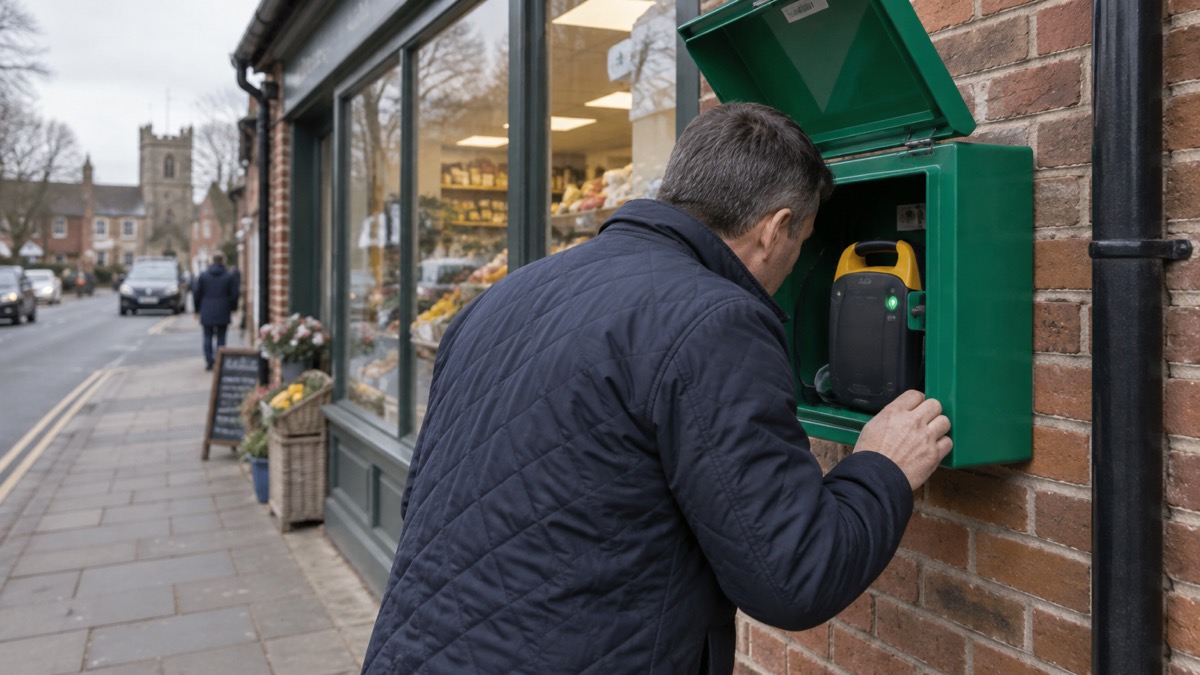
If you are responsible for a defibrillator, you are not on your own. The ambulance service, the Resuscitation Council UK and the device makers all provide guidance, and the national database connects your device to the 999 system.
Register the device. Guardians register the AED on the national database, carry out basic checks, monitor pad and battery expiry dates and funds for replacements, and return the device to a response ready state after use1. Registration details include the pads expiry date3. AED cabinets should be unlocked and readily accessible 24 hours a day, 7 days a week, 365 days per year3.
Make sure the device can be reached. Resuscitation Council UK guidance says AED cabinets should be unlocked and readily accessible 24 hours a day, 7 days a week, 365 days per year15. If your cabinet is locked, know how the code is obtained and make sure others can get it.
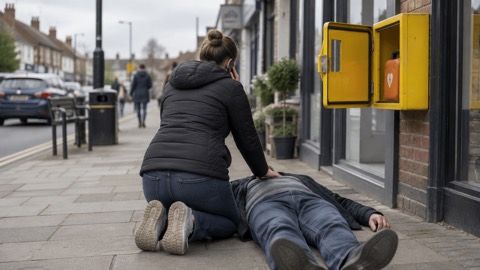
Know how the 999 system helps. If there is a defibrillator nearby, sometimes called an AED, shock-box or heart starter, the call handler will tell you where it is16. The ambulance call handler will tell you where the nearest AED is, and if someone is with you, ask them to fetch it and bring it back17. AEDs are usually available in gyms and public places, and anyone can use them; getting one gives the best chance of keeping someone going until the ambulance arrives18.
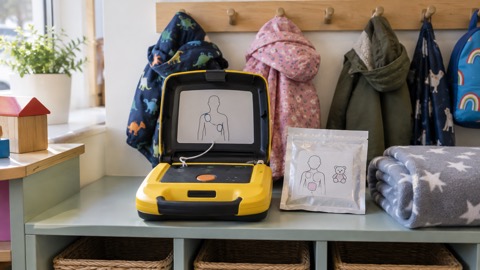
For a child or baby, the same principle applies: ask someone to get an AED if there is one nearby19. The public access defibrillators page explains how to find the nearest one, and the defibrillator guardian checklist sets out the checks in order.
Replacing pads after use and disposing of old parts
After a defibrillator has been used, it is not ready again until the used parts are replaced. The electrode pads and items like scissors and razors are single use and will need replacing before the AED can be response ready again, and some items have a limited shelf life1. Returning the device to a response ready state after use is part of the guardian's role1.
The steps after use are:
- Replace the electrode pads with a new set before the expiry date1.
- Replace any single-use items used from the kit, such as scissors and razors1.
- Check the battery and replace it if the device indicates low power or it is due8.
- Run a self-test, which many devices perform automatically once a new battery is fitted14.
- Record the use and the replacement, and report the event to the maker where they ask for it9.
On the iPAD SP1, a pad indicator illustrates if a pad needs replacing, so there is no worry about placing them incorrectly2. That helps when you are restocking: the device tells you what it needs.
Disposal is not covered in detail by the guidance here, but the general principle is to follow the maker's instructions for the device and its parts. Batteries and pads are consumables, and the maker's manual for your model is the place to check. The defibrillators page covers how the device works and how to use it, and the choosing a defibrillator page helps if you are deciding what to buy for a home, club or village.
Sources (20)
- PAD Information Pack, South Central Ambulance Service, August 2026
- iPAD SP1 Semi-Automatic AED Defibrillator, Steroplast, 29 October 2026
- AED, Northern Ireland Ambulance Service, 29 October 2026
- AED Guide, Resuscitation Council UK, January 2026
- HeartSine Samaritan PAD 350P Semi Automatic Defibrillator, Defib Store, 29 October 2026
- ZOLL AED 3 Fully Automatic Defibrillator, Steroplast, 28 October 2026
- ZOLL AED Plus Semi Automatic Defibrillator, Steroplast, 29 October 2026
- ZOLL Powerheart G3 IntelliSense Lithium 4 Year Battery, Steroplast, 28 October 2026
- HeartSine samaritan PAD 350P Handbook, HeartSine, February 2022
- ZOLL AED 3 Battery Pack, Steroplast, 28 October 2026
- Defibrillators Guide, Steroplast, 28 October 2026
- LIFEPAK CR2 Operating Instructions, Stryker, January 2019
- Philips Defibrillator Maintenance, Defibshop, 29 October 2026
- Schiller AED Accessories Replacement Battery, Steroplast, 28 October 2026
- Adult Basic Life Support Guidelines, Resuscitation Council UK, 27 October 2025
- Cardiac Arrest, Scottish Ambulance Service, 29 October 2026
- How to Do CPR, Resuscitation Council UK, 2026
- How to Use a Defibrillator, St John Ambulance, 28 October 2026
- How to Give a Child CPR, NHS inform, 24 July 2026
- How to Give a Baby CPR, NHS inform, 24 July 2026
 Baby and Child Kit Checklist
 Bleeding Control Kit Checklist
 Car Kit Checklist
 CPR on a Baby
 CPR on a Child
 Chest Compression Rate and Depth
 Rescue Breaths or Hands-Only CPR
 Checking Breathing
 Agonal Breathing and CPR
 Breathing During CPR
 Recovery Position and Spine
 Cardiac Arrest vs Heart Attack
 Heart Attack First Aid
 Defibrillator Pad Placement
 Defibrillator on a Child