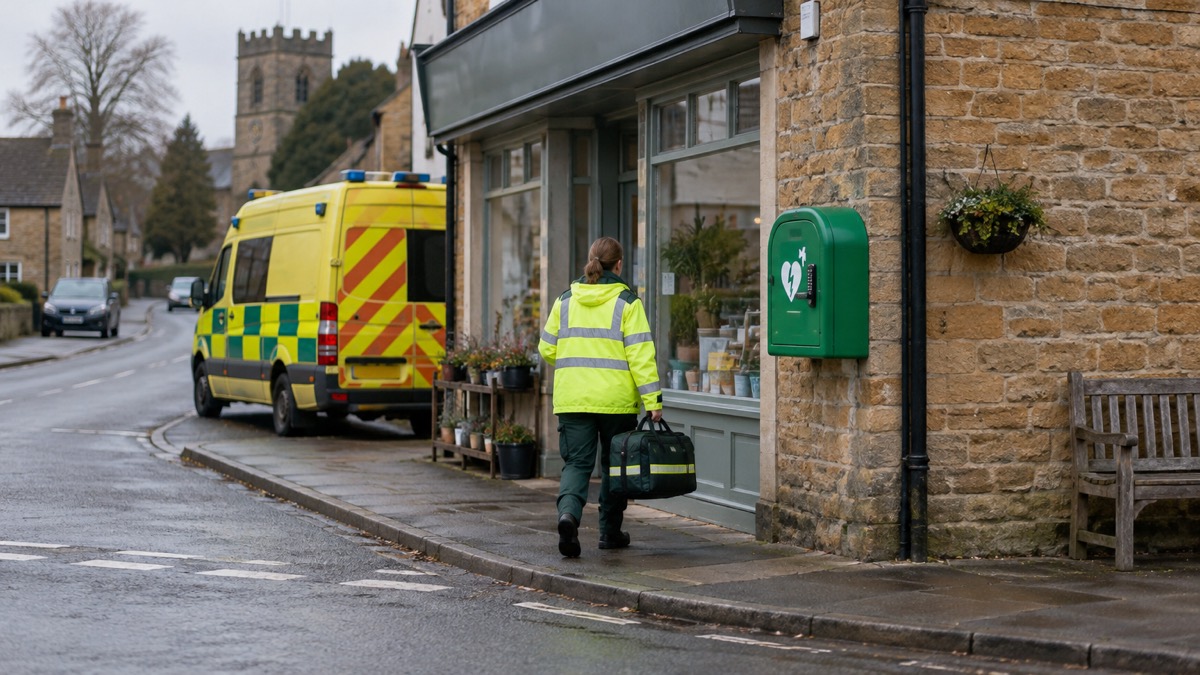
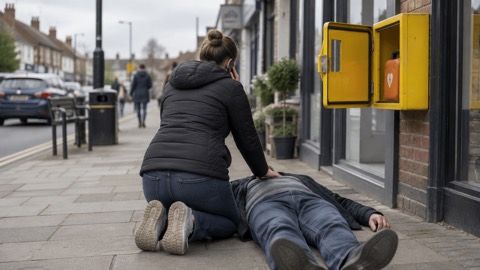
If someone has collapsed and is not breathing normally, ring 999 first. If the nearest defibrillator sits in a locked cabinet, you do not need to find a key or a code in advance: the ambulance service call handler can give you the access code and tell you where the nearest registered defibrillator is1. Staff in emergency operations centres can direct 999 callers to the nearest registered defibrillator and provide access codes for secure cabinets when they are needed1.
The code is only one step in a longer sequence. While you are on the phone, the call handler will also talk you through CPR and tell you where the defibrillator is2. The defibrillator itself then gives spoken instructions once you switch it on, so you do not need training to use it4. The most important thing is to start CPR and get the machine to the person as quickly as you can.
This page explains what happens on the 999 call, how to open a locked cabinet and take the defibrillator, what to do if the lock is stiff or the code will not work, and how cabinet owners can keep the lock simple and maintained so it does not slow anyone down.
Ring 999 and the ambulance service gives you the code
The single most useful thing to know about a locked defibrillator cabinet is that you do not need to solve the lock yourself. In an emergency, the cabinet is accessed via a code given to the person who rings 9994. The ambulance service holds the code because the cabinet owner has recorded it on The Circuit, the national defibrillator database, when the defibrillator was registered5.
The Circuit is the database the ambulance services use. When someone calls 999 for a cardiac arrest, the ambulance service can access The Circuit to find the closest defibrillator registered with them, which can be used before the ambulance arrives6. That is why registering a defibrillator, and recording its access code, matters: an unregistered cabinet is invisible to the call handler, and a registered one with a missing or wrong code can still cause delay5.
The arrangements are the same across the UK. Northern Ireland Ambulance Service says staff in emergency operations centres can direct 999 callers to the nearest registered defibrillator and provide access codes for secure cabinets if required1. The Resuscitation Council UK, which sets resuscitation guidance for the whole of the UK, describes the same process in its public access defibrillator guidance2. In Wales, the Welsh Ambulance Service advises that in an emergency you should call 999 and they will always direct you to your nearest available defibrillator4.
What happens on the 999 call before you get the code
The code is not the first thing that happens on the call. The call handler needs to know where you are and what has happened, and will start helping you with CPR while the location of the defibrillator is sorted out. The Scottish Ambulance Service says you will be asked for the phone number you are calling from, the address or location including the postcode if possible, and whether the patient is conscious and breathing3.
Have those details ready if you can, but do not delay the call to gather them. The call handler is trained to guide you. The Resuscitation Council UK says trained staff answering emergency 999 calls instruct people at the scene of a cardiac arrest to give CPR and use a defibrillator if available, and will tell the caller the location of the nearest defibrillator registered on The Circuit2. The British Heart Foundation gives the same instruction: shout for someone nearby to call 999 and get a defibrillator, and the 999 call handler will tell you where to find the nearest one7.
A few practical points help the call go smoothly:
- Send someone else if you can. If there is another person with you, one of you can stay with the patient doing CPR while the other rings 999 and fetches the defibrillator7.
- Give the location clearly. The call handler needs the address or location, including the postcode if possible, to match you to the nearest registered defibrillator3.
- Stay on the line. The call handler will keep guiding you, and can give the cabinet code once the defibrillator is identified1.
- Lock away family pets before help arrives, so the crew can get in without obstruction8.
Opening a locked cabinet and taking the defibrillator
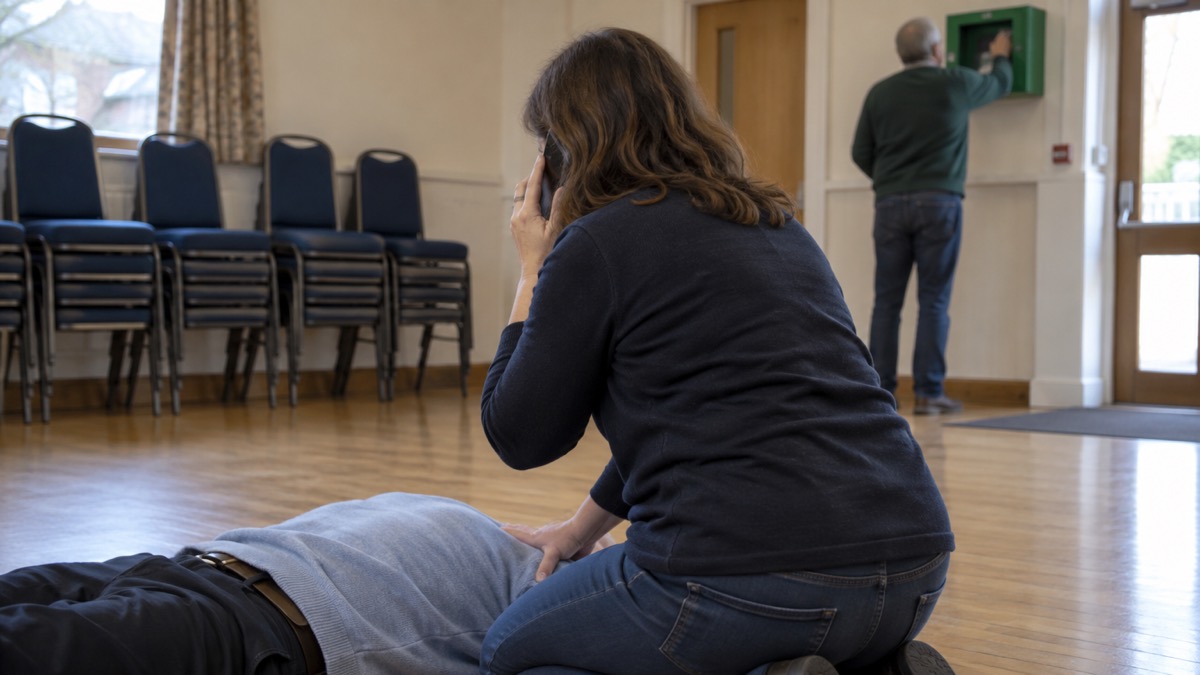
Once the call handler gives you the code, opening the cabinet is usually straightforward. The cabinet is a weatherproof box holding the defibrillator and its pads; the lock is there to keep the equipment secure, not to make access difficult. The maker of one locked cabinet, the DefibSafe 2, describes the process from the caller's side: provide the operator with the location shown on the defibrillator cabinet, because there is a unique code for each cabinet, then stay on the line for further guidance while the defibrillator provides its own instructions9.
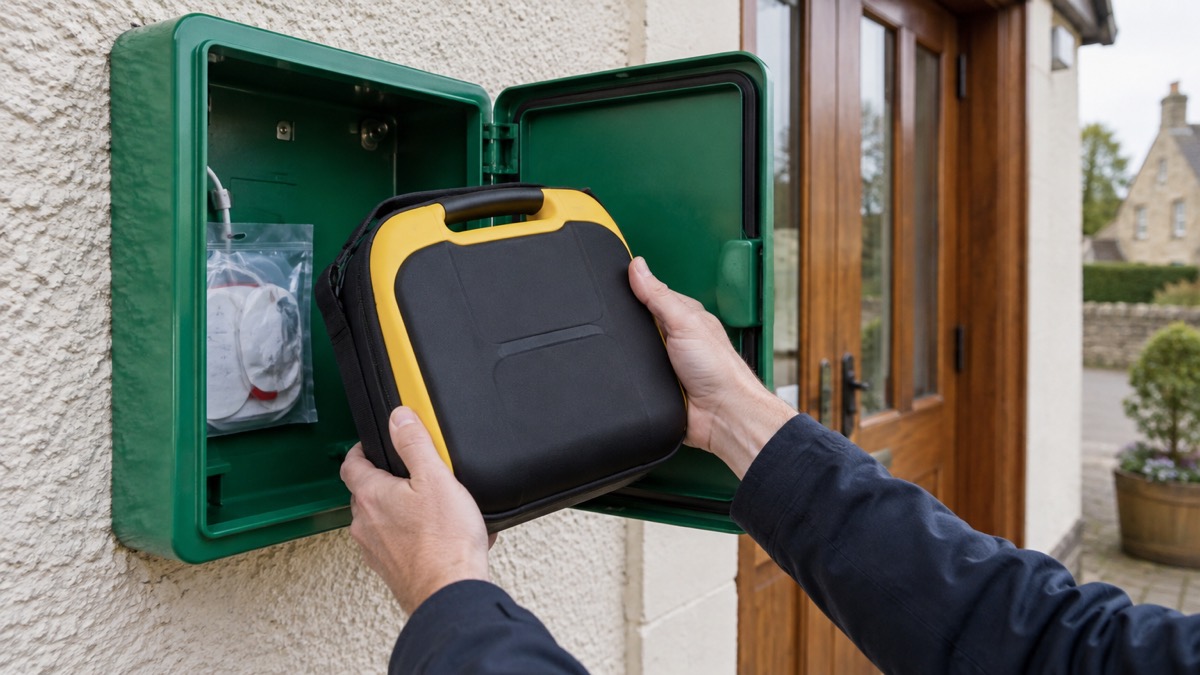
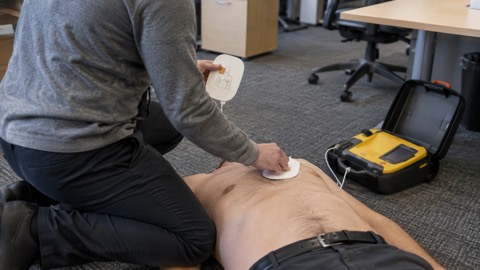
When the cabinet is open, take the defibrillator out and switch it on. Public access defibrillators are designed to be used by untrained bystanders and give spoken instructions once switched on4. The machine will tell you where to place the pads and when to stand clear. The 999 call handler will stay with you and talk you through CPR at the same time2.
A few things are worth knowing before you need them:
- The cabinet should hold only the defibrillator and its equipment. The Resuscitation Council UK advises that only the defibrillator and associated equipment should be stored within the cabinet, because additional items can distract from CPR or defibrillation5.
- The defibrillator may be semi-automatic or fully automatic. Either way, follow its spoken prompts; the difference is whether you press a button to deliver the shock or the machine does it4.
- Do not open the defibrillator lid unless necessary. One maker, Stryker, states in the LIFEPAK CR2 operating instructions that each time the lid is opened the defibrillator turns on and battery power is reduced, so after an initial inspection the lid should be left closed until it is needed10.
When the lock is stiff or will not open
A stiff lock is a known problem, and it is one of the reasons the Resuscitation Council UK recommends against locking cabinets at all. Its guidance states plainly that defibrillator cabinets should not be locked, because locked cabinets may create significant delays5. The Council's 2024 consensus statement adds that lockable cabinets can delay accessing a defibrillator, and that every second counts when it comes to cardiac arrest, so public access defibrillators should be placed in unlocked cabinets that allow immediate access in an emergency11.
The evidence behind that advice is worth knowing if you are struggling with a lock. Data from The Circuit suggests that many occasions where cabinets are forced open are neither vandalism nor theft, but people responding to genuine emergencies struggling to operate the lock or obtain the unlocking code5. Reports from ambulance services and other sources provide no evidence that public-access defibrillators in locked cabinets are less likely to be stolen or vandalised12. In other words, the lock is not protecting the defibrillator as much as it is slowing down the person trying to save a life.
If the code does not work or the lock will not turn:
- Tell the call handler immediately. They may be able to check the record or direct you to another defibrillator1.
- If the cabinet is locked, the lock should be simple to operate and well maintained, with the unlocking code accurately recorded on The Circuit so the emergency call handler can provide it to bystanders5.
- If you must force the cabinet in a genuine emergency, do it. The Resuscitation Council UK acknowledges that cabinets are forced open in real emergencies, and that this is usually people trying to help rather than vandals5.
- Locked cabinets need extra steps, like getting a code, which can slow things down13.
For cabinet owners: keeping the lock simple and maintained
If you look after a defibrillator, the strongest advice from the Resuscitation Council UK is not to lock the cabinet in the first place. Its guidance recommends that defibrillators are kept in unlocked cabinets to enable access 24 hours a day, 365 days a year5. The Scottish Ambulance Service recommends an unlocked outdoor cabinet so that the defibrillator is easy to get in an emergency15. The Resuscitation Council UK advises that defibrillators should be kept in unlocked cabinets to reduce delaying treatment, and that if a cabinet is locked it should use a coded lock rather than a key, with the code provided to the national database16.
Where a locked cabinet is used, the Council sets out what the owner must do to keep it usable:
- Keep the lock simple to operate and well maintained, using a suitable lubricant recommended by the cabinet supplier5.
- Make sure the keypad is visible and well lit at night, so it can be operated in the dark5.
- Record the unlocking code accurately on The Circuit, so the emergency call handler can give it to a bystander5.
- Check the cabinet is easy to open, or if locked, that the lock is working properly and the access code is in place, as part of regular guardian checks17.
If you want to convert a locked cabinet to an unlocked one, the Resuscitation Council UK says the guardian should follow the manufacturer's guidance for disabling or removing the lock14. Its guidance also notes that it has produced a template letter for guardians of defibrillators, to request that their insurance company provides cover for unlocked, "Rescue Ready" cabinets containing AEDs18.
The Circuit provides stickers with spaces to enter a contact number, location and, if needed, the cabinet unlocking code, so the information travels with the defibrillator5. If you do not have a Circuit sticker, tie on a label or use an indelible marker to write the same information directly onto the case5. The South Western Ambulance Service explains that one sticker is placed on the cabinet to show the defibrillator is registered with The Circuit, and the second sticker, placed on the defibrillator itself, has room to write the address of the cabinet, a What3Words location and, if the cabinet is lockable, a code for opening it13.
Unlocked cabinets, sharing the code and finding the nearest defibrillator
Most of the questions people ask about cabinet codes come down to one point: the code is a fallback, not the normal way in. The Resuscitation Council UK recommends that defibrillators are kept in unlocked cabinets so they can be reached immediately5. The NHS in England says public access defibrillators should be kept in unlocked cabinets so people can get to them quickly in an emergency19. The Scottish Ambulance Service recommends an unlocked outdoor cabinet15. Where conditions allow, defibrillators should be placed in openly accessible, unlocked cabinets that allow immediate access in an emergency12.
That does not mean codes are never needed. Some cabinets are locked, and some are locked because the owner has chosen that. If you are a cabinet owner, the code should be recorded on The Circuit rather than shared informally, so the call handler can supply it when it is needed5. If you are a member of the public, you do not need to memorise a code: ring 999 and the call handler will give it to you1.
To find your nearest defibrillator before you need it, type a UK postcode into the British Heart Foundation's Defib Finder7. You can also check The Circuit to confirm defibrillator availability, including accessible times, before relying on a particular cabinet2. Doing this on an ordinary day means you know where the nearest cabinet is, whether it is locked, and how to get to it.
| Situation | What to do | Who advises |
|---|---|---|
| Cabinet is unlocked | Open it, take the defibrillator, switch it on and follow the spoken prompts | Resuscitation Council UK5 |
| Cabinet is locked | Ring 999, give your location, and the call handler can give you the code | Northern Ireland Ambulance Service1 |
| Code does not work | Tell the call handler and ask for the next option | Resuscitation Council UK5 |
| You want to find the nearest one | Type a UK postcode into the Defib Finder, or check The Circuit | British Heart Foundation2 |
Using a defibrillator when you have never been trained
You do not need training to use a public access defibrillator. The machines are designed for bystanders and give spoken instructions once switched on7. The Welsh Ambulance Service advises that in an emergency you should call 999 and they will always direct you to your nearest available defibrillator4.
The machine analyses the heart rhythm and will only advise a shock when one is appropriate, so you cannot shock someone who does not need it. If you are unsure, switch it on and follow the prompts. The British Heart Foundation's guidance is to shout for someone nearby to call 999 and get a defibrillator, and the call handler will tell you where to find the nearest one7. If you want to build confidence before an emergency, the British Heart Foundation offers free online CPR training through RevivR20.
Returning the defibrillator afterwards
After the ambulance crew arrives, tell them the defibrillator has been used so the pads and battery can be replaced. If the defibrillator is registered on The Circuit, the guardian receives an email immediately when it is deployed by the ambulance service, which helps get it back into service5. The Circuit provides stickers with spaces for a contact number, location and cabinet unlocking code to assist prompt return5.
If you took the defibrillator from a cabinet, put it back if you can, or hand it to the crew. Do not put a used defibrillator back without reporting it, because used pads and a partly drained battery may not be ready for the next person. The guardian checks, set out in the Resuscitation Council UK's guardian checklist, include confirming the cabinet is unlocked and easy to open, or if locked, that the lock is working properly and the access code is in place17.
For more on what a defibrillator does and how to use one, see Defibrillators (AEDs): What They Do and How to Use One. For finding the nearest one, see Public Access Defibrillators: Finding the Nearest One. If you look after a cabinet, the Defibrillator Guardian Checklist sets out the regular checks.
Sources (20)
- Defibrillators (AED), Northern Ireland Ambulance Service, 2026-10-29
- AED Guide, Resuscitation Council UK, 2026
- Phoning 999, Scottish Ambulance Service, 2026-10-29
- Learn to Save a Life, Welsh Ambulance Service NHS Trust, 2026-10-29
- Public access defibrillators: A guide for communities, Resuscitation Council UK, 2025-10
- The Circuit: the new defibrillator database, North West Ambulance Service, 2025-07-10
- Understanding defibrillators: what they are and how to use them, British Heart Foundation, 2026-10-29
- What happens when you call 999, London Ambulance Service, 2026-09-30
- DefibSafe 2 External Cabinet with Lock, Steroplast, 2026-10-28
- LIFEPAK CR2 Operating Instructions, Stryker, 2019-01
- A consensus statement on AED cabinets, Resuscitation Council UK, 2024-08
- AED Guide 2019, Resuscitation Council UK, 2019-11
- Defibrillators, South Western Ambulance Service, 2026-10-29
- Consensus statement on AED cabinets, Resuscitation Council UK, 2015-11-27
- Purchasing a public access defibrillator, Scottish Ambulance Service, 2026-10-29
- PAD Information Pack, South Central Ambulance Service, 2026-08
- Check your defib: Guardian checklist, Resuscitation Council UK, 2026
- Defibrillation, Resuscitation Council UK, 2026
- Improving outcomes in cardiac arrest: tools and resources, NHS England, 2026-10-29
- Boost CPR confidence with RevivR, British Heart Foundation, 2026-10-29
 Baby and Child Kit Checklist
 Bleeding Control Kit Checklist
 Car Kit Checklist
 CPR on a Baby
 CPR on a Child
 Chest Compression Rate and Depth
 Rescue Breaths or Hands-Only CPR
 Checking Breathing
 Agonal Breathing and CPR
 Breathing During CPR
 Recovery Position and Spine
 Cardiac Arrest vs Heart Attack
 Heart Attack First Aid
 Defibrillator Pad Placement
 Defibrillator on a Child