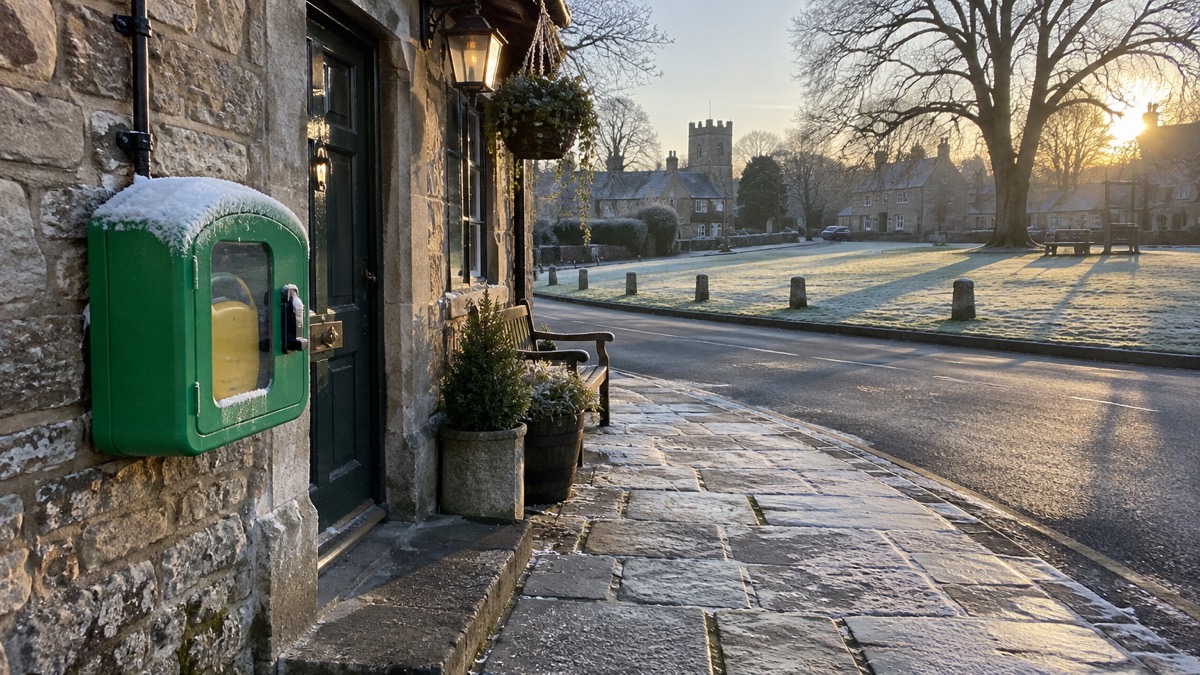
If you are putting a defibrillator outside a village hall, a pub, a sports club or a phone box, the cabinet is not just a box. It has to keep the device warm enough to work in a cold snap, and it has to let a stranger reach it in seconds. The Scottish Ambulance Service recommends an unlocked outdoor cabinet so that your defibrillator is easy to get in an emergency1, and the South Central Ambulance Service says external locations need a cabinet with an integrated heating unit to prevent damage to the device and battery from cold or heat exposure2.
If the defibrillator is going inside a building that is open and warm, the job is simpler: an indoor cabinet protects it from knocks and dust, and the building's own heating does the rest. The choice comes down to where people can actually reach the device at any hour, and whether that place is heated.
Whichever you choose, register it. Ambulance services ask that every public access defibrillator goes on the national database called The Circuit at www.thecircuit.uk, and the South Western Ambulance Service warns that if your defibrillator is not registered, they will not know it exists3. If you are still deciding what to buy, start with Choosing a Defibrillator for a Home, Club or Village and Defibrillators (AEDs): What They Do and How to Use One.
Outdoor cabinets need a heater; indoor cabinets usually do not
The dividing line is temperature. The Scottish Ambulance Service says outdoor AED cabinets should be temperature-controlled to keep the device within its recommended range, preserving battery life and optimal function1. The South Central Ambulance Service puts it more bluntly: external locations need a cabinet with an integrated heating unit to prevent damage to the device and battery from cold or heat exposure2. A defibrillator left in an unheated box through a frost is a defibrillator you cannot rely on when someone collapses.
An indoor cabinet has no such job to do, because the building is already heated. Its work is protection: keeping the device clean, dry, visible and undamaged, and holding it where staff and visitors can find it. The London Ambulance Service notes that defibrillators are located in large shops, GP surgeries, dentists, libraries and many other public places6, and those are exactly the settings where an indoor cabinet makes sense.
| What the cabinet must do | Outdoor cabinet | Indoor cabinet |
|---|---|---|
| Keep the device within its recommended temperature range | Yes, with an integrated heating unit2 | The building's heating does this |
| Protect from rain, sun and frost | Yes, a sealed outdoor enclosure | Not needed |
| Let the public reach it at any hour | Yes, if sited and unlocked for 24/7 access7 | Only while the building is open |
| Need a mains supply | Yes, for the heater and light | No |
| Suit a village hall, pub or phone box | Yes | No, unless the building is staffed around the clock |
The South Central Ambulance Service recommends placing AEDs on the outside of buildings in a protective cabinet, so they are accessible by the public on a 24/7 basis2. That is the case for going outdoors: the device is reachable when the hall is locked, the pub is shut and the clubhouse is empty. The trade-off is that you take on the heater, the power supply and the weather.
Thermostatic heating: how an outdoor cabinet keeps the defibrillator working in the cold
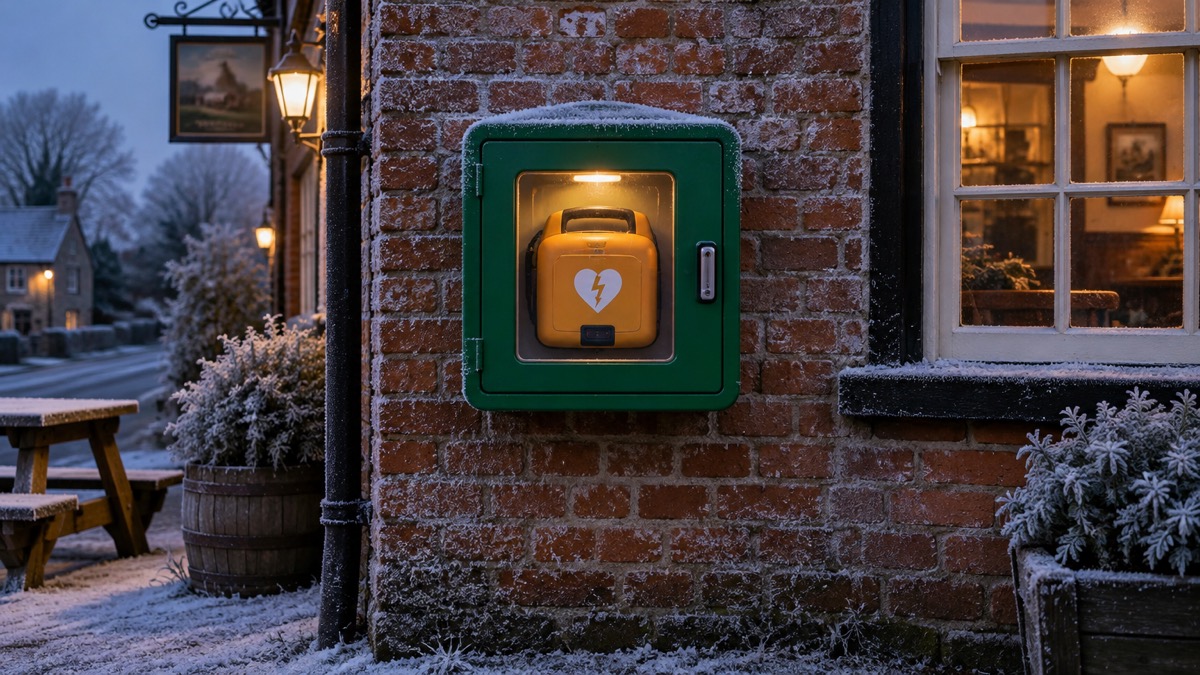
A heated cabinet does not run its heater flat out. The Defib Store 4000 outdoor cabinet uses a thermostatically controlled heater5, which switches on as the temperature inside falls and off again as it recovers. That is the same principle local councils apply to buildings in a cold snap: thermostatically-controlled heating systems should be left on permanently and set at a minimum temperature8. The cabinet is doing on a small scale what a frost-protected building does on a large one.
The enclosure helps. The Defib Store 4000 has a double skin clamshell design for additional insulation in colder climates5, so the heater has less work to do and the device is buffered from sudden drops. The maker also states the cabinet is UV stabilised against the effect of direct sun and will not discolour or degrade over time5, which matters for a box that may sit on a south-facing wall all summer.
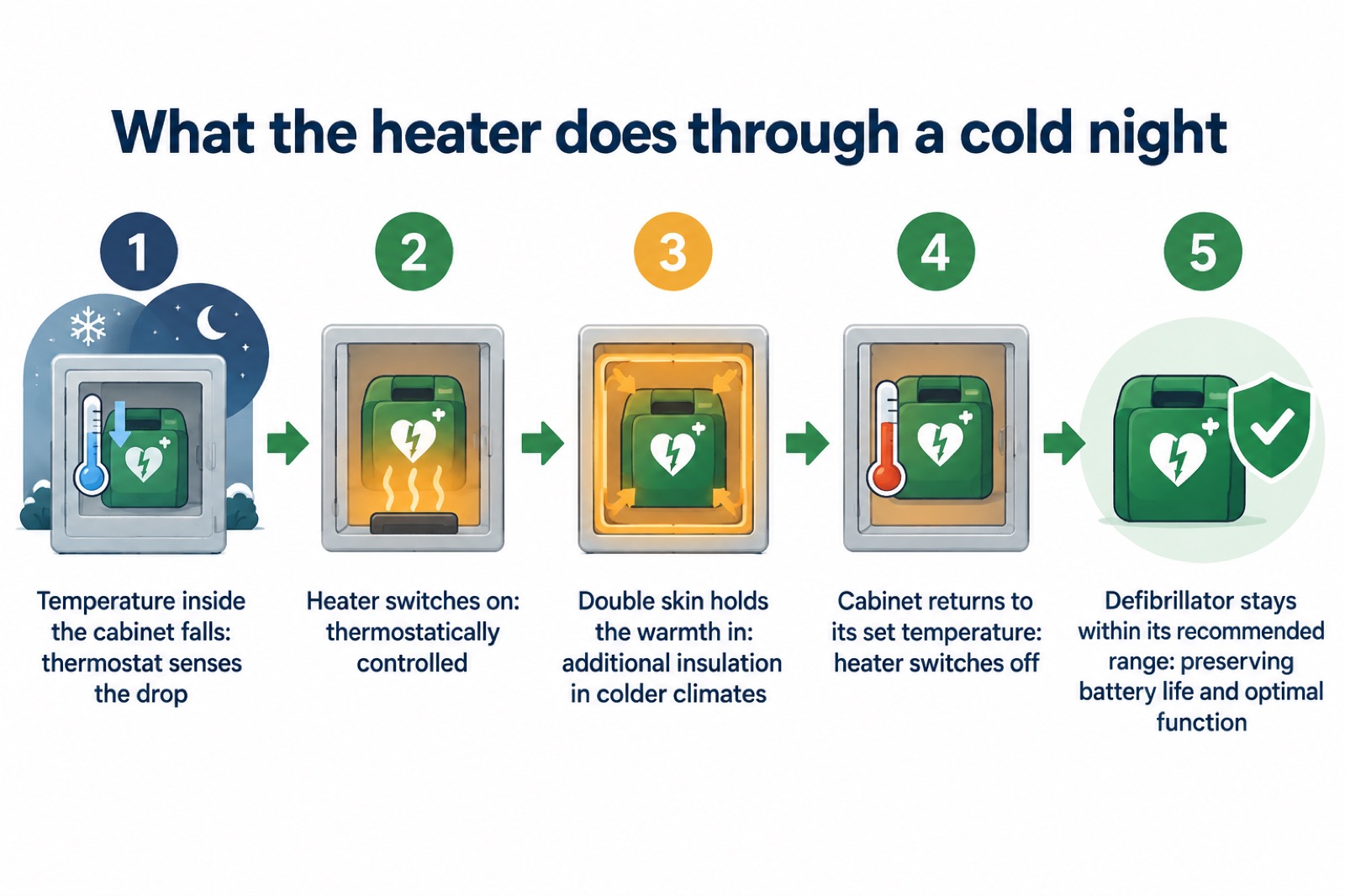
The point of all this is the battery. The Scottish Ambulance Service links temperature control directly to preserving battery life and optimal function1. A defibrillator that has spent a winter at sub-zero temperatures may still switch on, but you have no way of knowing how much capacity it has lost until it is needed. If you want to understand how long the battery and pads should last in normal conditions, see How Long Do Defibrillator Batteries and Pads Last?.
Indoor or outdoor cabinet: how each one suits your building
Choose by asking one question: can someone reach this defibrillator at three in the morning? If the answer is no, you need an outdoor cabinet and the power supply that goes with it. If the answer is yes, because the building is staffed or open around the clock, an indoor cabinet is simpler and cheaper to run.
The South Central Ambulance Service's siting advice is a good test of any location: it should have a large footfall, such as a public telephone box, outside a pub, village hall or community centre; have 24/7 access to the public; use an unlocked cabinet; and have clear signage and lighting9. An indoor cabinet in a building that closes at five fails the 24/7 test.
- Village hall or community centre: outdoor cabinet on an outside wall, heated, unlocked, with a light10.
- Pub or clubhouse: outdoor cabinet by the entrance, so it is reachable when the premises are shut9.
- Workplace open round the clock: indoor cabinet in a warm, visible spot is enough.
- Shop, GP surgery, dentist or library: defibrillators are located in large shops, GP surgeries, dentists, libraries and many other public places6.
- A home defibrillator: an indoor cabinet keeps it clean and findable; a heated outdoor cabinet is for public access, not a kitchen wall.
The Defib Store 4000's internal hook accommodates any defibrillator without carry case5, so the cabinet is not tied to one maker's device. That is worth checking before you buy, because a cabinet that only fits one model limits you when the defibrillator is replaced.
Unlocked or locked: getting the defibrillator out fast in an emergency
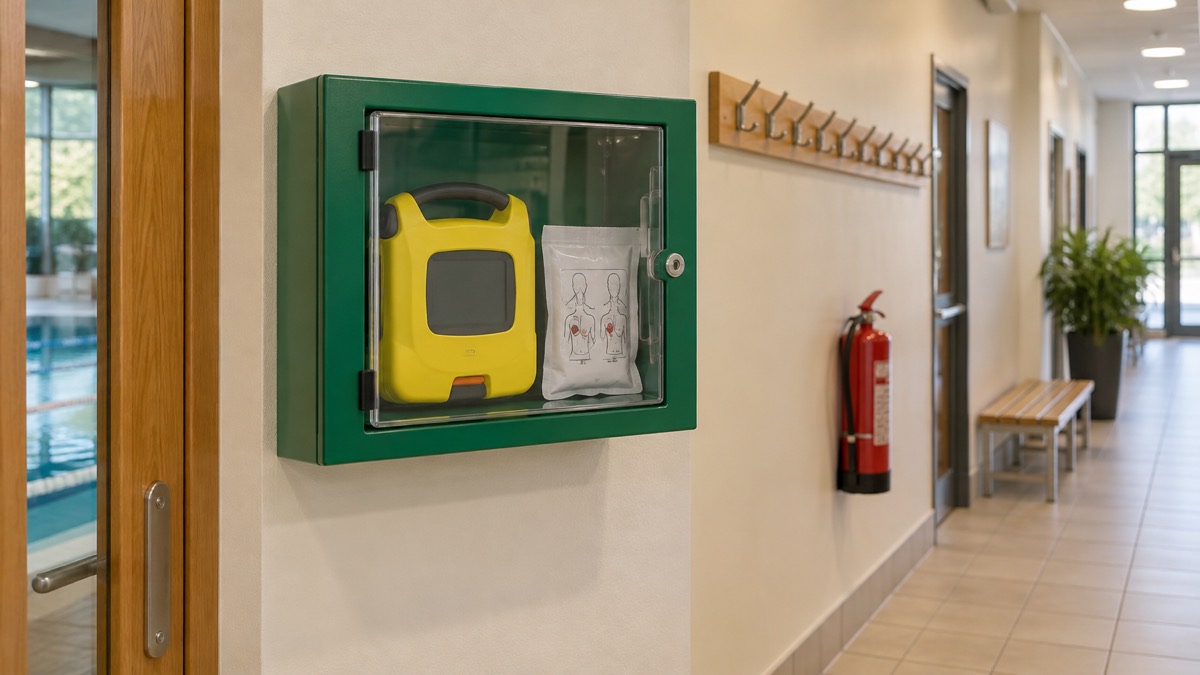
The ambulance services are consistent on this. An unlocked outdoor cabinet is recommended so that the defibrillator is easy to get in an emergency1. Public access defibrillators should be kept in unlocked cabinets so people can get to them quickly in an emergency11. The South Western Ambulance Service goes further and says lockable cabinets are not recommended3.
The reason is time. A cardiac arrest needs a defibrillator within minutes, and every step between the rescuer and the device costs some of them. A locked cabinet adds a code, a keypad and a phone call. The Defib Store 4000 uses a robust, unlocked, turn-handle latch5, which is the arrangement the guidance points to.
Where a locked cabinet is unavoidable, the Scottish Ambulance Service says you can add the access code when you register your defibrillator on The Circuit1. The North West Ambulance Service describes how it works in practice: publicly accessible defibrillators are placed in a cabinet that can be accessed 24 hours a day by anyone who needs to use one, and in an emergency the cabinet is accessed via a code given to the person who rings 99912. If you are the person standing in front of a locked cabinet, see How to Get the Code for a Locked Defibrillator Cabinet.
Green cabinets and signage: helping people find the defibrillator
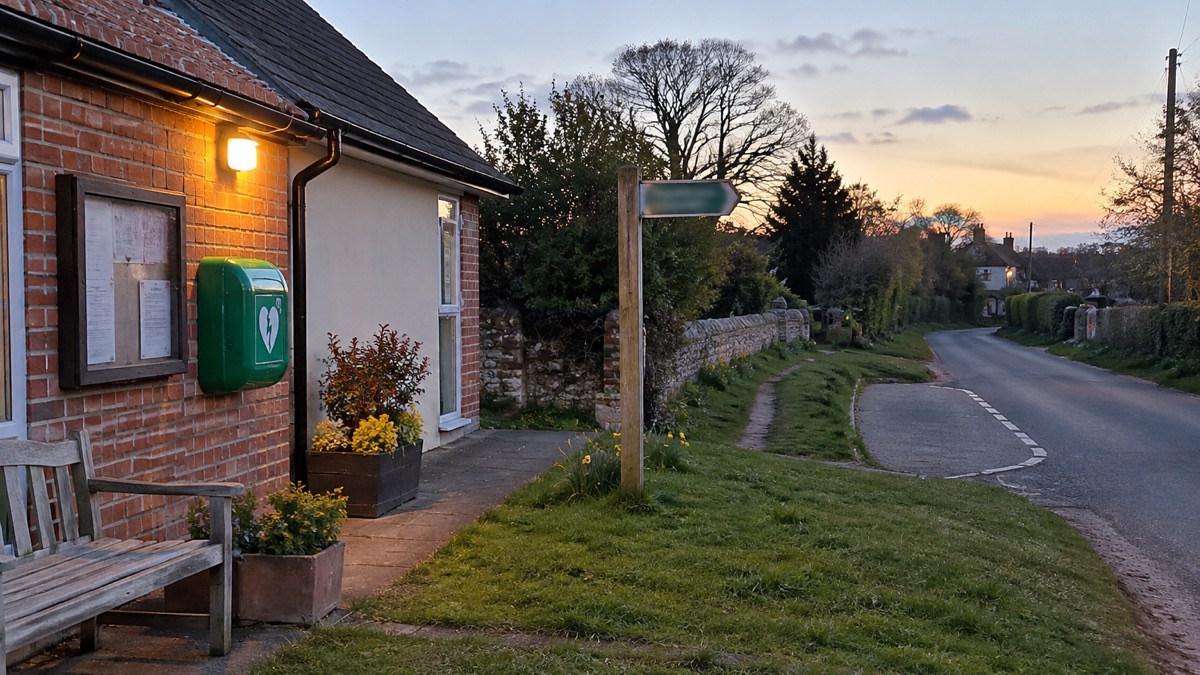
A cabinet nobody notices is a cabinet nobody uses. The Northern Ireland Ambulance Service notes that cabinets often use bright colours like yellow or green and are placed in public areas to ensure quick access during an emergency13. The Defib Store 4000 is supplied in green5.
Signage and lighting are part of the siting advice, not an afterthought: the South Central Ambulance Service's list includes clear signage and lighting alongside footfall and 24/7 access9. A cabinet on a dark wall behind a hedge fails on both counts.
The South Western Ambulance Service supplies labelling stickers with a specific job. One sticker is placed on the cabinet to show that the defibrillator is registered with The Circuit; the second sticker, placed on the defibrillator itself, has room to write the address of the cabinet, a What3Words location and, if the cabinet is lockable, a code for opening it3. That second sticker is what turns a passer-by into a rescuer who can direct someone else to the device.
- Colour: bright green or yellow so it stands out13.
- Signage: clear, on the cabinet and visible from the approach9.
- Lighting: the cabinet and its approach lit at night9.
- Registration sticker: on the cabinet, showing it is on The Circuit3.
- Location sticker: on the defibrillator, with the cabinet address, What3Words and any lock code3.
The Defib Store 4000 also has an internal LED motion sensing light that can be detached and used as a torch during a rescue5, which helps if the cabinet is opened at night. For the wider question of finding a device in a hurry, see Public Access Defibrillators: Finding the Nearest One.
Where an outdoor cabinet should and should not go
Put it where people are, at the height of the footfall, and where anyone can get to it at any hour. The South Central Ambulance Service's recommended locations are a public telephone box, outside a pub, a village hall or a community centre, with 24/7 access, an unlocked cabinet, and clear signage and lighting9. The South Central Ambulance Service also recommends placing AEDs on the outside of buildings in a protective cabinet, so they are accessible by the public on a 24/7 basis2.
The cabinet itself should be built for the spot. The Defib Store 4000 has internal hinges that do not allow for external tampering or hinge removal5, and the maker states it is suitable for coastal locations5, which matters for a village hall on the coast where salt and wind attack fixings. The maker also states it is Land Rover drive over tested5, a robustness claim from the manufacturer rather than an independent test.
Where not to put it:
- Out of sight down a side alley, where nobody passing will see it and the lighting is poor9.
- Behind a locked gate or inside a foyer that closes, which fails the 24/7 access test9.
- Anywhere the heater cannot be powered, because an unheated outdoor cabinet leaves the device exposed to cold and heat2.
- Where a heater would block an escape route. Fire services say heaters must not be placed where they will block an escape route14, and the same care applies to anything fixed in a corridor or doorway.
- Anywhere a portable heater is being used to warm the space. The Armagh, Banbridge and Craigavon guidance says electric space heaters are for enclosed, supervised spaces and not for outdoor or unsupervised use like garages or sheds unless the heater is rated for that environment15. A cabinet heater is built for the cabinet; a domestic space heater is not a substitute.
Checking the cabinet and heater through the winter
The heater is the part most likely to fail, and winter is when you find out. The Defib Store 4000 carries a 10 year warranty, but only a 5 year warranty on the heater and keypad lock5, which tells you the maker expects the heater to be the first component to need attention. Build a check into the year rather than waiting for a cold snap.
The same logic applies to any heating system left running through winter: the Llangattock Community Council's adverse weather guidance says thermostatically-controlled heating systems should be left on permanently and set at a minimum temperature8. The Centre for Sustainable Energy makes a related point about frost protection on storage heaters: over the summer you can select Frost Protect rather than turning off the heater, which saves settings and avoids energy use in warmer months16. For a cabinet, the principle is the same: keep the frost protection working rather than switching the heater off and hoping.
- Before winter: check the cabinet is clean, dry and undamaged, the door latches, and the light works.
- In freezing weather: open the cabinet and check it does not feel cold inside; if it does, treat the heater as faulty.
- Check the defibrillator itself: the maker fits a large viewing window to check on the status of the AED defibrillator5, so use it.
- After a storm: check the cabinet is still fixed to the wall and the supply is intact.
- Keep a record: note the date, what you checked and anything that needs fixing.
The Met Office's winter checklist includes plumbing checks17, and the same instinct applies here: a small leak or a cracked seal around a cabinet fixing is easier to deal with in autumn than in a January freeze. If the cabinet is on a wall that takes the weather, look at it after every named storm.
For the routine that keeps a public defibrillator ready, see the Defibrillator Guardian Checklist. If you are responsible for a device and want to know what to do when someone uses it, the South Western Ambulance Service asks that if you are on an incident where someone has collected a public access defibrillator, you help them get it live again by completing their online form, and continue to submit the online report until contacted by a South Western Ambulance Service representative3.
Sources (17)
- Purchasing a public access defibrillator, Scottish Ambulance Service, 2026-10-29
- PAD Information Pack, South Central Ambulance Service, 2026-08
- Defibrillators, South Western Ambulance Service, 2026-10-29
- Introduction to electricity, Health and Safety Executive, 2026
- Defib Store 4000 Outdoor Defibrillator Cabinet, unlocked, heater and LED light, green, Defib Store, 2026-10-29
- Emergency heart care, London Ambulance Service, 2026-09-30
- Improving outcomes in cardiac arrest: tools and resources, NHS England, 2026-10-29
- Adverse weather events, Llangattock Community Council, 2026-10-25
- Public access defibrillators, South Central Ambulance Service, 2026-10-29
- Buy ZOLL AED Plus Semi-Automatic Defibrillator & 4000 Unlocked Outdoor Cabinet | Defib Store, Defib Store
- A consensus statement on AED cabinets Resuscitation Council UK July 2024 V3.7.pdf, Resuscitation Council UK
- Learn to save a life, North West Ambulance Service, 2024-06-18
- AED, Northern Ireland Ambulance Service, 2026-10-29
- Heating your home, North Yorkshire Fire and Rescue Service, 2026-03-09
- Safe use of heaters and generators, Armagh City, Banbridge and Craigavon Borough Council, 2026-10-29
- Dimplex Quantum night storage heaters, Centre for Sustainable Energy, 2026-06
- WeatherReady winter checklist, Met Office, 2026
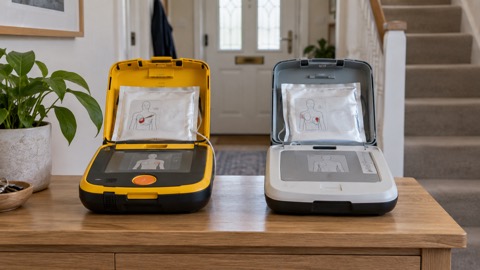 Semi vs Fully Automatic AED
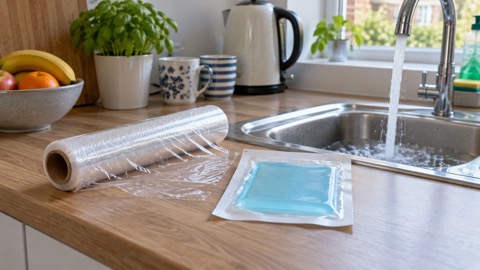 Burn Gel vs Cling Film
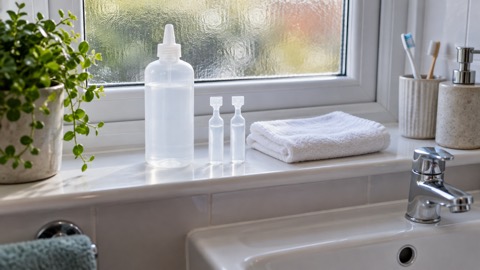 Saline Pods or Eyewash Bottle
 Instant or Reusable Ice Packs
 Ready-Made or Homemade Kit