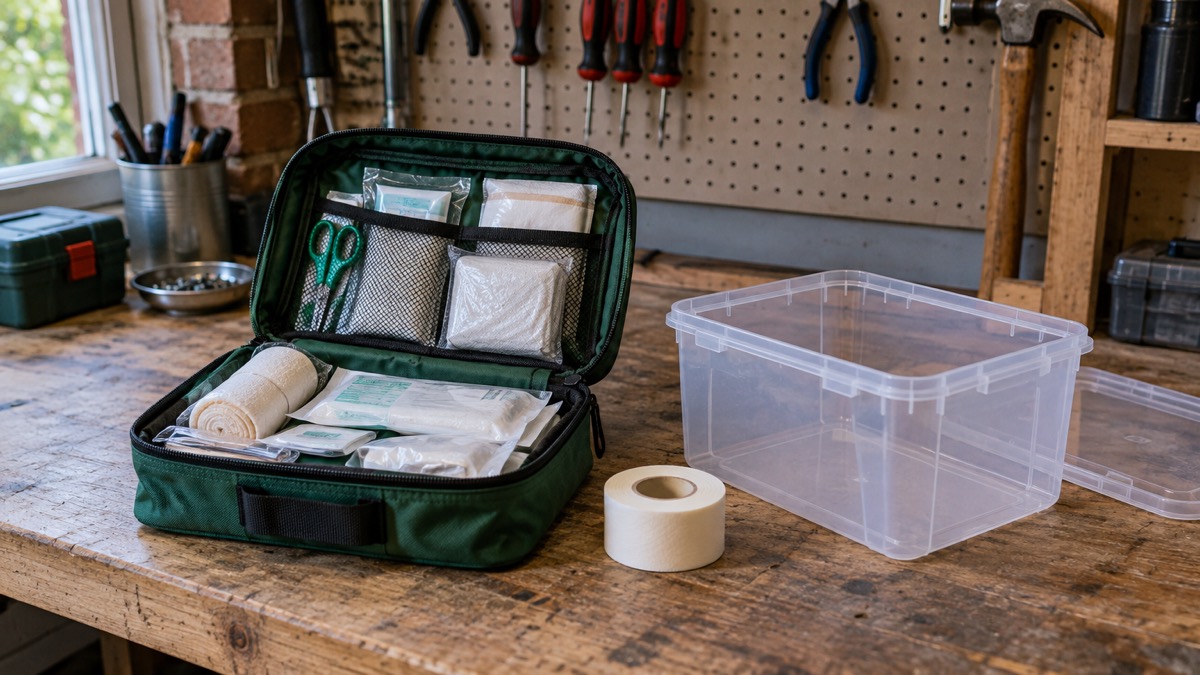
You can buy a ready-made first aid kit or put one together yourself, and both are fine for a home or car. The NHS says you can keep a home or car first aid kit handy by buying a ready-made one or putting together your own in a clean, waterproof box1. Northern Ireland's government says the same: you can buy a pre-made kit or put one together for yourself2. The choice is about fit, not about doing it properly.
What matters more than which route you take is what goes in it and where it lives. A basic kit should cover plasters in a range of sizes, sterile gauze dressings, bandages, gloves, tweezers, scissors, cleansing wipes, tape, a thermometer, antiseptic cream and an eye wash3. Keep it in a safe place at home where you can reach it easily, and keep the kit itself in a waterproof bag4.
If you are starting from nothing, a ready-made kit gets you a working set in one go. If you already own some of the pieces, or you want a kit shaped around your household, building your own in a clean, waterproof box is straightforward and lets you add what you actually use.
Ready-made or your own: both work for a home or car kit
The official position is unusually relaxed. The NHS frames it as a simple either-or: buy a ready-made kit or put one together yourself in a clean, waterproof box1. Northern Ireland's household emergency kit guidance repeats the point2, and the NHS medicine cabinet guidance for parents says a basic first aid kit can be bought over the counter or created yourself3.
That leaves the decision to your circumstances rather than to a rule. A ready-made kit suits a household that has nothing yet and wants a complete set without thinking through every item. Building your own suits a household that already has some supplies, wants a kit sized to the people in it, or wants to top up a bought kit with items it lacks.
Northern Ireland's guidance suggests a structure that works for either route: you may choose to have two kits, a large one that stays at home and a smaller emergency kit for when you go out4. That split is worth adopting whatever you decide, because the kit you need at home and the kit you need in a car or bag are not the same.
| Your situation | Route that fits | Why |
|---|---|---|
| Nothing at home yet | Ready-made kit, then top up | Gets a full set in one go1 |
| Some supplies already | Build your own | Use what you have and fill the gaps1 |
| Household with young children | Either, plus child-specific items | Children need plasters in variety and eye care5 |
| Car or emergency bag | Small ready-made or a packed own kit | A second, smaller kit for when you go out4 |
Whichever you choose, check the contents against a list rather than trusting the box. A bought kit can be missing something your household needs, and a homemade one can drift out of date.
What a home first aid kit should contain
Official lists vary in length but agree on the core. The NHS list is the fullest single starting point: plasters in a variety of different sizes and shapes; small, medium and large sterile gauze dressings; at least two sterile eye dressings; triangular bandages; crêpe rolled bandages; safety pins; disposable sterile gloves; tweezers; scissors; alcohol-free cleansing wipes; sticky tape; a thermometer, preferably digital; skin rash cream such as hydrocortisone or calendula; cream or spray to relieve insect bites and stings; antiseptic cream; painkillers such as paracetamol, aspirin (not to be given to children under 16) or ibuprofen; antihistamine cream or tablets; distilled water for cleaning wounds; and an eye wash and eye bath3.
Shorter official lists pick out the same themes. The Be Ready campaign lists waterproof plasters, bandages, a thermometer, antiseptic, eyewash solution, sterile dressings and gloves, medical tape for dressings, and tweezers8. The Black Country ICB lists bandages, plasters in a range of sizes (waterproof if possible), eyewash solution, thermometer, sterile dressings, tweezers and antiseptic9. Wiltshire Council's emergency kit guidance simply says toiletries and a personal first aid kit7.
A practical way to use these lists is to treat the NHS list as the target and the shorter lists as the minimum. If your kit covers plasters, dressings, bandages, gloves, tweezers, scissors, cleansing, tape, a thermometer, antiseptic and eye care, you have the spine of it.
- Plasters and dressings: a variety of sizes and shapes, plus sterile gauze in small, medium and large3
- Bandages and tape: triangular and crêpe rolled bandages, safety pins, sticky tape3
- Tools: tweezers, scissors, disposable sterile gloves3
- Cleansing: alcohol-free wipes, distilled water for wounds, antiseptic cream3
- Eyes: at least two sterile eye dressings, eye wash and eye bath3
- Medicines: painkillers, antihistamine, bite and sting cream, skin rash cream3
Ask a pharmacist what over-the-counter medicines they recommend having available, as the Scottish Ambulance Service suggests alongside keeping a first aid kit at home10. That is especially useful if you are unsure which painkiller suits your household.
Plasters and dressings in a range of sizes
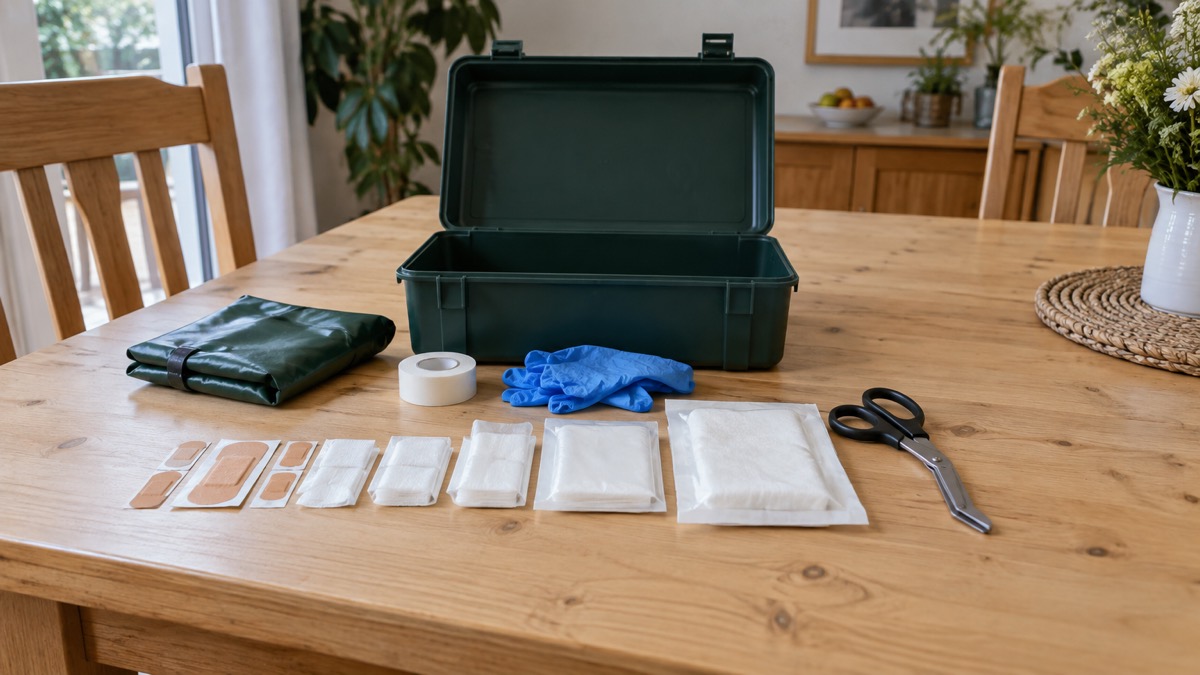
The single most repeated instruction across official lists is variety. The NHS says plasters in a variety of different sizes and shapes3. The guidance for babies says to buy sticking plasters in a variety of sizes for minor cuts, blisters and sore spots5. A kit with only one size of plaster will fail on the first cut that does not match it.
Dressings need the same spread. The NHS asks for small, medium and large sterile gauze dressings, plus at least two sterile eye dressings3. The baby first aid guidance adds adhesive tape, crêpe bandages, tubular bandages and triangular bandages, and sterile gauze dressings5. Scissors earn their place for cutting clothes and cutting plasters and tape to size11.
For a sense of what a stocked kit looks like in practice, a flood warden's kit list itemises foil blankets (2), adhesive dressings 5cm x 7.5cm (2), non-adhesive dressings 5cm x 5cm (2), assorted fabric plasters (20), assorted waterproof plasters (20), a non-woven triangle bandage (1), cleansing wipes (20), pairs of gloves (2), a conforming bandage (1), scissors (1), cotton gauze swabs (5), a resuscitation mask (1), safety pins (12), microporous tape (1), tweezers (1) and an instruction sheet (1)12. That is a working kit for a public role, and it shows how much of a kit is plasters and dressings.
If you want to go deeper on what each type does, the guide to dressings, bandages and plasters explains which one suits which injury, and the first aid kits for the home page covers contents and how to choose.
Building your own in a clean, waterproof box
The container matters as much as the contents. The NHS specifies a clean, waterproof box1. Argyll and Bute's guidance says to put your emergency kit in a safe place you can reach quickly, in a sturdy waterproof bag13. Carmarthenshire says the same: keep it in a safe place at home where you can reach it easily, and keep it in a waterproof bag6.
Label it. The baby first aid guidance says to either buy a first aid box, which is green with a white cross, or write "First Aid" on a homemade box so others know what it is5. That matters in a hurry, and it matters if someone else in the house or a visitor needs to find it.
Keep the supplies together and in a known place. Denbighshire's emergency supplies guidance suggests plastic boxes or backpacks to keep supplies together, kept in a designated place that all household members know14. Anglesey's home emergency plan adds the instruction to make sure everyone in the house knows where the kit is15.
A simple build order:
- Choose a clean, waterproof box with a lid that closes1.
- Write "First Aid" on it clearly5.
- Work through the NHS contents list and tick off what you have3.
- Add items for your household, such as child-specific supplies or regular medicines5.
- Put it in a place everyone knows and can reach14.
For a step-by-step contents checklist, the baby and child kit checklist and the bleeding control kit checklist cover two common household needs in more detail.
Where to keep a kit: home, car and emergency bag
Three locations cover most household needs: the home, the car, and an emergency grab bag. Newport's emergency kit checklist says to keep essential medication and a first aid kit at home in the event of an emergency, and to keep a first aid kit in your car6. The Ready Scotland campaign lists a first aid kit among car emergency kit items16.
For the home, the guidance is consistent: a safe place you can reach easily, in a waterproof bag6. For the grab bag, the Royal Borough of Windsor and Maidenhead's home emergency plan lists a first aid kit and essential medicines among grab bag essentials17. The Be Ready household emergency plan goes further, saying to keep a first aid kit or first aid items, and essential medication or medical supplies to last several days18.
| Location | What to keep there | Source |
|---|---|---|
| Home | First aid kit and essential medication, in a known reachable place | 6 |
| Car | A first aid kit | 6 |
| Emergency grab bag | First aid kit and essential medicines | 17 |
| Longer disruption | Medication or supplies to last several days | 18 |
North Yorkshire Fire and Rescue Service's flood guidance says to include a first aid kit and any prescription medicines in an emergency flood kit19. If anyone in the house takes regular medicine, that is the item most easily forgotten and the one that matters most over several days.
The car kit checklist sets out what to keep in the vehicle, and the wider emergency kit guide covers the rest of a household's supplies.
Learning first aid alongside the kit
A kit is only half of it. London Resilience advises learning first aid, which could give you life-saving skills to help your family, friends and others in an emergency7. The Be Ready campaign says to learn some basic first aid skills, to check online for free workshops, or to ask if your employer will pay for a course8.
Essex Prepared puts the kit and the skills together: have a first aid kit in your home and car and learn first aid, and download a first aid app for your smartphone, such as the free app from the Red Cross20. The app is a prompt, not a substitute for knowing what to do.
"Learn first aid, this could give you life-saving skills to help your family, friends and others in an emergency"
Some kits are designed for public settings rather than homes. ProtectUK's guidance on first aid provisions describes a Public Access Trauma (PAcT) First Aid Kit, which may also be used by an injured person who is able to self-treat themselves21. That is a different job from a household kit, but it shows why kits are matched to their setting.
If you want to build skills, the first aid courses page covers types, length and where to find one, and learning CPR free online covers free options. The first aid at home section is the place to start for the wider picture.
Workplace kits and needs assessments: what households can borrow
Workplace kits follow a different logic, and it is worth understanding because it sharpens your own thinking. The Health and Safety Executive says the contents of your first aid kit should be based on your first aid needs assessment22. The NHS adds that for workplaces and public areas, a first aid kit should be stocked based on the types of risks people could encounter there1.
The HSE's minimum for low-risk work, such as desk-based work, is modest: a leaflet with general guidance on first aid, individually wrapped sterile plasters of assorted sizes, sterile eye pads, individually wrapped triangular bandages preferably sterile, safety pins, large and medium-sized sterile individually wrapped unmedicated wound dressings, and disposable gloves22.
A household can borrow the method without the paperwork. Ask who lives here, what they do, and what injuries are likely. A home with a toddler needs plasters in variety and eye care5. A home with someone on regular medicine needs those medicines in the kit and in the grab bag18. A home near water or with a car needs a kit in the car as well6.
Backpacking kits are the other end of the scale. A maker's expedition kit lists 20 plasters in three sizes and states it is made and packed in the UK23. That is built for carrying on a walk, not for a cupboard at home. A household kit needs the wider spread of dressings, gloves, scissors and cleansing items that a rucksack kit leaves out to save weight.
Sources (23)
- What should I keep in my first aid kit?, NHS, 2026-10-25
- Household emergency kit, nidirect, 2026-07-06
- What to keep in your medicine cabinet, NHS Hertfordshire and West Essex, 2026-10-28
- First aid, nidirect, 2025-12-04
- Safety and first aid kit, NHS 111 Wales, 2021-04-19
- Emergency kit checklist, Neath Port Talbot Council, 2026-10-28
- Preparing yourself for emergencies, London Resilience Partnership, 2026-10-25
- Get prepared for emergencies, Be Ready campaign, 2026-10-21
- Keep a well stocked medicine cabinet at home, Black Country ICB, 2026-10-28
- Alternatives to 999, Scottish Ambulance Service, 2026-10-29
- Baby first aid accessories, NHS 111 Wales, 2021-04-19
- Be flood ready: guidance for flood wardens, Harborough District Council, 2026-10-29
- Be prepared at home and in your community, Argyll and Bute Council, 2026
- Emergency supplies kit, Denbighshire County Council, 2020
- Home emergency plan, Isle of Anglesey County Council, 2020
- Emergency kit, Ready Scotland, 2026-10-22
- Your home emergency plan, Royal Borough of Windsor and Maidenhead, 2025-10
- Be Ready household emergency plan, Be Ready campaign, 2026
- Keeping safe during high winds and heavy rain, North Yorkshire Fire and Rescue Service, 2024-01-22
- Step 1: preparation, Essex Prepared, 2026-10-29
- First aid provisions, ProtectUK, 2026-06-01
- What to put in your first aid kit, Health and Safety Executive, 2026
- Expeditionary First Aid Kit, Alpkit, 2026-10-25
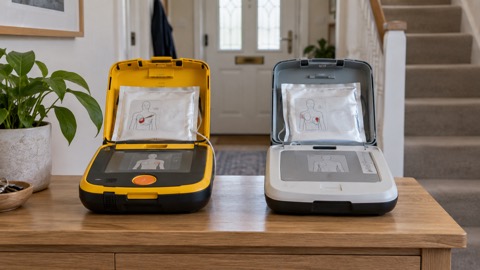 Semi vs Fully Automatic AED
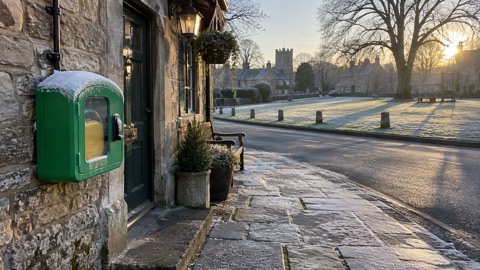 Indoor or Outdoor Defib Cabinet
 Burn Gel vs Cling Film
 Saline Pods or Eyewash Bottle
 Instant or Reusable Ice Packs