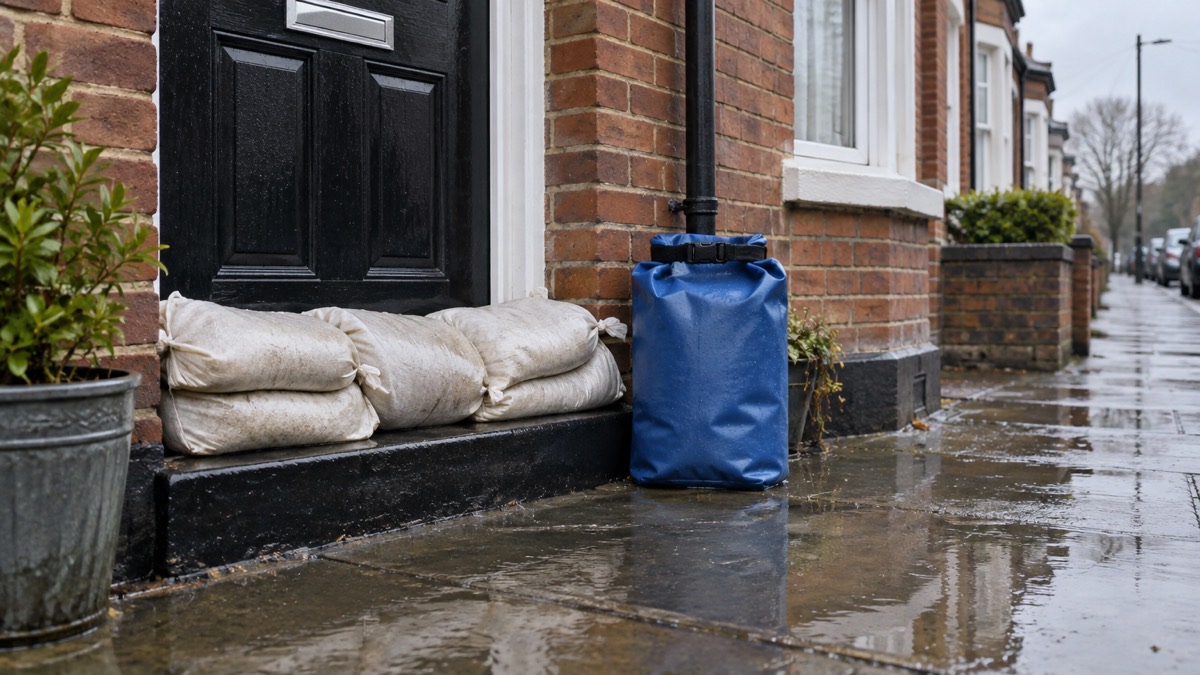
A waterproof drybag is one of the simplest pieces of emergency kit you can own, and one of the easiest to get wrong. The Aquapac Heavyweight Waterproof Drybag is a roll-top bag made from heavy-duty 500D vinyl, sold in 7L, 15L and 25L sizes, with a detachable, adjustable shoulder strap on every size1. Its job in a household emergency plan is to keep the things that must stay dry, such as spare clothes, paperwork, a torch, batteries and a phone, usable after rain, a flood or a soaking.
Official guidance is clear that the container matters. A drybag does that job without needing to be airtight in storage, so you can pack it, check it and repack it as your supplies change.
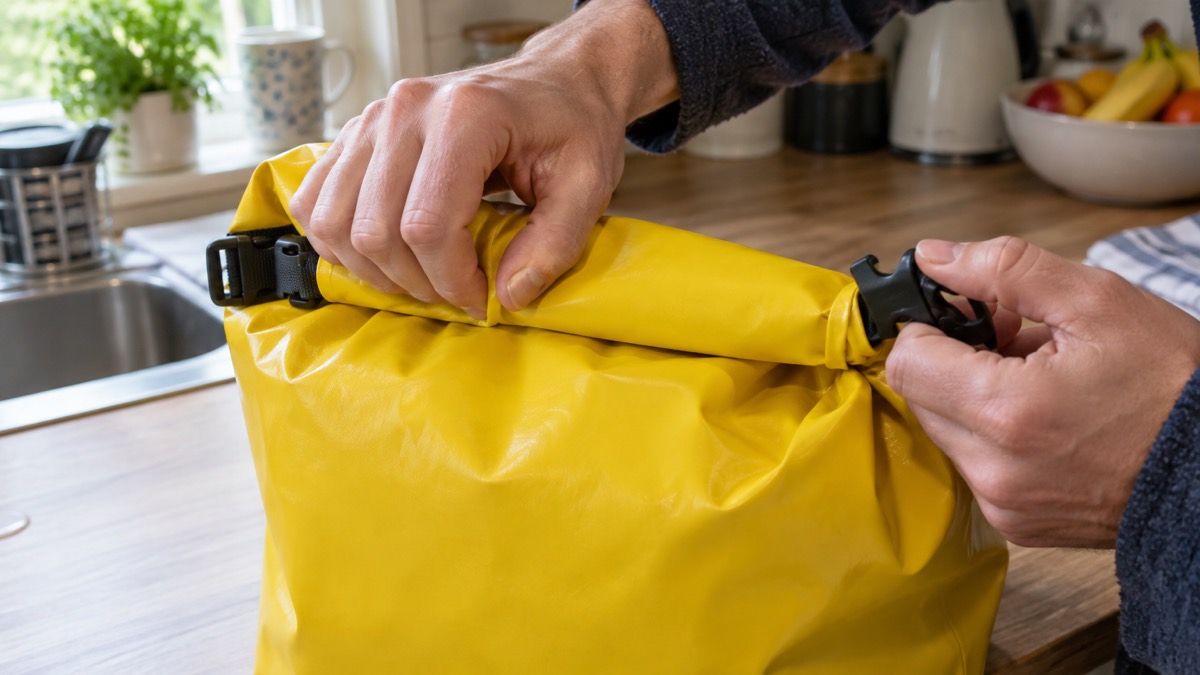
The bag is sealed by rolling the top down at least 3 times and securing the buckle2. Get that right and it protects gear from splashes, rain and spray1. Get it wrong, or overload the bag so the top cannot roll properly, and water will find its way in. This page covers what the bag is for, the sizes, the material, how to seal it, how to use it at home and outdoors, and the related TrailProof heavyweight duffel.
What the Aquapac Heavyweight Waterproof Drybag is for
Aquapac describes the Heavyweight Waterproof Drybags as designed for people who need serious gear protection in any weather1. In a household emergency context, that translates into a bag you pack once and keep packed, so that when the power goes off, the storm hits or the flood water arrives, your essential dry items are already protected and you are not hunting for bags in the dark.
The bag is not just for outdoors. The same qualities that suit a kayak suit a kitchen cupboard or a hallway shelf. It keeps spare clothing dry in a grab bag, holds copies of documents away from damp, and protects a torch and radio from rain if you have to leave the house. Age UK's flood advice specifically recommends large sealable bags for important belongings and paperwork3, and a roll-top drybag is a reusable version of that idea.
It is worth being clear about what the bag does not do. It is not a sandbag and it will not hold back flood water. The Scottish Environment Protection Agency warns that sandbags may not hold back water unless a waterproof sheet is placed under them4, and the Environment Agency's guidance says sandbags can keep water out for short periods, improved by using them with plastic sheeting5. A drybag protects what is inside it; it does not protect a doorway.
The bag is also not a substitute for a proper grab bag. Buckinghamshire Council's grab bag guidance lists warm, wind and rainproof clothing, strong shoes, a waterproof torch with spare batteries and a radio with spare batteries, all checked regularly6. A drybag is where those items live inside the bag, not the bag itself. For the wider picture, see Grab Bags: What to Pack If You Have to Leave Home and Keeping Supplies Dry: Dry Bags, Pouches and Waterproof Cases.
Sizes: 7L, 15L and 25L
Aquapac sells the bag in three practical sizes: 7L, 15L and 25L1. The right one depends on what you want to keep dry, not on a preference for bigger or smaller.
| Size | What it suits in a household plan | Notes |
|---|---|---|
| 7L | A small personal kit: phone, charger, torch, batteries, copies of key documents | One of three practical sizes the maker lists1 |
| 15L | A change of clothes and a wash kit, or a family's shared documents and medication | One of three practical sizes the maker lists1 |
| 25L | Spare clothing and bedding for more than one person, or bulky items | One of three practical sizes the maker lists1 |
Every size comes with the same detachable, adjustable shoulder strap1, so you can carry the bag over your shoulder when your hands are full. That matters if you are moving supplies between rooms during a power cut, or carrying kit to a neighbour's house.
The bag is available in two bright colours, Acid Green and Cool Blue1. Bright colour is a small practical point in an emergency: a bag that stands out is easier to find in a dim hallway or a cupboard full of dark holdalls.
If you are working out how much to pack in total, the site's guidance on how many days your supplies should last and on choosing a rucksack or holdall will help you size the bag against your plan. A drybag works best as an inner layer inside a larger bag, so match its size to the space you have rather than buying the largest available.
Material: heavy-duty 500D vinyl
The bag is made from heavy-duty 500D vinyl1. Aquapac's dry bag instructions describe the material used across its dry bags, duffels, backpack and waist pack as UV-stabilised 500D vinyl2. The "D" refers to denier, a measure of the thickness of the yarn in the fabric, and 500D is a substantial, hard-wearing grade rather than a thin lightweight shell.
Aquapac explains the trade-off in its own comparison of its ranges. It says the Heavyweight range is likely to last longer, because it is made in a thicker, tougher material compared with the Lightweight range7. For a household that wants a bag to sit in a cupboard for years and then work first time, that durability is the point. A bag that splits or scuffs through in storage is worse than no bag at all.
The material choice also has a practical consequence for packing. Thicker vinyl is stiffer than lightweight nylon, so the bag holds its shape and stands up while you load it, but it will not compress down as small as a lightweight bag when empty. If space in your grab bag is tight, that is worth knowing before you buy.
Other makers take different approaches, which is useful context rather than a comparison. OverBoard says its waterproof duffels are made from materials such as PVC tarpaulin, eco-friendly TPU fabrics and nylon ripstop8, and its dry bags from a combination of eco-friendly TPU, nylon rip-stop and PVC9. Aquapac's own Upano lightweight duffel uses 420D PU-coated nylon, which the maker says is PVC-free and stays supple in sub-zero temperatures7. ORTLIEB describes its Dry-Bag Heavy Duty as designed for maximum durability, with abrasion-resistant material and a reinforced base10. Each maker is describing its own product; the right choice depends on whether you prioritise toughness, packability or a particular material.
How to seal the 3-roll top with side clip
The closure is a 3-roll top with side clip1. Sealing it properly is the single most important thing you can do to make the bag work, and it takes seconds once you have the habit.
- Fill the bag no higher than the point where the top can still be rolled freely. An overfilled bag cannot make a proper seal.
- Squeeze out excess air so the bag rolls tightly rather than trapping a cushion of air.
- Roll the top down at least 3 times2.
- Secure the buckle or side clip2.
- Check the roll is even across its width before you trust it.
Aquapac's product page puts the same instruction in its own words: roll 3 times and clip shut to protect your gear from splashes, rain, and spray1. The maker's dry bag instructions, which cover its dry bags, duffels, backpack and waist pack, say to roll the top down at least 3 times and secure the buckle2.
"Roll the top down at least 3 times." "Secure the buckle."
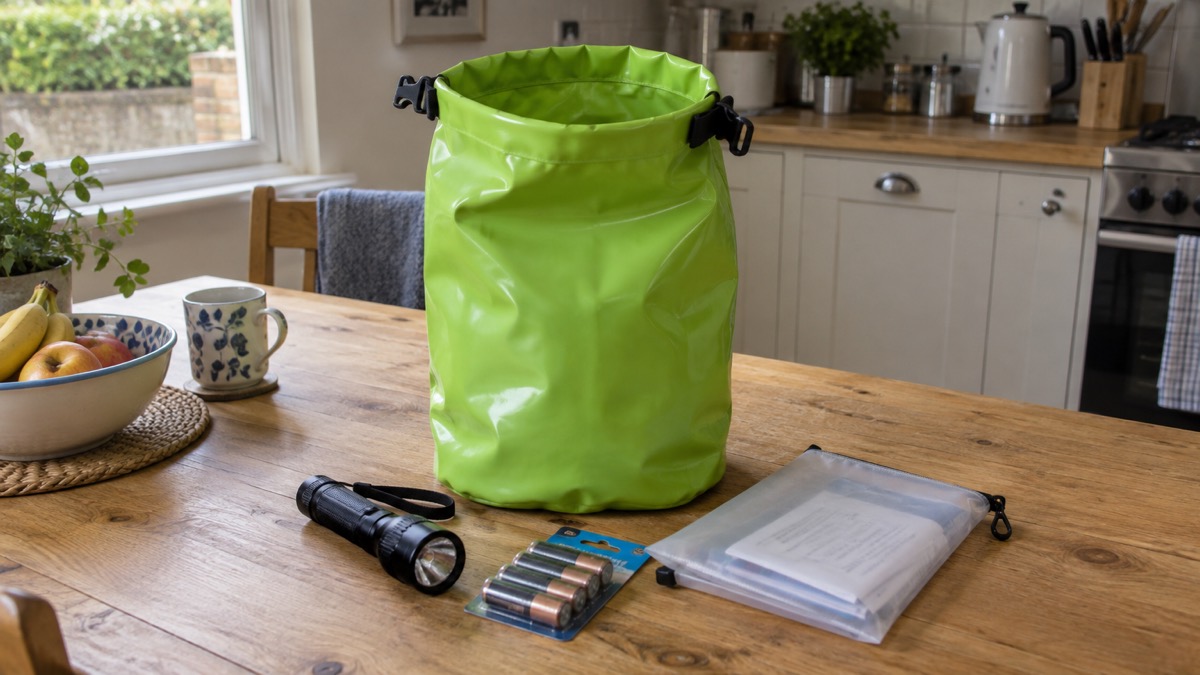
The "at least" matters. Three rolls is the minimum the maker gives, and rolling more times gives a longer, more secure fold, provided the bag is not so full that the rolls are cramped. Rolling fewer than three times leaves a short fold that can work loose or let water past.
Other makers use the same principle. OverBoard's Fold Seal System rolls the top down tightly at least 3 times and then clips the buckles together at the sides or top11, and Lifeventure's Storm Dry Bags use a roll-top closure with a lightweight Kross buckle, rolled over 3 times12. The consistency across makers is a useful reminder: the roll count is not a brand quirk, it is how the closure works.
Using the bag at home and outdoors
Aquapac lists paddling, hiking, sailing, SUP, fishing, travel and everyday outdoor use among the intended uses1. The roll-top closure is designed to protect gear from splashes, rain and spray1. That is the honest scope of the bag: it is built for wet conditions, not for being deliberately submerged.
At home, the bag earns its place in three ways. First, as the dry core of a grab bag, holding the items Buckinghamshire Council says should be checked regularly, including a waterproof torch and spare batteries and a radio and spare batteries6. Second, as document protection: Age UK's flood advice recommends large sealable bags for important belongings and paperwork3, and the site's page on important documents explains which papers to keep ready. Third, as a store for spare clothing and bedding kept dry against damp in a cupboard or garage.
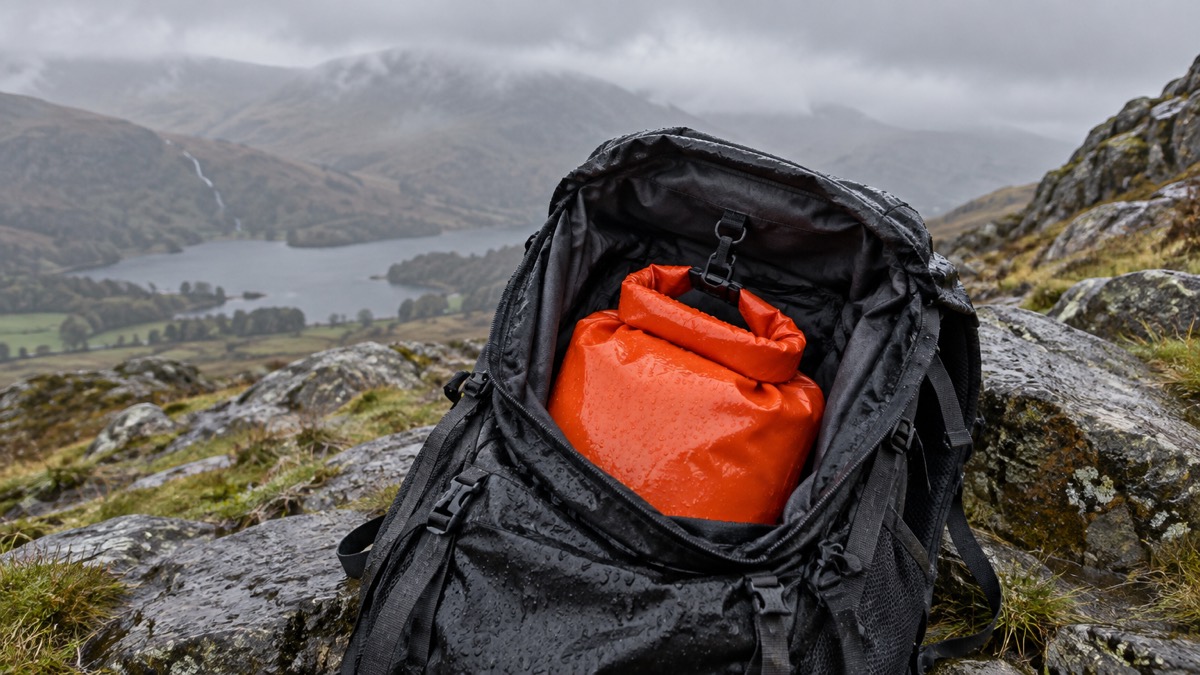
Outdoors, the bag suits the conditions Aquapac names: paddling, hiking, sailing, SUP and fishing1. If you are caught in heavy rain or spray, the bag keeps its contents dry provided it is sealed correctly. It is not described by the maker as a diving bag, so do not treat it as one.
There is a wider point about waterproofing that applies to any bag. Waterproofing works as a system: a drybag inside a rucksack keeps the contents dry, but the rucksack itself will still get wet and heavy. Plan for the inner layer to be the thing that protects what matters, and accept that the outer bag may be soaked.
The TrailProof heavyweight duffel: a related 500D drybag
Aquapac's TrailProof range includes a heavyweight duffel drybag made from 500D polyester-reinforced PVC tarpaulin7. It shares the heavyweight, 500D approach of the drybag but is built as a duffel, with removable shoulder straps, multiple attachment points for straps or lashing, and an internal ID pocket7. Aquapac says the Heavyweight range is likely to last longer than its Lightweight range because it is made in a thicker, tougher material7.
The TrailProof range as a whole comprised 4 drybags, 3 duffels and 2 backpacks when Aquapac introduced it12. The drybags in that range come in 7-litre, 15-litre, 25-litre and 70-litre capacities12, so if you want a much larger dry bag than the 25L Heavyweight, the TrailProof range is where to look.
| Feature | Aquapac Heavyweight Waterproof Drybag | Aquapac TrailProof heavyweight duffel |
|---|---|---|
| Material | Heavy-duty 500D vinyl1 | 500D polyester-reinforced PVC tarpaulin7 |
| Form | Roll-top drybag with shoulder strap1 | Duffel with removable shoulder straps7 |
| Sizes | 7L, 15L, 25L1 | 90-litre size quoted for weight7 |
| Extras | Detachable, adjustable shoulder strap1 | Multiple attachment points, internal ID pocket7 |
The weight figures for the TrailProof heavyweight duffel are not settled. Aquapac's blog post gives 1305g for the 90-litre size7, and the same post also gives 832g; the two figures are not reconciled, so the maker's published weights disagree. Check the listing for the size you are buying rather than relying on either figure. The same post gives 714g for the 70-litre Upano lightweight duffel, with a second figure of 547g also appearing7.
For households comparing dry storage options more broadly, the site's waterproofing page sets out dry bags, pouches and cases side by side, and the emergency kit section covers the wider question of what to keep ready. Aquapac's own range is described on the Aquapac brand page.
Keeping the bag ready, and where it fits your plan
A drybag only helps if it is packed, sealed and findable when something goes wrong. A simple routine keeps it that way.
- Pack it once, then check it. Treat the bag as part of your regular restocking routine. The site's guide to checking and restocking supplies sets out a schedule.
- Store it dry and open. Keep the bag unsealed in storage so it does not grow musty, and seal it only when packed for use.
- Keep it where you would grab it. In a hallway cupboard or with the rest of your grab bag, not in a loft or shed.
- Match the bag to the job. The maker lists 7L, 15L and 25L sizes1.
- Re-test the seal after any period in storage, using the tissue test above.
Where the bag fits depends on your household. For a home pack, it protects documents and spare clothing; the site's guide to what to keep in a household emergency pack at home sets out the wider list. For a grab bag, it is the dry inner layer; see grab bags. For a car, it keeps spare clothes and a torch dry through a storm; see what to keep in your car. Households in Scotland, Wales and Northern Ireland can check the devolved advice on the Scotland, Wales and Northern Ireland page.
The bag also has a role in flood preparation beyond the grab bag. Age UK's flood advice recommends large sealable bags for important belongings and paperwork3, and a reusable drybag does that job without a stock of plastic bags. It will not keep flood water out of a room, but it will keep the contents of a cupboard dry if water gets in.
Support and warranty
Aquapac's product page lists what comes in the box: 1 x Waterproof Drybag in your chosen size, 1 x Detachable shoulder strap, and instructions for roll-top sealing1. Keep the instructions with the bag, because the roll count is the thing most likely to be forgotten between emergencies.
The maker's dry bag instructions cover the dry bags, duffels, backpack and waist pack, and set out the roll-and-buckle method2. If a bag fails to keep water out, check the seal first: an uneven roll, too few rolls or an overfilled bag are the usual causes. If the bag itself is damaged, contact the maker or the retailer you bought it from and quote the product name and size.
The bag is made in China and designed in the UK1. If you need to confirm the country of manufacture for any reason, the product page is the maker's own statement.
Sources (12)
- Heavyweight Waterproof Drybag, Aquapac, 2026-10-28
- Dry bag instructions, Aquapac, 2026-10-28
- Prepare for a flood, Age UK, 2026-10-05
- Flooding FAQs, Scottish Environment Protection Agency, 2026-10-29
- Sandbags and how to use them properly for flood protection, Environment Agency, 2009-03
- Emergency grab bag, Buckinghamshire Council, 2023-08-25
- The difference between lightweight and heavyweight drybags, Aquapac, 2017-01-05
- Waterproof duffels, OverBoard, 2026-11-02
- Waterproof dry tubes, OverBoard, 2026-11-02
- Dry-Bag Heavy Duty, ORTLIEB, 2026-10-28
- Fold Seal System, OverBoard, 2026-10-28
- Introducing our new range of TrailProof drybags, Aquapac, 2014-09-04
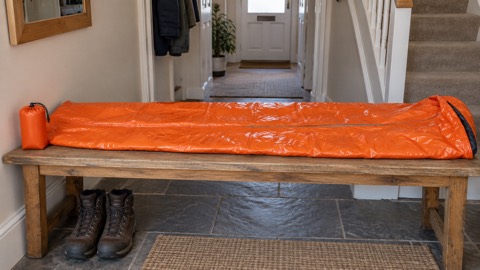 Lifesystems Survival Bag
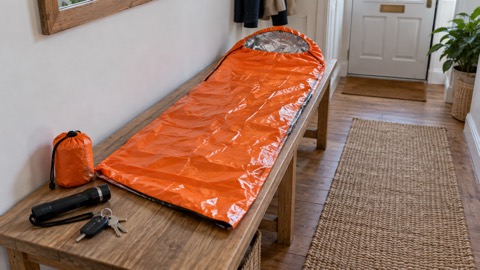 Blizzard 3 Layer Survival Bag
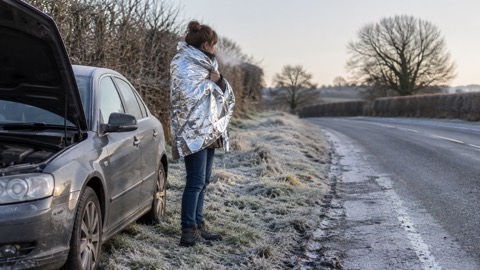 Blizzard EMS Survival Blanket
 Heatshield Thermal Blanket
 Steroplast Foil Blanket
 NEBO Assist Air Jump Starter
 Ring Ultraboost 500
 Ring Ultraboost 1000
 Ring Ultraboost 1500
 Ring RPPL260 Jump Starter
 Ring RTC6000 Tyre Inflator