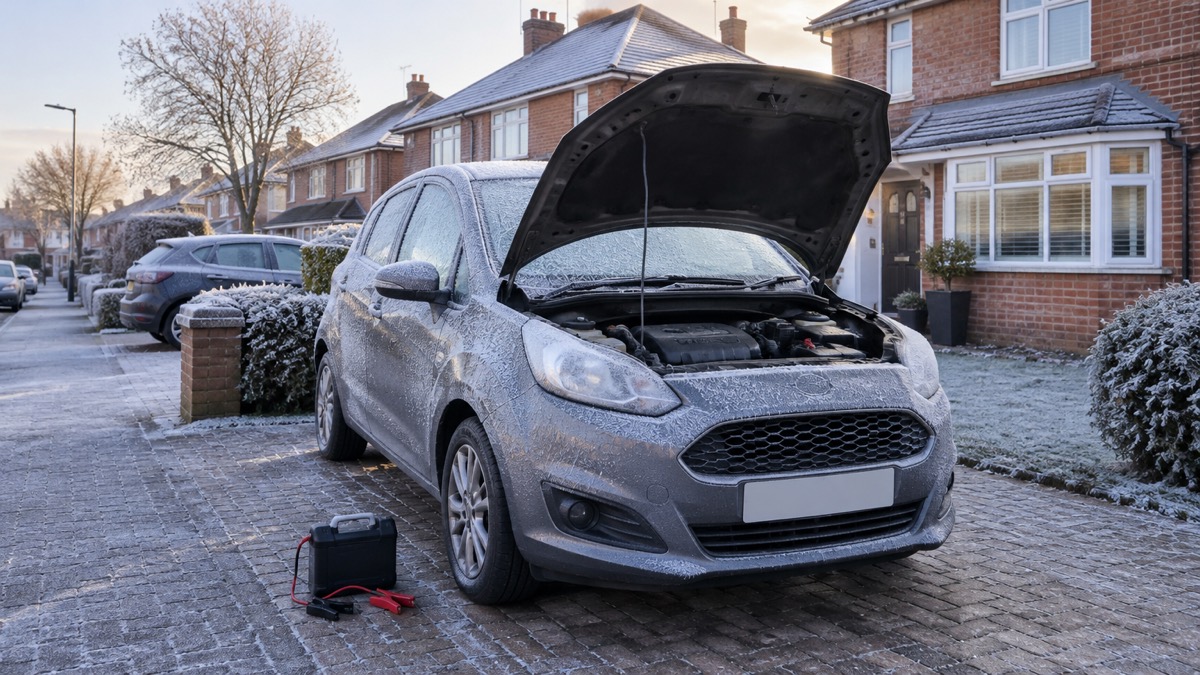
The Ring RJS010T Ultraboost 500 is a portable 12V jump starter and power bank for most cars, SUVs and light commercial vehicles. Ring gives it 500A peak amps, 200A rated output and a 6000 mAh lithium-ion battery, in a unit weighing 0.84 kg. It is designed to start a vehicle with a flat battery without needing a second car and a set of leads, and it can also charge a phone from its USB-A port1.
For a household, that makes it a car and emergency kit item rather than a workshop tool. It lives in the boot or a cupboard, charged and ready, and earns its place on the morning the battery is flat on the drive. Ring states that the Boost function allows it to start vehicles even when the battery is fully discharged, and that it is ideal for most cars, SUVs and light commercial vehicles, with petrol engines up to 3.0L and diesel engines up to 1.5L1.
This page sets out what the unit does, its specifications, what its indicator lights mean, and how Ring says it should be charged, used and stored. It is a description of one product on the maker's own figures, not a comparison with others; for the wider picture of what these devices do and how to choose between them, see Portable Jump Starters: What They Do and How to Choose One.
What the Ultraboost 500 does: a 12V jump starter and power bank
The Ultraboost 500 has two jobs. The first is to start a vehicle whose battery cannot turn the engine. Ring describes it as a 12V jump starter, and says the Boost function allows it to start vehicles even when the battery is fully discharged1. That is the situation it is built for: not a battery that is merely tired, but one that has gone flat, perhaps after a light was left on or a car sat unused through a cold spell.
The second job is as a power bank. Ring states that all models in the range have a power bank function, and the Ultraboost 500 has a 2.1A USB-A port for charging devices1. In a power cut, that is a phone charge or two from a unit that was already in the car. It is a useful second life for something bought for the boot, though the 6000 mAh battery is shared between the two jobs, so a unit drained charging phones is a unit less ready to start an engine.
Ring also fits a bright LED torch that illuminates the battery terminals during use1. Anyone who has tried to find a battery terminal in a dark car park in winter will see the point: the light is there so you can see what you are clamping onto, not as a general purpose torch. For lighting around the home in a power cut, a dedicated torch or lantern is the better tool; see Emergency Lighting at Home: Torches, Lanterns and Candles.
The unit is aimed at ordinary vehicles. Ring's engine figures, petrol up to 3.0L and diesel up to 1.5L, are the maker's own limits, and they are the first thing to check against your own car before you rely on it1. A small petrol hatchback sits comfortably inside them. A large diesel van may not.
Specifications: 500A peak, 200A rated, 6000mAh
The headline figures are 500A peak amps and 200A rated output, from a 6000 mAh rechargeable lithium-ion battery1. Peak amps describe the short burst the unit can deliver at the moment of starting; rated output is the figure it is specified to sustain. Both matter, and Ring gives both, which is more than every listing does.
| Specification | Ring's figure |
|---|---|
| System voltage | 12V1 |
| Peak amps | 500A1 |
| Rated output | 200A1 |
| Battery capacity | 6000 mAh1 |
| Battery type | Rechargeable lithium-ion1 |
| USB output | 2.1A USB-A port for battery bank use1 |
| Maximum petrol engine | 3.0L1 |
| Maximum diesel engine | 1.5L1 |
| Operating temperature | -20°C to +55°C1 |
| Weight | 0.84 kg1 |
| Dimensions | 100 x 130 x 105 mm1 |
| Carton weight | 0.96 kg1 |
| Carton dimensions | H 100 x W 130 x D 218 mm1 |
| Certification | E Regulation1 |
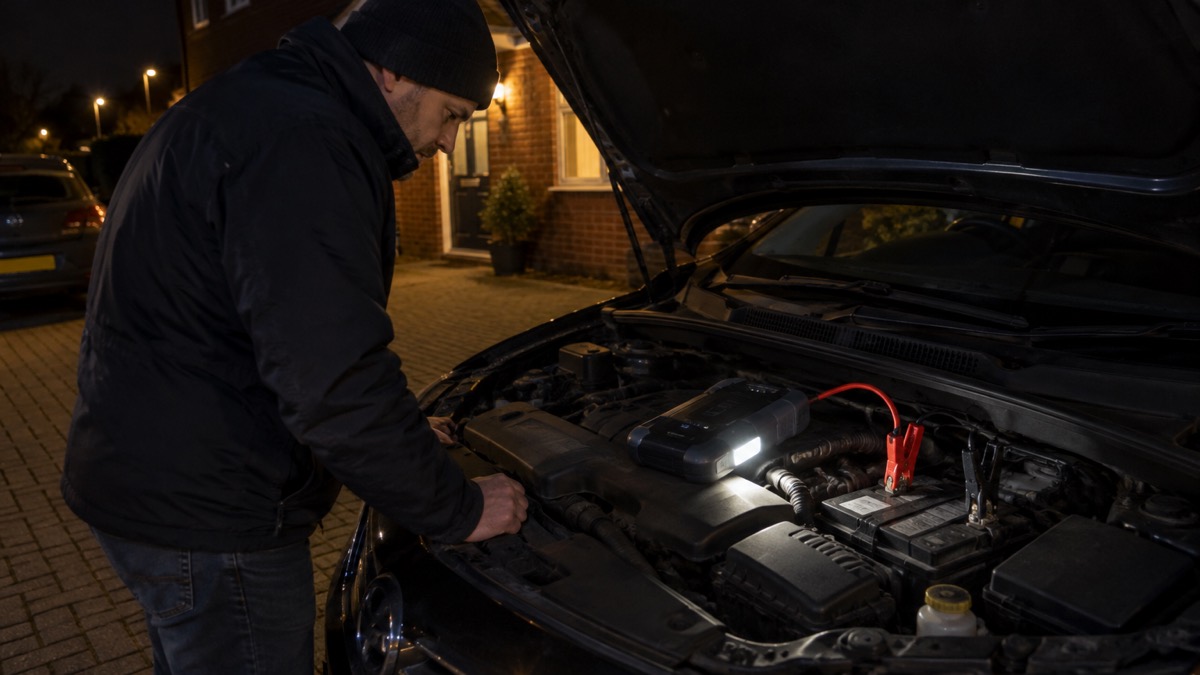
Two features decide how it behaves in use. The first is the "Lock 'n' Load" battery terminal, which Ring describes as being for a secure, safe connection and easy-reach cables1. The second is the large digital LCD display, which Ring says clearly shows the remaining battery level so you always know when it needs recharging1. A jump starter is only useful if it is charged when you need it, and a visible level is the simplest way to know.
The 6000 mAh capacity is confirmed in Ring's battery care pages as well as the product listing2. Ring's wider battery care guidance is worth reading alongside this page if you want to understand why car batteries go flat in the first place; see Ring's battery care pages2.
What the indicator lights mean
The Ultraboost 500 tells you what it thinks of the connection through its lights and, in one case, a sound. Ring sets out four states, and each one points to a different action1.
| Light | What Ring says it means | What to do |
|---|---|---|
| No lights | Battery is below 1V; use the boost function1 | Use the Boost function to start the vehicle |
| Green light | Connected correctly and good to jump start1 | Proceed with the jump start |
| Red light with audio warning | Connected to the battery the wrong way around1 | Disconnect, check the clamp positions, reconnect |
| Flashing green light | Battery has low voltage below 9V; use the boost function1 | Use the Boost function to start the vehicle |
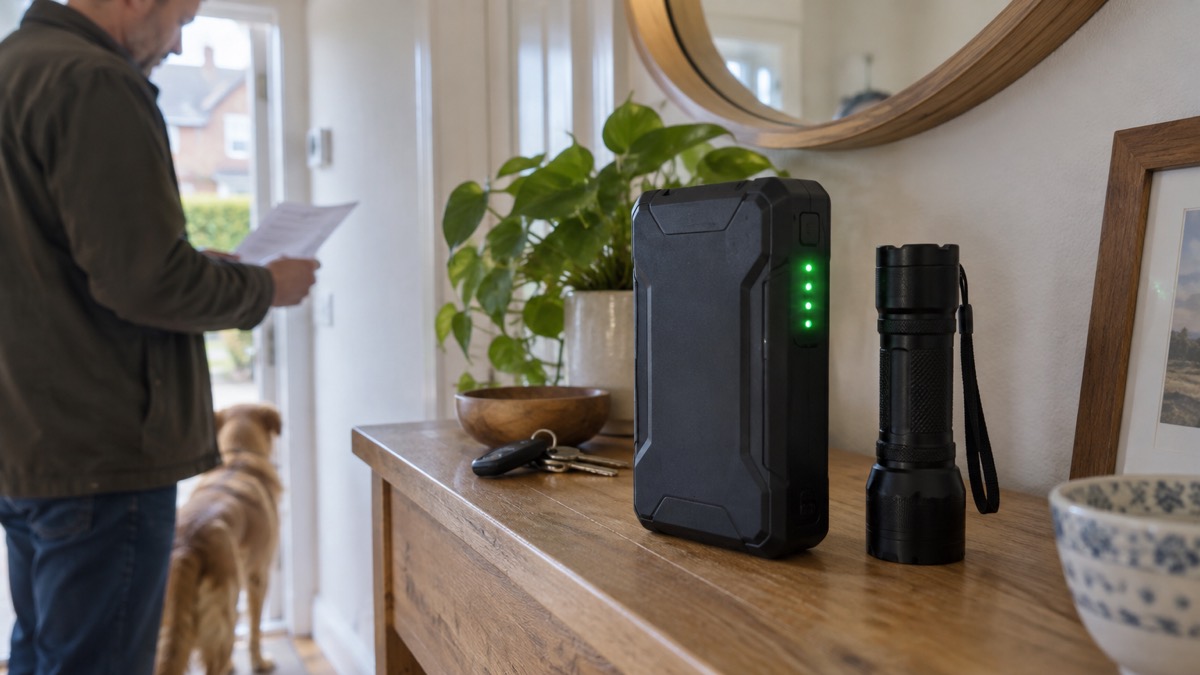
The red light with an audio warning is the one to understand before you need it. It means the clamps are on the wrong terminals, and the unit is telling you so rather than letting you proceed. Ring states that its Ringtelligence system keeps users safe with reverse polarity protection and a spark-free design1. That protection is a backstop, not a licence to connect carelessly: if you see the red light, stop, disconnect, and check which clamp goes to which terminal before trying again.
The two boost cases are the ones that surprise people. A battery below 1V shows no lights at all, and one below 9V gives a flashing green light; in both, Ring says to use the Boost function1. In other words, the unit is designed for batteries that are properly flat, not just sluggish, which is exactly the situation a jump starter is bought for.
"Ringtelligence keeps users safe with reverse polarity protection and spark-free design"
Charging it by USB-C, indoors
Ring's charging instructions are short and worth following exactly. Recharge via the USB-C input using a suitable power adapter, and for best performance always fully charge the unit before use1. Ring also states that charging should be done indoors within the recommended temperature range1. The unit ships with a USB-C charging cable and a carry case, but the listing does not mention a power adapter, so you will need one of your own1.
A sensible routine for a household is to charge it fully when it arrives, check the LCD display every few months, and top it up before a long journey or a forecast of severe weather. Ring's own instruction for the RJS010T ULTRABOOST 500 is to always fully charge the unit before use for best performance, and to charge it indoors within the recommended temperature range1. That is a five minute job a couple of times a year.
Lithium-ion batteries deserve respect, and the fire and rescue service's guidance on lithium-ion battery safety is written for exactly this kind of device: charge on a hard, flat surface away from soft furnishings, do not leave charging unattended for long periods, and stop using a battery that is swollen, damaged or hot. Ring's own instruction is that charging should be done indoors within the recommended temperature range1. The same principles apply to a jump starter as to any other lithium-ion device in the home.
Using it in freezing weather
Ring states that the jump starter operates in temperatures from -20°C to +55°C, making it suitable for year-round use1. That range covers a British winter with room to spare, and it means the unit can live in the car rather than being brought in and out. Keeping it in the vehicle also means it is at roughly the same temperature as the battery it is being asked to start, which is the condition the maker's range describes.
The limit to understand is that the operating range is about the jump starter, not about your car battery. A battery that is cold, old and flat is harder to start than a warm one, and no jump starter changes that. What the range does tell you is that the unit itself should not be the weak link on a frosty morning, provided it is charged.
Ring's maintenance advice is the same in winter as at any other time: keep it charged, store it safely, and check cables and clamps before use1. Cold weather is when a car battery is most likely to fail, so the check before the first hard frost is the one that matters. For the wider picture of preparing a car for winter, see What to Keep in Your Car in Case of a Breakdown or Storm and Storms, Snow and Ice: A Household Guide.
Vans, SUVs and larger models in the range
Ring describes the Ultraboost 500 as ideal for most cars, SUVs and light commercial vehicles, with petrol engines up to 3.0L and diesel engines up to 1.5L1. The petrol and diesel figures are not the same, and the diesel limit is the tighter of the two. A diesel engine above 1.5L sits outside the maker's stated diesel limit even though it may be a common family car engine size, so check your own engine against the figures rather than assuming a car of this size is covered.
If your vehicle falls outside those limits, Ring lists the RJS020T and RJS030T as upgrades to this product1. They have their own pages: the Ring RJS020T Ultraboost 1000 Jump Starter and the Ring RJS030T Ultraboost 1500 Jump Starter. Moving up the range is the sensible response to a vehicle the 500 is not specified for, rather than asking more of a unit than its maker says it can give.
The Ultraboost 500 is one of a number of portable jump starters a household might consider, and the right choice depends on the vehicle, the space you have and what else you want the unit to do. The section page Portable Jump Starters: What They Do and How to Choose One sets out the general ground, and Emergency Kit: What a UK Household Should Keep Ready covers where a jump starter fits among the other things worth keeping.
What comes in the box, and how big it is
Ring lists the carton as containing one unit, with a carry case and a USB-C charging cable included1. The unit itself weighs 0.84 kg and measures 100 x 130 x 105 mm; the carton weighs 0.96 kg and measures H 100 x W 130 x D 218 mm1. At well under a kilogram, it is light enough to sit in a boot or a hallway cupboard without being noticed, and small enough to live in a glovebox at a push.
The carry case matters more than it sounds. The clamps and cables are the parts most likely to be damaged in storage, and a case keeps them tidy and protected between uses. Ring's advice to check cables and clamps before use is easier to follow when they are stored properly1.
Ring is a British automotive lighting and battery care company, part of OSRAM, with over 40 years' lighting experience according to its own pages3. That background is context for the maker, not a claim about this product's performance. For the household, the practical points are the ones above: a charged unit, a case, and a check of the cables before you rely on it.
Where to get help and what to do if something goes wrong
If the unit will not charge, will not hold its charge, or shows signs of damage such as a swollen case or a hot battery, stop using it and contact Ring through the details on its product page1. Do not open the unit or attempt a repair; lithium-ion batteries are not a household repair job, and the fire and rescue service's guidance on lithium-ion safety covers storage and disposal as well as charging4.
For a flat car battery away from home, the practical order is: check the connections and the indicator lights, use the Boost function if Ring's table says to, and if the vehicle still will not start, call for recovery. A jump starter starts an engine; it does not diagnose why the battery went flat, and a battery that keeps going flat needs attention from a garage.
For the wider household picture, the Emergency Kit section covers what to keep ready at home and in the car, and Power Cuts: A Household Guide covers what to do when the mains goes off, which is when the power bank function earns its keep.
Sources (4)
- RJS010T Ultraboost 500 Jump Starter, Ring Automotive, 2026
- Battery Care, Ring Automotive, 2026
- Torches, Ring Automotive, 2026
- E-bikes and e-scooters safety guidance, Cheshire Fire and Rescue Service, 30 September 2026
 NEBO Assist Air Jump Starter
 Ring Ultraboost 1000
 Ring Ultraboost 1500