Ring Automotive is a maker of vehicle electrical equipment whose products many UK households already own without thinking of themselves as preppers: battery chargers and maintainers, jump starters, tyre inflators and inspection lamps. Its kit sits in the boot or the garage and earns its keep on the days something goes wrong, whether that is a flat battery on a cold morning, a soft tyre before a long drive, or a power cut at home when a torch and a charged power bank matter.
If you have arrived here because of the recall, the essential facts are these. On 21 July 2025, the Ring Automotive RTC6000 and RETC6000 cordless tyre inflator was recalled from end users under PSD notification number 2507-0008, notified by Local Authority Trading Standards1. The product does not meet the requirements of the Electrical Equipment (Safety) Regulations 20162. Users are advised to stop using it immediately, check the affected batch codes and serial numbers on Ring's recall page, and complete the recall form there1. Two Ring jump starters have also been recalled in recent years, both presenting a fire risk, and this page covers those too.
Beyond the recalls, this page sets out what Ring makes for ordinary households, how its smart chargers, jump starters and lamps fit into household preparedness, and how to register a Ring product so that any future safety notice reaches you. For the wider picture of what a household should keep ready, start with Getting Started: Preparing Your Household for an Emergency and the Emergency Kit guide.
The recall: RTC6000 and RETC6000 cordless tyre inflators
The Office for Product Safety and Standards issued the notice, which was notified by Local Authority Trading Standards on 21 July 2025 under reference 2507-00081. The affected product is the Ring Automotive cordless tyre inflator, model RTC6000 / RETC6000, described in the notice as a cordless tyre compressor and air pump for use with bike tyres, footballs, air beds and motor vehicles2. The country of origin is given as China6.
The reason for the recall is stated plainly in the notice: the product does not meet the requirements of the Electrical Equipment (Safety) Regulations 20162. That is the legal basis on which the product has been recalled from end users6. In practice, a product that fails those regulations may present an electrical safety risk, and the official advice leaves no room for interpretation.
What to do, in order:
- Stop using the inflator immediately. Do not use it to inflate a tyre, a ball or an air bed while you wait for a response2.
- Find the batch code or serial number on your unit. The affected codes are listed on Ring's recall page at ringautomotive.com/en/rtc6000-batch-recall1.
- Complete the recall form on that page. The official notice directs owners there for both the affected codes and the form1.
- Keep the unit somewhere safe and out of use until you have followed the instructions on the recall page. Do not dismantle it or attempt a repair.
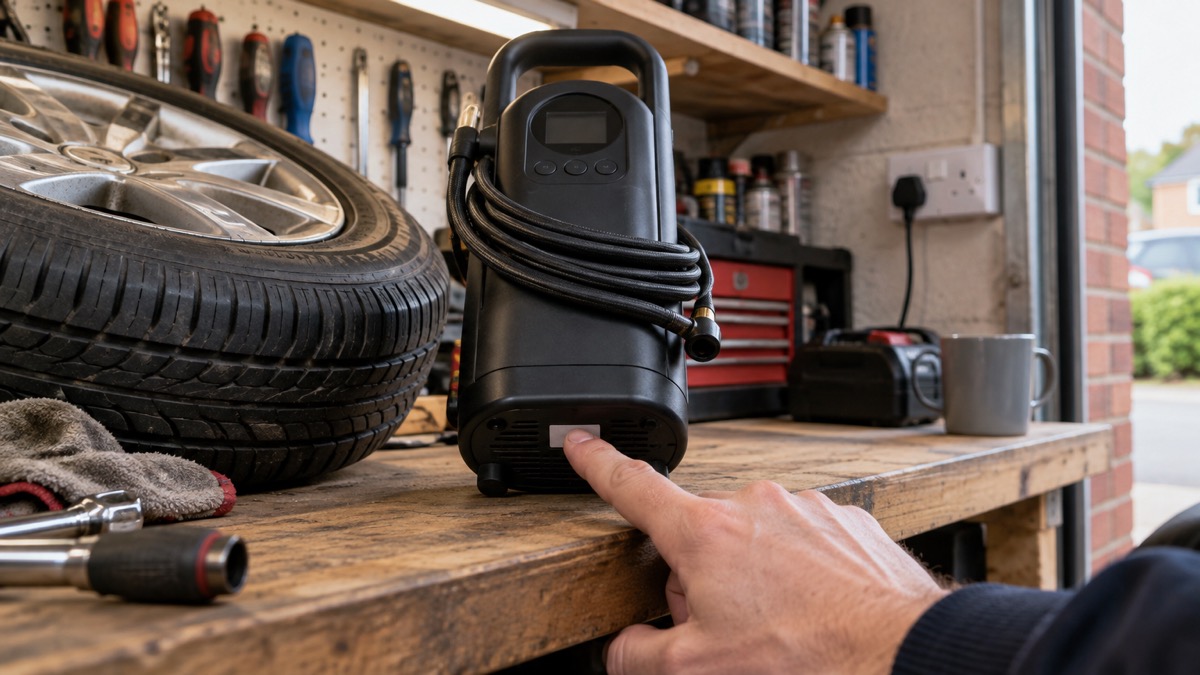
A note on scope: the recall covers the RTC6000 and RETC6000 models only, and within those models, only certain batch codes and serial numbers. If you own a different Ring inflator, check the recall page before assuming it is affected; if your model or batch code is not listed, this notice does not cover it. Trading standards notices are re-published by many local authorities, so you may see the same notice from your own council; the underlying reference, 2507-0008, is the one that identifies it1.
Recalls of this kind are exactly why fire and rescue services ask households to register electrical products with the manufacturer. Manchester Fire and Rescue Service advises that registering ensures manufacturers can contact you if a safety repair is needed7, and its electrical safety guidance adds that registering your electrical items with the manufacturer means you will be informed of any safety recalls5. A household that had registered its inflator would expect to hear about this notice directly.
What Ring Automotive makes for UK households
Ring Automotive's range for ordinary households falls into a few practical groups: battery chargers and maintainers that keep a vehicle battery healthy, jump starters for starting a car with a flat battery, tyre inflators for keeping pressures right, and inspection lamps and torches for working in the dark. Each of these has a place in household preparedness as well as in everyday motoring, because the same kit that gets you to work on a cold Monday also gets you through a power cut or a storm.
For a household building up its readiness, the relevant guides on this site are Backup Power at Home, which covers what a household can sensibly do when the mains fails, and Emergency Lighting at Home, which covers torches, lanterns and lamps. Ring's products slot into the vehicle and workshop end of that picture rather than the whole-house end: a smart charger maintains a battery over months, a jump starter starts a car without a second vehicle present, and a rechargeable inspection lamp gives hands-free light wherever you need it.
The table below sets out the main kit types side by side by what each does and who it suits.
| Kit type | What it does for the household | Who it suits |
|---|---|---|
| Smart charger and maintainer | Charges and maintains vehicle batteries over long periods, including lithium-ion batteries on the 900 series | Households with a seasonal vehicle, motorcycle or caravan8 |
| Jump starter | Starts a vehicle with a flat battery without needing a second car; some models double as a torch and power bank | Any household that relies on one car3 |
| Tyre inflator | Inflates vehicle tyres, bike tyres, footballs and air beds | Households that check tyre pressures at home2 |
| Inspection lamp | Hands-free rechargeable light for working under a bonnet or around the house | Households that want a work light that also serves in a power cut9 |
Two of these groups have been touched by recalls in recent years, the jump starters in 2023 and 2024 and the tyre inflator in 2025, so the sections that follow give both the useful side of the kit and the safety record a household should know about before relying on it.
Smart chargers: the Ring 900 series and RSC904T
Ring's current smart charger line is the 900 series, which the maker describes as an evolution from its 800 series. The maker states that the 900 introduces support for charging Lithium Ion batteries and a new efficient nine-stage charging cycle8. Nine-stage charging is the maker's own description of how the charger manages the battery through the charging process rather than pushing a fixed current; the practical point for a household is that the charger is designed to be left connected.
That matters because the maker positions the 900 series for maintaining seasonal vehicles, motorcycles, caravans and more8. A household with a caravan or a second car that sits unused over winter faces the classic problem of a battery that discharges over months and then will not start the engine. A maintainer is designed to be connected for those long periods, topping the battery up rather than giving it one hard charge.
Within the series, the Ring RSC904T SMARTCHARGE 4 Charger & Maintainer is listed by the maker with efficient charging at a 4A charging rate with Stop-Start compatibility8. Stop-Start compatibility matters because vehicles with Stop-Start systems typically use battery technologies that not every older charger is designed for; a charger marked compatible is built with those batteries in mind. The maker's product page is the authority on these specifications, and it is where to confirm the details before you rely on them.
For a household thinking about preparedness rather than motoring alone, a smart charger is one half of a battery plan: it keeps the vehicle battery healthy so that the jump starter, the other half, is rarely needed. It is also worth understanding what a smart charger is not. It maintains and charges vehicle batteries; it is not a household backup power source. For what a household can realistically run when the mains fails, read Backup Power at Home.
Jump starters: what they do, and two Ring recalls
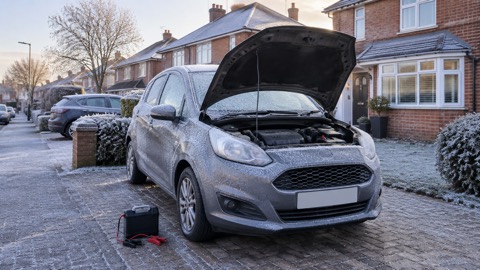
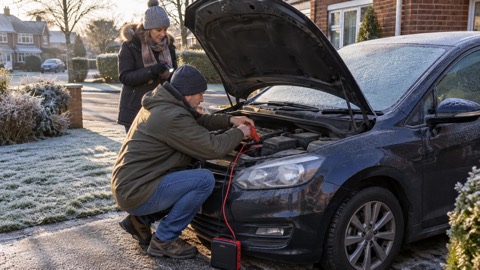
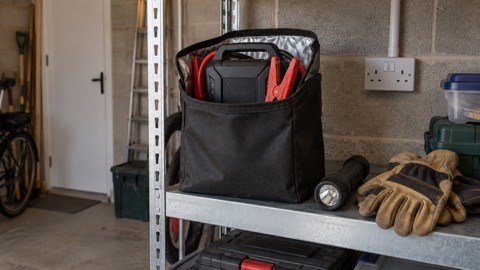
A jump starter is a battery in a box with heavy leads, designed to start a vehicle with a flat battery without a second vehicle to jump from. The official recall notice for one Ring model describes the intended use well: the RPPL360 was sold as a jump starter for motorcycles, cars, 4x4s and vans; a LED torch; and a power bank for phones and tablets3. That combination, starting power plus a torch plus phone charging, is what makes a jump starter a genuinely useful item in a household emergency kit as well as in the boot.
The safety record, though, is something a household should know about. Two Ring jump starters have been recalled:
| Product | Recall | Risk | What to do |
|---|---|---|---|
| Ring RPPL360 Fast Charge Lithium Jump Starter, barcode 5055175250151, PSD case 2303-0111, March 2023 | Recalled from end users | High risk of fire | Contact the retailer or ordering@ringautomotive.com for up-to-date advice on obtaining a refund and disposing of the unit3 |
| Ring Fast Charge Jump Starter 260 & Power Bank, PSD case 2402-0097, March 2024 | Recalled from end users | Fire risk | Contact the retailer or Ring Customer Services on 0113 213 7389 and ordering@ringautomotive.com for up-to-date advice on obtaining a refund and safely disposing of the unit4 |
The RPPL360 notice states the position in the official words:
"Product Recall for Ring RPPL360 Fast Charge Lithium Jump Starter presenting a high risk of fire."
If you own either of these units, the same rule applies as for the tyre inflator: stop using it, and contact the retailer or Ring using the details in the official notice for advice on a refund and on safe disposal3. Do not put a recalled lithium-ion unit in household refuse; the notices direct owners to the retailer or Ring precisely so that disposal is handled safely.
The wider lesson is about lithium-ion batteries generally, not about one maker. The Scottish Fire and Rescue Service advises that after buying a lithium-ion battery product you should register it with the manufacturer, because if there is an issue, manufacturers use that information to contact you with relevant safety advice or for product recalls10. London Fire Brigade describes the registration process as visiting the manufacturer's website, finding the product registration page, and entering details such as the model number, serial number and purchase date11. A jump starter is exactly the kind of product this advice is written for.
Tyre inflators and inspection lamps
Ring's tyre inflators are described in the recall notice as cordless tyre compressors and air pumps for use with bike tyres, footballs, air beds and motor vehicles2. That breadth is the point of the tool: the same unit that tops up a car tyre before a motorway drive pumps up a bicycle tyre or an air bed. Keeping tyre pressures correct is ordinary vehicle maintenance, but in a household preparedness sense an inflator also earns its place around storms and bad weather, when a slow puncture discovered at home is far better than one discovered on a flooded road.
The recall section above covers the RTC6000 and RETC6000 in full. If your inflator is another model, the recall page is still the place to check, because it lists the affected batch codes and serial numbers precisely so that owners of unaffected units can be reassured1.
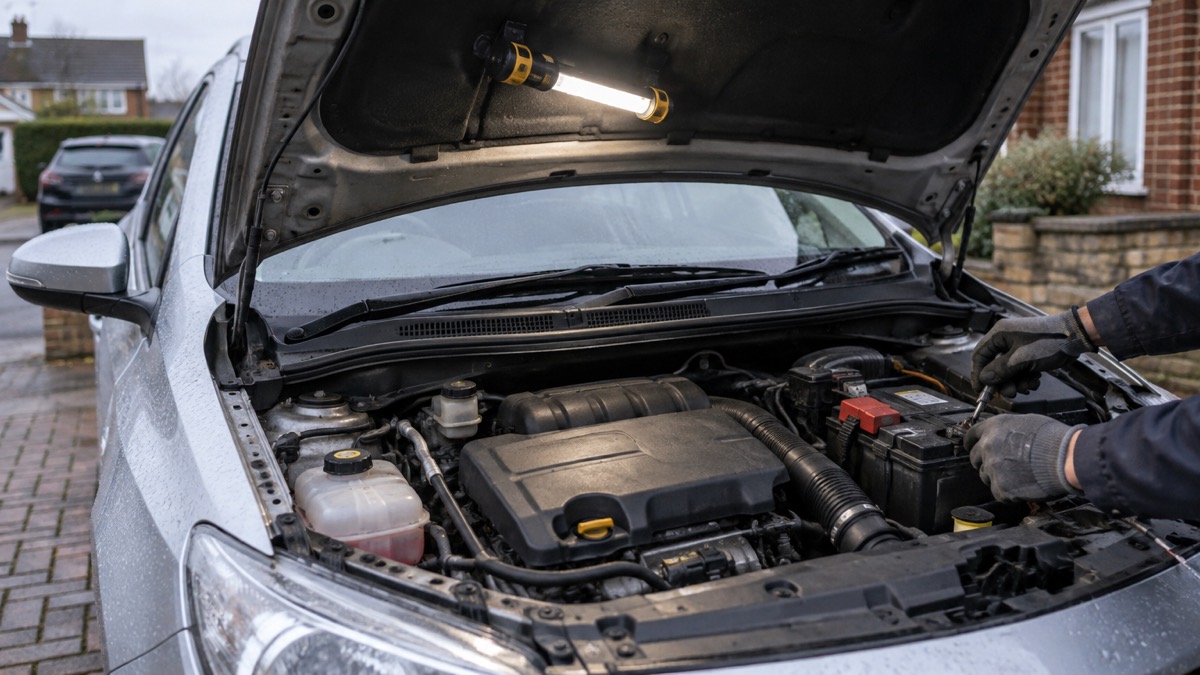
On the lighting side, Ring makes rechargeable inspection lamps. One example from the maker's own product pages is the RIL0265, a hands-free inspection lamp9. The maker's specifications for it give a flavour of what this kind of lamp offers a household:
| Specification | RIL0265 (maker's figures) |
|---|---|
| Type | Hands Free Inspection Lamp9 |
| Battery | Rechargeable lithium-ion, 500mAh, batteries included9 |
| Recharge time | 1.5 hours, described by the maker as a quick recharge time9 |
| Superseded by | LEDIL413, listed by the maker as the alternative product9 |
A hands-free lamp is the working end of household lighting: it clips or hooks where you need it, leaving both hands free, whether that is under a bonnet, under a sink, or in a cupboard during a power cut. A 1.5 hour recharge time means the lamp can be brought back to full between uses without planning ahead9. The maker lists the RIL0265 as superseded by the LEDIL413, so households buying new will find the alternative model on Ring's own pages9. For the full picture of household lighting in an emergency, including what to keep where, read Emergency Lighting at Home.
Support, warranty and safety notices
Ring Automotive's contact routes are given in the official notices for its recalled products. For the Fast Charge Jump Starter 260, the notice gives Ring Customer Services on 0113 213 7389 and ordering@ringautomotive.com, alongside the retailer, for up-to-date advice on obtaining a refund and safely disposing of the unit4. For the RPPL360, the notice directs owners to the retailer and ordering@ringautomotive.com3. For the tyre inflator recall, the recall page itself carries the affected codes and the recall form1. Use the contact route printed in the notice for your specific product, because that is the one the company has set up to handle it.
On warranty, the maker's product pages are the place to check the terms for a specific item, since warranty arrangements are set by the maker for its own products. What a household can do regardless of warranty terms is register, and the point of registering is safety as much as service.
The registration advice comes from fire and rescue services across the UK, and it is consistent:
- The Scottish Fire and Rescue Service advises registering lithium-ion battery products with the manufacturer after buying, so makers can contact you with safety advice or recall notices10.
- London Fire Brigade describes registering via the manufacturer's website, entering the model number, serial number and purchase date11.
- Manchester Fire and Rescue Service advises registering electrical items with the manufacturer to be informed of any safety recalls5.
- Cornwall Fire and Rescue Service notes you will need the brand name, model, serial number and purchase date, and describes the registration process as very simple to follow12.
- Cheshire Fire and Rescue Service advises registering your product with the manufacturer for safety updates, recalls and warranties13.
- North Yorkshire Fire and Rescue Service makes the same point for heaters: register with the manufacturer so that in the event of a recall or repair you can be contacted14.
The Scottish Fire and Rescue Service's electrical safety guidance summarises what you typically need to hand: the model name or number, the serial number and the purchase date15. Gather those before you start and registration takes minutes.
Where this fits in a household's preparedness
Ring's products are vehicle and workshop kit, and they are at their most useful to a household that has thought about where they sit in the wider plan. A smart charger keeping the car battery healthy, a jump starter in the boot, an inflator in the garage and a charged inspection lamp on the shelf together cover a surprising number of the small failures that make an ordinary week difficult: the flat battery, the soft tyre, the blown fuse in the dark.
For the broader household plan, the guides on this site take over where vehicle kit stops. Backup Power at Home covers what a household can run when the mains fails and what it cannot. Emergency Lighting at Home covers torches, lanterns and where to keep them. The Emergency Kit guide sets out the whole picture of what a UK household should keep ready, and Getting Started is the place to begin if you are starting from nothing.
The single most important action on this page, though, remains the recall. If you own a Ring Automotive RTC6000 or RETC6000 cordless tyre inflator, stop using it immediately, check the batch codes on Ring's recall page, and complete the recall form1. If you own a Ring RPPL360 jump starter or a Fast Charge Jump Starter 260, the same applies: stop using it and contact the retailer or Ring for advice on a refund and safe disposal3. And whatever Ring products you keep, register them with the maker, so that the next notice, if there is one, reaches you instead of passing you by5.
Sources (15)
- Product recall: Ring Automotive cordless tyre inflator 2507-0008, Office for Product Safety and Standards, 21 July 2025
- Ring Automotive cordless tyre inflator product safety notice, Darlington Borough Council Trading Standards, 23 July 2025
- Product recall: Ring RPPL360 fast charge lithium jump starter 2303-0111, Office for Product Safety and Standards, 27 March 2023
- Product recall: Fast Charge Jump Starter 260 and 9000mAh power bank 2402-0097, Office for Product Safety and Standards, 1 March 2024
- Electrical safety at home, Manchester Fire and Rescue Service
- Ring Automotive cordless tyre inflator recall notice, London Borough of Bromley
- Maintain appliances and recalls, Manchester Fire and Rescue Service
- Ring RSC904T SMARTCHARGE 4 Charger & Maintainer, Ring Automotive
- Ring Automotive RIL0265 hands free inspection lamp, Ring Automotive
- Lithium-ion batteries safety advice, Scottish Fire and Rescue Service, 27 November 2025
- Registering your e-bike or e-scooter for safety alerts and product recalls, London Fire Brigade, 25 October 2026
- Register your appliance, Cornwall Fire and Rescue Service
- E-bikes: battery safety at home, Cheshire Fire and Rescue Service, 30 September 2026
- Heating your home safely, North Yorkshire Fire and Rescue Service, 9 March 2026
- Electrical safety at home, Scottish Fire and Rescue Service, 27 February 2025
 Ring RJS010T Ultraboost 500 Jump Starter
 Ring RJS020T Ultraboost 1000 Jump Starter
 Ring RJS030T Ultraboost 1500 Jump Starter
 Ring RPPL260 Fast Charge Jump Starter 260Recalled
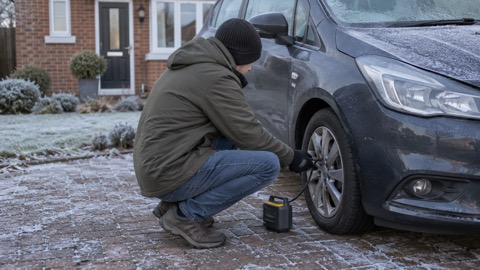 Ring RTC6000/RETC6000 Cordless Tyre InflatorSome units recalled