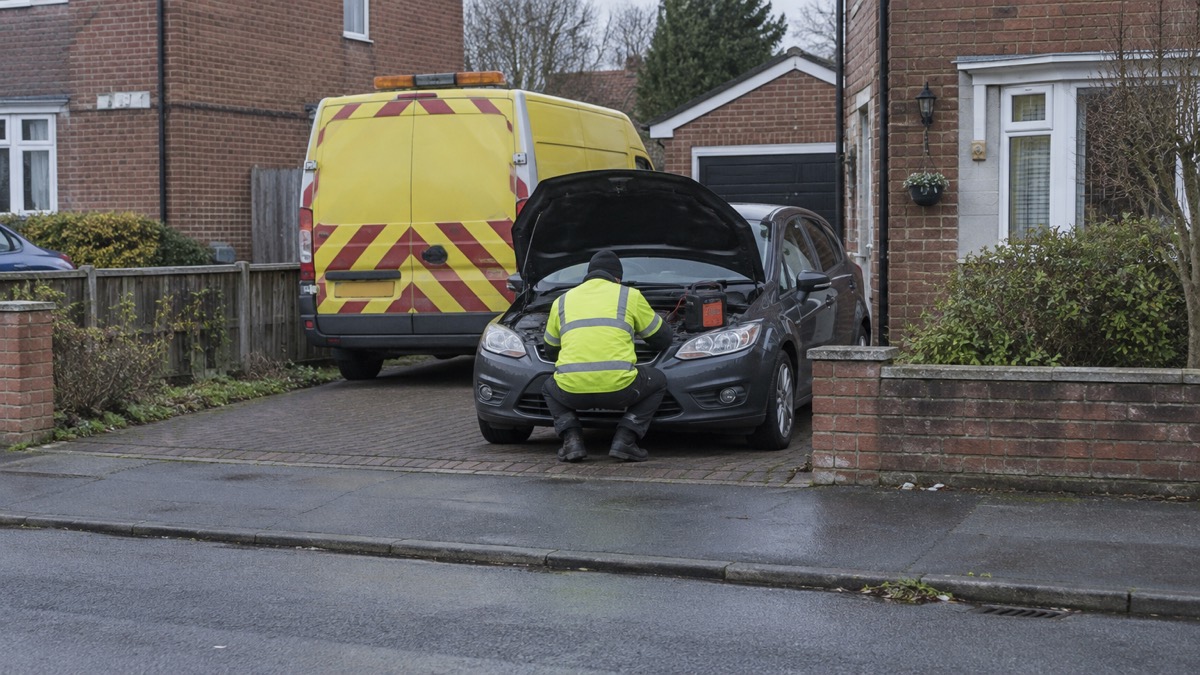
The Ring RJS030T Ultraboost 1500 is a 12V jump starter and power bank for a household car, made by Ring. The maker lists 350A starting output and 1500A peak amps, enough for petrol engines up to 6.0L and diesel engines up to 3.0L, and says it suits most cars, SUVs and light commercial vehicles1. It also charges phones and other devices from a Quick Charge USB-A port and USB-C, and has a large LCD screen showing its own battery level1.
If you are thinking of keeping one in the car, the practical points are these. Charge it fully indoors before you rely on it, using the USB-C input and a suitable power adapter, because the maker says to always fully charge the unit before use1. Check the cables and clamps before each use, since the maker states no regular maintenance is required beyond keeping it charged, storing it safely and checking those parts1. And know the boost function: if the car battery is below 1V, or below 9V with a flashing green light, the maker says to use the boost function rather than assume the jump starter has failed1.
This page sets out what the maker says the unit will and will not do, how to use it safely, and what to check before you depend on it. It is one option among several; for the wider picture, see portable jump starters: what they do and how to choose one.
What the Ultraboost 1500 is, and what it suits
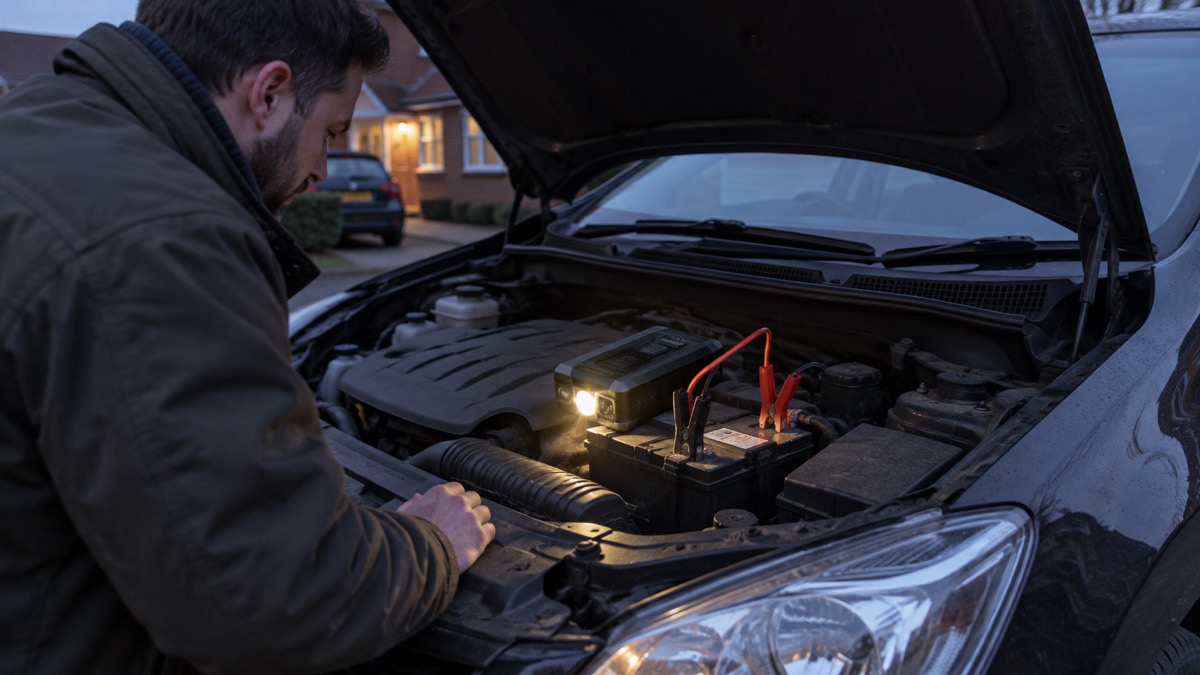
The Ultraboost 1500 is a single unit that does two jobs. As a jump starter it delivers 12V to a car battery through its clamps; as a power bank it charges USB devices from a Quick Charge USB-A port and a USB-C port1. The maker states that all models have a power bank function1. Inside is a 12,000 mAh rechargeable lithium-ion battery1.
The maker describes it as ideal for most cars, SUVs and light commercial vehicles, with petrol engines up to 6.0L and diesel engines up to 3.0L1. That covers the ordinary family car and a good many vans. It is not a workshop tool for heavy plant, and the maker does not claim it is. If your vehicle sits outside those engine limits, this is not the unit for it.
Two design details matter for a household. The first is the "Lock 'n' Load" battery terminal, which the maker describes as giving a secure, safe connection and easy-reach cables1. The second is Ringtelligence, which the maker says keeps users safe with reverse polarity protection and a spark-free design1. In plain terms, the unit is built to cope with the most common mistake, connecting the clamps the wrong way round, and to avoid a spark at the terminals.
The maker lists the unit at 204 x 125 x 105 mm, with a carton weight of 1.13 kg1. That is small enough to live in a car boot or a cupboard by the front door, and light enough to carry out to a car with a flat battery on a cold morning. The maker states it operates in temperatures from -20°C to +55°C, making it suitable for year-round use1, which matters in a UK winter when batteries are most likely to fail.
Specifications at a glance
The maker's own figures are the ones to rely on. Where you see a specification quoted elsewhere, check it against this table.
| Specification | Maker's figure |
|---|---|
| Product type | 12V jump starter and power bank1 |
| Battery | 12,000 mAh rechargeable lithium-ion1 |
| Starting output | 350A1 |
| Peak output | 1500A1 |
| Petrol engines | up to 6.0L1 |
| Diesel engines | up to 3.0L1 |
| Suitable vehicles | most cars, SUVs and light commercial vehicles1 |
| Charging input | USB-C, PD60W fast charge1 |
| USB outputs | Quick Charge USB-A and USB-C1 |
| Display | large LCD screen showing battery level1 |
| Light | integrated bright LED torch1 |
| Safety features | reverse polarity protection, spark-free design (Ringtelligence)1 |
| Operating temperature | -20°C to +55°C1 |
| Dimensions | 204 x 125 x 105 mm1 |
| Carton weight | 1.13 kg1 |
| Carton dimensions | H 100 x W 130 x D 218 mm1 |
| In the box | carry case and two USB-C charging cables1 |
| Barcode | 50551752536641 |
| Model code | RJS030T1 |
The maker's product page also carries a What Car? Recommended 2025 award1. That is the maker's own listing of an award, not an independent test result, so treat it as a label rather than a guarantee.
Starting power: what 350A and 1500A mean for your car
The two current figures do different jobs. The 350A starting output is the current the unit delivers to turn the engine over; the 1500A peak is the short burst it can supply at the moment of cranking1. The maker pairs those figures with engine limits of 6.0L petrol and 3.0L diesel1. A larger engine needs more current to turn it, which is why the limits are set by engine size rather than by vehicle type.
For a household, the useful question is whether your car falls inside those limits. Most family cars do. A large diesel van may not, and the maker's claim of suitability for light commercial vehicles should be read alongside the 3.0L diesel limit rather than instead of it1. If you are unsure of your engine size, check the vehicle's documents before you buy.
The unit is not a substitute for a healthy battery. It is there to get you started when a battery has gone flat, for example after a cold night, a light left on, or a car that has stood unused. Once started, the car's own charging system takes over. If a battery keeps going flat, the jump starter is masking a fault rather than fixing it, and the battery or charging system needs attention.
When the battery is almost flat: using the boost function
A jump starter normally needs to see some voltage in the car battery before it will deliver current. A battery that is deeply discharged can read too low for that, and the unit will refuse to start. The Ultraboost 1500 has a boost function for exactly this case, and the maker's indicator lights tell you when to use it.
| Indicator | What the maker says it means | What to do |
|---|---|---|
| Green light | connected correctly and good to jump start1 | Proceed with the jump start |
| Red light with audio warning | connected to the battery the wrong way around1 | Stop, disconnect, reconnect the correct way round |
| Flashing green light | battery has low voltage below 9V1 | Use the boost function1 |
| No lights | battery is below 1V1 | Use the boost function1 |
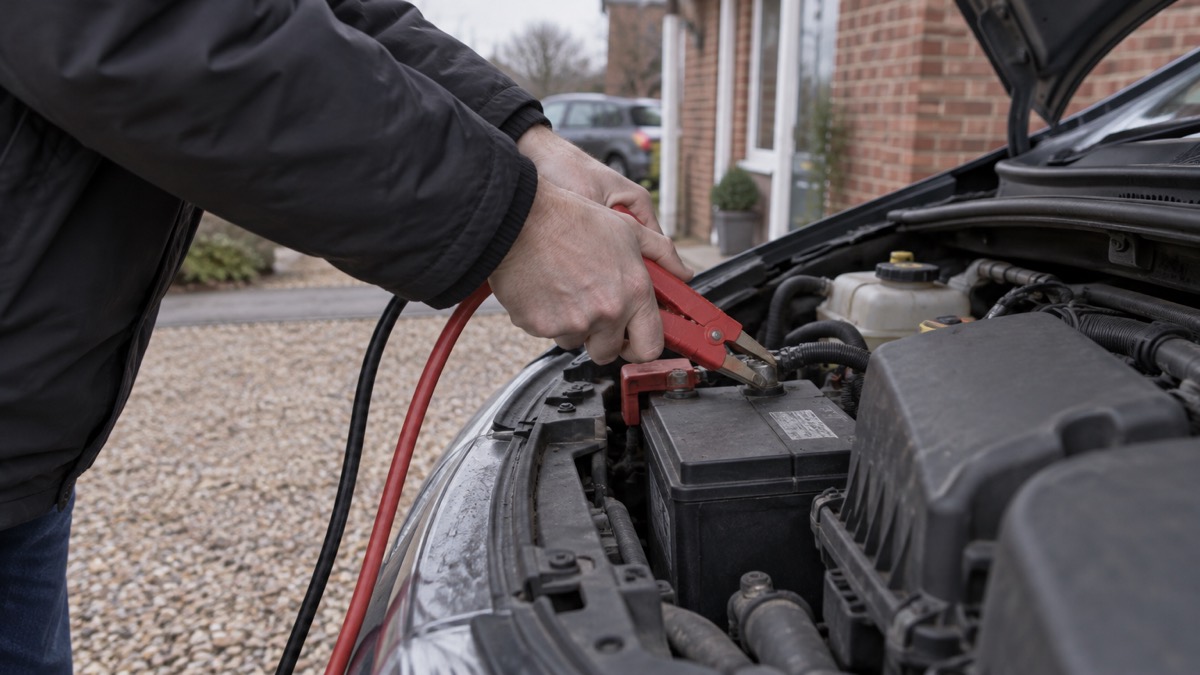
The sequence is straightforward. Connect the clamps, watch the indicator, and act on what it tells you. A red light with an audio warning means the clamps are on the wrong terminals; the maker's reverse polarity protection is there to prevent damage, but you should still disconnect and reconnect correctly rather than ignore it1. A flashing green light or no lights at all means the car battery is too flat for the normal mode, and the maker says to use the boost function1.
Charging it: USB-C, indoors, and fully before use
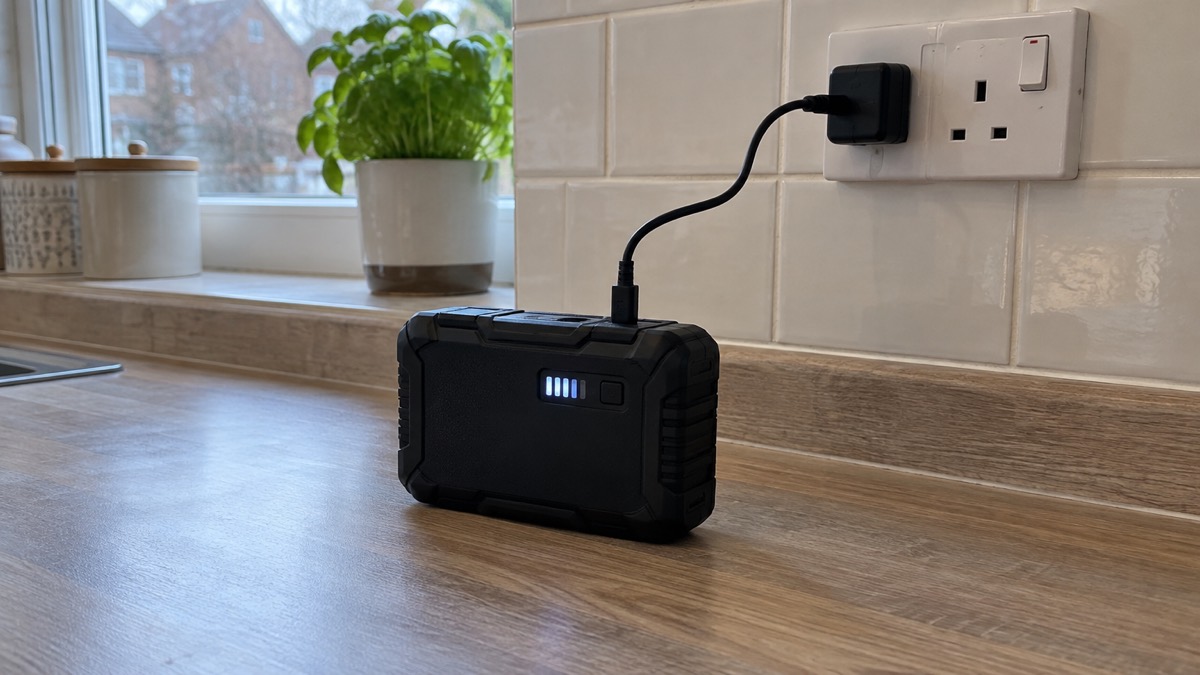
The maker's charging instructions are short and worth following exactly. Recharge via the USB-C input using a suitable power adapter1. The unit supports PD60W fast charge technology, which the maker says enables rapid recharging of the jump starter and fast charging of USB-C devices1. The pack includes two USB-C charging cables1; it does not list a mains adapter, so you will need one you already own.
The maker states: "For best performance, always fully charge the unit before use"1. It also states that charging should be done indoors within the recommended temperature range1. That is the instruction to follow at home: charge it inside, at room temperature, before it goes in the car, and recharge it after you have used it to start a car.
The maker lists the operating temperature as -20°C to +55°C1. That is the range in which the unit works, not a licence to charge it in a freezing car. Keep the charging itself indoors.
Looking after it: storage, checks and the torch
The maker's maintenance instruction is reassuringly simple: "No regular maintenance is required. Simply keep it charged, store it safely, and check cables and clamps before use"1. The check is the part that matters. Look at the clamps and cables before every use, and particularly before a long journey or a winter cold snap, when you are most likely to need it.
Store it where you will find it and where it will not be damaged: not loose in a boot under heavy shopping, and not somewhere it will sit at the bottom of a damp garage. The carry case included in the box helps here1. Keep it charged, and read the large LCD screen showing the current battery level before you set out1, so a flat jump starter is not the surprise that greets you when the car will not start.
The integrated bright LED torch illuminates the battery terminals during use1. That is its job: lighting the connection point when you are working under a bonnet in the dark. It is not a general purpose torch for walking or for a power cut. For those, see emergency lighting at home and the car kit guide.
The maker's parent company, OSRAM, is described by Ring as having been a world leader in automotive lighting for over 100 years, and Ring itself cites over 40 years' lighting experience3. That is background on the maker, not a claim about this unit's performance.
Where it fits in a household emergency kit
A jump starter earns its place in a car kit because a flat battery is one of the most common reasons a journey stops. The Ultraboost 1500 covers that job and adds a power bank for phones, which matters if you are stranded and need to call for help. The maker states that all models have a power bank function1, and the Quick Charge USB-A port is there for battery bank functionality1.
It is not a home backup power supply. It will charge a phone; it will not run a fridge or a heater. For the wider question of what to keep in the car, see what to keep in your car in case of a breakdown or storm. For the household side, the emergency kit section sets out what a home should hold.
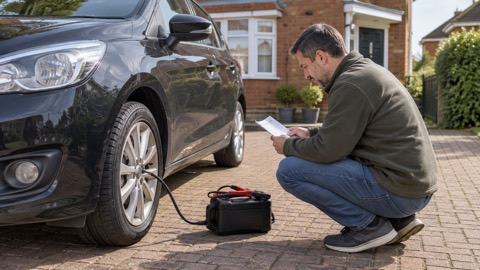
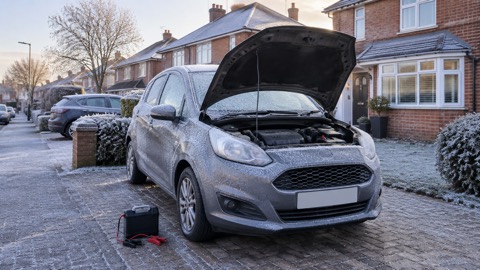
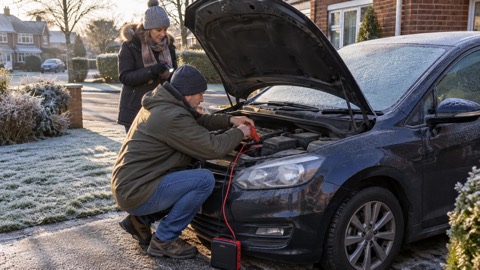
If you are comparing jump starters by size and engine coverage, the same maker offers the Ultraboost 500 and the Ultraboost 1000, and there is a separate NEBO Assist Air. Which suits you depends on your engine size and whether you want an air compressor as well. The jump starters guide explains what to look for.
Support, model code and what to do if something is wrong
The model code is RJS030T and the product name is Ultraboost 1500 Jump Starter1. The carton barcode is 50551752536641. Quote the model code when you contact the maker, look up instructions, or check that a unit you are offered is the one you want.
There is no recall of this product in the information available here. The lesson for any household is to register the product where the maker offers it, keep the packaging and model code, and check the government's product recall pages if you hear of a problem.
If your unit is damaged, stop using it. A damaged lithium-ion battery is not something to keep in the car. Contact the maker and follow its instructions for the product.
Sources (3)
- RJS030T Ultraboost 1500 Jump Starter, Ring Automotive, 2026
- Battery Care, Ring Automotive, 2026
- Torches, Ring Automotive, 2026

 NEBO Assist Air Jump Starter
 Ring Ultraboost 500
 Ring Ultraboost 1000