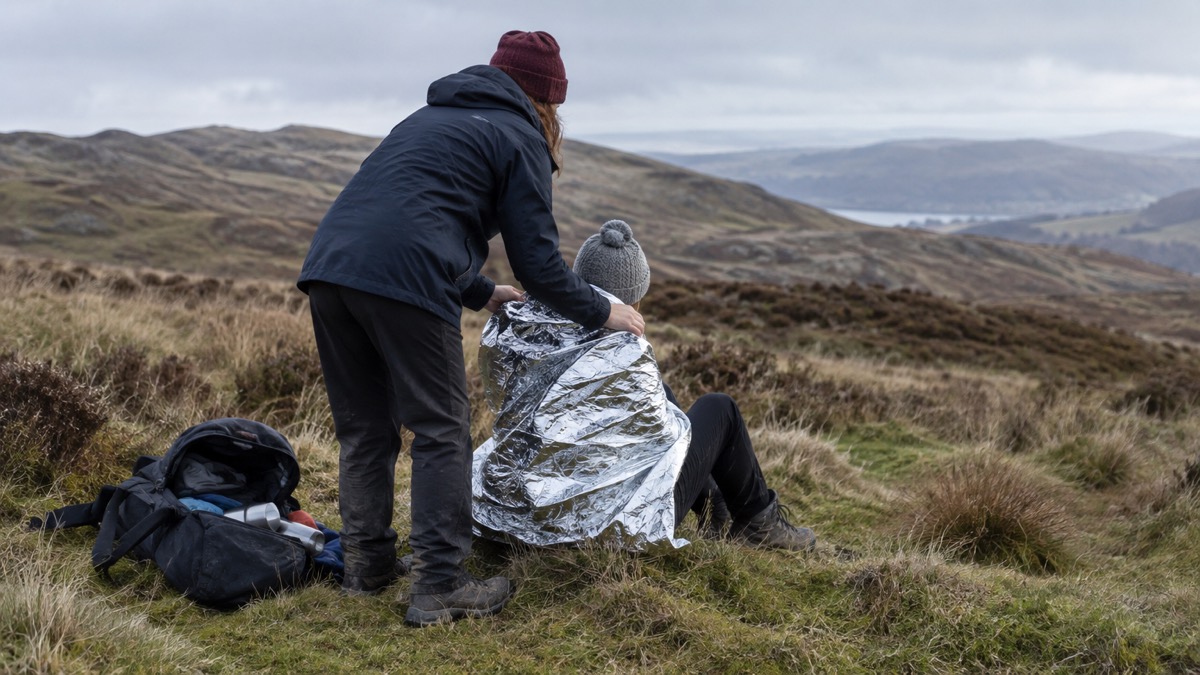
The Heatshield Thermal Blanket is a reusable foil blanket made by Lifesystems, sized to fit one or two people. It is made from heat reflective metalised low-density polyethylene, is reusable and tear-resistant, and is windproof and waterproof1. The single size weighs 84g and measures 2100 x 1500mm unpacked; the double measures 2500 x 1500mm unpacked1.
For a household, that makes it a small, light item that does two jobs: it keeps a person warm when the heating has failed or someone is hurt outdoors, and it helps rescuers find them. It packs down to 120 x 90 x 10mm in the single and 120 x 90 x 12mm in the double, so it fits in a glovebox, a rucksack lid pocket or the corner of a home emergency box1.
This page sets out the two sizes, what the blanket does and does not do, how to wrap someone who is cold or injured, and where to keep it so it is there when it matters. It is one item in a wider kit: for the full picture, see Emergency Kit: What a UK Household Should Keep Ready.
Single or double: sizes and weights
The two sizes are the same blanket in different dimensions, and the choice comes down to who it is for and where it will live.
| Single | Double | |
|---|---|---|
| Weight | 84g1 | 98g1 |
| Unpacked | 2100 x 1500mm1 | 2500 x 1500mm1 |
| Packed | 120 x 90 x 10mm1 | 120 x 90 x 12mm1 |
| Fits | 1 person | 1 or 2 people1 |
The single is the one for a personal rucksack, a walking jacket pocket or a car door pocket. At 84g it adds almost nothing to the weight of a day bag, which is why it suits walkers and anyone packing for an expedition. The double weighs 98g, against 84g for the single, and packs to 120 x 90 x 12mm against 120 x 90 x 10mm, so it is a little heavier and a little thicker in the bag, and gives you enough material to wrap a second person or to cover someone from shoulders to feet with room to tuck in1.
For a household kit, the practical answer is often one per person rather than one shared double. Official guidance in Scotland lists blankets in the home emergency kit2. A single blanket per person means nobody is waiting for their turn, and each person can keep their own blanket around them while moving. The maker's single is sized to fit 1 or 2 people and measures 2100 x 1500mm unpacked, while the double measures 2500 x 1500mm, so a single per person still leaves room to wrap up1.
Windproof and waterproof, so it cuts windchill
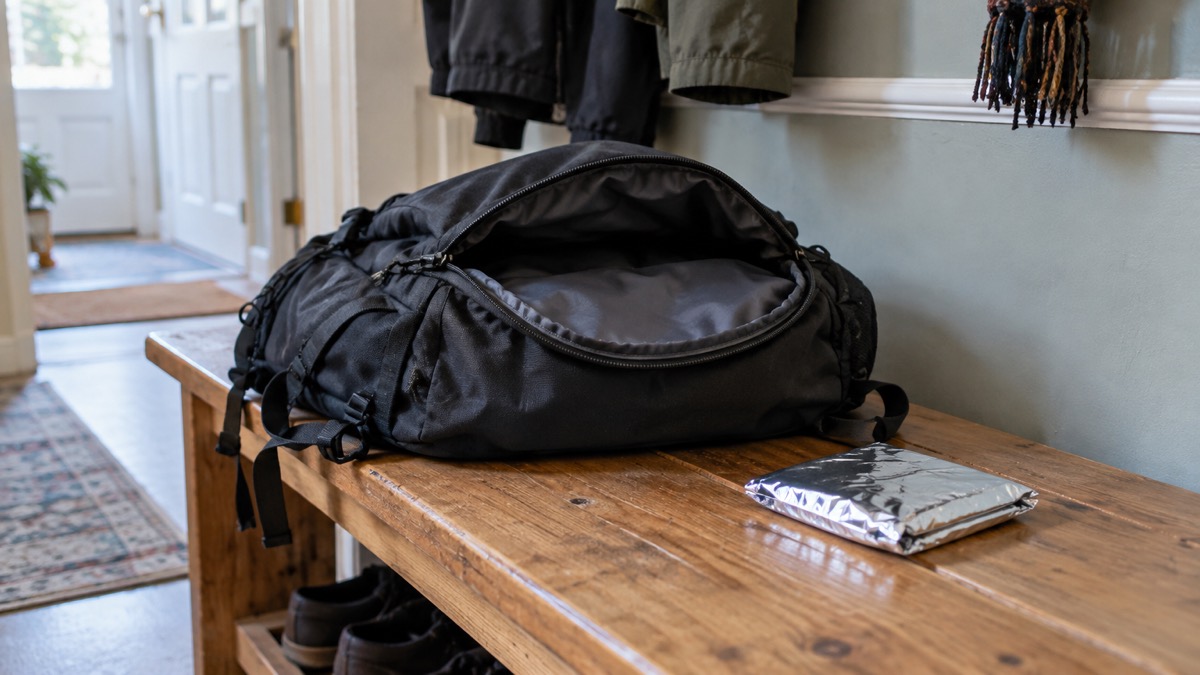
The blanket's value outdoors is not only that it reflects heat back. The maker says it is windproof and waterproof and that it reduces windchill1. Wind is what turns a cold wait into a dangerous one: it strips the warm layer of air from around the body and makes the same temperature feel far colder. A windproof layer over the top of clothing stops that loss.
That is why official winter driving advice treats a foil blanket as standard car kit. The West Yorkshire Prepared winter driving checklist says a foil or emergency blanket with 90% heat reflectivity or higher is ideal3. The same principle sits behind the wider advice to keep a blanket and warm clothes in the car in case of a breakdown4, and to take a blanket to keep warm if you get stuck5.
Waterproofing matters for a different reason. Wet clothing loses its insulation, and official hypothermia guidance is clear that wet clothes should be replaced with dry ones before a person is wrapped up6. A waterproof blanket over damp clothing will not dry anyone, but it will stop rain and spray from soaking them further while help is on its way.
Visible and radar reflective for search and rescue
The maker describes the blanket as highly visible and radar reflective for search and rescue teams1. In practice that means two things. The shiny surface catches light and shows up against dark ground, heather or tarmac, which helps a search party or a passing driver spot someone. The radar reflective quality helps helicopter and coastguard crews using radar to pick out a person on the ground.
This is the same reasoning behind carrying high visibility clothing in the car. If you are out of the vehicle on an unlit road, being seen is a safety measure in its own right. For more on that, see Why Carry a Hi-Vis Jacket and Blanket in the Car.
The blanket is not a substitute for telling someone where you are. If you are stuck or injured, call 999 or 112 and give your location, then wrap up and stay put unless it is unsafe to do so. The blanket buys time; the call brings help.
Wrapping someone who is injured or cold
This is where the blanket earns its place in a first aid kit. Official first aid guidance repeatedly names a blanket as the thing to reach for.
- Hypothermia: remove wet clothing, replace with dry clothes, then wrap the person in blankets, a sleeping bag or a dry towel and make sure their head is covered6. NHS Inform adds that you should not remove your own clothing to give to the person6. The Red Cross teaches the same sequence: drier clothes, a warm hat, then a blanket wrapped around them7.
- Shock: help the casualty to lie down on a blanket or rug if there is one nearby, to protect them from the cold8. St John Ambulance adds that while waiting for help you should cover them with a coat or blanket to keep them warm9.
- Burns and scalds: keep the person warm with a blanket or layers of clothing, but avoid the injured area10. The Northern Burn Care Network gives the same advice: keep the person warm using a blanket or layers of clothing11.
- Frostbite: wrap yourself in something warm like a blanket, sleeping bag or dry towel12.
- Falls: if you have fallen and cannot get up, keep warm while you wait for help by covering yourself with anything you can reach, such as a towel, coat, rug or blanket13.
- If the person cannot be moved indoors: find something for them to rest on to protect them from the cold ground, like a towel or a blanket14.
The NHS also lists an aluminium blanket in the first aid kit, noting that it retains body heat in emergencies and is essential for first aid and survival15.
Packing it in a rucksack or home emergency kit
Official emergency kit lists across the UK name blankets again and again, which tells you how highly they are rated for a household with no specialist training.
- Scotland's Ready Scotland emergency kit lists blankets for the home and a blanket for the car2.
- Nottinghamshire County Council suggests a change of clothes per person or an emergency blanket14.
- Newport City Council's emergency kit checklist includes a blanket and warm clothes for the car4.
- Lincolnshire County Council advises a sleeping bag or warm blanket for each person, and extra bedding in winter16.
- Dumfries and Galloway suggests a waterproof container or bag for the household pack, kept somewhere easy to reach17.
- The UK government's Be Ready Household Emergency Plan lists blankets, sleeping bags and warm clothing18.
- West Yorkshire Prepared's flooding checklist includes blankets, warm clothing, waterproofs, rubber gloves and a first aid kit19.
- The Royal Borough of Windsor and Maidenhead's home emergency plan lists warm clothing and blankets in the grab bag20.
- Croydon's flood evacuation checklist includes blankets in the flood kit21.
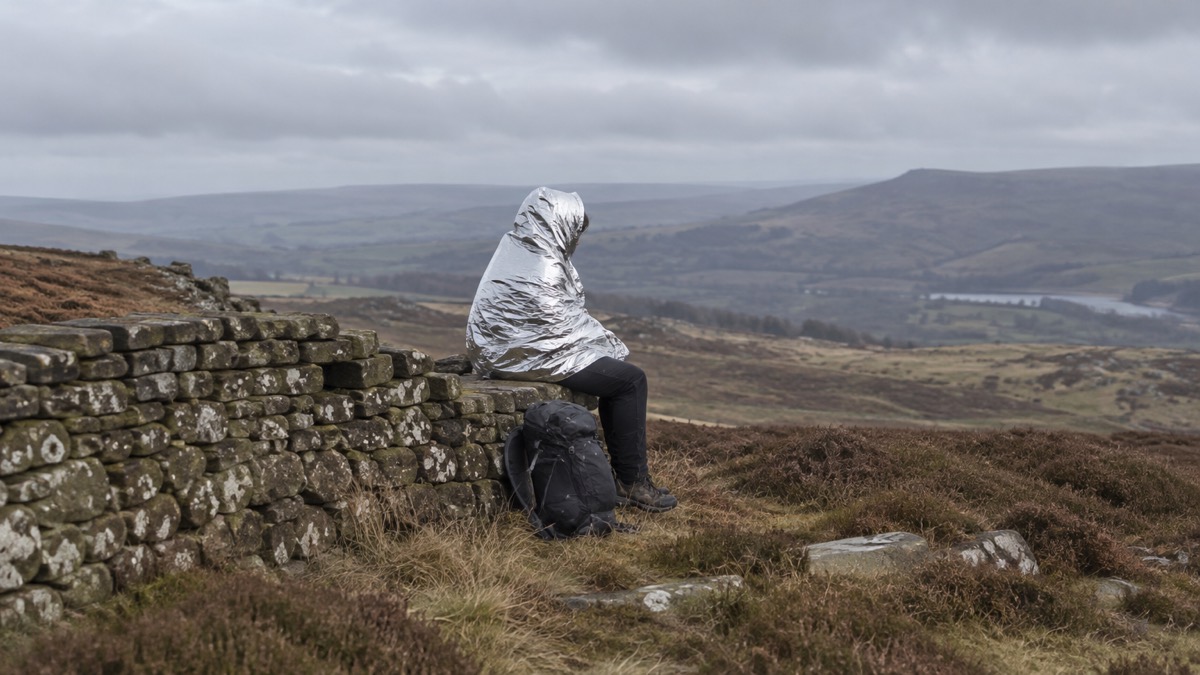
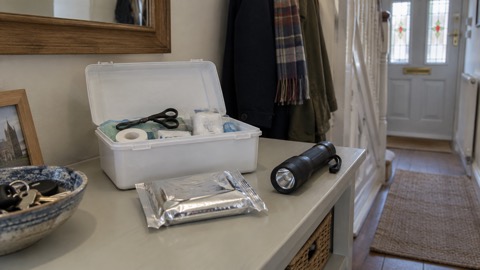
Where to put it depends on the job. In a grab bag, a single blanket per person is light enough not to notice. In the car, keep one in the door pocket or under the seat where you can reach it without opening the boot. At home, keep one with the blankets and warm clothing you would reach for in a power cut. SP Energy Networks advises keeping a warm blanket handy during a power cut22, and Staffordshire County Council suggests lap blankets for people sitting for long periods23.
What it can and cannot do
The blanket is a heat reflector, not a heat source. It will slow heat loss from a person who is already warm and dry, and it will cut wind and rain. It will not warm someone who is already dangerously cold on its own, and it will not dry wet clothing.
It is also not a shelter. A survival bag encloses the body and gives more protection from wind and rain; a blanket is quicker to deploy and easier to share. If you are choosing between the two for a rucksack, see Survival Bag or Foil Blanket: Which to Carry. For the wider family of foil blankets, see Foil Blankets: How They Keep You Warm and How to Use One.
The maker lists the blanket as DofE Recommended Kit and gives it an overall rating of 4.875 out of 5 from 8 reviews1. Treat ratings as a guide to how owners have found it, not as a guarantee for your circumstances.
Sources (23)
- Heatshield Thermal Blanket, Lifesystems, 2026-10-28
- Emergency kit, Ready Scotland, 2026-10-22
- Winter Driving Checklist, West Yorkshire Prepared, 2020-09
- Emergency kit checklist, Newport City Council, 2026-10-29
- Low temperatures and heavy snow, Dorset Prepared, 2024-03-14
- Hypothermia (low body temperature), NHS Inform, 2026-07-15
- Hypothermia, British Red Cross, 2026-10-28
- Shock first aid, NHS Inform, 2026-07-24
- Shock, St John Ambulance, 2026-10-28
- Burns and scalds, NHS Inform, 2026-07-31
- First aid, Northern Burn Care Network, 2022-03-11
- Frostbite, NHS, 2025-06-09
- Falls, NHS, 2025-03-06
- Preparing for an emergency, Nottinghamshire County Council, 2026-10-29
- What should I keep in my first aid kit?, NHS, 2026-10-25
- Get help and advice in an emergency, Lincolnshire County Council, 2026-10-29
- Create a household emergency plan, Dumfries and Galloway Council, 2026
- Be Ready Household Emergency Plan, UK Government, 2026
- Flood evacuation checklist, Croydon Council, 2025
- Emergency home emergency plan, Royal Borough of Windsor and Maidenhead, 2025-10
- Preparing for emergencies, North Hertfordshire Council, 2015-01-12
- What to do in a power cut, SP Energy Networks, 2026-10-26
- Stay warm and safe, Staffordshire County Council, 2026
 Blizzard EMS Survival Blanket
 Steroplast Foil Blanket