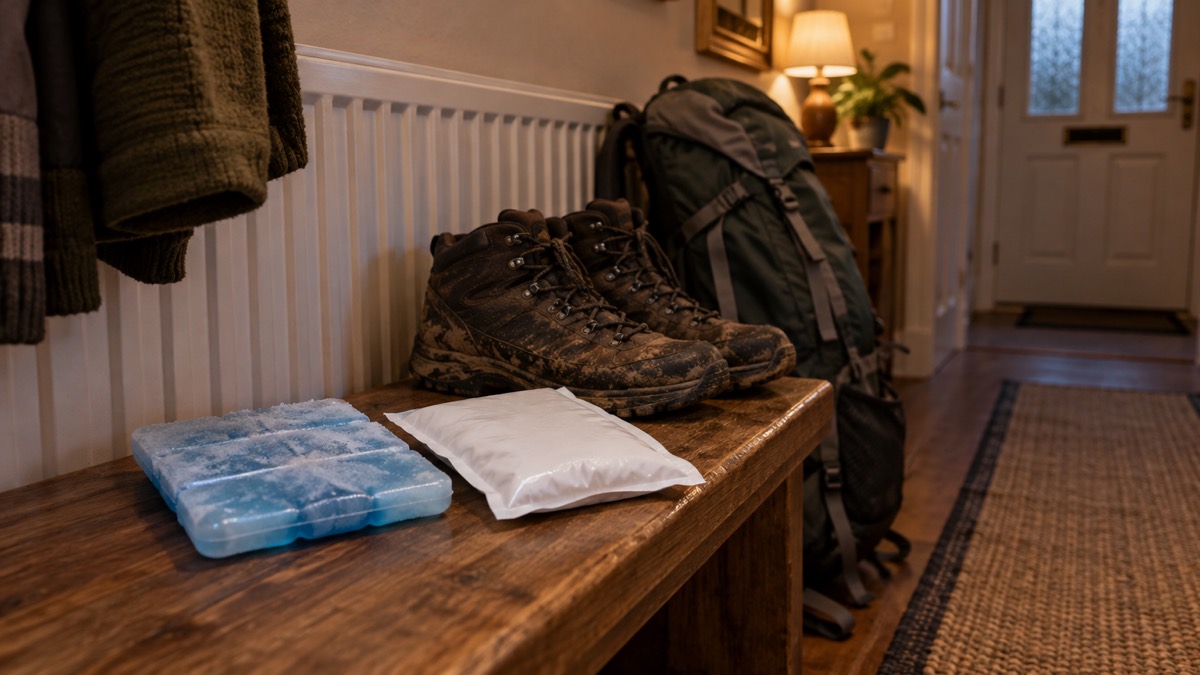
Most minor sprains and strains can be treated at home with self-care, and an ice pack is one of the simplest things you can reach for. The NHS advises applying an ice pack to the affected area for 15 to 20 minutes every two to three hours, wrapped in a towel so that it does not touch your skin directly and cause an ice burn1. The British Red Cross puts a firmer limit on it: anything over 10 minutes can cause further damage2. Where the two differ, treat 10 minutes as the ceiling and the NHS's 15 to 20 minutes as the target only if your skin is well protected and you are checking it.
The choice between an instant pack and a reusable one comes down to where you are and whether there is a freezer. An instant pack cools the moment you squeeze it and needs no pre-cooling, so it suits a car, a sports bag or a cupboard3. A reusable pack lives in the freezer, can be applied again and again over the days a sprain takes to settle, and some can be heated as well as frozen5. Many households keep both: a reusable one at home, an instant one in the bag that leaves the house.
Whichever you use, the safety rules are the same. Wrap it, time it, check the skin, and know when a knock needs more than cold and rest.
Most minor sprains and strains can be treated at home
Injuries to the soft structure around the bones and joints are commonly called strains and sprains, and they are often associated with sports activities3. A trip on the stairs, a heavy bag carried awkwardly or a sudden twist can do the same. The main signs are pain and tenderness around the joint or muscle3. Most minor ones are relatively minor and can be treated at home with self-care techniques, such as paracetamol or PRICE therapy1.
Self-care is the first line for a wide range of everyday problems. Many common illnesses and injuries can be treated at home with rest, painkillers such as paracetamol or ibuprofen, and basic first aid8. For a sprain or strain, the cold step is the one that does the most in the first hours: an ice pack could be ice or frozen vegetables wrapped in a tea towel, and applying it to the injury will reduce the swelling and pain2.
You do not need special kit to start. NHS guidance for a bump or bruise says a cold flannel or a covered ice pack on the spot for a few minutes will help reduce swelling and cool it down9. For a strain or sprain, an ice pack could be ice or frozen vegetables wrapped in a tea towel, and applying it to the injury will reduce the swelling and pain2. What a purpose-made pack gives you is convenience and a shape that stays where you put it.
| What you have to hand | What it does | Suits |
|---|---|---|
| Bag of frozen vegetables in a tea towel | Cools the area, reduces swelling and pain2 | A one-off knock at home |
| Cold flannel | Cools and reduces swelling on a bump9 | Bruises, small children |
| Instant ice pack | Cools immediately when squeezed, no freezer needed3 | Car, sports bag, days out |
| Reusable ice pack or bag | Freeze and reapply, washable, some heat as well5 | Home, clubs, ongoing joint pain |
Instant or reusable: how each one works
The two kinds of pack do the same job by different means, and knowing how each works tells you which to reach for.
An instant ice pack uses endothermic reactions to cool down immediately when you squeeze it3. The maker's instruction is simply to squeeze the water sachet inside to activate the ice pack, and it states that no freezer storage is needed6. A second maker describes its large instant pack as activating once squeezed, with no pre-cooling required4. Once triggered, an instant pack is single-use: it stays cold for a period and then goes in the bin.
A reusable pack works the other way round. It holds a gel or water that you chill in advance, so the cold is stored up and released when you need it. One maker states that the high-quality internal gel can be reheated and frozen multiple times without losing effectiveness5. A reusable ice bag is different again: it is a watertight bag with a screw top that you fill with ice cubes, crushed ice or cold water and apply directly to the affected area7. Both kinds are washable, which matters when they are used on broken skin or by different people.
| Feature | Instant pack | Reusable pack or bag |
|---|---|---|
| Ready when | Squeeze to activate3 | Needs freezing in advance5 |
| Freezer needed | No freezer storage needed6 | Yes5 |
| Uses | Single-use4 | Reusable, refreezable5 |
| Cleaning | Not applicable | Washable with soap and water, disinfectant safe7 |
| Where it is kept | Sports first aid kits, sports physio kits, workplaces, treatment centres6 | Home, club, ongoing joint pain7 |
Instant ice packs for the first minutes after an injury
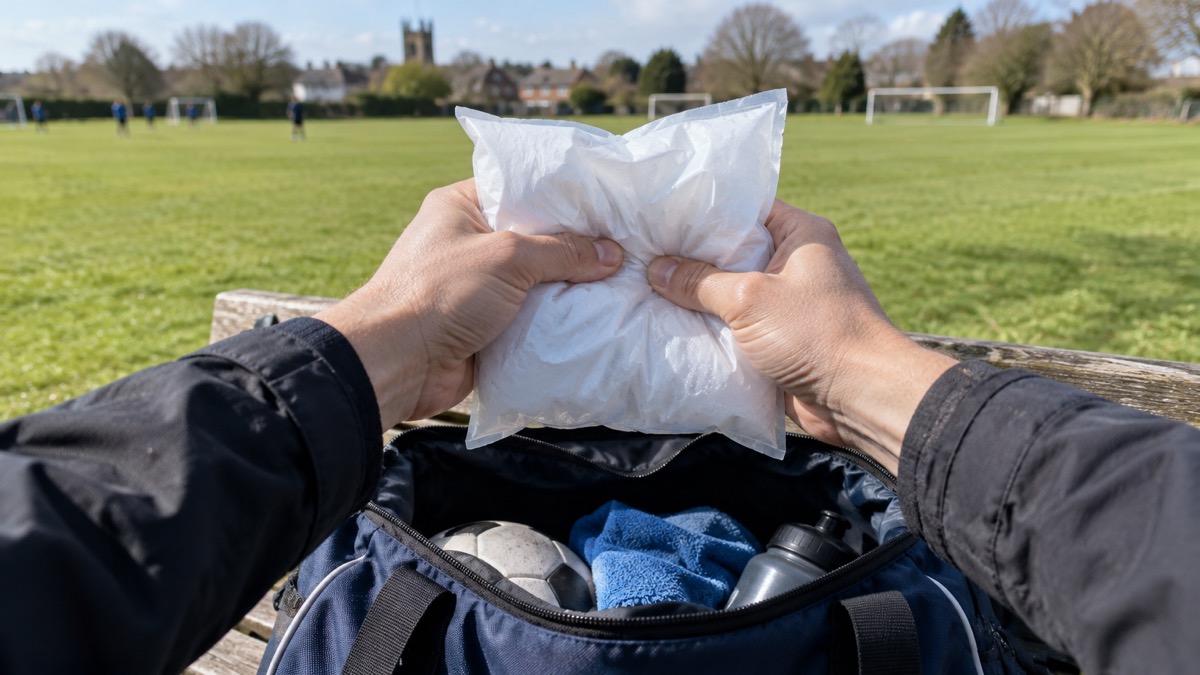
The value of an instant pack is timing. In the first minutes after a knock, when you are away from home or the freezer is full, an instant pack gives you cold therapy straight away. One maker describes its instant packs as providing instant treatment during the acute stage of an injury, for sprains, knocks and bruises5. Another says its large instant pack is particularly useful for sports injuries, sprains and bruising4.
Instant packs are commonly kept where injuries happen away from home. Long instant cold packs are commonly kept in sports first aid kits and sports physio medical kits, and are used at sports events, training grounds, workplaces and offices, doctors' surgeries and hospitals, physiotherapists and treatment centres6. They are also used for treating acute sports injuries, soothing sunburns, relieving insect bites, and managing tendonitis symptoms during flare-ups6.
The trade-off is duration and cost over time. One maker states its large instant pack remains cold for up to 20 minutes4, which covers a single application. That is why instant packs tend to sit alongside a reusable pack rather than replace it.
Reusable ice packs: ideal for sprains, joint pain and bruises
A reusable pack earns its place over the days an injury takes to settle. One maker lists muscular sprains, joint pain and bruises as what its reusable ice pack is for, with pain relief and swelling reduction as its uses7. A reusable hot and cold pack from the same maker is described as reducing swelling and the appearance of bruises, and as useful for insect bites, headaches, toothaches, migraines and sports injuries5.
Reusable kit comes in two main forms, and the shape decides which injuries it suits:
- A gel pack is frozen flat and laid over the area.
- A reusable ice bag is filled with ice cubes, crushed ice or cold water. Its pleated design conforms to body contours, and its shape adapts to the injured area, such as the shoulder, elbow, hip, lower back, thigh, knee, calf and elbow5. One maker's bag holds 1000 ml7.
A reusable pack also gives you the option of heat once the acute stage has passed. The same gel pack can be warmed, and the maker advises returning it to room temperature between uses to ensure its longevity and effectiveness5. Warm treatments are not recommended as first aid in the early stage of a strain or sprain2, so keep heat for later recovery and follow the maker's instructions.
Using an ice pack as part of PRICE
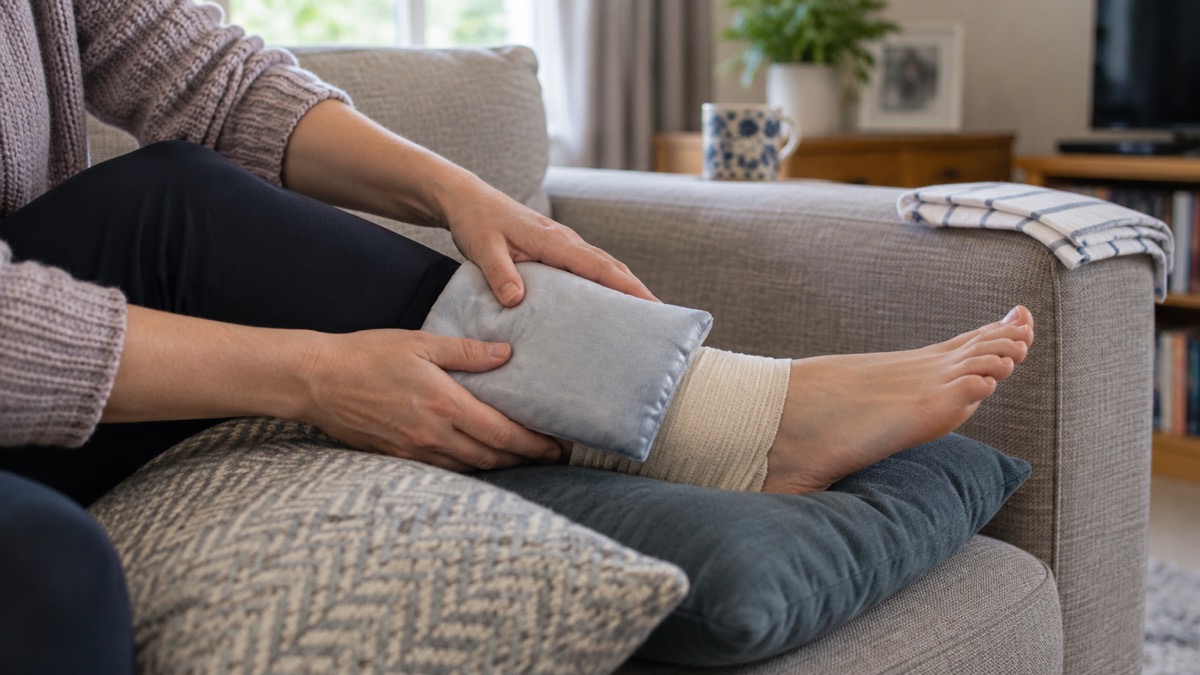
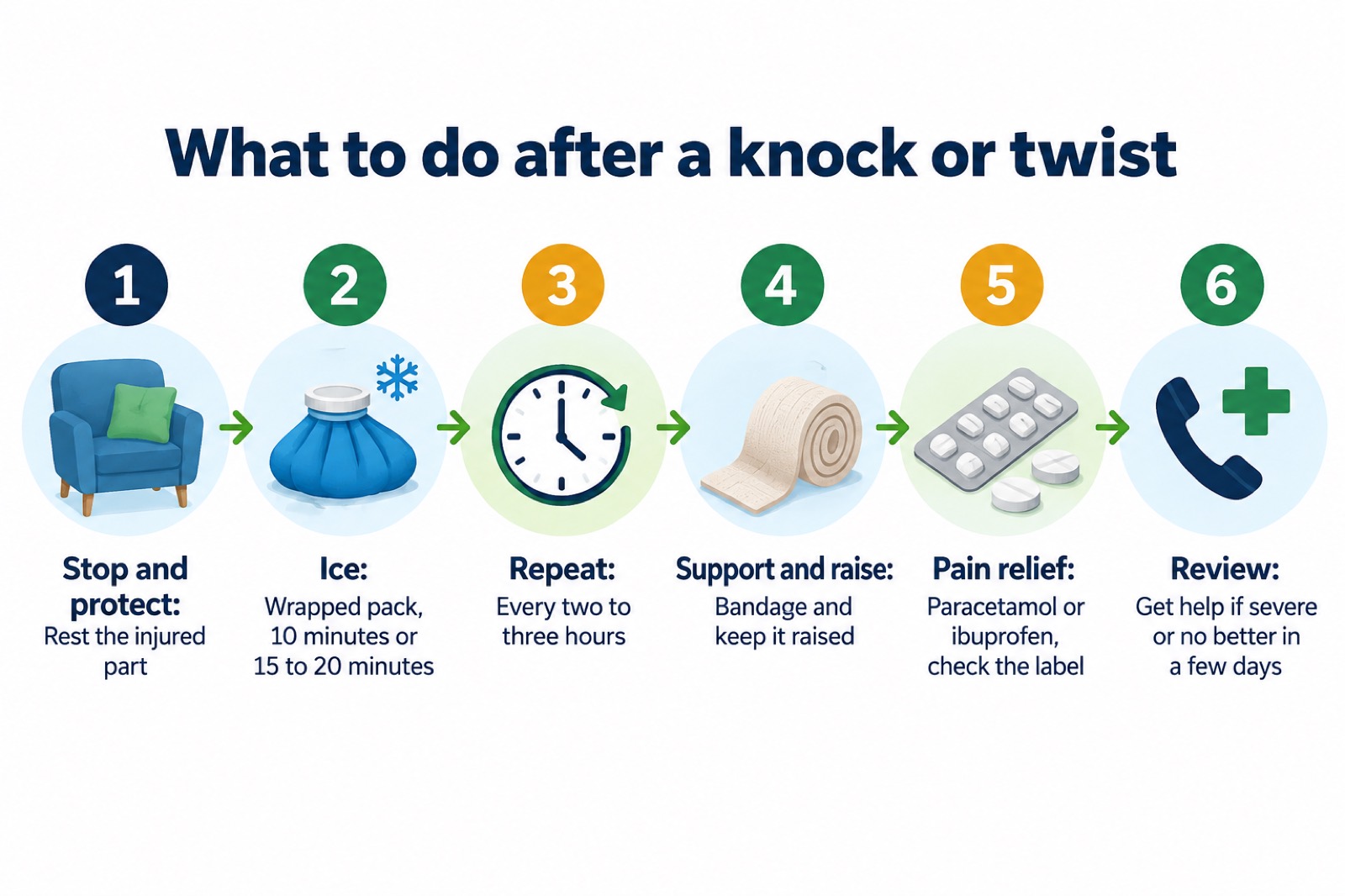
Cold therapy works best as one step in a sequence, not on its own. The NHS sets out PRICE therapy, and the ice step is specific: apply an ice pack to the affected area for 15 to 20 minutes every two to three hours, wrapped in a towel so that it does not directly touch your skin and cause an ice burn1. One maker gives the same rhythm for the first 48 hours, to reduce swelling and alleviate pain5.
The British Red Cross teaches a similar sequence under the RICE method, with a shorter cold step: apply an ice pack or cold compress, trying to cool the area with an ice pack or a bag of frozen vegetables wrapped in a tea towel against the injury3. It warns that anything over 10 minutes can cause further damage2. If you are following the Red Cross, keep to 10 minutes and check the skin; if you are following the NHS timing, protect the skin well and check it often.
The rest of the sequence matters as much as the cold:
- Protect and rest. After using the RICE method, rest the injured part3.
- Comfort and support. Keep the injured part of the body supported in a raised position, then apply a bandage around the injury2. If it is just a strain and some of the swelling has gone down as a result of the ice pack, apply a crepe bandage for support, securing it with tape or safety pins10.
- Pain relief if needed. Paracetamol or ibuprofen can be used alongside, following the label1.
Signs of a sprain or strain
A sprain or strain shows itself in ways you can recognise at home. The main signs are pain and tenderness around the joint or muscle3. Swelling and bruising commonly follow, which is why cold therapy in the first hours helps: the instant cold pack's immediate coldness reduces blood flow in the targeted area, managing pain symptoms and discomfort, and preventing swelling and bruising6.
Some causes are easy to overlook. Strain and sprain injuries are the obvious injuries resulting from poor ergonomics12. They are often associated with sports activities too3.
It helps to know what a sprain is not. A suspected broken bone is a different matter: NHS Scotland lists signs of shock, especially if the thigh bone or pelvis are injured, among the signs to act on13. If you suspect a break, or the injury is significantly severe, seek immediate medical attention rather than reaching for an ice pack5.
When to seek medical advice
Most sprains and strains settle with self-care, but some need a professional eye. The British Red Cross advises that if the pain is severe or they cannot move the injured part, seek medical advice3. A maker of reusable packs lists the signs that should prompt help: persistent or worsening pain, severe or increasing swelling, changes in skin colour such as blue or very pale skin, numbness or tingling that does not improve, signs of infection such as increased warmth, redness or pus, no improvement after a few days of self-care, or sudden acute pain unmanageable with over-the-counter pain relief7. It also advises seeing a doctor for sudden, sharp or unexpected injuries, especially if they limit movement or function5.
Where to go depends on how urgent it is. For sprains, minor burns and head injuries, a minor injury unit or urgent treatment centre needs no appointment and is open late9. In Wales, minor injury units treat dislocations, sprains and strains16. If you are unsure, NHS 111 can direct you to the right service, and 999 is for emergencies only8.
Keeping ice packs in a first aid kit
Whether to keep cold therapy in the kit depends on the household. A reusable pack needs a freezer, so it suits a home kit; an instant pack needs nothing but a dry cupboard, so it suits a car, a sports bag or a kit that goes out with you. You may choose to have two kits: a large one that stays at home and a smaller emergency kit for when you go out17. A first aid kit is also part of a household emergency pack.
Store the kit where everyone knows to look. Use plastic boxes or backpacks to keep the supplies together, and keep the kit in a designated place that all household members know. First aid kits are also typically stored in a green box with a white cross and should be easy to locate18. If gloves are available in your first aid kit, wear them whenever you are cleaning wounds, handling bodily fluids, or disposing of waste18.
For a fuller list of what belongs alongside the ice pack, see our guide to first aid kits for the home and the wider first aid at home section. If you are treating a sprain in more detail, the page on sprains, strains and ice packs walks through the whole routine.
Sources (18)
- Hot weather advice, NHS Central East Integrated Care Board, 2026-08-04
- Strains and sprains, British Red Cross, 2026-10-25
- Sprains and strains, St John Ambulance, 2026-10-28
- Easy Ice Instant Ice Pack Large, Wallace Cameron, 2026-05-15
- Steroplast Reusable Hot and Cold Pack, Steroplast, 2026-10-29
- Sterofreeze Instant Ice Packs 29.5cm x 13cm, Steroplast, 2026-10-28
- Reusable Ice Bag, Steroplast, 2026-10-28
- Alternatives to 999, South Central Ambulance Service, 2026-10-29
- Where is best?, NHS Cheshire and Merseyside, 2026-03-24
- First aid kit, NHS 111 Wales, 2021
- Prepare for winter, King Street Surgery, 2026-01-20
- Febrile seizure, British Red Cross, 2026-10-29
- Fracture first aid, NHS inform, 2026-07-24
- Stay cool and safe in hot weather, Somerset Council, 2026-07-08
- Safety first aid kit, NHS 111 Wales, 2021-04-19
- Minor injury unit, NHS 111 Wales, 2021
- First aid, nidirect, 2025-12-04
- What To Put in a First Aid Kit - St John Ambulance, NHS UK / St John Ambulance
 Semi vs Fully Automatic AED
 Indoor or Outdoor Defib Cabinet
 Burn Gel vs Cling Film
 Saline Pods or Eyewash Bottle
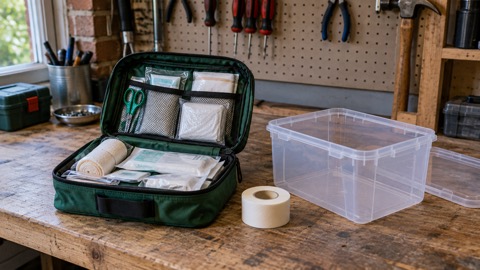 Ready-Made or Homemade Kit