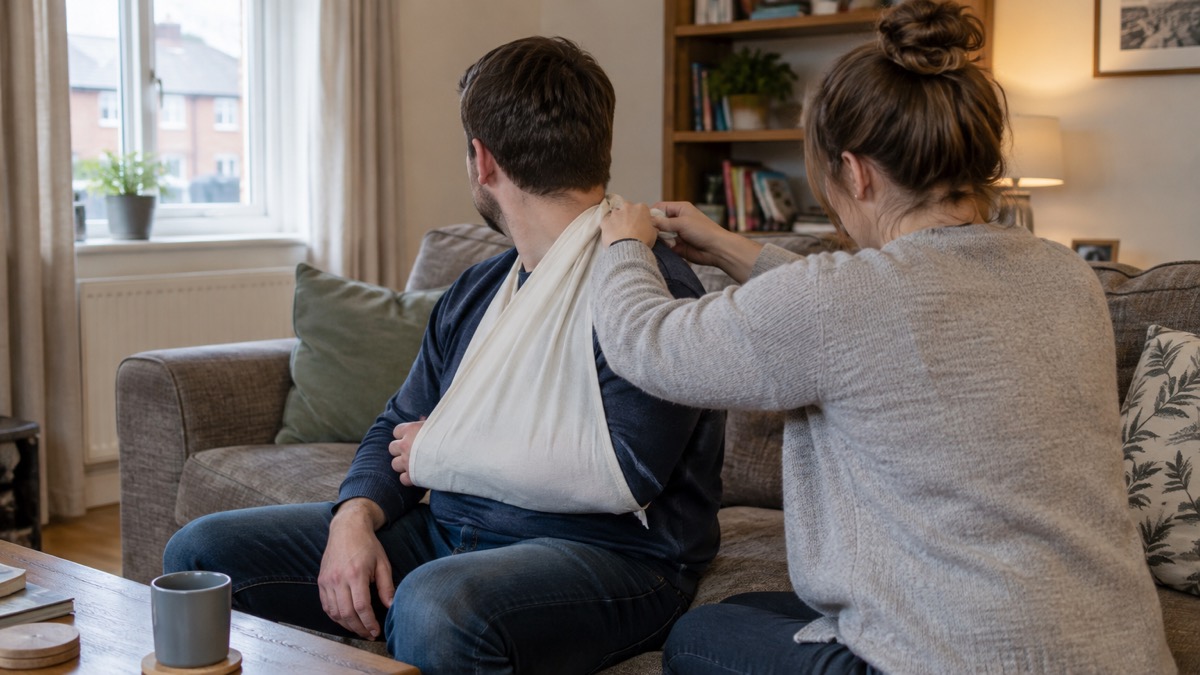
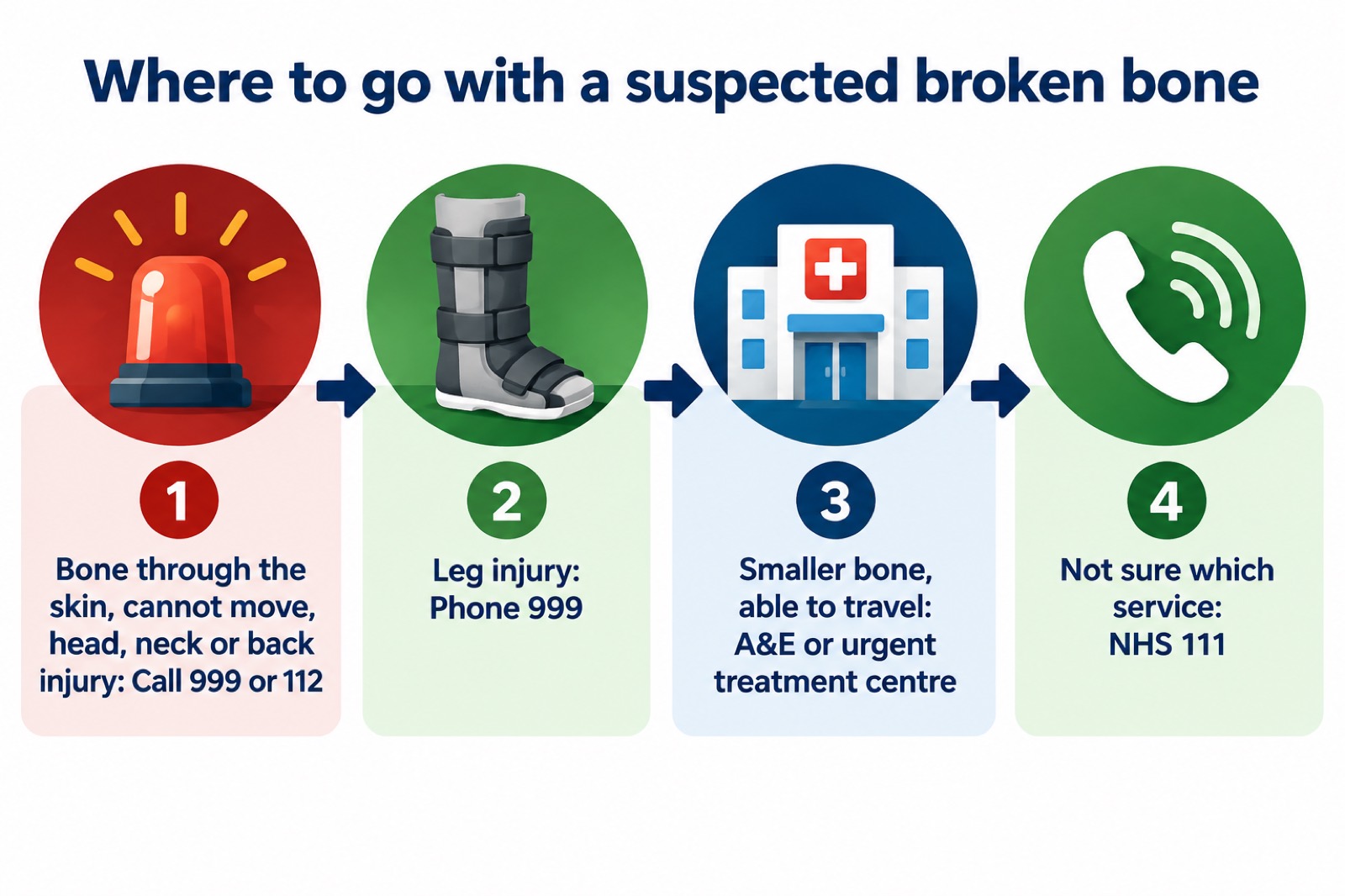
If you think someone has broken a bone, the first question is whether to call 999. Call 999 or 112 if the bone is through the skin, if the person cannot move for themselves or is in a lot of pain, if the injury is to the head, neck, back or pelvis, or if it is a leg injury1. Otherwise, keep the injured part still, support the joints above and below it with your hands, and get the person to A&E or an urgent treatment centre4.
While you wait, do not try to straighten the limb or push a dislocation back into place, and do not give the person anything to eat or drink in case they need an anaesthetic at hospital1. Keep them warm and stay with them until help arrives5.
You cannot usually tell a break from a sprain by looking. The British Red Cross says it is usually impossible to differentiate between a broken bone and a sprain or strain without an X-ray, and that the only accurate way to diagnose a broken bone is to X-ray it1. If you are in any doubt about how serious an injury is, seek medical advice1.
When a suspected broken bone means calling 999
An ambulance is for injuries that threaten life or limb, or that cannot safely be moved without one. St John Ambulance sets out the categories plainly: open fractures and long bone fractures need immediate transfer to A&E by calling 999 or 112, and so do suspected broken back, neck or pelvis2. The British Red Cross adds that you should call 999 if the person is unable to move for themselves or is in a lot of pain1.
For children, the NHS advice is direct: if you cannot easily move your child without causing pain, call 999 for an ambulance7. The British Red Cross baby and child booklet lists the same triggers for calling 999 or 112: when the break is so severe that you cannot control the pain, when the bone is sticking out of the skin, when it is a leg injury and you cannot transport the person yourself, or when the injury involves trauma to the head or neck8.
NHS inform's fracture guidance is simpler still on one point: phone 999 for emergency help if the casualty has a leg injury4. The North East Ambulance Service explains the general test behind all of this: call 999 when someone is seriously ill or has life-threatening injuries, for example a traumatic head injury, severe blood loss, chest pains or loss of consciousness5.
If the injury is to the head, neck or back, do not move the person at all. NHS inform says that if you think someone may have a spinal injury, do not try to move them until the emergency services reach you9. That applies even if they are uncomfortable on the floor: keep them warm, reassure them and wait.
Signs that a bone may be broken
A break is not always obvious. The British Red Cross lists the signs as being in a lot of pain, lying in an unnatural position after a fall or a blow from an object, and, in severe cases, a limb that is misshapen or has an open wound1. St John Ambulance gives a fuller list: deformity, swelling and bruising around the fracture; pain or difficulty moving the area; a limb that looks shorter, twisted or bent; a grating noise or feeling from the ends of the broken bones; difficulty or being unable to move the limb normally; a wound over the fracture; and signs of shock2.
Signs of shock matter particularly with certain injuries. Both NHS inform and St John Ambulance single out fractures of the thigh bone, hip or pelvis as likely to cause shock, so watch for it and treat it if it appears2. Our page on shock explains what to look for and what to do while help comes.
Children are a special case. NHS inform notes that a lot of force is needed to break a bone, unless it is diseased or old, but that bones which are still growing can bend easily and may split or crack4. A child's injury can therefore be a fracture without the dramatic deformity an adult break might show.
| Sign | What it can mean |
|---|---|
| Deformity, swelling, bruising | Possible fracture around the area2 |
| Limb looks shorter, twisted or bent | Possible fracture2 |
| Grating noise or feeling | Ends of broken bone moving2 |
| Wound over the fracture | Open fracture, call 9992 |
| Signs of shock | Especially with thigh, hip or pelvis injury2 |
If you are in any doubt about the severity of the injury, seek medical advice, and do the same if it causes pain or discomfort and the symptoms do not improve1.
Keep the injured part still until help arrives
The core of fracture first aid is immobilisation: stop the injured part moving, and support it so it does not move on its own. NHS inform advises you to tell the casualty to stay still, support the joints below and above the injured area with your hands, and place padding around the injury for extra support4. The British Red Cross child guidance follows the same pattern: assist the child to keep still, supporting the joints above and below the injured area, place padding around any open wound, and secure the limb to an uninjured part of the body with a sling or bandage8.
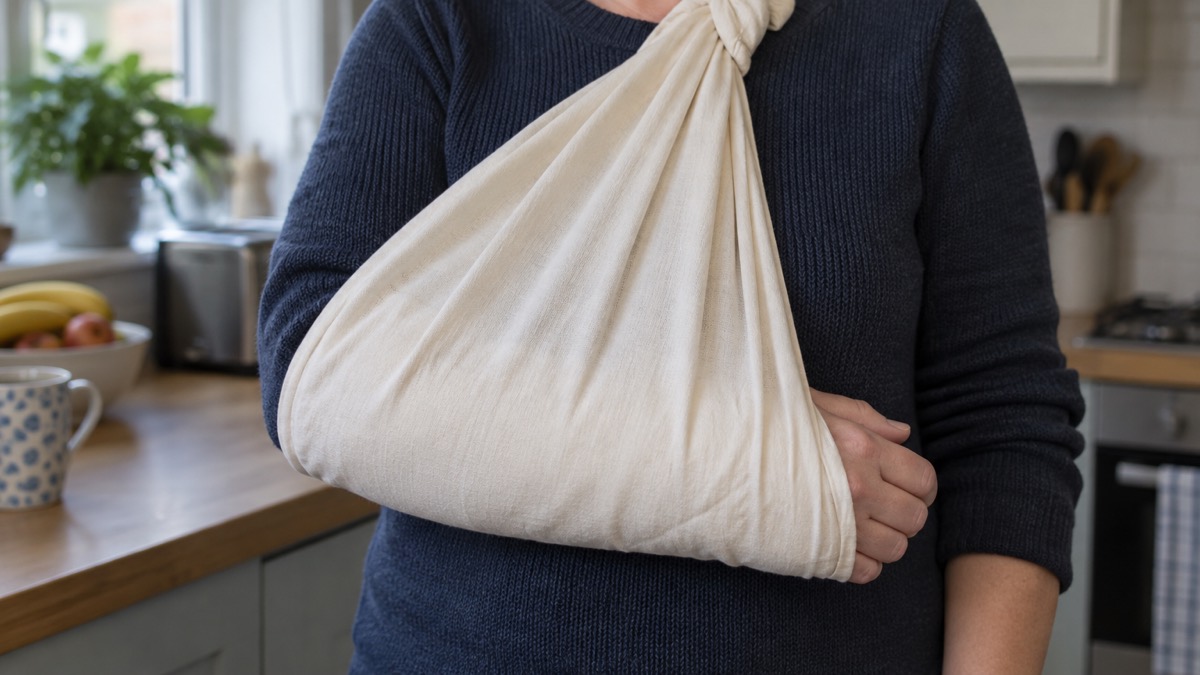
For a dislocation, the principle is the same but the wording is about comfort. St John Ambulance advises you to tell the casualty to stay still and help them support their dislocated joint in the most comfortable position10. Do not try to put the dislocated bone back into its socket, as this may cause further injury10.
If you bandage an injured limb, leave fingers and toes exposed so you can check their circulation11. That is the check that tells you a bandage is too tight: if the fingers or toes go pale, cold or numb, loosen it. Our page on dressings and bandages covers how to apply them.
While you wait, keep the person comfortable and warm. NHS inform's shock guidance says to cover the legs and body with coats or blankets and monitor the person until help arrives6. The South Western Ambulance Service advises staying with the person until the ambulance arrives5. If the person becomes unresponsive and is not breathing normally, that becomes a resuscitation emergency: see our guide to what to do first.
What not to do with a suspected fracture
Most harm in fracture first aid comes from well-meant interference. The clearest rule is about dislocations: never attempt to put dislocations back in place, as you may cause further damage1. St John Ambulance repeats it for dislocated joints: do not try to put the dislocated bone back into its socket, as this may cause further injury10.
Do not give the casualty anything to eat or drink, because they may need an anaesthetic when they get to hospital4. That includes a cup of tea while you wait for the ambulance.
If you are treating for shock, there is one exception to the usual advice. St John Ambulance says that if necessary you should treat for shock, but do not raise the legs if either is suspected to be broken or there is injury to the pelvis or a hip2. Raising the legs is a standard shock measure, but not when the leg or pelvis may be fractured.
Do not move someone with a suspected spinal injury9. Do not try to remove an object embedded in a wound: for an eye injury, St John Ambulance says the person should not attempt to remove the object but should cover the eye and seek medical help as soon as possible13. Our page on eye injuries covers that in full.
Getting to A&E, an urgent treatment centre or NHS 111
Not every suspected break needs an ambulance. St John Ambulance says that smaller bones or other fractures will need transfer to A&E or an urgent treatment centre, but less urgently, and that if possible the patient can make their own way to hospital with a friend, family member or on public transport2.
If you are not sure where to go, NHS 111 is the route. The London Ambulance Service says to use 111 if you think you need to go to A&E or another NHS urgent care service but are not sure which one is most appropriate or closest14. The Surrey and Sussex integrated care board adds that patients who need urgent NHS care are asked to call NHS 111 before they decide to walk into the local A&E15. NHS 111 online can direct you to call 999 or go to A&E in an emergency, go to an urgent treatment centre, see an out-of-hours GP, book a callback from a nurse, or contact your own GP surgery, among other outcomes16.
Urgent treatment centres and minor injury units are set up for exactly this kind of injury. The Central London integrated care board lists sprains, broken bones, minor burns and head injuries among what a minor injury unit or urgent treatment centre handles, with no appointment needed and late opening17. The London Ambulance Service lists suspected broken bones among the things a walk-in or urgent care centre can assist with18.
In Scotland the arrangements differ. NHS 24's Right Care Right Place guidance explains which service to use, and a minor injuries unit can help with a cut, a minor burn, a sprain or strain, or a suspected broken or fractured bone19. In Wales, call 999 for a fall if the person cannot get up even with help, is confused, drowsy or vomiting, or has injured their head, neck, back or hip or has severe bleeding20.
If the person has fallen and you are deciding whether to move them
A fall is the commonest way a bone gets broken at home, and the decision about moving the person is where most damage is done. If the fall seems serious, do not try to move the person or give them anything to eat or drink: keep them warm and call for an ambulance21. If you think they may have a spinal injury, do not move them until the emergency services reach you9.
If the person is unhurt enough to get up, help them do it slowly and safely. NHS inform's guidance for someone who has fallen is to take their time, roll onto their side and push onto their hands and knees, crawl to something sturdy such as a heavy chair, sofa, step or even the bath, place one foot flat on the floor, push on the sturdy item and slowly stand up, then find a place to sit down and rest22.
It is worth rehearsing this before you need it. NHS inform suggests practising getting up from a fall in different rooms of your house and using different types of sturdy furniture for support, and asking a friend or relative to be with you when you practise23. Our page on preventing accidents at home covers the wider picture.
What to keep ready at home
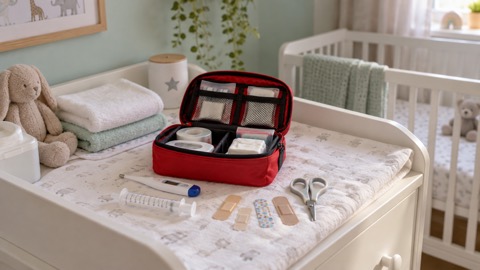
You do not need specialist fracture equipment. A household first aid kit is the starting point: Lincolnshire's emergency advice lists a first aid kit among the things to have ready24. Our guide to first aid kits for the home sets out what to include, and the ready-made or homemade kit comparison helps you choose.
For a suspected fracture, the useful items are padding to place around the injury, a bandage or sling to secure the limb to an uninjured part of the body, and blankets or coats to keep the person warm while you wait6. A phone charged enough to call 999, and the person's medical details to hand, make the call easier: our ambulance information checklist lists what the crew will ask.
Sources (24)
- Broken bone first aid, British Red Cross, 2026-10-25
- Fractures and broken bones, St John Ambulance, 2026-10-28
- Fracture first aid, NHS inform, 2026-07-24
- 999, North East Ambulance Service, 2026-10-29
- What to do if your child has an accident, NHS, 2025-12-18
- Baby and child first aid booklet, British Red Cross, 2025-08
- Dislocated joints, St John Ambulance, 2026-10-28
- How to put someone in the recovery position, NHS inform, 2026-07-24
- What to do when the ambulance is coming, South Western Ambulance Service, 2026-10-29
- What to do if you fall, NHS inform, 2026-04-30
- Some of the reasons people call 999, Welsh Ambulance Service, 2026-10-29
- Dementia fire safety, North Wales Fire and Rescue Service, 2026-10-29
- Strains and sprains, British Red Cross, 2026-10-25
- Bandage and dressing, St John Ambulance, 2026-10-28
- How do I apply a bandage?, NHS, 2025-04-28
- Your local 999 and 111 services, London Ambulance Service, 2026-08-10
- Where is best, Central London Integrated Care Board, 2026-03-24
- Emergency care and 999, Surrey and Sussex Integrated Care Board, 2026-10-29
- When to use 111, London Ambulance Service, 2026-08-12
- NHS 111 online, NHS Digital, 2026-10-29
- Right care right place, NHS 24, 2023-10-30
- Minor injury unit and urgent treatment centre, Central London Integrated Care Board, 2026-09-22
- Get help in an emergency, Lincolnshire County Council, 2026-10-29
- Eye injury, St John Ambulance, 2026-10-28
 Baby and Child Kit Checklist
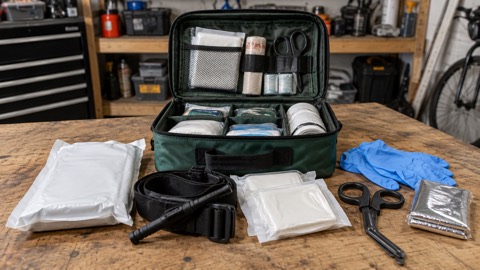 Bleeding Control Kit Checklist
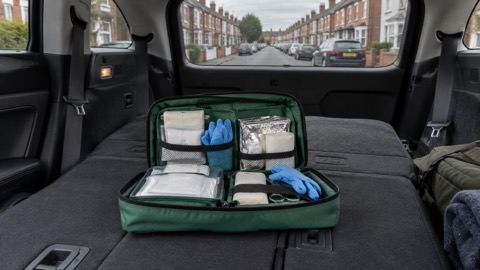 Car Kit Checklist
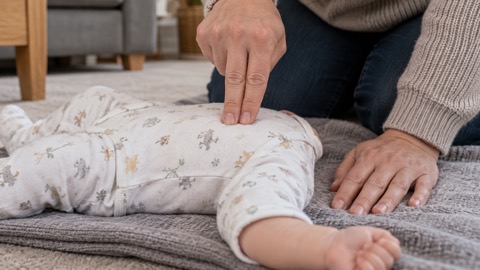 CPR on a Baby
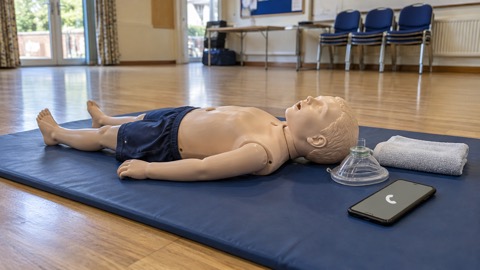 CPR on a Child
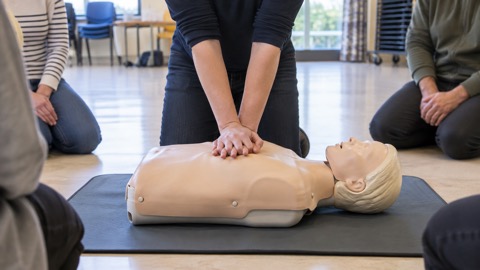 Chest Compression Rate and Depth
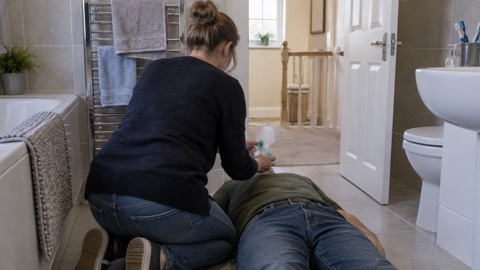 Rescue Breaths or Hands-Only CPR
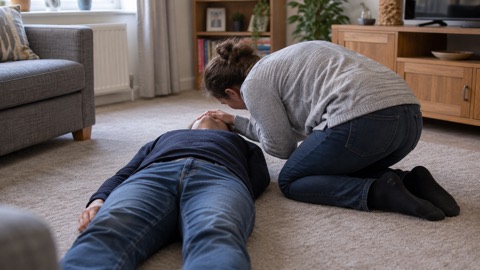 Checking Breathing
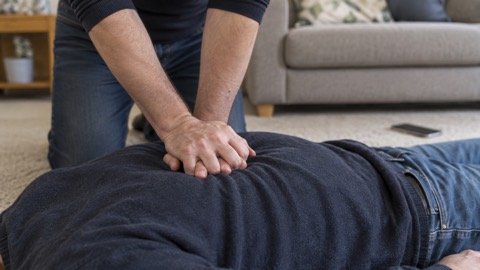 Agonal Breathing and CPR
 Breathing During CPR
 Recovery Position and Spine
 Cardiac Arrest vs Heart Attack
 Heart Attack First Aid
 Defibrillator Pad Placement
 Defibrillator on a Child