More accidents happen in the home than anywhere else, and the groups most at risk are children under five, older people and vulnerable adults. The good news from every official source is the same: many of these accidents can be prevented through simple safety measures and greater awareness of hazards in and around the home1. This page sets out what the UK's official guidance says about the three biggest risks, falls, burns and scalds, and poisoning and choking, and the practical changes that cut each one.
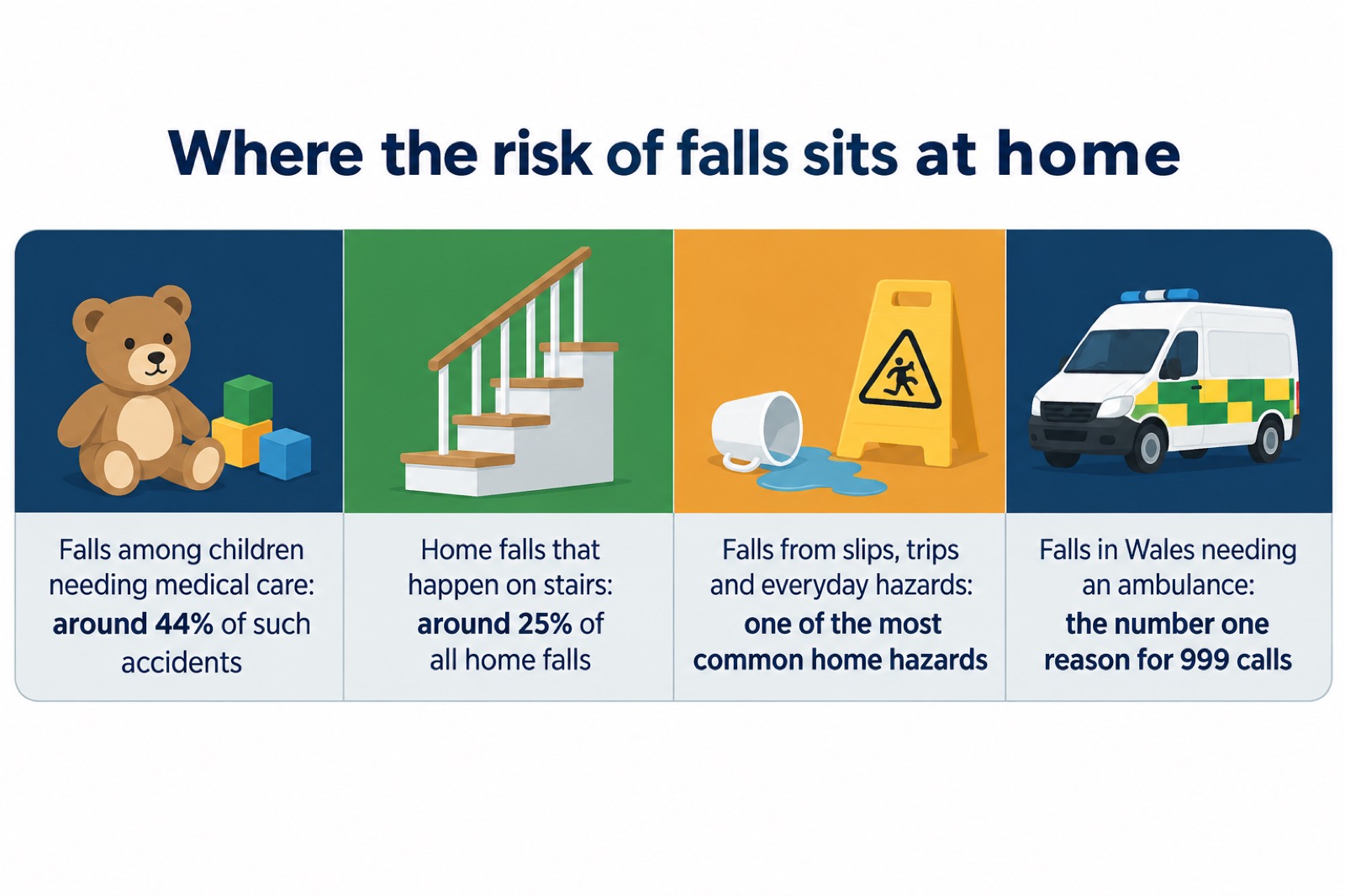
The scale is worth knowing. Every year over two million children are taken to A&E due to accidents in the home, and around 44% of accidents where children need medical care are because of falls2. Falls on stairs alone account for around 25% of all home falls, fatal and non-fatal3. Suspected poisoning is one of the most common reasons young children are taken to A&E, with those under the age of 5 most at risk4. None of these need specialist equipment to prevent: the measures that work are stairgates, non-slip mats, locked cupboards, thermostatic mixing valves and working smoke alarms.
Falls: the biggest cause of injury at home
Falls are the single largest cause of home injuries across every age group. Around 44% of accidents where children need medical care are because of falls2, and in Wales falls are currently the number one reason people call for an ambulance6. Slips, trips and fall hazards are one of the most common hazards found in the home, according to Cornwall Council's housing team7.
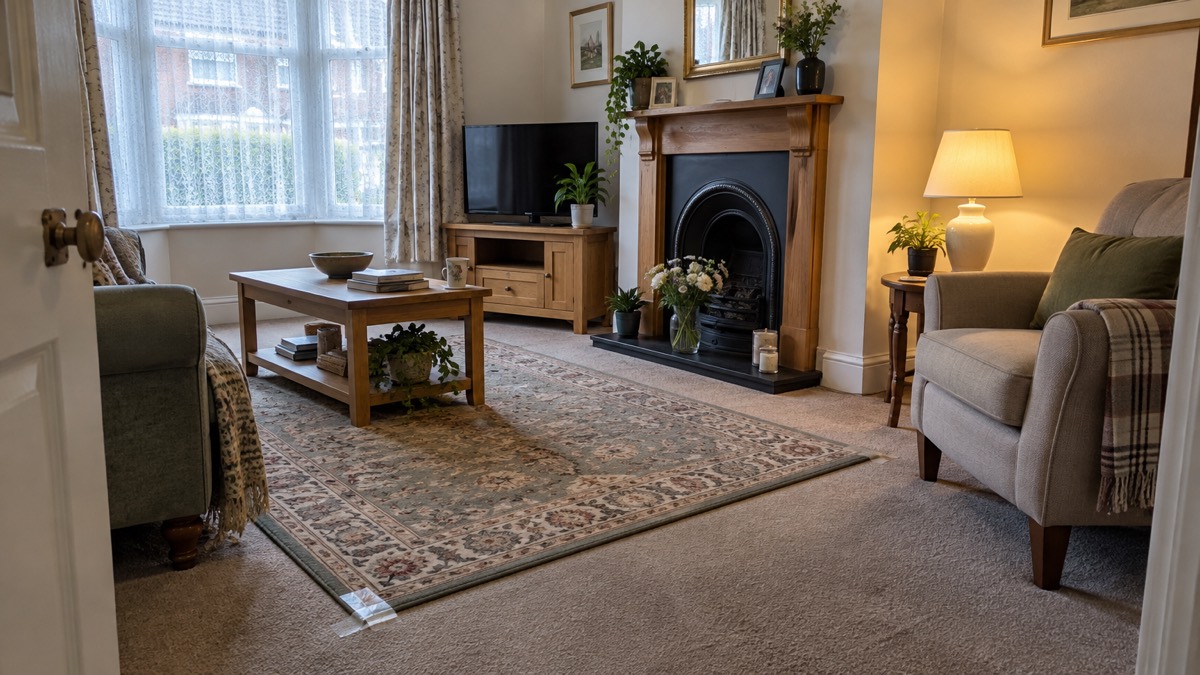
The causes are strikingly ordinary. Oxford Health NHS Foundation Trust lists a loose rug, poor lighting, trailing cables, difficulty climbing stairs or a room that is too hot or too cold as typical contributors to falls at home8. Norfolk and Suffolk NHS advice adds that many falls happen at home during everyday activities, and that small changes can reduce slips and trips, make it easier to move around and help you stay confident and independent9. That last point matters: fear of falling leads people to move less, which weakens muscles and makes the next fall more likely.
What to do about it falls into two groups: removing the hazards, and making the person less likely to be harmed. The first group costs almost nothing and is listed in the next sections. The second includes strength and balance work: the Scottish Ambulance Service points people to its Falls Assistant tool to assess their own risk of falling and make a personalised falls prevention plan10.
Who is most likely to fall, and why
Age is the strongest single factor. The risk of falling is higher if you are over 65, live with a long-term condition, or have problems with balance or mobility6. The NHS lists the underlying causes in older people as muscles getting weaker with age, conditions affecting mobility or balance such as arthritis, stroke or Parkinson's disease, side effects of some medicines, and problems with eyesight or hearing11.
Children have their own pattern. Children under the age of five are most likely to fall between levels, such as from furniture or down stairs, and boys are more likely to fall than girls3. Children younger than five are also most likely to fall on a level surface, meaning a trip over a toy or a slip on a floor is as much a concern as a fall from height3. Around 44 per cent of accidents where children need medical care are because of falls2.
For fatal falls on stairs and steps at home, in the age bands 40 to 64 and 75 and over, a man is almost twice as likely to die from a fall on stairs or steps at home than a woman in the same age band3. Falls in the bathroom have their own injury pattern: the most common injuries from falls associated with a bath, shower or similar facility are cuts or lacerations, at 27% of such injuries3.
One risk compounds another. Cheshire Fire and Rescue Service warns that falls can increase the risk of fire, because someone who has fallen or is unsteady may find it harder to react quickly, turn off appliances or respond to a smoke alarm12. If someone in your household is unsteady on their feet, treat fire safety measures as falls prevention too.
Making stairs, floors and high shelves safer
The fixes here come straight from council and NHS guidance, and most take minutes. Cornwall Council's slips, trips and falls advice for households is7:
- Keep the stairs clear.
- Do not leave shoes, toys or other things on the floor.
- Clean up spills straight away.
- Make sure your lights work, and change lightbulbs when needed.
- Use rugs that do not slip, especially on wooden or tiled floors.
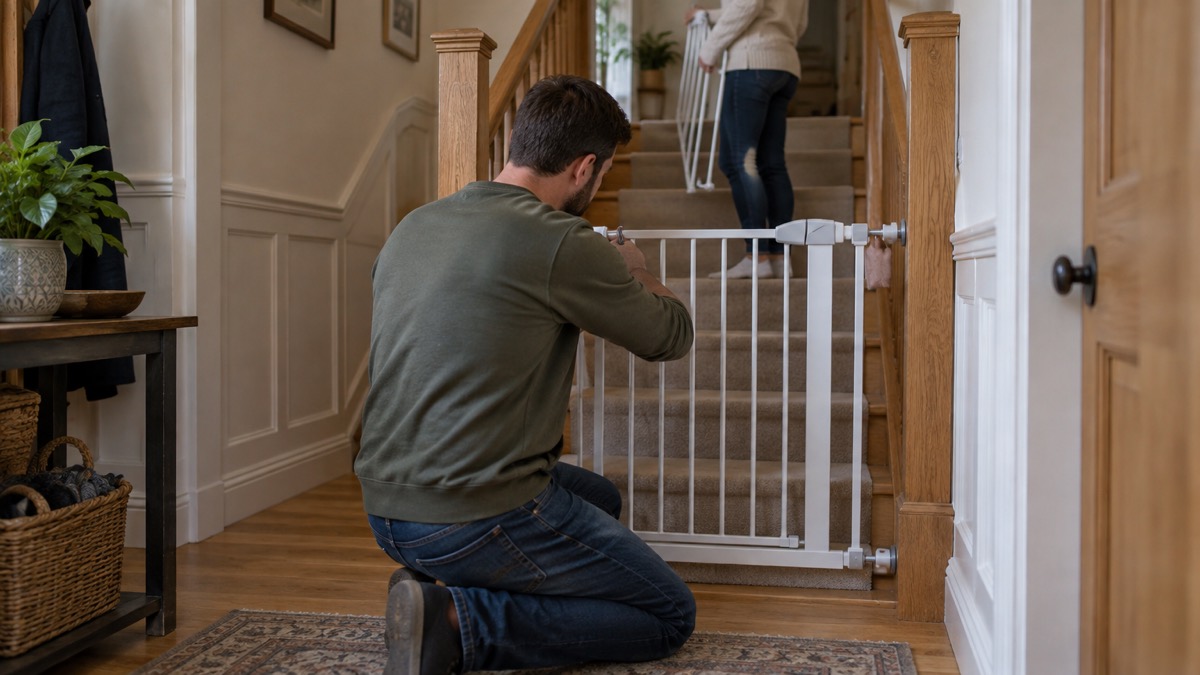
- Use a stairgate if you have young children.
- Tell your landlord if something is broken or unsafe.
Cheshire Fire and Rescue Service advises that if you wear slippers in your property, make sure they fit well to reduce the risk of slips, trips or falls12. Beyond footwear, the same everyday checks matter on stairs and floors: keep the stairs clear, do not leave shoes, toys or other things on the floor, and clean up spills straight away12.
| Hazard | Who it most affects | What to do |
|---|---|---|
| Stairs and steps | Young children7 | Use a stairgate if you have young children, and keep the stairs clear7 |
| Loose rugs and slippery floors | Everyone8 | Non-slip rugs, especially on wood or tiles7 |
| Trailing cables and clutter | Everyone8 | Tidy away, keep walkways clear7 |
| High shelves | Older people13 | Store frequently used items within easier reach13 |
| Bathroom falls | Older people3 | Non-slip mats, especially in the bathroom14 |
The Northern Ireland Fire and Rescue Service's falls prevention advice for older people brings these together: clean up spillages, remove clutter, trailing wires and frayed carpets, use non-slip mats especially in the bathroom, have good lighting, wear slippers and shoes with a good grip, and consider an additional handrail at stairs or steps14. If you rent, you do not have to fix structural problems yourself: tell your landlord if something is broken or unsafe7.
For reaching jobs that feel risky, the Welsh Ambulance Service is blunt: do not struggle with jobs that feel risky, for example reaching high shelves, always ask for help6.
When to call 999 after a fall, and when to use NHS 111
Knowing which number to call saves precious minutes, and the criteria are consistent across the UK. The Welsh Ambulance Service NHS Trust says call 999 for a fall if the person6:
- cannot get up, even with help
- is confused, drowsy, or vomiting
- has injured their head, neck, back or hip
- has severe bleeding
NHS guidance for England gives the same headline: call 999 if you or someone else has fallen and may have injured the head, back, neck or hip11. Surrey and Sussex NHS guidance adds that you should also call 999 if you think someone has had a major trauma, such as after a serious road traffic accident, a stabbing, a shooting, a fall from height, or a serious head injury15. Patients who need urgent NHS care are asked to call NHS 111 before they decide to walk into the local A&E15.
If none of the 999 criteria apply but the person may be in pain, injured or unwell, get help from NHS 111, by calling 111 or using 111 online11. NHS inform gives the same rule for Scotland: if you are injured, phone 999 and ask for an ambulance; if you are not sure, phone 1115. In Scotland, calling 999 for a fall now offers varied responses to accommodate the needs of the individual, so a call is not automatically a trip to hospital10.
If you have fallen and are unhurt but on the floor, NHS inform advises practising getting up from a fall in different rooms of your house and using different types of sturdy furniture for support, and asking a friend or relative to be with you when you practise5. To call for help from the floor, you can use a community alarm if you have one, use a phone to call a relative, friend or neighbour, ask your smart speaker to call someone who can help, or try shouting or banging on a wall to attract your neighbour's attention5. The Welsh Ambulance Service advises carrying a mobile phone or wearing a pendant alarm6.
After a fall, Greater Manchester preparedness guidance applies to any household emergency: check for injuries and help yourself before attempting to help others, follow the advice of the emergency services, and do not put yourself or others in danger16. If you have had a fall, you might be able to refer yourself directly to services that can help, without seeing a GP, by asking at your GP surgery reception, checking the surgery website, contacting your local integrated care board, or searching online11. In Northern Ireland, ask your GP to be referred to the Falls Prevention Team within your local Health Trust14.
For what to do while help is on the way, see what to do for a suspected broken bone and head injury: when to get medical help.
Scalds from hot taps: what a thermostatic mixing valve does
Hot water from taps and showers is one of the most serious scald risks in the home, especially for young children and older people who may react more slowly to heat. Cheshire Fire and Rescue Service's burn awareness guidance is direct on the fix: install thermostatic mixing valves in all hot water outlets17.
A thermostatic mixing valve blends hot water with cold water at the outlet, so the water that reaches the tap or shower is held at a safe, set temperature rather than at whatever the boiler delivers. That means a child turning on a hot tap, or someone with reduced sensation stepping into a shower, meets water that cannot scald them at full boiler temperature. The valve does this automatically and continuously, compensating as the incoming water temperature changes.
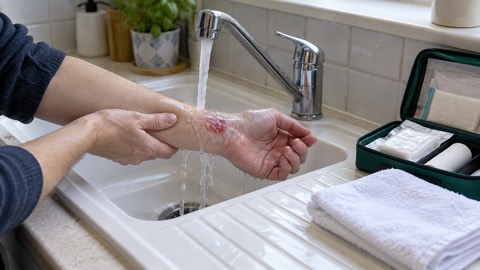
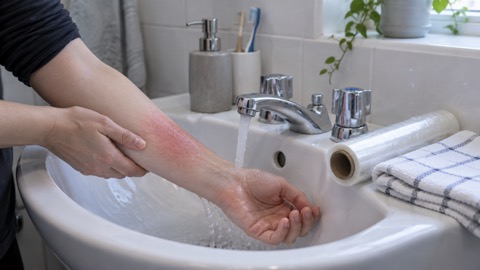
For guidance on treating a scald or burn when it has already happened, see burns and scalds: how to cool, cover and get help.
Fitting and servicing a mixing valve
Mixing valves can be fitted at individual outlets rather than replacing a whole system, which is what makes them practical in older homes as well as new builds. The fitting itself is plumbing work on the water supply, and the valve should be set and verified on installation.
Where your hot water is heated by gas, the wider gas safety rules apply. The Northern Ireland Fire and Rescue Service advises households to have all gas appliances serviced annually by a Gas Safe registered engineer, to purchase gas appliances from a reputable source, never to attempt DIY on a gas installation, never to block air vents, to fit a carbon monoxide alarm in any room with a gas appliance, and to know how to turn your gas supply off in an emergency14. An annual service is the right moment to have the mixing valve and hot water system checked at the same time.
If you are an older householder in Belfast, the council's home safety check and repair scheme for seniors covers handyperson tasks including fitting curtain rails, repairing doors, fitting door chains, fixing floorboards, changing light bulbs, draught-proofing windows or doors, adjusting heating timers, fitting carbon monoxide alarms, and clearing and laying salt on paths during winter18. Similar schemes exist through other councils and fire services: Devon and Somerset Fire and Rescue Service runs home safety partnerships for carers and vulnerable households19, and Belfast's family home safety check will show you the potential risk areas in your home, provide tailored advice, arrange for safety equipment to be delivered subject to eligibility, and refer you for a free smoke alarm installation18. Ask your local fire and rescue service or council what is available in your area.
Poisoning and choking: the main risks to young children
Suspected poisoning is one of the most common reasons young children are taken to A&E, with those under the age of 5 most at risk4. Medicines like painkillers and household cleaning products are the most common way for children to be poisoned4. The prevention advice from Berkshire Healthcare NHS Foundation Trust is simple: keep these locked away in their original containers and supervise children at all times4. Original containers matter because they carry the product name and strength, which is what NHS 111 or A&E staff will ask about if a child does swallow something.
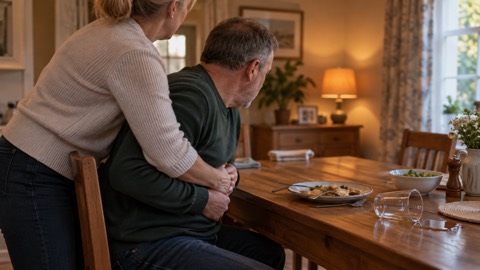
Choking is the other major risk in this age group. Each day, around 40 under-5 year olds are taken to hospital after choking or swallowing something dangerous4. To reduce the risk, keep small objects out of reach and never prop a baby up with a bottle. Stay with young children while they eat and encourage older ones to sit still during meals4.
- Medicines: locked away, in original containers4
- Cleaning products: locked away, in original containers, never decanted into food or drink bottles4
- Small objects: out of reach of under-fives4
- Bottle feeding: never prop a baby up with a bottle4
- Mealtimes: stay with young children while they eat; older children sit still4
If a child does swallow pills or chemicals, do not make them sick: see what to do if a child swallows pills or chemicals. If someone is choking, see what to do if someone is choking, and for babies, what to do if a baby is choking.
Burns, scalds and electric shock: first steps
Alongside the mixing valve, the kitchen is where burn prevention is mostly done. Cornwall Fire and Rescue Service notes that the majority of fires in the home are accidental and could have been prevented20. Wiltshire and Swindon Prepared advises keeping tea towels and cloths away from the cooker and hob21. Simple habits around the cooker, combined with a working smoke alarm, cover most of the remaining kitchen risk.
For electric shock, NHS inform's first aid guidance is clear about the first step: if possible, turn off the source of electricity, which breaks contact between the casualty and the electrical supply22. Do not touch the person while they are still in contact with the supply. Low-voltage shocks can happen at home or at work, while high-voltage shocks are more likely in industry jobs or from contact with a power line22. The current can cause burns where it enters and exits the body, and the burn may be very small or not visible at all but can still cause damage deep into the body's tissues22, so anyone who has had an electric shock needs medical assessment even if they seem fine. For the full sequence, see what to do if someone gets an electric shock.
Smoke alarms and escape plans: the safety net
Every measure on this page reduces the chance of an accident, but a working smoke alarm is what turns a fire into an escape rather than a tragedy. North Yorkshire Fire and Rescue Service states that the first step of any escape plan is having a working smoke alarm23. Dorset and Wiltshire Fire and Rescue Service advises planning and practising your escape route24.
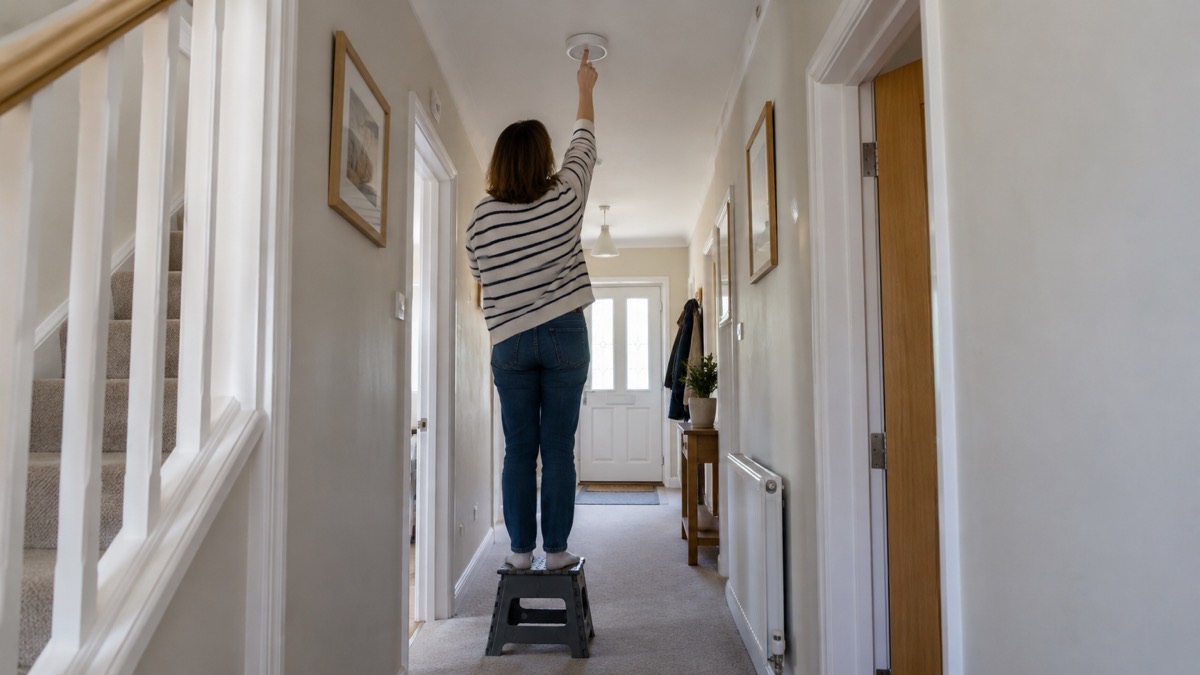
When choosing alarms, Oxfordshire County Council notes that an optical alarm is less likely to go off accidentally, which suits ground floor hallways and homes on one level25. Test smoke alarms regularly1. For fuller guidance on alarms, carbon monoxide and what to do in a fire, see home emergencies: fire, carbon monoxide, gas leaks and burst pipes.
Two placement points from official guidance are worth noting. Manchester Fire and Rescue Service advises keeping doors and window keys accessible, and avoiding keeping them in the kitchen because this is where most fires in the home start26. If you live in a flat or high-rise building, Warwickshire County Council advises keeping corridors, stairwells and fire exits clear of flammable materials and clutter27, and North Yorkshire Fire and Rescue Service says to make sure doors to stairways are not locked23.
Getting help beyond your own household
Much of the support available is free and simply needs asking for. Fire and rescue services across the UK run home safety checks: Belfast City Council's family home safety check will show you the potential risk areas in your home, provide tailored advice on how to make your home safer, arrange for safety equipment to be delivered subject to eligibility and stock availability, and refer you for a free smoke alarm installation18. Devon and Somerset Fire and Rescue Service runs home safety partnerships aimed at carers and those they look after19.
For falls specifically, the routes in differ slightly by nation. In England, you may be able to self-refer directly to services that can help after a fall, by asking GP surgery reception, checking the surgery website, contacting your local integrated care board, or searching online11. In Scotland, the Scottish Ambulance Service's Falls Assistant lets you assess your own risk of falling and make a personalised falls prevention plan10. In Northern Ireland, speak to your GP to be referred to the Falls Prevention Team within your local Health Trust14.
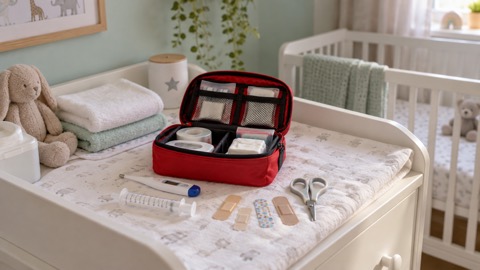
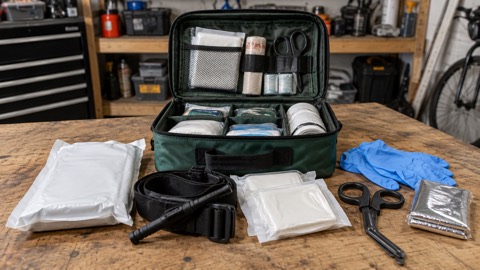
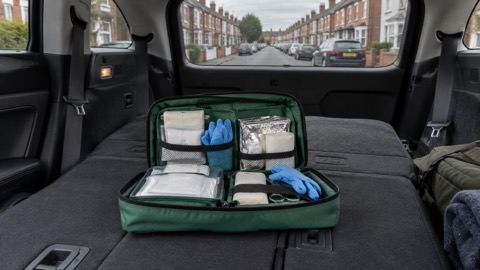
Finally, keep a first aid kit at home and in the car. Official emergency kit guidance from Neath Port Talbot Council includes a first aid kit among what to keep in your car in the event of an emergency28. For what to put in them, see first aid kits for the home and the car kit checklist for injuries on the road, and for the skills to use alongside them, first aid courses.
Sources (28)
- Home accident prevention, Public Health Agency Northern Ireland, 2026
- Preventing accidents in the home, Just One Norfolk, 2026-10-28
- Home accident hazards, Somerset Council, 2026-10-28
- Child safety, Berkshire Healthcare NHS Foundation Trust, 2026-10-29
- What to do if you fall, NHS inform, 2026-04-30
- Some of the reasons people call 999, Welsh Ambulance Service NHS Trust, 2026-10-29
- Slips, trips and falls in the home, Cornwall Council, 2025-06-19
- Falls guidance: at home, Oxford Health NHS Foundation Trust, 2026-09-15
- Stay Steady and Safe home safety checklist, Norfolk and Suffolk Integrated Care Board, 2026
- Falls: emergency care, Scottish Ambulance Service, 2026-10-29
- Falls, NHS, 2025-03-06
- Slips, trips and falls, Cheshire Fire and Rescue Service, 2026-05-20
- Handling falls, North West Ambulance Service, 2024-10-22
- Home fire safety, Northern Ireland Fire and Rescue Service, 2026-10-14
- Emergency care and 999, Surrey and Sussex Integrated Care Board, 2026-10-29
- Prepare yourself, Greater Manchester Combined Authority, 2026-10-29
- Burn awareness, Cheshire Fire and Rescue Service, 2026-05-20
- Home safety, Belfast City Council, 2026-10-29
- Home safety partnerships, Devon and Somerset Fire and Rescue Service, 2026
- Keeping you safe at home, Cornwall Fire and Rescue Service, 2026-10-28
- Cut the risk of fire in your home, Wiltshire and Swindon Prepared, 2026-10-25
- Electric shock first aid, NHS inform, 2026-07-24
- Bedtime routine and escape plan, North Yorkshire Fire and Rescue Service, 2026-03-27
- Safety at home, Dorset and Wiltshire Fire and Rescue Service, 2026-04-30
- Smoke alarms, Oxfordshire County Council, 2026
- Fire safety information for residents living in flats, Manchester Fire and Rescue Service, 2026-10-29
- Fire safety advice for residents in high rise buildings, Warwickshire County Council, 2026-10-29
- Emergency kit checklist, Neath Port Talbot Council, 2026-10-29
 Baby and Child Kit Checklist
 Bleeding Control Kit Checklist
 Car Kit Checklist
 Danger, Response, Airway
 CPR Steps for Adults
 2025 Resuscitation Guidelines
 Defibrillators (AEDs)
 Public Access Defibrillators
 Choosing a Defibrillator
 The Recovery Position
 Choking First Aid
 Cuts, Grazes and Wounds
 Burns and Scalds
 Adrenaline Auto-Injectors
 Sepsis Signs to Act On