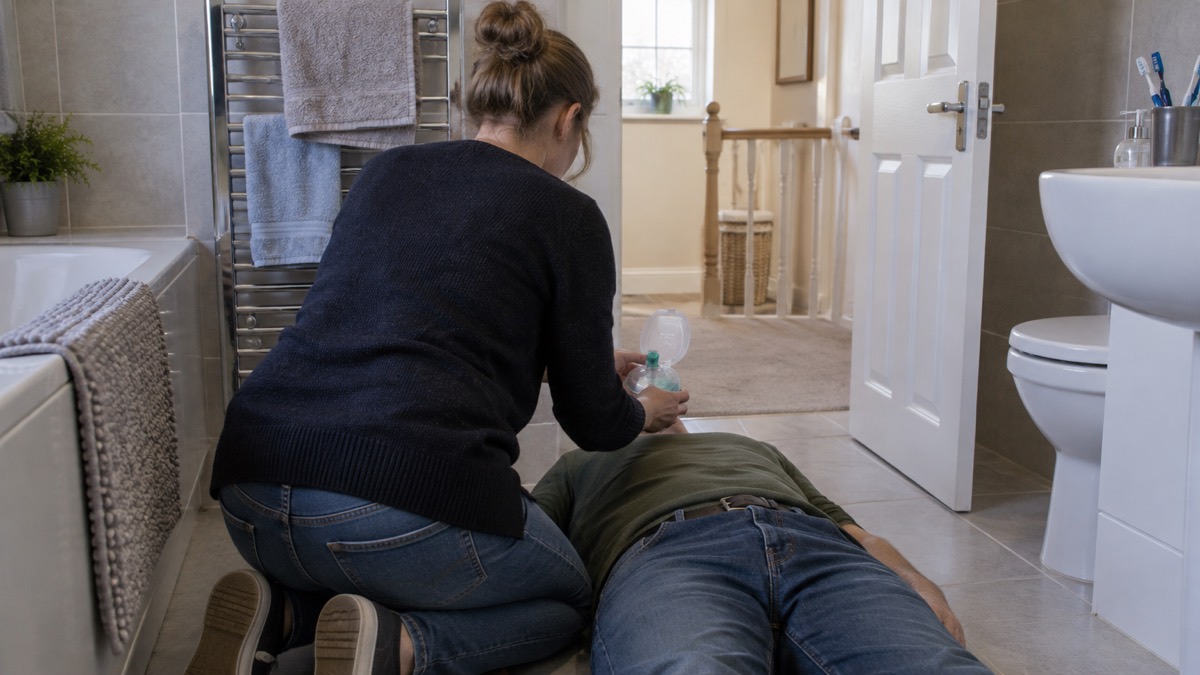
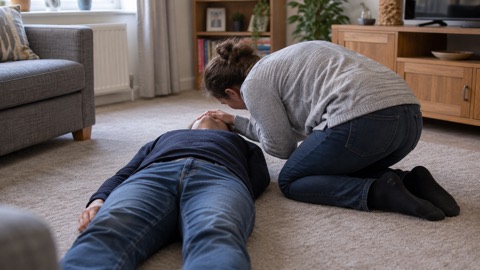
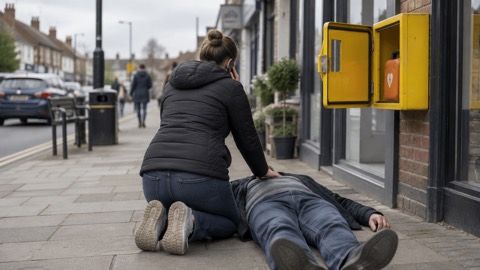
If someone collapses and is not breathing normally, call 999, then start chest compressions straight away. You do not need to have been trained to do this, and you do not need to give rescue breaths. Hands-only CPR, pushing hard and fast on the centre of the chest, is very effective and is the recommended approach for most bystanders1. Push at a rate of 100 to 120 compressions a minute, 5 to 6cm deep, and keep going until an ambulance arrives, you are too exhausted to continue, or the person starts to show signs of life2.
If you have been trained in CPR and feel able to give rescue breaths, the fuller version is better: 30 chest compressions followed by 2 rescue breaths, repeated3. Resuscitation Council UK's 2025 adult guidelines set this out plainly: if you have been trained to provide rescue breaths, alternate 30 compressions with 2 breaths; if you have not, give continuous chest compressions3. The ambulance service works on the same assumption. Call handlers are told to assume the caller does not know CPR and to give compression-only instructions, moving to 30:2 only if the caller knows rescue breaths3.
The choice is yours, and either way you are helping. The British Heart Foundation puts it simply: "It's your choice if you would like to give rescue breaths. Hands-only CPR is very effective and is the recommended way since the Covid-19 pandemic"1. What matters most is that someone starts compressions and that someone fetches a defibrillator.
Not trained in CPR: give chest compressions only
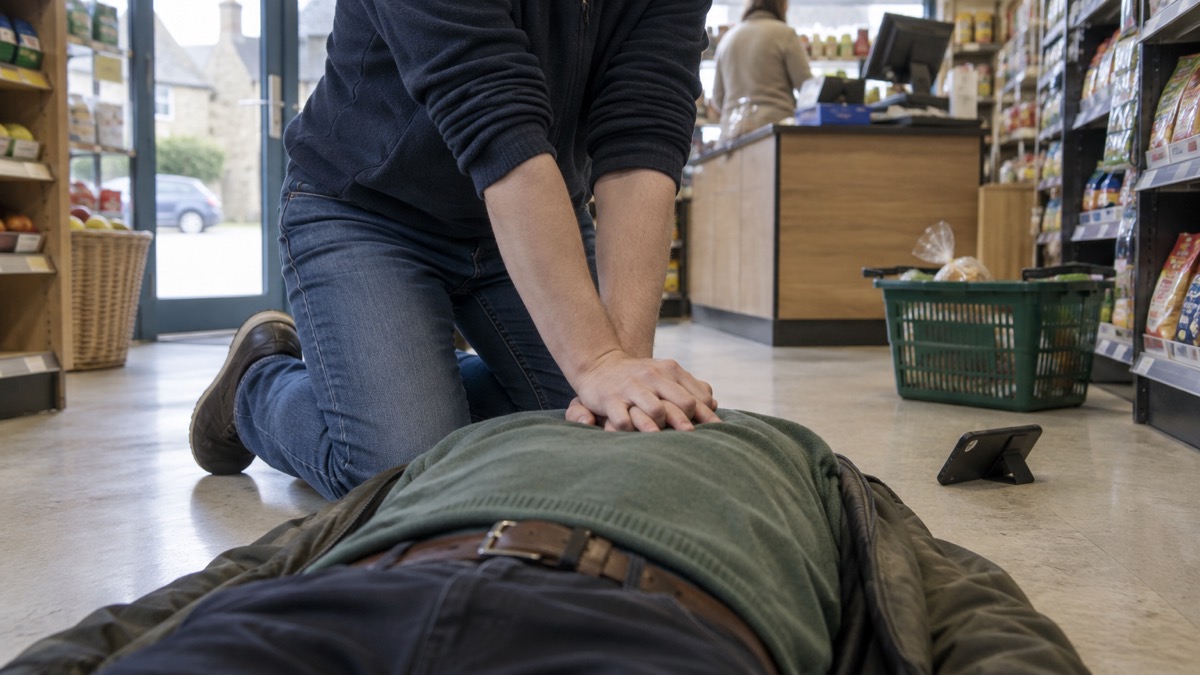
If you have never been trained, the advice is unambiguous. NHS inform says: "Only give rescue breaths if you've been trained in CPR. Otherwise, provide chest compressions only"4. The Resuscitation Council's public guidance says the same: if you are not trained to provide rescue breaths, perform continuous chest compressions without interruptions8. St John Ambulance adds the practical test: if you have not been trained, or are uncomfortable providing rescue breaths, give compression-only CPR9.
This is not a second-best option. Hands-only CPR keeps oxygenated blood moving to the brain and heart, and it is what the ambulance service will talk you through on the phone. The London Ambulance Service describes the response to a cardiac arrest as calling 999 immediately, starting chest compressions if it is safe to do so, and sending someone to get a defibrillator if one is nearby, and it says this applies even without formal training7.
Here is what to do, in order:
- Check for danger and response. Shout and gently shake the person. If they do not respond, move on.
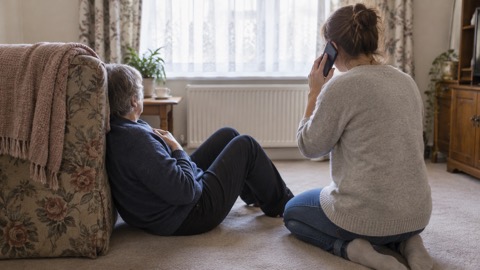
- Call 999. Put the phone on speaker so the call handler can guide you2.
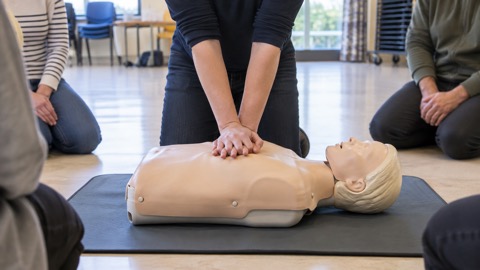
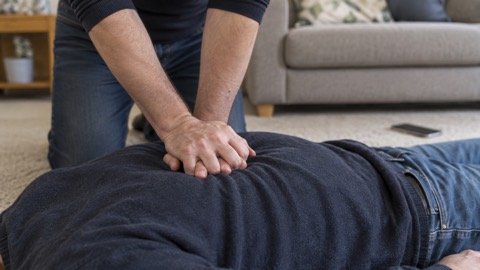
- Start compressions. Place the heel of your hand on the breastbone at the centre of the chest, put your other hand on top and interlock your fingers. Position yourself with your shoulders above your hands2.
- Push hard and fast. Using your body weight, not just your arms, press straight down by 5 to 6cm, then release the compression and allow the chest to return to its original position, keeping your hands on the chest2.
- Keep going. Repeat at 100 to 120 a minute until an ambulance arrives, you become exhausted, or the person shows signs of regaining consciousness such as coughing, opening their eyes, speaking or breathing2.
If you are trained but out of practice, or simply do not want to give mouth-to-mouth, the same applies. NHS inform says: "If you're unable or unwilling to provide rescue breaths, give continuous chest compressions"4. You are not obliged to do anything you are not comfortable with, and compressions alone can save a life.
Hands-only CPR is very effective, and it is what most bystanders are advised to do
The case for hands-only CPR rests on three things: it is simple enough to start within seconds, it removes the hesitation that mouth-to-mouth can cause, and it is what the official guidance now recommends for untrained bystanders. The British Heart Foundation describes hands-only CPR as very effective and the recommended way since the Covid-19 pandemic1. The British Red Cross makes the same point in its Covid-19 guidance: if you are willing and able, you can perform two breaths for every 30 chest compressions, but if you are not able, calling 999 and giving only chest compressions can save a person's life10.
The technique is the same whether or not you plan to add breaths. The Scottish Ambulance Service advises you to put your hands in the centre of the person's chest and interlock your fingers, push hard and fast with your arms straight, and continue until help arrives11. The rate is 100 to 120 compressions a minute6.
| What you do | When it applies | What it involves |
|---|---|---|
| Hands-only CPR | You are untrained, out of practice, or unwilling to give breaths | Continuous compressions, 100 to 120 a minute, 5 to 6cm deep2 |
| CPR with rescue breaths | You are trained and willing | 30 compressions then 2 breaths, repeated3 |
| Compression-only after failed breaths | You tried breaths and could not get them in | Return to compressions after two attempts12 |
A common worry is that compressions alone are not enough. For an adult whose heart has stopped, the blood still holds oxygen for a while, and compressions circulate it. What harms people is hesitation, and the guidance is designed to remove it. If you are in any doubt, start compressions.
Trained in CPR: compressions with rescue breaths are the gold standard
For someone who has been trained, CPR combines chest compressions and rescue breaths to give a person the best chance of survival following a cardiac arrest12. The British Red Cross defines CPR as exactly that combination13. The ratio is 30 compressions to 2 breaths, and Resuscitation Council UK's 2025 guidelines confirm it for trained rescuers: "If you have been trained to provide rescue breaths, alternate 30 chest compressions with 2 rescue breaths"3. Its community basic life support guidance repeats the same figure: 30 chest compressions followed by 2 rescue breaths14.
The breaths themselves have a technique. Give them after about 30 pushes on the chest: tilt the head back, seal your mouth over their mouth or nose, and blow two steady breaths, pinching the nose for mouth breaths or shutting their mouth for nose breaths13. Resuscitation Council UK's 2025 guidelines add a caution: "When providing rescue breaths, deliver just enough air to make the chest start to rise; avoid excessive ventilation"3.
If a breath does not go in, do not keep trying indefinitely. Stick to two attempts to get the breaths in; if one or both do not work, return to chest compressions12. St John Ambulance gives the same instruction15.
If the person starts to breathe normally, stop compressions but carry on with rescue breaths until they can breathe normally on their own, put them in the recovery position, monitor their breathing and be ready to restart CPR, and wait for the emergency services17. The recovery position page explains how to do this safely.
Choosing on the spot: what to do if you are unsure
In the moment, the decision is simpler than it feels. Ask yourself two questions: can I do compressions, and am I trained and willing to give breaths? If the answer to the first is yes, start. If the answer to the second is no, keep going with compressions.
The guidance is built for exactly this uncertainty. NHS inform says that if you are unable or unwilling to provide rescue breaths, give continuous chest compressions4. The British Red Cross says that if you cannot give rescue breaths for any reason, just give chest compressions18. St John Ambulance says that if you are trained, after 30 compressions provide two rescue breaths, but if you are unable or unwilling to provide them, give continuous chest compressions15.
A few situations change the answer:
- Drowning. Give five rescue breaths first, then CPR of 30 compressions and two breaths19. The reason is that the cardiac arrest was caused by lack of oxygen, so getting air in matters. The near-drowning page covers the full sequence.
- A child or baby. Give five initial rescue breaths, then 30 compressions and two breaths6. Cardiac arrest in children is likely to be caused by a respiratory problem, so breaths are important20. The child CPR and baby CPR pages set out the detail.
- An electric shock. Begin CPR if you are able and use a defibrillator if one is available, but only attempt first aid you are trained and confident to carry out21.
CPR on children and babies: breaths matter more
Children are not small adults, and the guidance reflects that. St John Ambulance states: "Rescue breaths must be performed on a child, as cardiac arrest in children is likely to be caused by a respiratory problem"20. The same applies to babies22. That does not mean an untrained bystander should do nothing: NHS inform says that for a child aged one or over, only give rescue breaths if you have been trained in CPR, otherwise provide chest compressions only16. For a baby under one, if you cannot or do not want to give rescue breaths, continue giving chest compressions only23.
If you are trained, the sequence for a child is:
- Five initial rescue breaths. Blow gently and steadily for up to one second until the chest rises20.
- Thirty compressions. Push in the centre of the chest at about 100 to 120 a minute6.
- Two rescue breaths. Pinch the nose, cover the mouth with yours to create a seal, blow for one second, just enough to see the chest rise, then release and watch the chest fall8.
- Repeat. Thirty compressions and two breaths, continuing until help arrives16.
If you cannot get the breaths in, make up to five attempts to achieve effective breaths, enough to make the chest visibly rise, then move on to chest compressions combined with rescue breaths6. If other people are around, change who is giving compressions every 1 to 2 minutes16.
| Age group | Initial breaths | Ratio | If untrained or unwilling |
|---|---|---|---|
| Adult | None | 30 compressions to 2 breaths3 | Continuous compressions4 |
| Child (1 and over) | 5 rescue breaths6 | 30 to 216 | Compressions only16 |
| Baby (under 1) | 5 rescue breaths6 | 30 to 223 | Compressions only23 |
Resuscitation Council UK notes that rescuers specifically trained in paediatric basic life support use a compression-to-ventilation ratio of 15:28. If you have had that training, follow it; if not, the 30:2 sequence above is what the NHS and the voluntary aid societies teach.
Drowning: why rescue breaths come first
Drowning is the clearest case where rescue breaths are not optional. The cause of the cardiac arrest is a lack of oxygen, so the priority is to get air into the lungs. NHS inform's drowning first aid says to continue 30 chest compressions with 2 rescue breaths until help arrives, the person shows signs of becoming responsive (they cough, open their eyes, speak or move purposefully) and start breathing normally, or you are too exhausted to continue5. The British Heart Foundation gives the ratio as 2 rescue breaths for every 30 compressions1.
Devon and Somerset Fire and Rescue Service sets out the sequence for a near-drowning casualty: if the person is not breathing, they need five rescue breaths and then CPR, 30 chest compressions followed by two rescue breaths, continued until help arrives19.
Resuscitation Council UK's 2025 first aid guidelines add a point for trained first aiders and lifeguards: "If feasible and safe (with an effective flotation device), provide five rescue breaths in the water as soon as possible"24. That is not advice for an untrained bystander on a riverbank. Getting into the water to reach someone is how rescuers become casualties. The cold water shock page explains what happens when someone enters cold water suddenly.
Using a defibrillator alongside CPR
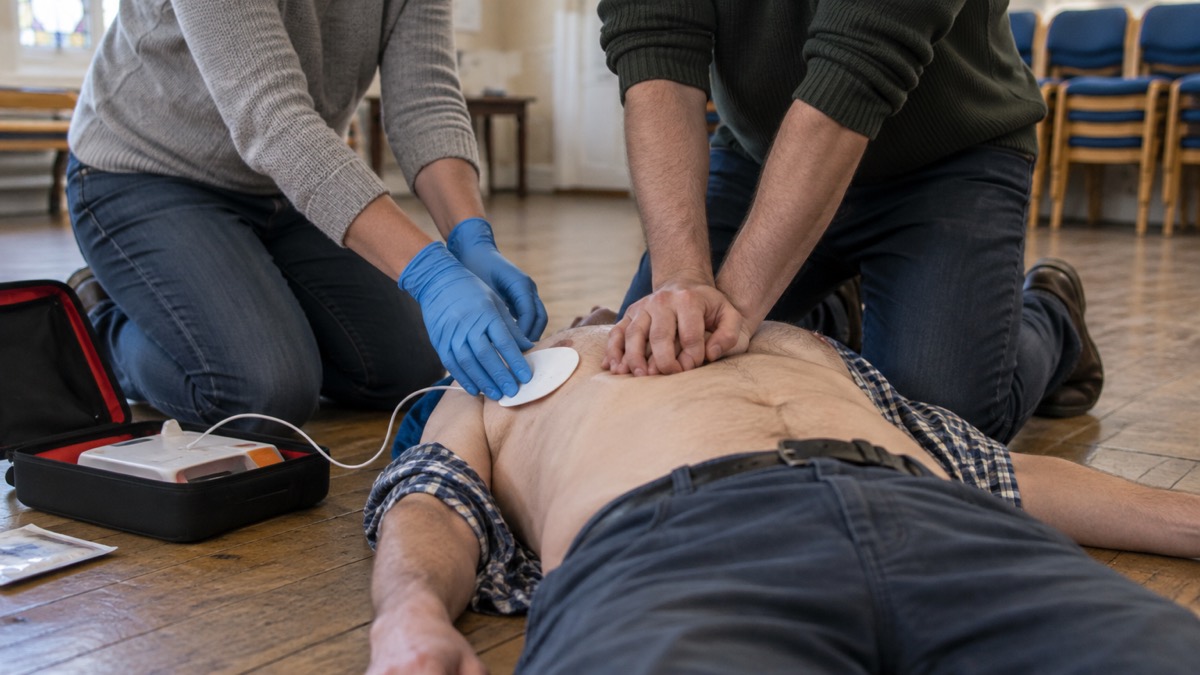
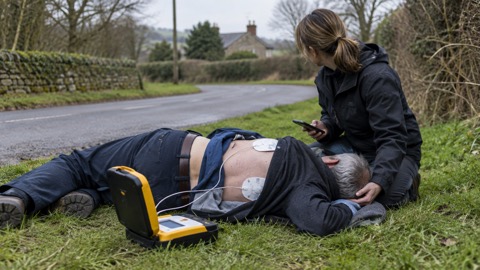
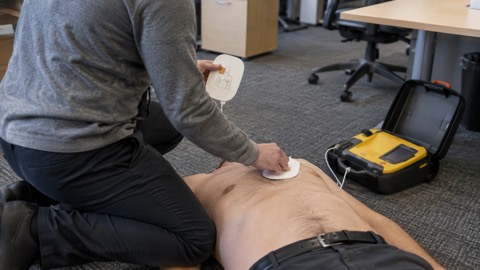
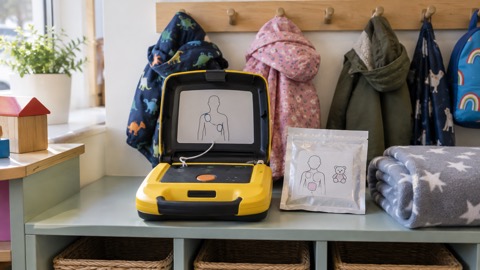
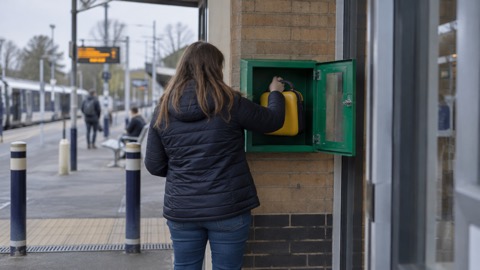
A defibrillator, or AED, is designed to be used by anyone, and it works alongside compressions rather than instead of them. The London Ambulance Service advises calling 999 immediately, starting chest compressions if it is safe to do so, and sending someone to get a defibrillator if one is nearby7. The device analyses the heart rhythm and tells you what to do. If its analysis does not find a shockable rhythm, resume chest compressions7.
The Electrical Safety First guidance on electric shock makes the same point: if the person is not breathing normally, begin CPR if you are able to do so, and use a defibrillator if one is available21. You do not need to stop compressions while someone fetches the device; keep going until it is ready to be attached.
The defibrillators page explains how to use one step by step, and the public access defibrillators page explains how to find the nearest one. If you are thinking about buying one for a home, club or village, the choosing a defibrillator page sets out what to consider.
Where to learn CPR
Reading this page is a start, but practising compressions on a manikin is what builds the confidence to act. Free online learning is available, including Resuscitation Council UK's RevivR course, and the learning CPR online page explains the options. The first aid courses page covers the types of hands-on course available, how long they take and where to find one.
The CPR page on this site walks through the hands-only steps for adults, and the 2025 resuscitation guidelines page explains what changed for bystanders.
If you have children, the teaching children basic life-saving skills page explains how to help them learn to call 999 and what to say. A household where everyone knows what to do, and where someone knows where the nearest defibrillator is, is better prepared than one where only one person does.
Sources (24)
- How to do CPR, British Heart Foundation, 2026
- How do I perform CPR?, Yorkshire Ambulance Service, 2026
- Adult basic life support guidelines, Resuscitation Council UK, 2025
- How to give an adult CPR, NHS inform, 2026
- Drowning first aid, NHS inform, 2026
- How to resuscitate a child, NHS, 2026
- Emergency heart care, London Ambulance Service, 2026
- How do I do CPR?, Resuscitation Council UK, 2026
- Adult first aid booklet, First Aid Awards, 2025
- Unresponsive and not breathing during Covid-19, British Red Cross, 2026
- Cardiac arrest, NHS inform, 2026
- How to do CPR, NHS, 2026
- Unresponsive and not breathing, British Red Cross, 2026
- Adult basic life support in community settings, Resuscitation Council UK, 2025
- CPR, St John Ambulance, 2026
- How to give a child CPR, NHS inform, 2026
- How to do CPR on a child or baby - BHF, BHF (British Heart Foundation)
- Unresponsive and not breathing child, British Red Cross, 2026
- Water safety, Devon and Somerset Fire and Rescue Service, 2026
- Child CPR, St John Ambulance, 2026
- First aid, Electrical Safety First, 2026
- How to do CPR on a baby, St John Ambulance, 2026
- How to give a baby CPR, NHS inform, 2026
- First aid guidelines, Resuscitation Council UK, 2025
 Baby and Child Kit Checklist
 Bleeding Control Kit Checklist
 Car Kit Checklist
 CPR on a Baby
 CPR on a Child
 Chest Compression Rate and Depth
 Checking Breathing
 Agonal Breathing and CPR
 Breathing During CPR
 Recovery Position and Spine
 Cardiac Arrest vs Heart Attack
 Heart Attack First Aid
 Defibrillator Pad Placement
 Defibrillator on a Child
 Defibrillator Without Training