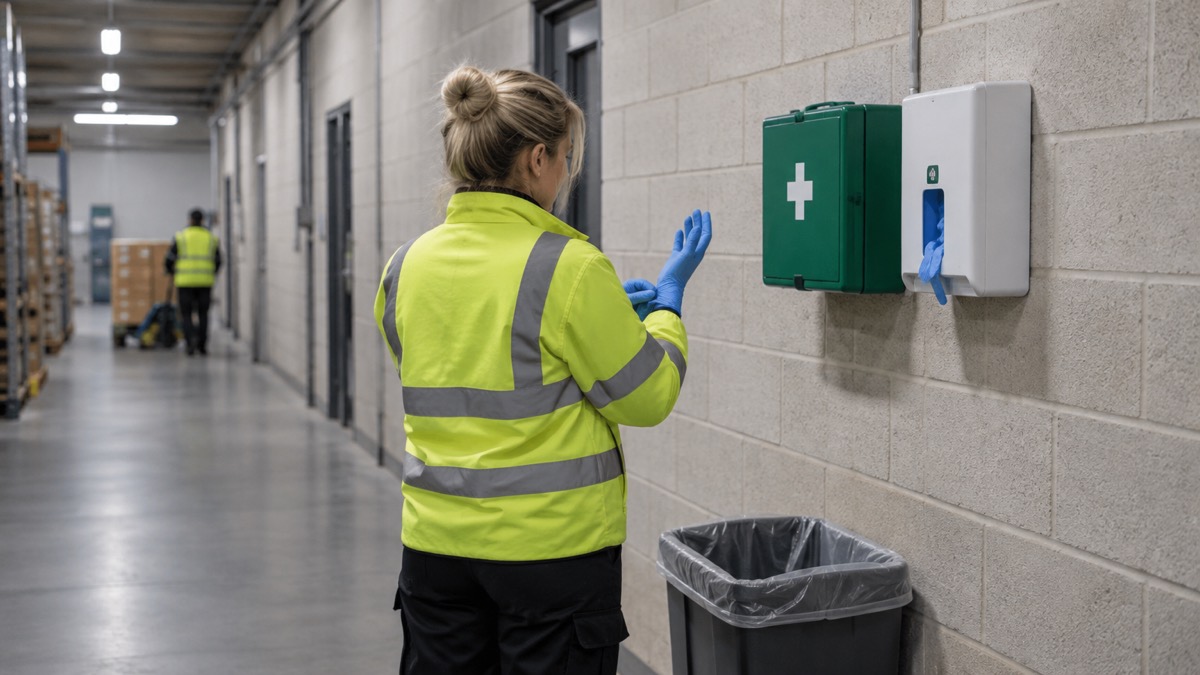
Before you help anyone who is hurt, UK official guidance is clear and consistent: check for danger first, and help yourself before you help others1. The Scottish Ambulance Service's cardiac arrest advice makes the danger check the first step, before you approach the person at all2, and NHS inform's primary survey guidance states it as a rule: "Before approaching a casualty, always make sure the area is safe"3. This page sets out what that means in practice, how to protect yourself when you are in close contact with someone who is bleeding or not breathing, how to clean a wound when there is no running water, and when the right thing to do is to step back and call 999.
Protecting yourself is not a lesser form of helping. A second casualty makes the incident worse, delays help for the first person, and gives the emergency services more to do. The North West Ambulance Service puts it plainly: "Please do not put yourself in an increased risk of danger when helping someone"4. The same service's first aid leaflet opens with the same instruction: "Before helping, check that you aren't putting yourself in any danger"5.
Check for danger before you help
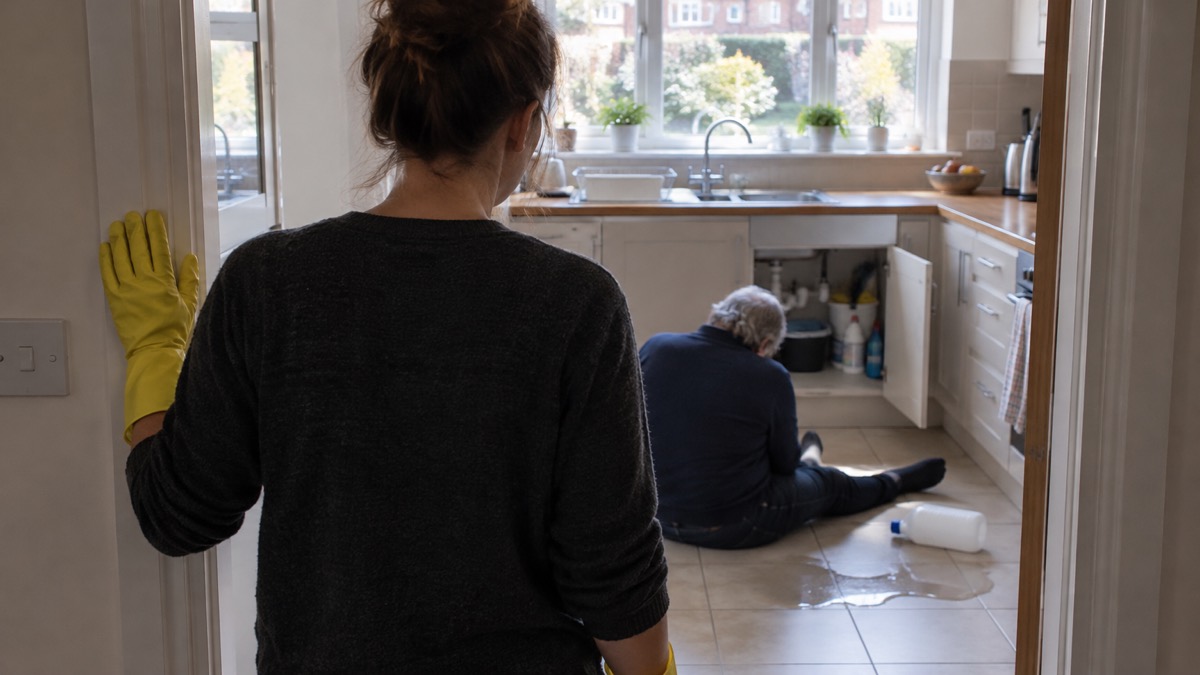
Every official source in the UK teaches the same opening move, whatever the emergency. The London Ambulance Service's lifesaver steps call it the D of DRSABCD: "Check for danger to yourself, the patient and others before approaching"6. NHS inform's primary survey says the same3, and the Scottish Ambulance Service lists "Check for danger before approaching the person" as the first step of responding to a cardiac arrest2. Greater Manchester's household preparedness guidance adds the wider rule: check for injuries, help yourself before attempting to help others, follow the advice of the emergency services, and do not put yourself or others in danger1.
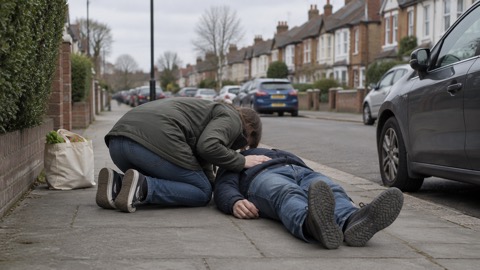
What the danger check means in practice is a quick, deliberate look at the scene before you touch anyone. The hazards depend on the situation, and the guidance gives examples you can act on. If someone is having a seizure, the NHS says to only move them if they are in danger, "such as near a busy road or hot cooker"10. If someone has been burned, the Northern Burn Care Network's first step is to stop the burning, "for example by dousing the flames or removing the person from the area", which means dealing with the source of the fire before you treat the person11. If the casualty is contaminated with chemicals, NHS inform's poisoning first aid guidance tells you to protect yourself with gloves, goggles or a mask before you go near them8.
The reason the check comes first is arithmetic as much as principle. If you are injured, you cannot help, and the ambulance crew arriving later has two patients instead of one. The North West Ambulance Service frames the choice you may face: if you can, remove the danger from the casualty, or remove the casualty from the danger, but never increase your own risk to do it4. If neither is possible without putting yourself in harm's way, the correct action is to keep back, call 999 and wait for people equipped to make the scene safe. Our page on the primary survey walks through the full sequence of checks that follows once the area is safe.
Only act when you are confident it is safe
Confidence and safety are two separate judgements, and official guidance asks you to make both. The East of England Ambulance Service's guidance on terrorist incidents states the rule directly: "You should only give first aid to others if it is safe for you to do so", and when the emergency services arrive, follow their instructions if they tell you to leave the area12. Protect UK's guidance on marauding terrorist attacks says the same in fewer words: consider first aid when it is safe to do so13.
That principle is not limited to attacks. It applies to a road collision with traffic still moving, a fire in a kitchen, or any scene where the hazard that caused the injury is still live. The judgement is yours to make in the moment, and the guidance does not ask you to be heroic. It asks you to be useful, and you are most useful alive, uninjured and able to call for help, talk to the 999 operator and pass on what you have seen.
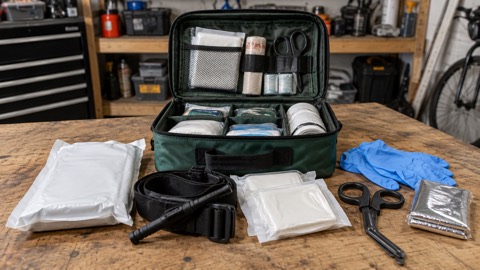
One piece of official guidance is worth knowing about if you are in a public place during a serious incident. Protect UK describes Public Access Trauma (PAcT) first aid kits, which may also be used by an injured person who is able to treat themselves14. If you are helping someone who can use one, directing them to it keeps you at less close contact and gets bleeding controlled sooner. Protect UK also notes that the security of such kits matters: their integrity must remain intact, with due regard to damage or loss from vandalism and theft14, so if a public kit has been tampered with, do not rely on its contents and say so when you call 999.
If you feel unsure, that is a signal to act on, not a failure. The government's Be Ready campaign advises learning some basic first aid skills in advance, checking online for free workshops or asking whether your employer will pay for a course15. Training is what turns an unsure bystander into a confident helper, and several ambulance services and local authorities make the same point: learning first aid and CPR is one of the most useful things you can do12, and it can take some time for emergency services to arrive at an incident, so a trained person on the scene can save lives16. Our pages on first aid courses and learning CPR free online list the options.
Your safety comes first, even when someone is badly hurt
This is the hardest instruction in first aid to follow, because it goes against the instinct to rush to the most badly hurt person. Official guidance is unanimous. Northumberland's local resilience forum guidance says: "When checking for injuries to yourself or others always attend to yourself first"17. Westminster's household emergency guidance says the same: if you are involved in an accident or injured, check yourself for injuries and help yourself before helping others18. Greater Manchester's guidance repeats it for households preparing for emergencies1.
The rule holds even when the other person's injuries look far worse than yours. A cut on your hand matters when you are about to press on someone else's bleeding wound, because it is a route for infection both ways. A wobbly leg after a fall matters when you are about to kneel on a slippery floor to help someone else up. Sheffield Children's NHS Foundation Trust's basic life support guidance describes first aid as the immediate treatment given to anyone who is injured, stops breathing or requires assistance, and notes that anyone can learn these skills19. The skill being learned includes protecting the first aider.
"Check for injuries, remember to help yourself before attempting to help others."
There is a practical reason this advice appears in household emergency guidance rather than only in first aid manuals. In a widespread emergency, a flood or a storm or a power cut that injures several people at once, you may be the only help available for some time. Greater Manchester's community preparedness guidance is explicit that it can take some time for emergency services to arrive at an incident, and that by learning first aid you can save lives and look after those who are injured16. In those circumstances, an uninjured you is the household's main asset. Triage yourself first, then those with you, then anyone else.
Gloves, masks and close contact when helping
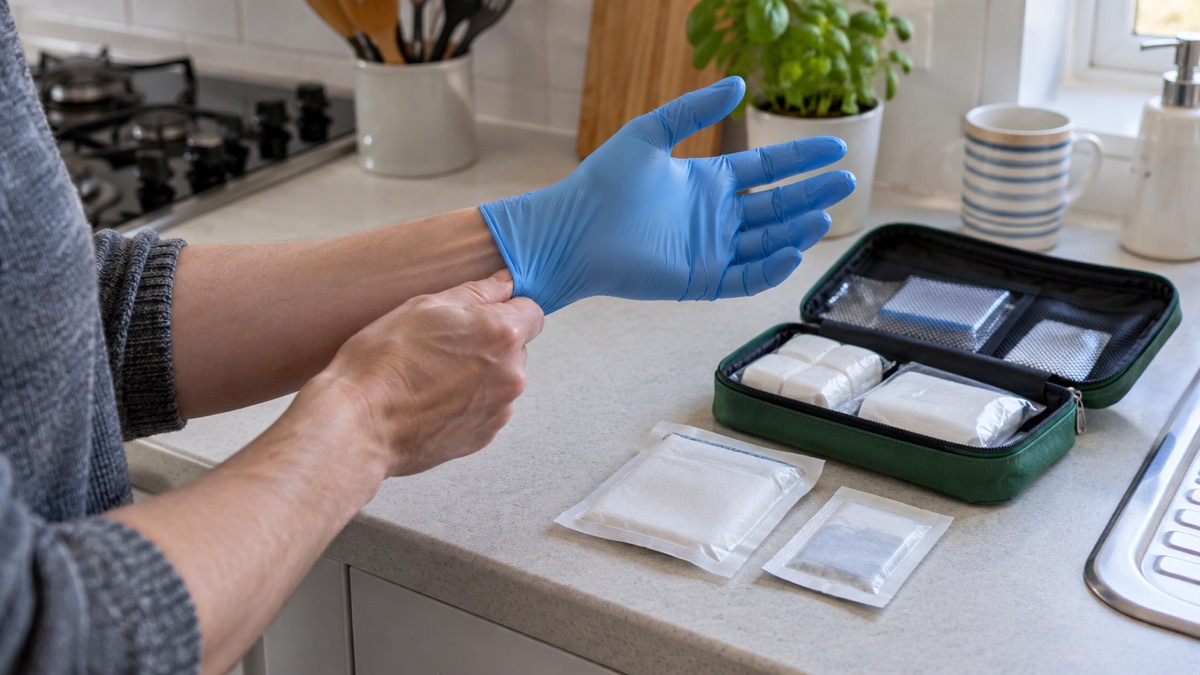
When you do help, the closest contact comes with bleeding wounds and with resuscitation, and that is where gloves and face barriers earn their place in a kit. NHS 111 Wales' first aid kit guidance explains what sterile gloves are for in both directions: "Sterile gloves are used to protect the patient if the first aider's hands are dirty and protects the first aider if the patient is bleeding"9. The NHS's own first aid kit guidance goes further on when to wear them: "If gloves are available in your first aid kit, wear them whenever you're cleaning wounds, handling bodily fluids, or disposing of waste"7.
That last phrase, disposing of waste, covers the used dressings, wipes and gloves themselves. Bag them, seal the bag and put it in the bin, then wash your hands. If you are pricked by a discarded needle while clearing up, or while handling waste, do not squeeze or scrub the wound; the pack's official guidance does not extend to needlestick follow-up treatment, so treat it as a matter for medical advice and seek help promptly through 111 or an urgent treatment service, and say exactly what happened.
Masks and eye protection come into their own with chemicals. NHS inform's poisoning first aid guidance states: "If the casualty is contaminated with chemicals, wear protective gloves, googles or a mask"8. That applies to chemical spills at home as much as to incidents elsewhere, and it is the maker's or official guidance you should follow for any specific product involved.
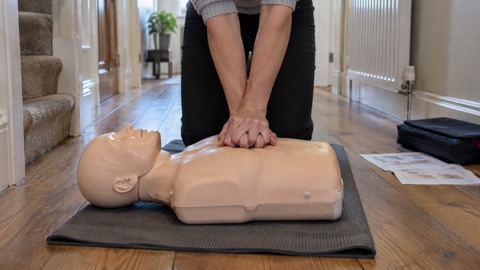
For resuscitation, the Health and Safety Executive's official first aid at work poster sets out the first aider's priorities in an emergency, including checking for a response, checking the airway and breathing, and performing CPR with chest compressions20. Training is the right place to learn rescue breaths and how a face shield or pocket mask is used. If you have no barrier device and no training in rescue breaths, hands-only CPR with chest compressions is still worth doing: our page on rescue breaths or hands-only CPR explains the choice, and how to do CPR gives the steps.
Keeping yourself safe when helping someone with a burn
Burns bring their own protection issues, because the danger that caused the burn is often still present, and because the treatment itself, cooling with water, carries a risk to the casualty that you need to manage. The London and South East Burns Network's guidance lists maintaining personal safety as a standing instruction for burn first aid21, and Cheshire Fire and Rescue Service's burn awareness advice is to know how to prevent burns and give first aid quickly to reduce injury and long-term harm22.
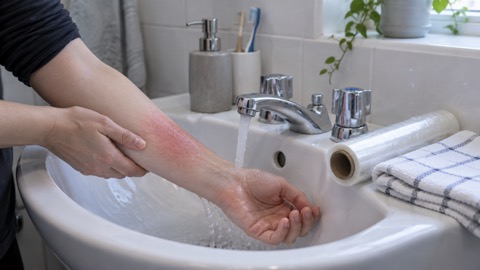
The sequence protects you as well as the casualty. First, stop the burning, by dousing flames or removing the person from the area11. Then cool the burn. NHS inform's burns guidance warns about a specific danger while you do this: "Be aware that overcooling the casualty may lower the body's temperature. A very low body temperature can cause hypothermia. Babies and elderly people are more at risk of hypothermia"23. The London and South East Burns Network says the same: keep the patient warm to prevent hypothermia, with children and elderly people most susceptible21. So while the burn itself is cooled, the rest of the person is kept warm, and NHS inform's step for a severe burn is to reassure the casualty and cover them to keep them warm while you wait for help23.
Two firm rules from official guidance protect the casualty while you help:
- Do not attempt to remove clothing if it is stuck to the skin; leave this for medical staff to remove11.
- Do not use ice or very cold water on a burn or scald, as this can make the wound worse24.
- If there is no running water, immerse the burn or scald in cold water or use any other cool fluid, such as milk or another cold drink24.
- Seek help immediately if the person has other injuries or is suffering from smoke inhalation25.
For minor burns, the Northern Burn Care Network says burns can be left uncovered unless they are in a place where it is difficult to keep clean, and a non-adhesive dressing can be used for temporary coverage if you need to cover one11. If you are helping at a bonfire or fireworks event, Manchester Fire and Rescue Service advises making sure in advance that whoever lights the fire and any helpers know what to do in the event of a burn injury or clothing catching fire26. Preparedness guidance for power cuts makes the same general point: have a first aid kit handy in case of an emergency27. Our page on burns and scalds covers the full treatment sequence.
Cleaning a graze when there is no water
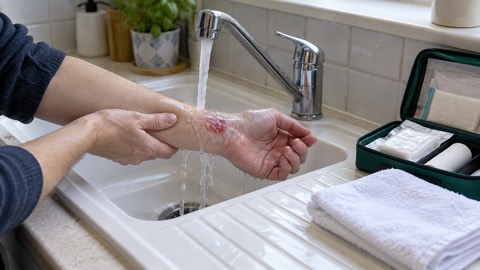
Running clean water over a wound is the normal first step, but emergencies are exactly when water may be off: after a burst pipe, during a flood, in a power cut that stops the pump. Official guidance has a specific answer for this. NHS 111 Wales' first aid kit guidance says of alcohol-free wipes: "These are used to clean grazes and minor wounds when water is not available"9. The NHS's first aid kit guidance describes cleansing wipes as used to gently clean the skin around the wound and for hygienic cleaning in any first aid situation7.
The wipes to look for are alcohol-free. NHS guidance for the Black Country lists alcohol-free antiseptic wipes as useful to clean cuts28, and Leicester, Leicestershire and Rutland's NHS guidance says the same: "alcohol-free antiseptic wipes are useful to clean cuts"29. Alcohol-free matters because alcohol stings on broken skin and the recommended kit contents across NHS sources specify the alcohol-free type. The same sources note antiseptic more generally can be used to clean cuts before they are bandaged, and most can treat a range of conditions including insect stings, ulcers and pimples28.
Sterile saline wipes are one common form. The maker Life Systems states its sterile saline wipes are both sterile and alcohol free, and that they leave the skin hygienic and well prepared for improved dressing adhesion30. That last point is practical: a cleaned, dried edge helps a plaster or dressing stay put. Alcohol-free wipes are used to clean grazes and minor wounds when water is not available, which is what makes wipes worth keeping in a kit that may be used away from a tap.
| Situation | What official guidance says to use |
|---|---|
| Graze or minor wound, no water available | Alcohol-free wipes, used to clean the skin around the wound9 |
| Cuts before bandaging | Alcohol-free antiseptic wipes28 |
| Burn or scald, no running water | Cold water, or any other cool fluid such as milk or a cold drink; never ice or very cold water24 |
| Hands before handling food, no running water | Wet wipes or alcohol gel31 |
| Eyes | Eyewash solution and eye bath from the kit32 |
In a flood or after any loss of water supply, the same constraint applies to wound cleaning and to kitchen hygiene, and the same substitutes work for hands: alcohol gels and wet wipes can stand in for soap and water until the supply returns. Our page on cuts, grazes and wounds covers cleaning and dressing in full.
Wipe once, then throw the wipe away
A wipe is a single-use item. One wipe, one pass over the skin, then straight in the bin. Wiping back over skin you have already cleaned, or using one wipe on two people, moves dirt and germs from one place to another, which is the opposite of what the wipe is for. Wear gloves while you clean if your kit has them, and bag the used wipe and gloves together.
One further piece of official guidance matters here. NHS inform's advice on staying safe during a drought warns: "Wipes and hand sanitisers don't work against all germs so try to wash your hands with soap and water as soon as you can"31. Wipes are a substitute when water is not available, not a replacement for it. As soon as running water is back, or as soon as you can reach any clean water and soap, wash your hands properly. The same applies to the wound itself where guidance allows: clean water remains the first choice for rinsing when you have it.
What to keep in your kit for cleaning minor wounds
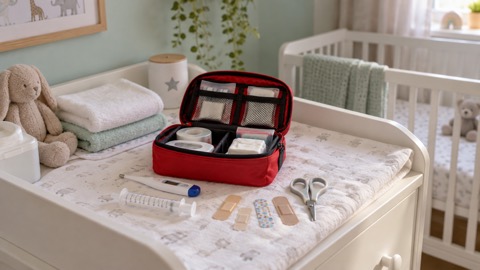
A well-stocked first aid kit at home is what makes all of this possible in the moment. NHS guidance from a GP surgery puts it simply: it is important to have a well-stocked first aid kit in your home so you can deal with minor accidents and injuries32. The government's Be Ready campaign checklist includes a first aid kit with waterproof plasters, bandages, a thermometer, antiseptic, eyewash solution, sterile dressings and gloves, medical tape for dressings, and tweezers15.
The NHS's full recommended contents, for cleaning wounds as much as covering them, are:
- Alcohol-free cleansing wipes7
- Distilled water for cleaning wounds7
- Eye wash and eye bath7
- Disposable sterile gloves7
- Tweezers and scissors7
- Plasters in a variety of sizes and shapes32
- Small, medium and large sterile gauze dressings, and at least 2 sterile eye dressings32
- Triangular bandages, crêpe rolled bandages and safety pins32
- Sticky tape, a thermometer (preferably digital) and skin rash cream such as hydrocortisone or calendula32
- Cream or spray for insect bites and stings, antiseptic cream, and antihistamine cream or tablets32
- Painkillers such as paracetamol (or infant paracetamol for children), aspirin (not to be given to children under 16), or ibuprofen32
The Black Country NHS guidance gives a shorter core list of the same shape: bandages, plasters in a range of sizes, waterproof if possible, eyewash solution, a thermometer, sterile dressings, tweezers and antiseptic28. Whichever list you work from, the items that protect you specifically are the gloves, the wipes and the waste bag you keep with them. Our page on first aid kits for the home compares ready-made kits against building your own, and dressings, bandages and plasters explains what each covering is for.
When to step back and call 999
Sometimes the safest and most useful thing you can do is not to treat anyone at all. The North West Ambulance Service's rule for the number is: "Call 999 for an ambulance if the patient is seriously ill or injured and you think their life is in danger"5. While you wait, you can still help by making the area safe if you can do so without risk, keeping the person warm and reassured, and being ready to tell the crew what happened.
The NHS's child accident guidance gives the fullest list of when to call 999 immediately, and most of it applies to adults too. Call 999 if the child stops breathing, is struggling to breathe, is choking, is unconscious, is limp and floppy, has a cut that will not stop bleeding or is gaping open, will not wake up, has a seizure or fit, has a swollen mouth, lips, throat or tongue, has blue, grey, pale or blotchy skin, lips or tongue, seems suddenly confused or distressed, has been severely injured, has swallowed a poison or too much medicine, or is bleeding heavily24.
Heavy bleeding is the case where protecting yourself and helping pull against each other most, so the guidance is precise. If nothing is stuck in the wound, apply pressure using a clean pad or dressing and keep doing this until the bleeding stops5. If there is something stuck in the wound, do not remove it: press firmly on either side of the object and build up padding around it before bandaging, to avoid putting pressure on the object5. The NHS's child accident guidance adds that if there is a lot of bleeding you should press firmly on the wound with a dressing or clean, non-fluffy cloth such as a tea towel or flannel, and use your fingers if you do not have a clean cloth24. Gloves protect you if you have them; if you do not, a clean cloth between you and the blood is the next best thing, and washing your hands thoroughly afterwards is not optional. Our pages on severe bleeding and how ambulance services prioritise 999 calls explain what happens next.
Sources (32)
- Prepare Yourself for Emergencies, Greater Manchester Combined Authority, 2026
- Cardiac Arrest Response, Scottish Ambulance Service, 2026
- How to Do a Primary Survey, NHS inform, 2026
- Learn to Save a Life, North West Ambulance Service, 2024
- First Aid Facts Leaflet, North West Ambulance Service, 2019
- Remember These Steps to Learn How to Save a Life, London Ambulance Service, 2026
- What Should I Keep in My First Aid Kit?, NHS, 2026
- Poisoning First Aid, NHS inform, 2026
- First Aid Kit, NHS 111 Wales, 2021
- What to Do if Someone Has a Seizure (Fit), NHS, 2023
- Burn Injuries First Aid, Northern Burn Care Network, 2022
- Staying Safe from a Terrorist Incident, East of England Ambulance Service, 2026
- Marauding Terrorist Attack: Run, Hide, Tell, Protect UK, 2022
- First Aid Provisions, Protect UK, 2026
- Get Prepared for Emergencies, UK Government Be Ready campaign, 2026
- Prepare Your Community, Greater Manchester Combined Authority, 2026
- Northumbria Local Resilience Forum, Northumberland County Council, 2026
- Prepare Your Household for Emergencies, Westminster City Council, 2014
- Basic Life Support, Sheffield Children's NHS Foundation Trust, 2023
- Basic Advice on First Aid at Work Poster, Health and Safety Executive, 2017
- Burns Network First Aid Guidance, London and South East Burns Network, 2026
- In the Event of a Fire, Cheshire Fire and Rescue Service, 2026
- Burns First Aid, NHS inform, 2026
- What to Do if Your Child Has an Accident, NHS, 2025
- Burn Awareness, Cheshire Fire and Rescue Service, 2026
- Bonfire Safety, Manchester Fire and Rescue Service, 2026
- 12 Tips to Prepare for a Power Cut, Horsted Keynes Parish Council, 2026
- Keep a Well Stocked Medicine Cabinet at Home, NHS Black Country Integrated Care Board, 2026
- What Should You Have in Your Medicines Box, NHS Leicester, Leicestershire and Rutland Integrated Care Board, 2025
- Sterile Saline Wipes, Life Systems, 2026
- How to Stay Safe During a Drought, NHS inform, 2026
- Accidents, First Aid and Treatments: What Should I Keep in My First Aid Kit?, Collingwood Surgery, 2026
 Baby and Child Kit Checklist
 Bleeding Control Kit Checklist
 Car Kit Checklist
 Danger, Response, Airway
 CPR Steps for Adults
 2025 Resuscitation Guidelines
 Defibrillators (AEDs)
 Public Access Defibrillators
 Choosing a Defibrillator
 The Recovery Position
 Choking First Aid
 Cuts, Grazes and Wounds
 Burns and Scalds
 Adrenaline Auto-Injectors
 Sepsis Signs to Act On