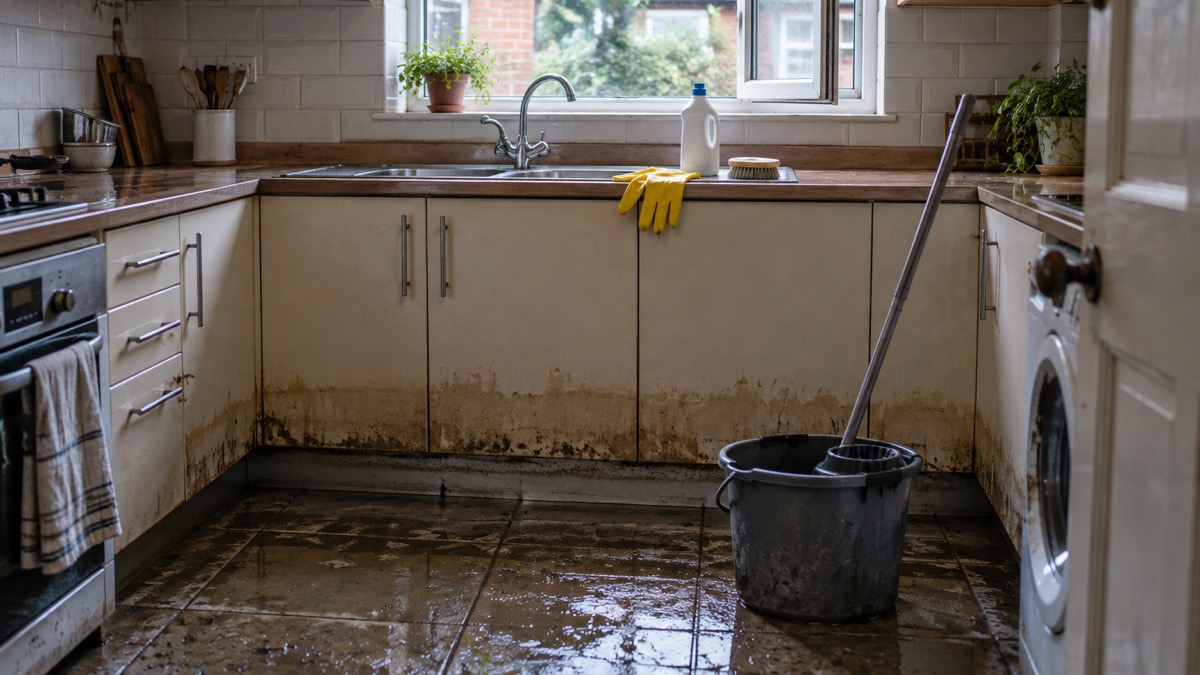
Floodwater in a kitchen leaves behind more than mud. It can carry sewage and other contamination, and it gets into places a cloth will not reach: the grain of a wooden spoon, the seal of a fridge door, the chip in a mug. The rule that matters is simple. Clean and disinfect everything before it touches food again, and throw away anything that cannot be properly cleaned1.
Work in a set order. Clean with hot water and detergent first, then disinfect, then let everything dry thoroughly, because drying also helps destroy germs left behind3. Use a food-safe disinfectant on any surface where you prepare food, and follow the maker's directions on how much to dilute it5. Wear waterproof gloves and an apron while you do it, and wash your hands with soap and clean water afterwards7.
Some things cannot be saved. Wooden chopping boards and wooden spoons that came into contact with floodwater should be discarded, and so should chipped or damaged crockery, because neither can be properly sanitised1.
Clean and disinfect everything before it touches food again
The standard advice from public bodies is consistent: clean and disinfect the kitchen, including all surfaces, appliances, crockery and cooking items, before using them with food2. That covers more than the worktop. Countertops, plates, cups, bowls, pans and cutlery all need the same treatment if floodwater reached them or the cupboard they were in11.
The reason is that floodwater may be contaminated, so disinfecting is not a tidy-up but a health step. Public health guidance is to disinfect all areas affected after cleaning, to wash your hands thoroughly, and to keep open sores or cuts clean and covered with waterproof plasters12. Anything that came into contact with floodwater needs disinfecting, not just rinsing13.
Hand washing runs alongside the cleaning, not after it. Wash your hands with soap and clean water after using the toilet, before eating or preparing food, after contact with floodwater, sewage or contaminated items, and after any clean-up activity14. Where you have been handling floodwater, mud or items that touched it, wash with disinfectant as well9.
Hot water, detergent, then a kitchen disinfectant: the order that works
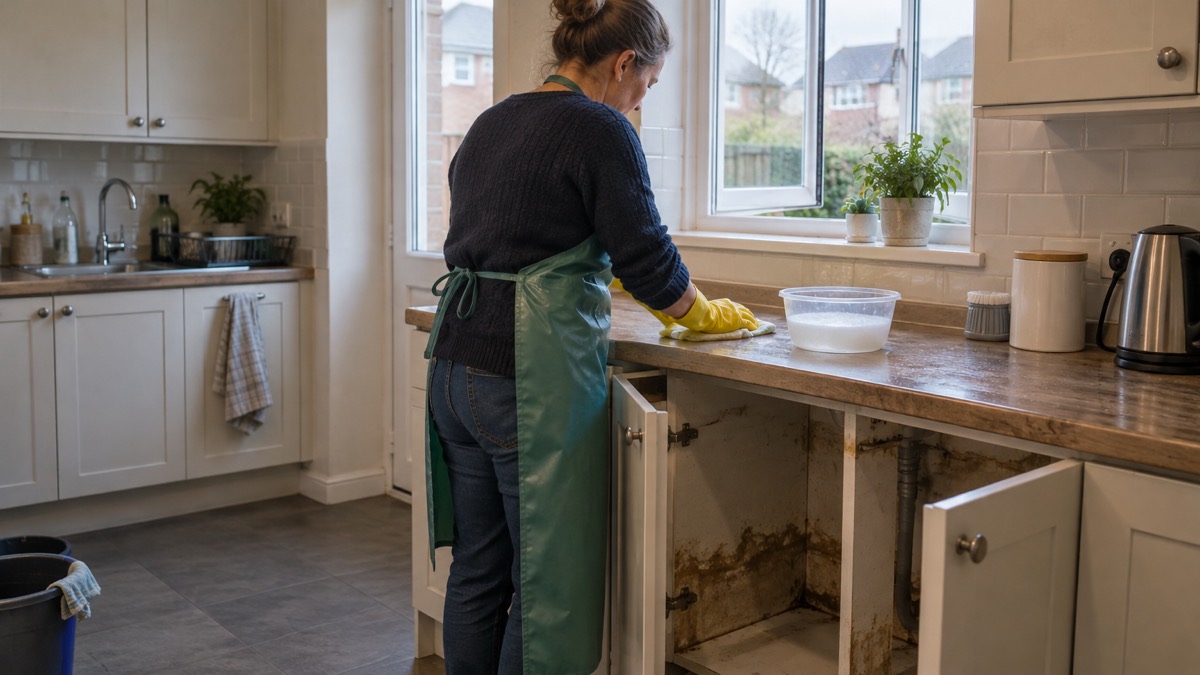
The sequence public guidance sets out is clean water and detergent first, then a normal kitchen disinfectant, applied to work surfaces, plates, pans, cutlery and plastic or glass chopping boards before you prepare food2. Cleaning lifts the dirt and silt; disinfecting deals with what is left on the surface. Doing them in the other order wastes the disinfectant on mud.
For the cleaning stage, use hot, soapy water on all surfaces, equipment, crockery, cutlery and utensils. If you have no access to clean water, an antibacterial spray or surface wipes can stand in1. For the disinfecting stage, use a domestic disinfectant following the manufacturer's directions on concentration, and use a food-safe disinfectant on food preparation surfaces, storage cupboards and fridges6.
A few practical points decide whether this works:
- Dilution matters. Follow the maker's directions on concentration rather than guessing6.
- Contact time matters. Let the disinfectant do its job before you wipe it away or put anything down.
- Drying matters. Allow surfaces to dry thoroughly, which also helps destroy germs left behind4.
- Oil and diesel need extra work. If the floodwater contained oil or diesel, clean the remaining contamination with a hot detergent solution7.
Worktops, walls, floors and appliances
Floodwater does not stay at worktop height. Clean all hard surfaces across the home that may have come into contact with it, including walls and flooring, with hot water and detergent11. Public health advice for Wales is the same: clean affected hard surfaces including walls, floors and furniture with hot soapy water and an ordinary household cleaning product, and allow them to dry thoroughly15.
For heavier soiling, clean dirt from walls and furnishings, preferably with a hose, rinse several times, then wipe down all surfaces with bleach with adequate ventilation, and rinse16. Where floodwater carried oil or diesel, follow the detergent step described above7.
Appliances need individual attention. Switch off electrical appliances and remove plugs before you start, and remember that a fridge or freezer that has been off will not have kept its contents cold16. Fridges and freezers that came into contact with floodwater should be washed down with a food-safe disinfectant as part of the clean6. If you are unsure whether an appliance is safe to use after water damage, treat that as a separate question from cleaning it.
Cupboards and drawers are easy to overlook. Empty them, then clean and disinfect the inside of your food cupboards17. While floorboards and walls continue to dry out, look for loose material and dust and vacuum these areas regularly11.
What to throw away: wooden boards and chipped or damaged items
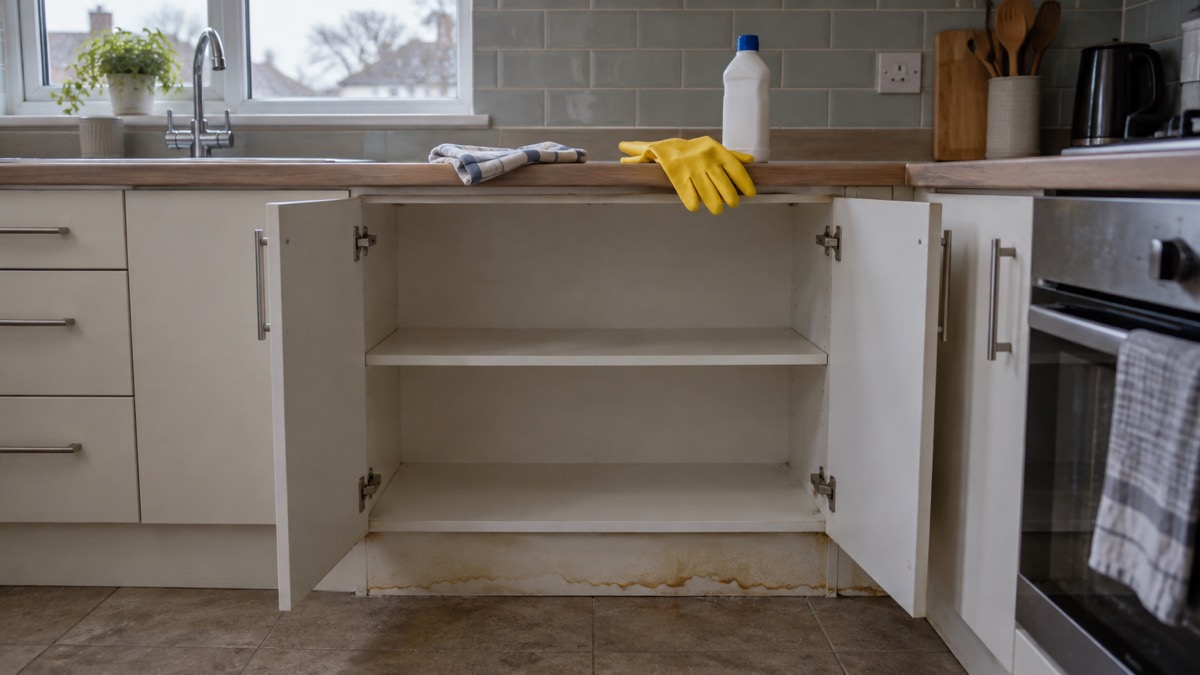
Some kitchen items cannot be made safe, and the guidance on them is unusually unanimous. Throw away any chipped or damaged crockery, and wooden chopping boards and wooden spoons, if they have come into contact with floodwater, because they cannot be properly sanitised and can absorb contaminated water1. Councils across the country repeat the same instruction: discard wooden boards and utensils contaminated by floodwater11.
Plastic and glass chopping boards are different. They can be cleaned and disinfected and used again, which is why the cleaning instructions name them specifically2. Check each item first: anything chipped, cracked or damaged joins the discard pile1.
Food is the other category. Dispose of any frozen food that has been at room temperature for a few hours7. Before you bin freezer contents, check with your insurer, and if you are covered for loss of perishable goods, make a list of all the foods you throw away7.
Disposal has its own rules:
- Put flood-damaged food and kitchen items in black plastic refuse sacks, double bagged if possible, seal them, and put them out when the next refuse collection is due21.
- Check with your insurer before disposal, because food may be insured21.
- Do not throw anything else away until you are told to, apart from ruined food20.
- Throw away items damaged by floodwater after your property and items have been checked by a loss adjuster, and dispose of them appropriately18.
Protective gloves, boots and what to wear while you clean
Floodwater is often dirty and contaminated, so protective clothing is part of the method, not an optional extra. Wear rubber boots, waterproof gloves and an apron22. Public health guidance for England lists rubber boots, protective overalls or a waterproof apron, and waterproof gloves as the basics for avoiding exposure to floodwater3.
When you use cleaning products, wear gloves and a disposable plastic apron, and follow the manufacturer's instructions correctly6. If scrubbing, hosing or pressure-washing causes water to splash, wear a standard face mask; goggles offer added protection and can be reused after thorough washing12.
Cuts and sores need covering before you start. Keep them clean and use waterproof plasters, and wear gloves throughout12. Wash your hands thoroughly with warm water and soap after each cleaning session and after any contact with floodwater3.
Fridges, freezers and washing up without mains water
If the power went off, your fridge and freezer stopped working, and the guidance is to plan for that: switch off appliances, remove plugs, and remember that freezers and refrigerators will become ineffective16. Once the power is back, the cleaning rules above still apply to the appliance itself, and a food-safe disinfectant should be used on fridges as part of the wash-down6.
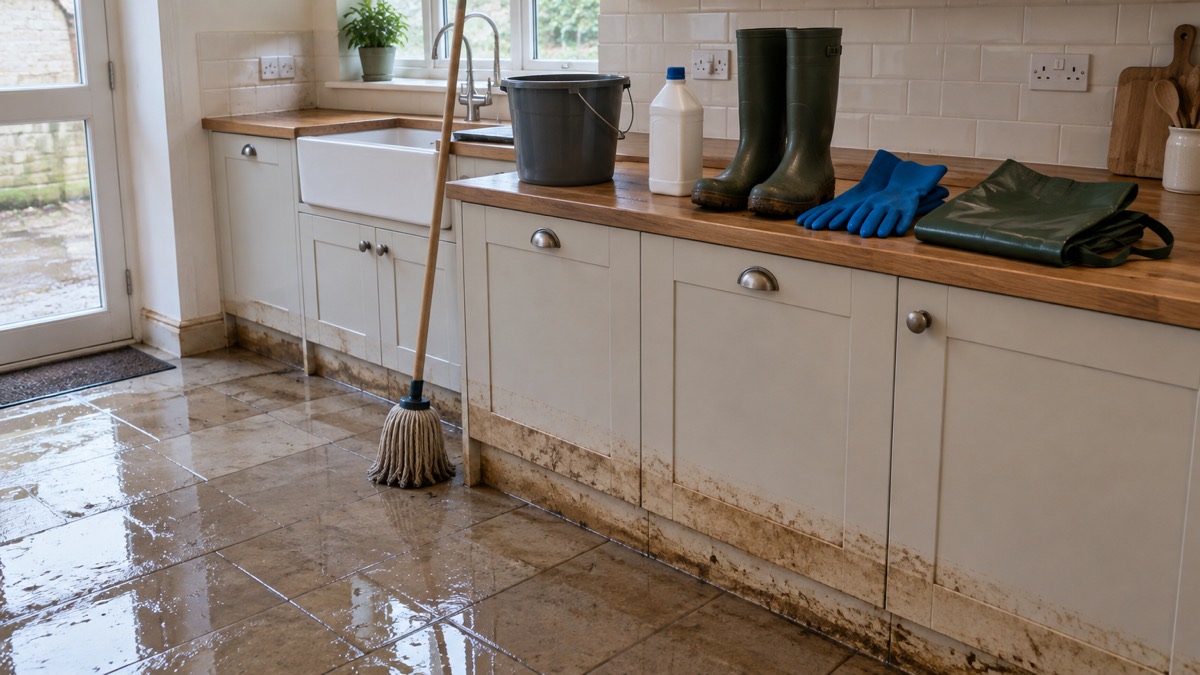
Without mains water, washing up changes. Use hot, soapy water where you have it, or an antibacterial spray or surface wipes if you have no access to clean water1. To wash your hands, fill a large clean bowl such as a washing up bowl with water and add some soap or a household disinfectant; keeping water use to a minimum will prolong alternative sources such as water tanks24. If you have no running water, alcohol gels or wet wipes can clean your hands before handling food1.
If your water supply itself was affected, private supply guidance is to remove screens, filters, flow regulators and aerators, clean reusable parts with hot water and a detergent suitable for food contact items, apply a mild disinfectant suitable for food contact or drinking water disinfection, rinse, reassemble and run the tap for a few minutes before use25.
For the wider job beyond the kitchen, see Cleaning Up Safely After Floodwater and After a Flood: Returning Home Safely. If your kitchen flooded because of sewage, Sewer Flooding: Causes and Who Is Responsible explains what is different. And if you are planning ahead for the next time, Making a Household Flood Plan sets out what to prepare.
Sources (26)
- Flooding food safety advice, Food Standards Scotland, 2026
- Flood clean-up advice, Rhondda Cynon Taf County Borough Council, 2021
- Flooding and health: advice for the public, UK Government, 2024
- Household flood plan, nidirect, 2018
- Sewer flooding, Northumbrian Water, 2026
- Cleaning up and returning home after flooding, Derbyshire County Council, 2026
- Clearing flood, Oxford City Council, 2026
- After a flood, Surrey County Council, 2026
- After a flood: clearing up, nidirect, 2026
- Cleaning up after a flood: health advice, North Warwickshire Borough Council, 2024
- Flooding and health: safely cleaning your home, Wiltshire and Swindon Prepared, 2026
- Thunderstorms weather warning: advice and information, nidirect, 2026
- After a flood, London Fire Brigade, 2026
- Further support after a flood, Nottinghamshire County Council, 2026
- Flooding and health, Public Health Wales, 2026
- Householders facing flooding, Lancaster City Council, 2026
- Food safety after a flood: consumer advice, UK Government, 2018
- Personal flood plan, UK Government, 2023
- Flooding aftercare, Runnymede Borough Council, 2026
- What to do after a flood, Natural Resources Wales, 2026
- How to recover from flooding, UK Government, 2023
- Flooding advice, Mid and West Wales Fire and Rescue Service, 2026
- Flood Smart Living, Suffolk County Council, 2024
- Water supply interruptions or outages, UK Government, 2026
- Private water supplies after floods or storms, Argyll and Bute Council, 2026
- Food poisoning, NHS Inform, 2026
 Flood Warning Checklist
 First Steps After a Flood
 Insurance Claim Records
 Signing Up for Flood Warnings
 Flood Warnings Without Email
 Who to Report Flooding To
 Reporting a Blocked Gully
 Garden Safety After Sewage
 Council Sandbag Duties
 Filling and Laying Sandbags
 Makeshift Sandbags
 Disposing of Used Sandbags
 Turning Off Utilities
 Walking or Driving in Floodwater
 Turning Electricity Back On