
Dettol is a household name in the UK, and most homes already have a bottle of something with the name on it. For an emergency kit, the useful question is narrower: which Dettol products earn a place in the cupboard, what does each one actually do, and how do you use it without causing harm? The range that matters for preparedness is small. There is a concentrated multipurpose disinfectant, a ready-to-use antibacterial surface cleanser spray, and the antiseptic liquid and wipes that households reach for when someone has a cut or the water is off.
The maker's own instructions decide how each one is used. Dettol Concentrated Multipurpose Disinfectant is diluted at 1 cap (16ml) to 512ml of water, a 1:32 dilution, wiped on evenly with a damp cloth and left for 15 minutes, and a trigger bottle mixed that way is suitable for 4 weeks1. The ready-to-use Dettol Antibacterial Surface Cleanser is a spray that the maker says kills 99.9% of bacteria and viruses, and it is not for personal hygiene2.
Two rules sit above everything else on this page. Read the label before use, and keep every product out of reach of children2. Disinfectant is for surfaces and for cleaning minor wounds as the label allows, never for drinking water, and never mixed with other cleaners.
What Dettol makes for UK households
The products that matter for a household preparing for disruption fall into a few clear jobs. One is cleaning and disinfecting surfaces, which is what the concentrated multipurpose disinfectant and the surface cleanser spray are for. Another is wound cleaning, which is where antiseptic liquid, cream and wipes come in. A third is hygiene when mains water is interrupted, where hand sanitiser and wipes do the work.
The maker's surface cleanser is sold at Tesco, Sainsbury's, Asda, Wilko and Amazon UK, and the concentrated disinfectant is listed on Amazon UK2. Availability on a shop shelf is not the same as availability in a power cut, so buy what you need before you need it and keep a spare in the kit.
| Product | What it is for | Key maker specification |
|---|---|---|
| Dettol Concentrated Multipurpose Disinfectant Rose & Peach Blossom 250ml | Diluted for surfaces, or poured neat into drains and bins | Kills 99.9% of bacteria; 1:32 dilution; 15 minute contact time1 |
| Dettol Antibacterial Surface Cleanser 500ml | Ready-to-use spray for food preparation areas, highchairs and hard and soft surfaces | Kills 99.9% of bacteria and viruses; contains benzalkonium chloride; non bleach2 |
| Antiseptic liquid, cream and wipes | Cleaning cuts and grazes before dressing | Antiseptic can clean cuts before bandaging; alcohol-free wipes are useful3 |
The concentrated disinfectant is suitable for use over 100 surfaces, but on hard non-porous surfaces only1. That limit matters in a flood clean-up, where you will meet plaster, fabric and soaked furniture as well as worktops.
Antiseptic liquid for cuts and grazes
Antiseptic is a first aid item, not a cleaning product, and it belongs in the first aid kit rather than under the sink. Official NHS guidance describes antiseptic as something that can be used to clean cuts before they are bandaged, and notes that most can treat a range of conditions including insect stings, ulcers and pimples, with alcohol-free antiseptic wipes useful for cleaning cuts4. Antiseptic cream or spray can be applied to cuts, grazes or minor burns after cleaning to help prevent infection, and some contain a mild local anaesthetic to numb the pain5. Antiseptic creams can also help relieve itching and prevent infection for bites and stings6.
The cleaning method matters as much as the product. NHS Scotland advises rinsing the wound with bottled or tap water, or using sterile wipes, cleaning the skin around it with soap and water or antiseptic while trying not to get antiseptic into the wound, patting dry with a gauze swab or clean tea towel, and then putting on a sterile dressing or plaster3. If the wound is painful for the first few days you can take pain relief like paracetamol or ibuprofen, but do not give aspirin to children under 163.
A family medicine chest should hold antiseptic cream for sores, grazes and septic spots alongside the dressings and pain relief7. Build the first aid side of your kit around the wound, not around the bottle: water to rinse, something clean to dry, a dressing to cover, and antiseptic for the skin around the edges.
Surface cleaners and disinfectant sprays
The two surface products do different jobs and are used differently. The ready-to-use Dettol Antibacterial Surface Cleanser is a spray for everyday cleaning: the maker says it can be used on food preparation areas, highchairs and many more surfaces around the home, on hard and soft surfaces, and that it leaves no taint and no odour2. It is proven to remove allergens including pollen particles, dust mites and pet dander, and it is free from bleach, taint and dyes2. Its active ingredient is benzalkonium chloride, and it contains less than 5% non-ionic surfactants, disinfectant and perfume2.
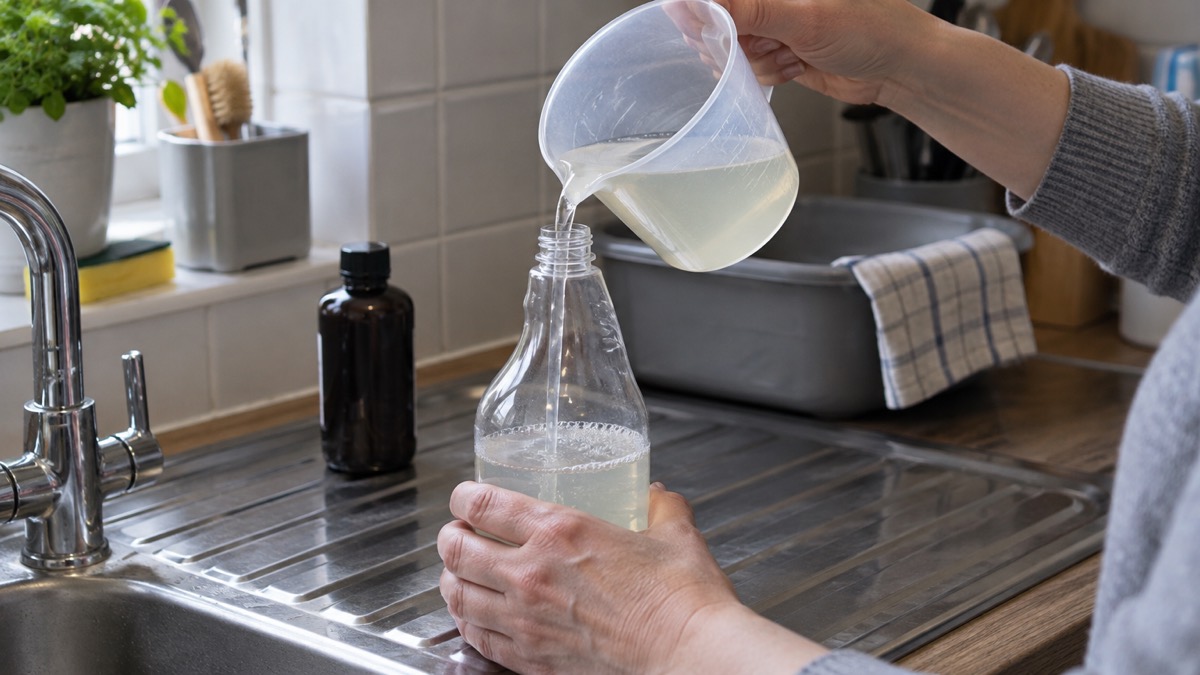
The concentrated disinfectant is the stronger, more flexible option for a kit because one small bottle makes many bottles of spray. The maker's method is to add 1 cap (16ml) to 512ml of water in a suitable container or trigger spray bottle, wipe the surface evenly with a damp cloth and leave it for 15 minutes1. The maker states that all its products are tested according to European standards to confirm the level of active substances1.
Neither product is a substitute for cleaning. Disinfectant works on a surface that has already been wiped, which is why the maker's method is wipe, then leave. The spray is not for personal hygiene, must not be frozen, and must not be used on windows, mirrors, fabrics, painted or varnished surfaces2. The maker also advises avoiding contact with plastic baby bottles, which can crack when steam sterilised2.
Antibacterial wipes for when water is short
When the water supply is disrupted, wipes and hand sanitiser stop hygiene from collapsing. Independent guidance for households affected by water and sewerage incidents lists hand sanitiser, baby or biodegradable wet wipes, waterless soap, dry shampoo, and disposable plates, cups and cutlery as useful items9. Scottish Government emergency kit guidance likewise lists toiletries, hand sanitiser and wet wipes for hygiene10.
That makes wipes a sensible kit item, but a limited one. They clean hands and surfaces, not dishes, and they do not make water safe to drink. Store them where they will stay dry, and count them as a short-term bridge while you work through your stored water, which is covered in the water guide. The same principle applies to hand wash and sanitiser: keep a bottle by every sink and one in the kit, and use them when you cannot wash properly.
Hand wash and hand sanitiser
Hand hygiene is the simplest defence against illness in any disruption, and it is the one thing you can restock cheaply. Keep hand sanitiser in the emergency kit alongside toiletries and wet wipes, as official kit lists advise10. In a water outage, use sanitiser after the toilet and before food, and save stored water for drinking and cooking.
If someone does become unwell with sickness or diarrhoea, dehydration is the risk to watch. NHS guidance is to drink fluids if you have symptoms of dehydration, to start with small sips and gradually drink more if you feel sick, and to avoid caffeinated drinks and alcohol because both will dehydrate you7. Keeping oral rehydration supplies and clean drinking water is more useful than any disinfectant in that situation.
Using Dettol products safely
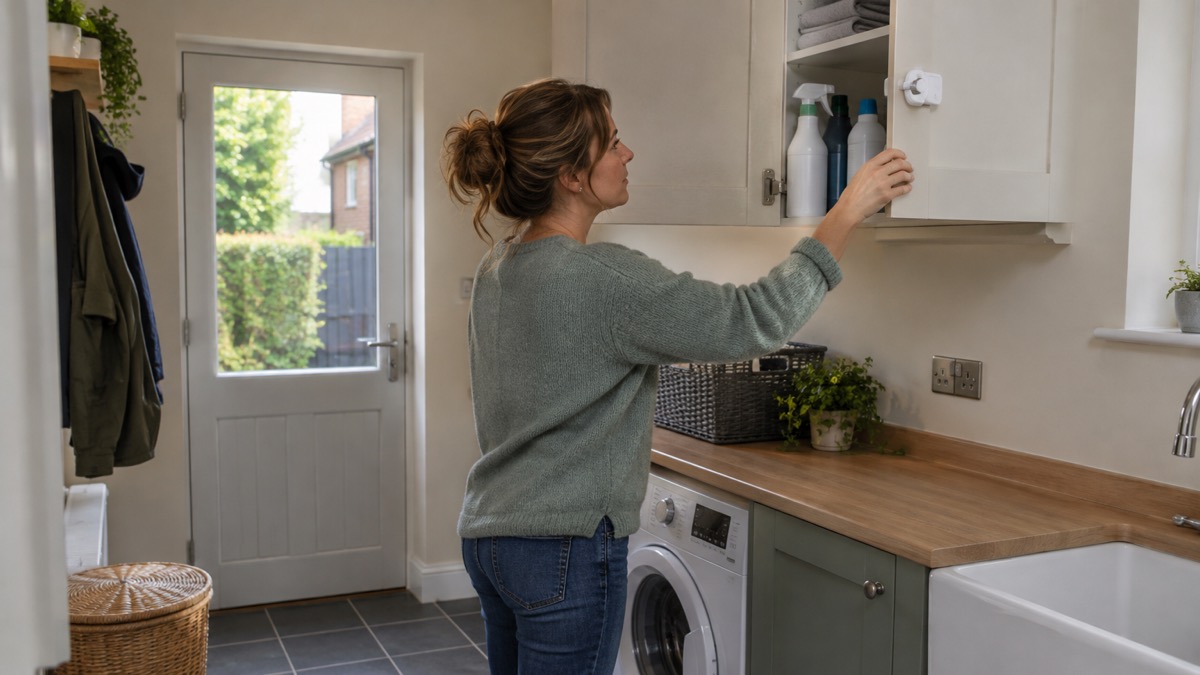
The maker's own safety instructions are short and worth reading once, properly. On the surface cleanser: use biocides safely, always read the label and product information before use, and keep out of reach of children2. On the concentrated disinfectant: do not swallow, and avoid release to the environment1. If the concentrated product gets on your skin, wash with plenty of water, and if skin irritation occurs get medical attention1.
- Read the label on the bottle you actually own before every new use2.
- Keep products out of reach of children, in a locked or high cupboard2.
- Wear gloves for flood clean-up and for mixing concentrated disinfectant.
- Never decant disinfectant into a drinks bottle, squash bottle or food container.
- Wash hands after cleaning, and keep disinfectant away from food and from anything a child could mistake for a drink2.
- Store away from food, and never store in a container a child could mistake for a drink.
Emollient products such as creams, sprays, liquids or gels are safe to use and are vital for the skin conditions they treat11. Keep them separate from your disinfectants so neither is used by mistake.
Where never to mix or use disinfectant
Mixing cleaning products is where household accidents happen. The maker's instruction on the surface cleanser is explicit: do not use with detergents or other disinfectants2. Use one product at a time, on a surface you have already wiped with water or plain detergent, and let it dry.
There are also places the spray should never go. It is not suitable for windows, mirrors, fabrics, painted or varnished surfaces, and it is not for personal hygiene2. Do not freeze it2. The concentrated disinfectant must not be swallowed1.
"Do not use with detergents or other disinfectants."
The one place the concentrated disinfectant is meant to go neat is the drain. The maker says that for up to 24 hours of long-lasting fragrance you can pour it neat directly into bins, drains, plug holes and toilet bowls1. That is a fragrance instruction, not a drain-clearing one, and it does not extend to wipes, which go in the bin.
Cleaning up after a flood
Flood water carries contamination, and cleaning up is the moment a household uses most disinfectant. Official guidance for people recovering from flooding is to make liberal use of disinfectants when cleaning up13. The same guidance sets out the order of work: add small amounts of chlorine bleach to standing water and then remove it, and remove all debris, soaked and dirty material including wet insulation, residual mud, furniture, appliances, clothing and bedding13.
Disinfectant comes after removal, not instead of it. Strip out what is soaked, bag it, then clean and disinfect the hard surfaces that remain, using the concentrated disinfectant at the maker's 1:32 dilution and leaving it for 15 minutes1. Keep the concentrated product off porous and absorbent materials, since the maker limits it to hard non-porous surfaces1. Wear gloves and boots, keep children and pets out of the affected rooms, and wash your hands when you stop. Our flooding guide covers the wider clean-up and insurance-free practicalities.
Storing Dettol products in your emergency kit
A household emergency kit should be kept in a safe place at home where you can reach it easily, and in a waterproof bag14. That applies to your disinfectant as much as to your torch. Keep the concentrated bottle upright, closed, and inside a sealed bag so a leak cannot soak the dressings and medication stored beside it.
Official kit lists put hygiene and first aid items together: sanitary items and toiletries, spare medication, essential medication and a first aid kit12. A pet kit should carry several days' supply of food in an airtight, waterproof container, a water bowl and several days' supply of water, an extra supply of any regular medicine in a waterproof container, a first aid kit, and sanitation items including pet litter, newspapers, paper towels and plastic bags16. Store your disinfectant away from all of it, and away from pet food.
- Keep the concentrated disinfectant in its original labelled bottle, never decanted.
- Put it in a sealed bag inside the kit, upright.
- Keep a spare trigger spray bottle for mixing.
- Check the kit each season and replace anything leaking or past its date.
- Keep the kit where you can reach it easily, in a waterproof bag14.
Safety notices and recalls
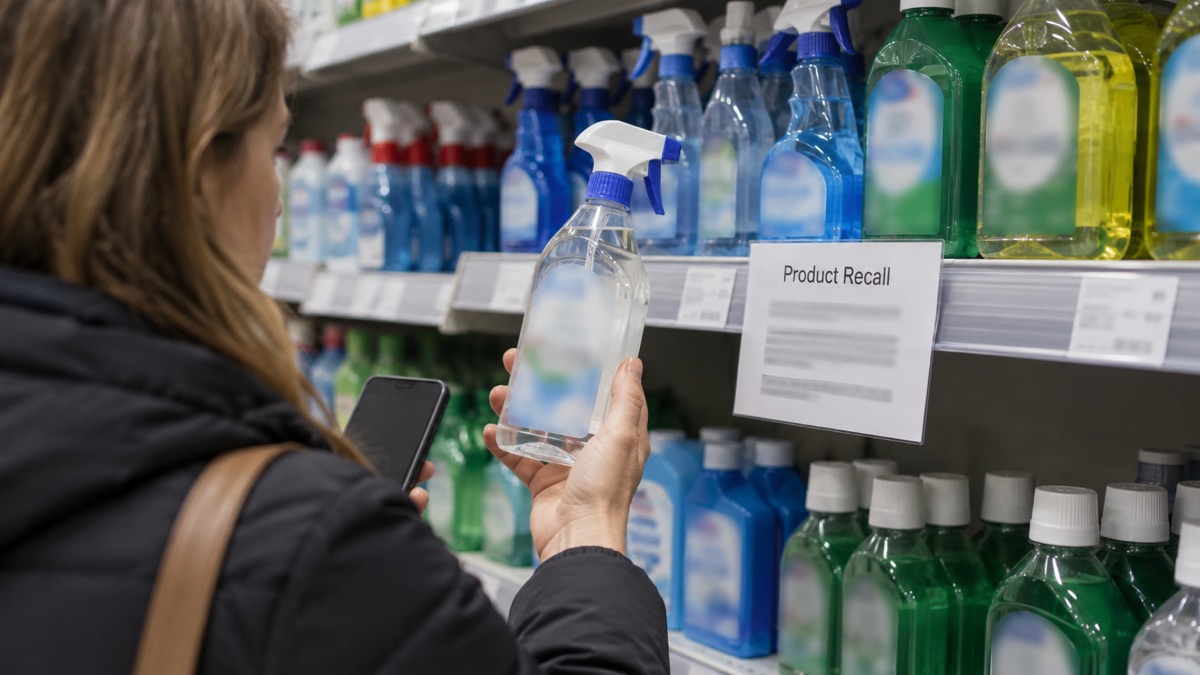
Household chemicals are recalled less often than electrical goods, but the principle is the same: check, and register where you can. The Office for Product Safety and Standards issues recalls and alert notices on its website17. For electrical items, the fire and rescue service advises registering your appliances with the manufacturer so you are informed of any safety recalls18. White goods recalls and safety notices can be checked on the Electrical Safety First website20, and appliance recalls through the Office for Product Safety and Standards alerts and recalls page19. A list of recalled products is also available on the gov.uk Product Recall page17.
Recalls do happen and they are taken seriously. A Deltronic Security AB Environmental Alarm was recalled from end users, with the notice stating that the products present a risk of serious harm, notified by Local Authority Trading Standards17. A.Vogel Ltd recalled a batch of Rapunzel Biosnacky seeds, with point of sale notices displayed in all retail stores selling the product and on its website21. Neither is a Dettol product, and no Dettol recall appears in the material behind this page; the point is the habit. If you hear of a recall, stop using the product and follow the notice.
Dettol support and product information
For instructions, ingredients and safety information, the maker's own product pages are the place to start: the Dettol Antibacterial Surface Cleanser 500ml page and the Dettol Concentrated Multipurpose Disinfectant Rose & Peach Blossom 250ml page carry the dilution, contact time, safety warnings and ingredient lists quoted here2. The maker states that all its products are tested according to European standards1.
If you need help with a product, use the contact details printed on the pack or shown on the maker's website, and have the batch code to hand. If a product has caused a skin reaction, wash with plenty of water and get medical attention if irritation occurs10. For urgent medical advice in the UK, call 111 or 999 in an emergency.
Where to go next depends on what you are preparing for. The emergency kit guide sets out the full household list, the first aid guide covers wounds and dressings, the water guide covers storage and outages, and the flooding guide covers clean-up after a flood. For the wider picture of how households prepare, start with getting started.
Sources (21)
- Dettol Concentrated Multipurpose Disinfectant Rose & Peach Blossom 250ml, Dettol, 2026
- Dettol Antibacterial Surface Cleanser 500ml, Dettol, 2026
- Cuts and grazes, NHS Inform, 2026
- The family medicine chest, NHS, 2026
- Newborn essentials and first aid, NHS 111 Wales, 2021
- Keep well stocked medicine cabinet at home, NHS Black Country ICB, 2023
- Dehydration, NHS, 2026
- What to keep in your medicine cabinet, NHS Hertfordshire and West Essex, 2026
- Water and sewerage incidents at home, Consumer Council for Water, 2026
- Emergency kit, Ready Scotland, 2026
- Emollients, Greater Manchester Fire and Rescue Service, 2026
- Loss of essential services, Greater Manchester Combined Authority, 2026
- Be Prepared, Lancaster City Council, 2026
- Get prepared, Carmarthenshire County Council, 2026
- Emergency kit checklist, Neath Port Talbot Council, 2026
- Emergency grab bag, Buckinghamshire Council, 2026
- Product recall: Deltronic Security AB Environmental Alarm, Office for Product Safety and Standards, 2025
- Electrical safety, Greater Manchester Fire and Rescue Service, 2026
- Maintain appliances and recalls, Greater Manchester Fire and Rescue Service, 2026
- White goods, Cheshire Fire and Rescue Service, 2026
- A.Vogel Ltd recalls Rapunzel Biosnacky seeds, Food Standards Scotland, 2026