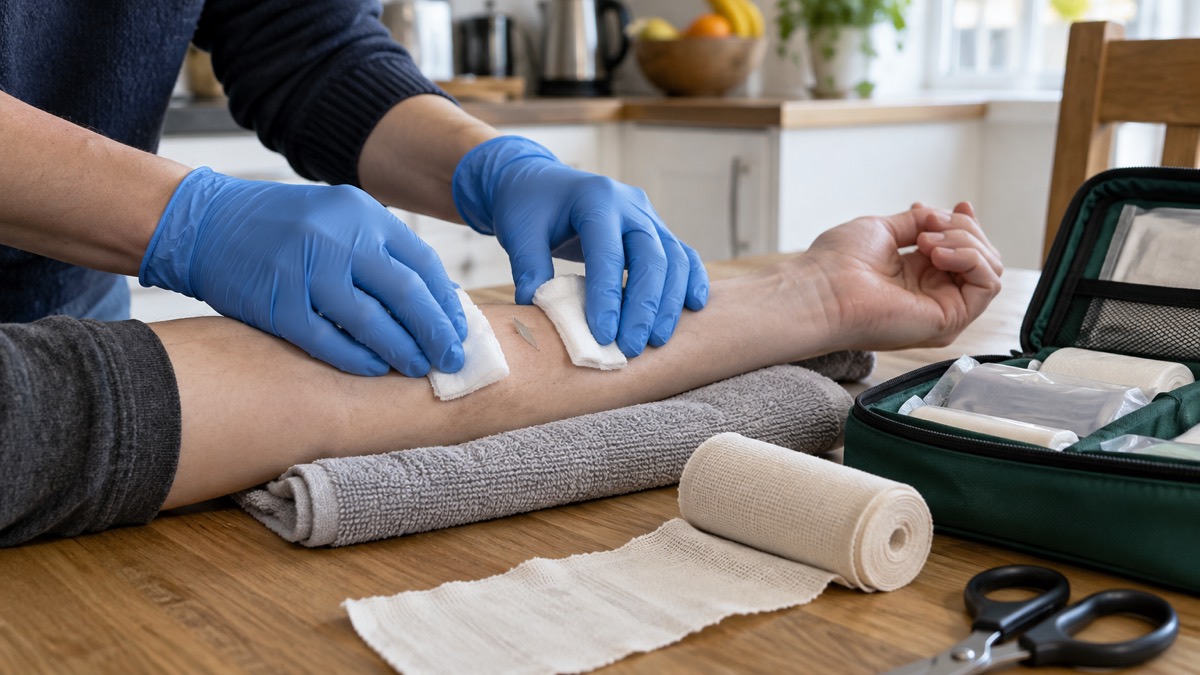
If something is stuck in a wound, leave it where it is. Every first aid body in the UK says the same thing: removing an embedded object can make the bleeding much worse, because the object may be plugging the hole and slowing the blood flow1. The NHS, the British Red Cross and St John Ambulance all advise pressing around the object rather than pulling it out2.
What you do instead is control the bleeding around it. Press firmly on either side of the object to push the edges of the wound together, without pressing down on the object itself5. Then get medical help. A wound with something embedded in it is one of the situations where NHS inform says to phone 999 or go to A&E5.
This page sets out what to do in the first few minutes, when to call an ambulance and when to make your own way to hospital, what to do while you wait, and the narrow cases where a small object can safely come out at home.
Leave it in: why removing an embedded object makes things worse
An object embedded in a wound is often doing a job, even though it did not mean to. The British Red Cross puts it plainly: do not remove it, because it is helping plug the hole and stop the blood flow1. Pull it out and the wound can bleed freely again, sometimes much more heavily than before.
NHS inform's severe bleeding guidance is just as direct: do not try to remove the object2. Its cuts and grazes page adds a second instruction that matters just as much: do not press down on the object either. Press firmly either side of it to push the edges of the wound together5. Pressing on the object can drive it deeper and cause further damage.
The same advice applies to children. NHS guidance for children's accidents says that if there is an object embedded in the wound, like a piece of glass, do not remove it, as this can make the bleeding worse. Press around the edges of the object rather than directly on it3. St John Ambulance gives the same instruction for severe bleeding: do not pull it out, because it may be acting as a plug to reduce the bleeding4.
"Do not remove it, it's helping plug the hole and stop the blood flow."
There is one exception to hold in mind, and it is not about wounds. If a child has something lodged firmly in their nose or ear, NHS guidance is to leave it where it is and take them to the nearest A&E department or minor injuries unit3. The principle is the same: do not go digging.
Controlling bleeding around the object
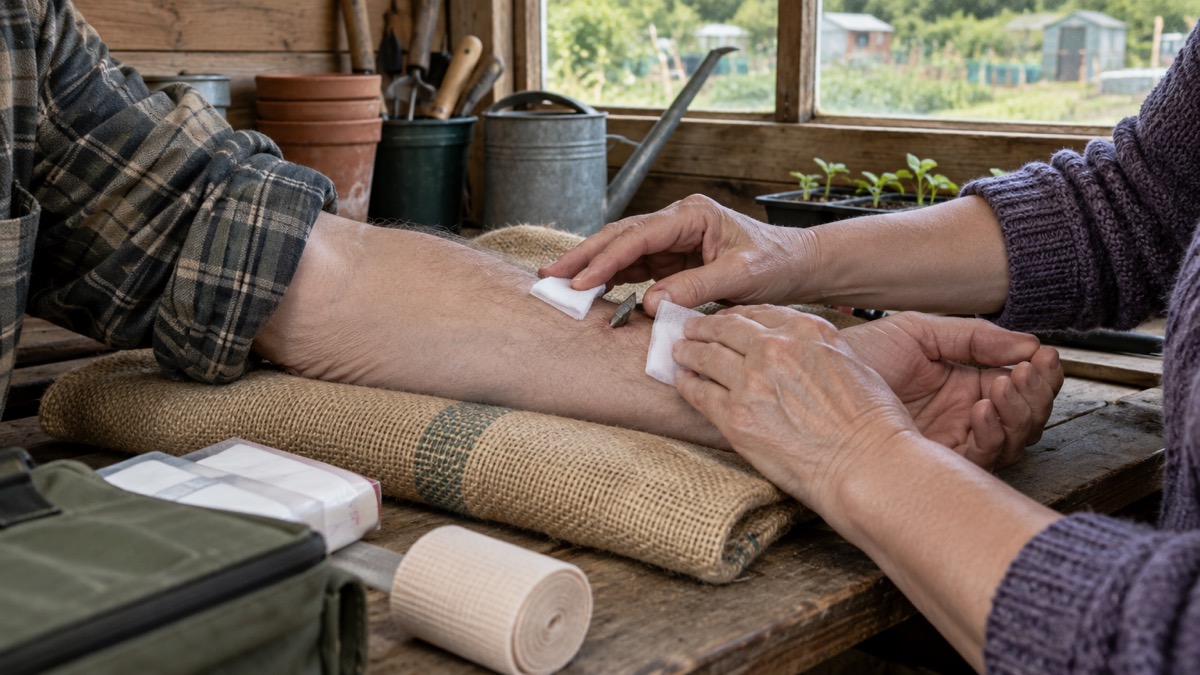
The aim is to close the wound edges around the object without moving it. Put on disposable gloves if you have them, then press firmly on the skin either side of the object with a clean dressing, pad or cloth5. Hold steady pressure rather than prodding and checking.
If you have a dressing and bandage, secure the dressing with the bandage tied over the wound, keeping the pressure on4. If blood comes through the dressing, do not add more on top indefinitely: remove it and reapply pressure with a new dressing or pad, then secure it again4. The British Red Cross gives the same instruction for adults and for babies and children: remove the soaked item, replace it with a fresh one, and make sure firm pressure is applied1.
A few practical points that decide whether this works:
- Use a clean barrier. A sterile gauze dressing is ideal; a clean cloth will do. Disposable sterile gloves protect you as well as the casualty8.
- Keep the person still. Movement disturbs the pressure you are applying.
- Do not raise the object or wiggle it to see how deep it goes.
- Watch the person, not just the wound. If they become pale, clammy or faint, they may be developing shock. Treat any injuries you can see that could be causing it, such as severe bleeding, and reassure the casualty that you will help them8.
If the wound is on a limb and you cannot control the bleeding with pressure around the object, that is an emergency. Ring 999.
When to call 999 and when to go to A&E
NHS inform lists "there's something stuck in the cut" among the reasons to phone 999 or go to A&E, alongside bleeding you cannot stop, blood that comes out in spurts and is bright red and hard to control, loss of feeling or movement near the wound, a bad cut on the face or palm, and a wound that is very large or deep5. In practice, an embedded object usually means an ambulance or a hospital trip rather than a plaster at home.
Calling 999 is for serious illness or life-threatening injury, such as severe blood loss or loss of consciousness9. The ambulance services describe serious head injuries among the emergencies that warrant a 999 call10. If the object is embedded and bleeding is heavy or you cannot control it, that is a 999 call.
| Situation | What to do |
|---|---|
| Object embedded, bleeding controlled with pressure around it | Go to A&E or a minor injuries unit, keeping pressure on5 |
| Object embedded, bleeding heavy or not controlled | Phone 9995 |
| Object embedded in the eye, or a large object in the eye | Do not remove it; cover the eye and seek medical help urgently11 |
| Something lodged firmly in a child's nose or ear | Leave it; take them to A&E or a minor injuries unit3 |
| Small splinter under the skin, no heavy bleeding | You can remove it at home with tweezers6 |
If you are unsure, ring 999 and let the call handler decide. The ambulance service would rather talk you through it than have you wait.
What to do while you wait for help
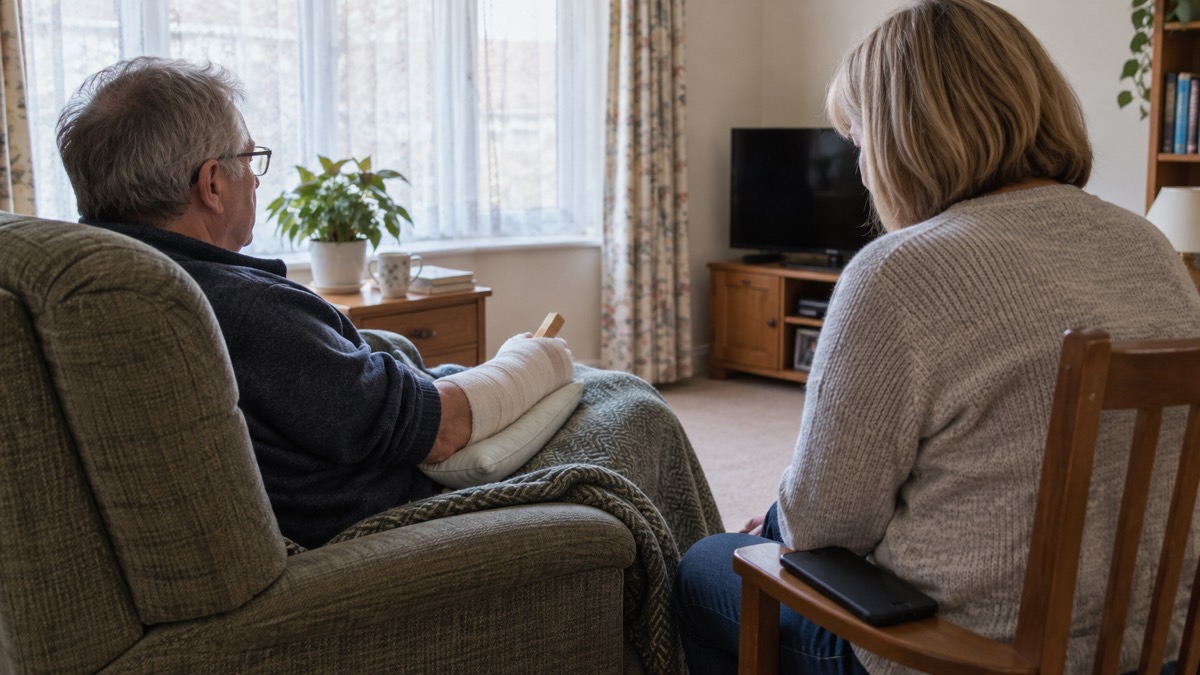
Once you have called 999, keep the pressure on and keep the person calm. The ambulance service's own advice is to stay calm12. NHS inform's guidance for supporting a casualty while help is on the way is to keep them comfortable and supported, and to reassure them that help is coming13.
Work through these in order:
- Keep pressing around the object. Do not lift the dressing to look.
- Keep the person still and warm. Reassure the casualty and cover them to keep them warm while you wait for help to arrive9.
- Support the injured part. If you suspect a fracture as well, advise the casualty to stay still and support the joints below and above the injured area with your hands14.
- Watch for shock. Treat any injuries you can see that could be causing it, and reassure the casualty that you will help them9.
- Have information ready. The crew will want to know what happened, what the object was, and any medicines or allergies.
Small splinters and shallow objects you can take out at home
Not every object in the skin needs a hospital. A splinter sitting near the surface, with no heavy bleeding, is the classic case for tweezers. NHS medicine cabinet guidance lists tweezers for taking out splinters, and warns that if splinters are left in, they can cause discomfort and become infected6. Another NHS list describes tweezers simply as "For removing splinters"6. Once the splinter is out, clean and dry the wound and cover it with a dressing6.
The distinction is depth and bleeding. A splinter you can see and grip is a home job. An object that has gone deep, is bleeding heavily, or is in the eye, face, chest or abdomen is not. If you cannot get a grip on it, do not dig with a needle: soak the area in warm water first, and if it still will not come, get help.
For the step by step, see How to Remove a Splinter Safely. For cleaning and dressing the wound afterwards, see Cuts, Grazes and Wounds: Cleaning and Dressing at Home.
Getting ready: first aid kit items for embedded objects
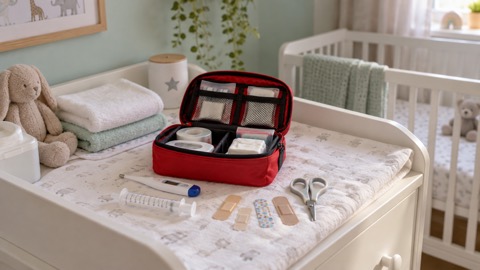
You cannot plan for the object, but you can plan for the dressing. A well-prepared first aid kit can help treat minor cuts, sprains and bruises, and reduce the risk of cuts becoming infected15. For an embedded object, the items that matter are the ones that let you apply firm pressure without touching the object.
| Item | What it does for an embedded object |
|---|---|
| Sterile gauze dressings, small, medium and large | The pad you press either side of the object6 |
| Disposable sterile gloves | Protects you and the casualty6 |
| Rolled crepe bandage | Holds the dressing in place over the wound6 |
| Tweezers | For splinters and shallow objects only6 |
| Antiseptic cream and alcohol-free cleansing wipes | For cleaning around minor wounds afterwards6 |
| Eye dressings (at least two sterile) | For covering an injured eye without pressing on it6 |
NHS lists of what a household medicine cabinet should hold include bandages, plasters, sterile dressings, tweezers and antiseptic15. Local emergency planning advice also lists a first aid kit as part of a household emergency kit16. Keep it somewhere you can reach without moving furniture, and check it now and then.
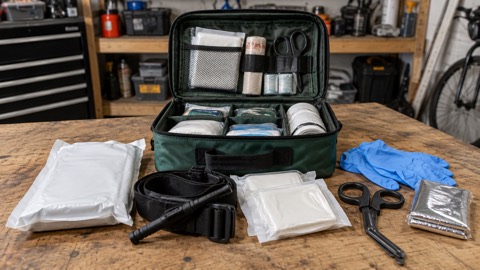
For a fuller list, see First Aid Kits for the Home: Contents and How to Choose and the Bleeding Control Kit Checklist.
Sources (17)
- First aid for someone who is bleeding heavily, British Red Cross, 2026-10-25
- Severe bleeding first aid, NHS inform, 2026-07-24
- What to do if your child has an accident, NHS, 2025-12-18
- Severe bleeding, St John Ambulance, 2026-09-08
- Cuts and grazes, NHS inform, 2026-07-31
- What should you have in your medicines box, Leicester, Leicestershire and Rutland ICB, 2025-09
- First aid for a baby or child who is bleeding heavily, British Red Cross, 2026-10-29
- The family medicine chest, Vallance Medical, 2026
- 999, North East Ambulance Service, 2026-10-29
- When to call 999, South Western Ambulance Service, 2026-10-29
- Eye injury, St John Ambulance, 2026-10-28
- What to do when the ambulance is coming, South Western Ambulance Service, 2026-10-29
- Stroke first aid, NHS inform, 2026-07-24
- Fracture first aid, NHS inform, 2026-07-24
- Keep a well stocked medicine cabinet at home, Black Country ICB, 2026-10-28
- Get help and advice in an emergency, Lincolnshire County Council, 2026-10-29
- Preparing for an emergency, Nottinghamshire County Council, 2026-10-29
 Baby and Child Kit Checklist
 Bleeding Control Kit Checklist
 Car Kit Checklist
 CPR on a Baby
 CPR on a Child
 Chest Compression Rate and Depth
 Rescue Breaths or Hands-Only CPR
 Checking Breathing
 Agonal Breathing and CPR
 Breathing During CPR
 Recovery Position and Spine
 Cardiac Arrest vs Heart Attack
 Heart Attack First Aid
 Defibrillator Pad Placement
 Defibrillator on a Child