
Stryker is the name on current medical and first aid equipment and on the paperwork that comes with it. Older items, manuals and labels often carry the name Physio Control, which is the earlier branding for the same organisation. If you have searched for Stryker because a label, a manual or a kit bag sent you looking, the practical answer is that you are in the right place: the equipment is the same, and the route to support, spare items and safety information has not changed.
For an ordinary UK household, the Stryker kit you are most likely to meet is first aid equipment: a stocked sports first aid kit, and the defibrillators that public places, sports clubs and community buildings hold for anyone to use in a cardiac arrest. Neither is a substitute for calling 999. A first aid kit is for the first response to an injury, not a substitute for medical assessment and treatment1. A defibrillator is used alongside CPR while the ambulance is on its way, and the call handler will tell you where the nearest one is2.
This page sets out what the two names mean, what the kit does for a household, how to check older items and paperwork, and where to go for support, warranty and safety notices. It does not sell anything and does not compare one maker with another.
Stryker: the distributor formerly known as Physio Control
The simplest way to hold the two names in your head is this: Stryker is the current name, and Physio Control is the name that came before it on the same equipment. A defibrillator, a manual or a kit bag that says Physio Control is not a different maker's product and does not need a different support route. Read the label for the model and serial number, keep the manual with the item, and quote those numbers whenever you ask about it.
That matters most when you are trying to find instructions. A manual printed under the older name describes the same equipment, so the guidance in it still applies. If the paperwork has gone missing, the model and serial number on the item itself are what you need to search for a replacement copy.
For a household, the practical consequences are small but worth knowing:
- Buying replacement items: a first aid kit can be kept complete by reordering individual items rather than replacing the whole bag1.
- Asking for help: quote the model and serial number, and say whether the label reads Stryker or Physio Control, so the right documentation is found.
- Registering equipment: registering an item with the manufacturer means you are contacted if a safety recall is issued5.
Where the equipment is a defibrillator held for public use, the organisation that looks after it keeps the records. If you are the person responsible for one in a village hall, a club or a workplace, keep the manual, the registration details and the pad and battery expiry dates together in one place, so that whoever checks it next has everything to hand.
Physio Control and Stryker: the same name on older kit
Older kit carrying the Physio Control name turns up in homes, sports bags, clubhouses and community buildings, often with a manual that has been photocopied or lost. The equipment itself has not changed its purpose. A first aid kit is there for the first response to an injury, and the maker is clear that it is not a substitute for medical assessment and treatment1. A defibrillator is there to be used in a cardiac arrest, alongside CPR, while professional help is coming2.
What does change with age is the condition of the contents. The Health and Safety Executive's advice for workplace first aid kits applies just as well to a kit kept at home: check your kit regularly, note that many items, particularly sterile ones, are marked with expiry dates, and replace expired items, disposing of them safely3. A kit that has sat in a car boot or a shed for years may look complete and still be unusable when it is needed.
If the older item is a defibrillator, the checks are different: the pads and the battery have their own expiry and replacement schedules, and the manual for your model sets them out. Keep the manual with the device, and if it has gone missing, use the model and serial number to find the right copy.
What Stryker supplies to UK households
Stryker's equipment reaches households in two ways: bought directly as a first aid kit, or met in public as a defibrillator that anyone can use. The two call for different things from you.
| Kit type | What it does for the household | What to check | Where to read more |
|---|---|---|---|
| Sports first aid kit | Treats sports injuries and provides aftercare, with 107 items in a zip-fastened bag1 | Expiry dates on sterile items; restock individual items as they are used1 | First Aid at Home |
| Public access defibrillator | Used with CPR in a cardiac arrest; the 999 call handler tells you where the nearest one is2 | Pads and battery dates; the manual for your model | Health Emergencies |
A first aid kit belongs in the household emergency kit as well as in a sports bag. Official emergency kit lists include a first aid kit among the items a household should keep ready, alongside face masks, toiletries, hand sanitiser and wet wipes for hygiene6. The Scottish preparedness guidance takes the same view, listing a first aid kit as part of the home emergency kit7.
Sports first aid kits
The Steroplast Physio Sports First Aid Kit is a stocked bag for sports injury treatment and aftercare, with 107 items inside1. It is blue, measures 41cm x 23cm x 11cm, and closes with a zip; the base is reinforced with water-resistant plaster feet, and it carries on an adjustable strap with padded support1. Inside, individual flexible compartments with velcro-secured pockets of different shapes and sizes keep the contents organised and protected1.
The contents are chosen for injuries on the field rather than for a household cupboard, and knowing what is in it tells you what it can and cannot do:
- Wound care: 2 medium dressings for medium-sized cuts or abrasions, 2 strips of 3 wound closures for closing small cuts and lacerations without stitches, and antiseptic cream for cleansing and preventing infection in minor wounds1.
- Cold therapy: 2 ice packs, for cold therapy to reduce swelling and pain1.
- Blisters and strapping: 4 blister plasters to protect blisters and prevent further friction, and fabric strapping 2.5cm x 1.5m for securing dressings and devices or supporting minor strains1.
- Tools and hygiene: 6 inch paramedic scissors for cutting tape, clothing and bandages without injuring the skin, hand sanitiser for decontaminating hands before and after treating injuries, and a pack of 10 tissues for general cleaning up and drying1.
- Shock and warmth: a foil blanket to preserve body heat and for shock management1.
The maker states that the kit is aligned with the advice from sports injury specialists and conforms to national governing body guidelines1. It can be customised with a design, logo or branding on the side of the bag, which suits a club rather than a kitchen cupboard1. Items can be reordered individually to keep the kit complete1.
Defibrillators in public places
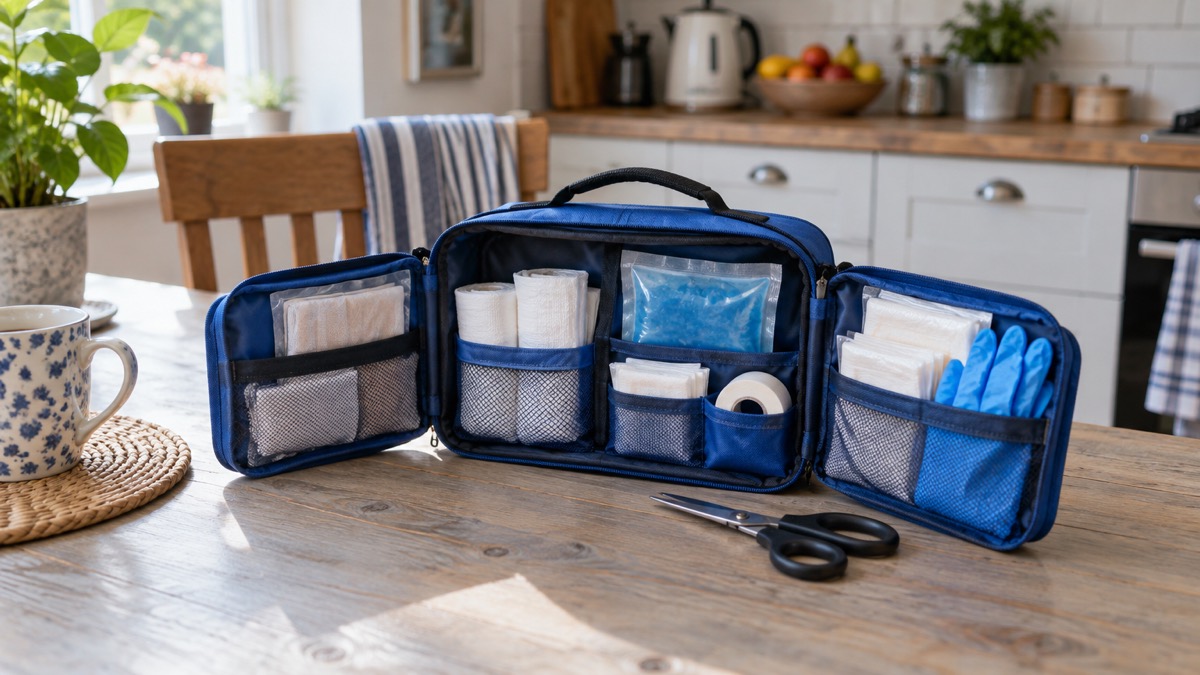
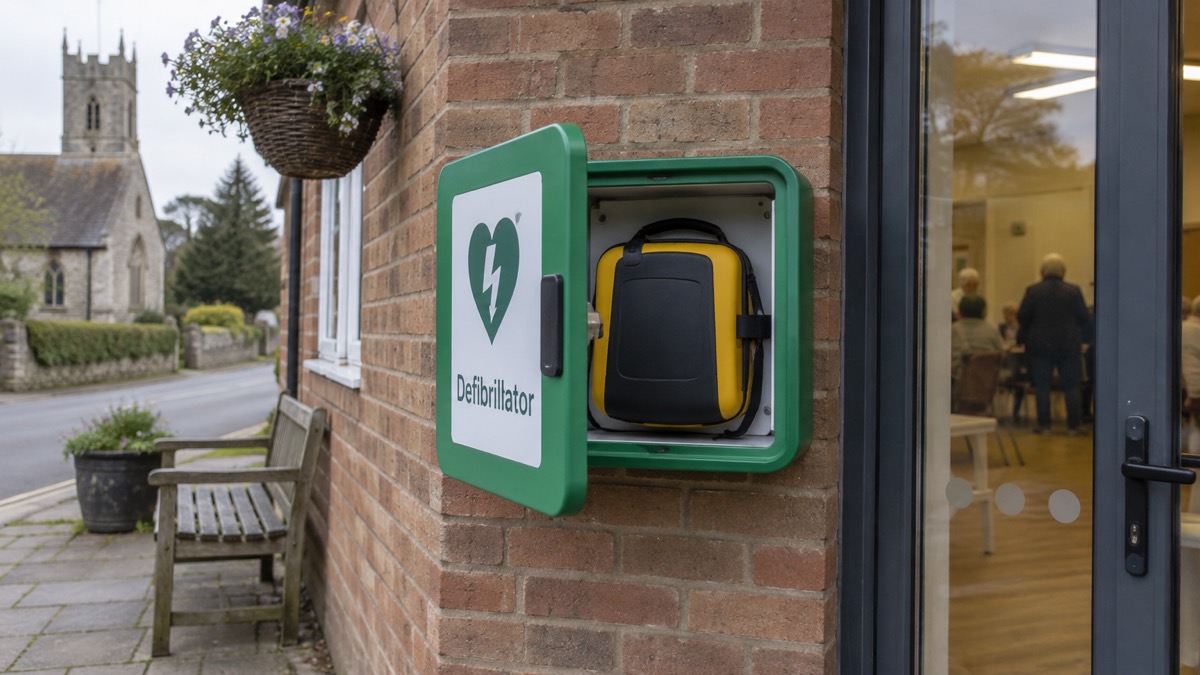
A defibrillator is sometimes referred to as an AED, shock-box or heart starter2. When you dial 999 for someone in cardiac arrest, the call handler will tell you where the nearest one is2. That is the single most useful thing to know: you do not need to have found the device in advance, and you do not need to remember its location, because the ambulance service will direct you.
Community defibrillators are often bought and maintained by local groups and councils. One example in the pack is a device recorded at Marlin Industries Ltd, Llay Industrial Estate, Davy Way, Wrexham, LL12 0PG8. If you are raising funds for one in your area, or taking on responsibility for one that already exists, the practical tasks are the same: keep it registered, keep the pads and battery in date, and make sure the cabinet and the location details are correct.
Finding the right kit from a distributor
Stryker kit reaches most households through a supplier rather than directly, so the buying decision is usually about the supplier as much as the product. The same principle applies to any equipment you buy for emergency use: buy from a recognised manufacturer and retailer, which reduces the risk of buying a counterfeit and unsafe item9. For a second-hand item, make sure it is made by a manufacturer you recognise, and if the seller cannot provide the instruction manual, look online and download a copy9.
Those two rules cover most of what goes wrong. A first aid kit bought from an unknown seller on an online marketplace may be short of items, past its dates or not what the listing said. A defibrillator bought second-hand without its manual leaves you unable to check the pads and battery schedule.
- Check the seller is established. Recognised manufacturers and retailers are the safer route for anything electrical or medical9.
- Ask for the manual. If it is missing, download a copy before you rely on the item9.
- Check compatibility if you buy parts separately. Where components are sold on their own, make sure they are compatible with what you already have10.
- Be wary of online auctions and platforms. Official e-bike guidance warns buyers to be especially careful in those settings, and the same caution is sensible for any kit bought at a distance10.
For a household putting together an emergency kit, the first aid kit is one line among many. The wider list, and how to build it without overspending or overbuying, is set out in Emergency Kit: What a UK Household Should Keep Ready. If you are starting from nothing, Getting Started: Preparing Your Household for an Emergency sets out the order to do things in.
Checking kit that carries the Physio Control name
An older kit or device with the Physio Control name on it needs the same checks as any other, plus a little more care over the paperwork. Work through it in this order:
- Find the model and serial number. They are on the item itself, and they are what any support query will ask for first.
- Find the manual. If the paper copy has gone, keep the instructions with the item so they are there when you need them.
- Check every expiry date. Many items, particularly sterile ones, are marked with expiry dates; replace expired items and dispose of them safely3.
- Restock what is missing. Items in the sports kit can be reordered individually to keep the kit complete1.
- Check for safety notices. Look up the model on the recall lists described below before you rely on it4.
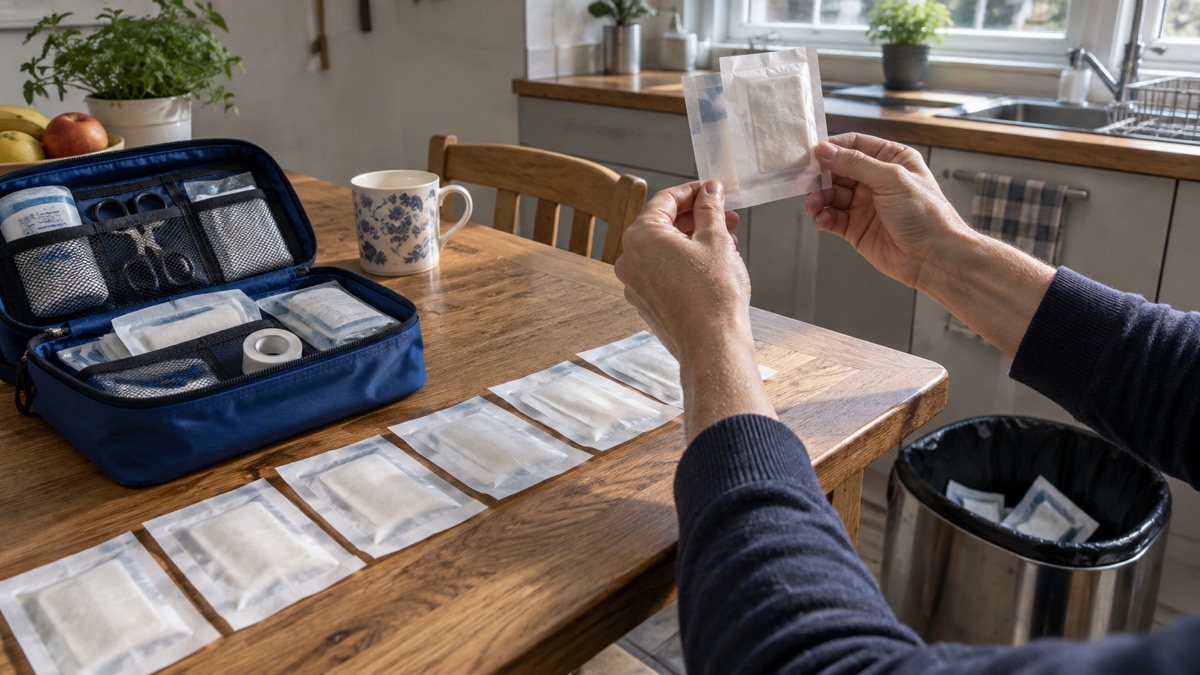
For a defibrillator, add the pads and battery to that list, and follow the schedule in the manual for your model. For a first aid kit, the check is quick: empty it, read the dates, and put back only what is still usable.
Support and warranty
Support for Stryker kit starts with the people you bought it from and the documentation that came with it. Have the model and serial number ready, say which name is on the label, and describe what you need: a replacement item, a copy of the manual, or advice on a fault.
For a first aid kit, the maker's product page is the reference for what each item is for and which items can be reordered1. For a defibrillator, the manual for your model is the reference for pads, batteries and checks, and the organisation that holds the device keeps those records.
Warranty terms vary by product and by maker, so read the warranty statement supplied with your item and keep the proof of purchase with it. How long cover runs differs widely: carbon monoxide alarms from Kidde are certified by BSI to EN50291-Part 1 and guaranteed for 10 years12, while a clearance product such as the Sterling PS484000C carries a 6 months warranty and may have signs of use or wear13. That is why the warranty document is worth filing rather than discarding.
If you need help that is not about the product itself, these routes are there for anyone:
- In an emergency, dial 999. For a cardiac arrest, the call handler will direct you to the nearest defibrillator2.
- The UK Sepsis Trust provides help and support for anyone affected by sepsis, including family, friends and carers, at www.sepsistrust.org or on 0808 800 002913.
- Chest, Heart and Stroke Scotland's advice line can be reached by email at adviceline@chss.org.uk, or by texting Advice to 6677714.
- In Northern Ireland, the PSNI non-emergency number is 10115.
First aid knowledge matters more than any kit. First Aid at Home: A Household Guide covers the basics, and the NHS inform guidance on how to give a child CPR is the reference to read before you need it14.
Safety notices and recalls
Every piece of equipment in a household can be subject to a recall, and the way to find out is to check the official lists rather than wait to hear about it. The Office for Product Safety and Standards issues recalls and alert notices on its website4. Electrical Safety First also lists recalls and safety notices for electrical goods11.
The single most effective habit is to register what you buy. Register your electrical items with the manufacturer so that you are informed of any safety recalls5. Register your new portable heater with the manufacturer, so you can easily be contacted if a safety notice or recall is issued17. Register e-bikes and e-scooters with the manufacturer for safety updates, recalls and warranties18.
Checking a specific appliance is usually a matter of a model and serial number. For tumble dryers, for example, a green "dot" sticker in the door area or on the back means the machine already has the necessary safety modification and no further action is required; without the sticker, you find the model and serial number on the back of the dryer door or in the recess of the dryer door and enter the details on the Hotpoint website20. The same approach, find the number, check the list, applies to any appliance.
"If your tumble dryer has a green "dot" sticker in the door area or on the back, your machine already has the necessary s"
For household electrical safety more broadly, the fire and rescue service advice is consistent across the UK: check for recalls or safety notices on the Electrical Safety First website11, and periodically check for any product recalls or safety notices related to your specific appliance model21. Heaters should be checked against the Office for Product Safety and Standards website to ensure they are not subject to a product alert or recall22.
Batteries deserve their own line. Rechargeable lithium-ion batteries are found in mobile phones, vaping devices, e-bikes and scooters, vacuum cleaners, tablets, iPads and ear pods23. The fire and rescue service advises buying e-bike conversion kits from a reputable seller, making sure the kit complies with British or European standards, and being especially careful when buying at online auctions or on online platforms10. If you are buying components separately, make sure they are compatible10. Speak to a professional about purchasing from a reputable supplier of conversion kits, who can likely source the kit for you24.
If you are not eligible for a free backup solution for a phone during a severe weather outage, you can buy one from your provider or another retailer25. Keeping a charged phone and a way to charge it is part of being reachable when the power fails, which is covered in Staying Informed and in Touch in an Emergency: A Household Guide.
Sources (25)
- Physio Sports First Aid Kit, Steroplast, 2026-10-28
- Cardiac Arrest, Scottish Ambulance Service, 2026-10-29
- What to put in your first aid kit, Health and Safety Executive, 2026
- Electrical items, London Fire Brigade, 2026-10-25
- Electrical safety, Greater Manchester Fire and Rescue Service, 2026-10-29
- Get help and advice in an emergency, Lincolnshire County Council, 2026-10-29
- Emergency kit, Ready Scotland, 2026-10-29
- Defibrillators, Hope Community Council, 2026-10-29
- Heating your home, North Yorkshire Fire and Rescue Service, 2026-03-09
- E-feiciau ac e-sgwteri diogelwch tan, Mid and West Wales Fire and Rescue Service, 2026-10-29
- White goods, Cheshire Fire and Rescue Service, 2026-05-20
- Carbon monoxide alarms, CO-Gas Safety, 2024-02-18
- Sepsis, NHS, 2026
- How to give a child CPR, NHS inform, 2026-07-24
- Emergency advice, Belfast City Council, 2026-10-29
- Electrical fire safety leaflet, Greater Manchester Fire and Rescue Service, 2026
- Fire safety at home, Surrey County Council, 2026-10-15
- Registering your e-bike or e-scooter for safety alerts and product recalls, London Fire Brigade, 2026-10-25
- Smiggle Fun Character Slapband Watch, Electrical Safety First, 2026-10-25
- How to check if your tumble dryer is a fire risk, London Fire Brigade, 2026-10-25
- Electrical fire safety, Warwickshire County Council, 2026-10-29
- Stay fire safe, Greater Manchester Fire and Rescue Service, 2026-10-29
- Lithium-ion batteries, South Wales Fire and Rescue Service, 2026-01-13
- Rechargeable lithium-ion battery safety advice, Cheshire Fire and Rescue Service, 2026-09-30
- Stay connected in severe weather, Ofcom, 2026-10-13
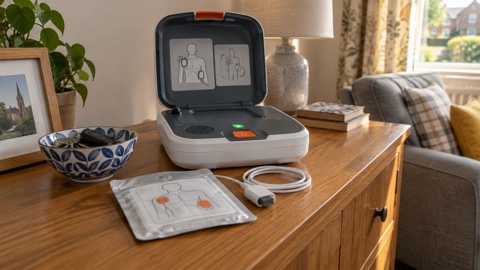 LIFEPAK CR2 Defibrillator with cprINSIGHT