A scald in the kitchen or a burn from a hot engine is one of the more likely injuries a household has to deal with, and often at the worst moment: during a power cut, after a flood, or while cooking on a camping stove because the gas is off. Burnshield is a sterile hydrogel made for the first, emergency treatment of burns, sold as a gel, a spray and a range of foam dressings, and it is the kind of item that earns its place in a home first aid kit because it can be used by anyone and keeps for years1.
The headline points are simple. Cool the burn with running water first, then apply the hydrogel or a dressing, and secure it with a non-adherent bandage, cling film or the product's own foil packaging1. The maker says Burnshield is most effective within the first 24 hours after a burn, and that it is for emergency treatment only, after which you should seek medical attention1. Every product has a five-year expiry from the date of manufacture, so a kit bought now and stored cool and dry will still be usable years into the future1.
What Burnshield is and what it does on a burn
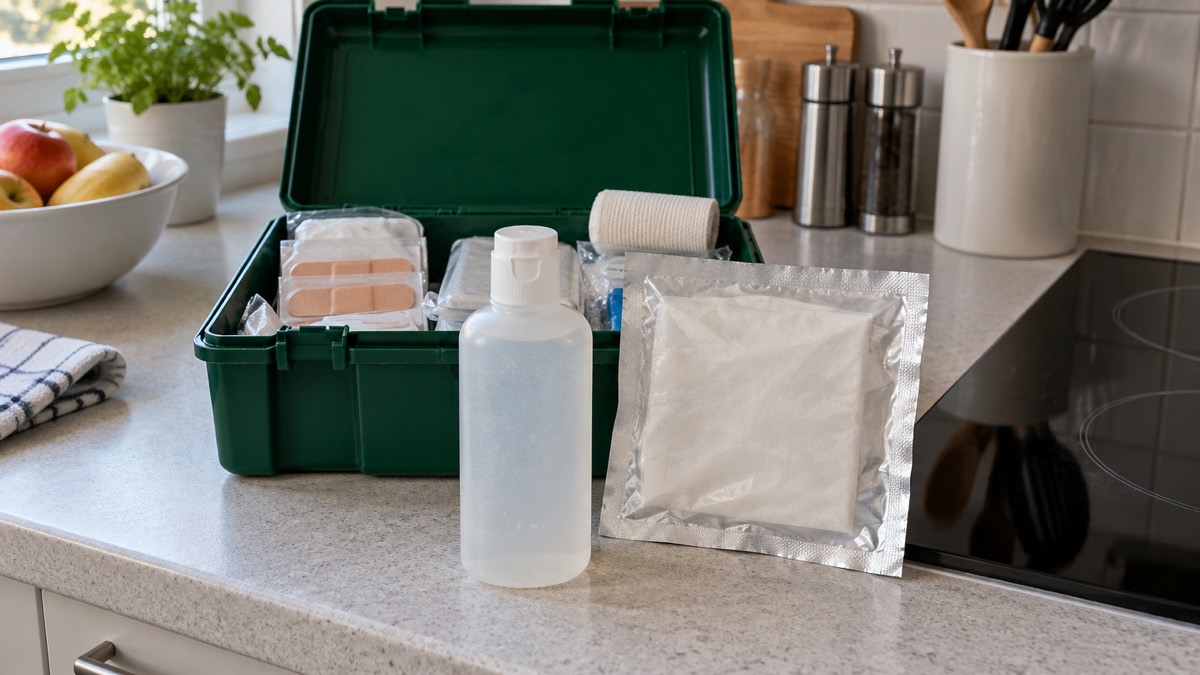
Burnshield is a sterile hydrogel used for the initial, emergency treatment of burns1. The gel is water based, non-toxic and non-irritant, and the maker lists its properties as sterile, safe for use on children and on facial burns, non-adherent, and formulated to cool and soothe the burn while assisting moist wound healing1. It is a white to off-white gel that turns clear once applied, which lets you watch how the wound is progressing without taking the dressing off1.
The maker describes four effects that matter in an emergency: pain relief, reducing the risk of infection, protecting the wound area from further harm, and lowering wound temperature to reduce trauma to the tissue2. The dressings are made of fibreless elastic foam sheeting soaked in the hydrogel, which covers the burn and holds the gel against it2. The gel itself is listed as containing 1% Melaleuca (tea tree oil), 96% purified water and a gelling agent7.
It is worth being clear about what the hydrogel is not. It does not replace cooling with water, and official first aid advice is that burn gel wraps may provide useful analgesia but should be applied only after first aid cooling4. It also does not replace medical assessment: the maker says Burnshield is for the emergency phase only and that you should seek medical advice depending on the severity, depth and size of the burn1. Used in that order, cooling then gel then cover, it buys time and comfort while you decide what help is needed.
Which burns it suits, and who should still seek help
The maker states that Burnshield is applicable to all types of burns during the emergency phase, without restriction to first, second or third degree burns, because burns can progress significantly within the first hour1. Its product pages list suitability as first, second and third degree burns and large burn areas, and say it can be applied during the emergency phase of all types of burns without restriction to the degree of burn6. The maker also says the products are suitable for burns caused by fire, liquid or steam scalds, thermal sources and radiation (sun) exposure, including facial burns and sunburn2.
That breadth is the point for a household: you are not expected to diagnose the depth of a burn before reaching for something to put on it. But breadth is not the same as "treat it yourself and carry on". The maker sets out clear groups who should receive medical attention for burns regardless:
- Children under the age of 108
- People with chronic health conditions such as heart, lung or liver disease, or diabetes8
- People with weakened immune systems, for example due to HIV/AIDS or chemotherapy for cancer6
- Anyone with a burn on the face, neck, hands, feet, joints or genitals, which should receive immediate medical evaluation8
- Anyone with a chemical or electrical burn, which the maker says requires prompt evaluation at A&E5
The maker also says to seek immediate medical care for burns larger than the size of the affected person's hand, or for any deep burns that cause white or charred skin7. Official advice runs alongside this: cool the area with water for a minimum of 20 minutes and seek medical attention at your nearest minor injuries unit9, and fire and rescue services advise cooling for 20 minutes and calling 999 or 111 if the burn is larger than a 50p coin3. If in doubt, the NHS says to call 111 or your GP4.
Use it in the first 24 hours, then get medical attention
The maker is explicit that Burnshield is used only for the emergency treatment of burns and is most effective only within the first 24 hours after being burnt, after which you should seek medical attention1. The dressings are described as providing essential immediate treatment and protection, particularly crucial within the first 24 hours following a burn, and as being for use during the emergency phase to limit the progression of the burn6.
The reason timing matters is that early first aid changes outcomes. Official guidance states that knowing the correct first aid and applying it quickly, within three hours of a burn, can reduce the seriousness of the injury10. That is why the sequence below is worth knowing before you need it, and why a burn kit belongs with the rest of your first aid at home supplies rather than at the back of a cupboard.
- Stop the burning and make the area safe. For an electrical burn, isolate the electrical source11.
- Cool the burn with running water for 20 minutes3.
- Remove clothing or jewellery near the burn, but do not remove anything stuck to the burnt skin12.
- Apply Burnshield gel or a dressing over the burn, covering beyond the burn area1.
- Cover or secure it with a non-adherent bandage, cling film or the product's own foil packaging1.
- Keep the person warm, and seek medical advice based on the severity, depth and size of the burn1.
The maker says Burnshield is safe to use at home as well as by medical professionals and first responders, and that ambulance and fire services have used its products to treat burn victims in emergencies for over 20 years2. That history is reassuring, but it does not change the rule: the gel is a bridge to proper care, not a substitute for it. If a burn has not healed within two weeks, official guidance says to seek medical attention because there can be a risk of sepsis4.
How to apply it and secure a dressing
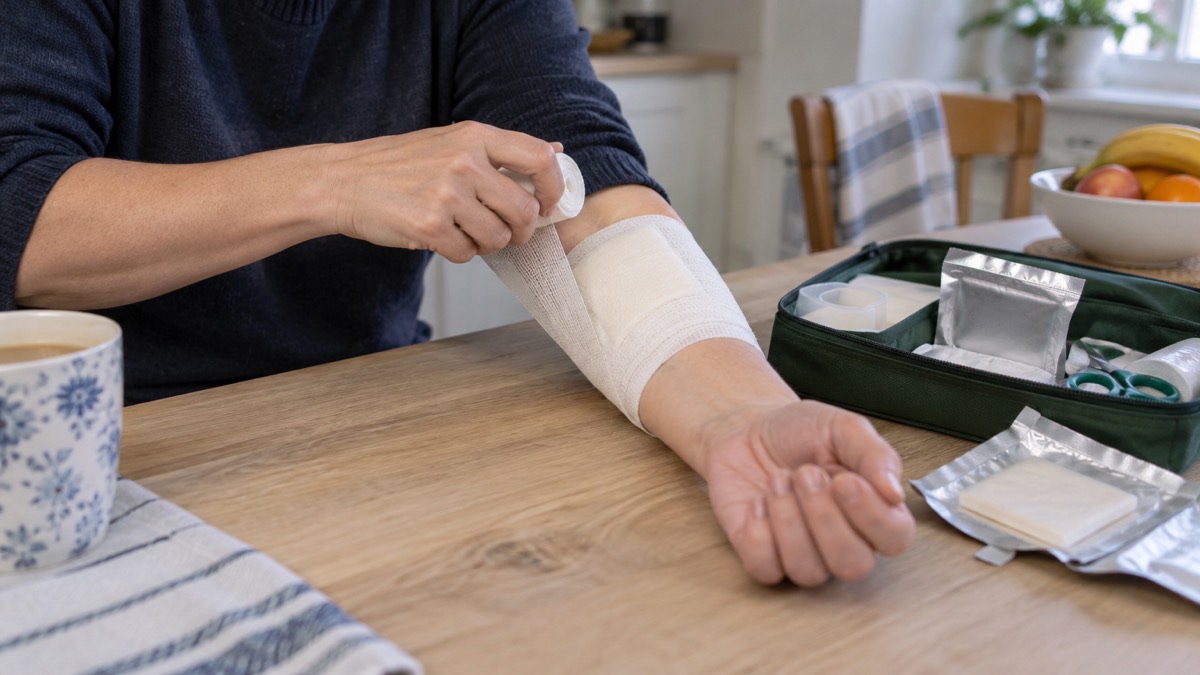
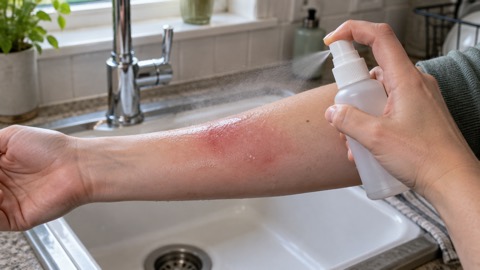
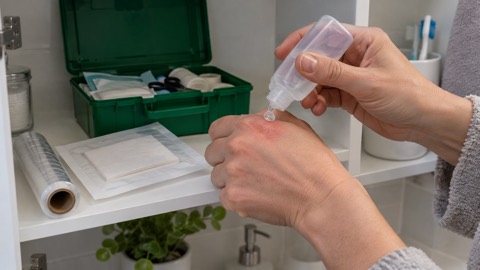
Applying the gel and applying a dressing are slightly different jobs, and the maker gives instructions for both. For the gel, remove the lid, apply the gel to the burn area making sure to apply gel beyond the burn area, then cover with a non-adherent bandage1. The 50ml squeeze bottle instructions say to apply a generous amount directly onto the burn wound, covering both the burn and the surrounding skin for complete coverage, and note it can be applied directly onto the skin or over burn dressings to help keep the area moist5. The 125ml spray can be applied directly to the skin or over burn dressings without removing the dressing, which is useful for topping up moisture8.
For a dressing, the maker's steps are to open the sterile foil package, remove the foam dressing, apply it over the wound, and secure it with a non-adherent bandage1. The digit dressing page adds that you should place the dressing over the burn ensuring complete coverage and hold it in place with a non-adherent bandage6. The large surface dressing page says to hold the dressing in place with a non-adherent bandage or other suitable material7. Before any of this, carefully remove clothing or jewellery near the burn, but avoid removing items stuck to the burnt skin to prevent further harm7.
The maker lists the ways to secure its products as a foam cohesive bandage, a crepe or conform bandage, cling film, or the product's own foil packaging1. Cling film is familiar ground for UK households: St John Ambulance advises covering a cooled burn with kitchen film lengthways down the affected limb to protect from infection15, and general dressing advice is to hold the pad by the edges, place it directly on top of the wound, ensure it covers beyond the edge, and secure with tape or a roller bandage16.
The range: gel, spray, sachets and dressings
All Burnshield products consist of the same water-based hydrogel, sold on its own in bottles, tubes or sachets, or combined with a carrier material: polyurethane for the Burnshield Dressings, wool or cotton for the cotton dressings and blankets, plus burn kits for consumer, retail, professional and military use1. The maker says the range is suitable from domestic use to industry, marine, mining, ambulance service, hospitals and military1. For a household, the practical question is which format suits which job.
| Format | What it is | Best suited to |
|---|---|---|
| Hydrogel gel, 50ml squeeze bottle | Sterile gel, supplied as a pack of 1 or 617 | Small burns and top-ups; applying directly or over a dressing5 |
| Hydrogel spray, 125ml | Sterile spray, supplied as a pack of 1 or 617 | Rehydrating a dressing without removing it; minor burns and sunburn8 |
| Digit dressing, 2.5cm x 50cm | Hydrogel sterile foam bandage, single-use, can be cut or torn to size17 | Fingers and toes, or small awkward areas6 |
| Small surface dressing, 10cm x 10cm | Hydrogel sterile foam pad, single-use17 | Small flat burns |
| Large surface dressing, 20cm x 20cm | Hydrogel sterile foam pad, single-use17 | Larger burns on limbs or the body7 |
| Face mask dressing, 20cm x 45cm | Hydrogel sterile foam pad, single-use17 | Facial burns, which the maker says are safe to treat1 |
| Torso/back dressing, 60cm x 40cm | Hydrogel sterile foam pad, single-use17 | Larger areas of the trunk |
| Burncare kit | Dressings and hydrogel sachets in a compact plastic case17 | Kitchens, vehicles and grab bags17 |
The maker says all Burnshield products are designed to be used together, and that combining dressings and hydrogel is safe and often more effective, especially if the burn area is large and severe2. For a household building an emergency kit, a gel or spray plus one dressing size that matches the people in the house is a sensible pairing; the kit format is the simplest way to keep both together and ready to grab.
Single use only, and how to store it for five years
Every Burnshield product is single use only1. The maker describes them as single-use products designed to maintain sterility with each application, ensuring maximum sterility and efficacy each time5. Dressings are individually wrapped in a foil pouch, which is what keeps them sterile until the moment you open one6. That is why a used dressing is never put back in the kit, and why you should hold a small stock rather than one precious item: if you use it, replace it.
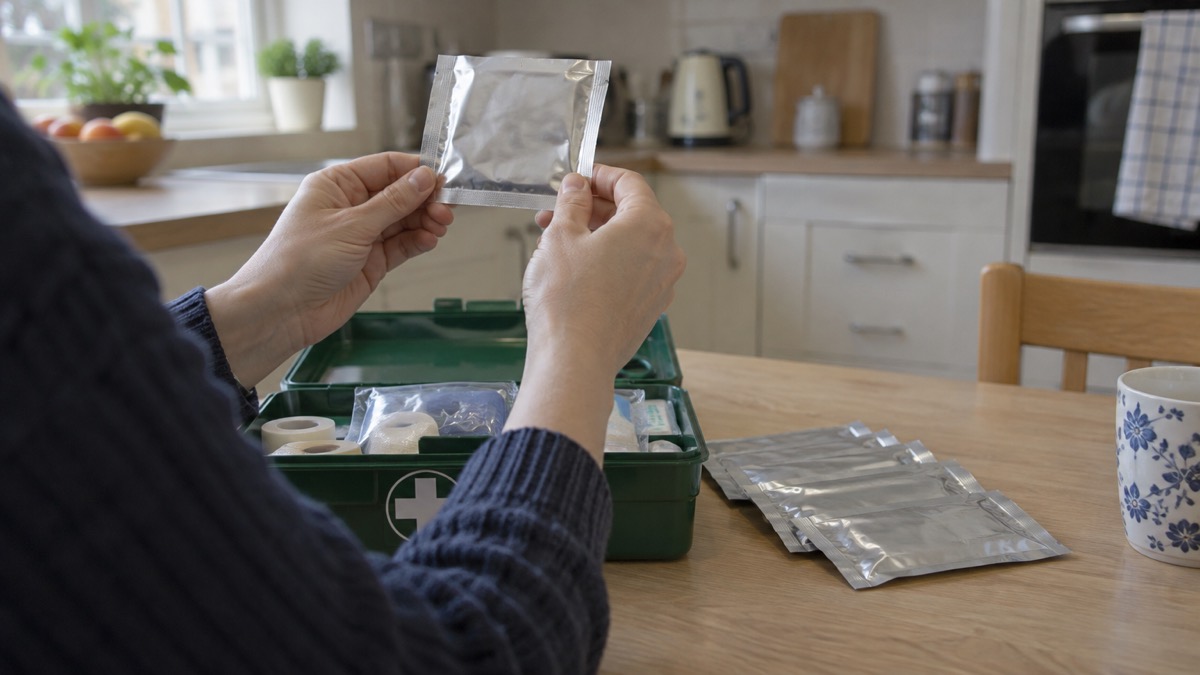
Storage is straightforward but worth getting right. The maker says to store products in a cool, dry place8, and the full range has a shelf life of five years from the date of manufacture, with the expiry date shown on the packaging of each product2. The hydrogel itself is described as remaining stable and safe to use for a minimum of five years, showing no harmful degradation over time2. For a household, that means a kit bought now will still be in date at the end of a five-year planning cycle, provided it is not left somewhere hot or damp.
A simple routine keeps it ready:
- Store the kit cool and dry, away from radiators, windowsills and damp cupboards8
- Write the expiry date on your kit review calendar when you buy it2
- Check the foil pouches are intact; a damaged pouch is no longer sterile6
- Replace anything you use straight away, so the kit is complete for next time1
- Keep the kit where a burn is most likely, such as the kitchen, and a second in a grab bag if you have one17
Sterility, CE marking and ISO 13485
Burnshield products are sterilised by gamma irradiation1. The maker states that Burnshield fulfils the EU requirements related to all products bearing the CE mark as well as ISO 13485 accreditation1, and its dressings have received accreditations and approvals from ISO, TGA, CE and the FDA6. For a household, these are the marks that tell you the product has been made and sterilised to a recognised standard, which matters when you are relying on it in an emergency rather than in a hospital.
The maker also says its products have been designed for emergency use by anyone, and that all Burnshield products come with simple instructions on the packaging2. That combination, a sterile product with clear on-pack instructions, is what makes it suitable for a home kit where the person treating the burn may not have had first aid training. It is still worth reading the leaflet once, before you need it, and keeping it with the kit.
Where to get help and how to keep the kit ready
Burnshield is sold internationally through approved distributors, which the maker says are available on request, and in South Africa through leading pharmacies, medical distributors and Levtrade International1. In the UK, the maker's product pages list the 50ml gel, the 125ml spray and the dressings as in stock5. Availability changes, so check before you rely on a particular format.
For help with a burn, the NHS is the first port of call: call 111 or your GP if in doubt about a minor burn, and 999 or your nearest Emergency Department for a serious one4. For a child with a bad burn, the Child Accident Prevention Trust advises giving painkillers as part of first aid18. If you are building out a household plan, the first aid at home guide sets out what else belongs alongside a burn kit, and home emergencies covers the fire and scald risks that most often cause burns in the first place.
Sources (20)
- Burnshield FAQ, Burnshield, 2026
- Burnshield FAQs, Steroplast, 2022
- Firefighters Issue Safety Advice Ahead of National Burn Awareness Day, Devon and Somerset Fire and Rescue Service, 2026
- First Aid for Burns and Scalds, South West Burn Care Network, 2022
- Burnshield Hydrogel Burn Gel 50ml Bottle, Steroplast, 2026
- Burnshield Digit Burn Dressing 2.5cm x 50cm, Steroplast, 2026
- Burnshield Large Limb Burn Dressing, Steroplast, 2026
- Burnshield Hydrogel Burn Spray 125ml, Steroplast, 2026
- Stay Safe This Summer, Cornwall Council, 2026
- Burns Prevention Booklet 2024, Salisbury NHS Foundation Trust, 2024
- Burn Awareness, Cheshire Fire and Rescue Service, 2026
- Burns and Scalds, NHS, 2026
- Burns and Scalds, NHS Inform, 2026
- Heavy Bleeding, North West Ambulance Service, 2019
- Adult First Aid Booklet, St John Ambulance, 2025
- How Do I Apply Plasters and Other Dressings?, NHS, 2025
- Treating Different Types of Burns, Steroplast, 2025
- Should I Just Go Straight to Hospital if My Child Has a Bad Burn?, Child Accident Prevention Trust, 2025
- Fireman Sam Safety Tips, Child Accident Prevention Trust, 2026
- Diogelwch Tan Gwyllt, Mid and West Wales Fire and Rescue Service, 2026
 Burnshield Hydrogel Burn Spray 125ml
 Burnshield Hydrogel Burn Gel 50ml