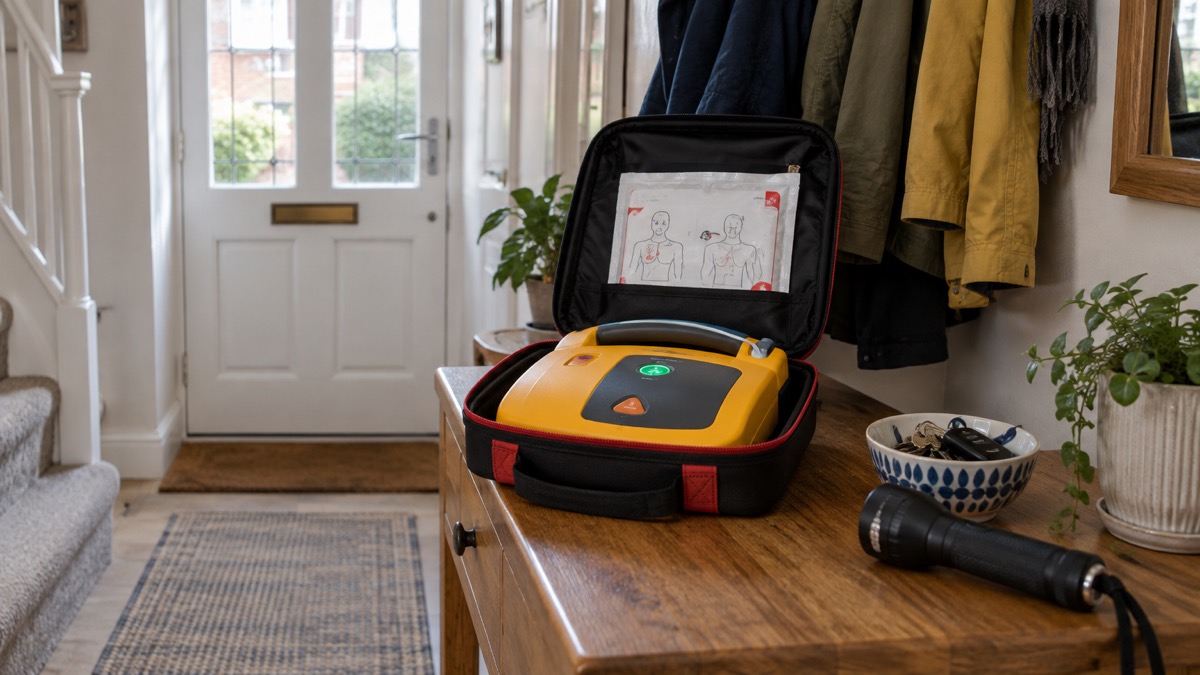
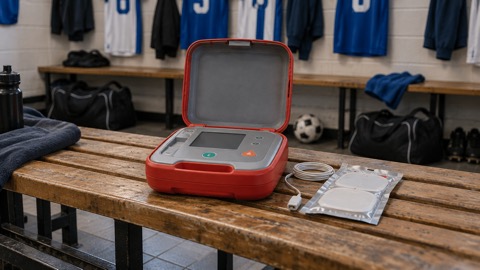
The HeartSine samaritan PAD 350P is a semi-automatic defibrillator made by HeartSine, now part of Stryker. It is built for public access and home use, weighs 1.1 kg with its Pad-Pak fitted, and is designed so that a bystander with no medical training can follow spoken and visual prompts through a cardiac arrest1. It analyses the heart rhythm itself and, if a shock is needed, charges and tells the rescuer to stand clear and press the shock button1.
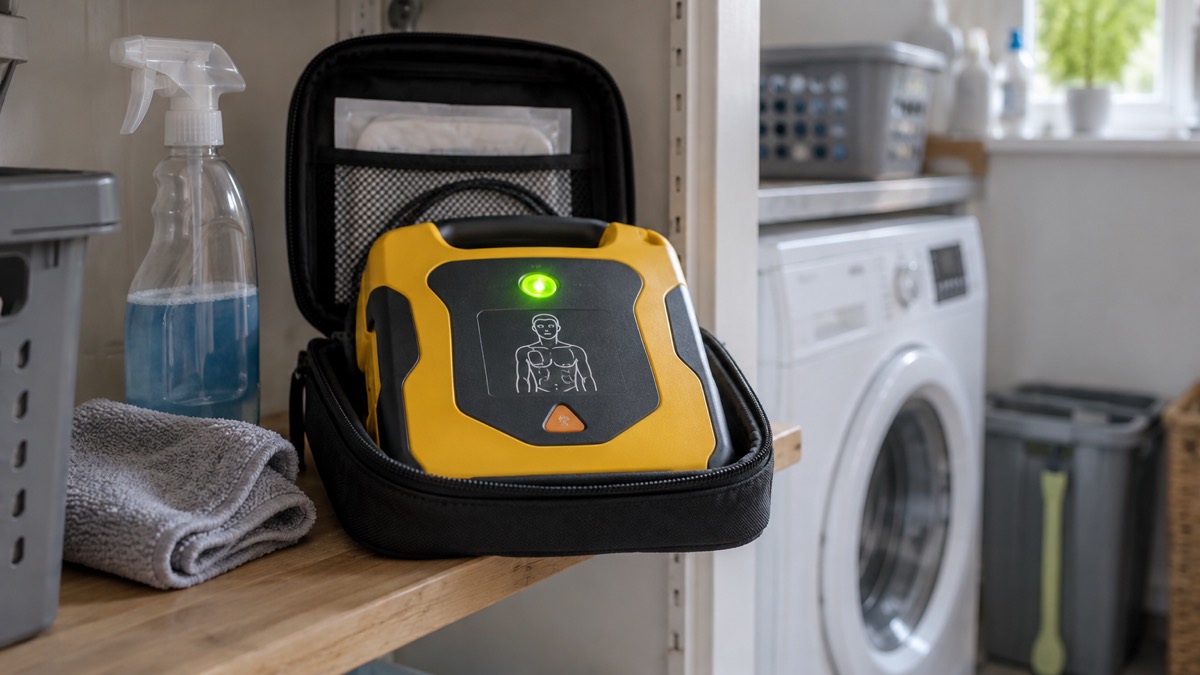
What matters most for a household is readiness. The battery and electrode pads are one combined unit, the Pad-Pak, with a single expiration date, and the maker gives a battery life of up to 4 years with weekly self-test and a pad lifespan of 4 years1. The device runs a self-test each Sunday at 7 p.m. Eastern Time and shows a flashing green status indicator every 5 to 10 seconds when it is ready for use, with a flashing red light indicating a problem3. If you are weighing up a home defibrillator at all, the wider guide to choosing a defibrillator for a home, club or village sets out what to look for before you settle on a model.
Availability is the first practical question. The maker's UK page says Stryker has started rolling out production again and that stock of the HeartSine Samaritan 350P, 360P and 500P is expected before the end of 2026, with a phone number for the latest delivery times1. If you are buying now, ask the supplier for the Pad-Pak expiration date before you commit.
Specifications
The 350P is a compact, sealed unit. The maker and the retailer agree on the headline figures, and where they differ the maker's figure is given first.
| Specification | Figure | Source |
|---|---|---|
| Type | Semi-automatic defibrillator | 1 |
| Manufacturer | HeartSine | 1 |
| Size with Pad-Pak | 20 cm x 18.4 cm x 4.8 cm | 2 |
| Weight with Pad-Pak | 1.1 kg | 1 |
| Housing | ABS plastic | 2 |
| Battery type | Lithium | 2 |
| Battery standby life | 48 months from date of manufacture | 2 |
| Pad life | 48 months from date of manufacture | 2 |
| Patient suitability | Adult (paediatric needs the separate Pediatric-Pak) | 1 |
| Operating temperature | 0°C to 50°C | 2 |
| Relative humidity | 5% to 95%, non-condensing | 2 |
| Ingress protection | IP56 against dust and sprays of water, not immersion | 1 |
| Connectivity | None | 1 |
| Memory | Internal, 90 minutes of ECG and event recording | 2 |
| Drop tested | 1 metre | 2 |
| Shock rating | MIL STD 810F Method 516.5, Procedure 1 (40G) | 6 |
| Certifications | UL Classified; algorithm meets IEC/EN 60601-2-4 | 4 |
| Country of manufacture | Made in the UK | 2 |
The retailer lists the dimensions as height 200 mm, width 184 mm and depth 48 mm, which is the same size in different units2. The maker's manuals give the size as 20 cm x 18.4 cm x 4.8 cm with the Pad-Pak installed5. The device is available with English and Spanish voice prompts6.
What it does in a cardiac arrest
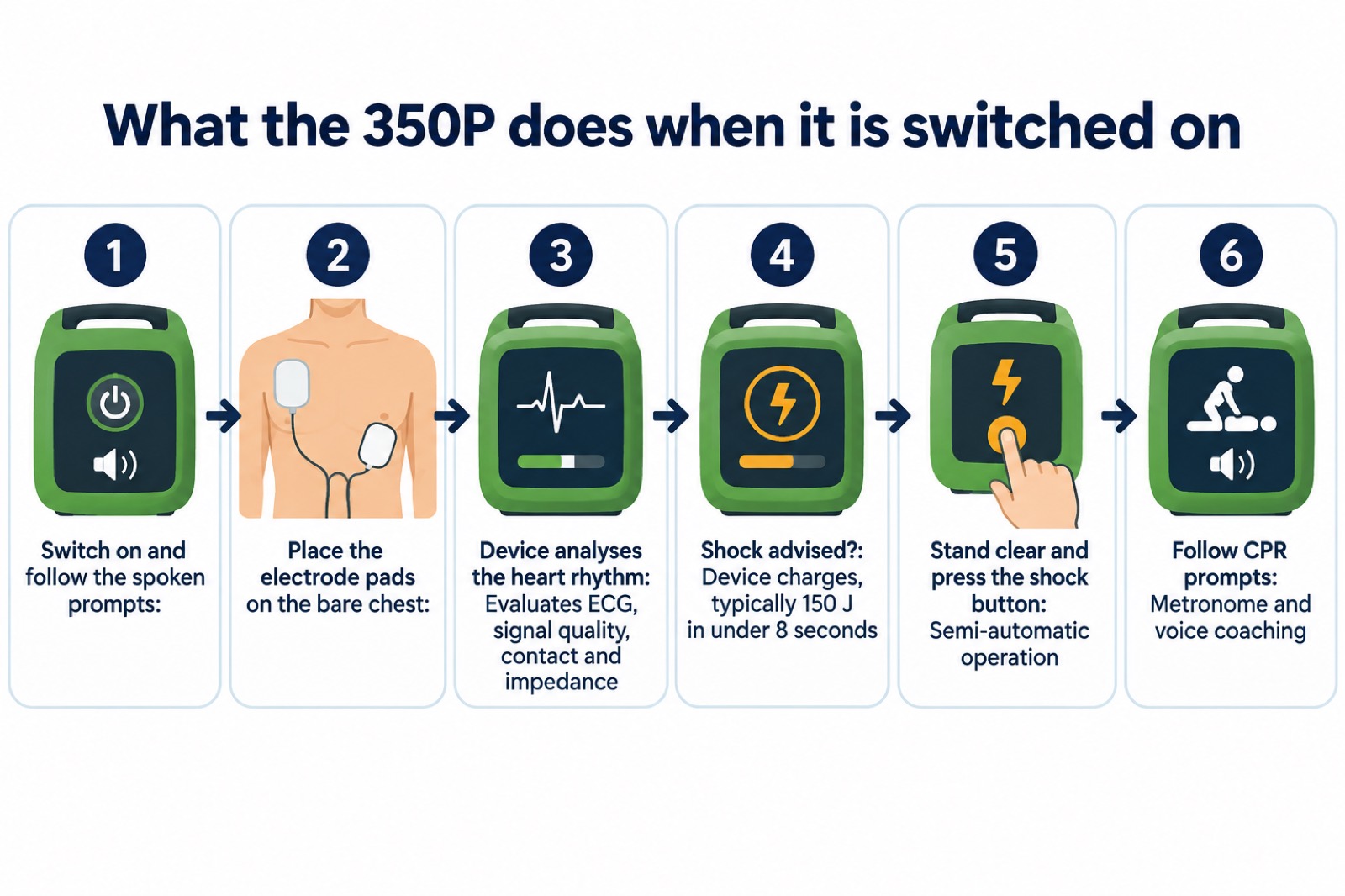
The 350P is intended for use on a person who is unconscious and not breathing normally4. It is not for anyone who is responsive or conscious, and the maker states plainly that it must not be used to provide treatment in that case5. If you are not sure whether someone is in cardiac arrest, the guide to cardiac arrest and heart attack explains how to tell them apart, and what to do first: danger, response, airway and breathing walks through the check.
Once the pads are on, the device evaluates the patient's ECG, signal quality, electrode contact integrity and patient impedance to decide whether defibrillation is required6. Its algorithm is validated against the American Heart Association database and the Massachusetts Institute of Technology NST database, and its sensitivity and specificity meet the requirements of IEC/EN 60601-2-48. In plain terms, it is built to recognise the rhythms it should shock and to leave alone the ones it should not.
If a shock is needed, the device charges and advises the user to stand clear and press the shock button8. Charging is typically 150 J in under 8 seconds and 200 J in under 12 seconds, and the time to shock after CPR is typically 8 seconds6. The delivered energy is 150 or 200 J plus or minus 10%, so 135 to 165 J at the 150 J setting and 180 to 220 J at the 200 J setting, across patient resistances of 25 to 225 ohms8.
The prompts coach CPR as well. The device gives visual and audible prompts including a CPR coaching metronome2. The metronome beeps at a rate compliant with 2015 ERC and AHA guidelines, and the voice prompts respond to compression speed: "Push faster" below 90 per minute, "Good speed" between 100 and 120, and "Push slower" above 1306. If you want to rehearse the technique before you ever need it, how to do CPR: hands-only steps for adults covers the basics.
Charging, use and storage
There is nothing to charge in the usual sense. The 350P runs from a lithium battery sealed inside the Pad-Pak, and the maker gives a battery life of up to 4 years with weekly self-test1. The Pad-Pak is the only consumable, and it carries a single combined expiration date for battery and pads1. When the Pad-Pak expires, the whole unit is replaced.
The device looks after itself between uses. It runs a self-test each Sunday at midnight GMT4. The retailer describes the same routine as weekly automatic self tests performed by the unit2. Check the status indicator weekly: it should flash green every 5 to 10 seconds when the device is ready, and a flashing red indicator means a problem4. The maker's maintenance schedule is weekly checks of the status indicator and monthly checks of the Pad-Pak expiration date and for physical damage8.
Storage conditions decide how long the Pad-Pak lasts. The device is designed to operate between 0°C and 50°C5. Standby temperature is the same range, and transport temperature is -10°C to 50°C for up to two days; if the device has been stored below 0°C, return it to 0°C to 50°C for at least 24 hours before use8. Relative humidity should stay between 5% and 95%, non-condensing8. Storing it outside the temperature range may shorten the Pad-Pak's shelf life5.
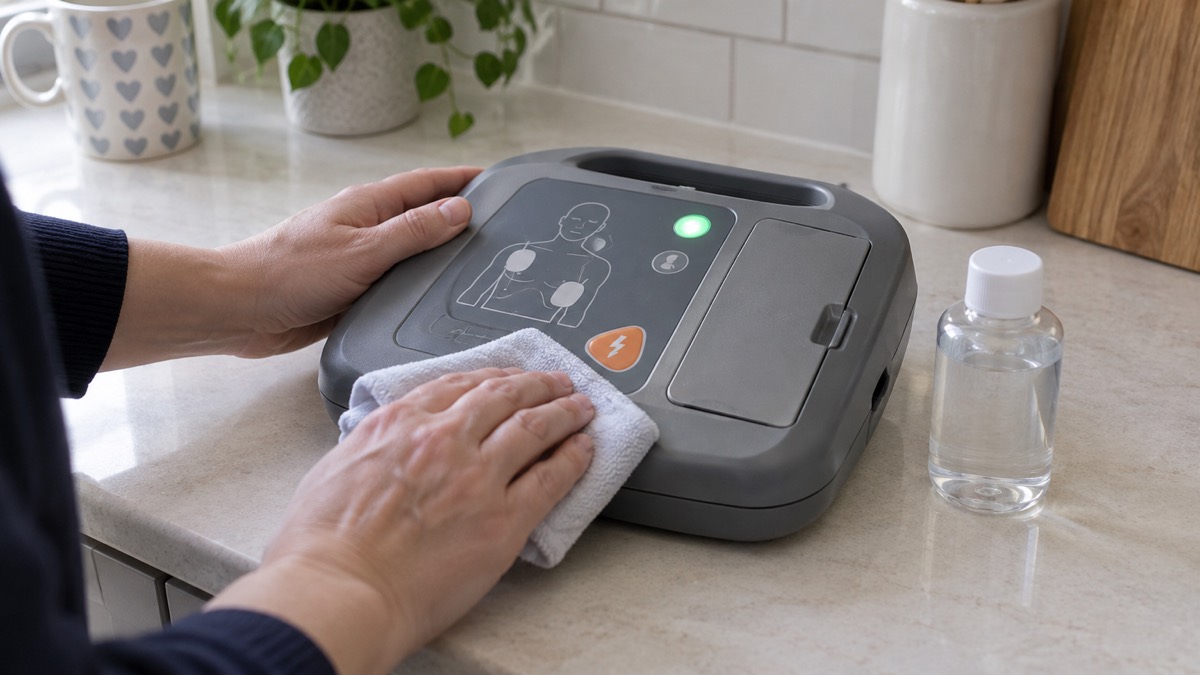
Cleaning is simple and the maker is specific: use a soft cloth dampened with soapy water or 70% isopropyl alcohol8. Do not immerse the device in water or any fluid, and do not use abrasive materials, cleaners or solvents5. The IP56 rating covers dust and sprays of water but not immersion5.
Safety
The 350P is designed to be safe in untrained hands, but the maker's warnings are worth reading before you mount it on a wall.
Keep portable radio frequency equipment, including mobile phones and their antennas, at least 30 cm (12 in) from any part of the device5. The device is not intended for use near intentional transmitters of radio energy such as high frequency surgical equipment, radar installations or radio transmitters, nor near MRI equipment6.
Pad placement matters. With the adult Pad-Pak, place one pad horizontally on the right chest and the other vertically on the left rib cage8. With the Pediatric-Pak, place one pad on the centre of the chest and the other on the centre of the back8. The maker warns that air, hair, dressings or medicine patches between the pads and the skin can reduce defibrillation effectiveness5. Slightly red skin after shock therapy is normal5. If you want the detail on positioning, where do defibrillator pads go? covers it.
The device is for adults over 8 years old or over 25 kg with the adult Pad-Pak, and for children between 1 and 8 years of age or up to 25 kg with the Pediatric-Pak5. The maker warns not to delay treatment trying to find out a child's exact age and weight, and not to use the device on a child under one year old with the Pediatric-Pak4. The separate guide to using a defibrillator on a child or baby sets out the options.
Two status warnings are worth knowing by heart. If the status indicator is red and the device is beeping, there is not enough battery capacity to deliver a shock, and the maker says to replace the Pad-Pak or find another AED immediately4. If you hear "Warning low battery", the device will keep working but may have fewer than 10 shocks left, so prepare the spare Pad-Pak and be ready to swap it quickly8. If a spare Pad-Pak or alternative defibrillator is not available, the device will continue to analyse the rhythm and advise when CPR is needed, but it will not be able to deliver a shock8.
The maker lists the potential adverse effects of any AED, including failure to identify a shockable rhythm, failure to deliver a shock, myocardial damage, skin burns around the electrode area, and bystander shock from patient contact during defibrillation6. These are the reasons the prompts tell you to stand clear.
Support, registration and warranty
The 350P carries an 8 year limited warranty1. The maker's manual sets out an eight year service life warranty from the date of sale to the original end user, and products with an expiration date are warranted until that date4. The warranty is void if the device has been opened, if unauthorised modifications have been made, if it has not been used in accordance with the instructions, if the serial number is removed or defaced, if it has been used or stored outside the temperature range, or if it has been tested using unapproved methods8.
Register the device. The maker asks owners to register at heartsine.com/register, by returning the warranty registration card, or by emailing heartsinesupport@stryker.com with name, address and device serial number8. Registration is how the maker tracks the location of each AED4.
After a use, report it to Stryker at aedevent@stryker.com. Sending the event data may make you eligible for a free replacement Pad-Pak4. The retailer also lists free replacement pads after use2. Check the device for damage after use and replace it immediately if damaged3. The 90 minutes of rescue data stored on the device is what the report draws on1.
For support, the maker's manual gives a customer support number of 800 442 1142 and a support email of heartsinesupport@stryker.com4. For UK buyers, the maker's UK page gives a phone number for delivery enquiries1. If you are setting up a defibrillator for a village hall or club, the defibrillator guardian checklist sets out the routine checks that keep it ready, and the guide to public access defibrillators explains how to find the nearest one if yours is out of reach.
Sources (8)
- HeartSine samaritan PAD 350P product page, Defib Store, 2026
- HeartSine Samaritan PAD 350P defibrillator, Safelincs, 2026
- H032-019-614-1_350_360_450_User_Ed4_US_0420_web.pdf, HeartSine Technologies
- HeartSine samaritan PAD 350P OTC handbook, HeartSine, 2022
- HeartSine samaritan PAD 350P, 360P and 500P user manual (EN-UK), HeartSine, 2022
- HeartSine samaritan PAD 350P, 360P and 450P user manual, HeartSine, 2020
- HeartSine samaritan PAD 350P, 360P and 450P combination user manual, HeartSine, 2019
- HeartSine samaritan PAD 350P, 360P and 500P user manual (Ireland), HeartSine, 2019
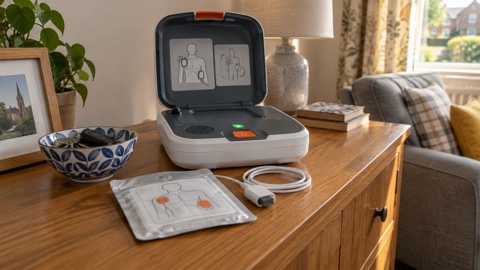 Stryker LIFEPAK CR2
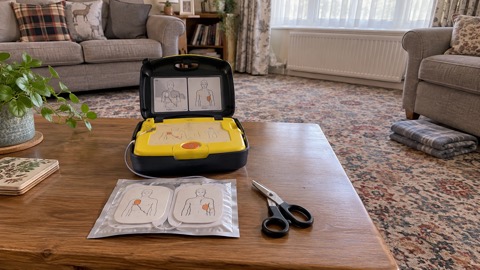 ZOLL AED 3 Defibrillator
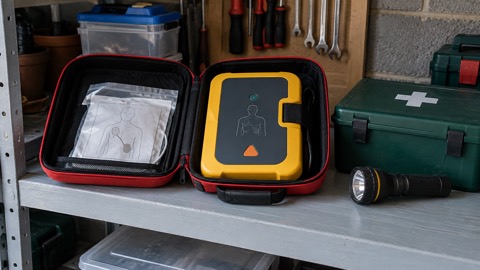 ZOLL AED Plus Defibrillator
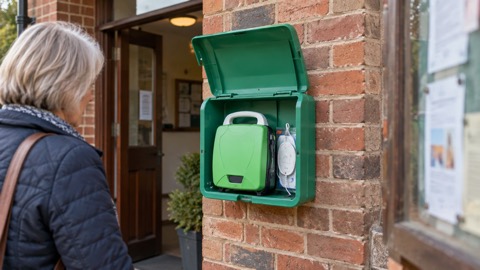 Cardiac Science Powerheart G5
 Philips HeartStart FRx AED