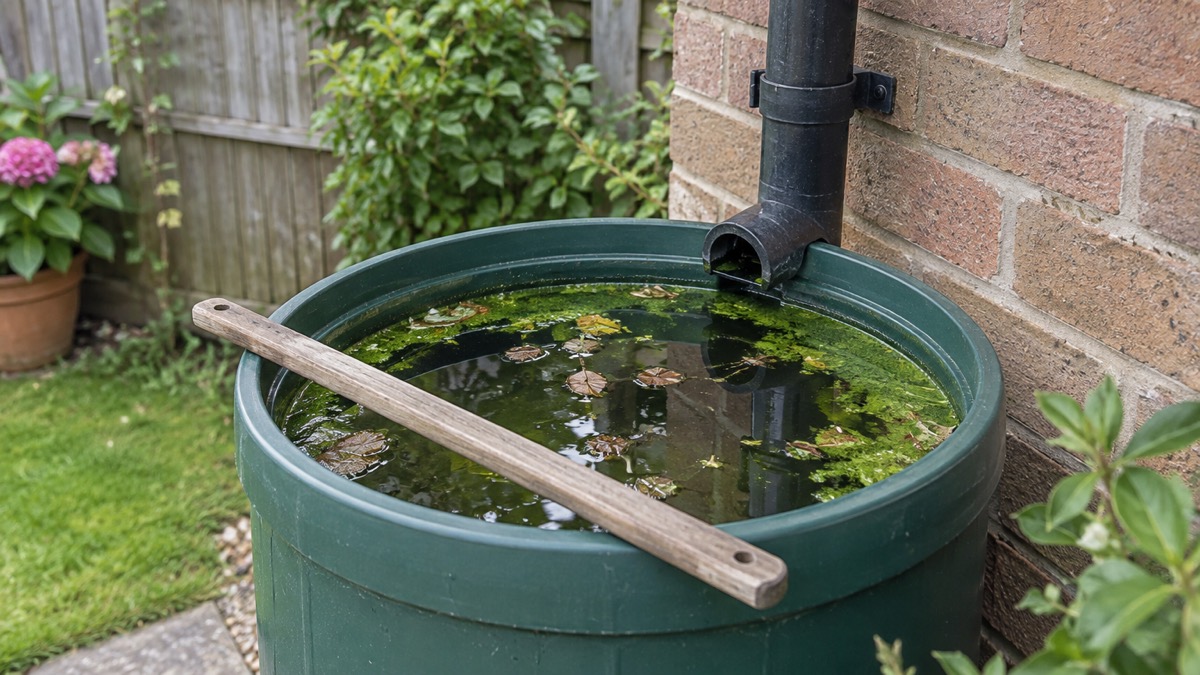
Stored rainwater does go off. Left sitting in a warm, open butt, it turns green with algae, collects debris and insects, and can start to smell. It is still useful water, but it needs managing: keep the butt covered and out of direct sunlight, use the water regularly so it is turned over, and empty and clean the butt if it turns unpleasant. The Royal Horticultural Society's advice is blunt: if the water smells, empty and clean the water butt rather than adding chemicals1.
What changes is not the rain itself but what happens to it once stored. Rainwater is classed as non-potable, meaning it cannot be consumed2. That does not make it waste. Official guidance says stored rainwater can be used for flushing toilets or watering plants, but must not be drunk because it could contain bacteria or disease3. A water butt is a simple storage container that collects rainwater from your roof via a downpipe, and it can save around 1,000 litres of water a year4.
The practical answer for a household is to treat stored rainwater as garden and utility water, keep the butt clean and covered, and never rely on it for drinking without proper treatment. This page explains what goes wrong in the barrel, how to spot it, how to keep the water fresher for longer, and what it can safely be used for.
Stored rainwater does go stale: what changes in the barrel
Rainwater leaving your roof is reasonably clean, but a water butt is not a sealed bottle. It is an open-topped container fed by a downpipe, and once water sits in it, three things happen. Light gets in and encourages algae. Warmth speeds that up. Debris, pollen and insects wash in or fall in, and the water starts to change.
Algae are the most visible change. Water companies monitor reservoir water regularly, and almost all samples will have some algae present because it occurs naturally; most strains found are green algae, which is rarely harmful7. The same is true of a garden butt. Green water is not usually a health hazard in itself, but it is a sign the water is stale and the butt would benefit from cleaning.
Smell is the second signal. Stored water that has sat for a long time, collected leaf litter or been warmed by the sun can develop an unpleasant odour. The Royal Horticultural Society's guidance is to empty and clean the butt rather than treat it with chemicals1. That is the simplest and safest response.
The third change is biological. Mosquitoes and other insects will breed in open standing water. Official advice is to remove standing water from gardens and outdoor spaces, including water that collects in buckets, containers, paddling pools and plant pots8. A sealed tank removes that opportunity; a maker of sealed wall tanks states that sealed tanks improve water quality and eliminate bugs and mosquitoes, unlike cheaper open water butts6.
Signs your stored rainwater has gone off
You do not need a test kit to judge whether a butt needs attention. The signs are visible and smellable, and they map onto what water companies tell customers about changes to tap water after an interruption.
- Green water. Algae growth, often a film on the surface or the sides of the butt. Green algae are rarely harmful, but they signal stale water7.
- A musty or earthy smell. Water taken from rivers and reservoirs can have a musty or earthy smell before treatment, and treatment removes most of these smells, though less so in hot, dry weather9. In a butt, that smell means the water has sat too long.
- Cloudiness or discolouration. After a mains outage it is common to experience discoloured water, and water companies advise running the cold tap nearest the stopcock for a while to see if it clears10. In a butt, discolouration usually means silt or algae and is a prompt to clean.
- Surface scum, larvae or insects. Standing water attracts breeding insects; removing standing water is the official way to reduce mosquito breeding8.
- Slime on the inside walls. A sign the butt needs emptying and cleaning1.
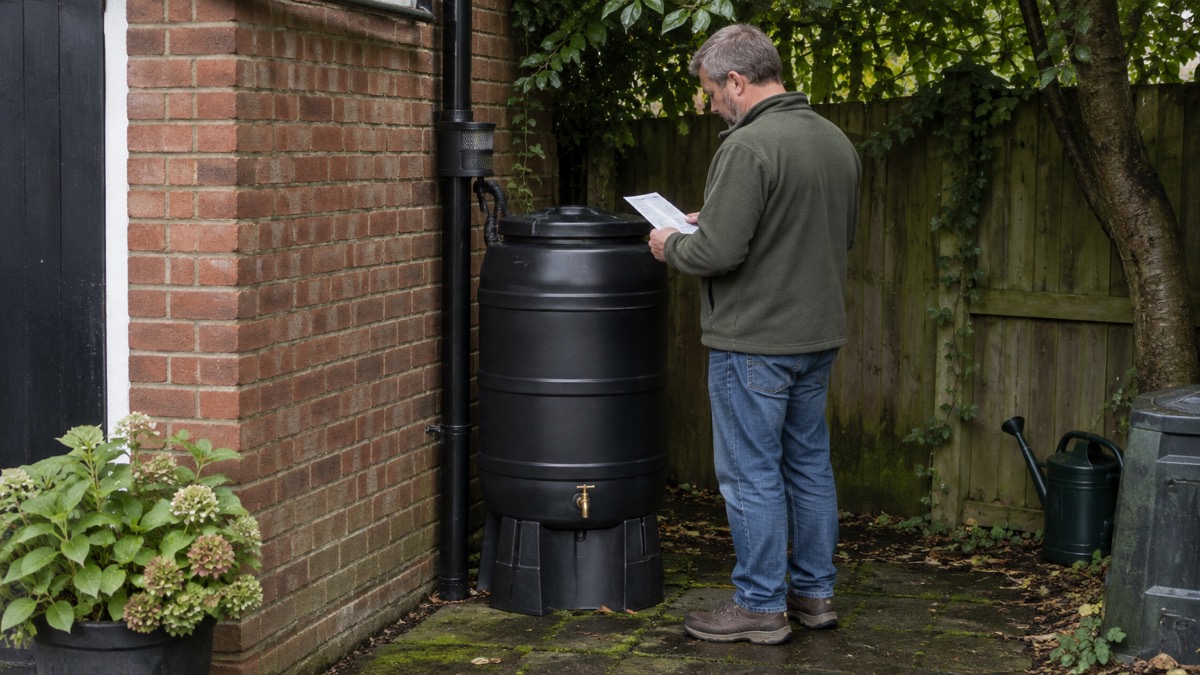
If the water smells, the Royal Horticultural Society's advice is to empty and clean the butt rather than adding chemicals1. Do not try to treat a smelly butt with disinfectants and then use the water on plants.
Keeping a water butt clean, covered and dark
The aim is to slow the changes described above: less light, less warmth, less debris, and water that is used and replaced rather than left to sit.
Cover it and shade it. A close-fitting lid keeps light, leaves and insects out. Sealed tanks improve water quality and eliminate bugs and mosquitoes compared with open butts6. Position the butt out of direct sun where you can.
Keep gutters clear. The Royal Horticultural Society advises keeping gutters clear to reduce waterborne plant diseases such as Phytophthora and Pythium1. Debris washing off the roof is the main source of the organic matter that feeds algae and smells.
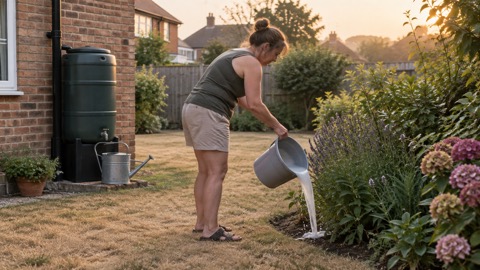
Use the water frequently. The same guidance says to use stored water frequently to keep it fresh1. Watering the garden regularly turns the water over and stops it stagnating.
Empty and clean when needed. If the water smells, empty and clean the butt rather than adding chemicals1. A dedicated guide on how to clean a water butt and keep debris out walks through the job.
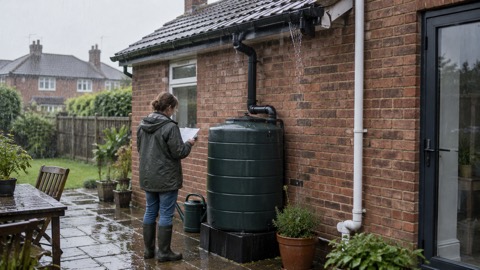
Plan for overflow. In heavy rainfall the tank fills first, then, should the rainfall continue, it overflows into a soak-away, which takes stress off public storm drains2. Make sure the overflow runs away from the house.
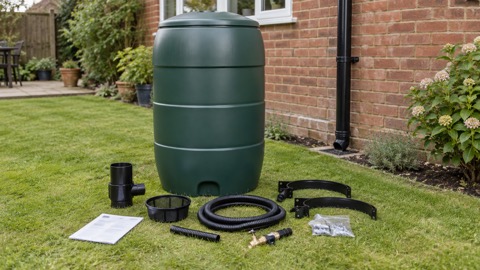
Install one if you have not. Official guidance suggests installing a water butt for rainwater storage from your downpipes, which can be connected to greywater systems such as toilet flushing and garden watering11. Another official guide suggests considering a water or rain butt if you have an outside area10. For sizing and siting, see water butts: sizes, fittings and where to put one.
Rainwater is not drinking water without treatment
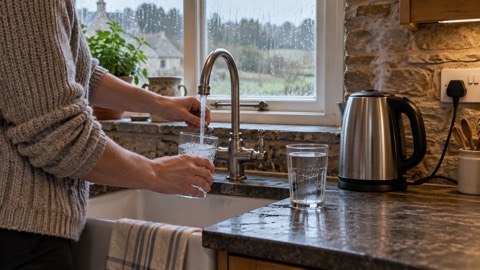
Rainwater is classed as non-potable, which means it cannot be consumed2. Official guidance is equally clear: stored rainwater can be used for flushing toilets or watering plants, but do not drink it as it could contain bacteria or disease3.
That is not a comment on the quality of your roof. It reflects the fact that a butt collects whatever the roof, gutters and air carry, and stores it at ambient temperature with no treatment. A maker of rainwater systems states plainly that rainwater is classed as non-potable and cannot be consumed2.
If your drinking water comes from a storage tank, official guidance says it will be safe to use if the tank is properly designed, correctly installed and kept in good condition12. That is about treated mains water held in a tank, not about rainwater in a butt. The two should never be confused, and rainwater pipework should be labelled so nobody mistakes it for drinking water. For the rules on labelling and pipework, see what pipe to use for rainwater and labelling rules.
Making rainwater safe in an emergency: boiling and filtering
In a water supply interruption, stored rainwater has a role, but it is a utility supply, not a drinking supply. Official guidance says stored rainwater can be used for flushing toilets or watering plants, but must not be drunk3. If you need drinking water during an outage, follow your water company's advice.
Where a mains supply may be affected, official guidance is to follow the advice of your local water company on the safety of the water supply, and if in doubt boil all water intended for drinking, brushing teeth, washing food and cooking13. While waiting for confirmation that the main supply has been affected, boil all intended water and let it cool to avoid scalding, or use bottled water14.
Boiling is the standard instruction for making water safe when a supply is suspect. It is not a licence to drink untreated rainwater; it is the step to take when official advice says the mains supply may be unsafe. If a boil notice is issued, dispose of any stored water, either onto your garden or into a drain15.
Filtering removes silt and debris but does not make rainwater safe to drink on its own. For the wider picture on treating water, see is harvested rainwater safe to drink? and the water in an emergency guide.
What stored rainwater can safely be used for
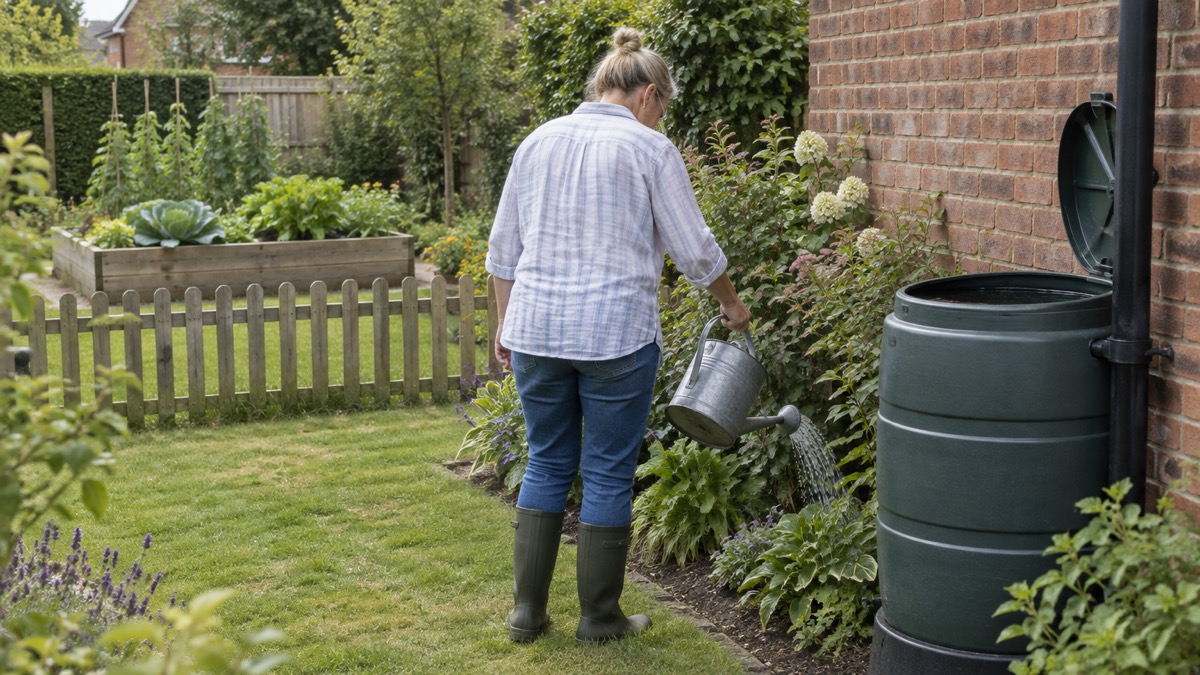
Stored rainwater is a genuinely useful household resource, and the list of safe uses is long. A rainwater system maker states that rainwater can be used for all outdoor uses: watering the garden, washing cars, cleaning patios, drives and windows, topping up swimming pools, ornamental ponds and hot tubs2. Official guidance confirms stored rainwater can flush toilets and water plants3, and that stored water can be reused for watering your garden and washing cars5.
In a supply interruption, a water butt earns its place. Official guidance says that in the event of a water supply interruption you can use the water it stores to flush your toilet, and that a water butt can save around 1,000 litres of water every year5. Another official guide says to use water butts to collect and store rainwater straight from your gutters, which can also be used to water the garden in dry weather11.
For the garden, the Royal Horticultural Society advises using rainwater stored in water butts on established plants, but avoiding it on seedlings because it may contain damping-off diseases; it is perfect for houseplants, particularly orchids and carnivorous plants1. For fruit, water developing plants, especially those near walls or on dwarfing rootstocks and trees or bushes planted in the last 12 months, if the weather is dry for more than two weeks, soaking each area thoroughly16.
During a hosepipe ban, stored rainwater can in many cases still be used because it is not taken from the mains supply, but check your water company's guidance4. For the full list of permitted uses, see what harvested rainwater can be used for in your home and garden.
Where to get help and further reading
If your mains supply is interrupted or discoloured, contact your water company. Official guidance says that after an outage it is common to experience discoloured water, and you should try running the cold tap nearest your stopcock for a while to see if it clears, contacting your provider if problems continue10. If you have a private water supply, low rainfall over a long period can cause groundwater levels to become exceptionally low, and spring sources to dry up or pumps to run dry17.
For the wider subject, the rainwater harvesting at home guide explains how a system works, and keeping a rainwater system clean and working through the year covers the annual routine. If you are choosing equipment, water butt or underground tank? sets the options side by side, and the garden rainwater harvesting kit checklist lists what a basic set-up needs.
For emergencies more broadly, the water in an emergency section covers storage and supply interruptions, and self-reliance at home covers growing, rainwater and off-grid power together.
Sources (17)
- Water butts and rainwater use, Royal Horticultural Society, 2026
- Rainwater harvesting FAQ, Rainwater Harvesting, 2025-11-06
- Loss of essential services, Greater Manchester Combined Authority, 2026-10-29
- Why water butts are so popular, Rainwater Harvesting, 2026-08-17
- Guidance for incidents, Wessex Water, 2026-10-28
- Wall tanks, Rainwater Harvesting, 2026-10-12
- How to identify algal bloom, South West Water, 2026-10-28
- Invasive mosquito species detected in East London, GOV.UK, 2026-09-03
- Taste and smell, Drinking Water Quality Regulator for Scotland, 2026-10-28
- Water supply interruptions or outages, Prepare campaign, 2026-10-12
- Advice and support on drought, Westminster City Council, 2026-08-06
- Water storage tanks and cisterns, Drinking Water Inspectorate, 2026-06-09
- Staying healthy and safe after flooding, Surrey County Council, 2026
- Flooding, Drinking Water Inspectorate, 2026-10-28
- Boil notice for customers in Tunbridge Wells, South East Water, 2026-10-28
- Fruit gardening calendar, Royal Horticultural Society, 2026
- Drought planning and management, Natural Resources Wales, 2026-10-29
 Composting Toilet Kit Checklist
 Garden Harvesting Kit Checklist
 Rainwater Winter Checklist
 Composting Toilet Near Wells
 Flies in a Composting Toilet
 Composting Toilet Chamber Size
 Is Harvested Rainwater Safe
 Garden and Lawn Water Needs
 Grey Water Disposal Off Mains
 Rain and Grey Water in Garden
 House With a Private Supply
 Rainwater Pipe Types and Labels
 Private Water Supply Visitors
 Rainwater Systems in a Power Cut
 Underground Tank Dig Depth