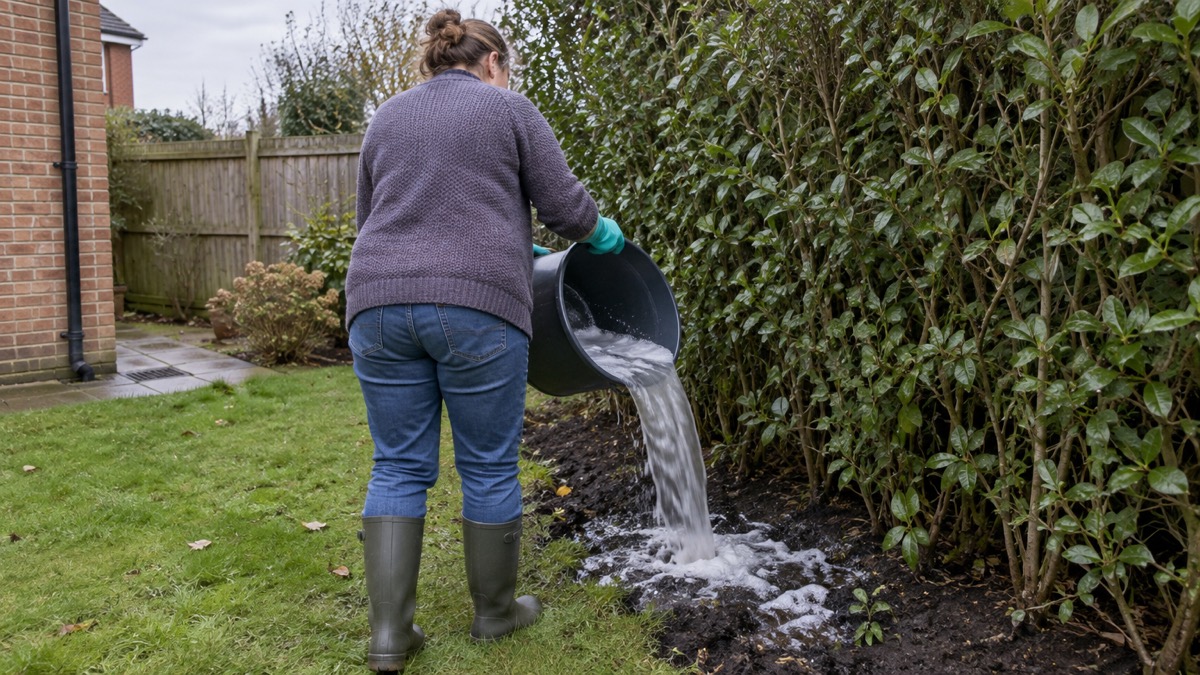
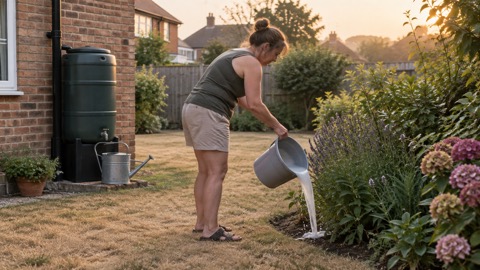
Grey water is the water that has already been used for washing: showers, baths, wash basins, the washing machine and the kitchen sink. It is not sewage, and it does not need to go down a drain. If you have no mains drainage, or your drains have stopped working, the simplest safe route for most of it is onto the garden, poured from a watering can, used straight away rather than stored1.
The rules that matter are few. Use it immediately and do not store it longer than 24 hours unless it has been filtered through a reed bed, sand filter or a professionally designed treatment system2. Keep it away from anything you drink from: private supplies come from boreholes, springs, wells, rivers and lochs, and most are in rural areas where mains water is not available3. Never connect a grey water or rainwater supply directly to the mains drinking water5. And keep bleach, disinfectants, dishwasher salt and harsh cleaners out of any water you plan to reuse2.
Where a drain or septic system has failed, the priority changes from reuse to disposal and repair. Stop adding water, keep the area clear, and treat any flooded ground as contaminated until it has been cleaned. The sections below take each of these in turn.
Grey water is what you drain from washing, not from the toilet
The distinction is worth getting straight before anything else, because it decides where the water can go. Cambridge Water defines grey water as wastewater from showers, baths and wash basins1. The Royal Horticultural Society widens it to water from showers, baths, washing machine rinse cycles and kitchen sinks2. What it is not is blackwater: the water from the toilet, which carries human waste and needs proper treatment.
That difference matters because grey water carries soap, hair, skin cells and food traces, not pathogens in the way sewage does. It can be put to work. Cambridge Water notes it can be used for flushing the toilet, watering gardens and washing cars, helping to cut down water consumption by more than a third1. Argyll and Bute Council describes the same principle in its private supply guidance, referring to the use of grey water, for example from a rainwater butt, for flushing toilets and so conserving drinking water7.
If you are on mains water, grey water is a saving. If you are off the mains, it is a disposal problem with a useful side. Either way, the household question is the same: what do I do with this bucket?
A useful way to think about it is by source and by what it has picked up.
| Source | What it carries | Sensible destination |
|---|---|---|
| Bath, shower, basin | Soap, hair, skin | Garden, toilet flushing1 |
| Washing machine rinse cycle | Detergent, fibres | Garden, toilet flushing, if detergent is mild2 |
| Kitchen sink, washing up | Food traces, grease, detergent | Ornamental plants in containers, not edible crops2 |
| Anything with bleach or disinfectant | Harsh chemicals | Not reused; dispose of it2 |
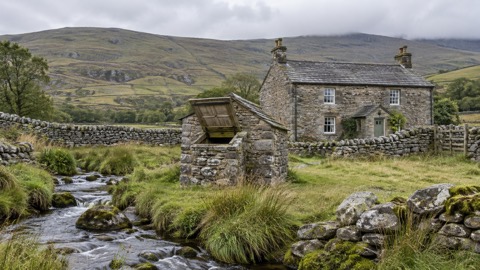
If you are on a private supply, it is also worth knowing how your water arrives. Most private water supplies are in rural areas where mains water is not available, and they can come from springs, wells, boreholes, rivers and lochs3. That list is the reason the next section is strict about distance.
Where to pour grey water away from homes, wells and watercourses
Pour grey water onto ground that is well away from anything you or a neighbour drinks from, and away from buildings you want to keep dry. The official private supply guidance gives the clearest number to work to: prevent storage or the spreading of manure within 50 metres of the water source6. Manure and grey water are not the same thing, but the principle is the same, and 50 metres is the distance to keep in mind for anything that could carry contamination into a well, borehole or spring.
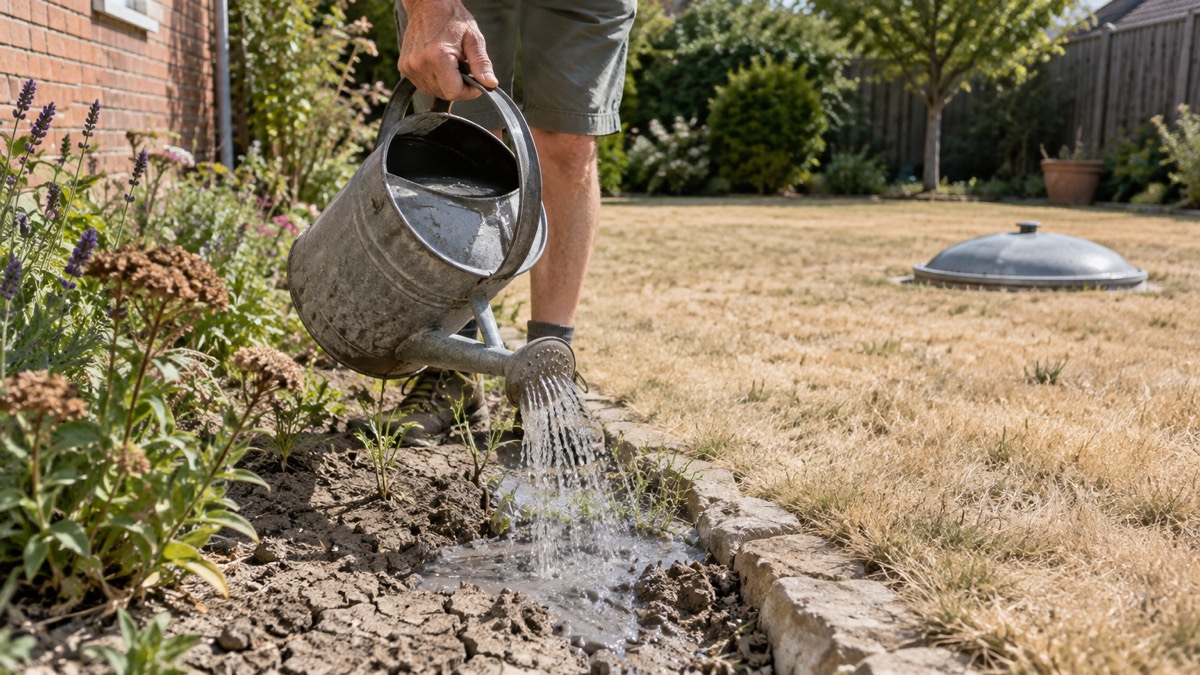
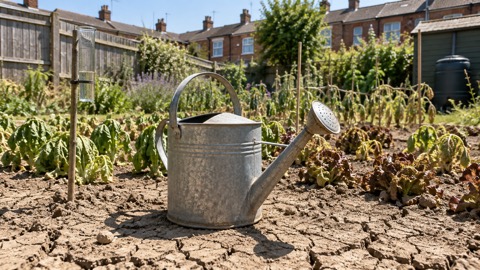
For the garden itself, the advice is straightforward. During hot, dry spells, Hampshire Fire and Rescue Service suggests considering grey waste water for watering plants and lawns, so that even if there are limits on hosepipes the ground can be kept damp8. Suffolk Fire and Rescue Service gives the same advice for dry spells, suggesting water from water butts or wastewater from the home if hosepipe bans are in place9. The RHS adds the practical detail: apply it with a watering can, and alternate with rainwater or mains water to avoid mineral salt build-up2.
A short set of rules covers most gardens:
- Pour onto soil or mulch, not onto leaves, and use a watering can so it goes where you want it.
- Work from the furthest point back towards the house, so you are not walking through what you have just poured.
- Keep it off patios, paths and driveways, where it will run rather than soak in.
- Keep it away from ponds, ditches and watercourses, and away from any well, borehole or spring, working to the 50 metre figure in the private supply guidance6.
- Alternate with rainwater or mains water to stop salts accumulating in the soil.
If you have a private supply, the Drinking Water Inspectorate lists boreholes, natural springs and watercourses among the sources a supply can come from4. That is the reason for the distance: a bucket poured too close to a borehole head is a bucket poured towards your own drinking water.
Where grey water must never go
Some destinations are ruled out, and the reasons are about contamination rather than tidiness.
Never connect a grey water or rainwater supply directly to the mains drinking water. WaterRegsUK states plainly that alternative water supplies should never be directly connected to the mains drinking water5. The risk is backflow: if the mains pressure drops, water from your tank or butt can be drawn back into the pipe that feeds your taps.
Never leave a hosepipe sitting in a drain, pond, bucket or watering can. The Met Office warns that contaminated fluid could be siphoned back into your drinking water supply10. The same rule applies to a hose left in a water butt.
Never send surface water into the foul sewer. Thames Water advises that surface water from roofs, guttering, patios and driveways should not flow into a foul sewer, and that where you are not near a surface water sewer you should use soakaways or ditches11. The foul sewer carries sewage to treatment; adding clean rainwater and grey water to it overloads a system that may already be struggling.
There is a further reason to keep grey water out of drains during a drought. The government's drought guidance says: don't pour water down the drain if there's another use for it, such as watering plants12. A drain is the last resort, not the first.
Where a drain is blocked or a sewer is backing up, the water has to go somewhere, and the garden is usually the better answer than a floor. If the ground is saturated, store what you can in covered containers for the short term and stop adding to the system until it is cleared.
Using soaps and detergents that break down outdoors
What goes into the water decides where it can go afterwards. The RHS is specific: avoid water containing bleach, disinfectants, dishwasher salt or harsh cleaners2. Those are the things that will damage plants, disrupt a septic tank and make the water unfit to spread.
Plain soap and mild detergent are the baseline. South West Water's garden water saving tips, given by a television gardener, suggest reusing washing up water as long as it does not contain bleach, or bathwater, by putting it into buckets and using it to water the garden13. The RHS adds that grey water from washing up can be used to water ornamental plants in containers2. The container detail matters: a pot is a contained space where you can see the effect, and where the water does not reach open ground or a watercourse.
If you are watering edible crops, the RHS advises limiting grey water to crops that will be cooked2. That is a simple rule to hold in mind: salad leaves and soft fruit that go straight to the plate are not the place for it; potatoes, beans and anything destined for the pan are.
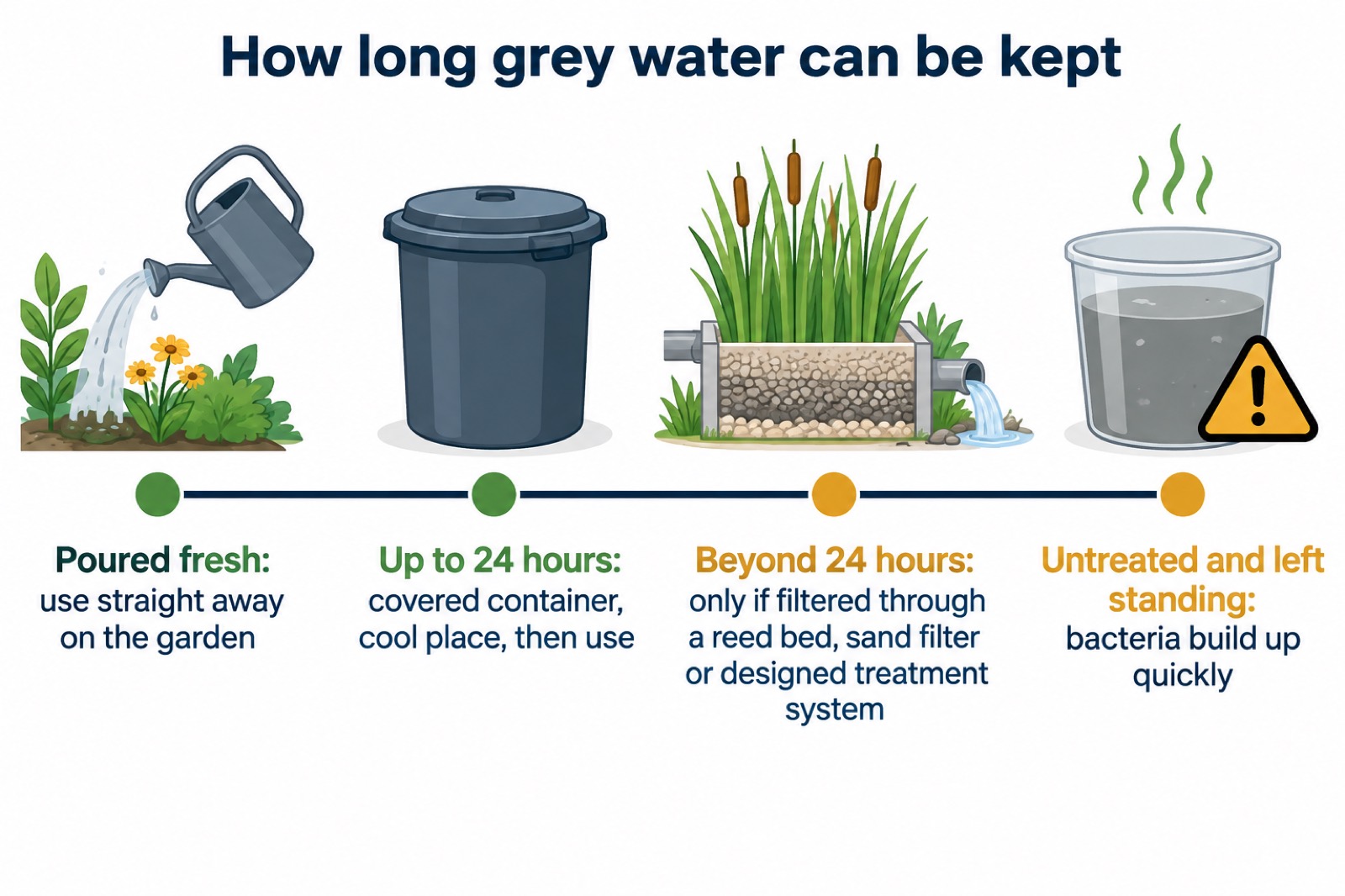
"Use grey water immediately, do not store it longer than 24 hours unless filtered through a reed bed, sand filter or a professionally designed water treatment system."
There is a separate cleaning use for bleach that should not be confused with reuse. After flooding or illness, official guidance uses dilute bleach deliberately as a disinfectant: Northumberland County Council advises cleaning all equipment used with dilute bleach, one egg cup in a small bucket of warm water14. That water is then disposed of, not poured on the garden.
If you have no running water at all, Food Standards Scotland advises that you can use alcohol gels or wet wipes to clean hands before handling food15. That is a better answer than washing hands in stored grey water.
Storing grey water safely for a short time
Grey water does not keep. Cambridge Water warns that bacteria can soon build up when nutrient rich waste water is left untreated for a period of time, and advises only having a small storage tank to prevent bacteria levels building up1. The Centre for Alternative Technology goes further: it is not possible to store this water without chemical treatment, so direct irrigation is the option it recommends16.
If you must hold some back, the limits are tight. The RHS says not to store it longer than 24 hours unless it has been filtered through a reed bed, sand filter or a professionally designed water treatment system2. In practice that means a covered container, kept cool, emptied the same day or the next, and never left open where children or animals can reach it.
A few practical points make short storage safer:
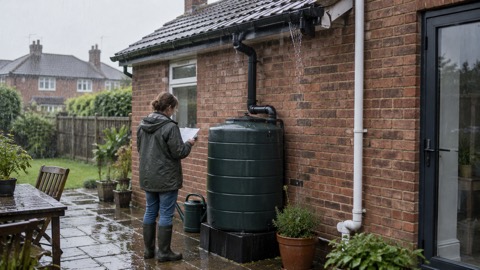
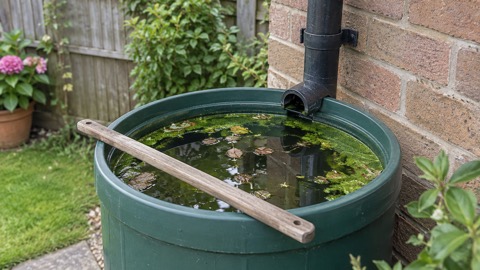
- Use a container with a lid, and label it so nobody mistakes it for drinking water. The maker of the Rain Activ system notes that untreated rainwater is not for human consumption and that the point of use should be clearly labelled17.
- Keep the container out of the sun and out of reach of children and pets.
- Pour it out and rinse the container between fills rather than topping up a part-full drum.
- Do not add fresh grey water to old; empty first, then refill.
If you are storing water because the mains have failed, keep the two purposes separate. Official guidance for a supply interruption says to use alternative water supplies such as bottled water solely for drinking, washing your hands and food preparation18. Grey water is for the garden and the toilet, not the kitchen.
Grey water in freezing weather
Cold changes the calculation. Water freezes at 0°C, and Surrey County Council notes that the presence of grit prevents water from freezing until between -6°C and -8°C19. A bucket left out overnight in a hard frost will be solid by morning, and a container that freezes can split.
Do not pour warm grey water onto frozen ground or into a frozen drain. It will cool, freeze and build a plug. If a pipe does freeze, turn on nearby cold taps with the stop tap kept off, as this will relieve pressure on the frozen pipe20.
In freezing weather, the sensible routine is:
- Store grey water indoors, in small amounts, and empty containers before a hard frost rather than leaving them full.
- Keep pours away from steps, paths and drives, where frozen water becomes a slip hazard.
- Check outdoor taps and exposed pipes before the first cold snap, and lag what you can.
If the ground is frozen, the garden cannot take the water. That is the point at which a short covered store indoors, emptied daily, is the practical answer, and the point at which reducing how much you produce becomes worthwhile: shorter showers, washing up in a bowl rather than under a running tap.
Getting help when drains or septic systems fail
When a drain backs up or a septic system stops coping, the first job is to stop adding water. The second is to work out whether the problem is yours or the network's.
For mains water, Richmond Council's utilities failure guidance gives a simple test: the main water supply normally enters your home in the cold kitchen or utility room tap, so try that tap first. If water comes out there but not elsewhere, the problem is with your internal plumbing21. Water UK adds the neighbour test: speak to one of your neighbours, and if they also have no water or low water pressure it is likely to be an issue with your water company network22.
If your property has flooded, Northern Ireland Direct advises that once the water levels are lower outside than inside your property, you can begin to get rid of the water by using a pump or bucket, and that you can hire or buy a pump and generator from a DIY shop23. Keep generators outdoors and well away from windows and doors; the fire and rescue service treats generator fumes as a carbon monoxide risk.
For a septic system, the practical steps are to spread washing across the week, keep bleach and harsh cleaners out, avoid putting food waste and grease down the sink, and have the tank emptied on its usual cycle. If drains back up after heavy rain, the cause may be groundwater rather than your tank, and the water company is the first call.
Where a private supply is involved, the responsible body differs across the UK. In Scotland, local councils regulate private water supplies and can advise on low or failing sources. If your supply runs low, official guidance suggests considering deepening your well or borehole and installing storage tanks to make the supply more resilient in dry weather24.
For households that need extra help, the Priority Services Register run by water companies gives advance notice of interruptions and priority during repairs; ask your supplier to add you. For flooding, the fire and rescue service and your local council are the first contacts, and the flooding guide sets out the sequence. If you are weighing up a septic tank against a composting toilet, the comparison of the two covers the practical differences, and the rainwater harvesting section explains how a butt or tank fits alongside a grey water routine.
Sources (24)
- Saving water FAQs, Cambridge Water, 2026-10-28
- Water saving in the garden, Royal Horticultural Society, 2026
- Private water supplies, Highland Council, 2025-10-10
- Private water supplies, Drinking Water Inspectorate, 2026-10-28
- Alternative water supplies, WaterRegsUK, 2026-11-04
- Protecting your private water supply, Drinking Water Inspectorate, 2026-10-28
- Loss of supply: private water supply users, Argyll and Bute Council, 2026
- Reduce the risk of wildfire damage to your property, Hampshire Fire and Rescue Service, 2026-08-27
- Warm weather safety, Suffolk Fire and Rescue Service, 2026-10-29
- Hosepipes and hidden health risks, Met Office, 2026-10-29
- Hydraulic flooding, Thames Water, 2026-10-28
- Droughts, Prepare campaign, 2026-10-19
- TV gardener's top tips for saving water in the garden, South West Water, 2026-10-28
- Infectious diseases control, Northumberland County Council, 2026-10-28
- Flooding food safety advice, Food Standards Scotland, 2026-10-25
- Water saving in the garden, Centre for Alternative Technology, 2025-06-27
- Rain Activ Dual Garden System, Rainwater Harvesting Ltd, 2026-07-01
- Water supply interruptions or outages, Be Ready campaign, 2026-10-12
- Salting and gritting, Surrey County Council, 2026-10-28
- Frozen or burst pipes, Met Office, 2026-10-26
- Utilities failure, Richmond Council, 2026-05-22
- Interruptions to water supply, Water UK, 2026-10-26
- After a flood: clearing up, Northern Ireland Direct, 2026-05-06
- Drought planning and management, Natural Resources Wales, 2026-10-29
 Composting Toilet Kit Checklist
 Garden Harvesting Kit Checklist
 Rainwater Winter Checklist
 Composting Toilet Near Wells
 Flies in a Composting Toilet
 Composting Toilet Chamber Size
 Is Harvested Rainwater Safe
 Garden and Lawn Water Needs
 Rain and Grey Water in Garden
 House With a Private Supply
 Rainwater Pipe Types and Labels
 Private Water Supply Visitors
 Rainwater Systems in a Power Cut
 Does Stored Rainwater Stagnate
 Underground Tank Dig Depth