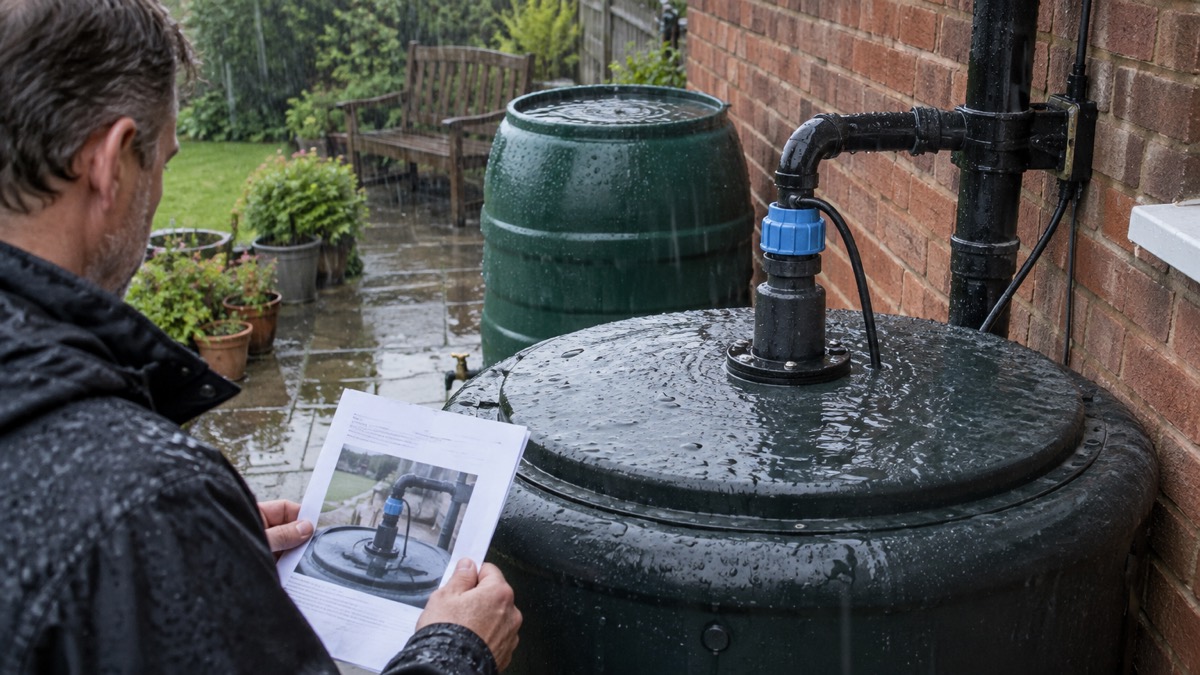
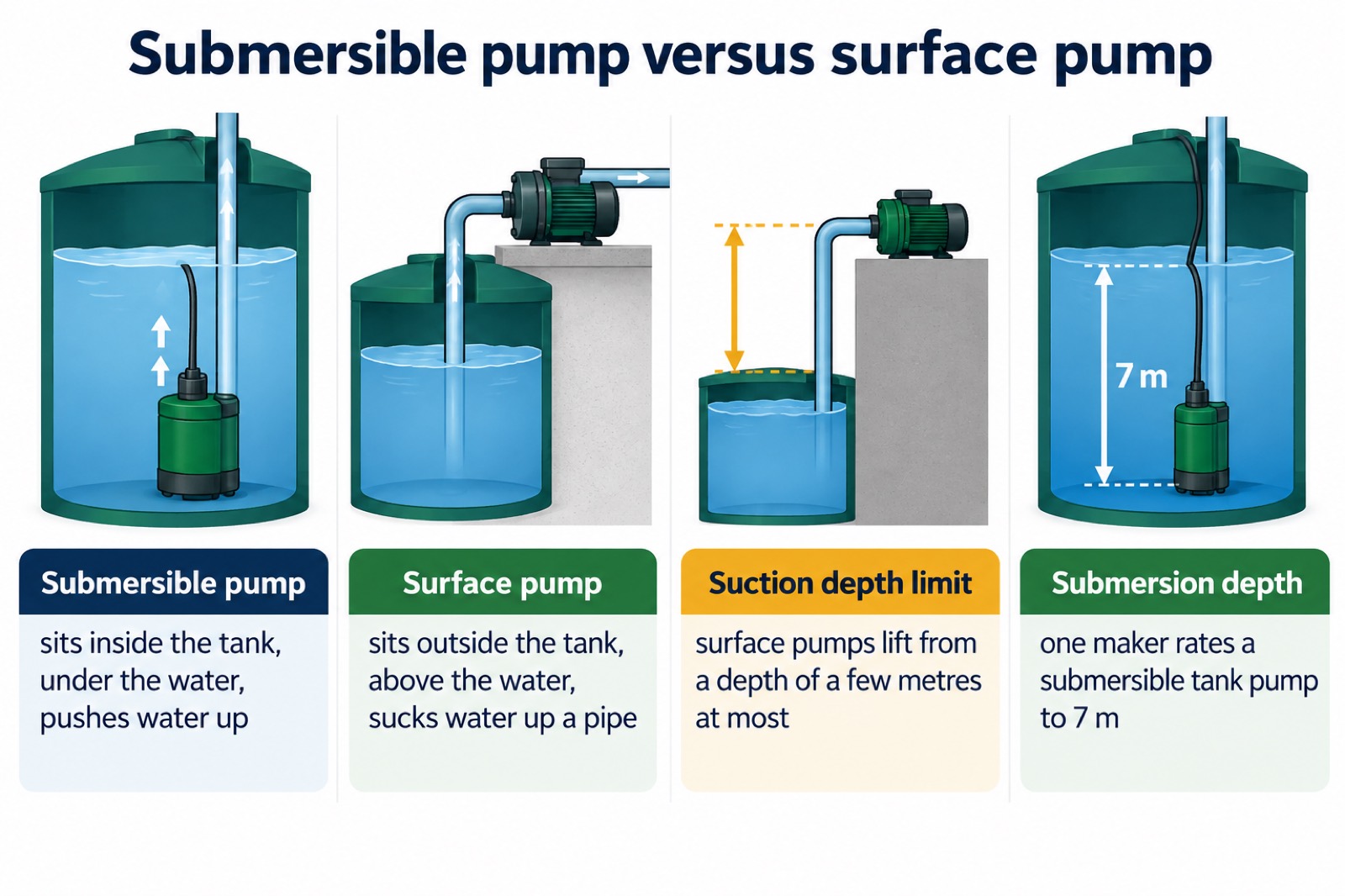
A rainwater tank on its own gives you standing water. To get that water to a hose, a sprinkler, a washing machine or a toilet cistern, you need a pump, and the first choice you make is between two types. A submersible pump sits inside the tank, under the water, and pushes water up and out. A surface pump sits outside the tank, on the ground or a stand, and sucks water up through a pipe. Each suits different tanks, depths and jobs, and choosing wrongly is the most common reason a rainwater set-up disappoints.
The depth of your tank is the biggest factor. Underground rainwater harvesting tanks require a pump to work as part of a rainwater harvesting system1, and for anything deeper than a shallow tank, a submersible pump is usually the answer. Surface suction pumps are limited to a depth of a few metres2, so they suit water butts and above-ground tanks where the pump can sit at, or just below, the water level. Beyond depth, you choose by delivery head (how high and far the pump can push water), flow (how many litres per hour it moves), and dry-run protection (whether it switches itself off before the tank empties).
Submersible or surface: how each type moves water
The difference between the two types is simple but it drives everything else about your set-up. A submersible pump is sealed so it can work underwater. It sits at the bottom of the tank, takes water in directly around it, and pushes it up a pipe to wherever you need it. Because the water arrives at the pump rather than being pulled to it, depth is far less of a problem: the maker GARDENA rates its Rain Water Tank Pump 4000/1 for a maximum submersion depth of 7 m5, and its battery-powered model for 1.8 m7.
A surface pump works the other way round. It sits outside the tank, above the water, and creates suction in a pipe that runs down into the tank. Air pressure does the work of lifting the water to the pump, and that is the hard limit: suction pumps are limited to a depth of a few metres2. For a water butt on a stand or a shallow above-ground tank, that is fine. For an underground tank or a deep container, it is not.
There is a useful reference point for what "enough pressure" means. Essex & Suffolk Water explains that mains water pressure should normally fill a storage tank at second floor roof level and enable a ground floor kitchen cold tap to fill a 4.5 litre container in 30 seconds, which in technical terms means ten metres head at the boundary of your property, a flow of nine litres per minute4. When you compare pump specs, that gives you a sense of scale: a pump with a 13 m maximum delivery head5 is in the same territory as ordinary mains pressure, though the flow it delivers at that head will be lower than its maximum.
Surface pumps: sitting above the water, separate from the tank
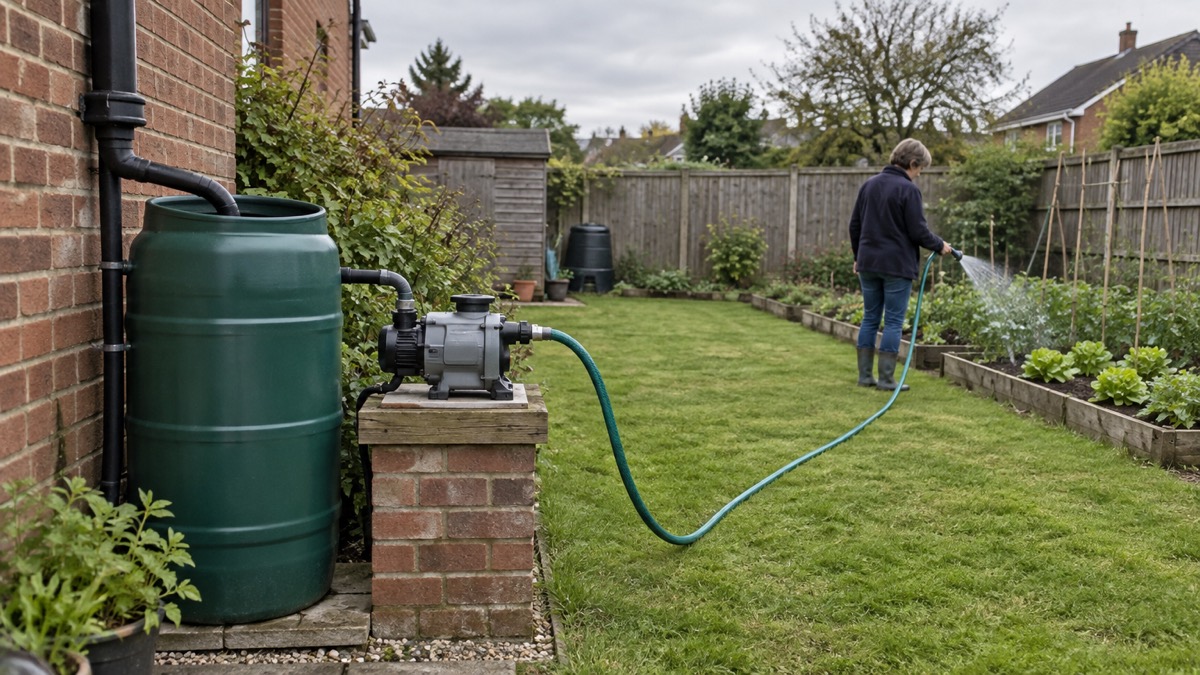
A surface pump keeps its motor and electrics out of the water entirely. That has practical advantages: you can see it, reach it, and service it without emptying the tank or pulling anything out. It also means the pump needs protection from weather if it lives outdoors, and it needs a stable, level surface to sit on, in the same way that a large tank does. Enduramaxx, for a 30,000 litre tank, recommends a smooth, level, firm surface with a reinforced concrete base as best, and a base at minimum 600mm (24") larger than the tank's dimensions8. A pump standing beside a tank deserves the same thinking on a smaller scale.
The trade-off is the suction limit. Because a surface pump pulls water up rather than pushing it, it is limited to a depth of a few metres2. For a typical water butt or wall tank this is workable. The 2 x 250 Litre Multitank Rainwater Wall Tank, for example, has ¾-inch threaded connections on both the front and the back for taps or hose fittings9, so a small surface pump can connect at the tank's own outlets and draw from a container that is close by and shallow.
Surface pumps of the flood-draining kind show the type at its most developed. Lakeside Flood Solutions describes its Surface Water Pumps, often referred to as "Puddle Suckers", as positioned outside on the ground surface during rising water to drain water away from the premises, with manual or automatic options, all provided with a power cable and 10m lay-flat discharge hose, longer lengths available on request3. One of these can drain surface water and flood water down to very low levels, to as low as 1mm3. That same low-level draining ability is what you would want from a surface pump used to empty a water butt almost completely at the end of the season.
What a surface pump is used for
Surface pumps suit three household jobs. The first is garden watering from a water butt or small above-ground tank, where the tank is shallow and close to where the water is used. The second is draining: because a good surface pump can pull water down to as low as 1mm3, it can empty a container almost fully, which matters before winter, when the Multitank wall tank's maker advises using its side outlet for thorough drainage before frost sets in9. The third is flood defence, where the pump stands outside on the ground and moves water away from the building3.
Where the water goes afterwards matters too. Thames Water notes that surface water sewers carry rainwater to streams, rivers and soakaways10. If you are pumping large volumes of rain or flood water, do not assume any drain will take it: pumping flood water into public sewers is something gov.uk advises you to check with your water company first11.
Suction lift: the depth limit that decides the choice
The single most important number when choosing between the two types is how far down the water is. Suction pumps are limited to a depth of a few metres2. That is a physical limit, not a quality issue: no surface pump, however well made, can pull water from a deep tank, because atmospheric pressure will not lift it further. The Centre for Alternative Technology's guidance on reducing water use makes the point directly when discussing wells and boreholes: to draw water from a well or borehole, you will almost certainly need a submersible pump rather than a suction pump2.
Tank dimensions show you how quickly you hit the limit. Enduramaxx's 30,000 litre rainwater tank has a diameter of 3.45m and a total height of 3.6m8. A surface pump trying to draw from the bottom of a tank of that height, standing at ground level, is already working at the edge of its suction range before you add any pipe run or fittings. An underground tank is worse still, since the water surface sits below ground. For both, a submersible pump is the practical answer, and underground rainwater harvesting tanks require a pump to work as part of a rainwater harvesting system1.
For context on what a pump has to achieve, the water industry's own reference standard is ten metres head at the boundary of your property, a flow of nine litres per minute4. Head is not just vertical height: it includes friction losses in the pipe, so a long horizontal run to a distant flowerbed eats into your head budget just as a rise does. When a maker states a maximum delivery head of 13 m5 or 20 m7, treat that as the total budget for lift and pipe losses combined, not just the height you can pump up to.
| Question | Surface pump | Submersible pump |
|---|---|---|
| Where does it sit? | Outside the tank, above the water3 | Inside the tank, under the water1 |
| How deep can the water be? | A few metres at most2 | One maker rates 7 m submersion5; its battery model 1.8 m7 |
| What can you reach? | Visible and serviceable without emptying the tank | Must be lifted out for inspection |
| Typical use | Water butts, shallow tanks, draining to 1mm3, flood water | Underground tanks, deep tanks, garden irrigation1 |
Submersible pumps: underwater, and pushing water up
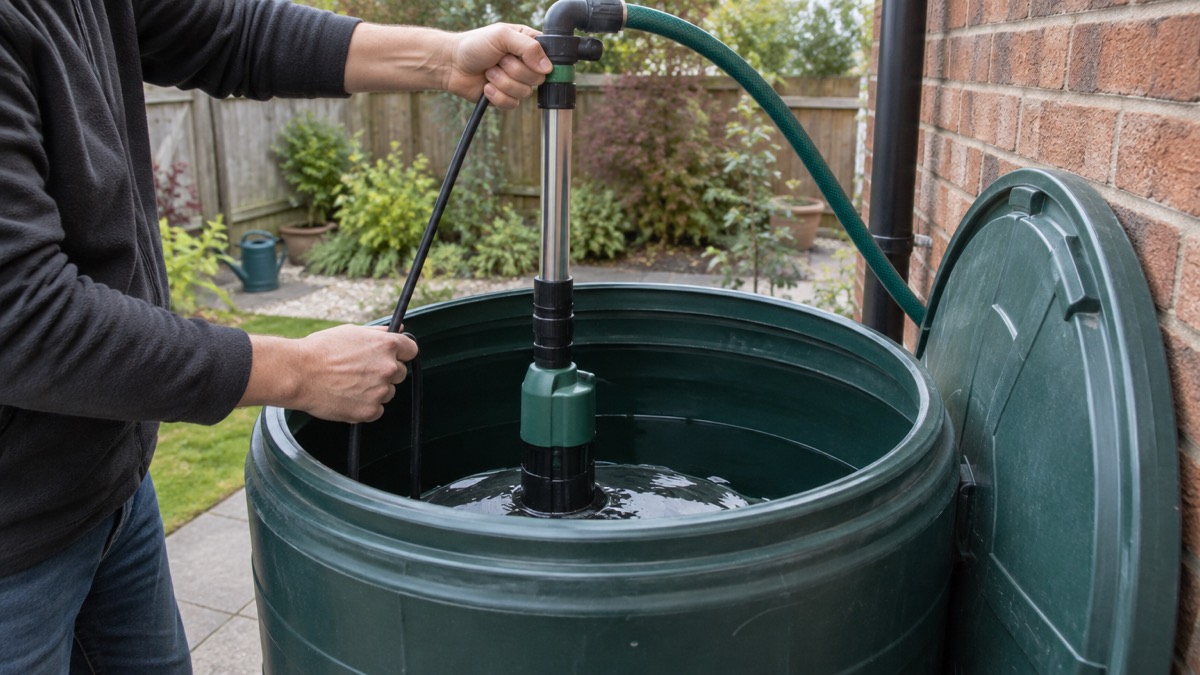
A submersible pump is built to live in the tank. Its motor is sealed and cooled by the water around it, and because it takes water in directly, it does not fight atmospheric pressure at all. It simply pushes. That is why depth matters so much less: the GARDENA Rain Water Tank Pump 4000/1 is rated for a maximum submersion depth of 7 m5, and the maker's battery rainwater tank pump for 1.8 m7.
The specifications that matter on a submersible tank pump are head, flow, and how low it can drain. The GARDENA 4000/1 offers a maximum delivery capacity of 4000 l/h and a maximum delivery head of 13 m5. Its continuous-on function allows the tank to be emptied down to a water depth of just 5 mm5, which is useful for end-of-season draining and for clearing sumps. The battery model offers three selectable power levels so the pump adapts to different tasks7, and a maximum delivery head of 20 m7. Materials matter for a device that lives in water: the 4000/1 has a glass fibre reinforced plastic casing and a stainless steel shaft5.
Dry-run protection is the feature that protects your investment. The GARDENA 4000/1's adjustable float switch switches the pump off when water falls below a certain level, to prevent dry running5. Running a pump with no water flowing through it is what destroys pump motors, and the water industry itself follows the same logic at network scale: South East Water explains that when a water storage tank drains too low, the pumps physically cannot push water through the pipes and automatically shut down to avoid damage, turning back on when tank levels rise12. Your tank pump does the same thing on a household scale, if it has the feature fitted.
What shows above the tank
With a submersible pump, most of the hardware is hidden, but three things show above the tank. The first is the outlet arrangement. The GARDENA 4000/1 uses an aluminium telescopic pipe that can be adjusted between 615 and 815 mm and drains the collected water over the rim of the barrel without blockages, with the length extendable by a further 210 mm using a separately available extension pipe5. That over-the-rim design means no hole needs to be cut low in the tank wall, which suits water butts and IBC containers; the maker states the pump fits through 150mm openings, for example in IBC containers5.
The second is the power cable, which must reach from the tank to a suitable socket. The 4000/1 has a 10 m cable of type H05RN-F5; the battery model has a 2 m cable of type H05-VV-F7 but can also run cordless, powered by an 18V rechargeable POWER FOR ALL battery7. The third is any tank furniture the pump works alongside: Enduramaxx's 30,000 litre tank has 4 flat areas around the top of the tank to mount inlets and overflows8, and a wall tank may simply use its ¾-inch threaded connections for taps or hose fittings9. Plan the top of the tank so the pump's pipe, cable and the tank's own fittings do not crowd each other.
Choosing by head, flow and dry-run protection
Once you know which type suits your tank, three specifications decide which model. Delivery head is how high and how far the pump can push water, measured in metres and consumed by both vertical lift and pipe friction. Compare it with the ten metres head at the boundary that defines normal mains service4, and with the maker's figures: 13 m for the GARDENA 4000/15, 20 m for its battery model7. Flow is how much water moves per hour: 4000 l/h maximum for the 4000/15. For context, the Scottish Flood Forum suggests a pump capacity of 500 litres per minute for a flood sump13, a very different class of duty from garden watering.
Dry-run protection is the feature that stops the pump destroying itself when the tank runs low. Look for an adjustable float switch that switches the pump off when water falls below a certain level5. Without it, a pump left running in an empty tank will overheat, and the damage is not covered as a fault.
A checklist for choosing:
- Depth of water: more than a few metres, or underground, means submersible1
- Delivery head needed: height of lift plus pipe run, compared with the maker's maximum5
- Flow needed: a sprinkler wants more than a drip line; 4000 l/h is a garden-class figure5
- Drain-down depth: 5 mm with a continuous-on function5; 1 mm for surface "puddle sucker" types3
- Dry-run protection: an adjustable float switch5
- Cable reach: 10 m on one mains model5, 2 m on a battery model7
- Power source: mains, or an 18V battery platform for cordless use7
For households thinking about running a pump without mains power, a small water pump appears in the Caravan and Motorhome Club's solar power guidance with a power rating of 40W14, which gives a sense of how little power a modest pump draws. A larger tank pump such as the 4000/1 has a power rating of 400 W5, which is a different proposition for an off-grid set-up. If you are planning to run a pump from solar or battery power, see our guides to off-grid solar systems and solar water pumping.
Watering the garden from a tank
Garden irrigation with collected rainwater is the most common use for a tank pump, and in a drought it becomes more than a convenience. The UK government's drought guidance for households says: "In the garden, use a watering can instead of a hosepipe and install a water butt if you can to capture rain."15 Ready Scotland gives the same advice for hot weather: use a watering can instead of a garden hose16.
A pump changes what is possible during a temporary use ban. South East Water's 2026 temporary use ban FAQs for Kent state that you may water your garden with tap water by hand, using a bucket or a watering can, and that you may also water your garden with greywater or rainwater from a water butt through a hosepipe17. The ban itself exempts drip or trickle irrigation systems fitted with a pressure reducing valve and a timer, that are not handheld, without run off or airborne dispersion, as well as the use of watering cans instead of hoses18. So a pump feeding a hose from your rainwater store can keep a garden alive when a mains hose cannot legally be used. Our page on using rain and grey water in the garden covers what that water is best spent on.
For pressure-dependent kit, check the pump's pressure rating. GARDENA states that its Rain Water Tank Pump can easily be connected to the Aqua oscillating sprinkler thanks to the 1.3 bar pressure5. Sprinklers and spray fittings need a certain pressure to break the water into droplets; a drip line, which the ban exempts when fitted with a pressure reducing valve and a timer18, needs far less. Match the pump to the watering method, not the other way round.
Electrical safety in the garden is the one place this job can go wrong. Electrical Safety First's garden safety guidance advises: "If there's a problem, switch off the water pump electrical supply immediately and have the pump repaired by a registered electrician."6 Water and electricity meet at every rainwater pump, so use a weatherproof connection, keep plugs out of damp, and treat any tripping or fault as a reason to stop and get the pump checked.
Pumps for floods, sumps and standing water
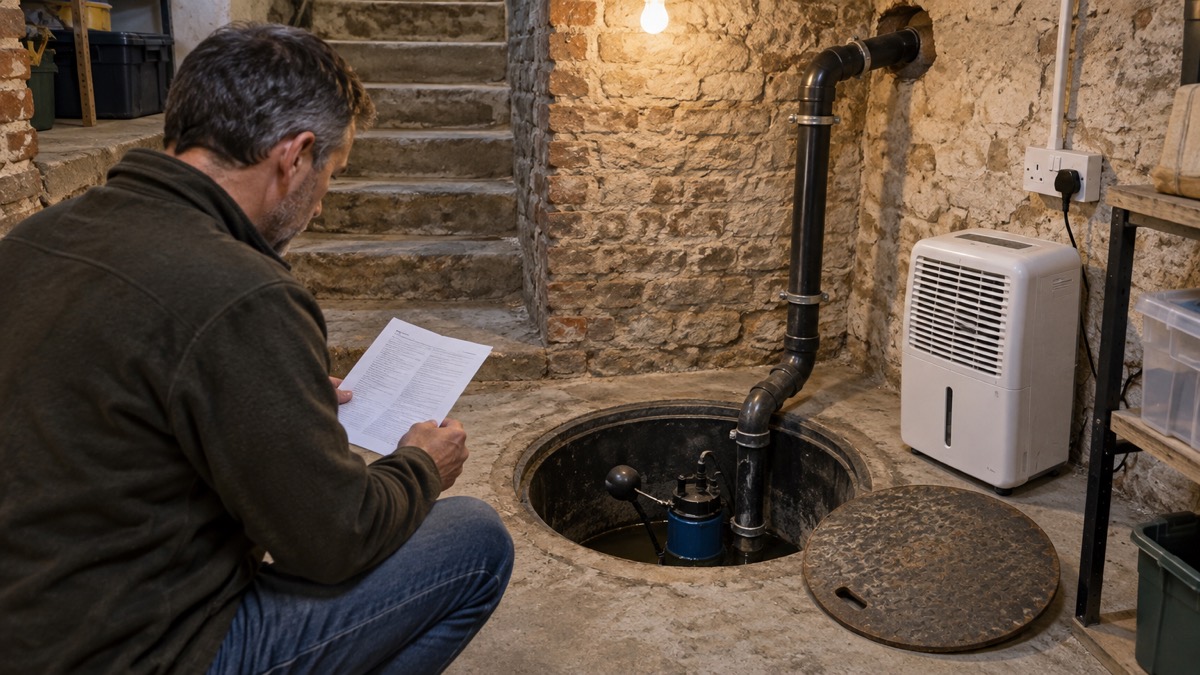
The same two pump types reappear in a flood, and this is where official guidance is worth following closely. The first rule is about timing. London Fire Brigade's after-a-flood advice says that for small areas of flooding you could use a bucket to get rid of the floodwater, and for larger areas consider hiring a water pump run by a generator19. nidirect's guidance for Northern Ireland adds the sequencing: once the water levels are lower outside than inside your property, you can begin to get rid of the water by using a pump or bucket, and you can hire or buy a pump and generator from a DIY shop20. A Tewkesbury flood recovery leaflet puts it plainly: "Wait until water levels outside are lower than inside your property before using a bucket or pump to remove."21
Pumping before the outside level has dropped simply refills your property. When you do start, the Scottish Flood Forum's Ready for Flooding guide notes that the Fire & Rescue Service can pump out standing water but will charge for non-emergencies, and that otherwise you can use a pump from a hire or DIY shop, or buckets followed by a wet/dry vacuum22.
Placement matters as much as timing. gov.uk's guidance on preparing your property for flooding explains that a pump works best when the inlet sits in a low point into which water can drain, a sump23. That is why flood-resilient homes install purpose-made systems: nidirect advises householders to install a sump/pump to remove water and fit non-return valves to all drains and water inlet pipes, which only let water flow one way24. Yorkshire Water agrees that sump pumps are a good way to tackle groundwater issues25. At product level, Lakeside Flood Solutions' Sump & Pump system uses a submersible pump installed below ground to a bespoke sump3, and the Scottish Flood Forum's flood protection guide describes how, when pumps are fitted to the solum and the water activated, a float switch allows the pump to remove water as soon as it reaches a fixed depth13. That automatic float-switch behaviour is the same dry-run and level-control feature you want in a rainwater tank pump.
After pumping out, the clean-up has its own rules. Argyll and Bute Council, for private water supplies after floods or storms, advises removing any screens, filters, flow regulators and aerators, cleaning reusable parts with hot water and detergent suitable for food contact items, applying a mild disinfectant suitable for food contact or drinking water disinfection, rinsing, reassembling and running the tap for a few minutes before use29. If you keep rainwater for garden use only, this applies to your mains taps rather than the tank, but it shows the standard of hygiene flood water demands. For the wider picture, see our guide to flooding.
Power, cables and discharge pipes
The plumbing and wiring around a pump are as important as the pump itself. On the power side, check the cable length against the real distance from tank to socket, because outdoor extension leads are a common cause of trouble. The GARDENA 4000/1 has a 10 m power cable of type H05RN-F5; the battery model has a 2 m cable of type H05-VV-F7 but its real freedom comes from its 18V POWER FOR ALL battery, with the ready-to-use set including a System Battery PBA 18V/45 and a charger7. A battery pump also keeps working through a power cut, which is worth remembering if your rainwater system is part of your emergency planning; our page on whether a rainwater system keeps working in a power cut covers this.
On the water side, the discharge arrangement decides how well the system works. A submersible tank pump with a telescopic pipe drains water over the rim of the barrel without blockages5, and comes with a regulating valve for adjusting or stopping the water flow, and an integrated fine filter5. Surface flood pumps come with a 10m lay-flat discharge hose, with longer lengths available on request3. Lay-flat hose is worth having for any occasional-duty pump: it stores flat, deploys quickly and does not kink.
Two final checks. First, where the water goes: check with your water company before pumping flood water into public sewers11, and remember that surface water sewers carry rainwater to streams, rivers and soakaways10. Water companies themselves manage large-scale pumping in emergencies: Southern Water describes over-pumping, pumping heavily diluted wastewater from sewers through a screening system before releasing it into nearby rivers, streams or ditches30, and United Utilities' water tankers arrive in an area to pump additional water into the pipes, keeping taps flowing and toilets flushing31. Your household pump is on a different scale, but the principle of knowing where the water ends up is the same. Second, maintenance: a pump with a fine filter5 needs that filter cleaned, and a tank with a downpipe filter needs that checked too, as covered in our guide to keeping a rainwater system clean and working through the year.
Where this fits in a wider set-up
A pump is one component in a rainwater system, and its requirements shape the rest. If you are still choosing a tank, our pages on water butts, underground tanks and above-ground tanks set out the options, and how to size a rainwater tank helps you match storage to your roof and demand. How the pumped water reaches your WCs and washing machines is covered in direct feed and gravity feed systems, and the rules that govern the plumbing, including keeping rainwater pipes separate from mains pipes, are in rainwater systems and the law.
If your interest in pumps goes beyond the garden, into private supplies and off-grid living, the same submersible-versus-suction choice appears again at well and borehole scale, where the Centre for Alternative Technology's guidance is clear that a submersible pump is almost certainly what you will need2. Our guides to private water supply rules and treating a private water supply pick up from there.
Sources (31)
- Rainwater Harvesting Tanks, Enduramaxx
- Reducing Water Use, Centre for Alternative Technology, 2025-06-27
- Sewage Defence: Sump & Pump and Surface Water Pumps, Lakeside Flood Solutions, 2026-06-29
- Getting Water to Your Home, Essex & Suffolk Water, 2024-01
- GARDENA Rain Water Tank Pump 4000/1, GARDENA, 2026-10-29
- Garden Safety, Electrical Safety First, 2026-10-26
- GARDENA Battery Rainwater Tank Pump 2000/2 18V P4A Ready-To-Use Set, GARDENA, 2026-10-29
- 30,000 Litre Rainwater Tank, Enduramaxx, 2026-09-28
- 2 x 250 Litre Multitank Rainwater Wall Tank, Rainwater Harvesting Ltd, 2026-10-01
- Sewer Flooding: Hydraulic Flooding, Thames Water, 2026-10-28
- Help During a Flood, GOV.UK, 2026-10-25
- Kent and Sussex Supply Issues FAQs, South East Water, 2026-10-28
- Flood Protection Guide, Scottish Flood Forum, 2023-02
- Solar Power Technical Advice, The Caravan and Motorhome Club, 2026-10-25
- Droughts: Be Informed About Hazards, Prepare Campaign, 2026-10-19
- Hot Weather Advice, Ready Scotland, 2026-03-24
- TUBs Kent FAQs, South East Water, 2026-10-28
- Temporary Use Bans, South East Water, 2026-10-29
- After a Flood, London Fire Brigade, 2026-10-25
- After a Flood: Clearing Up, nidirect, 2026-05-06
- After a Flood: Flood Recovery Leaflet, Tewkesbury Borough Council, 2023
- Ready for Flooding, Scottish Flood Forum, 2023-02
- Prepare Your Property for Flooding, GOV.UK, 2009-10-01
- How to Protect Your Home from Flooding, nidirect, 2025-12-18
- Flooding: Report a Problem, Yorkshire Water, 2026-10-28
- How to Recover from Flooding, GOV.UK, 2023-12-19
- Adapting Your Home or Business to the Risk of Flooding, GOV.UK, 2009-10-01
- Cleaning Up and Returning Home After Flooding, Derbyshire County Council, 2026-10-29
- Private Water Supplies After Floods or Storms, Argyll and Bute Council, 2026
- Who Is Responsible for Flooding, Southern Water, 2026-10-28
- Water Tankers, United Utilities, 2026-10-28
 Composting Toilet Kit Checklist
 Garden Harvesting Kit Checklist
 Rainwater Winter Checklist
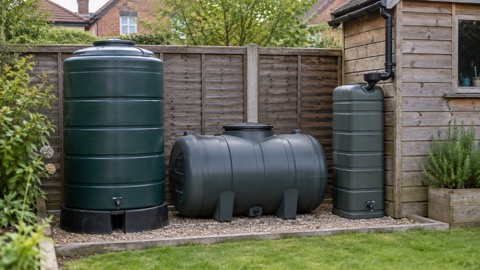 Above-Ground Rainwater Tanks
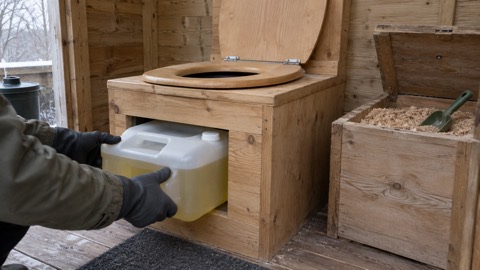 Composting Toilets
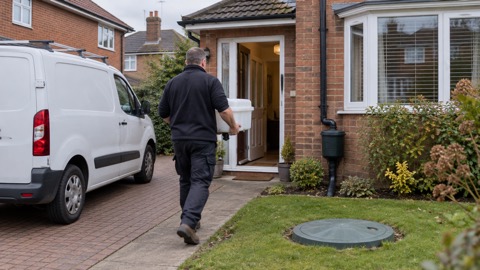 Direct vs Gravity Feed Systems
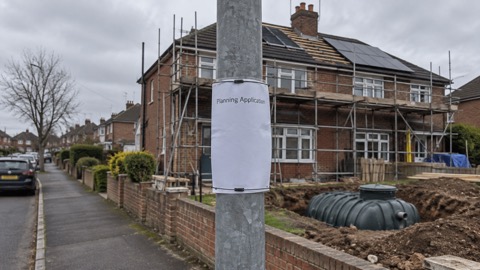 Planning Permission for Systems
 Private Water Supply Running Low
 Private Water Supply Regulations
 Private Water Supplies Scotland
 Treating a Private Water Supply
 Rainwater Filter Types
 How Rainwater Harvesting Works
 Rainwater System Maintenance
 Rainwater Systems and the Law