
The HydroForce Series 4 is a mains electric submersible pump that sits in a rainwater tank and moves stored rainwater to the taps or appliances connected to it1. It is manufactured in the UK by Hydroforce Pumps Limited, a sister company of Rainwater Harvesting Limited1.
For a household preparing for disruption, the pump is the part of a rainwater system that turns a tank of stored water into something you can actually use: filling a watering can, running a garden tap, or feeding appliances on a direct feed system1. What it does give you is a way to draw on water you have already collected, at a useful rate, for as long as the power is on.
This page sets out what the pump is, how the Series 4 name relates to the HydroForce brand, how the electronic control behaves, what the dry-run protection and non-return valve do for you, and what to plan for when the electricity fails. It is written for a household that already has, or is considering, a rainwater tank and wants to know how the pump fits into an emergency plan.
What the HydroForce Series 4 is and what it does for a household
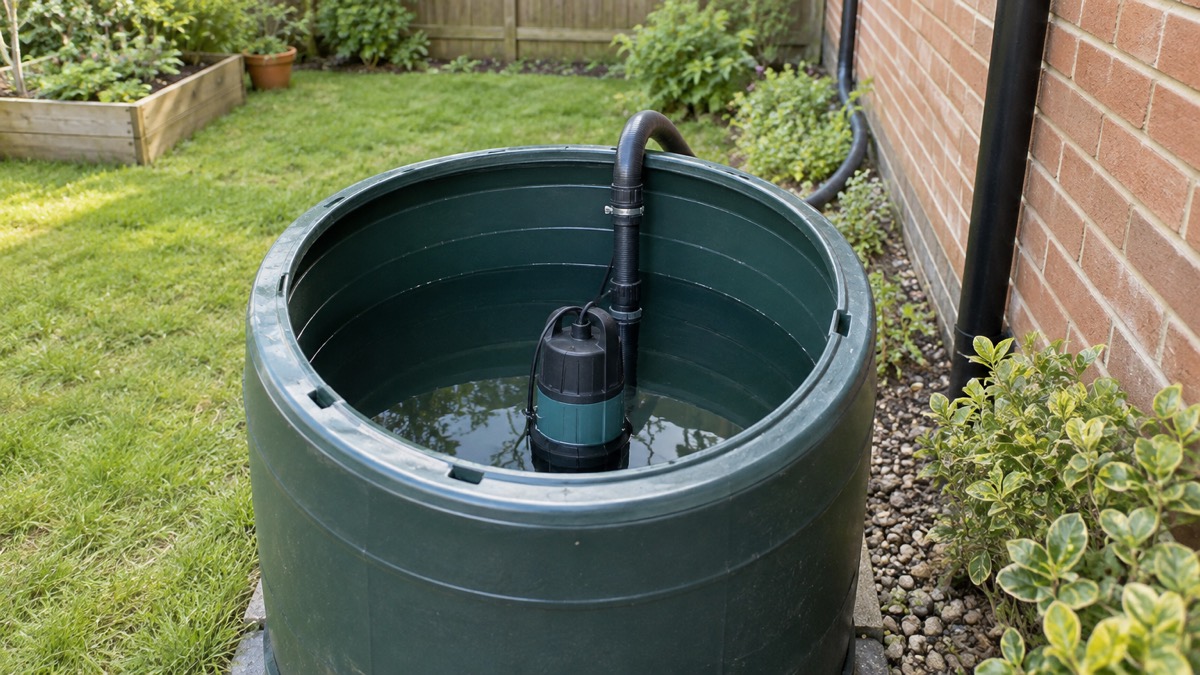
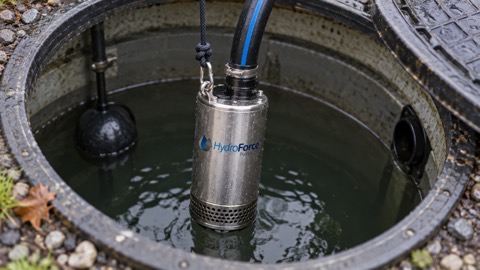
The Series 4 is a submersible pressure sensitive rainwater tank pump. The maker describes it as electronically controlled and centrifugal roto-dynamic, with no reciprocating parts2. In plain terms, it is a pump that lives underwater in your tank, spins an impeller to move water, and decides for itself when to run based on the pressure in the pipework.
That combination matters for preparedness in a few ways. Because it is submersible, it does not need a dry pump house or a shed beside the tank, and it is not exposed to frost the way a surface pump and its pipework can be. Because it is pressure sensitive, it does not need a float switch or a manual control to start: open a tap or start an appliance and it responds. And because it has no reciprocating parts, there is less inside it to wear out from sitting idle between uses, which is the normal life of a pump in a household that only draws on its tank in dry weather or during a disruption.
What it cannot do is make water. It moves what you have already collected from your roof into the tank. If you are still at the planning stage, the pages on how a rainwater system works and on sizing a tank set out how much you can expect to store. The pump is the last link in that chain, and its value in an emergency is entirely dependent on the tank above it being full when the emergency arrives.
Flow rate: up to 2500 litres per hour
The maker rates the Series 4 at 2500 litres per hour1. That is the headline figure, and it is worth putting beside the things a household actually does with water, because a pump's rated flow and the flow you get at the end of a hose are not the same thing.
| Use | Flow or capacity | Source |
|---|---|---|
| HydroForce Series 4, rated output | 2500 litres per hour | 1 |
| Power shower or old mixer shower | about 20 litres per minute | 3 |
| Sump pump capacity suggested for flood protection | 500 litres per minute | 4 |
The comparison with a shower is the useful one. At about 20 litres per minute, a power shower or an old mixer shower draws a high flow3. A pump rated at 2500 litres per hour is moving a comparable order of water, which tells you it is built to feed appliances and taps rather than to trickle into a watering can. For garden use that is ample: you will fill a can or a water butt far faster than you can carry it.
The flood protection figure is there to show the difference in scale between jobs. Independent guidance on protecting a property from flooding suggests a sump pump capacity of 500 litres per minute4, which is a different class of machine doing a different job. The Series 4 is a rainwater tank pump, not a flood pump, and it should not be pressed into that role. If flooding is your concern, the flooding guide covers what actually helps.
What affects the flow you get in practice is the pipework and the head: the height the pump has to lift water and the resistance of the pipe run both take their toll. Keep runs short and pipework clear, and the pump will perform closer to its rating.
Series 4 and HydroForce: how the names relate
Two names appear on this product and they are easy to confuse. HydroForce is the brand, and the Series 4 is the model within it. The pump is manufactured in the UK by Hydroforce Pumps Limited, which the maker describes as its sister company1. The same maker states that the pump is manufactured in the UK and designed for rainwater harvesting systems2.
So when you see "HydroForce Series 4", read it as: the fourth series of the HydroForce rainwater tank pump, made in Britain by the company that also supplies the wider rainwater harvesting range. The HydroForce brand page is the place to start if you want to see the range as a whole.
This matters for two practical reasons. First, a UK manufacturer means support and spares are domestic, which is worth knowing if the pump is part of your standby arrangements and you want it fixed rather than replaced. Second, the naming tells you which documentation applies: the Series 4 maker's instructions are the ones to follow for installation, and they are written for this pump rather than for a generic submersible.
Pressure-sensitive electronic control: how the pump responds
The pump is pressure sensitive, so it reacts automatically when water is needed5. The maker's description of a direct feed system explains the mechanism: the submersible pump pumps water straight from the underground tank to each connected appliance, activating automatically when a drop in pressure is detected5.
In a direct feed arrangement, the pump is what stands between the tank and your taps. Open a tap and the pressure in the line falls; the pump senses that and starts. Close it and the pressure rises again; the pump stops. There is no float switch to jam and no manual lever to remember. For a household that wants a system to work without attention, that is the appeal.
The trade-off is that the control depends on the electronics inside the pump, and on there being electricity to run them. It also depends on the pipework holding pressure: a leak on the delivery side will make the pump cycle repeatedly as it tries to maintain pressure. If you notice the pump running when nothing is open, look for a leak or a dripping tap before assuming the pump has failed.
If you are choosing between arrangements, the page on direct feed and gravity feed systems sets out where a pressure-sensitive pump fits and where a gravity system does the job without one.
Double dry-run protection and the built-in non-return valve
The maker lists two features that matter for a pump left in a tank between uses: a built-in non-return valve and double dry-run protection2.
The non-return valve keeps water from running back down the delivery pipe into the tank when the pump stops. Without one, the pump would have to re-prime the line every time it started, and the pressure control would be fighting a falling column of water. With it built in, the line stays charged and the pump picks up where it left off. That is a small thing that makes a large difference to how reliably a system starts after weeks of disuse.
Double dry-run protection is the safeguard against running with no water. It is there for the moment the tank level drops below the pump inlet, whether because of a dry spell, a leak, or someone leaving a hose running. It protects the pump; it does not make an empty tank acceptable. A pump that is repeatedly allowed to run dry will still suffer, and the protection is a backstop rather than a way of working.
The practical routine is simple. Check the tank level before a dry spell and after heavy use. Keep the inlet clear of silt and leaf debris, which is covered in the rainwater maintenance guide. And if the pump starts behaving oddly, stop and investigate rather than letting it cycle.
Mains electric: what a power cut means for the pump
The Series 4 is a mains electric submersible pump1. When the power goes, the pump stops. That is the single most important thing to understand about it as emergency equipment, because the moments when you most want stored water are often the moments when the electricity is least reliable.
Government guidance is explicit that mains water supply to your home could also be disrupted during and after power cuts6. So a power cut can take away both your mains supply and your pump at the same time. The causes are ordinary: strong winds and rain can bring down branches and trees onto power lines, or damage the lines themselves7; severe weather or major equipment damage can mean a longer power cut7; and power cuts can occur due to weather conditions, equipment failure or damage to the substation8. Planned cuts for routine maintenance, replacing equipment, moving cables, repairing faults, tree cutting, upgrading the network and connecting new properties are notified in advance9, which at least gives you warning.
Power cuts are also common during adverse weather events, and electrical items that have come into contact with water may break down10. That combination, a storm that floods the garden and cuts the power, is exactly when a full tank and a dead pump would be frustrating.
Planning around the outage
The official position on electric pumps is straightforward: you may need a back-up generator for an electric pump if there are power cuts12. That is a statement about pumps in general, and it applies here. If you go down that road, the safety rules are not optional. A generator must never be run indoors or in a garage attached to the house, because of carbon monoxide, and connecting a generator to your home's wiring needs a proper changeover arrangement installed by a competent electrician. The backup power guide and the power cuts guide cover both in detail.
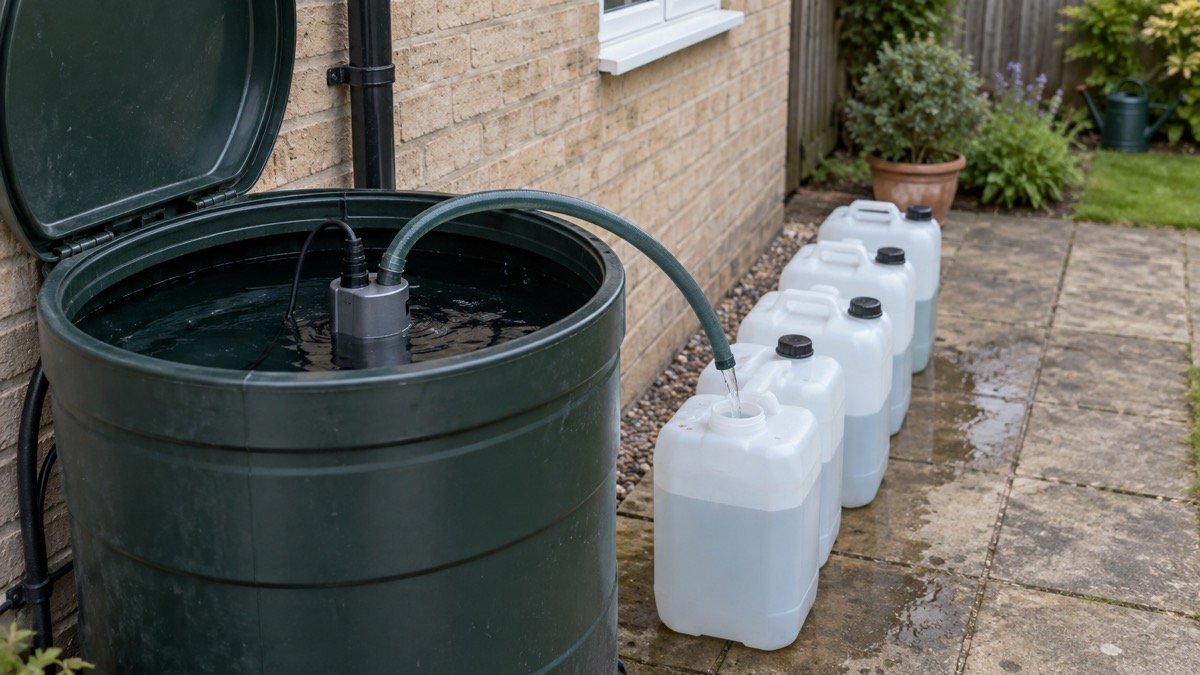
For most households the simpler answer is not to depend on the pump at all in an outage. Keep a store of water in containers you can lift and carry, enough for drinking, cooking and basic hygiene, and treat the pump as a convenience for the days when the power is on. The water in an emergency guide sets out how much to store and how to keep it fresh. Our page on rainwater systems in a power cut goes through what keeps working and what does not.
There is a regional wrinkle worth knowing. In Northern Ireland, the Water Mains Rehabilitation Project means customers may experience a reduction in water pressure or an interruption to supply whilst work is being carried out13. A stored tank and a working pump are useful then too, provided the power is on.
Keeping the pump ready between emergencies
A pump that is part of your standby arrangements needs to be exercised, not just installed. The maker's features, the non-return valve and the dry-run protection, are there to help it survive idle periods2, but they do not replace a periodic check.
- Run the pump briefly every few weeks by opening a connected tap, so you know it starts and stops as it should.
- Check the tank level and top up if needed before forecast dry weather.
- Clear leaves and silt from the tank inlet and any filter, following the rainwater maintenance guide.
- Look for drips on the delivery side; a leaking line makes a pressure-sensitive pump cycle.
- Before winter, work through the rainwater system winter checklist.
If the pump is part of a wider plan, the garden rainwater harvesting kit checklist lists the other pieces a working system needs, and the pumps for rainwater tanks page explains how submersible and surface types differ.
Support, spares and where to get help
The pump is manufactured in the UK by Hydroforce Pumps Limited1, so support comes from a domestic company rather than an overseas distributor. Keep the maker's installation and operating instructions with the pump's paperwork, note the model and series, and record when it was installed. If you need to make a claim or order a part, those details are what you will be asked for.
For faults, the safety advice above applies: switch off the electrical supply and have the work done by a registered electrician11. Do not open the pump or attempt a repair yourself.
If a power cut or a water interruption is affecting your household, the power cuts guide and the water guide set out what to do and who to contact. Households that depend on a water supply for medical reasons should ask to be added to their supplier's Priority Services Register; the extra help guide explains how. For the wider picture of preparing a home for disruption, start with getting started and the self-reliance section.
Sources (13)
- Rain Director product page, Rainwater Harvesting Ltd, 2025-11-27
- F-Line 15000 Litre Garden System, Rainwater Harvesting Ltd, 2026-07-07
- Reducing water use, CAT, 2025-06-27
- Flood Protection Guide, Scottish Flood Forum, 2023-02
- Direct feed or gravity feed, Rainwater Harvesting Ltd, 2026-04-10
- Power cuts, Cabinet Office, 2026-10-21
- Winter hub, National Grid, 2026-10-08
- Electricity substations, Electricity North West, 2026-10-25
- Planned power cuts, SSEN, 2026-10-25
- Flooding and food safety, Food Standards Scotland, 2026-10-25
- Garden safety, Electrical Safety First, 2026-10-25
- Prepare your property for flooding, GOV.UK, 2009-10-01
- Water Mains Rehabilitation Project, NI Water, 2026-10-28
 Enduramaxx Rainwater Filter Kit
 GARDENA Tank Pump 4000/1
 HydroForce Series 3 Clean Water Pump
 Multitank Rainwater Wall Tank
 Rain Activ Dual Garden System
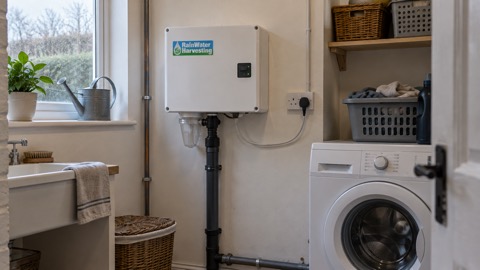 Rainwater Harvesting Rain Backup
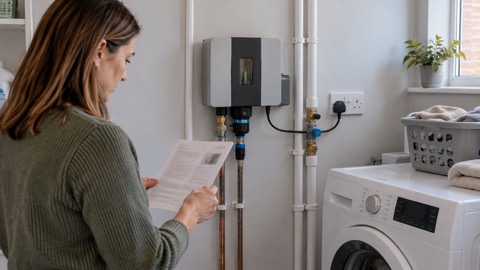 Rain Director
 Rainwater Harvesting Header Tank