HydroForce is a UK maker of pumps for rainwater harvesting and clean water movement, and its kit earns a place in a household emergency plan for two reasons: water you can move, and water you can store. The pump most households will meet is the HydroForce Clean Water Submersible Series 3, an electronically controlled, pressure sensitive submersible pump with no reciprocating parts, which delivers up to 3.5 bar at the outlet and a maximum flow rate of 2500L/hour1. The rainwater side of the range is the HydroForce Rainwater Harvesting Clean Water Pump Series 4, a submersible pressure sensitive rainwater tank pump, manufactured in the UK and designed for rainwater harvesting systems2.
Neither pump is a flood barrier. What they do is move water: from a tank to a garden or a tap, or from a sump or a low corner of a property out to a drain. Property flood resilience, the official term for measures that reduce flood risk to a building, includes pump systems for groundwater flood risks alongside barriers on windows and doors, non-return valves and automatically closing airbricks3. In Northern Ireland, the Homeowner Flood Protection Grant can help owners install physical barriers and equipment such as door barriers, air brick covers, non-return drainage outlets and waterproofing walls4.
What HydroForce makes for UK households
The range is narrow and practical. HydroForce makes submersible pumps for moving clean water, chiefly for rainwater harvesting systems and for shifting water that has collected where it should not be. The Series 4 is described by the maker as a submersible pressure sensitive rainwater tank pump, electronically controlled, centrifugal roto-dynamic with no reciprocating parts, with a built-in non-return valve and double dry-run protection2. The Series 3 is the clean water submersible pump, electronically controlled and pressure sensitive, with logic processors in its circuit board that prevent other pump anomalies and permit factory programming of reset timings1.
For a household getting ready for emergencies, that means two jobs. The first is water supply: a rainwater tank with a pump on it gives you a store of water you can move without carrying buckets, which matters in a drought or when mains supply is interrupted. The second is water removal: a submersible pump that can sit in a sump or a tank and start automatically when it registers a pressure drop is the kind of kit that keeps working while you are dealing with everything else1.
What HydroForce does not make, on the evidence here, is barriers, sandbags, generators or batteries. If your flood plan needs door barriers or air brick covers, those are separate products, and in Northern Ireland grant help may be available for them4. For the wider picture of what a household should hold, see Emergency Kit: What a UK Household Should Keep Ready and Water in an Emergency: A Household Guide.
HydroForce kit types and what each one does
Two kit types carry the name in this range, and they suit different households.
| Kit type | What it is | What it does for a household | Suits |
|---|---|---|---|
| Clean Water Submersible Series 3 Pump | Electronically controlled, pressure sensitive, submersible, centrifugal roto-dynamic pump with no reciprocating parts1 | Moves clean water at up to 3.5 bar and 2500L/hour, starting automatically when it registers a pressure drop1 | Households with a tank, sump or low point who want water moved without lifting it |
| Rainwater Harvesting Clean Water Pump Series 4 | Submersible pressure sensitive rainwater tank pump, electronically controlled, centrifugal roto-dynamic with no reciprocating parts2 | Draws from a rainwater tank, with a built-in non-return valve and double dry-run protection2 | Households with a rainwater harvesting system who want a stored supply they can use |
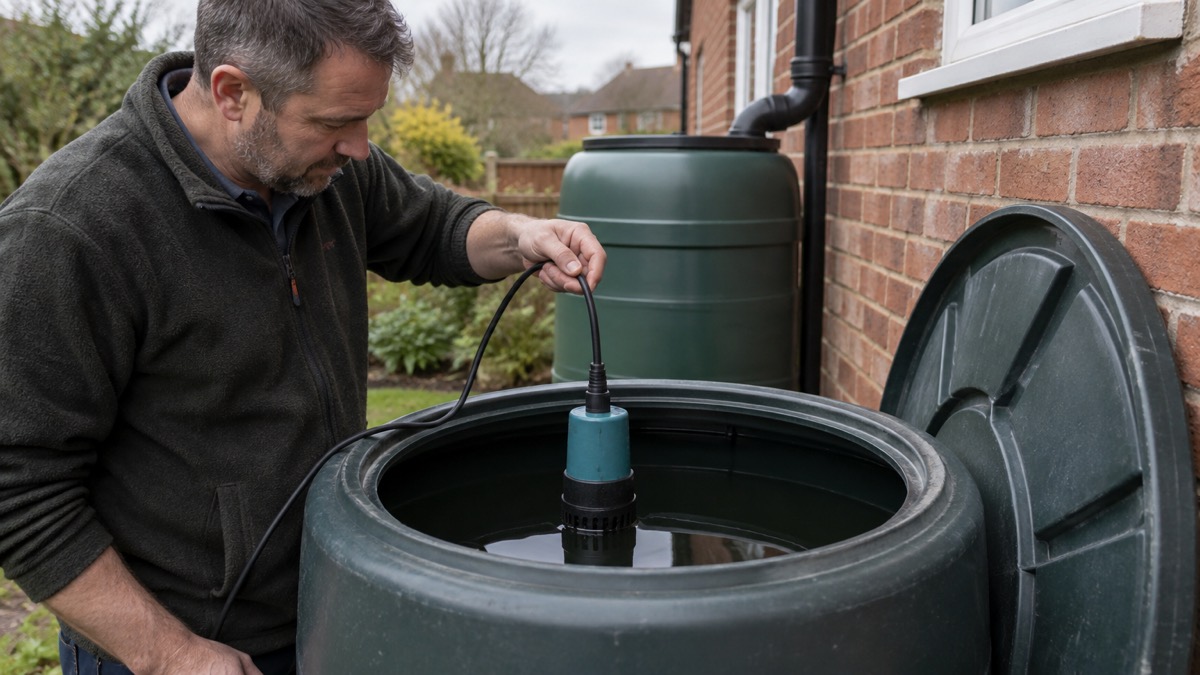
The Series 3 can be installed two ways: suitable for total immersion in tank water, or externally connected to the tank above ground1. That choice matters in an emergency, because a pump you can reach without opening a tank is easier to check and to isolate. The Series 4 is built around the rainwater tank itself, and its double dry-run protection is the feature to note if you plan to run a tank low during a dry spell2.
For the full specification and fitting detail on the rainwater model, see HydroForce Series 4 Rainwater Pump. For the wider subject of stored and off-grid water, see Self-Reliance at Home: Rainwater, Off-Grid Power and Living Without Mains.
Specifications to check before relying on HydroForce kit
The figures that decide whether a pump suits your setup are lift, flow, pressure, connections and cable. Get these wrong and the pump will run but not do the job.
| Specification | Series 3 figure | Why it matters to a household |
|---|---|---|
| Outlet pressure | 3.5 bar nominal at outlet1 | Enough pressure to push water through a hose or pipe run rather than dribble |
| Maximum flow rate | 2500L/hour1 | How quickly a tank or sump is emptied |
| Maximum head | 35 metres nominal1 | The height the pump can lift water; a long vertical run eats into it |
| Maximum suction | 3 metres1 | How deep below the pump the water can be drawn from |
| Inlet port | 1 inch (25mm) female BSP to the non-removable filter1 | Decides the fittings you need on the suction side |
| Output port | 1 inch (25mm) female BSP with push-fit connector for 1 inch (25mm) MDPE pipe; 1 1/4 inch (32mm) connector option by special order1 | Decides the pipe you need on the delivery side |
| Cable | 10m H07RN-F connection cable1 | How far the pump can sit from the power source |
| Dimensions | L 565 W 185 H 260 mm1 | Whether it fits through the opening of your tank or sump |
Two practical points follow. First, the pump does not include the inline cartridge filter: as of 1 November 2013 the Series 3 pump does not include it, and an optional cartridge filter and secure, impact resistant packaging are available1. Second, the inlet cartridge filter, inlet strainer and output pipe connector are factory-fitted and the seals tested to ensure proper running of the pump1. Check what your unit came with before you store it away.
Using HydroForce kit safely in an emergency
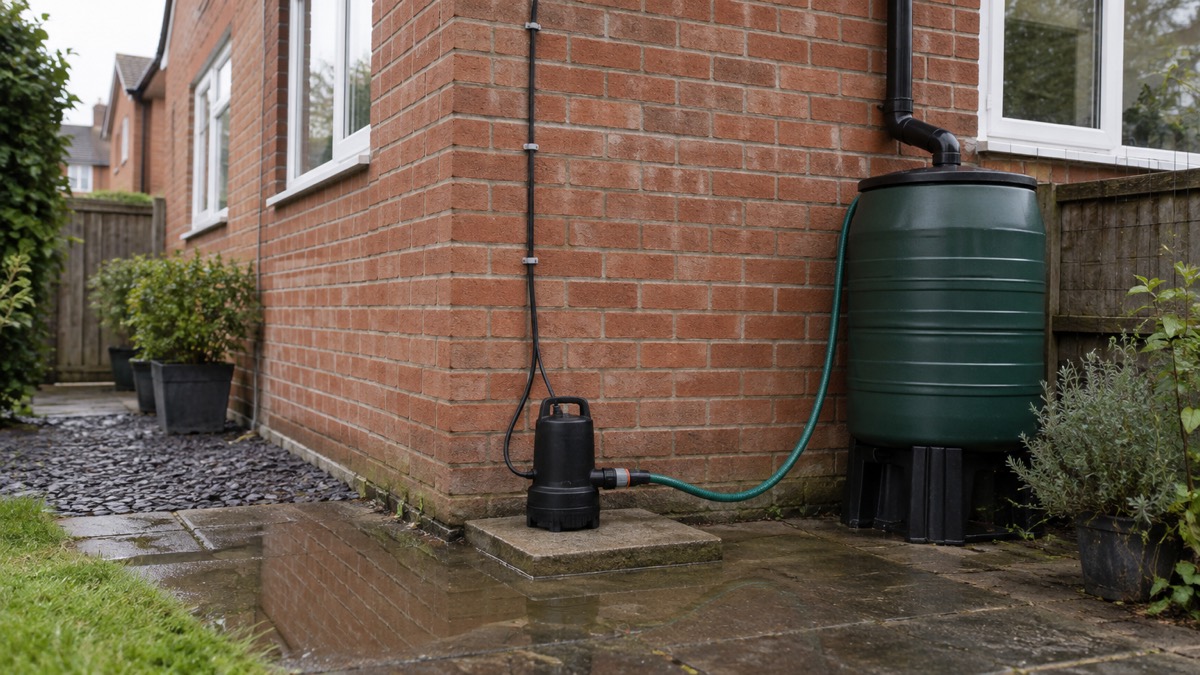
A pump is electrical equipment that operates in or beside water, so the safety rules are the ones that apply to any electrical appliance in a wet place. Use electrical outlets responsibly, avoiding overloading and using surge protectors when necessary7. If an appliance has been in flood water, turn off the electricity at the fuse box, allow appliances to dry out and have a qualified professional check them before turning them on8. That applies to a pump that has been submerged in dirty flood water as much as to any other appliance.
Keep the pump's cable and connections out of standing water where you can, and do not run the pump from an extension lead that lies in a puddle. The Series 3 uses 800 watts at 220-240v AC delivered by a 5 metre cable1.
If you are pumping out a flooded area, remember that the water has to go somewhere lawful and safe, and that pumping a basement or a low room while flood water is still high outside can simply let water back in. The fire and rescue service advice for water emergencies is to know what to do and how to spot and keep away from dangers11. Communicate your position and situation clearly when calling for emergency assistance, providing accurate details to aid rescue efforts10.
Charging, fuelling and powering HydroForce kit
HydroForce pumps in this range are mains-powered submersible pumps, not battery kit, so the question is not charging but how you will power them when the mains is off. The Series 3 draws its power through its 10m H07RN-F connection cable1. If you plan to run it from a backup source during a power cut, the load has to be within what that source can supply, and the connection has to be safe.
For context on small loads, chargers for battery operated devices use up to 75 watts12. A pump is a different order of load, so do not assume a small portable power station sized for phone charging will run it. Check the pump's requirements against your backup power before an emergency, not during one. For the general subject, see Backup Power at Home: A Household Guide and Power Cuts: A Household Guide.
If your plan involves a generator to run pumps or other kit, treat it as an outdoor appliance and keep it away from living spaces. Store fuel only as your plan allows and never indoors.
Storing HydroForce kit so it is ready when needed
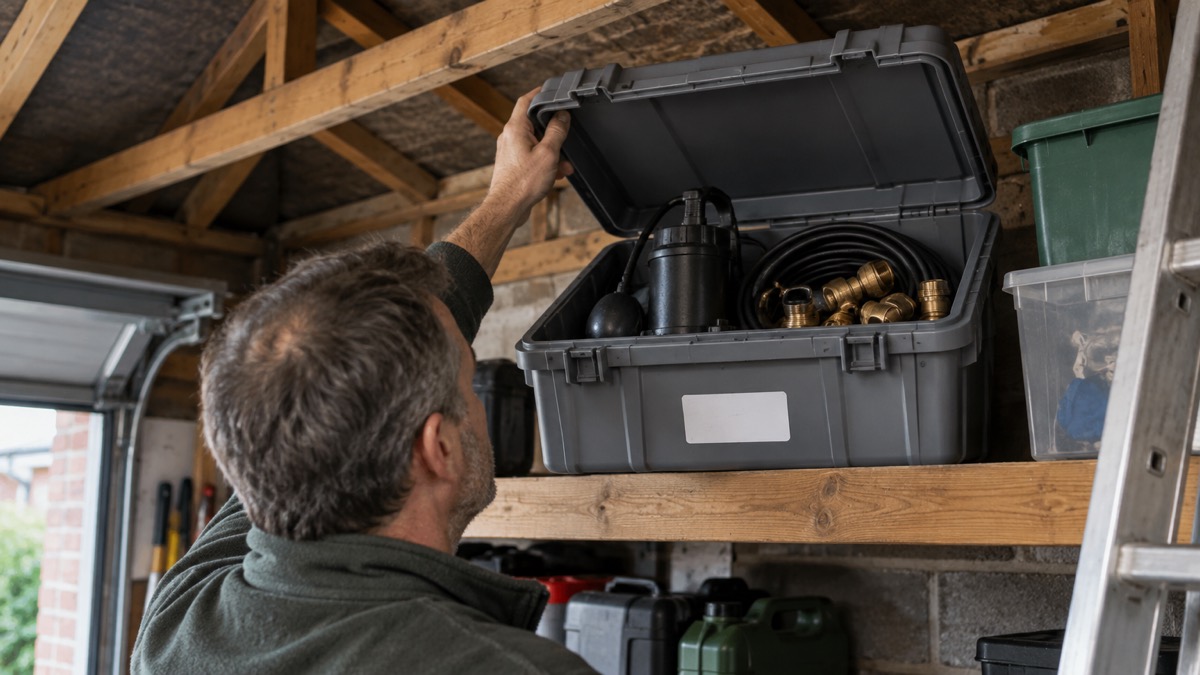
A pump that is buried under boxes in a shed is not part of an emergency plan. Store your flood kit in a waterproof box and put it somewhere high up13. Keep the kit together in an easily accessible area, and make sure as many people as possible know where to find it14. Consider packing a grab bag of essentials in advance, including any medication you need, a first aid kit and important documents, as well as items such as a torch, bottled water, warm waterproof clothing and baby care items, stored somewhere you can easily get to15.
For the pump specifically, store it clean, dry and with its fittings bagged together. If you keep a home first aid kit alongside, buy a ready-made one or put together your own in a clean, waterproof box16.
- Keep the pump, its cable, its fittings and its instructions in one labelled box.
- Store the box high up and in a waterproof container13.
- Keep the kit together in an easily accessible area, and make sure as many people as possible know where to find it14.
- Store water for drinking and sanitation as part of the kit16.
- Check the kit at the start of each flood season and again before winter.
Cleaning, servicing and replacing parts
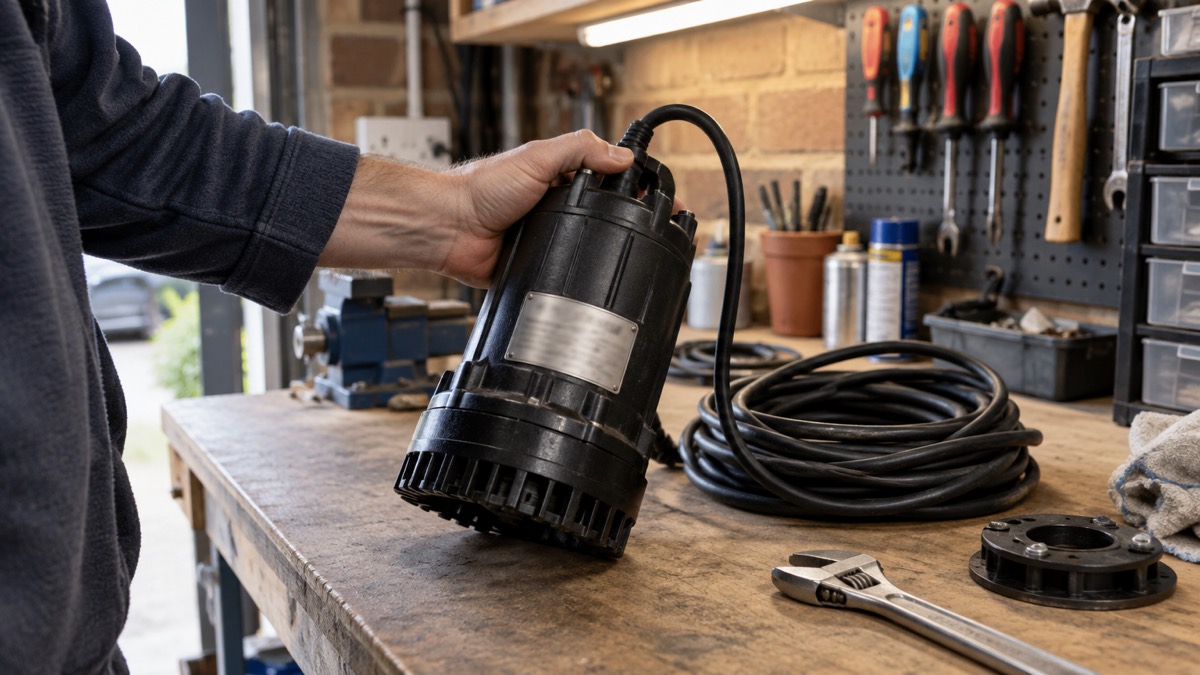
The Series 3 is a roto-dynamic pump with no reciprocating parts, which the maker presents as a simpler machine than a piston pump1. Its logic processors in the circuit board prevent other pump anomalies and permit factory programming of reset timings1. In practice, that means less to service than a mechanical pump, but the parts that touch water still need attention: the non-removable inlet filter, the optional cartridge filter and the seals on the factory-fitted fittings1.
After flood use, the drying advice applies: allow appliances to dry out and have a qualified professional check them before turning them on8. Help the drying process in a flooded building by using fans, air conditioning units and dehumidifiers17. Do not put a wet pump back into service on the assumption that it will be fine.
For spare parts, the maker lists the optional inlet cartridge filter, inlet strainer and output pipe connector, factory-fitted and with the seals tested1. Ask the maker about current availability for your model. As a general resilience habit, make a list of backup suppliers in case your existing suppliers face supply issues18.
HydroForce support and warranty
The Series 3 is guaranteed for 2 years1. Keep your purchase date and serial number, because warranty claims and registration both depend on them. The maker's product pages are the route to technical support and warranty questions for a specific model.
If your query is about a flood rather than the pump, other help exists. The National Flood Forum runs a helpline on 01299 403055, and water company customer services and emergency helplines can be reached for supply problems19. For households that need extra support, see Extra Help in an Emergency: Older, Disabled and Medically Dependent Households.
HydroForce safety notices and recalls
There is no HydroForce recall in the official notices available here, but the habit of checking matters more than any single notice. Use Electrical Safety First's online product checker to see if any of your appliances have been recalled21, and check the list of recalled items on the Electrical Safety First website, which explains what to do with your recalled appliance18. For white goods, check for recalls or safety notices on the Electrical Safety First website6. For heaters, ensure your heater is not subject to a product alert or recall by checking the Office for Product Safety and Standards website21.
Recent recalls show how identification works. A recall of Tucson pumps, notification number 2510-0040, states that the affected pumps can be identified by the serial number (S/N) on the label affixed to the pump22. A safety report on 20,000pcs Runfeng Water Beads, notification number 2607-0041, lists a barcode of X00230H8WL23. Boiler recalls are publicised locally too: Humberside Fire and Rescue Service alerted residents to a product recall affecting certain Ideal Heating Logic 2 Combi and System boilers, with advice to check against the official recall notice on GOV.UK24.
Register your appliance so manufacturers can contact you about faults or recalls6. For lithium-ion battery products, register with the manufacturer after buying, because makers use that information to contact you with safety advice or for product recalls, and if you choose not to register, recalls can be checked via Electrical Safety First or the UK government website5. You will need the brand name, model, serial number and purchase date, and the Register My Appliance website makes it easy to register all of your electrical products18.
Sources (24)
- HydroForce Series 3 specification, HydroForce Pumps, 2026-11-02
- Rain Activ Dual Garden System, Rainwater Harvesting, 2026-07-01
- Property flood resilience questions and answers, Argyll and Bute Council, 2026
- How to protect your home from flooding, nidirect, 2025-12-18
- Lithium-ion batteries, Scottish Fire and Rescue Service, 2025-11-27
- Register your appliance, Cornwall Council, 2026-10-29
- Fire safety advice for residents in high rise buildings, Warwickshire County Council, 2026-10-29
- Preparing yourself for emergencies | London City Hall, London City Hall (london.gov.uk)
- Water safety, Devon and Somerset Fire and Rescue Service, 2026
- Water safety, Warwickshire County Council, 2026-10-28
- Types of emergencies - Surrey County Council, Surrey County Council
- Ratings of electrical appliances, Electrical Safety First, 2026-10-25
- SEPA Flood kit checklist and label, SEPA
- Create a flood pack, Bradford Council, 2026-10-29
- Get help and advice in an emergency, Lincolnshire County Council, 2026-10-29
- What should I keep in my first aid kit?, NHS, 2026-10-25
- Flooding advice, Scottish Borders Council, 2026-10-29
- Advice and support: drought, Westminster City Council, 2026-08-06
- Flooding useful links and numbers, Cornwall Council, 2026-10-29
- Flooding FAQs, Scottish Environment Protection Agency, 2026-10-29
- Stay fire safe, Greater Manchester Fire and Rescue Service, 2026-10-29
- Product recall: Tucson 5m, 6m and 8m pumps, Office for Product Safety and Standards, 2025-10-08
- Product safety report: 20,000pcs Runfeng Water Beads, Office for Product Safety and Standards, 2026-10-26
- Check your boiler: important product recall, Molescroft Parish Council, 2025-12-02
 HydroForce Series 4 Rainwater Pump