
Rainwater Harvesting Ltd is a Peterborough based maker and supplier of rainwater harvesting equipment for UK households. It sells complete rainwater systems, large storage tanks, mains water backup units and pumps, and it runs a technical help desk for clients, builders and plumbers before, during and after an install1. For a household preparing for disruption, the appeal is straightforward: a stored supply of water for the garden, laundry, toilet flushing and cleaning, and a pump and backup arrangement that keeps the system useful when mains pressure or supply is interrupted2.
The practical points to know before you order are about delivery and support. Orders ship from the Peterborough warehouse, and delivery is usually within 5 to 7 working days of ordering, with systems normally on a 7 to 10 day delivery from receipt of order1. Delivery is kerbside and offloading is the customer's responsibility, so a tank arriving on a pallet needs people and access arranged in advance1. The company's contact details are printed in its Rain Director manual: phone 01733 405111, email info@rainwaterharvesting.co.uk and the website www.rainwaterharvesting.co.uk3.
Once a system is in, it needs the same care as any other piece of household equipment that you are relying on. Official guidance for private water supplies says to follow the manufacturer's instructions, keep a record of all maintenance carried out, and increase the frequency of maintenance during prolonged periods of heavy rainfall4. That is the routine that keeps a rainwater system ready for the week you actually need it.
What Rainwater Harvesting Ltd makes for UK households
The company's range covers the parts of a domestic rainwater system a household would recognise: storage tanks, a gravity feed system, a mains water backup unit, filters and a pump. Its product pages describe a domestic rainwater harvesting system as suitable for laundry, watering gardens, toilet flushing and cleaning2. That is the everyday case, and it is also the emergency case: those are the uses that keep a household functioning when a mains interruption or a hosepipe ban limits what comes out of the tap.
Two standards matter when you are choosing equipment. The British Standard for rainwater harvesting, BS8515, provides criteria for rainwater harvesting equipment manufactured in the UK5. Separately, official guidance for private water supplies says approved materials, WRAS approved or permitted under regulation 5, should be used to prevent contamination of rainwater during runoff and collection6. When you are comparing systems, ask whether the components meet those points; it is the difference between a garden water butt and a system you can rely on for household uses.
Rainwater harvesting also has a wider role in managing the water that arrives too fast. Wessex Water lists installing a water butt and improving your home's drainage among the ways households can manage rainwater runoff7. Maidstone Borough Council's rainwater harvesting campaign found that the approach reduces peak flow pressure on drainage systems, lowers the risk of surface water damage, supports water conservation during summer, reduces demand on mains supply and improves garden resilience during hosepipe bans8. A household that stores rain is doing a small amount of flood resilience work at the same time as building a water reserve.
For the wider picture of living with less mains water, see Self-Reliance at Home: Rainwater, Off-Grid Power and Living Without Mains and the Water in an Emergency guide.
Rainwater harvesting systems stocked at the Peterborough warehouse
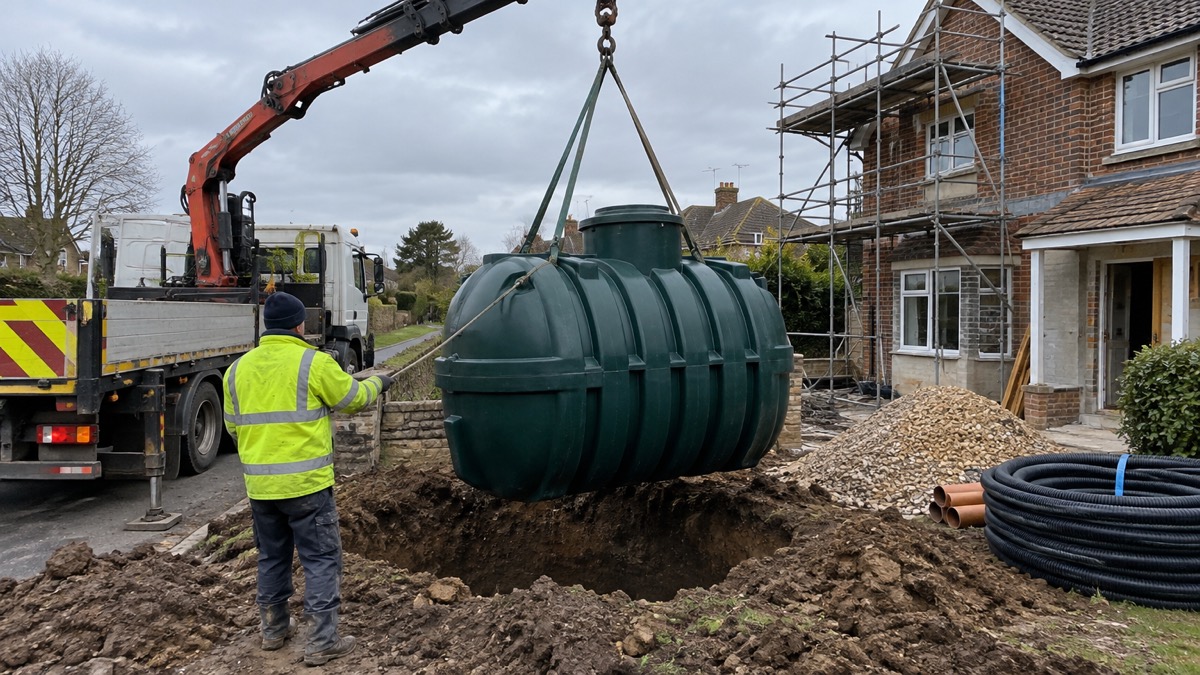
The company's larger tanks are made in the UK and come with a long guarantee. Its 90,000 Litre Rainwater Harvesting Tank is described as UK manufactured and guaranteed for 10 years, and the 100,000 Litre Rainwater Harvesting Tank is likewise UK manufactured with a 10-year guarantee2. Tanks of that size suit a household or small premises with the space and the downpipe run to fill them, and the guarantee is the figure to note when you are weighing up a long-term installation.
It is held in stock at the Peterborough warehouse, with mainland UK delivery included and delivery usually within 5 to 7 working days of ordering, though systems normally run on a 7 to 10 day delivery from receipt of order1. Gravity feed means the system does not depend on a pump to move water to the outlet, which is worth thinking about for a household that wants a supply that keeps working during a power cut.
| What it is | Key facts | What it means for a household |
|---|---|---|
| 90,000 litre rainwater tank | UK manufactured, 10-year guarantee2 | Large stored reserve for garden, laundry, flushing and cleaning |
| 100,000 litre rainwater tank | UK manufactured, 10-year guarantee2 | As above, for a larger roof catchment or premises |
Mains water backup systems and pumps made in-house
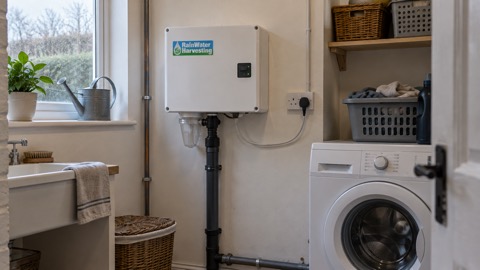
The Rain Director is the company's mains water backup control unit, and its installation manual is the document that carries the contact details and the technical support line3. The idea behind a mains backup unit is that the rainwater system has a fallback: when stored rainwater runs low, the unit can top the system up from the mains so that supply does not simply stop. For a household, that is the difference between a system that fails in a dry spell and one that keeps working.
The company also makes pumps. Its Hydroforce Pump Series 4 is described as manufactured in the UK and designed for rainwater harvesting systems1. A pump is what turns stored water into usable pressure at a tap, a washing machine or a toilet cistern, so it is the component that decides whether a system is convenient or merely a store of water in a tank.
Think about what happens in a power cut. A pumped system depends on electricity, and a gravity feed system does not. If your household plan assumes water will still flow during an outage, either choose a gravity-fed arrangement or plan for how the pump will be powered. The Backup Power at Home guide covers what a household can do about that, and Power Cuts sets out what to expect when the supply goes.
Self-cleaning filters on the company's systems
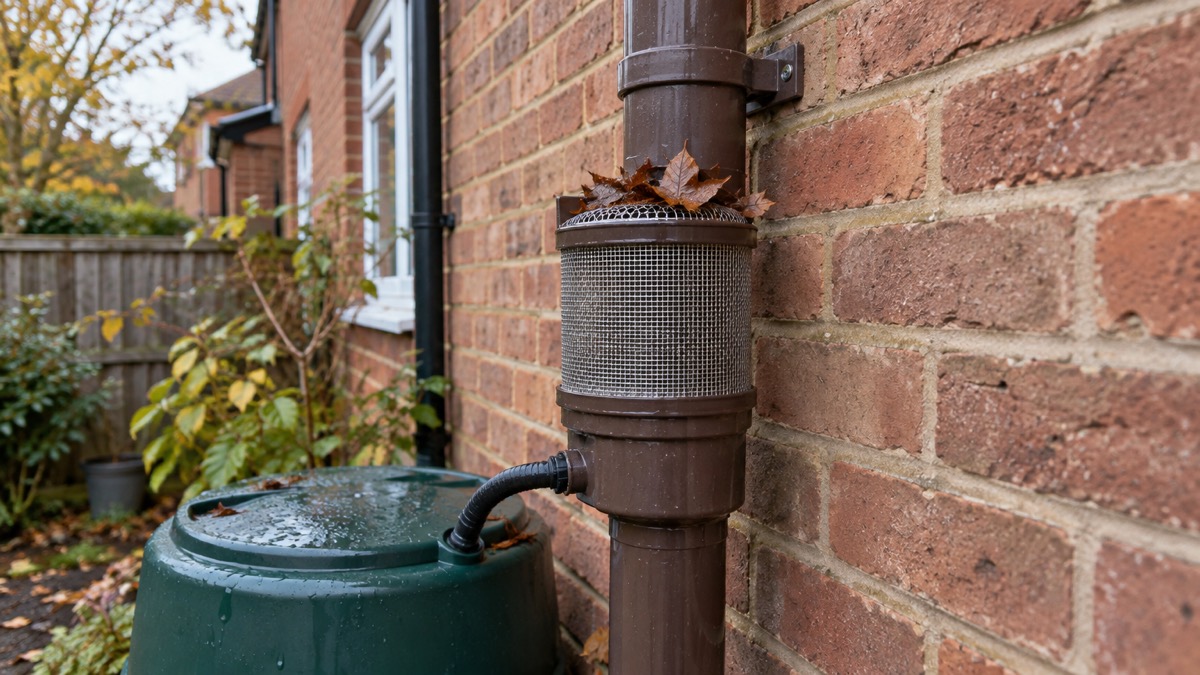
Filters are the part of a rainwater system that decides how clean the stored water is, and the company fits self-cleaning filters to its systems. The principle is that the filter sheds the debris it catches rather than holding it, so that leaves and grit are diverted away from the tank instead of sinking to the bottom and rotting there. That reduces how often the tank needs emptying and keeps the water in better condition between cleans.
The official guidance on materials is the point to hold on to. Approved materials, WRAS approved or permitted under regulation 5, should be used to prevent contamination of rainwater during runoff and collection6. When a filter or any other component is replaced, check that the replacement meets that standard rather than fitting whatever is to hand.
Filters also need attention after severe weather. Official guidance for private water supplies after floods or storms says to remove any screens, filters, flow regulators and aerators, clean reusable parts with hot water and detergent suitable for food contact items, apply a mild disinfectant suitable for food contact or drinking water disinfection, rinse, reassemble and run the tap for a few minutes before use10. That is the routine to follow if floodwater or storm debris has reached the system.
Delivery: usually 5 to 7 working days, up to 10 for systems
Delivery timing depends on what you order. The company says delivery is usually within 5 to 7 working days of ordering, and that systems normally operate on a 7 to 10 day delivery from receipt of order1. Confirm the date when you order rather than planning around one figure.
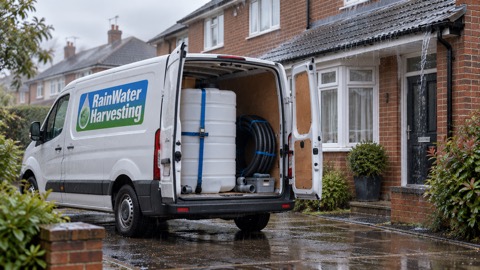
Plan the delivery as part of the installation, not as an afterthought. A large tank is not a parcel. Before the lorry is booked, work out where it will be set down, whether a vehicle can reach that point, and who will be there to move it. If you are having work done by a builder or plumber, tell them the delivery date so that labour is on site when the tank arrives.
| Question to settle before ordering | Why it matters |
|---|---|
| Where will the tank be set down? | Delivery is kerbside and offloading is your responsibility1 |
| Can a delivery vehicle reach that point? | Access decides whether the tank can be left at all |
| Who will move it? | A full tank is heavy; empty tanks still need people and equipment |
| When will the installer be on site? | Delivery and installation need to line up |
Kerbside delivery: offloading is your responsibility
The company is explicit that delivery is kerbside and that offloading is the responsibility of the customer1. That is a normal arrangement for bulky goods, and it is the point where households most often get caught out. The driver will leave the tank at the kerb; getting it from there to its resting place is yours to arrange.
Treat this as a planning task with a date attached. Confirm the access, have the people and any lifting equipment ready, and do not assume the driver will help move it further than the kerbside. If you are not able to move a large tank yourself, arrange for someone who can before you order.
The same principle of personal responsibility runs through emergency planning more widely. The Scottish Government's flooding guidance states that it is your responsibility to manage your own flood risk and protect yourself, your family, property or business11. Carmarthenshire Council's emergency planning advice makes the same point in Wales12. Knowing what is yours to do, and doing it before the day, is the whole of preparedness in one sentence.
Technical help desk before, during and after the install
The company says it provides a full time, fully trained technical help desk to answer any questions that the client, builders or plumbers have before, during and after the install1. The Rain Director manual gives the number as 01733 405 111, option 23. That is a resource to use early: a question about siting, pipe runs or the backup unit is much easier to answer before the trench is dug than after.
Builders and plumbers can use the same line. If you are having a system fitted, pass the number on and ask them to call if anything about the installation is unclear. The company's own framing is that the desk is there for the trades as well as the householder1.
Keep the details where you can find them in a hurry. A household emergency folder, with the water company's number, the plumber's number and the maker's support line, saves time when something goes wrong. NI Water's advice to keep a plumber's contact handy and to find local professionals through Watersafe is a sensible addition to that list13.
Maintenance: a full system clean after 10 years
A rainwater system is not fit and forget. Official guidance for private water supplies says your water treatment system needs regular maintenance, that you should follow the manufacturer's instructions, that maintenance frequency will need to be increased during prolonged periods of heavy rainfall, and that you should keep a record of all maintenance carried out on the system4. Those four points are the whole maintenance plan, and they apply to a rainwater system used for household purposes.
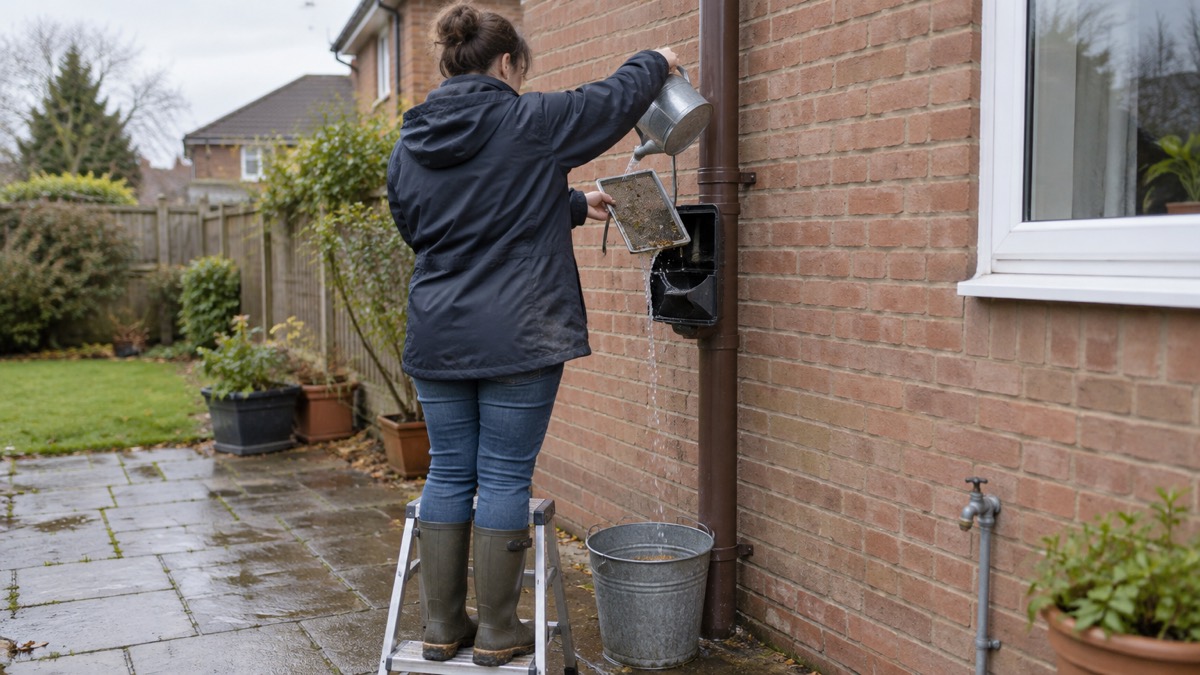
Occasional checks catch most problems. A documented approach used for a private supply involved weekly operating checks by a nominated person living on site, with weekly visual checks and recording of the UV system and pre-filter to assess whether parts needed replacement15. You do not need to copy the frequency, but the habit is worth borrowing: one person checks, writes it down, and anything unusual gets reported.
The company's own guidance is that a full system clean is due after 10 years. Put that in the diary when the system goes in, and use the years in between to keep records of what has been checked and when. If the system has been through a flood or a storm, follow the post flood cleaning routine for screens, filters, flow regulators and aerators before you use it again10.
Where to get help and how to keep the system ready
The company's support is the first port of call for anything specific to its kit: sales on 01733 405111, option 1, technical support on 01733 405 111, option 2, and email at info@rainwaterharvesting.co.uk1. Beyond that, a household should know who to call when the problem is the mains rather than the system. Water companies publish contact numbers and incident information; Northumbrian Water, for instance, asks customers to log in to their online account and add a mobile number so that text alerts and emails reach them16.
For the wider household plan, the Getting Started guide sets out how to build one, and the Emergency Kit guide covers what to keep ready. If your household includes someone older or with a medical dependency, the Extra Help in an Emergency guide explains the support available.
Sources (16)
- F-Line 7500 Litre Gravity Feed System, Rainwater Harvesting Ltd, 2026-07-07
- Rainwater tanks, Enduramaxx, 2026-10-29
- Rain Director installation manual, Rainwater Harvesting Ltd, 2019-03-15
- Private water supplies, Scottish Borders Council, 2026-10-29
- Saving water FAQs, Cambridge Water, 2026-10-28
- Protecting your private water supply, Drinking Water Inspectorate, 2026-10-28
- Causes of sewer flooding, Wessex Water, 2026-10-28
- Borough rainwater harvesting campaign, Local Government Association, 2026-03-19
- Weather and health, Public Health Wales, 2026-07-16
- Private water supplies after floods or storms, Argyll and Bute Council, 2026
- Flooding, Ready Scotland, 2026-03-24
- Get prepared, Carmarthenshire Council, 2026-03-24
- Time for some pipe prep with the cold weather coming, NI Water, 2025-11-18
- Community Resilience Plan, Wiltshire and Swindon Prepared, 2025
- Water safety plan approach to improving the safety of a private supply, Drinking Water Inspectorate, 2013
- How we manage incidents, Northumbrian Water, 2026-10-28
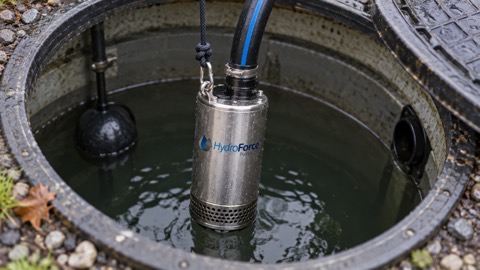 HydroForce Series 3 Clean Water Pump
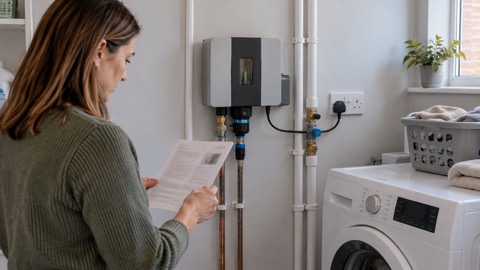 Rain Director
 Smart Header Tank
 Rain Backup in a Box