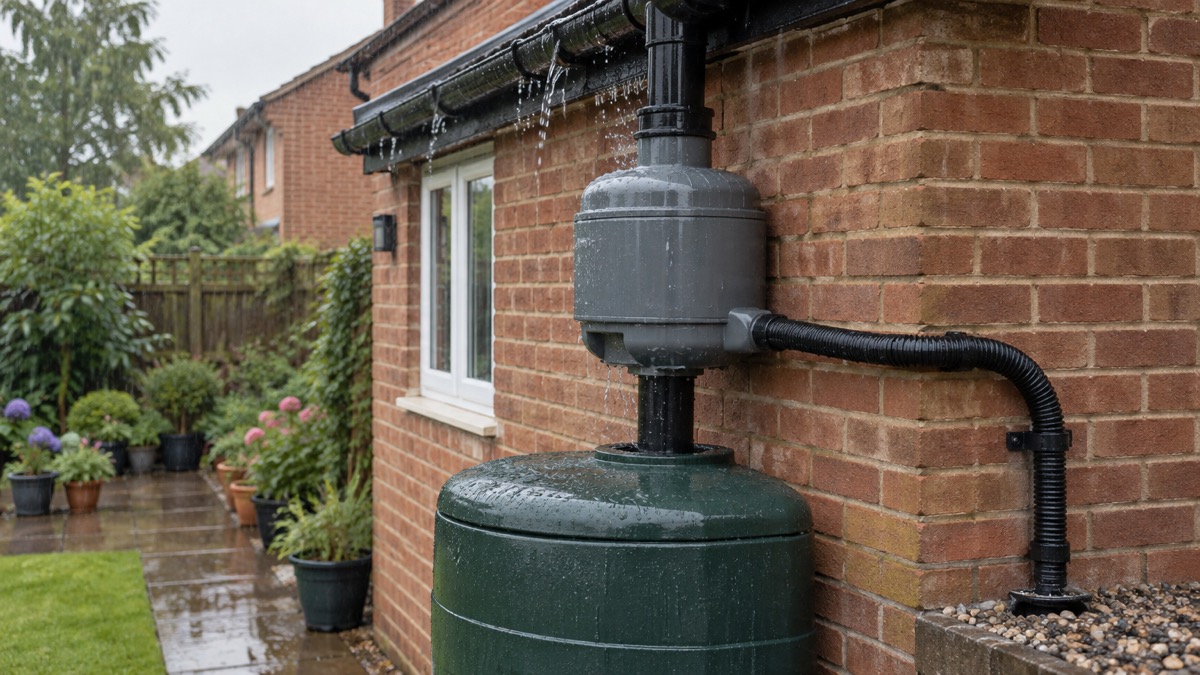
A rainwater filter kit sits between your roof and your water store. It takes the rain coming off the gutters, strains out leaves, moss and grit, and sends the cleaner water on into the tank, while the debris is carried away to a drain or soakaway. For a household building a water reserve against a dry summer, a supply interruption or a power cut, that filter is what keeps the stored water worth having: without it, sediment builds up in the tank and the water degrades1.
The Enduramaxx range is sold in versions sized by roof area. Kit A is designed for roof sizes up to 200m2, Kit B for up to 450m2, and Kit C for up to a maximum of 800 sq metres per kit1. The 450m2 kit is designed for roof sizes up to a maximum of 450 sq metres per kit3. Filter unit weights run from 2.2 kg for Kit A, through 6.2 kg for Kit B and the 450m2 kit, to 16 kg for Kit C1.
Two things catch people out. The wall bracket is not included with Kit B or the 450m2 kit, so it has to be planned for before fitting1. And Kit C is designed for installation in a pilot shaft or against the wall in frost-protected areas, which is a decision to make before the unit arrives rather than after1.
What a rainwater filter kit does for a household
A rainwater harvesting system has five basic parts: a catchment area, gutters and downspouts, a filter, a storage tank, and a distribution system5. The filter is the part that decides how clean everything downstream stays. Rainwater filters are important because they filter debris from the rainwater as it flows from the collection roof before it enters the storage tank6. Left unfiltered, that debris settles as sediment in the tank, and sediment is what turns a stored reserve into a cleaning job.
The Enduramaxx kits do two jobs at once. They prevent moss and leaves from going into your rainwater harvesting tank, and they soften the water as it passes through the filter7. Softening here means the water arrives at the tank in a gentler flow rather than a hard jet that stirs up what is already stored.
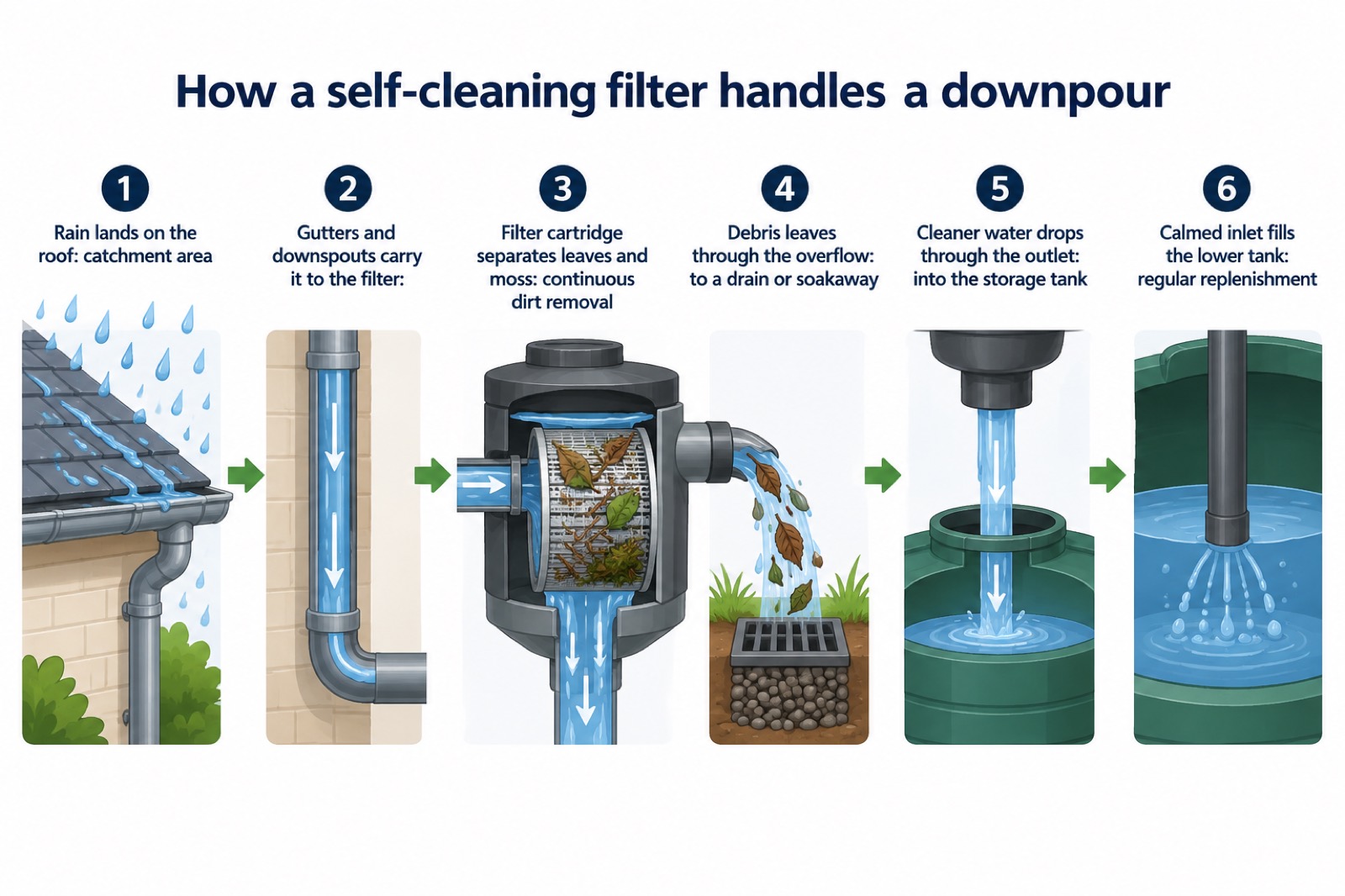
The flow path through the unit is worth understanding, because it explains why the filter needs so little attention:
- Inlet: water arrives from the downpipe into the filter body. Kits A and B each have two inlets of 2 x 4 inches; Kit C has 2 x 6 inch inlets1.
- Separation: the filter cartridge sits where it assists continuous removal of dirt, which is why the maker describes the unit as self-cleaning and low maintenance1.
- Overflow: Kits B and C have an overflow that carries debris away to a drain or soakaway, plus an outlet in the bottom of the filter for water to enter the storage tank1. Kit A uses a siphon overflow with a skimming inlet1.
- Into the tank: a calmed inlet ensures fresh water is supplied to the lower area of the tank, giving complete and regular replenishment of the stored water1.
That last point matters for a household storing water for months. A calmed inlet keeps the incoming water from disturbing the layer below it, so the store is turned over rather than churned.
Kit A, Kit B, Kit C and the 450m2 kit compared
The versions differ in three ways that matter to a household: how much roof they can take, how heavy they are to handle, and where they are designed to be fitted. The table sets the maker's figures side by side.
| Version | Roof area | Filter unit weight | Inlets | Fitting position |
|---|---|---|---|---|
| Kit A | up to 200m21 | 2.2 kg1 | 2 x 4"1 | wall, siphon overflow to a 130 mm tank hole1 |
| Kit B | up to 450m21 | 6.2 kg1 | 2 x 4"1 | wall, bracket not included1 |
| Kit C | up to a maximum of 800 sq metres per kit1 | 16 kg1 | 2 x 6"1 | pilot shaft or frost-protected wall1 |
| 450m2 kit | up to a maximum of 450 sq metres per kit3 | 6.2 kg3 | not stated | wall, bracket not included3 |
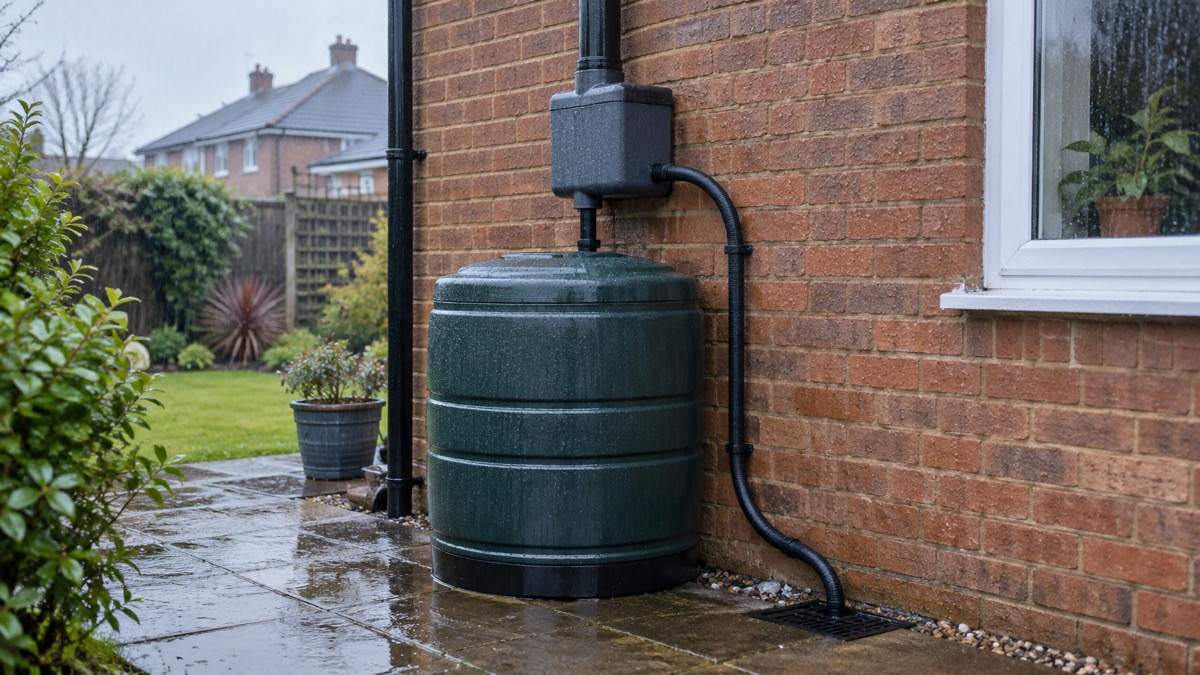
The range as a whole is described as available as a basket filter or self-cleaning design, suiting every roof size whether it is a domestic house, an agricultural barn or a commercial factory7. For a household, the practical question is which of those roof sizes matches the area actually draining to the downpipe you intend to use. A semi-detached house with one downpipe feeding a butt is at the small end; a barn roof or a large detached property with all its rainwater going to one store is at the top.
If you are still working out how big a store the roof can fill, the guide to sizing a rainwater tank takes the roof area, rainfall and demand together, and the rainwater harvesting overview explains how the parts of a system fit.
Roof area: up to 450 sq metres per kit
Roof area is the figure that decides the version, and it is easy to over-estimate. The number in the specification is the area draining to that filter, not the footprint of the building. A hipped roof with four downpipes sends only a quarter of its rain to any one of them.
The maker's limits are clear. Kit A is designed for roof sizes up to 200m2, Kit B for up to 450m2, and Kit C for up to a maximum of 800 sq metres per kit1. The 450m2 kit is designed for roof sizes up to a maximum of 450 sq metres per kit3. The Kit C installation manual gives the same ceiling, listing roof area up to 800m28.
Two practical consequences follow. First, if your roof drains to the filter from more than one side, add the areas together before choosing. Second, if you are near a limit, the next size up gives headroom for a downpipe that later takes an extra section of gutter. The maker's own framing is that there is a filter to suit every roof size whether it is a domestic house, an agricultural barn or a commercial factory2.
Where the water is going matters too. If you are harvesting for garden use only, gutter mesh can be used to filter the water; if you are harvesting for domestic use, a rainwater filter should be installed in the pipes or in the tank, preferably in the pipes9. A filter kit is the domestic-use answer.
Filter unit weight: 6.2 kg
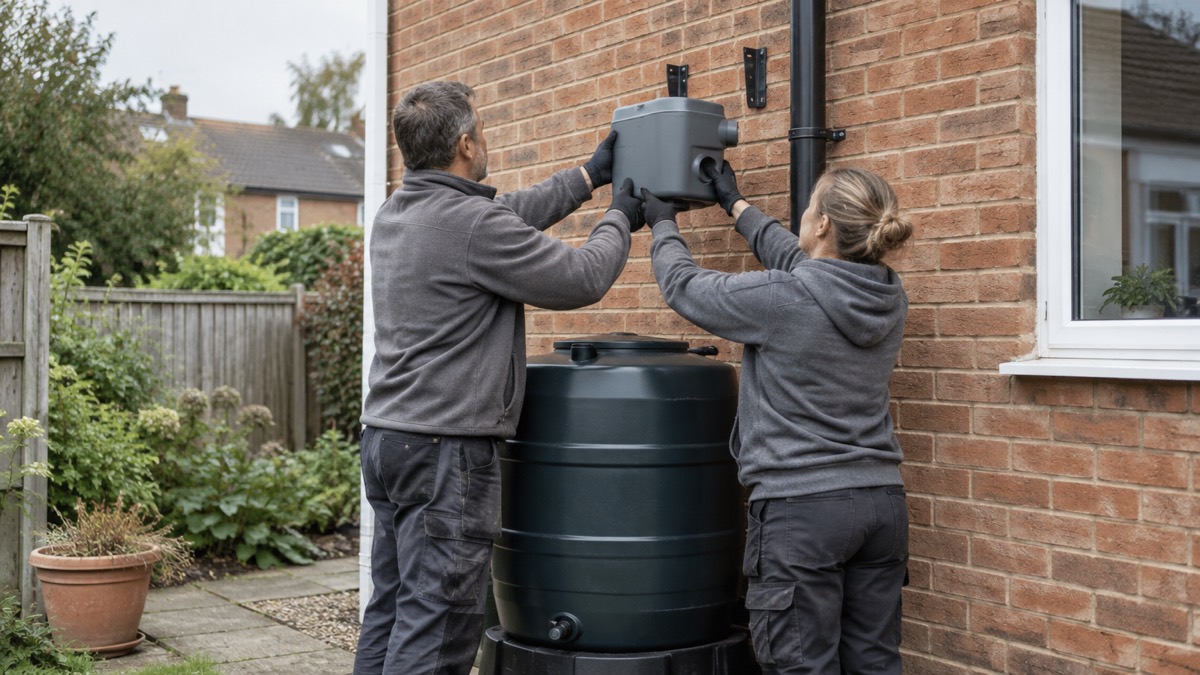
The weights are worth reading before you order, because they decide how the unit gets from the doorstep to the wall. Kit A has a filter unit weight of 2.2 kg, Kit B 6.2 kg, and Kit C 16 kg1. The 450m2 kit also has a filter unit weight of 6.2 kg3.
A 2.2 kg unit is a one-person lift up a step ladder. A 6.2 kg unit is still a one-person lift but awkward at arm's length above a tank, so plan a second pair of hands for the final positioning. A 16 kg unit is a two-person lift, and the route to wherever it is going needs checking first: gate widths, path footing and the drop into a shaft1.
Wall bracket not included: what to plan for before fitting
The single most common surprise with these kits is the fixing. The wall bracket is not included with Kit B or with the 450m2 kit1. The unit is designed to hang on a wall, but the bracket that holds it there is a separate item, so it needs to be on site before the fitter arrives.
Kit C takes a different approach: it is for installation in a pilot shaft or against the wall in frost-protected areas1. Frost protection is the reason. A filter full of water that freezes can crack, and a unit in a shaft below ground is out of the frost.
The pipework needs planning as well as the bracket:
- Tank penetration: the siphon overflow pipe on Kit A is made to fit a 130 mm hole in the storage tank wall1. That hole has to be cut in the right place, at the right height, before the tank fills.
- Joints: the Kit C manual instructs that silicone be applied around all the pipe and fitting joints connected to the tank8.
- Gutters and downspouts: install rainwater collection systems with gutters, downspouts and filters to prevent debris buildup, and regularly clean gutters, screens and storage tanks to avoid blockages and ensure proper water flow10.
If the filter is part of a wider garden or household water plan, the rainwater filters guide sets the downpipe, inline and in-tank types against each other, and the garden rainwater harvesting checklist lists what to have ready before the first wet day.
Self-cleaning filter: how dirt is removed
The self-cleaning claim rests on where the cartridge sits. On Kit B and the 450m2 kit, the filter cartridge location assists continuous removal of dirt, and the maker describes both as self-cleaning and low maintenance1. The same principle runs through the range: the company describes its clever self-cleaning filter as doing a lot of the hard work, needing just a check every so often4.
What happens in practice is a separation rather than a scrubbing. Water arrives from the roof carrying leaves and moss, passes the cartridge, and the debris is carried out through the overflow to a drain or soakaway while the cleaner water drops through the outlet into the tank1. Because the dirt leaves the unit rather than collecting inside it, there is no cartridge to lift out and hose down after every storm.
That does not make the filter maintenance free. Cartridge filters need to be cleaned or replaced according to manufacturer's instructions11. The maker's own advice for its systems is a full system clean after 10 years, with occasional checks of the self-cleaning filter in between4. The Kit C manual puts it plainly: correct installation and regular maintenance should provide trouble free service for many years8.
Keeping the filter working with low maintenance
A filter that is left alone still needs a short annual routine, and the routine is what keeps a stored reserve usable through a dry spell. The maker's schedule is occasional checks of the self-cleaning filter and a full system clean after 10 years4. Around that, the general advice is to regularly clean gutters, screens and storage tanks to avoid blockages and ensure proper water flow10.
A workable year looks like this:
- Before winter: clear the gutters and the screen above the filter so the first heavy rain runs freely10.
- After leaf fall: check the filter body and the overflow outlet for a blockage, so that moss and leaves are kept out of the tank rather than carried into it10.
- In a dry spell: check the tank and the inlet, and clean the tank as part of the routine10.
- Every so often: check the self-cleaning filter itself, as the maker advises4.
- At 10 years: arrange a full system clean4.
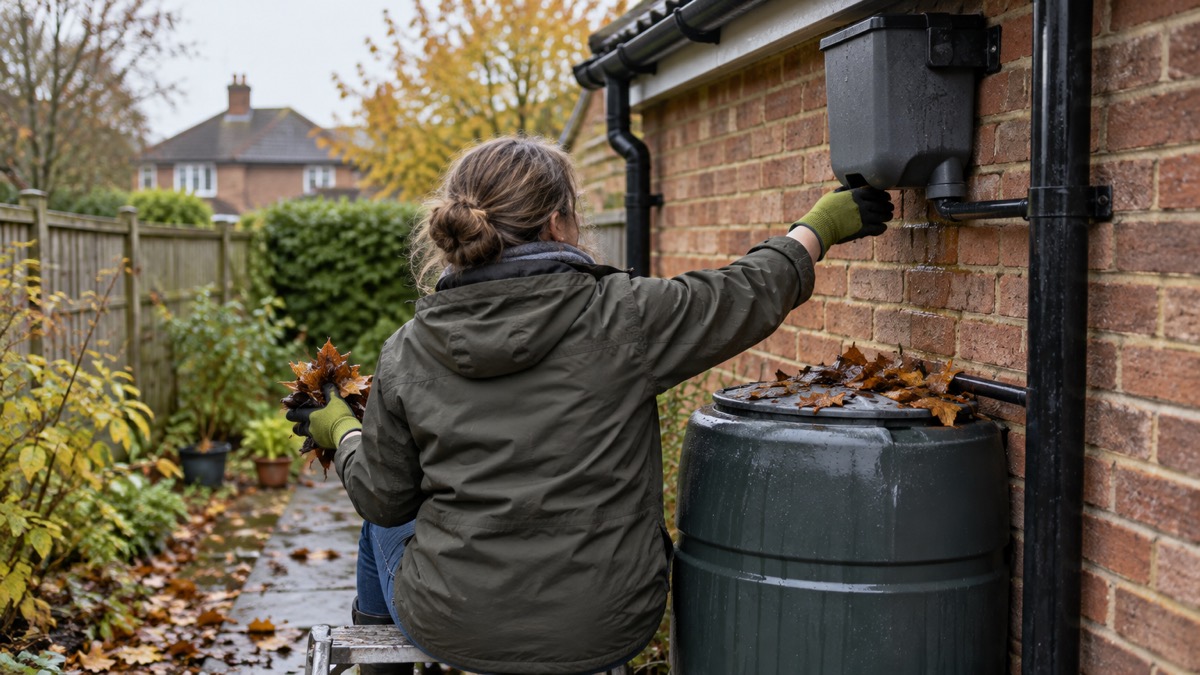
There is a wider reason to keep the store in good order. The Environment Agency's advice during a temporary use ban includes installing a rain butt to collect rainwater, alongside fixing a leaking toilet, using washing up water on plants and taking shorter showers12. A filtered store is the version of that advice that keeps water usable rather than stagnant. If you want to know whether stored water deteriorates, the answer is covered in does stored rainwater go off or stagnate, and the rainwater maintenance guide sets out the year-round routine in full.
Where the kit fits a household water plan
A filter kit is one part of a reserve, not the reserve itself. The basic components of a rainwater harvesting system are a catchment area, gutters and downspouts, a filter, a storage tank and a distribution system5, and the filter only earns its place once there is a tank for it to fill. If you are starting from nothing, the water butts guide covers the simplest store, and water butt or underground tank sets the two approaches against each other.
For emergency planning, the value of a filtered store is that it keeps working when the mains do not. A power cut does not stop rain falling, and a gravity-fed store needs no pump to deliver water at the bottom tap. Whether a system keeps running in an outage depends on how it is fed, which the guide to rainwater systems in a power cut explains.
What the kit cannot do is make rainwater safe to drink. Harvested rainwater is for the garden and for non-drinking household uses unless it is treated, and the question of drinking is dealt with separately in is harvested rainwater safe to drink. For garden use, the guide to using rain and grey water in the garden covers what to put it on.
Support, guarantee and the maker
The Enduramaxx kits are backed by the Enduramaxx guarantee, in the words of the Kit C manual, which also records the document version as BS1 V1 07/20208. The manual is dated July 2020, so check the current documentation with the maker when you buy, in case the fitting instructions have moved on.
The maker's own maintenance promise is worth holding them to: correct installation and regular maintenance should provide trouble free service for many years8. That makes the bracket, the frost protection and the pipe joints the things to get right at the start, since they are what "correct installation" means in practice.
Enduramaxx is listed on this site at Enduramaxx. For the wider picture of storing water, power and heat without the mains, start from self-reliance at home, and for the household emergency plan the water store belongs in, see water in an emergency.
Sources (12)
- Rainwater Harvesting Filters, Enduramaxx, 2026
- Rainwater Harvesting, Enduramaxx, 2026
- Rainwater Tank Filter Kits, Enduramaxx, 2026
- Essential Questions Answered, Rainwater Harvesting Ltd, 2026
- Rainwater Harvesting in Simple Terms, Rainwater Harvesting Ltd, 2023
- 2000 Litre Vertical Rainwater Harvesting Tank, Enduramaxx, 2026
- Rainwater Harvesting Filter Kits, Enduramaxx, 2026
- RWH Filter Kit C Installation Guide, Enduramaxx, July 2020
- How to Collect Rainwater, Rainwater Harvesting Ltd, 2024
- Off-Grid Solar Power, Bluetti, 2026
- Protecting Your Private Water Supply, Drinking Water Inspectorate, 2026
- Why Do We Have Hosepipe Bans During a Drought?, Environment Agency, 12 June 2025

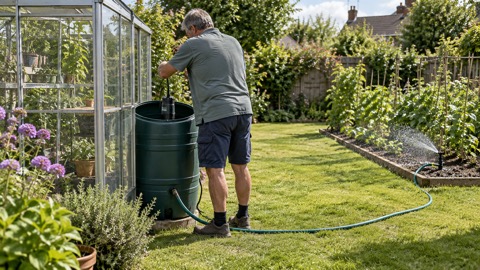 GARDENA Tank Pump 4000/1
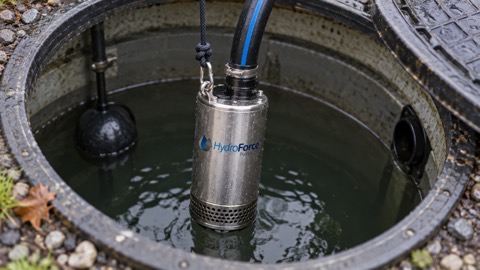 HydroForce Series 3 Clean Water Pump
 HydroForce Series 4 Pump
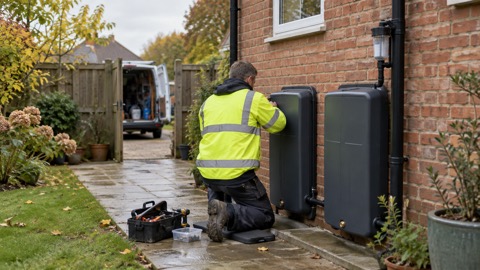 Multitank Rainwater Wall Tank
 Rain Activ Dual Garden System
 Rainwater Harvesting Rain Backup
 Rain Director
 Rainwater Harvesting Header Tank