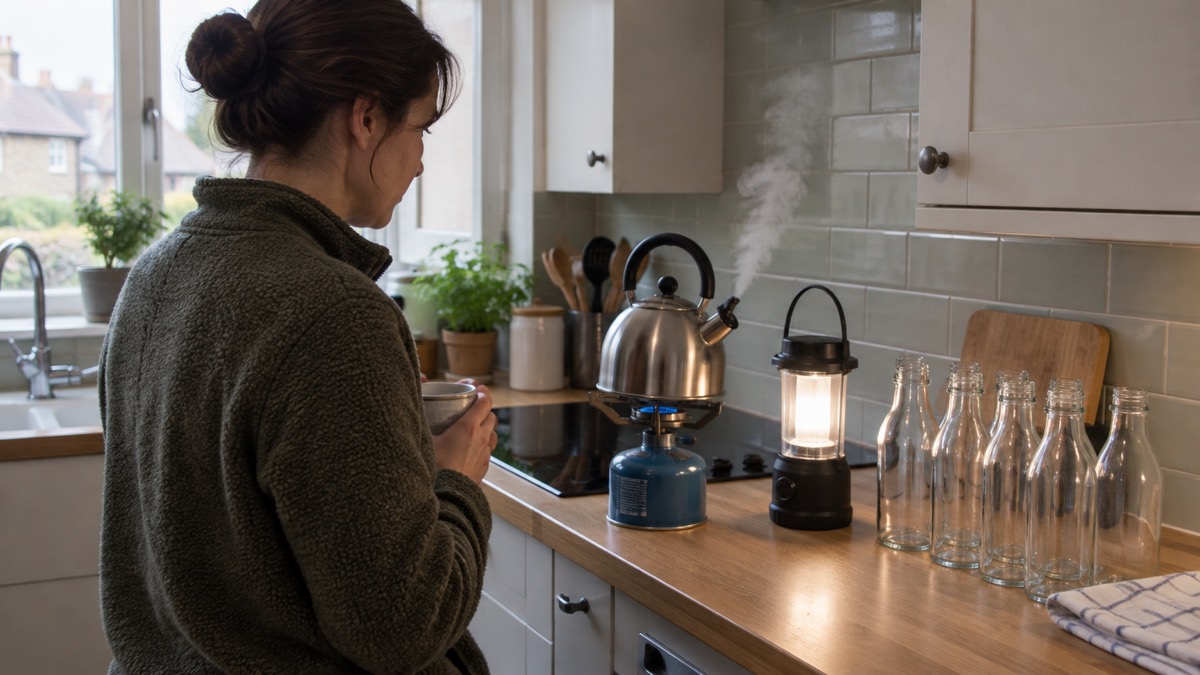
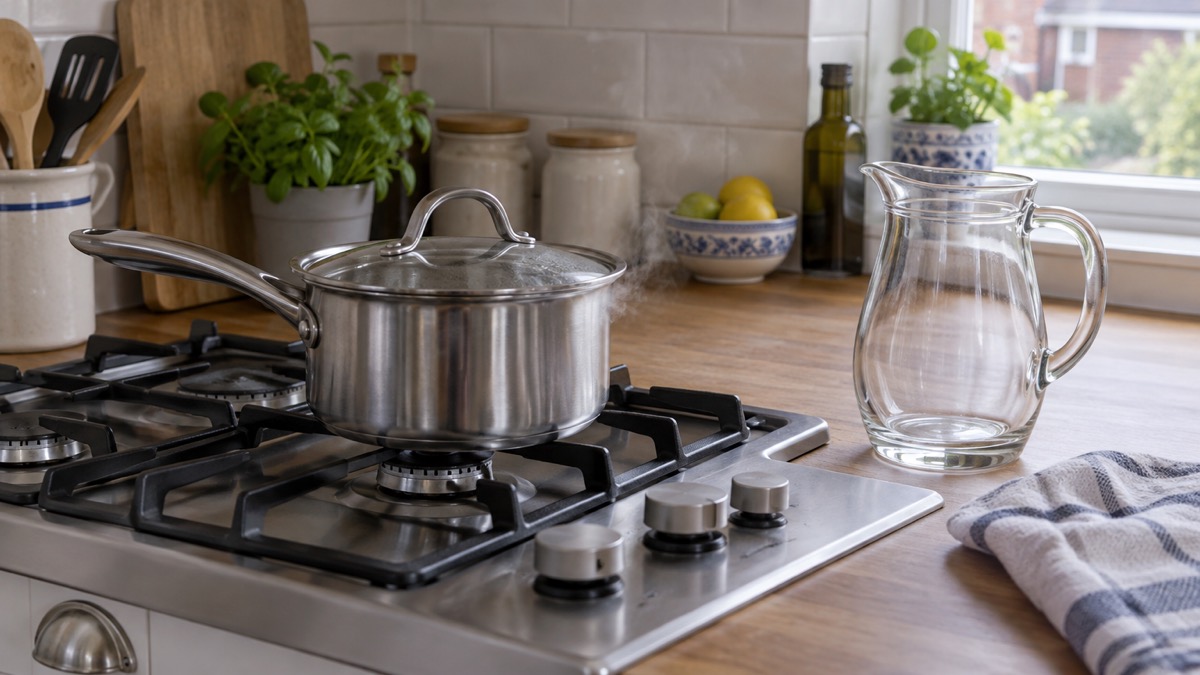
Boiling is the most reliable way to make water safe to drink at home, and the method is simple: bring the water to a rolling boil, take it off the heat, and let it cool naturally before you use it1. You do not need to boil it for minutes on end. One water company's boil notice advice is blunt on the point: "Simply bring the water to the boil and use or cool as required. Prolonged boiling is not necessary."2
The reason boiling works is that it kills or inactivates the bacteria, viruses and parasites that can make you ill1. What it does not do is remove chemicals, metals or dirt, so boiling is the right response to germs, not to every water problem. This page covers the method itself, what a boil water notice means and how you will hear about one, how to boil when the power is off, how to avoid scalds, and what to do when boiled water tastes odd.
Bring it to a rolling boil, then let it cool
The Drinking Water Inspectorate, which regulates drinking water in England and Wales, gives the core instruction: "You should boil your water until it reaches a rolling boil. Remove the water from the heat and allow it to cool naturally."1 Follow that instruction exactly: keep the water on the heat until it reaches a rolling boil, then take it off and let it cool on its own. Once the water has reached a rolling boil and cooled, it is ready to use, and further boiling adds nothing but risk of scalds and wasted fuel.
What you do next matters as much as the boiling. Public Health Wales advises: "Boil the water and let it to cool before using, keep it in a container with a cover or a lid while it is cooling (uncovered water could become contaminated and make you ill)."3 A clean lid or a covered container keeps the water safe while it comes down to drinking temperature. The UK Health Security Agency's flooding recovery guidance adds that boiled water is vulnerable to recontamination as it cools, so use it as soon as possible5.
Follow these steps in order:
- Fill a clean kettle or pan with the water you need to treat.
- Bring it to a rolling boil, with bubbles across the whole surface1.
- Remove it from the heat. Do not keep boiling; prolonged boiling is not necessary2.
- Cover the kettle or pan, or transfer the water to a container with a lid, and let it cool naturally3.
- Use the water as soon as it has cooled, or store it in the fridge in a clean container and use it within 24 hours2.
Water for baby formula
If you are making up infant formula, the timing is more precise. Northern Ireland's official flood safety advice for children says: "Boil the water and leave to cool in the kettle for no more than 30 minutes. Then it will stay at a temperature of at least 70°C", which is the temperature needed to make up feed safely4. Herefordshire Council's flood guidance adds that for formula-fed infants the preferred option is bowser or bottled water brought to a rolling boil and cooled, and that unboiled water should not be used6. Public Health Wales similarly advises that bottled water for baby feed should be boiled, covered and left to cool for up to half an hour, with the feed made up to the manufacturer's instructions and used immediately3. If you have no gas or electricity to boil water, Northern Ireland's advice is to use unboiled bottled water (table, spring or mineral water) to make the feed, but you must give it to the baby immediately4. Our page on babies and formula feeds covers this in full.
How long boiled water keeps
Boiled water is not sterile forever once it is cool. Anglian Water's boil notice guidance is specific: "Any boiled water should be stored in the fridge in a clean container and used within 24 hours."2 If you need to keep larger amounts ready, see our guides on how much drinking water to store per person and storing tap water safely at home, and for the fridge question in detail, how long you can keep boiled water in the fridge.
What a boil water notice means for your tap water
A boil water notice tells you that the water in your tap might contain bacteria, viruses or parasites which could be harmful to your health1. It is a precaution as much as a diagnosis: the water may or may not actually be contaminated, but the company cannot guarantee it is safe, so it asks everyone in the affected area to boil until testing confirms the supply is wholesome again.
Boiling is not the only instruction you might receive. The UK Health Security Agency explains that water suppliers send three kinds of water notice for different circumstances: "Boil tap water before use", for drinking and food preparation; "Do not drink your tap water"; and "Do not use your tap water"5. The stricter notices exist because boiling deals with germs but not with chemicals, which no amount of home boiling will remove. Our page on do not drink and do not use notices explains those separately.
| Notice | What it tells you to do | When it is used |
|---|---|---|
| Boil tap water before use | Boil for drinking and food preparation5 | Possible bacterial contamination1 |
| Do not drink your tap water | Do not drink it, boiled or not5 | Contamination boiling cannot fix |
| Do not use your tap water | Do not use it at all5 | Serious contamination |
While a boil notice is in place, use boiled and cooled water for drinking, brushing teeth, washing food and cooking. If in doubt, boil all water intended for those uses6. Un-boiled water may still be used to prepare food that will be cooked, or where the water is boiled during the cooking itself3. Bottled water may be used as normal2. Anglian Water's guidance for businesses adds two points worth knowing: all water for drinking and food preparation in bars, restaurants and cafes should be brought to the boil and cooled as necessary, and fizzy drinks dispensers should not be used unless they have been adapted to use sources other than tap water. The same guidance advises fish keepers not to change the water in their fish tanks while the notice is in place2.
For the practical side of living under a notice, our boil notice checklist for your home and the page on what to do if you get a boil water notice set out the full routine.
Why notices are issued, and how you will be told
Boil water notices are usually issued because of weather emergencies or engineering works1. Heavy flooding can wash contamination into treatment works or into private springs and wells; bursts, repairs and mains work can let contaminated water into the network. The Drinking Water Inspectorate notes that the multi-barrier treatment and testing systems that keep UK tap water safe work almost all the time, but "on rare occasions, the systems can fail"1. Southern Water's household code of practice puts the same point from the company's side: "If we have any concerns over the quality of water supplied, we may ask you to boil your water before using it."7
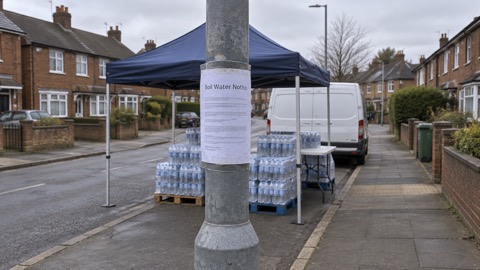
The notice itself comes to you directly. For a mains supply, the water company issues the notice to the consumers in the affected area, instructing them to boil their water before use1. Companies use a range of channels to reach households, and our page on how your water company will contact you in an incident covers what to expect and how to check the caller is genuine. You can also check whether there is an outage or notice in your area at any time.
Where flooding is the underlying cause, the warning chain starts earlier. Natural Resources Wales provides real-time information on flood warnings and alerts across Wales, and you can check current warnings for your area and sign up to receive them using your address or location, phone number and email address8. In the 2024/25 flood season Natural Resources Wales issued 622 flood alerts, 217 flood warnings and two severe flood warnings, which gives a sense of how often the conditions that lead to water problems arise9. Our flooding guide covers the whole chain from alert to recovery.
Boiling without mains power: camping stoves in a power cut
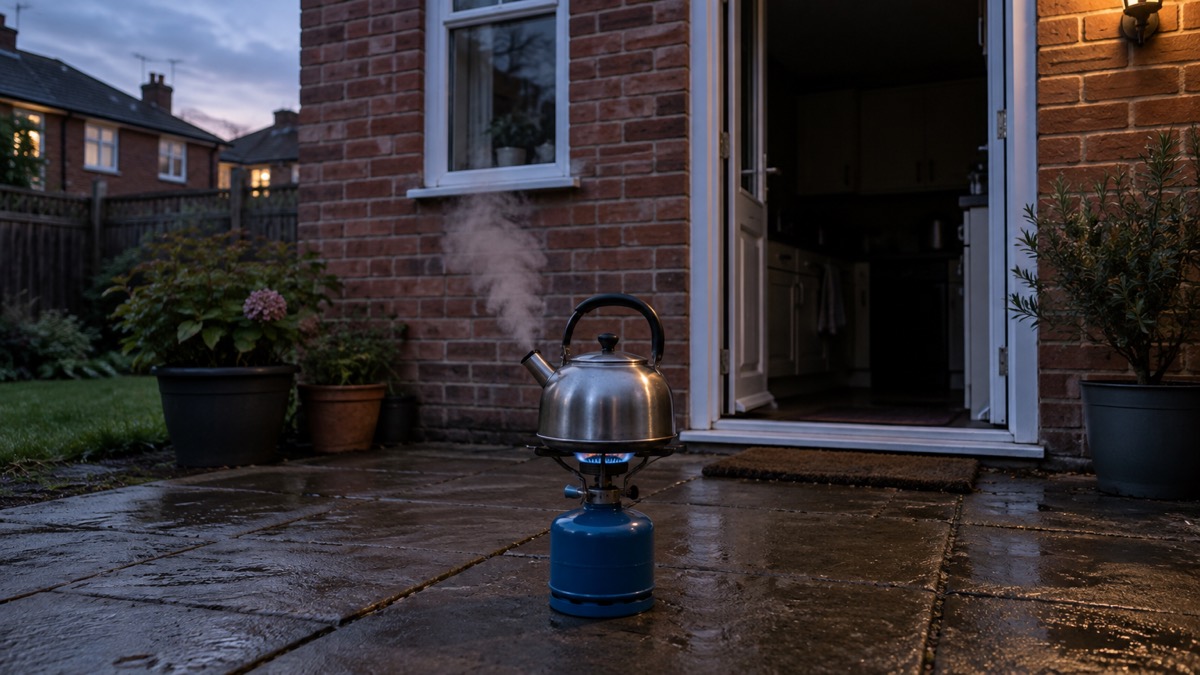
A power cut does not cancel a boil water notice, and it does not stop you needing hot water for drinks, food and a hot water bottle. Food Standards Scotland's power cut advice is that you can cook food and heat water using a camping stove, barbecue or bottled gas stove, checking the manufacturer's instructions for safe use10. Two cautions come with that. First, cooking with these appliances can take longer than your usual ways of cooking, so make sure food is steaming hot and cooked all the way through10. Second, use them only where the maker's instructions say: Wiltshire and Swindon Prepared's gas outage advice frames it as using a camping stove outside, and suggests that if you are able to, it may be worth boiling some water to keep in a flask so hot soups or a hot drink can be made11. Ready Scotland's outdoor advice is to keep any open fire small, controlled and supervised, and to use a camping stove rather than an open fire for cooking12.
The practical routine in a power cut is to boil a full kettle or pan once, then hold the hot water rather than boiling repeatedly. A parish council power cut preparation guide suggests exactly that: boil some water and keep it in a thermos flask, so you can make hot drinks or fill a hot water bottle if it gets cold13. Northern Ireland's storm advice for households with a baby adds that you should prepare a flask of hot water to heat bottles and baby food, noting it is always safer to make up a fresh feed, and that feeds should never be stored for longer than 24 hours14. If a power cut has affected your home and you have no electricity supply, it remains important to store and prepare food safely14; our power cuts guide and heating and cooking without mains power cover the wider routine.
Avoiding scalds when boiling and cooling water
Boiling water can scald, and a boil water notice means more boiling than your household normally does, so the scald risk rises at exactly the time you are least used to it. The Drinking Water Inspectorate's own notice advice carries the warning: "Please be cautious that boiling water can cause scalds."1
The consistent official advice is to use a kettle rather than pots and pans. Public Health Wales states it directly: "Use a kettle, rather than pots and pans, to boil water. Boiling water can scald. If you must use pots and pans, keep panhandles out of reach of children and use a lid."3 The UK Health Security Agency's flooding recovery guidance says the same, adding that you should turn pan handles inwards5. North Wales Fire and Rescue Service's guidance for older people gives the reason an electric kettle is the safest option of all: "An electric kettle is better than a stove-top kettle as it automatically switches off once it has boiled. Don't overfill the kettle, and only boil as much water as you need."15
If someone does scald or burn themselves, the first aid is the same whoever they are. North Wales Fire and Rescue Service advises: "If the person scalds or burns themselves, pour cold water over the affected area for at least ten minutes to reduce the heat and lessen the pain."15 The NHS in Norfolk gives the same core instruction for burns and scalds at home, and adds a related point for hot water bottles: allow the boiled water to cool for a few minutes before filling your bottle16. Our first aid guide covers burns in more depth.
- Use a kettle rather than pots and pans wherever you can3
- If you must use a pan, turn the handle inwards, keep it out of reach of children, and use a lid3
- Do not overfill the kettle; boil only as much as you need15
- Let boiled water cool a few minutes before filling a hot water bottle16
- If someone is scalded, pour cold water over the area for at least ten minutes15
When boiled water tastes or smells odd: check the kettle
A common call to water companies is a TCP, medicinal or plasticky taste in hot drinks when the cold water tastes fine. The Drinking Water Inspectorate's guidance is that if the taste or odour is only present in hot drinks or boiled water, and is not noticeable in freshly drawn cold water from the kitchen tap, the problem is likely to lie within your kettle17. The cause is chemistry, not contamination: chemical reactions can occur between chlorine in the water and chemicals in kettles, or in rubber or plastic components within your domestic plumbing, and the taste and smell may be stronger if the water has been boiled or left to stand in a glass18.
To confirm it, the Inspectorate suggests a simple test: try boiling some water in a saucepan instead, and if there is no smell or taste, the kettle is the likely cause17. The Drinking Water Quality Regulator for Scotland gives the same test for tastes present only in hot drinks, and notes that purchasing a different kettle without plastic in contact with the water should resolve the problem19. The issue is more common in new plastic kettles and may go away over time as you use the kettle; always follow the manufacturer's instructions when using a new kettle for the first time17.
If the taste comes from the tap rather than the kettle, work outward. Check other taps in the house, such as the bathroom sink, to see if the taste is present there too, then check with neighbours, then contact your water company if the problem persists17. If you suddenly notice a particularly bad or strong smell or taste which makes the water unpalatable, contact your water company18. One smell is in a category of its own: a petrol, oil or solvent taste or smell in water is not a common problem and should be investigated immediately19. Our pages on why tap water tastes or smells different and what to do if your water smells of petrol or oil take these further.
Private water supplies: who issues the notice
Around one in ten questions about boil notices has a different answer, and it is this one. If your water comes from the mains, the water company issues the notice. If you receive water from a private water supply, a well, borehole or spring, the notice comes from your local authority1. Cumberland Council's guidance for private supply users describes what a failed test means in practice: you will be told what went wrong, you may need to boil the water or stop using it, you will get advice on how to fix the issue, and you may receive a legal notice requiring improvements20.
The legal machinery behind that is section 80 of the Water Industry Act 1991, which gives local authorities discretionary powers to serve a notice on one or more relevant persons when a private supply is failing, has failed or is likely to fail to provide a sufficient supply of wholesome water21. Where a supply is deemed a potential or actual danger to human health, a relevant person is liable to be served a notice under regulation 18 of the Private Water Supplies Regulations in England, or regulation 20 in Wales22. The local authority is the regulator for private water supplies and should be your first point of contact for any concern, including having a supply checked for lead23. A notice served on a private supply explains why the water is unsafe, what actions are needed and how long you have to fix it20.
For a private water supply, the boil water notice comes from your local authority rather than a water company24. The legal basis is set out in the private water supplies regulations: where the local authority deems a supply a potential or actual danger to human health, a relevant person is liable to be served a notice under regulation 18 in England, or regulation 20 in Wales24. Local authorities also have discretionary powers under section 80 of the Water Industry Act 1991 to serve a notice when a private supply is failing, has failed or is likely to fail to provide a sufficient supply of wholesome water24. If your water fails a test, you will be told what went wrong, you may need to boil it or stop using it, and you will get advice on fixing the issue25. The Inspectorate also advises that if you note any changes to your supply, you should boil the water before use, particularly for vulnerable groups such as the young, the elderly, the immune-compromised and those not used to normally consuming it25. Our private supplies guide covers the whole subject.
Compensation after a boil water notice
Where a boil water notice follows a supply failure, households sometimes ask about compensation. The detail of any payment depends on the incident and on your water company's guaranteed standards scheme, and the amounts have varied between customers in past incidents, so the reliable route is to contact your water company after the notice is lifted, and to take it to the Consumer Council for Water if you are not satisfied with the reply. Our page on who checks drinking supplies explains the roles of the Drinking Water Inspectorate, Ofwat and the Consumer Council for Water, and the boil notice page covers what to do when a notice ends.
Frequently asked questions
Can I boil water in a saucepan instead of a kettle? Yes, and during a notice you may need to if you are boiling larger amounts than a kettle holds. Use a clean pan with a lid, turn the handle inwards and keep it out of reach of children, because boiling water can scald3. An electric kettle is the safer everyday choice because it switches off by itself once it has boiled; do not overfill it, and boil only as much as you need15.
Does boiling purify water completely? No. Boiling kills or inactivates bacteria, viruses and parasites, which is why it is the response to a boil water notice1. It does not remove chemicals, metals or particles, which is why the stricter "do not drink" and "do not use" notices exist and cannot be solved by boiling5. For water that may contain chemicals as well as germs, follow the notice you are given rather than assuming boiling covers it.
How long do I actually need to boil it for? Only until it reaches a rolling boil. Anglian Water's boil notice guidance states: "Simply bring the water to the boil and use or cool as required. Prolonged boiling is not necessary."2 Remove it from the heat at that point and let it cool naturally1.
Can I use unboiled tap water for anything during a notice? Yes, for cooking. Un-boiled water may be used to prepare food that will be cooked, or if the water is boiled during cooking3. Water for drinking, brushing teeth, washing food that will be eaten raw, and making up feeds should be boiled and cooled first6. Fish keepers should not change tank water while the notice is in place2.
What if I have no power and cannot boil water? Use a camping stove, barbecue or bottled gas stove following the manufacturer's instructions, used outside where the instructions require it, and keep boiled water in a thermos flask for hot drinks and hot water bottles10. For baby feed with no way to boil, use unboiled bottled water and give the feed to the baby immediately4.
My boiled water tastes of chlorine or rubber. Should I worry? Usually not. Reactions between chlorine and rubber or plastic parts in kettles and plumbing are a known cause, and the taste is stronger in boiled water or water left to stand18. Test by boiling water in a saucepan: if the taste goes, the kettle is the cause17. A petrol, oil or solvent taste is different and should be investigated immediately19.
Sources (25)
- Receiving a boil water notice, Drinking Water Inspectorate, 2024-05-16
- Boil water notice FAQs, Anglian Water, 2023-07
- Weather and health: flooding advice, Public Health Wales, 2026-07-16
- Keeping children safe during a flood, nidirect (Northern Ireland government), 2025-12-09
- How to recover from flooding, UK Health Security Agency, 2023-12-19
- Staying safe in a flood, Herefordshire Council, 2026-10-29
- Household code of practice, Southern Water, 2022-11
- Weather warnings and alerts, Carmarthenshire County Council / Natural Resources Wales, 2025-03-11
- Flood risk management annual report 2024-2025, Natural Resources Wales, 2025
- Food safety in the kitchen: power cuts, Food Standards Scotland, 2026-10-25
- What you might need in a gas outage, Wiltshire and Swindon Prepared, 2026-10-25
- Wildfires: being ready, Ready Scotland, 2026-05-12
- 12 tips to prepare for a power cut, Horsted Keynes Parish Council, 2026
- Strong winds weather warning: information and advice, nidirect (Northern Ireland government), 2026-10-24
- Dementia fire safety guidance, North Wales Fire and Rescue Service, 2026-10-29
- Burns and scalds, Just One Norfolk (NHS), 2026-10-25
- TCP or medicinal taste and odour, Drinking Water Inspectorate, 2026
- Taste and odour in drinking water, Drinking Water Inspectorate, 2024-08-13
- Drinking water quality FAQs: taste and smell, Drinking Water Quality Regulator for Scotland, 2026-10-28
- Types of private water supply, Cumberland Council, 2026
- Managing insufficiency of private water supplies, Drinking Water Inspectorate, 2025-12-15
- Buying a dwelling with a private water supply, Drinking Water Inspectorate, 2026-10-28
- Lead in private water supplies, Drinking Water Inspectorate, 2026-10-28
- Faecal contamination of a supply: case study, Drinking Water Inspectorate, 2022-07-11
- Private water supplies after floods or storms, Argyll and Bute Council, 2026
 Supply Interruption Checklist
 Boil Notice Checklist
 Drinking Supply Checklist
 How Much Water to Store
 Storing Tap Water Safely
 Containers and Jerrycans
 Household Storage Tanks
 Water Already in Your Pipes
 Making Water Safe to Drink
 Purification Tablets
 Emergency Filter Types
 What Water Filters Remove
 Gravity Filters Explained
 Hand Pump Filters
 Filter Bottles and Straw Filters