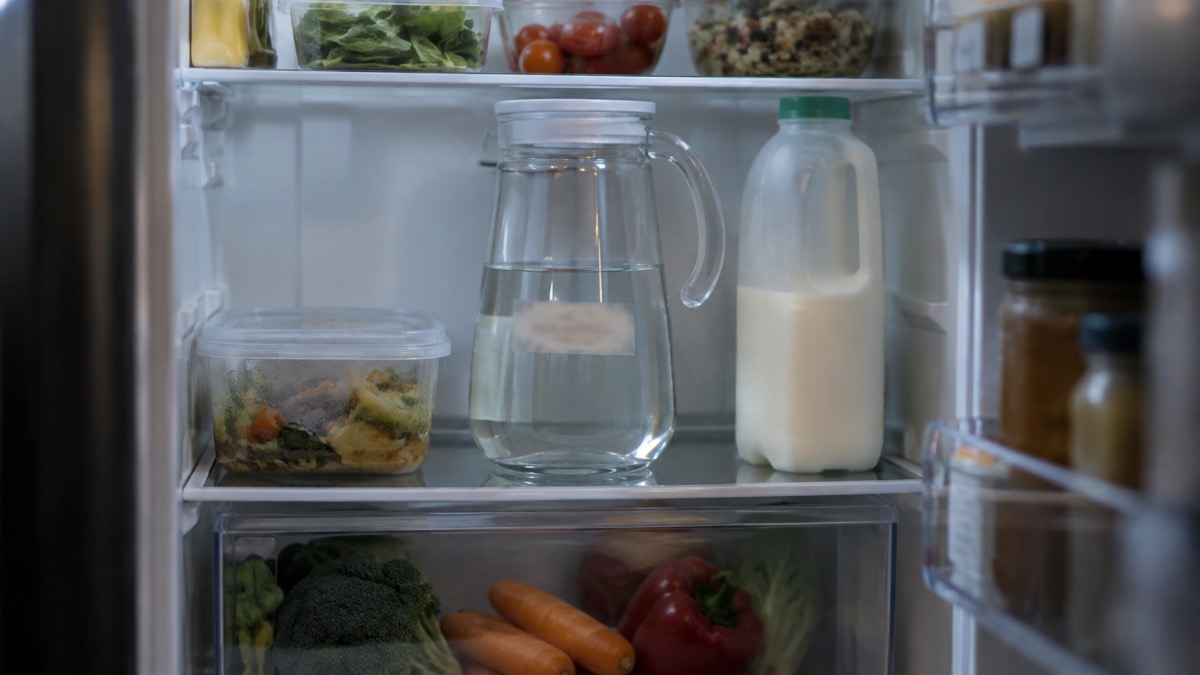
If you have boiled water to make it safe to drink, it will keep in the fridge for 24 to 48 hours, depending on whose guidance you follow. The Drinking Water Inspectorate, which regulates public supplies in England and Wales, says boiled water should be stored in a clean container, in the fridge, and discarded if not used within 24 hours1. Scottish private supply guidance from Argyll and Bute Council allows up to 48 hours in a covered container in the fridge2. Either way, the clock starts when the water goes into the fridge, not when it was boiled.
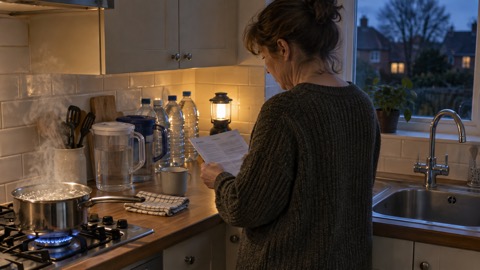
The steps are the same whichever figure you use. Bring the water to the boil, let it cool with a lid or cover on the container, then put it in a clean covered container in the fridge. Write the date on it if you will not remember, and tip out whatever is left at the end of the period. Boiled water is not sterile for ever: once it has cooled and been handled, it can pick up germs again, which is why the storage time is measured in hours rather than days.
This page sets out how long boiled water keeps, how to store it so it stays safe, why the advice differs between 24 and 48 hours, and when to throw it away. It also covers what to do if you have no fridge, how boiled water fits with baby formula, and how to clean the containers you use.
How long boiled water keeps in the fridge
The two headline figures come from two different sets of guidance, and both are current. The Drinking Water Inspectorate's boil water notice guidance, dated 16 May 2024, says: "The water should be stored in a clean container, in the fridge and should be discarded if not used within 24 hours"1. Argyll and Bute Council's private water supply guidance, for households on wells, boreholes or springs rather than mains, says water needs only to be brought to the boil and "can then be stored in a covered container in the fridge for up to 48 hours"2.
The difference is not a contradiction so much as a difference of caution. The 24 hour figure is the one attached to boil water notices on public supplies, where the water company is managing a known contamination risk and wants a tight turnover. The 48 hour figure appears in private supply guidance, where the household is managing its own treatment and the emphasis is on having safe water ready. If you are on a public supply and have been told to boil, treat 24 hours as your working limit. If you are on a private supply and following your council's advice, 48 hours is within what that guidance allows.
A third figure appears in water company advice about chilled tap water. Dwr Cymru, the water company for Wales, says to keep filtered water stored in the fridge and use it within 24 hours6, and its guidance on chilled tap water says that if you do not use it within 24 hours you should discard it7. That is about water stored for taste rather than safety, but it points the same way: a day in the fridge is the normal working life for a jug of drinking water.
| Guidance | Storage time | Applies to |
|---|---|---|
| Argyll and Bute Council | Up to 48 hours | Boiled water stored in a covered container in the fridge1 |
| Dwr Cymru | 24 hours | Filtered and chilled tap water6 |
| DWQR (Scotland) | Throw away unused water after 24 hours | Stored tap water4 |
| Boil water notice guidance | Discard if not used within 24 hours | Boiled water stored in a clean container in the fridge3 |
The Scottish drinking water regulator's chlorine guidance adds a plain rule that matches the tightest of these: "You should throw away any unused water after 24 hours"4. If you want one number to remember, use 24 hours. It is the figure that appears most often, it is the one attached to official boil water notices, and it leaves a margin if your fridge is warm or the container has been opened several times.
Store it covered in a clean container
The container matters as much as the time. The Drinking Water Inspectorate's instruction is specific: a clean container, in the fridge, covered1. A jug with a lid, a clean bottle with a cap, or a lidded plastic box all do the job. What you are avoiding is anything that lets dust, drips or hands get into the water after it has been boiled.
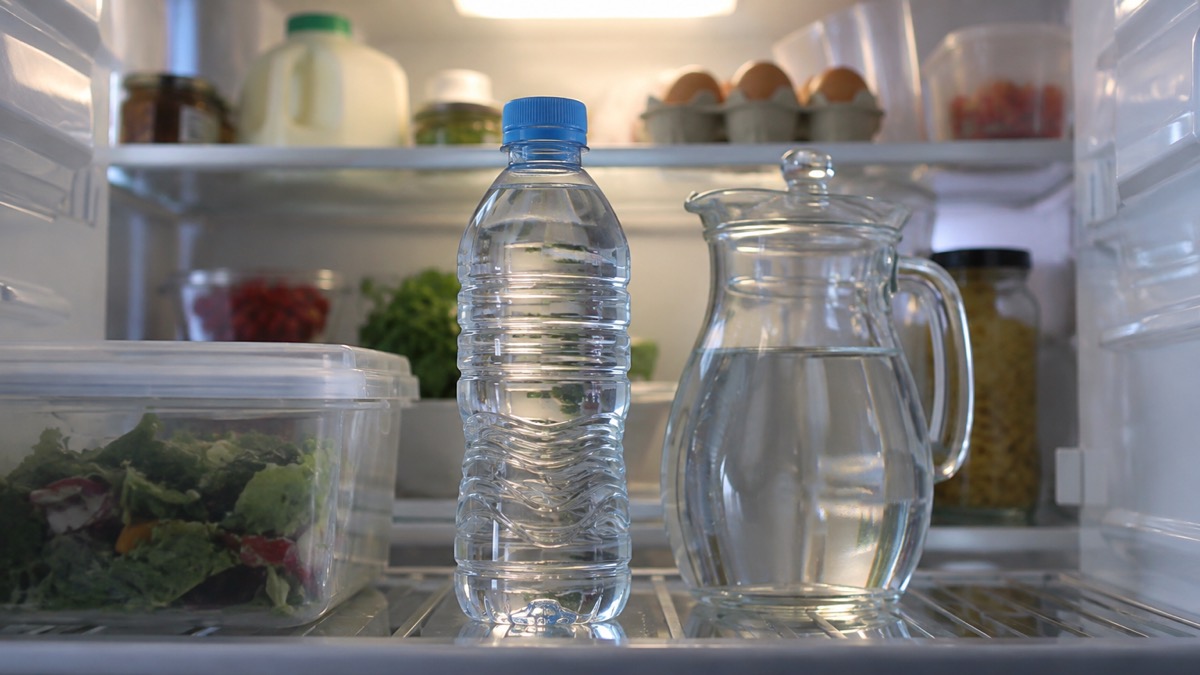
The Chartered Institute of Plumbing and Heating Engineering (CIPHE) sets out what good storage looks like in more detail. It says storing water in a clean sterile container with a close-fitting lid is preferable, that the lid should not be airtight but should exclude light, and that the container should be made from a material that will not contaminate the water. Water stored that way "could last for several days if kept cool"8. That is a broader statement than the 24 to 48 hour figures and applies to stored drinking water generally, not specifically to boiled water in a fridge. Treat the 24 to 48 hour figures as the ones that govern boiled water, and CIPHE's description as the standard to aim for in the container itself.
Bradford Council's flood pack guidance is useful on what to avoid. It says to store water in plastic containers such as soft drink bottles, and to avoid containers that will decompose or break, such as milk cartons or glass bottles9. A glass bottle that shatters in a busy fridge, or a milk carton that goes soft, is a contamination risk and a mess. Plastic bottles with screw caps are cheap, stackable and easy to label.
A few practical points follow from the guidance:
- Cool before you chill. Put the water in its covered container while it cools, then move it to the fridge. Do not put a hot pan straight into the fridge.
- Label it. Write the date on the bottle or a strip of tape. After a day you will not remember.
- Keep it away from raw food. Store it above, not below, any raw meat, so nothing can drip into it.
- Use a clean cup. Pour what you need rather than drinking from the container.
Why the advice says 24 hours in one place and 48 in another
The two figures come from two different situations, and understanding which one you are in tells you which to follow. A boil water notice is a formal instruction from your water company, issued in writing, explaining what to do while further water quality tests are carried out10. It is a precautionary measure, and it is rare10. When one is in force, the water company and the regulator want the household to boil, store briefly and turn the water over, so that any contamination that got into the system is not sitting in a jug for two days. Boil water notice guidance is clear that boiled water should be stored in a clean container, in the fridge, and discarded if not used within 24 hours3.
Private supply guidance is written for a different household. If you draw water from a well, borehole or spring, you are your own water manager, and the council's advice is about how to keep safe water available day to day. Argyll and Bute's 48 hour figure sits in that context2. Shropshire Council's flooding advice for private supplies gives the same core instruction without a time limit: bring water to the boil and leave it to cool before drinking, using it for food preparation or giving it to pets11.
There is a third context that produces a 24 hour figure: water kept for taste. Dwr Cymru's advice on filtered and chilled tap water is to use it within 24 hours6. That is not a safety limit in the same sense, but it reinforces the habit of a daily turnover.
When to throw stored boiled water away
Throw boiled water away at the end of its storage period, and sooner if anything about it looks or smells wrong. Boil water notice guidance says the water should be stored in a clean container, in the fridge and should be discarded if not used within 24 hours3, and the Scottish regulator's guidance says to throw away any unused water after 24 hours4. If you are following the 48 hour private supply guidance, the same principle applies at the end of that period: tip out whatever is left rather than keep it longer1.
There are three other triggers to watch for:
- The fridge has been off. If your fridge has lost power for more than four hours, throw away the food12. The same caution applies to stored water: if the fridge has warmed up, the water has lost the cold storage that helped keep it fresh, so tip it out and boil fresh.
- The container has been left open. Water left uncovered can become contaminated and make you ill3. If a lid has been off overnight, or a child has been drinking from the bottle, discard it.
- The water looks, smells or tastes odd. Cloudy water, a smell, or an unusual taste are reasons to throw it away rather than drink it. Boiling again is an option if you are unsure, but if the water is suspect, fresh is better.
Cooling water before it goes in the fridge
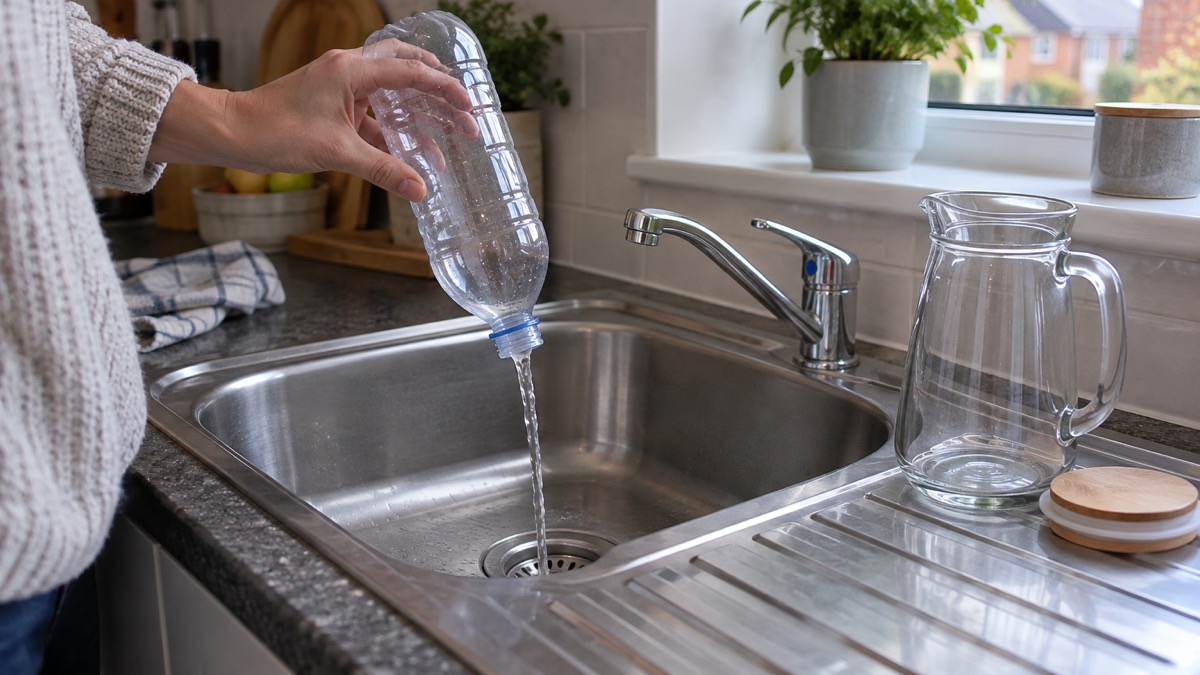
Boiling water should be cooled before it is chilled, and it should be cooled covered. Public Health Wales's flooding guidance is explicit: "Boil the water and let it to cool before using, keep it in a container with a cover or a lid while it is cooling (uncovered water could become contaminated and make you ill)"3. Argyll and Bute's private supply guidance after floods or storms says the same in shorter form: if you have any concerns about the microbiological quality, boil water and cool before use13.
The reason is straightforward. Boiling kills germs, but it does not protect the water afterwards. A pan of boiled water left open on the side is a surface for dust, flies and kitchen splashes. A covered jug is not. Once the water is cool, it goes into the fridge in its clean covered container.
The Food Standards Scotland chilling guidance gives the general principle for anything going into a fridge: do not let food sit at room temperature for longer than 1 to 2 hours14. Water is not food, but the same logic applies. Cool it covered, then chill it promptly rather than leaving it out all evening.
Keeping boiled water without a fridge
If the power is off, the fridge is off too, and the 24 to 48 hour fridge figures no longer apply. The answer is a vacuum flask. Northern Powergrid's power cut guidance says to use a vacuum flask to store hot water5, and its be prepared page repeats the advice: "Use a vacuum flask to store hot water"15. Wiltshire and Swindon's gas outage guidance makes the same suggestion for a winter outage: if you are able to use a camping stove outside, it may be worth boiling some water to keep in a flask so that hot soups or a hot drink can be made15.
A flask keeps water hot, not cold. That makes it useful for drinks, for filling a hot water bottle, and for washing, but it is not a way to store chilled drinking water. If you want cold water without a fridge, store it in a clean covered container somewhere cool and dark, and use it the same day. CIPHE's point that stored water "could last for several days if kept cool"8 depends on actually keeping it cool, which is hard in a warm kitchen in a power cut.
Bottled water for 3 days, at least 3 litres per person per day for drinking, with more needed for cooking and washing, is the baseline to have in12. Boiled water in the fridge is a top-up for a short interruption, not a substitute for that store. For the wider picture, see How Much Drinking Water to Store per Person and Storing Tap Water Safely at Home.
Water for baby formula
Stored boiled water is not the right water for making up powdered formula. The reason is that powdered formula is not sterile and should only be prepared using freshly boiled water16. Water that has been boiled, cooled and stored in the fridge is no longer freshly boiled, so it does not meet that standard.
What stored boiled water can do is cool a feed once it has been made up. Runnymede Council's flooding aftercare guidance says to use cooled boiled water or cooled boiled bottled water for cooling the feed once it has been made up12. That is a genuine use, and it is worth keeping a small bottle of cooled boiled water in the fridge for it.
The other rules for formula during a supply problem are firm:
- Do not use bottled water as a substitute for boiling. Bottled water is not usually recommended for making up formula milk feeds, because it is not sterile and may contain too much salt (sodium) or sulphate16. In rare circumstances, such as when drinking water is unavailable or has been contaminated, you can use still bottled water to make up formula feeds16.
- If you cannot boil water, use ready-to-use formula. Greater Manchester's loss of essential services guidance says that if you are not able to boil water to prepare baby formula safely, try to use ready-to-use baby formula17. The Be Ready power cuts page says the same: if you cannot boil water, use ready-to-use infant formula18.
- If you use a formula preparation machine, make sure the water is at least 70C17.
- Never prepare a feed with water you have not boiled first. Dwr Cymru's boil water notice guidance is blunt: "DO NOT prepare baby feeds with water without boiling it first"19.
For more on this, see Babies and Formula Feeds When the Supply Is Off or Unsafe.
Reboiling stored water
If you are unsure how long a bottle has been in the fridge, or it has been left out, you can bring it back to the boil and start again. Boiling is what makes water safe; storage is what keeps it safe afterwards. Once it has been boiled again, cool it covered and store it in a clean covered container in the fridge, then follow the same storage limits as before1.
Reboiling is not a way to extend storage indefinitely. Each time you handle the water, you give it another chance to pick up germs, and each reboil costs energy. If you are reboiling the same bottle for the third time, it is simpler to tip it out and boil fresh.
Cleaning the containers you store water in
A container that held water last week is not automatically clean this week. Public Health Wales advises using sterilising tablets or fluids, following the manufacturer's instructions, to clean bowls, buckets and other containers3. That is the standard to apply to anything you use for stored drinking water, including bottles and jugs.
Derbyshire Council's flood cleanup guidance gives the broader kitchen standard: food preparation surfaces, storage cupboards and refrigerators should be washed down with food safe disinfectant20. If your fridge has been through a flood or a long outage, clean it before you put fresh stored water back in.
A simple routine:
- Wash the container in hot soapy water, then rinse it.
- Sterilise it with sterilising tablets or fluid, following the manufacturer's instructions3.
- Rinse again if the steriliser requires it, and let it dry upside down.
- Fill with cooled boiled water, cap it, and label it with the date.
Food storage guidance from Food Standards Scotland adds a useful habit from the kitchen: once a tin is opened, put the contents into a clean bowl or container rather than storing them in the opened can21. The same principle applies to water: decant it into a clean container rather than leaving it in whatever it was boiled in.
Where to get help
If you are under a boil water notice, your water company will tell you what to do and when the notice is lifted. The notice is issued in writing and explains the steps19. Keep it somewhere you can find it, and check your water company's website or incident line for updates.
If you are on a private supply and have concerns about water quality after flooding or a storm, your council's environmental health team is the first point of contact. Argyll and Bute, Shropshire and other councils publish specific advice for private supplies after floods13.
If you need extra help, for example because you are older, disabled or medically dependent, ask your water company about its priority services register. For the wider picture on water in an emergency, see Water in an Emergency: A Household Guide, What to Do If You Get a Boil Water Notice and the Boil Notice Checklist for Your Home.
Sources (21)
- Receiving a boil water notice, Drinking Water Inspectorate, 2024-05-16
- Private water supplies, Argyll and Bute Council, 2026
- Weather and health, Public Health Wales, 2026-07-16
- Drinking water quality FAQs: chlorine, Drinking Water Quality Regulator for Scotland, 2026-10-28
- What to do in a power cut, Northern Powergrid, 2026-10-26
- Water quality in the home, Dwr Cymru, 2026-10-28
- Chlorine, United Utilities, 2026-10-28
- Flooding, Chartered Institute of Plumbing and Heating Engineering, 2026-10-29
- Create a flood pack, Bradford Council, 2026-10-29
- Guidance for incidents | Wessex Water, Wessex Water
- Flooding advice for properties using a private water supply, Shropshire Council, 2026-10-29
- Flooding, Runnymede Borough Council, 2026-10-26
- Private water supplies after floods or storms, Argyll and Bute Council, 2026
- Chilling, Food Standards Scotland, 2026-10-25
- What you might need in a gas outage, Wiltshire and Swindon Prepared, 2026-10-25
- Keeping children safe during a flood, nidirect (Northern Ireland Executive), 2025-12-09
- Loss of essential services, Greater Manchester Combined Authority, 2026-10-29
- Power cuts, Prepare campaign (UK Government), 2026-10-21
- Boil water notice, Dwr Cymru, 2026-10-28
- Cleaning up and returning home after flooding, Derbyshire County Council, 2026-10-29
- Food storage, Food Standards Scotland, 2026-10-25
 Supply Interruption Checklist
 Boil Notice Checklist
 Drinking Supply Checklist
 Boil Water Notice Advice
 When Supply Is Restored
 Check for an Outage
 Report No Water or Burst Pipe
 Bottled Water Stations
 Bottled Water Delivery Help
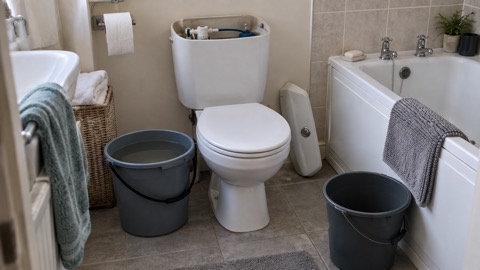 Flushing the Toilet in an Outage
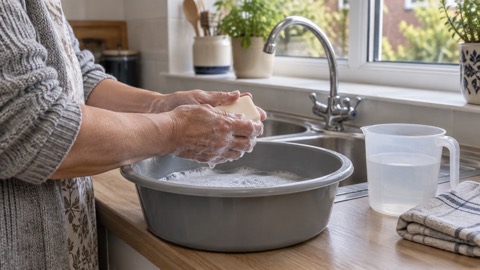 Washing Without Running Water
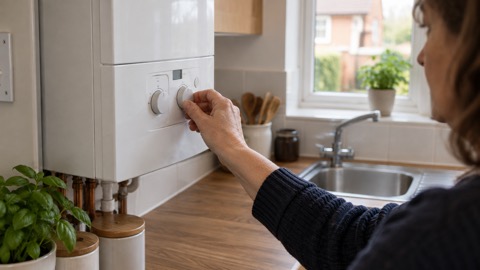 Combi Boiler When Water Is Off
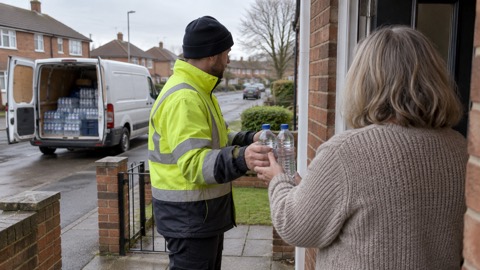 Water Company Incident Alerts
 Checking a Water Company Caller
 Brown or Discoloured Tap Water