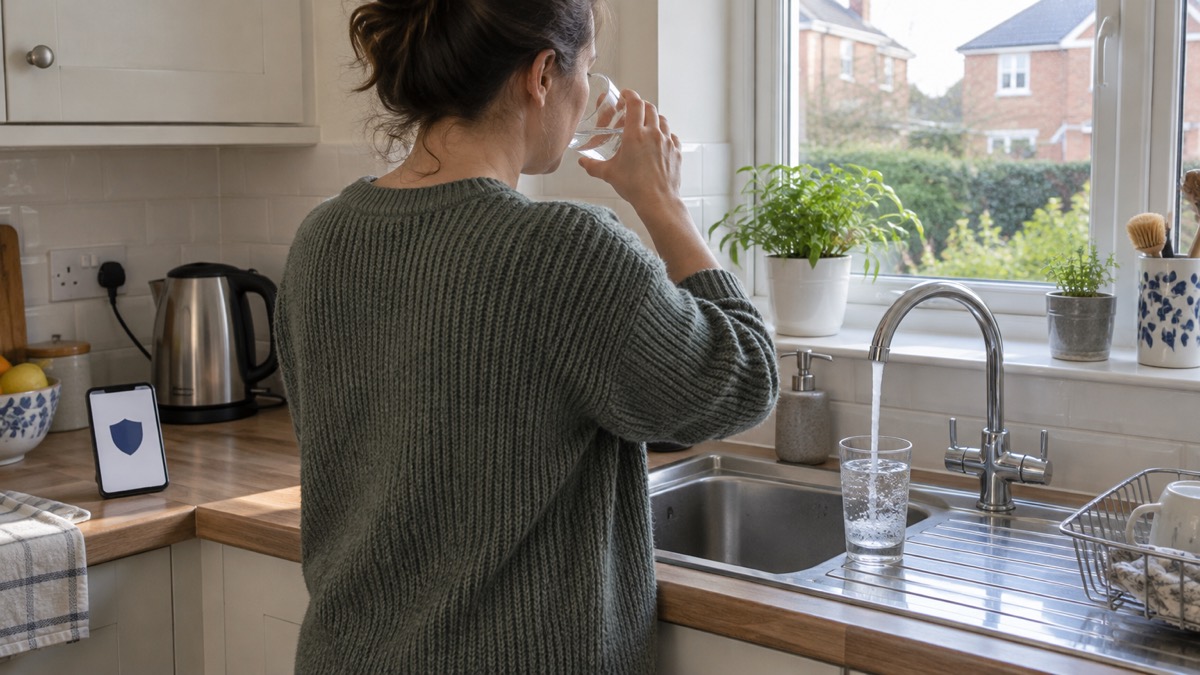
Tap water in the UK is safe to drink without boiling. It goes through treatment that kills or inactivates bacteria and viruses, and the water company monitors and tests it continuously1. You do not need to boil it, filter it or leave it to stand before you fill the kettle or a glass.
That holds through most of what unsettles people: a hosepipe ban, a drought, a burst main down the road. What changes the answer is a notice from your water company. If you get a boil water notice, the water in your tap might contain bacteria, viruses or parasites that could be harmful to your health, and you must boil it before drinking, brushing teeth, preparing food or cooking1. A do not drink notice is firmer still: do not drink or consume your tap water at all, as it may be at risk of contamination2.
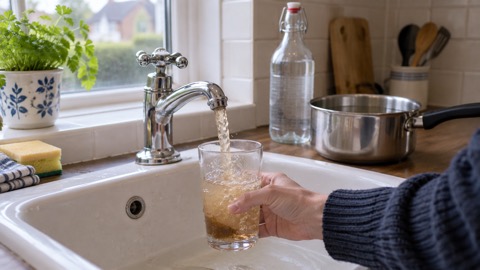
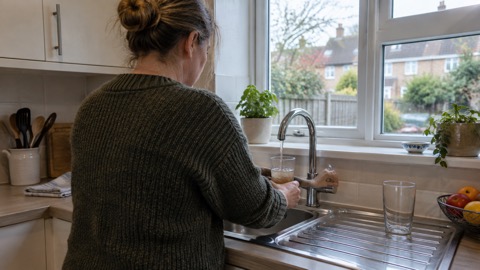
Between those two positions sits the everyday oddity: water that looks wrong but is not. In most cases discoloured water is not harmful3, and cloudy white water after an interruption does not pose any health risks and the water is still safe to drink4. The skill is telling the harmless from the notice, and knowing who to ring when you cannot.
How treatment makes tap water safe
Public supply in the UK is not raw water with the worst taken out. It is treated to a standard and then checked. In Scotland, public water has been treated to make it safe to drink and has to meet stringent regulations8. Severn Trent's summary of the national position is that UK drinking water is amongst the safest in the world9.
The treatment itself is a sequence. Water passes through sieves to remove large debris. Chemicals make smaller particles settle out as sludge. It filters through gravel and carbon, which removes traces of pesticides. Finally it is disinfected with chlorine, which removes any remaining germs or bacteria10. That last step is why the water arriving at your tap is biologically safe, and why the chlorine smell some people notice is a sign of protection rather than a problem: chlorine in drinking water isn't harmful because such low levels are added11.
Two practical points follow from how the system works.
- Use the cold tap for drinking, cooking and making infant formula12. Water from the hot tap has been through a storage tank or a boiler and is not meant for consumption.
- Do not drink softened water. Wessex Water does not recommend it, and advises that one tap, ideally the kitchen cold water tap, should be reserved for drinking water and remain unsoftened13.
If you are on a private supply, a well, borehole or spring, the picture is different. Clean, safe drinking water there is achieved by protecting the source and secondary treatment, such as filtration and disinfection14. Point of use treatment, applied to only one tap, is no longer acceptable15. Private supplies are the responsibility of the householder and the local authority, not the water company, and the sections below say who to contact.
When your water looks, tastes or smells wrong
Most complaints about tap water are about appearance, and most of those are harmless. WaterSafe, the industry body, says that in most cases discoloured water is not harmful3. But harmless is not the same as "carry on regardless". The Drinking Water Inspectorate's advice is blunt: if your tap water is suddenly discoloured, you should not assume that it is safe to drink until you have sought advice from your water supplier5.
There is one exception worth knowing. In areas with a known iron or manganese problem, if you have run your tap until the water becomes clear, it will then be safe to use unless the water supplier has issued a warning notice to say otherwise5. So run the kitchen cold tap for a few minutes and look again. If it clears, the cause was sediment in the pipe. If it does not, ring your supplier.
| What you see | What it usually means | What to do |
|---|---|---|
| Brown, black or orange | Sediment, often after work on the mains; iron or manganese in some areas | Run the tap until clear; if it stays discoloured, seek advice from your supplier5 |
| Cloudy or milky white | Air in the water after an interruption | No health risk, still safe to drink4 |
| A taste or smell you do not recognise | Varies; your supplier can investigate | Contact your water company if you notice a change in colour, taste or smell16 |
Your tap water should not smell and should be clear. If it is not, contact your water company, or your local council if you have a private water supply7. For a private supply, if you think it may be affecting your health, contact your GP15.
When your supply is interrupted: burst mains and outages
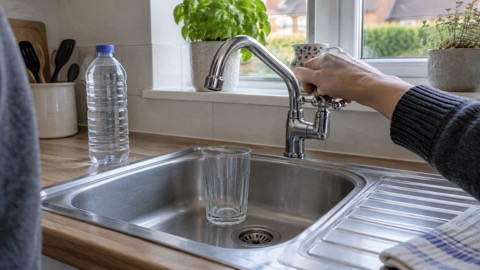
Interruptions to water supply occur for many reasons, ranging from scheduled maintenance to burst water mains17. Some are emergencies such as burst pipes, and your company cannot forewarn you of those, though it will let you know what the problem is, what action you should take and when normal supplies will be restored18.
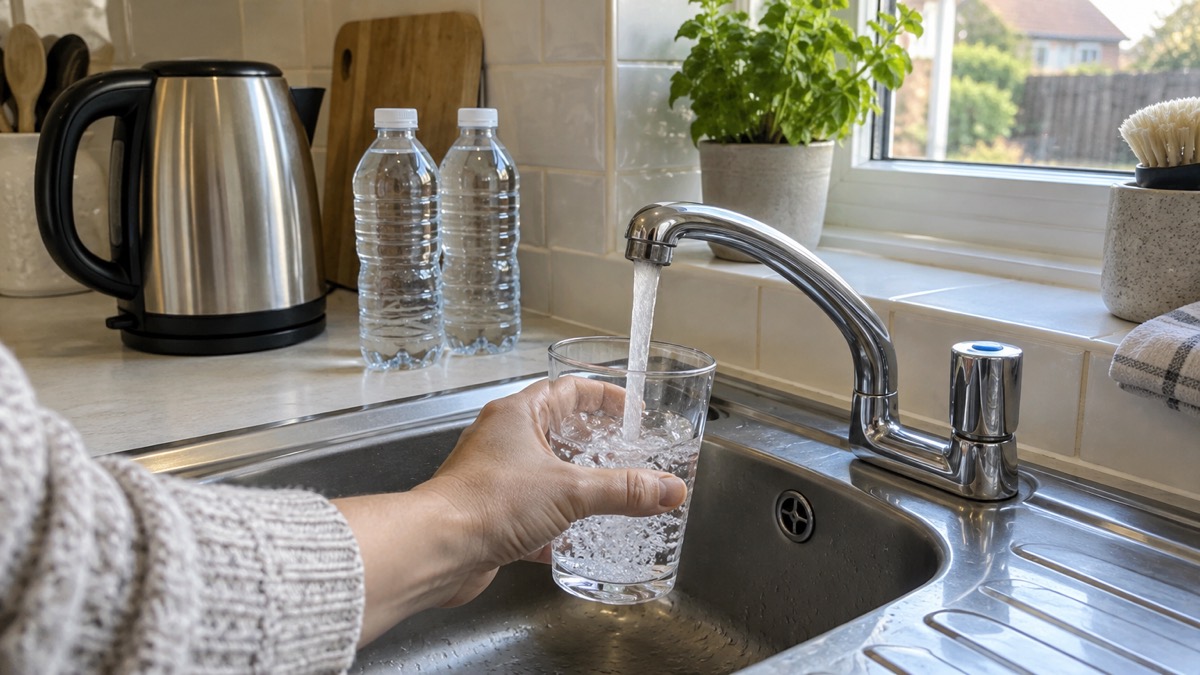
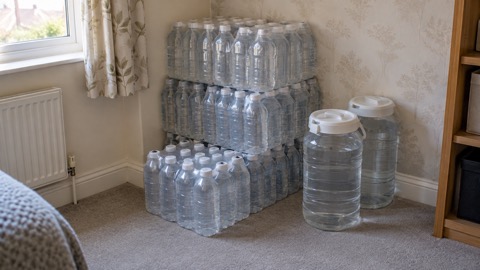
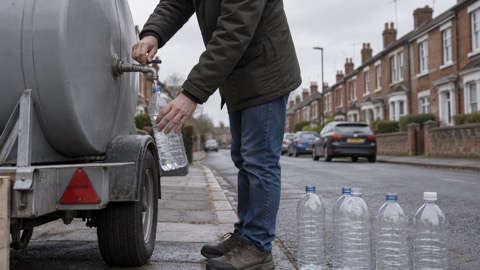
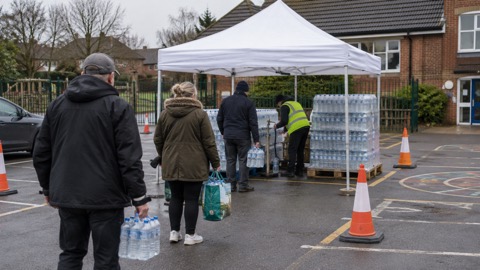
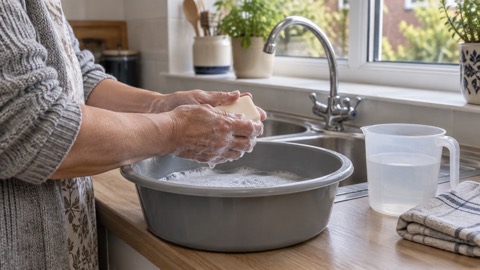
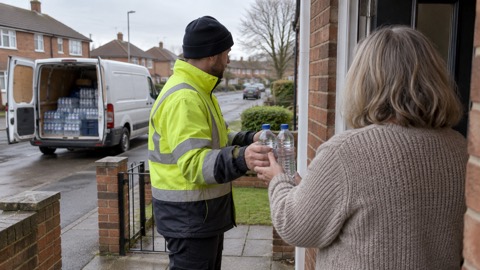
An interruption is not only a dry tap. It is when the drinking water supplied to your taps isn't up to the usual standard: low pressure, discoloured or cloudy water, or no water at all2. While there is no mains water supply, use alternative water supplies such as bottled water solely for drinking, washing your hands and food preparation6. That word "solely" matters: bottled water is a drinking and hygiene reserve, not a substitute for a shower or a washing machine.
A few practical steps make an outage much easier:
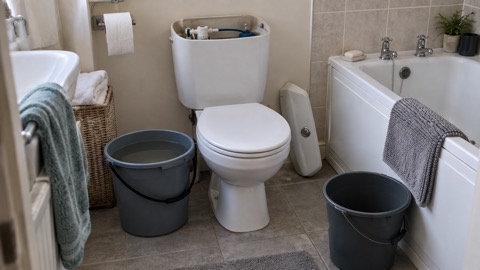
- Capture some tap water before the supply goes off, if you can, for drinking and flushing19. A filled kettle, a couple of pans and a bucket in the bathroom see most households through a day.
- Turn taps off properly so that when the main is refilled you are not the household flooding a ceiling20.
- Keep bottled water for drinking, handwashing and food preparation only6.
- Contact your water provider if you continue to have problems after an outage6.
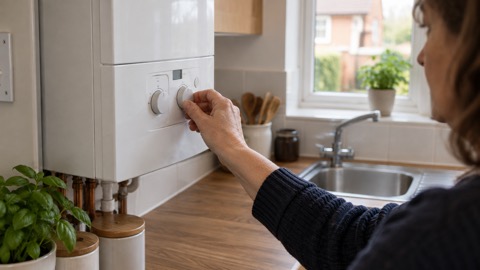
If your supply is off because of a burst main, the water that comes back may be cloudy or white. That is air, not contamination, and it does not pose any health risks4. Run the cold tap and it will clear. If you have a combi boiler, check what your make and model does when the mains is off before you assume hot water will return with the cold; see Can I Use a Combi Boiler When the Water Is Off?.
Boil water notices and do not drink notices
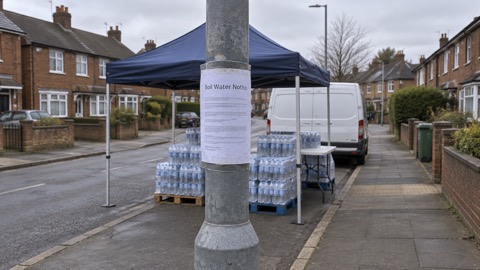
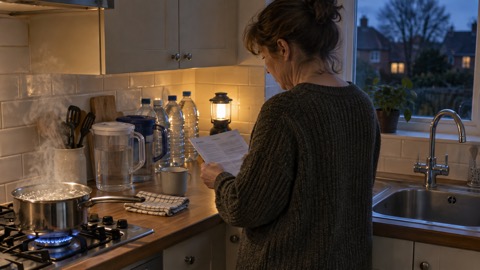
A boil water notice is not a general warning to be careful. It means the water in your tap might contain bacteria, viruses or parasites which could be harmful to your health1. Until it is lifted, boil water before:
- drinking it
- brushing your teeth
- preparing food
- washing food
- cooking1
Do not use tap water to prepare food without boiling it first22. If you are in any doubt during a flooding incident, boil all water intended for drinking, brushing teeth, washing food and cooking23. Boiling is the reliable method; a filter is not a substitute for it unless the maker's instructions say so for that specific product. Our guide to boiling to kill germs covers how long and how to store what you have boiled.
A do not drink notice goes further. Do not drink or consume your tap water at all, as it may be at risk of contamination2. That includes water for pets, for washing food and for making up feeds. Your water company will tell you what to use instead, and where to collect it.
If a notice arrives, work through our boil notice checklist and keep the notice itself where everyone in the house can see it.
Drought and hosepipe bans do not make tap water unsafe
A hosepipe ban is about how water is used outdoors, not about whether it is fit to drink. South West Water's advice during its restrictions is that water can still be used as normal for drinking, washing and cooking24. Cornwall Council's public health team says the same: water can still be used as normal for drinking, hygiene, washing and cooking25.
The reason for a ban is often not a shortage in the reservoir at all. Dŵr Cymru, explaining a hosepipe ban in parts of West Wales, said its reservoirs and water resources remain in a healthy position, and that the ban was not due to a shortage of water in reservoirs but exceptionally high demand for treated drinking water26. In other words, the treatment works and the pipes can only push so much through on a hot weekend.
Bans do restrict some uses, and the detail varies by company and by date. South East Water's guidance for its 2026 temporary use ban allows one useful exception: you can fill the water tank of a motor home with tap water using a hosepipe, as long as this water is then used for drinking, cooking or hygiene purposes and not for prohibited activities27. If you are unsure what your own ban permits, check your company's published list rather than guessing.
Drought does create one genuine risk, and it is not to public supply. If you have a private supply and it is affected by drought, contact your local authority28. The same applies if you are having supply issues due to the effects of dry weather29. A well that runs low is a private supply problem, and the council is the body that can advise.
Bottled water, babies and households that need extra help
Bottled water is the standard alternative during an interruption, but it is not a universal substitute. The NHS recommends that you do not use bottled water for making formula feed for babies: it is not sterile and may contain too much salt (sodium) or sulphate30. If you have no tap water, using ready-made or ready-to-feed formula is the safest option31. Our guide to babies and formula feeds when the supply is off or unsafe sets this out in full.
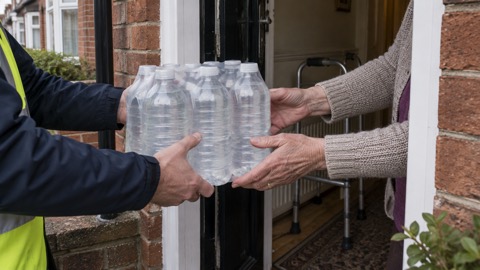
Some households need help before the water stops. Water companies keep a Priority Services Register for customers who need extra support, and Portsmouth Water's page on its priority services explains what is available18. If anyone in your home is older, disabled, medically dependent or has a baby, register now rather than during an incident. Our guide to extra help in an emergency covers the wider picture, and home dialysis and medical needs during an interruption covers supplies that cannot wait.
For storing bottled water properly, see how to store bottled water. For how much to keep, see how much drinking water to store per person.
Who to contact about supply problems
Start with your water supplier. If you have concerns about the quality of your tap water, you should first approach your water supplier and explain the problem to them32. That applies to colour, taste, smell, pressure and no water at all.
If that does not resolve it, escalate. If you have contacted your water company about your tap water and you are not happy with their response, contact the Drinking Water Inspectorate7. In Scotland the equivalent regulator is the Drinking Water Quality Regulator for Scotland, which oversees public supply for domestic consumers8. In Northern Ireland, contact the Drinking Water Inspectorate (NI) or the Environmental Health department of your local council33.
| Your situation | Who to contact |
|---|---|
| Public supply: colour, taste, smell, pressure, no water | Your water company first32 |
| Not satisfied with the company's response | Drinking Water Inspectorate7 |
| Private supply: well, borehole, spring | Your local council's environmental health team7 |
| Private supply affected by drought or dry weather | Your local authority28 |
| Private supply possibly affecting your health | Your GP15 |
| Public supply in Scotland | Scottish Water33 |
If your supply has been off and something still is not right afterwards, contact your water provider6. For a step by step on reporting, see how to report no water or a burst pipe, and for checking whether an outage is already known, see how to check if there is an outage in your area.
Sources (33)
- Receiving a boil water notice, Drinking Water Inspectorate, 2024-05-16
- Our promise to you if your water supply is interrupted, South East Water, 2026-10-28
- Why is my water discoloured?, WaterSafe, 2026-10-29
- Water quality FAQs, Scottish Water, 2026-10-29
- Brown, black or orange water, Drinking Water Inspectorate, 2026-10-28
- Water supply interruptions or outages, UK Government Prepare campaign, 2026-10-12
- Check drinking water quality, GOV.UK, 2026-10-29
- Public water supply: domestic consumers, Drinking Water Quality Regulator for Scotland, 2026-10-28
- Water quality, Severn Trent, 2026
- Water quality FAQs, Cambridge Water, 2026-10-28
- Water quality in the home, Dŵr Cymru, 2026-10-28
- Lead poisoning, NHS inform, 2026-09-07
- Tastes and smells, Wessex Water, 2026-10-28
- Private water supplies, Cornwall Council, 2026-10-29
- Private water supplies, Scottish Borders Council, 2026-10-29
- After a flood, GOV.UK, 2026-10-25
- Water supply interruptions or outages, Be Ready campaign, 2026-10-12
- Priority services, Portsmouth Water, 2025-08-19
- Winter #WeatherHacks - Met Office, Met Office
- Steps to reduce risk of burst pipes, nidirect, 2025-10-23
- Private water supplies after floods or storms, Argyll and Bute Council, 2026
- Boil water notice, Dŵr Cymru, 2026-10-28
- Staying healthy and safe after flooding, Surrey County Council, 2026
- Hosepipe ban, South West Water, 2026-10-29
- Stay safe this summer, Cornwall Council, 2026-08-08
- Hosepipe ban frequently asked questions, Dŵr Cymru, 2026-10-28
- Temporary use ban FAQs, South East Water, 2026-10-28
- How to stay safe during a drought, NHS inform, 2026-05-12
- FAQs for private water supply users, Scottish Environment Protection Agency, 2026-10-29
- Weather and health, Public Health Wales, 2026-07-16
- Power cuts, UK Government Prepare campaign, 2026-10-21
- Water testing, Drinking Water Inspectorate, 2025-12-09
- Dealing with drinking water problems, nidirect, 2026-10-06
 Supply Interruption Checklist
 Boil Notice Checklist
 Drinking Supply Checklist
 Boil Water Notice Advice
 When Supply Is Restored
 Check for an Outage
 Report No Water or Burst Pipe
 Bottled Water Stations
 Bottled Water Delivery Help
 Flushing the Toilet in an Outage
 Washing Without Running Water
 Combi Boiler When Water Is Off
 Water Company Incident Alerts
 Checking a Water Company Caller
 Brown or Discoloured Tap Water