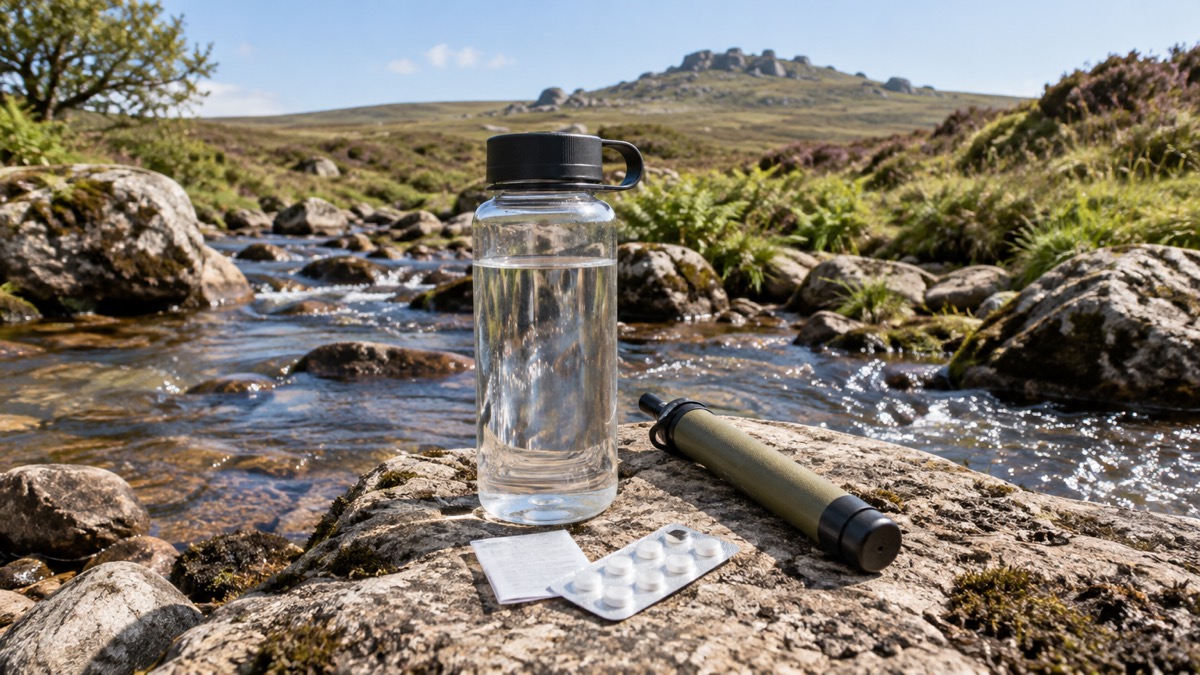
No, stream water is not safe to drink as it comes, however clear and inviting it looks. NHS inform's summer health advice is blunt about this: germs including E. coli, Cryptosporidium and Leptospira can contaminate lochs, rivers and burns, and they are harmful if swallowed1. UK Health Security Agency guidance on cryptosporidiosis says simply: "Do not drink untreated water."2
The catch is that you cannot rely on your senses. Scottish Borders Council warns that with private supplies, contaminated water may smell, taste and look normal, so you may not be able to tell whether water is safe3. A sparkling upland stream can still be carrying parasites from livestock upstream, and a river in spate after heavy rain can be carrying much more besides. The safe rule is to treat any water collected from a stream, river, loch, pond or spring before drinking it, and to know the signs that mean a source should be avoided altogether, such as a blue-green algal bloom.
This page covers which sources can be treated and which cannot, the main germs and what they do, how to recognise algae, how to keep children and animals safe at the water's edge, and what to do about water that has been standing in your own pipes and tanks.
Why clear water is not clean water
Public mains water in the UK is treated to make it safe to drink and has to meet stringent regulations, as the Drinking Water Quality Regulator for Scotland puts it6. A stream has had none of that treatment. Surface waters, meaning rivers, streams and lochs rather than underground sources, are considered to be at higher risk of contamination, especially with faecal bacteria, because any pathogens in them have had less time to die off compared with groundwater7. In plain terms: anything washed into a river yesterday may still be alive in it today.
What gets into that water matters. Cryptosporidium in manure can contaminate fields, rivers and crops2, and Scottish Borders Council advises anyone collecting water to ensure it is not contaminated by discharges from a septic tank, slurry spreading, or nearby sources of pollution such as pesticide or oil storage3. Farm runoff, sewage discharges and dirty water from eroded land all feed nutrients and germs into watercourses. The same council lists the waterborne infections that private supply users face: Campylobacter, E. coli O157, Cryptosporidium and Giardia, all of which can cause diarrhoea and vomiting3.
The risk rises at certain times. Argyll and Bute Council notes there are occasions when there is an increased risk of harmful bacteria affecting any supply, most likely after heavy rainfall or snowmelt, or when the water is highly coloured8. During droughts, private supply quality can decline and supplies can become contaminated when water levels are low, which could make someone who drinks that water unwell9. So a stream that was safe to treat and drink last month may not be this month, and after floods or storms the usual treatment processes may not be adequate, particularly if the water is coloured or cloudy, in which case it may need to be filtered and boiled before use10.
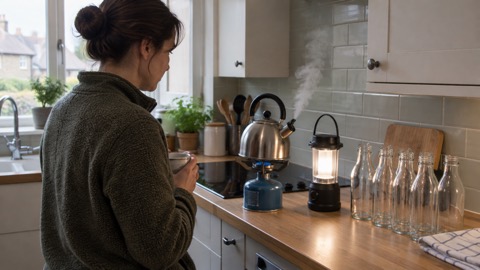
The good news is that treatment works. NHS inform states that untreated water can be made safe to drink by boiling it or using chemical treatments1, and the Drinking Water Inspectorate confirms that boiling is effective against parasites such as Cryptosporidium11. For how to do this properly, see How to Make Water Safe to Drink in an Emergency and Boiling to Kill Germs: How to Do It Properly.
Cryptosporidium: the parasite untreated water can carry
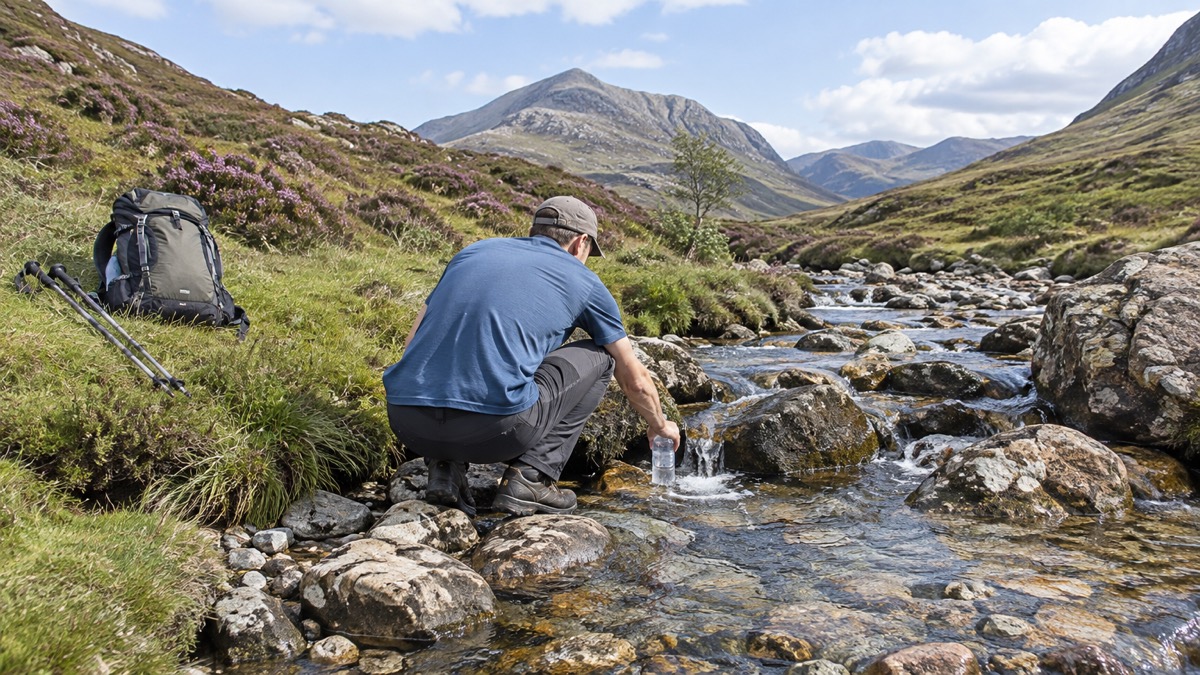
Cryptosporidium is a parasite, a tiny organism, that causes an illness called cryptosporidiosis affecting people and some animals, particularly farm animals2. It lives in the intestines and faeces of infected humans and animals, and it may contaminate lakes, streams and rivers, swimming pools, untreated or poorly treated water, food (especially raw milk and fresh produce), and objects such as farm gates, outdoor boots and clothing2. That last part is worth pausing on: you can pick it up from a gate latch, not just from a drink.
You can get cryptosporidiosis directly from another person or animal by touching faeces, for example when changing a nappy; from swimming in or drinking contaminated water; and occasionally by eating contaminated food, including unwashed or unpeeled vegetables or salads, or drinking contaminated raw milk2. The route that concerns this page is drinking from untreated, unprotected water supplies or swallowing contaminated recreational waters such as lakes, rivers and streams2.
Because the parasite comes from faeces, anything that puts manure near water raises the risk. Cryptosporidium in manure can contaminate fields, rivers and crops2, so streams running through grazing land, or downstream of farms, are exactly the kind of source to treat with the most care. Surface waters generally carry the highest faecal contamination risk because pathogens have had less time to die off than in groundwater7.
There is no way to tell by looking. Contaminated water may smell, taste and look normal3, and the only way to know you have cryptosporidium is for a doctor to ask for a sample of your faeces to be tested in a laboratory2. If you have drunk untreated water and become ill, tell your GP about the water as well as the symptoms. For more on this parasite, see Cryptosporidium Outbreaks: What Households Should Do.
Symptoms of cryptosporidiosis and how long they last
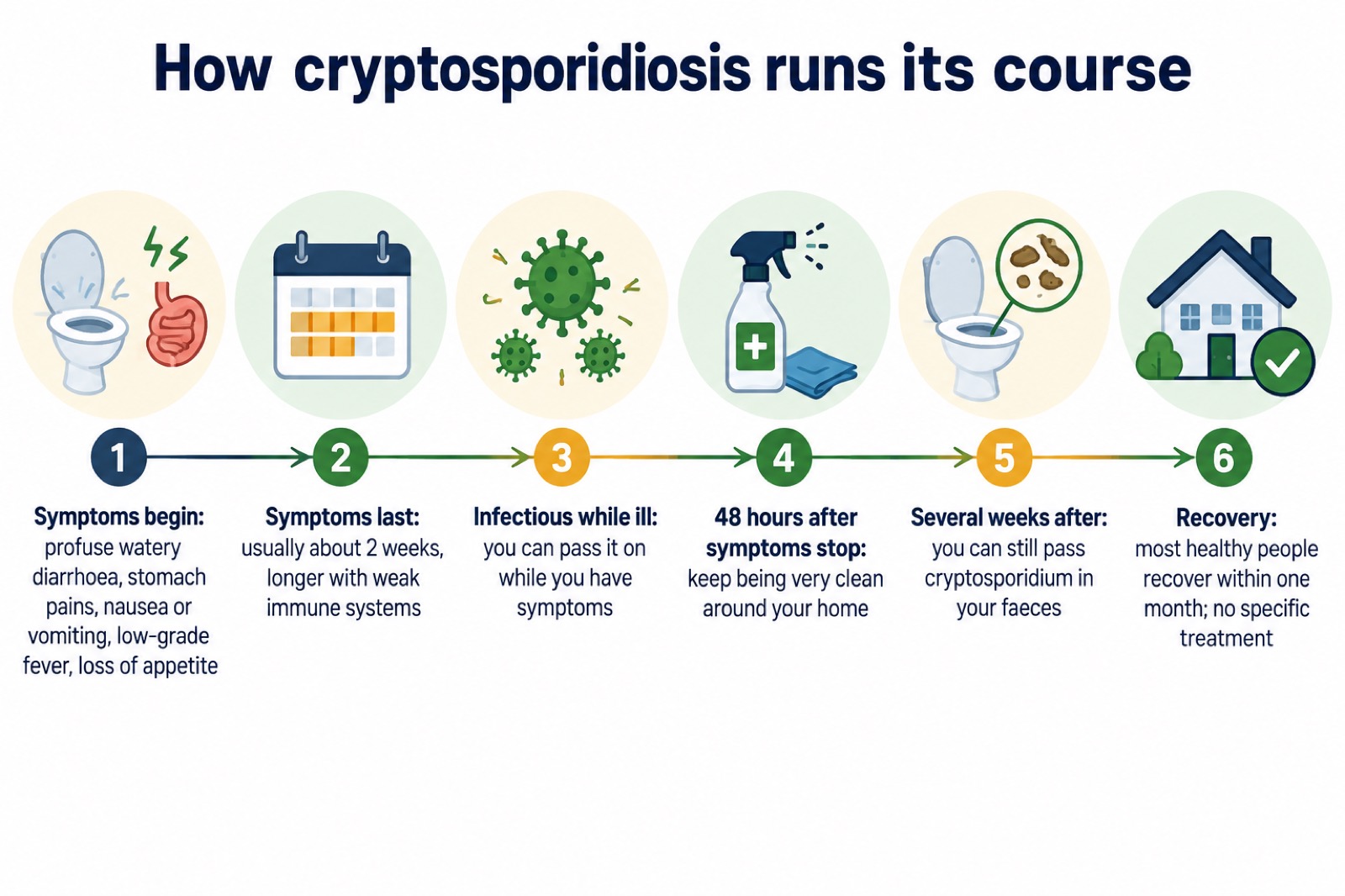
Cryptosporidiosis symptoms include profuse watery diarrhoea, stomach pains, nausea or vomiting, low-grade fever and loss of appetite, which can lead to dehydration and weight loss2. Argyll and Bute Council's sampling guidance describes the wider family of waterborne infections, including Campylobacter, E. coli O157, Cryptosporidium and Giardia, as producing acute gastrointestinal symptoms including sickness and diarrhoea12. Not every upset stomach after a day out is one of these, but they are the ones to suspect when untreated water has been swallowed.
Symptoms usually last about 2 weeks, but can be longer, especially in people with weak immune systems2. There is no specific treatment for cryptosporidiosis; most people with a healthy immune system will recover within one month2. The illness is highly infectious, so you need to be very clean around your home for at least 48 hours after your symptoms stop, and you are infectious to other people while you are ill and have symptoms2. You can also pass cryptosporidium in your faeces for several weeks even if you no longer have symptoms2.
Hand hygiene is the main defence at home. UK Health Security Agency guidance says to wash your hands thoroughly with soap and warm water before preparing and eating food, after handling raw food, after going to the toilet or changing a baby's nappy, and after working with, feeding, grooming or playing with pets and other animals2. Pay special attention to hygiene during farm visits, washing hands after any contact with animals, and eating only in designated areas2.
If you work with vulnerable groups such as the young, the elderly or those in poor health, or if you handle food, you should tell your employer you have had cryptosporidiosis2. If you are concerned about your health or your children, contact your GP; for further questions, contact your local health protection team2.
Who is most at risk from contaminated water
Anyone can get cryptosporidiosis, but it is most common in children aged between 1 and 5 years2. It can be a serious illness in people whose immune systems are not working properly2. Argyll and Bute Council lists the vulnerable groups on private supplies as bottle-fed infants, the very young, the elderly and anyone whose immune system might be compromised8.
The government's water supply interruption guidance names similar groups who may be most at risk when supplies are affected: people who use more water due to a medical condition, babies and young children, older adults, and people with long term health conditions5. For these households the message is sharper: do not take chances with untreated sources at all, and make sure any stored or collected water has been properly treated. If your household includes a bottle-fed baby, see Babies and Formula Feeds When the Supply Is Off or Unsafe.
Some groups are more likely to be exposed in the first place. UK Health Security Agency guidance lists those at higher risk as people who handle infected livestock or their faeces, people exposed to human faeces through caring or sexual contact, people who drink from untreated, unprotected water supplies or swallow contaminated recreational waters, and people who travel to countries where these exposures are likely2. For related help available to vulnerable households, see Extra Help in an Emergency: Older, Disabled and Medically Dependent Households.
Blue-green algae: how to recognise a bloom
Blue-green algae, also called cyanobacteria, are typically found in freshwater such as lakes, ponds and streams13. In still waters they can multiply to such an extent that they discolour the water, which then appears green, blue-green, greenish brown or dark brown, sometimes with a scum on the surface, most commonly at the water's edge or shoreline4. Blooms may colour the water or form a scum on the surface that may be smelly13.
Cumberland Council describes further signs: the water may look cloudy or discoloured, and foam may appear on the shoreline, which can be mistaken for sewage14. The algae may appear green, blue-green or greenish brown and often produce musty, earthy or grassy smells14. Blooms are more likely during long periods of warm, sunny weather and calm conditions with little or no wind14, and they commonly occur during prolonged hot weather, but sometimes occur at other times of the year4. They can be short-lived and transient, and may move around a body of water due to weather conditions4.
Waters affected by agricultural, domestic or industrial discharges can be prone to developing blue-green algae, but they can also occur naturally4. Reducing phosphate helps improve water quality, but algae can also use nitrogen and nutrients from dirty water and land erosion14. Look out for signs along the water's edge that may advise you not to use the water13.
| What you might see | What it can mean |
|---|---|
| Water coloured green, blue-green, greenish brown or dark brown | A blue-green algal bloom4 |
| Scum at the water's edge or shoreline | A bloom, treat as potentially toxic4 |
| Foam on the shoreline | Can be mistaken for sewage; may be a bloom14 |
| Musty, earthy or grassy smell | Often produced by blue-green algae14 |
| Official notices at the water's edge | Unsafe levels of algal cells or toxins4 |
Treat every algal scum as toxic
You cannot tell if a bloom is toxic just by looking at it, so it is safest to assume it is14. Argyll and Bute Council is firmer still: it is advisable to regard all algal scums as potentially toxic, because it is not possible to tell which algae produce toxins by appearance, and laboratory analysis is needed4. Public Health Wales agrees that it is not possible to tell by looking whether an algal bloom is harmful13.
"You can't tell if a bloom is toxic just by looking at it, so it's safest to assume it is."
The reason for the caution is real. Some blue-green algae can produce toxins, known as harmful algal blooms, which can harm wild animals, farm livestock and domestic pets, cause rashes after skin contact, and cause illness if swallowed14. Toxins in the blooms may cause skin rashes, nausea, vomiting, stomach pains, fever and headaches13, and exposure to high levels of toxic algae can cause more serious illness including liver damage13.
People and pets should avoid entering the water during a bloom14. Exposure routes are wider than swimming: being in or splashed by affected water; swallowing water or breathing in droplets when sailing, boating or fishing; water used for drinking; and touching pets, usually dogs, that have been in affected water13. Argyll and Bute Council's rule of thumb is short: "When in doubt, stay out."4
Keeping children, dogs and livestock away from affected water
Avoid all contact with affected waters and ensure that children are kept away4. Do not let your pets and other animals go into or drink the water or consume the scum4. Public Health Wales says the same: do not allow pets or animals into the water13. This is not an over-cautious rule. Dogs have died after going into the water at the shores of affected lochs, and affected animals can deteriorate very quickly after very little contact4. The toxins can cause deaths of animals through drinking contaminated water, swallowing quantities of scum or shoreline matter or crust, or licking contaminated coats4.
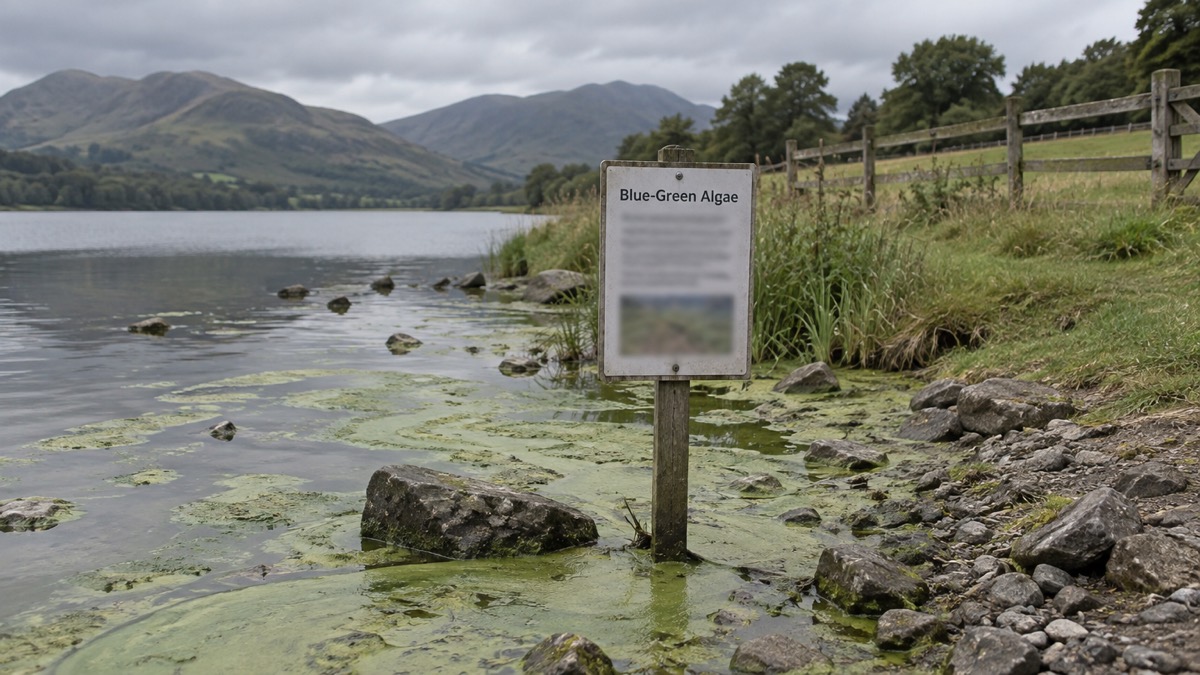
If you believe your pet may have been exposed to blue-green algae, contact your vet as soon as possible to get advice4. Farmers should ensure their animals do not have access to contaminated water, which may require fencing around suspect waters4. The Drinking Water Inspectorate makes the same point for private supply sources: install stock-proof fencing to protect the water source from grazing animals, including rabbits and deer as well as domestic livestock7.
The same care applies to flood water at the water's edge. The Met Office warns that flood water contains hidden dangers such as heavy debris, sharp objects, open manhole covers, sewage and chemicals, so keep children and pets away15. Public Health Wales says do not walk, drive, or allow children or pets to play in floodwaters16, and notes floodwater can be contaminated with sewage, chemicals and animal waste16. Don't let children or pets onto affected grass or paved areas until cleaned17, keep children and pets out of the affected area until the clean-up is complete18, and keep children out of recently flooded areas until they have thoroughly dried19. Wash children's hands regularly20.
Stagnant water in tanks and pipes, and flushing before use
The risks are not only outdoors. Water that sits still in your own plumbing can become unsuitable to drink. The Drinking Water Quality Regulator for Scotland advises: do not drink water that has been standing in the pipes for long periods, for example overnight, or if no one has been in for several hours. In these circumstances, draw off a washing-up bowlful of water from the kitchen tap to clear the water which has been standing in the pipes21. This matters most where lead pipes are involved, but it is good practice in any home after a period away.
If your drinking water comes from a storage tank, it will be safe to use if the tank is properly designed, correctly installed and kept in good condition22. After floods or storms, check the supply from abstraction point to taps for damage, change filters more frequently because of suspended solids, clean storage, intermediate and loft tanks, and check collection points for dislodgement or blockage10.
Before using taps after a flood, check your drains and sewers are clear before flushing toilets and running taps23. Any taps which have been submerged in contaminated floodwater should be cleaned using a bleach solution and run for 30 seconds prior to the water being used24. Watch for the signs that the water running is fresh: it should run clear, at its normal temperature, and without the odd taste or smell that standing or contaminated water can leave. If discoloured drinking water persists, in Northern Ireland it should be reported to Northern Ireland Water25. For more, see What to Do When Your Supply Comes Back On and How to Stay Safe from Legionella at Home.
Getting help: your GP, your vet and environmental health
If you think your water supply may be affecting your health, contact your GP3. In Argyll and Bute, the GP can provide containers for a stool sample, and the council water team can arrange to take a sample if appropriate12. The only way to know you have cryptosporidium is for a doctor to ask for a sample of your faeces to be tested in a laboratory2, so do not try to self-diagnose: describe the water you have drunk or the contact you have had, and let the test decide.
For pets, contact your vet as soon as possible if you believe your pet may have been exposed to blue-green algae4. For suspected algal blooms, take a photo and report it on the Bloomin' Algae website or app, and report it to your council's environmental health team4. Once a bloom is confirmed, weekly sampling will continue until 2 clear results are recorded14, so a report from you is what starts that protection for everyone else using the water.
If you are on a private supply, your council has a role too. Cornwall Council advises households to protect water quality by ensuring source protection measures remain effective, livestock cannot contaminate water sources, treatment systems are operating correctly, and filters and UV treatment systems are serviced and maintained26. Check that pipework bringing the water from your source is in good condition, does not leak, and is protected from damage by weather, animals or farm machinery3. See Private Supplies: Wells, Boreholes and Springs for the full picture.
Collecting rainwater, and what not to drink
Rainwater collected at home is not drinking water. The government's advice on supply interruptions is clear: do not drink water from a rain butt or tank as it could contain bacteria or disease. It can be used for flushing toilets or watering plants5. That is a genuinely useful role in an interruption, and it is covered in How to Flush the Toilet During an Outage, but it is not a substitute for a treated drinking supply. For drinking, see How Much Drinking Water to Store per Person and Storing Tap Water Safely at Home.
If you harvest rainwater as part of a private supply, the Drinking Water Inspectorate advises that approved materials (WRAS or permitted under regulation 5) should be used to prevent contamination of rainwater during runoff and collection7. Protect the source as you would any other: ensure the water being collected is not contaminated by discharges from a septic tank, slurry spreading, or nearby sources of pollution such as pesticide or oil storage3. For the wider picture on rainwater and living off mains, see Self-Reliance at Home: Rainwater, Off-Grid Power and Living Without Mains.
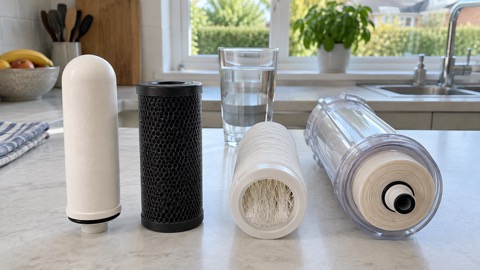
For treating water you have collected, chemical treatments are an alternative to boiling1. LifeSystems states that its chlorine dioxide drops kill bacteria, viruses and cysts in water including Giardia and Cryptosporidium27. See Purification Tablets: Chlorine, Chlorine Dioxide and Silver and Emergency Filters: Gravity, Pump, Bottle and Straw Types for the options, and What Each Filter Removes for what different filter types actually take out.
Sources (27)
- Summer health campaign, NHS inform, 2026-08-06
- Cryptosporidium: public advice, UK Health Security Agency, 2023-11-01
- Private water supplies, Scottish Borders Council, 2026-10-29
- Blue-green algae, Argyll and Bute Council, 2026
- Water supply interruptions or outages, Prepare Campaign, 2026-10-12
- Domestic consumers: public water supply, Drinking Water Quality Regulator for Scotland, 2026-10-28
- Protecting your private water supply, Drinking Water Inspectorate, 2026-10-28
- Private water supplies, Argyll and Bute Council, 2026
- How to stay safe during a drought, NHS inform, 2026-05-12
- Private water supplies after floods or storms, Argyll and Bute Council, 2026
- Receiving a boil water notice, Drinking Water Inspectorate, 2024-05-16
- Private water supplies: water sampling, Argyll and Bute Council, 2026
- Algal blooms, Public Health Wales, 2026-01-14
- Blue-green algae (cyanobacteria), Cumberland Council, 2026
- Driving in severe weather, Met Office, 2026-10-25
- Flooding and health, Public Health Wales, 2026-07-31
- Staying safe in a flood, Herefordshire Council, 2026-10-29
- Keeping children safe during a flood, nidirect, 2025-12-09
- Clearing up after a flood, Oxford City Council, 2026-10-29
- Thunderstorms: weather warning advice and information, nidirect, 2026-08-30
- Lead in drinking water, Drinking Water Quality Regulator for Scotland, 2024-02-26
- Water storage tanks and cisterns, Drinking Water Inspectorate, 2026-06-09
- Flooding advice, Belfast City Council, 2026-10-29
- Information about specific safety concerns, Northumberland County Council, 2026-05-21
- Dealing with drinking water problems, nidirect, 2026-10-06
- Private water supplies, Cornwall Council, 2026-10-29
- Chlorine Dioxide Water Purification Drops, LifeSystems, 2026-10-28
 Supply Interruption Checklist
 Boil Notice Checklist
 Drinking Supply Checklist
 How Much Water to Store
 Storing Tap Water Safely
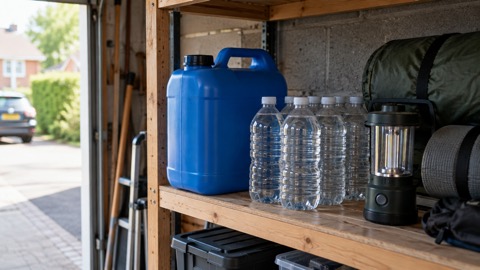 Containers and Jerrycans
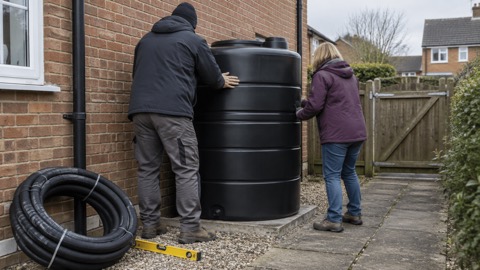 Household Storage Tanks
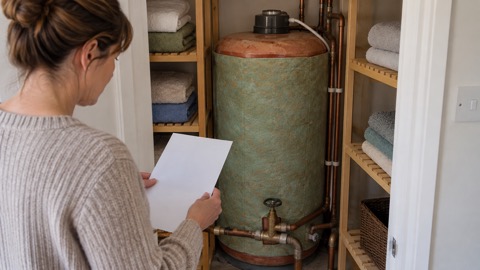 Water Already in Your Pipes
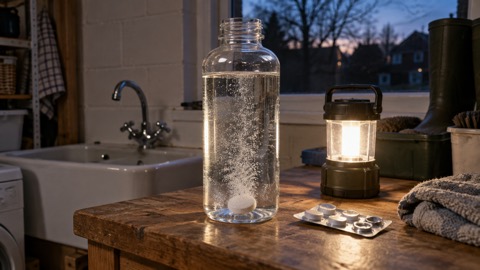 Making Water Safe to Drink
 Boiling Water to Kill Germs
 Purification Tablets
 Emergency Filter Types
 What Water Filters Remove
 Gravity Filters Explained
 Hand Pump Filters