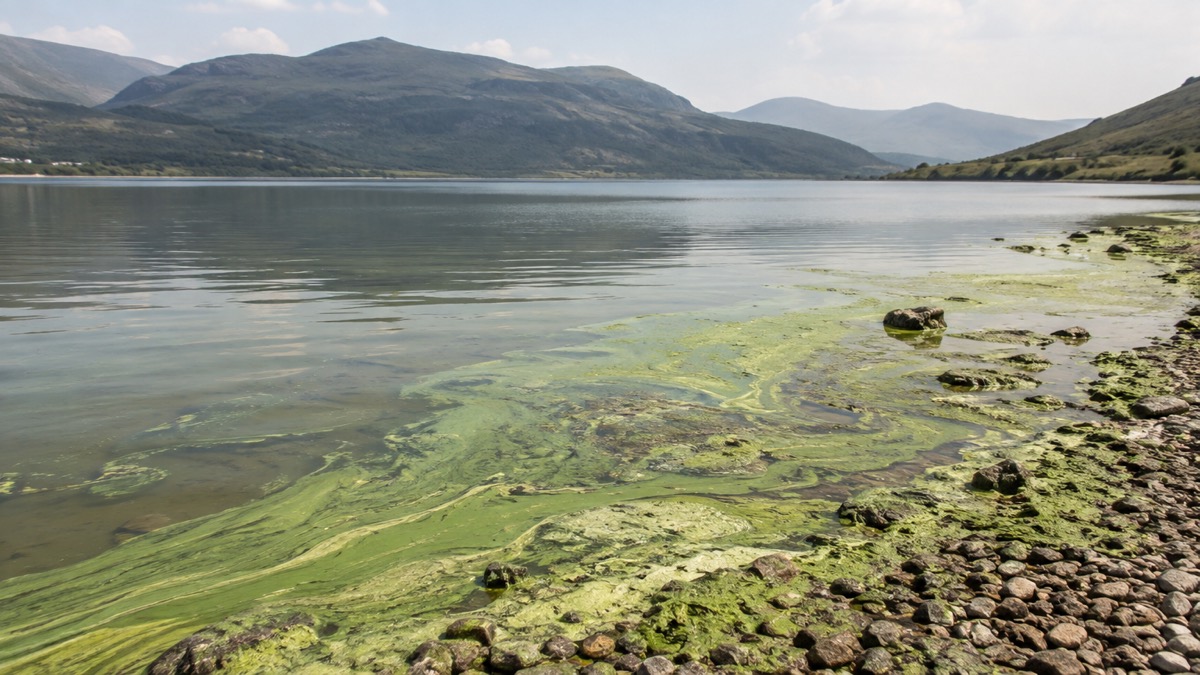
Blue-green algae, more correctly called cyanobacteria, are tiny organisms that occur naturally in lochs, ponds, reservoirs and rivers across the UK1. In long spells of warm, sunny, calm weather they can multiply into blooms that discolour the water and form scum at the edge, and some of these blooms produce toxins. Those toxins have killed dogs that went into affected water, and swimmers and paddlers who have swallowed algal scum have suffered skin rashes, eye irritation, vomiting, diarrhoea and muscle and joint pains1. The single rule that carries most of the official advice is simple: when in doubt, stay out1.
You cannot tell whether a bloom is toxic just by looking at it, so the safe approach is to treat every algal scum as potentially toxic2. That applies to the whole of a loch or watercourse where warning signs are displayed, not just the stretch where the scum is visible, because the algae can be dispersed and moved about by weather and currents1. This page sets out what to do near affected water, how to keep children and dogs safe, how to recognise a bloom, when fish from affected waters should not be eaten, and how to report what you find. It sits alongside our wider advice on heatwaves and drought and on swimming safely in rivers, lakes and the sea in hot weather.
When in doubt, stay out: what to do near affected water
The core instruction from councils that deal with blue-green algae is to be vigilant when using watercourses or shorelines, and when in doubt, stay out1. Avoid all contact with affected waters, and make sure children are kept away1. Blooms can be short-lived and transient, and they may move around a body of water as weather conditions change, so the absence of visible scum at one spot on one day is not a guarantee that the water is clear1.
If you or someone with you does come into contact with water you suspect is affected, the general advice for hazardous substance exposure applies: leave the immediate area to avoid further exposure, get fresh air, and find a water source to rinse if skin is itching or in pain, making sure the water can run off the affected area rather than pooling on the skin and spreading the substance more widely3. If someone is seriously unwell, report it to the emergency services on 9993.
A few sensible habits reduce the risk around any open water in warm weather. Pay attention to warning signs and your surroundings, stay clear of unstable bank edges, let someone know your plans, carry a mobile phone, and never enter the water after drinking alcohol4. Oxfordshire's summer safety advice makes the same point about alcohol: avoid being near water at all if you have been drinking5. Forestry and Land Scotland adds that dangerous algae, bacteria and viruses can be present in open water especially in summer, and that if the water looks or smells bad, do not enter6.
Keep dogs out of the water and away from scum
Dogs are the animals most often affected by blue-green algae, and the consequences can be fatal. Dogs have died after going into the water at the shores of affected lochs, and affected animals can deteriorate very quickly after very little contact1. The toxins can cause deaths of animals that come into contact with the algae through drinking contaminated water, swallowing quantities of scum or shoreline matter or crust, or licking their own contaminated coats1. That last route matters especially for dogs: a dog that swims in affected water and then grooms itself can swallow toxins even if it never drank from the loch.
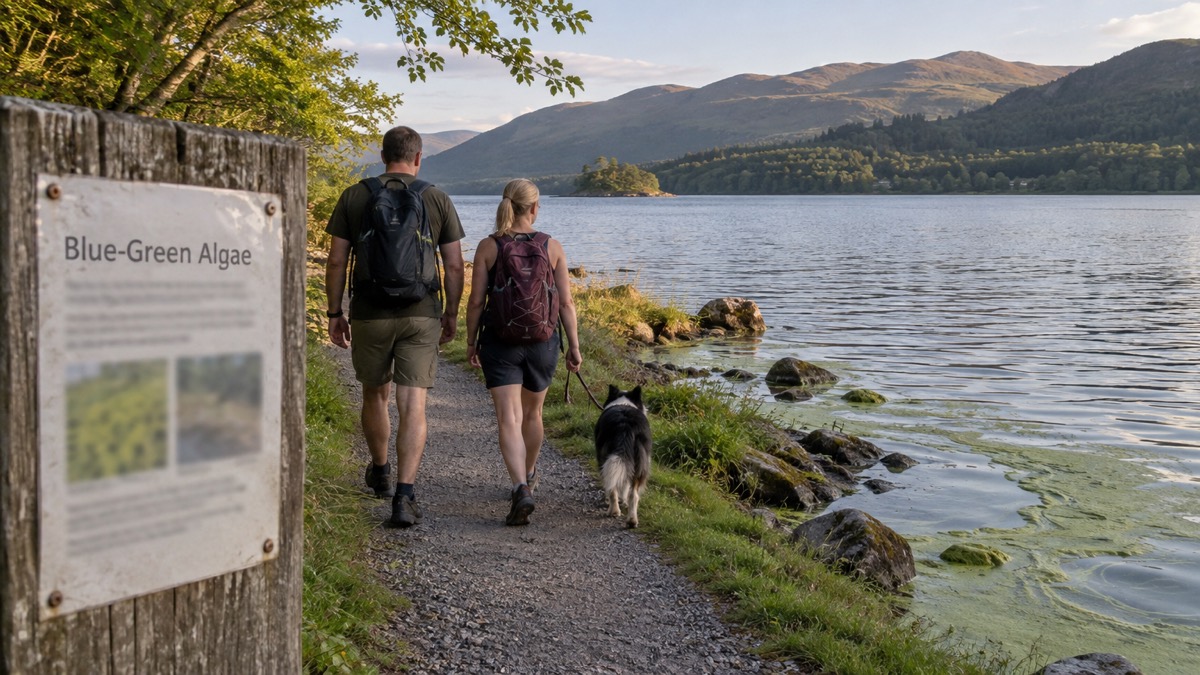
The instructions are therefore absolute. Do not let your pets or other animals go into or drink the water, or consume the scum1. Public Health Wales says the same: do not allow pets or animals into the water during a bloom7. Keep your dog on a lead around shorelines where scum is visible or warning signs are posted, and bring your own drinking water for it on walks. Forestry and Land Scotland warns that algae can be fatal for animals like dogs, so treat any stagnant or discoloured water on a walk as off limits6.
One further route of exposure that families often miss is touching a pet that has been in affected water. Public Health Wales lists touching pets, usually dogs, that have been in affected water among the ways people are exposed to algal blooms7. If your dog has been in water you suspect is affected, rinse it as soon as you can and keep children away from its wet coat until you have.
If you believe your pet may have been exposed to blue-green algae, contact your vet as soon as possible to get advice1. Do not wait to see whether symptoms develop, because affected animals can deteriorate very quickly1. Our wider guidance on pets and animals in an emergency covers what to have ready for your animals, including bottled water and pet food in an emergency kit.
How to spot a bloom: green, blue-green or brown water and surface scum
Blue-green algae are tiny organisms that occur naturally in lochs, ponds, reservoirs and rivers1. They are typically found in freshwater such as lakes, ponds and streams7, and Public Health Wales notes that toxic blue-green algae, more correctly called cyanobacteria, can grow in lakes and reservoirs8. In still waters the algae can multiply to such an extent that they discolour the water, which then appears green, blue-green, greenish brown or dark brown, sometimes with a scum on the surface, most commonly at the water's edge or shoreline1.
The Drinking Water Inspectorate explains the naming: cyanobacteria are sometimes referred to as blue-green algae, and algae generally are a diverse group of organisms that contain chlorophyll, often found in rivers and lakes9. Blooms may colour the water or form a scum on the surface that may be smelly7. Cumberland Council describes the appearance in more detail: blooms may appear green, blue-green or greenish brown, and often produce musty, earthy or grassy smells2. The algae can control their buoyancy, which allows them to float to the surface in sunny weather2, which is why scum often appears or thickens on bright days.
Other signs to look for include cloudy or discoloured water, and foam on the shoreline, which can be mistaken for sewage2. The bloom blocks sunlight, which can slow plant growth in the water2. Marine algal blooms also occur around the UK coast, but Public Health Wales notes these are less noticeable than blue-green algal blooms in freshwater, and there is a regular monitoring programme for marine blooms in the UK7.
| What you might see | What it can mean |
|---|---|
| Water coloured green, blue-green, greenish brown or dark brown | A blue-green algae bloom in still water1 |
| Scum at the water's edge or shoreline, sometimes thick | Surface accumulation of algae, treat as potentially toxic1 |
| Musty, earthy or grassy smell | Often produced by blue-green algae blooms2 |
| Foam on the shoreline | Can be a bloom sign, sometimes mistaken for sewage2 |
| Cloudy or discoloured water | A possible bloom sign2 |
Treat every algal scum as potentially toxic
It is not possible to tell which algae produce toxins just by their appearance, and laboratory analysis is needed, so it is advisable to regard all algal scums as potentially toxic1. Cumberland Council puts the same point more bluntly: you cannot tell if a bloom is toxic just by looking at it, so it is safest to assume it is2.
Some blue-green algae produce toxins, forming what are known as harmful algal blooms. Exposure to high levels of toxic algae can cause more serious illness including liver damage7. Because the toxins are invisible and the scum's appearance tells you nothing about whether it is producing them, the practical rule for a household is not to grade blooms by how they look. A thin scum and a thick one get the same response: keep everyone out, and report it.
Health effects for swimmers, paddlers and children
People are exposed to algal blooms in several ways, and Public Health Wales sets them out: being in or splashed by affected water; swallowing water or breathing in droplets when sailing, boating or fishing; water used for drinking; and touching pets, usually dogs, that have been in affected water7. That means the risk is not limited to swimmers. A child paddling at the edge, a family sailing through a bloom, or anyone handling a wet dog can be exposed.
The recorded effects on people are real and sometimes severe. Canoeists, windsurfers and swimmers who have swum through or swallowed algal scum have suffered skin rashes, eye irritation, vomiting, diarrhoea and pains in muscles and joints, and illnesses can be severe, particularly where affected water has been swallowed1. Public Health Wales adds that toxins can cause rashes after skin contact and illness if swallowed, and that exposure to high levels can cause more serious illness including liver damage7.
Children need particular watching. Swimmers and paddlers who have swum through or swallowed algal scum have suffered skin rashes, eye irritation, vomiting, diarrhoea and pains in muscles and joints, and illnesses can be severe, particularly where affected water has been swallowed1. If you are planning to swim outdoors in warm weather, check the water's appearance and any signs first, and read our guide to swimming safely in rivers, lakes and the sea in hot weather.
Warning signs apply to the whole loch or watercourse
Where blue-green algae has occurred before, councils have undertaken risk assessments of waterbodies, and in areas of high risk semi-permanent signage has been erected1. The Drinking Water Inspectorate notes that signs will often be posted around lakes and reservoirs warning people that cyanobacteria are present in the water9. Public Health Wales advises looking out for signs along the water's edge that may advise you not to use the water7, and nidirect's summer safety advice is blunt about them: pay attention to any warning signs or safety flags posted in the area, because they are put there for a reason10.
The point that catches many people out is the extent of the warning. The signage advice is pertinent across the whole loch or watercourse, because the algae can be dispersed and move about the loch with weather and currents1. A sign at one car park does not mean only that bay is affected. Treat the entire waterbody as off limits until the signs are removed.
Signs do come down when the risk passes. In one example from October 2026, warning signage relating to blue-green algae at Loch Morlich was removed following recent monitoring and assessment11. Where a council confirms a bloom, weekly sampling will continue until two clear results are recorded2, so the removal of signage reflects actual testing rather than a guess.
Fish from affected waters: when not to eat them
Anglers face a specific set of risks. Fish should not be consumed if dead fish or strange fish behaviour is seen, if blue-green algal scum is present, or if notices are displayed indicating unsafe levels of algal cell numbers or toxins1. Blue-green algae and their toxins can also adversely affect fish growth and health, and in some circumstances can cause fish kills1, so dead or oddly behaving fish are themselves a warning sign of a bloom.
There is a further instruction for pet owners among anglers: do not feed the liver or guts from fish to your pets when the fish are caught in waters affected by blue-green algae1. Toxins can concentrate in internal organs, so a fish that looks and smells fine can still carry them. If you fish waters that have had blooms in the past, check for notices before keeping any catch, and bin the guts rather than handing them to a dog.
How to report a suspected bloom
Reporting a bloom does two things: it gets the water tested, and it gets warning signs put up for other people. In England, Cumberland Council directs the public to report suspected blooms or pollution to the Environment Agency's 24/7 incident line on 0800 80 70 602. Once a bloom is confirmed, weekly sampling will continue until two clear results are recorded2.
You can also report sightings through the Bloomin' Algae project. Argyll and Bute Council asks anyone who suspects a bloom to take a photo and report it on the Bloomin' Algae website or app, as well as reporting it to the council's environmental health team by email1. The photo matters: it helps those assessing the report see what you saw, without needing to approach or touch the water.
If you are reporting on behalf of a household, keep it simple. Note where you were, what the water looked and smelled like, whether any animals or people had contact with it, and take a photo from a safe distance. Do not enter the water or handle the scum to get a better sample.
Why some waters are prone, and what reduces blooms
Blue-green algae occur naturally, but not all waters are equally likely to bloom. Waters that have been affected by agricultural, domestic or industrial discharges can be prone to developing blue-green algae, though blooms can also occur naturally1. The reason is nutrients: the algae feed on them. Cumberland Council notes that reducing phosphate helps improve water quality, but algae can also use nitrogen and nutrients from dirty water and land erosion2.
Weather is the other half of the picture. Blooms are more likely during long periods of warm, sunny weather and calm conditions with little or no wind2. Under favourable conditions such as warm, sunny weather, the algae can grow in huge numbers and form algal blooms7. They usually appear between June and November and rarely persist into winter, due to colder temperatures, wind and rainfall2. Although they commonly occur during prolonged hot weather, they sometimes occur at other times of the year1, so the season alone is not a safety check.
Households and boat owners can reduce the nutrient problem at its source. Cumberland Council advises regularly emptying holding tanks on boats, reducing detergent use by choosing phosphate-free products, and limiting fertiliser use on gardens, lawns and farmland2. None of these steps makes a single bloom disappear, but they reduce the conditions that let blooms form in the first place.
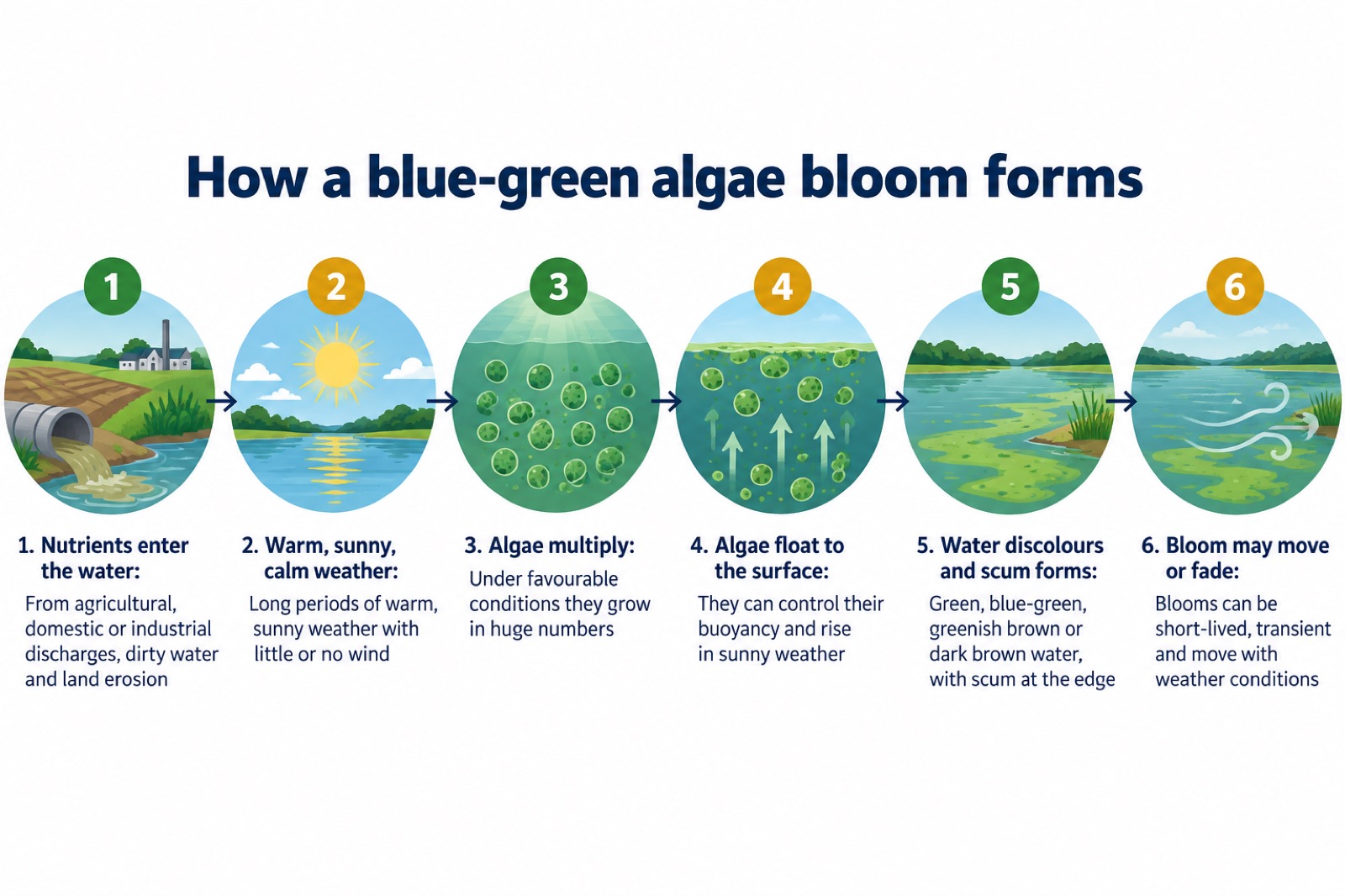
How warm, calm weather and nutrient-rich water combine to produce a bloom.
Drinking water, private supplies and Northern Ireland
For households on mains water, the Drinking Water Inspectorate provides reassurance about the source-water side of the problem. The main impact of algae in source waters is taste and odour complaints from consumers, often described as earthy or musty, caused by metabolites released by the algae, with no health impact upon consumers9. Water companies treat and monitor supplies, so a bloom in a reservoir does not mean a bloom in your tap.
Households on private water supplies should take more care, since the source is less protected. Official advice on protecting a private supply includes installing stock-proof fencing to protect the water source from grazing animals, including rabbits and deer as well as domestic livestock12, and Scottish Borders Council similarly advises that fencing may be necessary to stop farm and other animals from interfering with the source13. Animals near a source both damage it and add nutrients. If your private supply is affected or dries up in dry weather, see our page on what to do if your private water supply dries up.
Farmers have a direct responsibility here. Farmers should ensure that their animals do not have access to contaminated water, which may require fencing around suspect waters1. Livestock are among the animals the toxins can kill, so fencing suspect waters is protection for the herd as well as for the water.
Sources (13)
- Blue-green algae, Argyll and Bute Council, 2026
- Blue-green algae (cyanobacteria), Cumberland Council, 2026
- Physical threats: hazardous substance exposure, Protect UK, 2022
- Emergencies, safety and crime: water safety, The Highland Council, 2026
- Stay safe in summer, Oxfordshire County Council, 2026
- Water safety, Forestry and Land Scotland, 2026
- Algal blooms, Public Health Wales, 2026
- Water and health, Public Health Wales, 2026
- Algae and cyanobacteria in water, Drinking Water Inspectorate, 2022
- Fire and summer safety advice, nidirect, 2026
- Cairngorms wildfire and water update, The Highland Council, 2026
- Protecting your private water supply, Drinking Water Inspectorate, 2026
- Private water supplies, Scottish Borders Council, 2026
 Baby and Child Hot Weather
 Hot Weather Preparation
 Flood Warning Checklist
 Air Pollution and Hay Fever
 Babies and Children in Heat
 Dehydration Signs and Prevention
 Evaporative Coolers and Fans
 Electric Fans Guide
 Heat Exhaustion and Heatstroke
 UK Heatwave Definition
 Who Is at Risk in Hot Weather
 Portable Air Conditioners Guide
 Why UK Summers Are Hotter
 Sun Safety and Sunscreen
 Swimming Outdoors Safely