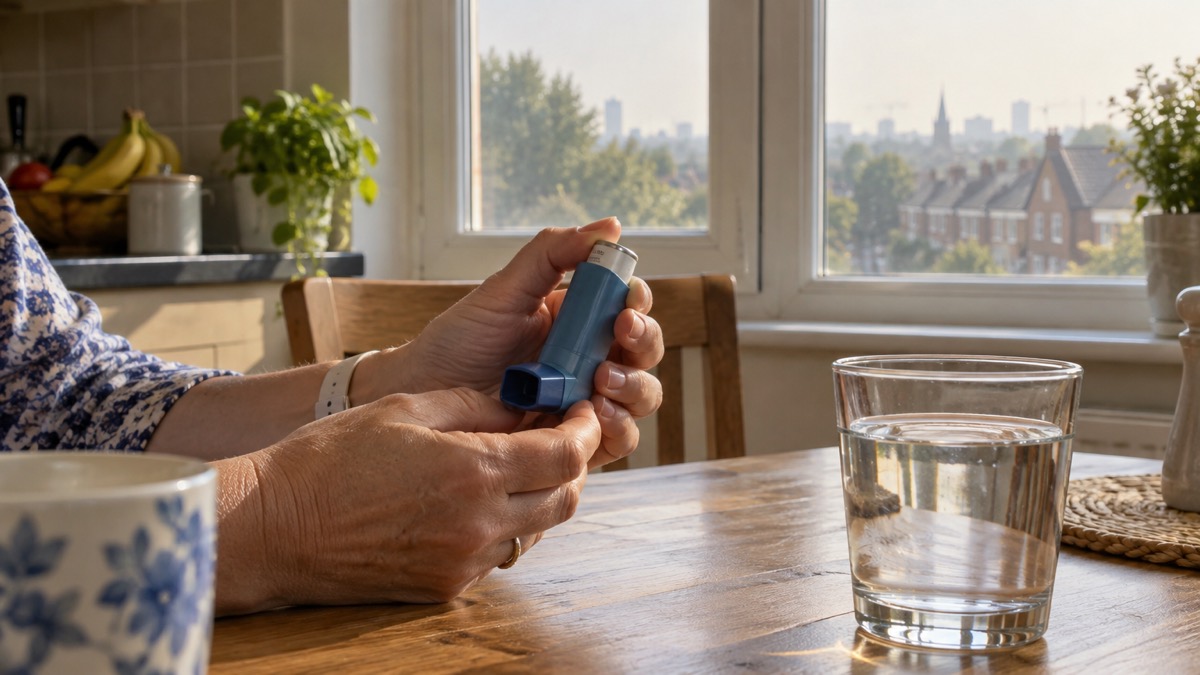
Hot weather does two things to the air at once: it makes some pollutants form faster, and it stops the air from clearing itself. The result is that the hottest, sunniest, stillest days of a British summer are often also the days when the air is at its worst to breathe. Official heatwave guidance for England is direct about what to do: check air pollution forecasts and advice, because air pollution can become worse during hot weather and can cause problems for people with asthma and other breathing problems1.
The practical habit to build is simple. Before and during any hot spell, look at the UK air pollution forecast, which gives a detailed interactive view for up to 5 days ahead2, and the Met Office 7-day forecast, which includes a pollen forecast useful for asthma and hay fever sufferers2. If you live in Scotland, the Air Quality in Scotland website shows local air quality by postcode on a scale of 1 to 10, and a free alert service tells you when pollution is set to rise3. Then match your day to what the forecast says: the people most at risk are those with lung or heart conditions, children, older people, and anyone whose breathing is already under strain from the heat itself.
This page explains why hot spells make the air worse, what ozone is and why it matters in summer, who is most at risk when heat and pollution arrive together, how hay fever fits in, and how pollution from outside gets into your home. It sits alongside our wider advice on heatwaves and drought, keeping your home cool and heat illness.
Check the air pollution forecast before hot days
The single most useful thing you can do is make checking the air pollution forecast part of checking the weather. The government's Prepare campaign advises finding out the pollution forecast in your area6, and the UK Air Pollution Forecast provides a detailed interactive view for up to 5 days ahead2. That is enough warning to plan around: you can move a long walk, a run or a day of gardening to a cleaner day, or to the earlier, cooler part of the day, before pollution and heat have both built up.
Pair it with the weather forecast itself. nidirect guidance for Northern Ireland advises checking the weather forecast so you know if a heatwave is on the way and can plan ahead to reduce the risk of ill-health from the heat7, and Met Office advice on keeping older people cool says to keep up to date with the latest forecast and any extreme heat warnings8. The two forecasts tell you different things: the weather forecast tells you how hot and how sunny it will be, and the pollution forecast tells you what that will do to the air.
In Scotland the arrangements are slightly different and worth knowing. Visit the Air Quality in Scotland website and enter your postcode to see what the quality of air is in your area, listed on a scale of 1 to 10, where 1 is low and 10 is very high3. You can also sign up to Know and Respond Scotland, which sends alerts if outdoor air pollution is forecast to be moderate, high or very high, along with advice on reducing your exposure to protect your health3. If you are travelling during a hot spell, National Highways-style advice applies too: check the forecast for your route and destination, not just for home2.
Why hot, sunny weather makes the air worse
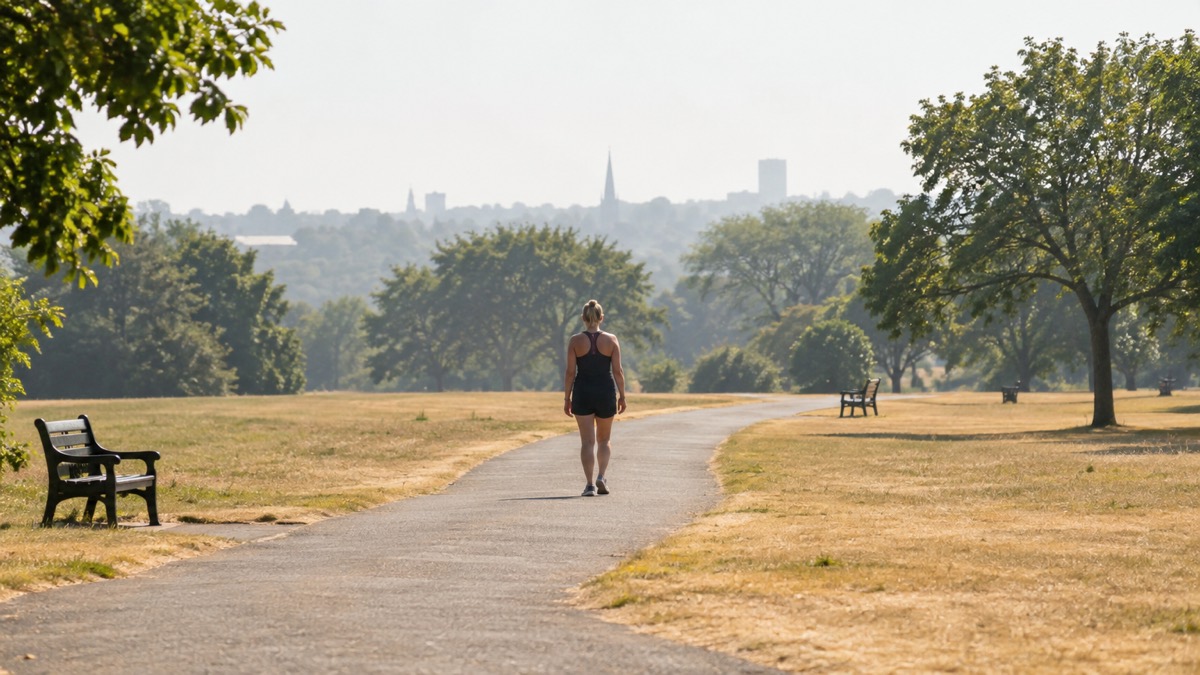
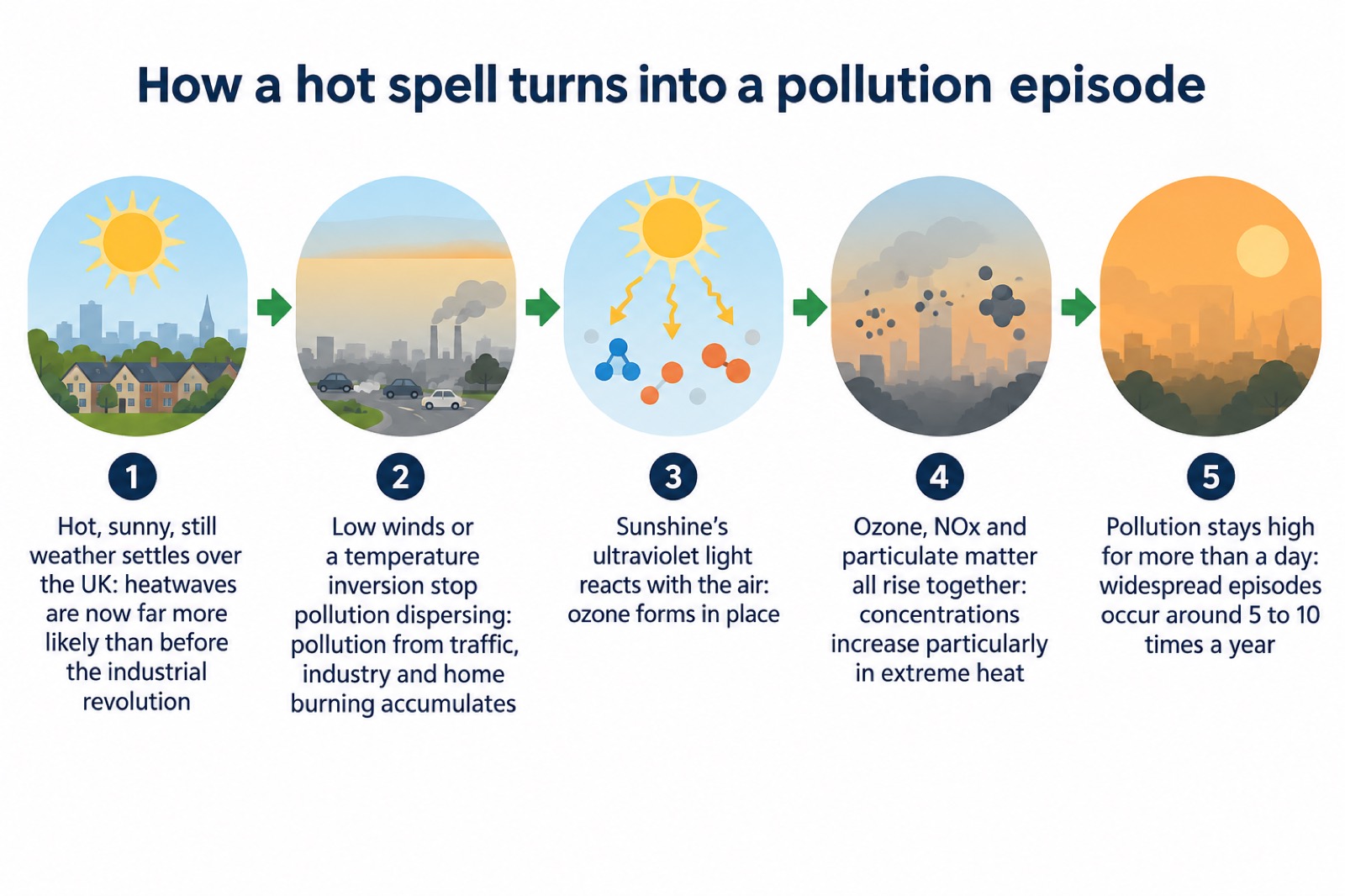
Air pollution does not simply get worse on its own. The National Risk Register explains that short-term surges in poor air quality occur primarily due to weather conditions preventing pollution from dispersing, including low winds or a temperature inversion4. In other words, the same still, settled weather that makes a heatwave also traps the pollution that traffic, industry and home burning produce, so it accumulates instead of blowing away.
Sunshine adds a second effect. The National Risk Register notes that sunshine's ultraviolet light reacts with the air to generate ozone4, a pollutant that is created in place rather than emitted directly from a pipe or exhaust. That is why a bright, cloudless heatwave can produce worse air than an equally hot but overcast day.
The health system's own planning documents confirm the pattern. An NHS integrated care board hot weather toolkit states that heat is associated with increased concentrations of ozone (O3), nitrogen dioxides (NOx) and particulate matter (PM2.5 and PM10), particularly during periods of extreme heat5. So a serious heatwave tends to raise several pollutants at once, not just one.
This is not a rare event, and it is expected to become more common. Periods of elevated pollution over a widespread area, lasting more than two days, can occur around 5 to 10 times a year depending on seasonal weather conditions4. Public Health Wales and the Met Office both note that hot spells are expected to become more frequent and more intense as the climate changes8. SEPA adds that Scotland is projected to have hotter, drier summers9. More hot spells means more of these trapped-pollution episodes.
Ozone: the summer pollutant that affects the lungs
Ozone deserves its own explanation because it behaves differently from the pollution people usually picture. Most pollutants are emitted somewhere and drift: exhaust pipes, chimneys, factories. Ozone is not emitted directly. As the National Risk Register sets out, sunshine's ultraviolet light reacts with the air to generate it4. That means ozone builds up precisely on the days people most want to be outside: warm, bright, summer days with strong sunshine.
Ozone is also a summer problem by nature. It needs the sun to form, so concentrations rise during hot sunny weather and fall when the weather breaks4. The NHS hot weather toolkit lists ozone among the pollutants whose concentrations increase with heat, alongside nitrogen dioxides and particulate matter5.
The health significance is in the lungs. NHS inform in Scotland states that outdoor air pollution can affect the health of our lungs and heart, and that being exposed to it can make existing health conditions worse3. Because ozone forms in the air itself rather than coming from a single nearby source, you cannot avoid it by moving a few streets away from a busy road in the way you might reduce exposure to traffic pollution. The practical response is timing: check the forecast, and on days when ozone is forecast to be high, do strenuous outdoor activity earlier or later in the day rather than in the sunny afternoon hours when it peaks.
Who is most at risk when heat and pollution combine
Everyone is at risk from air pollution, but NHS inform in Scotland is specific about who should take the most care: children, older people and those with underlying lung and heart conditions3. The same source adds another group whose risk comes from where they live: those who live near to industry or busy roads3. For them, a hot still day means both more pollution forming and less of it dispersing.
The heat side of the picture has its own at-risk list, and it overlaps heavily. nidirect guidance for Northern Ireland lists older people especially those over 75, babies and young children, people with a chronic health condition such as breathing or heart problems, people on certain types of medication, people with mobility problems, and people who are physically active such as manual workers or sportspeople7. Public Health Wales highlights older people, especially those over 6510, and official broadcast guidance adds pregnant women to the groups at particular risk from hot weather11. Met Office advice adds those who cannot adapt their behaviour to keep cool, and those exposed to high levels of heat because of where they live or work8.
| Group | Why heat and pollution raise the risk |
|---|---|
| People with lung or heart conditions | Pollution affects the health of the lungs and heart and makes existing conditions worse3; overheating makes heart and breathing symptoms worse8 |
| Children | Named among those most at risk from outdoor air pollution3 and from heat7 |
| Older people, especially over 65 or 75 | At risk from both pollution3 and heat7 |
| People near busy roads or industry | Higher exposure to outdoor air pollution3 |
| Pregnant women | At particular risk from hot weather11 |
| Babies and young children | Bodies less able to regulate temperature; at risk from heat7 |
If you or someone you look after falls into more than one of these groups, a hot spell with poor air quality is the day to change plans, not push through them. Our page on who is most at risk in hot weather goes into the heat side in more detail.
Heat and pollution together strain the heart and lungs
The reason officials worry about heat and pollution arriving together is that they hit the same systems. Met Office health guidance states that hot weather places a strain on the heart and lungs, and that the majority of serious illness and deaths caused by heat are respiratory and cardiovascular12. Add worse air pollution on top, and the same heart and lungs are working harder on dirtier air.
That is why the UK Health Security Agency's Beat the Heat guidance for hot weather tells people to check air pollution forecasts and advice, because air pollution can become worse during hot weather and can cause problems for people with asthma and other breathing problems1. NHS heatwave advice from Guy's and St Thomas makes the same point13, and the Scottish Government's Ready Scotland campaign states it plainly: hot weather can make air pollution worse, and this can cause problems if you have asthma or breathing problems14.
What to do on those days, drawn from official advice:
- Check the air pollution forecast alongside the weather forecast1
- Avoid exercising in the hottest parts of the day15
- Drink plenty of fluids and limit your alcohol intake1
- Keep your reliever inhaler with you if you use one, and follow your asthma plan
- Get medical advice if symptoms are affecting your health, or someone else's8
Heat alone can also produce symptoms that are easy to misread. The NHS lists being too hot as a cause of fainting, with warning signs that include sweating, feeling warm or hot, feeling sick, and changes to your vision16. If someone with a breathing condition feels this way on a hot, polluted day, get them somewhere cool, and seek medical advice. Our pages on heat exhaustion and heatstroke and when to call 999 or NHS 111 cover the warning signs in full.
Hay fever in hot weather
Hay fever sits at the junction of hot weather and air quality, and the forecast habit covers it too. The Met Office 7-day weather forecast includes pollen forecasts, which the government's early warning guidance notes can be useful for asthma and hay fever sufferers2. Warm, sunny weather is when pollen counts climb, so the same days that bring ozone and trapped pollution also bring pollen, and for many people all three arrive together.
For most people hay fever is miserable rather than dangerous, but it is worth taking seriously in two situations. First, hay fever and asthma are linked: the same guidance that flags pollen forecasts for hay fever sufferers flags them for asthma sufferers too2, and official heatwave advice already warns that hot-weather pollution can cause problems for people with asthma1. Second, hay fever disturbs sleep, and a hot night with poor air is already a night when breathing is harder work. NHS guidance on sleeping on hot nights is worth reading alongside the pollen forecast.
To ease symptoms when the pollen count is high:
- Check the Met Office pollen forecast before planning outdoor activities2
- Plan outdoor exercise for earlier in the day, avoiding the hottest parts15
- Shower and change clothes after being outdoors for a long period
- Keep windows closed at the times of day pollen is worst, balanced against the need to keep cool
- Speak to a pharmacist about treatments, and to a GP or midwife if you are pregnant or symptoms affect your breathing
Pregnant women should be especially careful in hot weather: official guidance names them among the groups at particular risk11. Our page on staying cool in pregnancy covers the heat side.
Pollution that gets into your home from outside
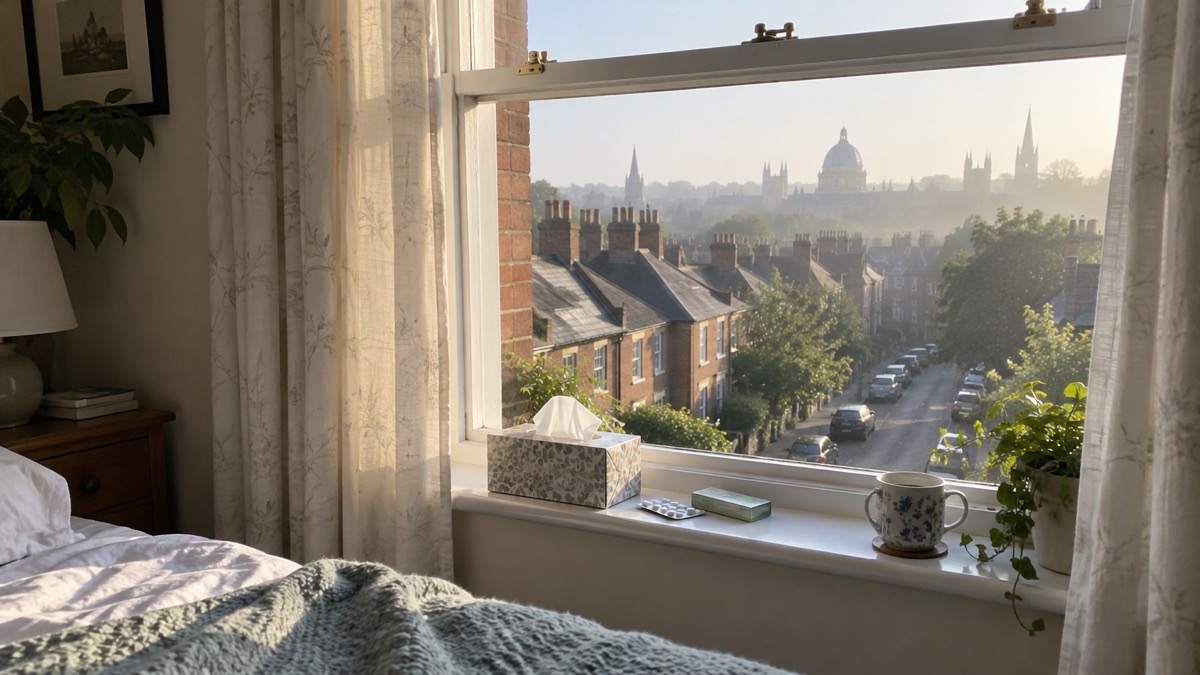
You cannot assume that closing the door solves the problem. NHS inform in Scotland states that some pollutants can enter your home from outdoor sources, and gives the example of gases and particles from vehicles entering your home and affecting the air you breathe indoors17. On a hot, still day when outdoor pollution is trapped over your area, some of it comes in with the air you let in.
The same source is clear that the home can make things worse on its own. Certain housing conditions put you more at risk: living near a busy road, cold and damp homes or homes with poor ventilation, and overcrowded homes which can lead to stagnant air that traps pollutants17. The groups most at risk from indoor air pollution are children, older people, pregnant women, and people with underlying health conditions like heart or lung conditions or allergies17.
Indoor air pollution has its own health effects, separate from the outdoor kind. NHS inform lists short-term effects including irritation of the eyes, nose and throat, headaches and dizziness, and longer-term increased risks including breathing problems, respiratory infections like bronchitis and pneumonia, reduced lung function especially in children, and cancers like lung cancer17.
This creates a genuine tension in a heatwave: you need ventilation to keep cool, but ventilation is also how outdoor pollution gets in. Sealing the house shut is not the answer either, because where the airtightness of a building is raised without adequate ventilation, overheating is likely to occur, along with condensation and potential damp and mould growth4. The answer is timing rather than sealing the house. Let air in when the outdoor air is cleanest and coolest, typically overnight and early morning, and shade and close up during the hot afternoon. Our pages on keeping your home cool and stopping the sun heating your rooms set out how to do that.
Reducing your own contribution
Households are not just exposed to pollution; they produce some of it. NHS inform in Scotland gives practical advice on reducing air pollution: walk, cycle, wheel or scoot for short local journeys and avoid the busiest roads and times where you can; use public transport where you can; switch your engine off when stationary if you do drive; and avoid unnecessary burning at home, for example in a wood burning stove or open fire, unless it is your only source of heat3. The main sources of particulate matter in Scotland are road transport, industry and domestic burning, including open fires and wood burning stoves3.
On hot, still days this matters most, because that is exactly when the weather will not disperse what you emit4. A bonfire or stove lit during a settled hot spell adds to the trapped pollution your street is already breathing.
Wildfire is a related and growing concern. NHS inform notes that wildfires are a growing risk in Scotland which can negatively impact air quality3. The Scottish Fire and Rescue Service has explained the mechanism: in early March there is a lot of dead grass and heather left over from the previous year which can dry very quickly due to a combination of frost, low relative humidity, sunshine and wind, and when ignited acts as fuel which can spread wildfires over a wide area18. Follow the fire and rescue service's advice on reducing wildfire risk, and see our pages on wildfires and grass fires and barbecues and wildfire risk.
Where to get help with breathing problems and hay fever
For day-to-day symptoms, a pharmacist is the right first stop for hay fever and mild breathing irritation, and a GP for anything persistent or worsening. Lancashire County Council's hot weather advice is to be alert and call a doctor or social services if someone is unwell or further help is needed19. Met Office advice adds: if you have concerns about an uncomfortably hot house that is affecting your health or someone else's, get medical advice8.
In Scotland, the Know and Respond Scotland alert service does more than warn you: it also provides advice on reducing your exposure to air pollution to protect your health3. NHS inform is the reference point for health information on outdoor and indoor air pollution in Scotland3.
For the wider picture of who gets extra support in an emergency, including households that are older, disabled or medically dependent, see our guide to extra help in an emergency. And if you want to build the checking habit into a broader routine, our hot weather preparation checklist and the heat-health alerts page explain how the warning system works and how to sign up.
Sources (19)
- Beat the heat: staying safe in hot weather, UK Health Security Agency, 2026-07-21
- Early warning and weather forecasts, GOV.UK, 2024-12-19
- Outdoor air pollution, NHS inform Scotland, 2026-10-14
- National Risk Register 2020, Cabinet Office, 2020
- Hot Weather Toolkit 2025, NHS Humber and North Yorkshire Integrated Care Board, 2025-05-28
- Check the risks where you are, Prepare Campaign (UK government)
- Hot weather advice, nidirect (Northern Ireland government), 2026-10-05
- Tips for keeping older people cool, Met Office, 2026-10-29
- What is water scarcity, Scottish Environment Protection Agency, 2026-10-29
- Weather and health, Public Health Wales, 2026-07-16
- Keeping warm or cool in extreme weather: broadcast scripts, GOV.UK, 2025-12-16
- Hot weather and its impacts, Met Office, 2026-10-29
- Heatwave advice, Guy's and St Thomas' NHS Foundation Trust, 2026-06
- Hot weather, Ready Scotland, 2026-03-24
- How to cope in hot weather, Keeping Well North West London (NHS), 2026-10-29
- Fainting, NHS, 2026-08-17
- Indoor air pollution, NHS inform Scotland, 2026-08-05
- Wildfire warning across Southwest and Central Eastern Scotland, Scottish Fire and Rescue Service, 2023-03-09
- How to keep cool this summer, Lancashire County Council, 2026-10-29
 Baby and Child Hot Weather
 Hot Weather Preparation
 Flood Warning Checklist
 Babies and Children in Heat
 Blue-Green Algae Risks
 Dehydration Signs and Prevention
 Evaporative Coolers and Fans
 Electric Fans Guide
 Heat Exhaustion and Heatstroke
 UK Heatwave Definition
 Who Is at Risk in Hot Weather
 Portable Air Conditioners Guide
 Why UK Summers Are Hotter
 Sun Safety and Sunscreen
 Swimming Outdoors Safely