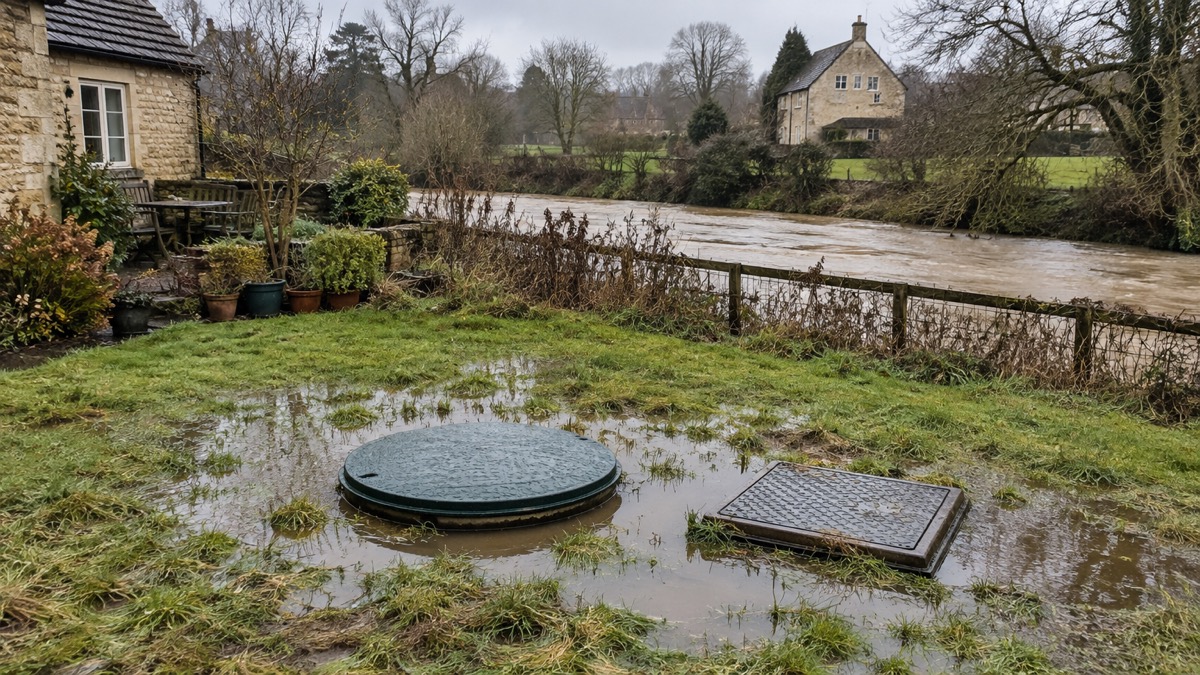
If your home has flooded, do not flush the toilet or run the taps until you know the drains and sewers are clear. Flushing while the system is overwhelmed can push sewage back into your home and spread it further1. If you have a septic tank and it has been covered by floodwater, the advice is not to use the tank at all if you can avoid it, to keep away from standing water that may contain sewage, and to flush as little as possible while the flood is in progress3.
Floodwater is likely to be contaminated with sewage, and that contamination remains after the water has gone4. That makes every decision around the toilet, the bathroom and the drains a health decision as much as a plumbing one. Wash your hands with soap and clean water after any contact with floodwater or sewage, and wear rubber boots and gloves for clean-up6.
The good news is that most of this is manageable with a few simple steps: check before you flush, use an emergency toilet if the system is down, clean and disinfect thoroughly once the water has gone, and know who to ring when the problem is bigger than your own plumbing. This guide sets out each of those in turn.
Don't flush until you know the sewer or tank is working
The single most useful thing you can do after a flood is to pause before you flush. The Consumer Council for Water is blunt about why: "Stop using water: Don't flush toilets or run the tap, as this could spread the sewage further"1. The official advice from Belfast City Council is the same in practice: check your drains and sewers are clear before flushing toilets and running taps2.
That check is not always something you can do yourself. If the water is still high, if the drains outside are full, or if you can hear gurgling when you run a tap, assume the system is not ready and keep using an emergency toilet instead. If your toilet or sink is backing up during floods, Natural Resources Wales advises calling your local water company10. An overflowing sewer is also a matter for your water company11.
Mains tap water is a separate question from drainage. Official guidance is that mains tap water should not be contaminated after flooding, but you should wash the taps and let them run for a few minutes before use2. That running water also helps you judge whether the drains are coping.
Signs your toilet or drains are backing up
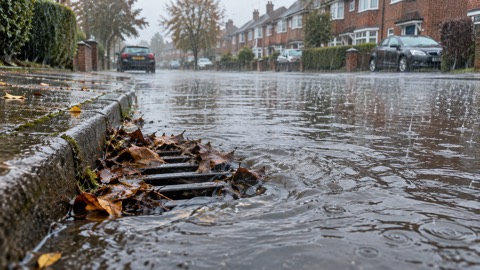
Floodwater does not only arrive through the front door. Water may come up through toilets, sinks, or drains, and this can cause significant disruption4. That is the clearest sign that the drainage system is under pressure: if water is rising in the bowl or the drain outside is full, the sewer is already struggling.
Watch for these warning signs:
- Water gurgling or rising in the toilet bowl when you run a tap or use the washing machine.
- A drain outside that is full to the top or overflowing.
- Slow drainage in the sink, bath or shower.
- A sewage smell in the bathroom or around outside drains.
- Water appearing at the base of the toilet or around a downstairs floor drain.
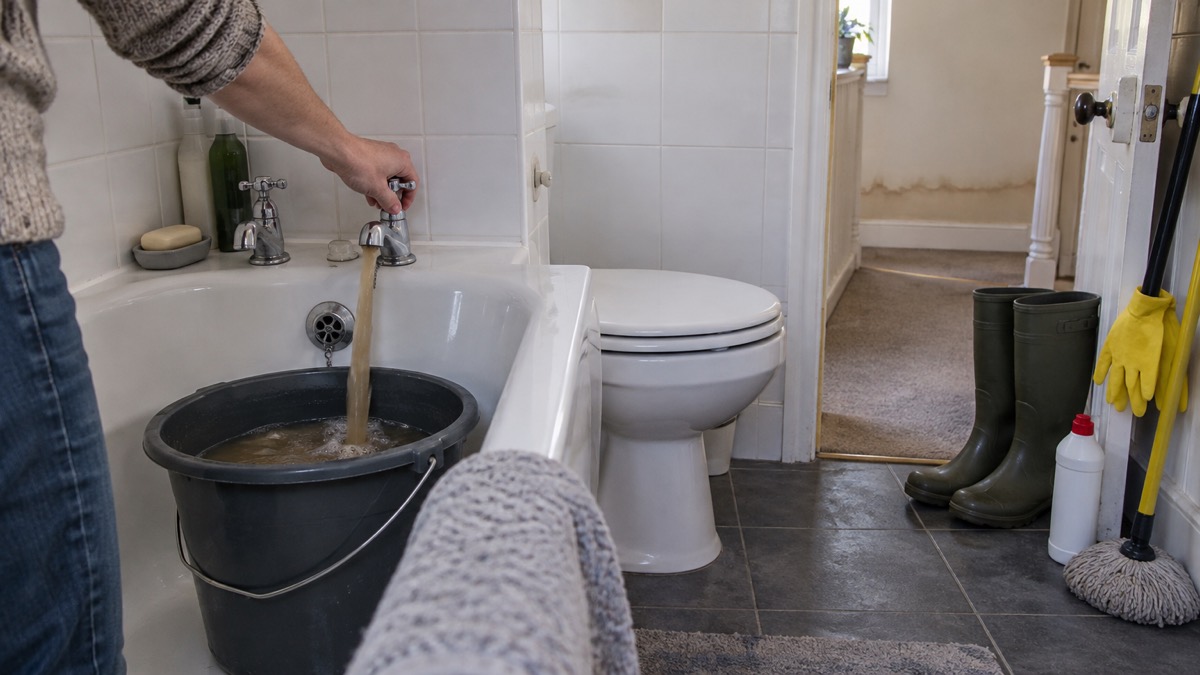
If you see any of these, stop using water and switch to an emergency toilet. The same applies if a neighbour's drains are backing up, since you are likely on the same sewer.
Floodwater itself carries a health risk whatever the drains are doing. Flood water can contain harmful bacteria, and official Scottish guidance is to wear protective clothing if you need to clean up14. In Northern Ireland the advice adds that you should use rubber gloves when cleaning up16. Keep children and pets away from any standing water, and wash your hands thoroughly after each clean-up session17.
If you are in a flat or a basement and sewage is entering, do not try to clear a blockage yourself while water is still rising. Get out of the affected room, keep others away, and call your water company10.
Septic tanks and cesspits after flooding: wait for the water to go down
If your home is not on the mains sewer, the rules change. Official guidance for septic tanks during flooding is clear: if the tank becomes covered with water, do not use the tank at all if possible, avoid contact with standing water that may contain sewage, eliminate all non-essential water use, and flush toilets as little as possible while a flood is in progress3.
The first principle is patience. General flooding advice is to wait for the water to subside18. Trying to pump out or empty a tank while groundwater is still high is where things go wrong.
There is a second reason to wait. There are often problems with septic tanks during groundwater flooding, and the official advice is to contact the Environment Agency and seek specialist advice7. Groundwater flooding is the kind that lingers, so this is not a problem that clears in a day. If you are in an area where the water table has risen, assume the tank needs professional attention before it goes back into normal use.
Once the water has gone down, a drainage contractor can assess the tank, check for silt and damage, and advise on emptying and restarting it. Keep a record of what happened and when, with photographs, for any insurance claim.
Emergency toilet: how to make one with bags and a bucket
If the toilet cannot be used, you still need somewhere to go. Official guidance lists the options in order of preference: use the facilities of unaffected family, friends, neighbours, public toilets, rest centres, local shops, supermarkets and hotels3. Chemical toilets may be provided in some situations, and you can hire chemical toilets from hire companies and camping and caravan stores3.
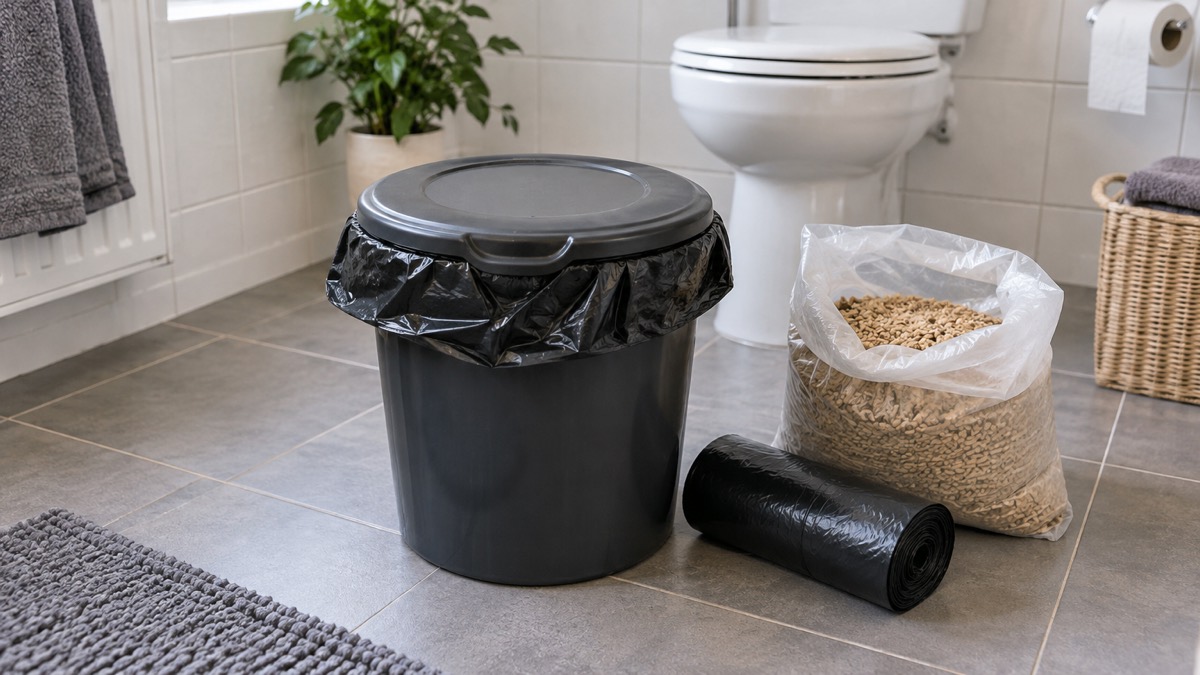
If none of that is available, a simple emergency toilet works. You need a bucket with a lid, strong plastic bags to line it, and something to absorb and cover waste, such as cat litter or sawdust. Portable bag-in-a-bag products designed for solid and urine waste may be provided in some situations, and they do the same job3.
To make and use one:
- Line a sturdy bucket with a strong plastic bag, and keep a supply of spare bags beside it.
- Put a layer of absorbent material in the bottom of the bag.
- After each use, add more absorbent material and close the lid.
- Keep the bucket away from food preparation areas and out of reach of children and pets.
- Wash your hands with soap and clean water after every use6.
When a bag is full, seal it and set it aside somewhere secure until you can dispose of it properly. Do not put it out with normal recycling.
Cleaning a toilet and bathroom contaminated by floodwater
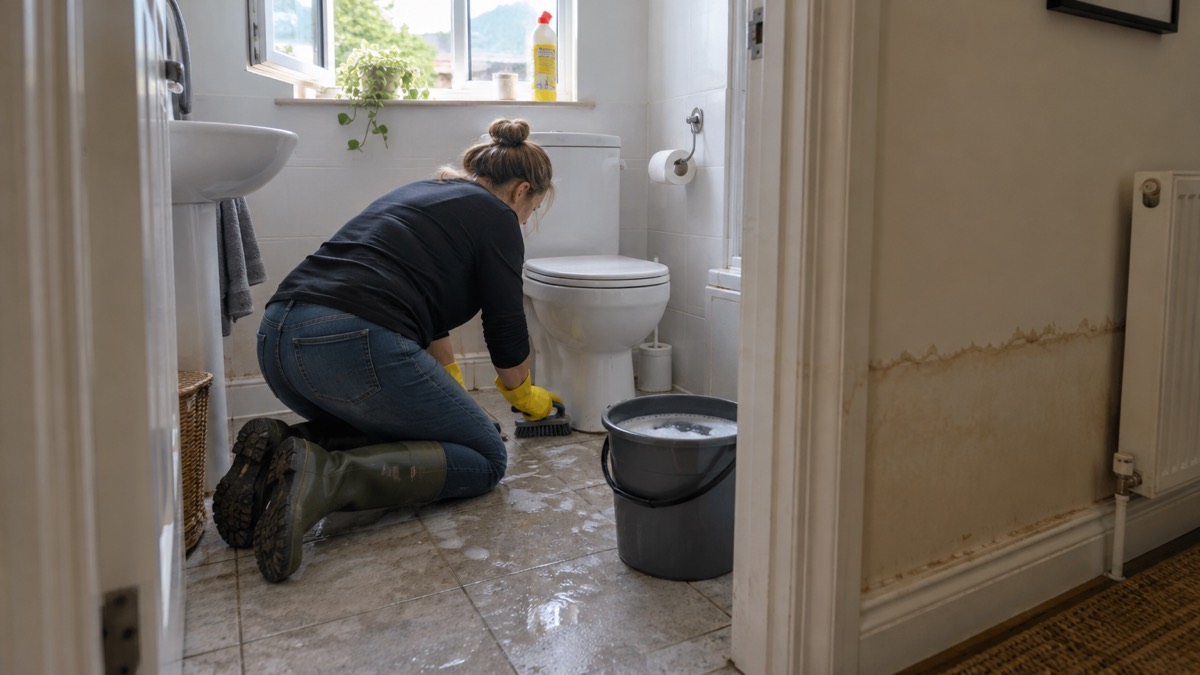
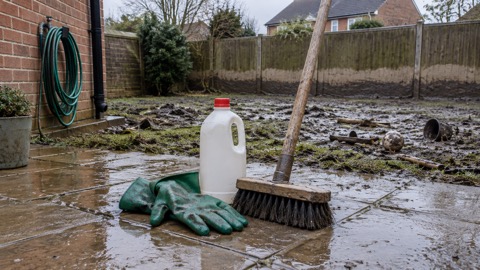
Only start cleaning when you are certain it is safe to return to your home after a flood19. When you do, treat the bathroom as contaminated until it has been cleaned and disinfected. Floodwater will often be contaminated by untreated sewage, which remains after the floodwater has gone, so wear rubber boots and gloves in and around the affected property5.
Work through it in this order:
- Ventilate first. Open windows and ventilate the house until it is completely dry20.
- Clean, then disinfect. Do an initial clean and follow it by disinfecting all surfaces that were contaminated by floodwater. You can clean contaminated surfaces with a brush, hot water and household cleaning fluid19.
- Rinse and clear the floors. Rinse and clean all floors as quickly as possible, and replace flooring that has been deeply penetrated by floodwater or sewage20.
- Disinfect all affected areas after cleaning, and keep any open sores or cuts clean and covered with waterproof plasters21.
- Wash your hands thoroughly with soap and clean water after each clean-up session17.
Toilet waste that has spread into affected areas should be removed by shovelling it into black bags and sealing them23. Wear gloves and boots while you do it, and wash afterwards. If the contamination is extensive, or the bathroom has been under water for some time, contact your local environmental health department for further advice20.
Who to call: water company, septic tank engineer or council
Knowing who is responsible for what saves time and worry. The table below sets out the main contacts.
| Problem | Who to contact |
|---|---|
| Toilet or sink backing up during floods, or sewer flooding | Your local water company10 |
| Overflowing public sewer | Your water company11 |
| Pumping floodwater into a public sewer | Check with your water company first11 |
| Septic tank, cesspit or treatment plant after a flood | A drainage contractor before emptying7 |
| Septic tank problems during groundwater flooding | The Environment Agency for specialist advice7 |
| Further cleaning or contamination advice | Your local environmental health department20 |
| Utilities before turning them back on | Your utilities company or a qualified engineer24 |
For sewer flooding, or if your toilet or sink is backing up during floods, call your local water company10. If you are thinking of pumping floodwater out of your property into a public sewer, check with your water company first11. Get your utilities company or a qualified engineer to check that gas, electricity and water are safe before turning them back on24.
On insurance, sewage flooding damage is covered by most building insurance policies, and your insurer will be able to advise you on your next steps25. Contact them early, before anything is removed or repaired.
For the wider clean-up, our guide to cleaning up safely after floodwater covers the rest of the house, and after a flood: returning home safely sets out the order to do things in. If your garden has been affected by sewage, see when your garden is safe after sewage. For the causes and responsibilities behind sewer flooding, read sewer flooding: causes and who is responsible.
Sources (25)
- What should I do if there's a flood?, Consumer Council for Water, 2026-10-28
- Flooding advice, Belfast City Council, 2026-10-29
- How to recover from flooding, GOV.UK, 2023-12-19
- Preparing for a flood, London Fire Brigade, 2026-10-25
- Information about specific safety concerns, Northumberland County Council, 2026-05-21
- Further support after a flood, Nottinghamshire County Council, 2026-10-29
- Prepare your property for flooding, GOV.UK, 2009-10-01
- Public health advice during a national power outage, GOV.UK, 2025-12-16
- Adapting your home or business to the risk of flooding, GOV.UK, 2009-10-01
- What to do in a flood, Natural Resources Wales, 2026-10-29
- Help during a flood, GOV.UK, 2026-10-25
- Private water supplies after floods or storms, Argyll and Bute Council, 2026
- Water storage, Drinking Water Inspectorate, 2025-11-05
- Rain and flooding, Ready Scotland, 2026-03-24
- Flooding, Ready Scotland, 2026-03-24
- Thunderstorms weather warning advice and information, nidirect, 2026-08-30
- Flooding, City of York Council, 2026-10-29
- Stay safe during Storm Babet, North Yorkshire Fire and Rescue Service, 2023-10-19
- After flood clearing, nidirect, 2026-05-06
- Be prepared, Lancaster City Council, 2026-10-26
- After a flood, Surrey County Council, 2026-09-23
- Cleaning up and returning home after flooding, Derbyshire County Council, 2026-10-29
- Staying safe in a flood, Herefordshire Council, 2026-10-29
- After a flood, GOV.UK, 2026-10-25
- Sewer flooding, South West Water, 2026-10-28
 Flood Warning Checklist
 First Steps After a Flood
 Insurance Claim Records
 Signing Up for Flood Warnings
 Flood Warnings Without Email
 Who to Report Flooding To
 Reporting a Blocked Gully
 Garden Safety After Sewage
 Council Sandbag Duties
 Filling and Laying Sandbags
 Makeshift Sandbags
 Disposing of Used Sandbags
 Turning Off Utilities
 Walking or Driving in Floodwater
 Turning Electricity Back On