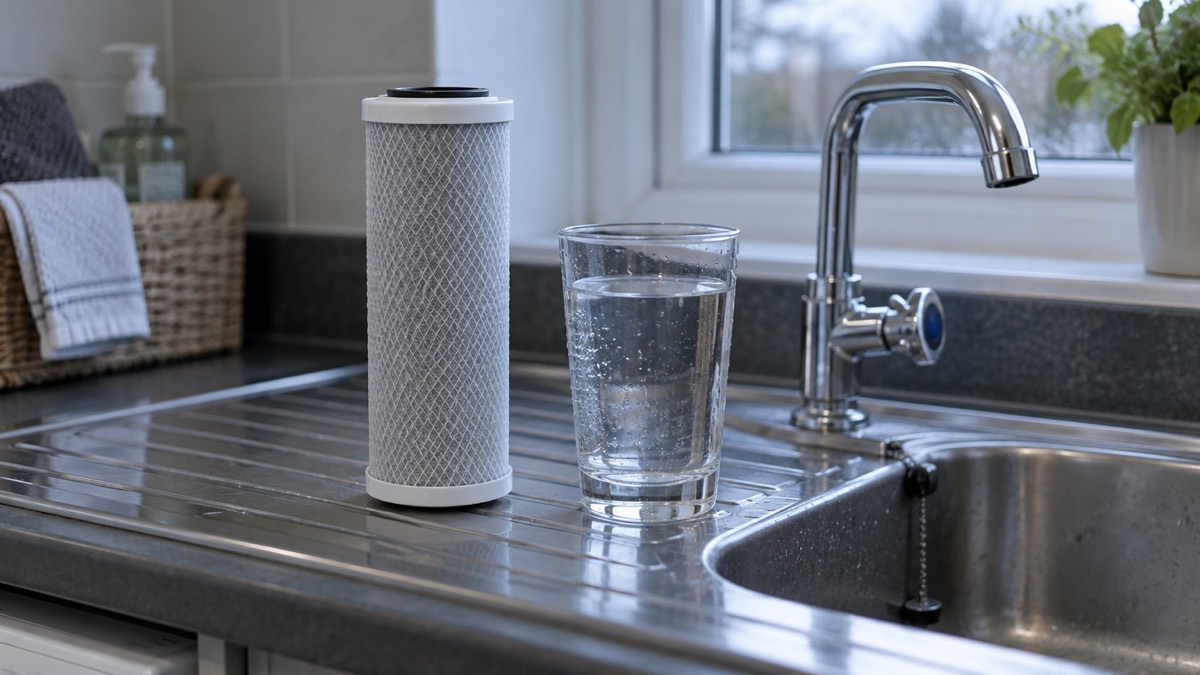
When a filter box says it removes "99.99%" of something, or carries a badge with "NSF" on it, those claims have a precise meaning, and knowing how to read them is the difference between a filter that suits your tap water and one that could keep you safe in a genuine emergency. The letters stand for NSF, formerly the National Sanitation Foundation, founded in 1944 and now a global, independent public health and safety organisation that develops and sets public health standards and operates in more than 180 countries1. Its standards for water filters are the ones you will see most often on products sold in the UK, alongside WRAS approval, which matters here for a different reason.
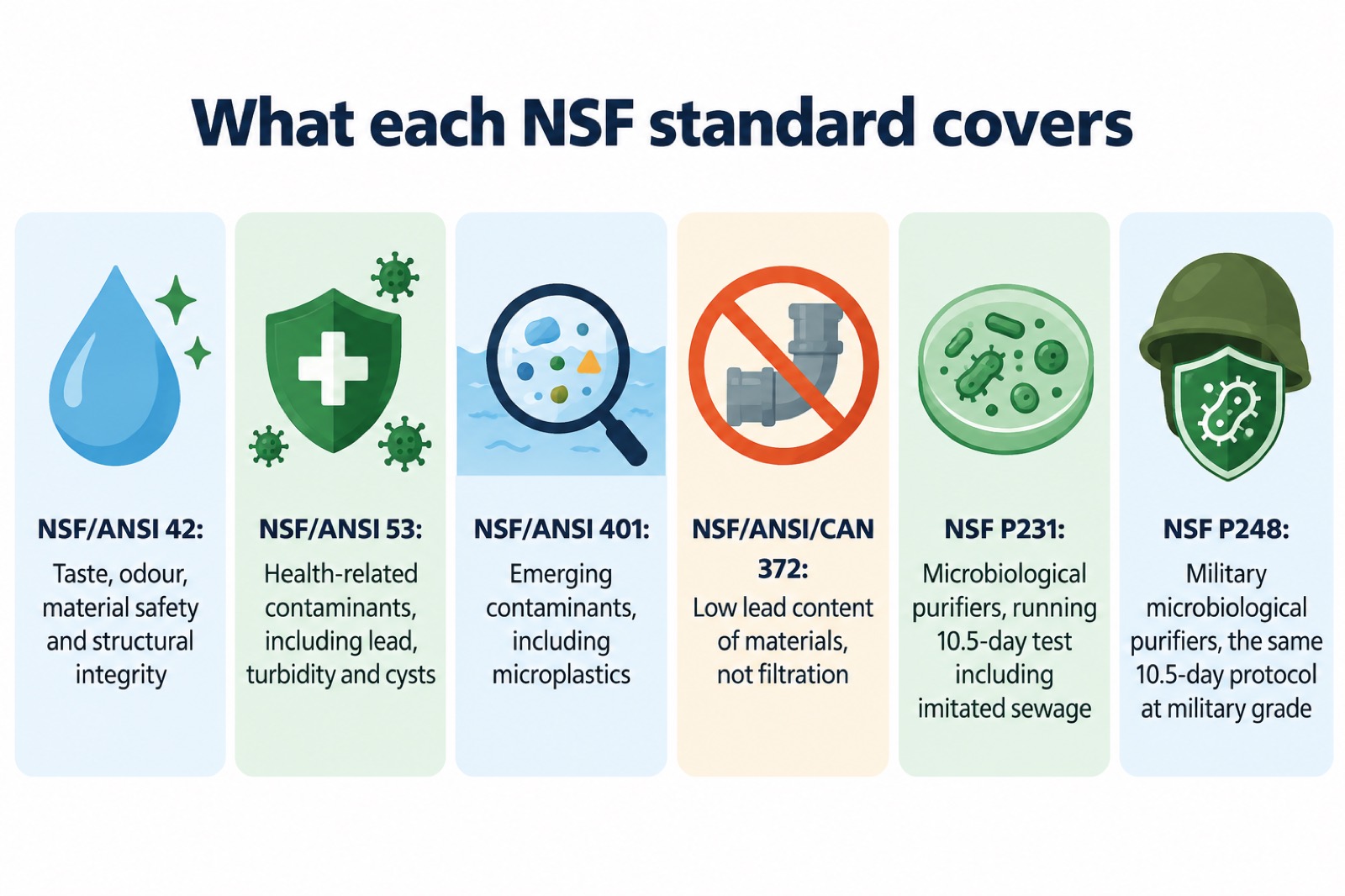
The short version is this. NSF/ANSI 42 covers taste, odour and material safety: it makes water pleasanter to drink and confirms the filter itself does not leach harmful substances. NSF/ANSI 53 covers health-related contaminants such as lead. NSF P231 and P248 are tougher protocols for microbiological purifiers, tested over a running 10.5-day test using multiple sources of water including imitated sewage3. Certification is not a one-off: all testing is repeated every 5 years, and makers of certified products receive unannounced annual factory inspections and audits1. You can verify any claim yourself by searching the maker, brand or product name in the official NSF database2.
What NSF is and why its mark carries weight
NSF was founded in 1944 as the National Sanitation Foundation and has grown into a global organisation operating in more than 180 countries2. It is a global, independent public health and safety organisation dedicated to improving human health worldwide by developing and setting public health standards1. The independence matters: the body writing the standard and testing the product is not the company selling it to you.
For UK households, NSF certification sits alongside the domestic system. Your water company is already testing constantly: Northern Ireland Water, for example, tests over 110,000 water samples every year to make sure water is clean and safe4. NSF standards come into their own at the point where mains assurance ends: the filter fitted under your sink, the gravity filter in your cupboard, or the purifier bottle in your emergency kit. If you are preparing for an interruption to your supply, the pages on how to make water safe to drink and what different filter types remove explain the practical side; this page explains how to judge the claims.
NSF has developed a range of specific standards for point of entry (POE) and point of use (POU) water systems, collectively known as drinking water treatment units (DWTU)1. Point of use means the filter treats water at a single tap or in a single bottle; point of entry means it treats all the water entering the house. For most households, and almost always in an emergency, point of use is what you will be dealing with: jugs, under-sink systems, gravity filters, pump filters and straw filters.
NSF/ANSI 42: taste, odour and material safety
NSF/ANSI 42 covers taste, odour and structural integrity: it improves water quality by reducing aesthetic impurities2. If you are looking for a system simply to improve the taste and smell of your tap water, a product certified to NSF/ANSI 42 is the one to look for2.
The standard has a second, less advertised role that is arguably more important. Material safety under NSF/ANSI 42 is a minimum requirement for NSF certification of water filters: it ensures the filter does not leach harmful substances into the water passing through it, and that the system will not leak1. In other words, 42 is the floor, not a luxury. A product certified to a higher standard should also have passed this material safety baseline, so the "42" on a listing is not a sign of a lesser product; it is a sign that the basics have been checked.
Doulton, for example, lists NSF/ANSI 42 certification across a range of its products, including the Kingfisher under-sink system with Biotect Ultra, the Biotect Ultra and Ultracarb cartridges, and the 8.5 litre gravity systems fitted with Ultra Sterasyl or Ultra Fluoride filters2. The Kingfisher system's 42 certification is stated as covering material safety, class 1 particulate and chlorine reduction5. Chlorine reduction is the classic 42 claim: it is what removes the swimming-pool taste that sometimes puts people off their tap water, a subject covered in more detail on why tap water tastes or smells different.
NSF/ANSI 53: the health standard, including lead
NSF/ANSI 53 focuses on health-related contaminant reduction: contaminants that can affect health, as opposed to the aesthetic impurities covered by 422. The clearest everyday example is lead. If you have concerns around lead in your water, look for NSF/ANSI 53, because this is the standard that covers health-related contaminants2.
The Doulton Kingfisher under-sink system carries NSF/ANSI 53 for turbidity, cyst and lead reduction5. Cyst reduction matters in the UK context because cryptosporidium, a parasite that forms resistant cysts, is the contaminant behind boil water notices; see cryptosporidium outbreaks: what households should do for that side of things. A filter certified for cyst reduction under 53 has been tested against that class of organism.
Two related standards often appear alongside 53 and are worth recognising:
- NSF/ANSI 401: covers emerging contaminants. The Doulton Kingfisher system carries it for microplastic reduction5, and BRITA states its LARQ Filter Pack has been tested in reference to NSF/ANSI 42, 53 and 401 standards6.
- NSF/ANSI/CAN 372: drinking water systems and components, low lead compliance. This does not relate to filtration capability at all; it is compliance with the low lead requirement of the US Safe Drinking Water Act2. The Kingfisher system carries it as lead-free compliance5, and LifeSaver's Lifeline filter straw is listed with NSF/ANSI 372 lead-free content compliance7. A 372 badge tells you the materials are low-lead, not that the filter removes lead.
A worked example of a 53-style claim: BRITA states its LARQ Filter Pack achieves a reduction rate of at least 98% of PFOS/PFOA, confirmed by the IAPMO Water Centre in the USA in reference to NSF/ANSI 536. Note the careful wording: "in reference to" a standard is not the same as holding the certification, which is exactly the distinction the next sections unpack.
NSF P231: the 10.5-day microbiological purifier test
NSF P231 is the Microbiological Water Purifier protocol, and it is a different order of test from 42 and 53. P231 and P248 are running 10.5-day tests using multiple sources of water, including imitated sewage3. The point of the 10.5 days and the foul water is to stress the filter over time: a product that works on day one must still work near the end of its claimed life, on water that is far worse than anything a UK household would normally see.
LifeSaver states that all its products are tested at independent laboratories using the full protocols created by NSF, including NSF P2318. The company also states that P231 far exceeds the HWT (Household Water Treatment) Scheme for safe drinking water8, which gives you a sense of the hierarchy: a general household-treatment claim sits below a full P231 protocol result.
The most detailed published example in the pack of what a microbiological purifier standard involves is NSF P231 itself. This is a 10.5 day test that uses multiple sources of water, including imitated sewage, to stress the purifier and check that it keeps working over time rather than only on day one9. That duration and that challenge water are worth sitting with, because they show what a serious microbiological claim looks like: not "removes bacteria" but sustained performance against deliberately unpleasant water, under a named protocol, over a stated period.
NSF Protocol P248: the military standard for virus removal
NSF Protocol P248, Military Operations Microbiological Water Purifiers, is described by LifeSaver as widely recognised as the ultimate water purification standard8. It was created for US military use, where soldiers cannot choose their water source and may be drinking from heavily contaminated supplies, so the pass bar is set accordingly. Like P231, it is a running 10.5-day test using multiple sources of water including imitated sewage3.
The LifeSaver Jerrycan and LifeSaver Bottle have been accredited with the full NSF P248 Military Operation Microbiological Water Purifier Standard8. BCS laboratories issued test results on 28 August 2018 showing the Jerrycan exceeds NSF Protocol P248 for virus, bacteria and protozoan cyst reduction10, and the Jerrycan passed compliance testing for P248 Military Operations in 201911.
One detail on the test itself deserves mention: P231 is a 10.5-day test that uses multiple sources of water, including imitated sewage, to stress the purifier3. Test protocols typically include easier and harder phases; a figure quoted from a stressed, sewage-imitating phase represents the filter at its worst-case challenge, not its best day.
What 99.99% removal actually means
Percentages like 99.99% are the language of filter claims, and they are precise once you know how to read them. A claim of 99.99% removal means that, under the stated test conditions, fewer than one part in 10,000 of the target contaminant got through. The more nines, the fewer organisms or particles pass: the Wayfarer's over 99.99992% microsphere removal9 means a smaller fraction passed than a 99.99% claim would allow, and its over 99.995% MS2 virus removal9 sits between the two.
Three things decide whether a percentage claim is worth anything:
- Against what? A percentage means nothing without the challenge organism or contaminant. "99.99% removal" of chlorine is an aesthetic claim; 99.995% removal of MS2 virus, a stand-in for real viruses, is a health claim9.
- Under which protocol? The same percentage means more under P231 or P248, with their 10.5-day running test and imitated sewage3, than under an unspecified laboratory test.
- At what point in the test? Figures from a stressed challenge phase, such as the imitated sewage stage of the P231 test3, represent the hardest conditions, not an average.
When you compare products, line up the percentages against the same questions. Two filters both claiming "99.99%" may be claiming very different things if one was tested against bacteria in clean water for an hour and the other against viruses in imitated sewage over 10.5 days.
Certification is maintained, not just earned
An NSF certification is not a certificate framed once and forgotten. To maintain certification, all testing is repeated every 5 years to ensure consistency of performance1. Between those retests, manufacturers of NSF certified products receive unannounced annual factory inspections and audits2. The unannounced part is the teeth: the certifier can turn up and check that what is being made and sold is still what was tested.
This is why a genuine certification is worth more than a one-off laboratory report. A single test tells you one sample, on one day, met a bar. A maintained certification tells you the product met the bar, keeps meeting it, and is being checked without warning every year1.
The 5-year cycle also has a practical edge for buyers: standards and products change. A certification held continuously is evidence the product has been through the repeat testing; a claim that references a test from years ago with no sign of current certification is worth questioning.
How to check a certificate is genuine
The commonest trap is not a fake number but a real number attached to the wrong product. Doulton's guidance is blunt about this: even water filters can be open to counterfeits, so always shop safely, and if in doubt check product authenticity1. The maker advises buying from the brand's official website, official distributors or marketplaces to ensure you get original, NSF tested products1.
To verify a claim, Doulton sets out the steps1:
- Check printed or digital advertising, packaging or the product itself for the official NSF mark and the specific standard numbers1.
- Note the exact model or product number, not just the brand1.
- Input the manufacturer, brand or product name directly into the official NSF database to confirm the scope of certification2.
The scope is the part people miss. A maker may hold certification for one cartridge or system while selling several, and the database tells you which products the certification actually covers. A brand-level badge on a product the database does not list is a red flag.
WRAS approval and why it matters in the UK
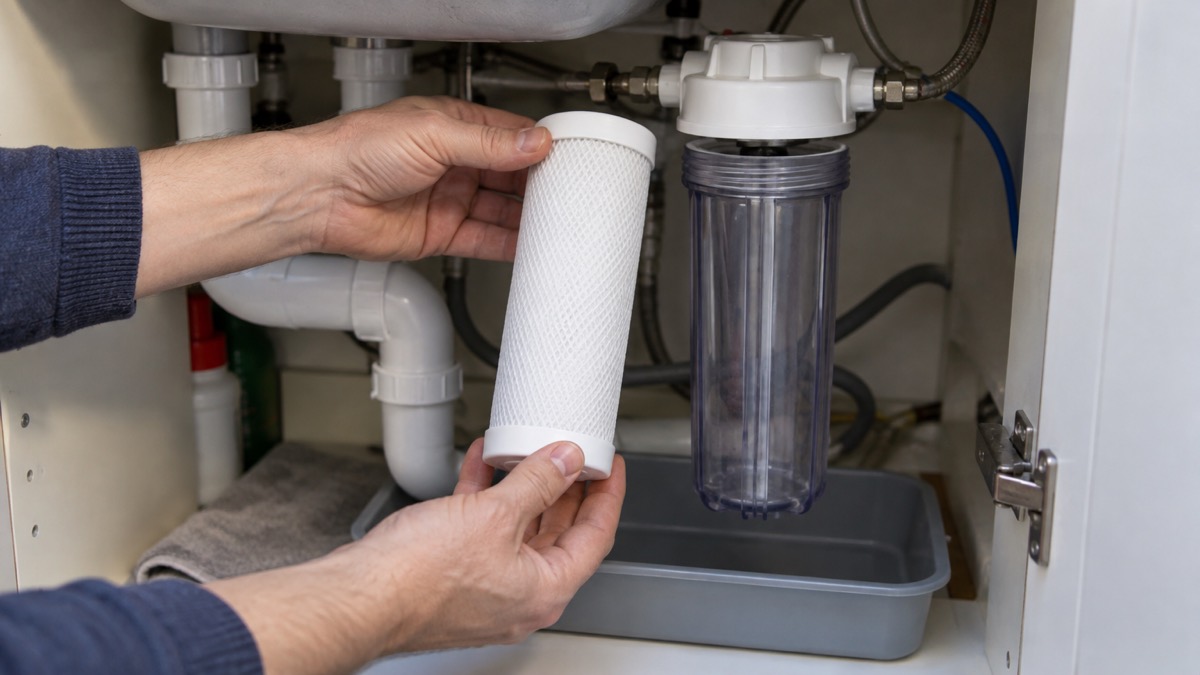
NSF is an international body; the UK-specific approval to know is WRAS, the Water Regulations Approval Scheme. Doulton's test data lists WRAS and NSF quality approval for both its Biotect Ultra and Ultracarb cartridges12, and the Kingfisher under-sink system is tested and certified by NSF International and WRAS, meeting WRAS requirements5.
WRAS approval matters for a different reason than NSF certification. It concerns whether a product or material is acceptable for contact with drinking water under the UK's water supply regulations. The Drinking Water Inspectorate, the regulator for England and Wales, advises that approved materials, WRAS or permitted under regulation 5, should be used to prevent contamination of rainwater during runoff and collection in rainwater harvesting systems13. The same principle runs through UK guidance on anything that touches your drinking supply.
United Utilities makes the related point about plumbing fittings: make sure all plumbing fittings are approved by Water Regs UK, as these are tested to ensure they do not affect water taste or smell, or encourage bacterial growth14. So the practical rule for a UK household is two badges, two jobs:
| Approval | What it tells you | Where it matters |
|---|---|---|
| NSF certification | The filter reduces the contaminants named under the stated standard | Choosing a filter for taste, lead or unsafe water |
| WRAS approval | The product and materials are acceptable for use with drinking water under UK regulations | Fitting anything to your home's plumbing |
For a filter you fit permanently, such as an under-sink system, look for both. For a portable emergency filter that never touches your plumbing, NSF (or equivalent) certification of its filtration claims is the one that counts.
Which standard to look for: taste, lead or unsafe water
The choice comes down to what you are trying to fix, and the guidance is straightforward. If you are looking for a system simply to improve taste and odour, a product with NSF/ANSI 42 is the right target; if you have concerns around lead, look for NSF/ANSI 53, which covers health-related contaminants1. If you are preparing for a situation where the water itself may be unsafe, from a boil water notice to treating water from streams and other sources, the microbiological protocols P231 and P248 are the ones that speak to that job3.
| Your situation | What to look for | Why |
|---|---|---|
| Tap water tastes or smells of chlorine | NSF/ANSI 42 | Aesthetic impurities: taste, odour, chlorine2 |
| Lead pipes or lead concerns | NSF/ANSI 53 | Health-related contaminants including lead2 |
| Microplastics and emerging contaminants | NSF/ANSI 401 | Microplastic reduction, as on the Doulton Kingfisher5 |
| Boil notice, outages, untreated sources | NSF P231 or P248 | Microbiological purifier protocols, 10.5-day test with imitated sewage3 |
| Anything fitted to home plumbing | WRAS as well | UK drinking water regulations13 |
Two cautions when reading listings. First, distinguish certified from tested in reference to: BRITA's LARQ pack, for instance, is described as tested in reference to NSF/ANSI 42, 53 and 401 standards6, wording that is not the same as holding the certifications. Second, remember that 372 is about the materials, not the filtration2.
Certification in the UK context: private supplies and official testing
For households on a private water supply, a well, borehole or spring, certification claims sit alongside the UK's own regulatory machinery rather than replacing it. WRAS, the Water Regulations Advisory Scheme, exists to ensure that water suppliers producing and distributing drinking water only use products that don't cause any detrimental effects on the safety or quality of the drinking water15. If you are treating a private supply with a filter, the certification tells you what the filter does; knowing what your supply actually contains is a separate question, and the two need to match.
The Drinking Water Inspectorate also advises on the storage side: a storage tank on a private supply must be inspected regularly, at least annually and preferably every six months17. A certified filter fitted to a poorly maintained tank is solving the wrong problem.
There is UK-specific research behind all of this, too. The DWI's 1996 report on the effectiveness of point of use drinking water devices, reference DWI0757, examined how these products perform18, an early official look at exactly the question a certification answers. And the background assurance for mains water remains constant testing by the companies: Northern Ireland Water's over 110,000 samples a year4 is the system a household filter is not replacing, only supplementing at the margin.
Where this leaves your choices
For everyday tap water, a 42-certified product does the taste job; add 53 if lead is the concern. For an emergency kit, look for the microbiological protocols: LifeSaver's range is tested at independent laboratories using the full NSF protocols8, with the Jerrycan and Bottle holding the full P248 accreditation8 and the Wayfarer's P231-adapted results published with dated figures9. Doulton's certified cartridges and systems, with both NSF and WRAS approval12, cover the under-sink and gravity options. Whatever you buy, verify the exact model in the official NSF database2, and buy from the maker's official channels to avoid counterfeits1.
Sources (18)
- Doulton and British Berkefeld NSF certification, Doulton, 2026
- Doulton and British Berkefeld NSF certification (EN-PL), Doulton, 2026
- LifeSaver features and benefits, Icon LifeSaver, 2026
- Code of Practice on Water Supply, Northern Ireland Water, 2018
- Doulton Kingfisher under-sink water filter system, Doulton, 2026
- BRITA LARQ Filter Pack, BRITA, 2026
- LifeSaver Lifeline gravity bag bundle, Icon LifeSaver, 2026
- LifeSaver independently tested, Icon LifeSaver, 2026
- LifeSaver Wayfarer NSF P231 testing summary, Icon LifeSaver, 2022
- LifeSaver Jerrycan starter pack, Icon LifeSaver, 2018
- LifeSaver Jerrycans collection, Icon LifeSaver, 2019
- Doulton test data, Doulton, 2026
- Protecting your private water supply, Drinking Water Inspectorate, 2026
- Chemical or medicinal taste in water, United Utilities, 2026
- Private water supplies, Somerset Council, 2026
- Types of private water supply, Cumberland Council, 2026
- Water storage on private supply networks, Drinking Water Inspectorate, 2025
- Effectiveness of point of use drinking water devices, DWI0757, Drinking Water Inspectorate, 1996
 Supply Interruption Checklist
 Boil Notice Checklist
 Drinking Supply Checklist
 How Much Water to Store
 Storing Tap Water Safely
 Containers and Jerrycans
 Household Storage Tanks
 Water Already in Your Pipes
 Making Water Safe to Drink
 Boiling Water to Kill Germs
 Purification Tablets
 Emergency Filter Types
 What Water Filters Remove
 Gravity Filters Explained
 Hand Pump Filters