
Icon LifeSaver Ltd is a UK-based outdoor survival gear specialist whose business is water purification systems: portable bottles, jerrycans, cubes and filter units that turn water from a tap, a stream or a stored supply into safe drinking water at the point you need it, rather than you having to carry purified water with you1. The company states that its portable water purifiers remove 99.99% of microbiological impurities to provide safe, great-tasting water1, and it supplies the UK, US and other military forces around the world2.
For a UK household building an emergency kit, that is the appeal in one line: a LifeSaver purifier, in the maker's own words, "can ensure that you and your family can have access to safe drinking water, whatever happens"3. This page sets out what the company makes, how to check you are dealing with Icon LifeSaver Ltd itself rather than a lookalike or a third-party seller, how to look after the kit, and how to reach the company when you need help. Water storage and treatment in general are covered in our guide to water in an emergency.
What Icon LifeSaver makes: water purification for households
Icon LifeSaver's range is built around one idea, which the maker states plainly: "LifeSaver products purify water at the point you need it"10. Instead of stockpiling bottled water or carrying a heavy treated supply, you carry a filter and treat whatever water you can find when you need it. For a household that already keeps stores for power cuts and storms, that changes the water question from "how much can I store" to "what can I safely treat", which is why a purifier sits naturally alongside the stores and torches in a household emergency kit.

The technology is ultra filtration: a physical barrier rather than a chemical dose. The maker describes LifeSaver purification technology as providing "a physical barrier against viruses, bacteria and cysts"11, and the product range is also stated to remove microplastics, the tiny plastic particles contaminating water supplies12. The Cube, for example, is described by the maker as "a microbiological water filter that uses ultra filtration technology to filter out viruses, bacteria"13.
Two things are worth knowing about how the company presents its credentials. First, its filters carry an EPA establishment number, 95937-GBR-1, printed on the maker's testing summary document4. Second, its large-scale purifiers are stated to be independently tested and certified to NSF Protocol P231 for water purification, to exceed DWI microbiological standards, to hold ISO 9001 certification, and to be Made in Britain14. The DWI is the Drinking Water Inspectorate, the England and Wales regulator for drinking water quality, so a claim to exceed its microbiological standards is a claim against the UK's own yardstick. For what a household should actually store and treat, see our water guide.
How to check you are dealing with Icon LifeSaver Ltd
The company's own details are printed on its documents, and they are the quickest way to confirm who you are dealing with. The testing summary document for the Wayfarer carries "Company Reg No: 09778295", "VAT Reg No: 228 3921 02" and "EPA Establishment number 95937-GBR-1"4. The product manuals give the website as www.iconlifesaver.com5. If you want to verify the business behind a listing, the company number is the item to check, since a name on a marketplace page tells you nothing about who stands behind the product.
The maker is also explicit about third-party purchases. Its support pages state: "If you purchased your LifeSaver product through Amazon or any other 3rd party seller, your enquiry should be directly th[rough the seller]" and, if that route is exhausted, you should contact info@iconlifesaver.com15. In practice that means the seller you bought from handles returns, faults and questions first, and the maker steps in only when that has failed. If you want the maker's own support from the outset, buy through its own site.
One point of confusion worth clearing up, because it catches people out in searches: "Lifesaver" is also the name of a completely unrelated CPR training product. Lifesaver is a collaboration between Resuscitation Council UK and the production company UNIT9, first launched in 2013 with updates in 2017 and 2020, and available on desktop and mobile16. A separate SCORM-compliant workplace e-learning tool called e-Lifesaver launched in April 202016. Neither has anything to do with water purification. The British Heart Foundation's RevivR is another separate trade mark in the first-aid learning space17. If a search result is about learning CPR, it is not Icon LifeSaver. For household first aid itself, see our first aid guide.
The kit: what each LifeSaver product does
The range divides by size and by how you draw the water. What follows is the maker's own description of each product, with the specifications it publishes. None of it is a ranking: the right choice depends on how many people you are covering and how you expect to use it.
| Product | What it is | Key specification | Made in the UK |
|---|---|---|---|
| LifeSaver Bottle | Water purifier bottle | 750ml capacity, purifies up to 6,000 litres18 | Not stated on the page cited |
| LifeSaver Lifeline | Filter straw with gravity bag bundle | Not stated on the page cited | Not stated on the page cited |
| LifeSaver Cube | Microbiological filter using ultra filtration | Filters viruses and bacteria13 | Yes9 |
| LifeSaver Jerrycan | Large-capacity container purifier | Model JGA1027 | Yes7 |
| LifeSaver Wayfarer | Portable purifier | Independently tested, summary published4 | Yes8 |
| LifeSaver C1 | Off-grid, whole-property purifier | NSF/ANSI P231 certified14 | Made in Britain14 |
The Bottle: a personal purifier you drink from
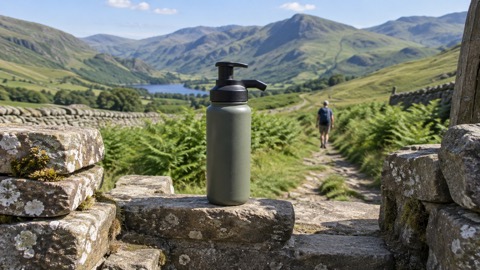
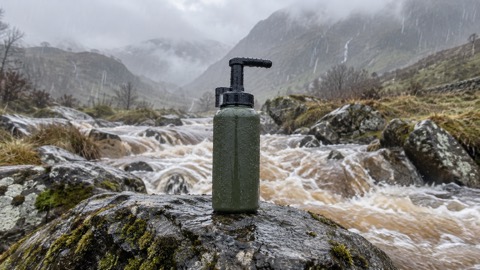
The LifeSaver Bottle is a water purifier bottle: you fill it from a tap, a stream or a stored container, pump it, and drink from the bottle itself19. The maker's headline figures are a 750ml capacity and purification of up to 6,000 litres over the filter's life1, with the maintenance pack page likewise describing the bottle as "purifying up to 6,000 liters of water"20. For one person's day-to-day carry or a grab bag, that capacity figure is the one that matters: it is the maker's stated lifetime for the filter, not the size of a single fill.
The Lifeline: a straw and gravity bag for a household
The LifeSaver Lifeline is a filter straw, sold in a bundle with a gravity bag, and the maker states it "transforms cloudy or muddy water into crystal clear drinking water"21. The filter purifies 5,000 litres6. A gravity bag changes how a household uses it: rather than one person drinking through a straw, water is poured into the bag and filtered through on its own weight, which suits a family filling bottles and pans in one go. That is the same role our water guide gives to a household treatment method: enough throughput for cooking and drinking, not just one drink at a time.
The Cube and the Jerrycan: stored water, made safe
The Cube is the maker's compact option, "a microbiological water filter that uses ultra filtration technology to filter out viruses, bacteria"13, and the maker notes the Cube and its pump are "made here in the UK"9. The Jerrycan is the larger stored-water option, model number JGA102, manufactured in the UK, with 170 customer reviews shown on its product page as of late October 20267. Between them they cover the two ends of household storage: a cube that sits in a cupboard or car, and a jerrycan that holds and treats a larger supply in one filling.
The Wayfarer and the C1: portable and fixed
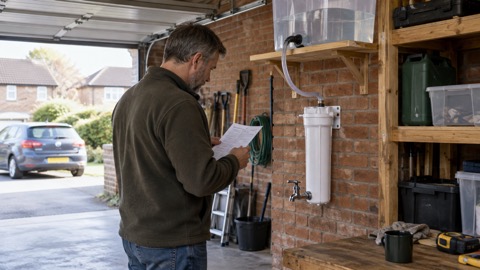
The Wayfarer is the maker's portable purifier, manufactured in the UK8, and an independently published testing summary is available for it4. At the other end of the scale, the LifeSaver C1 is described by the maker as "an economical, sustainable, whole-house water purification system to transform your private water [supply]"22, and the large-scale range is stated to be independently tested and certified to NSF Protocol P231, to exceed DWI microbiological standards, to hold ISO 9001 and to be Made in Britain14. The C1 is aimed at households on private supplies or off-grid setups rather than at an emergency kit, and it belongs with the thinking in our self-reliance guide.
Maintenance packs: keeping the filter working
The maker sells maintenance packs for the Bottle and the Jerrycan20. A maintenance pack is the consumable side of ownership: the parts that keep the purifier working between full filter replacements. The Bottle maintenance pack page shows 30 reviews as of late October 202620, and the Jerrycan maintenance pack page 17023. If you are budgeting for a purifier as part of a household emergency kit, plan for the maintenance items as well as the unit itself, since a filter that is not maintained is a filter that may not deliver its stated capacity.
Looking after your LifeSaver kit
The care advice comes from the maker itself, and unusually it comes in person: the company's Technical Director, Joe LoveGrove, presents the care videos. For the Wayfarer, the maker's guidance page says he "shows you how to take the Wayfarer apart, how to clean the component[s]" and put it back together24. For the Jerrycan, the same arrangement: "Joe LoveGrove, Icon LifeSaver's Technical Director, shows you how to take the jerrycan apart, how to clean the component[s]"25. For the Cube, the maker's priming video has the Technical Director explaining "exactly why priming is so important, and shows you how to do it step-by-step"26.
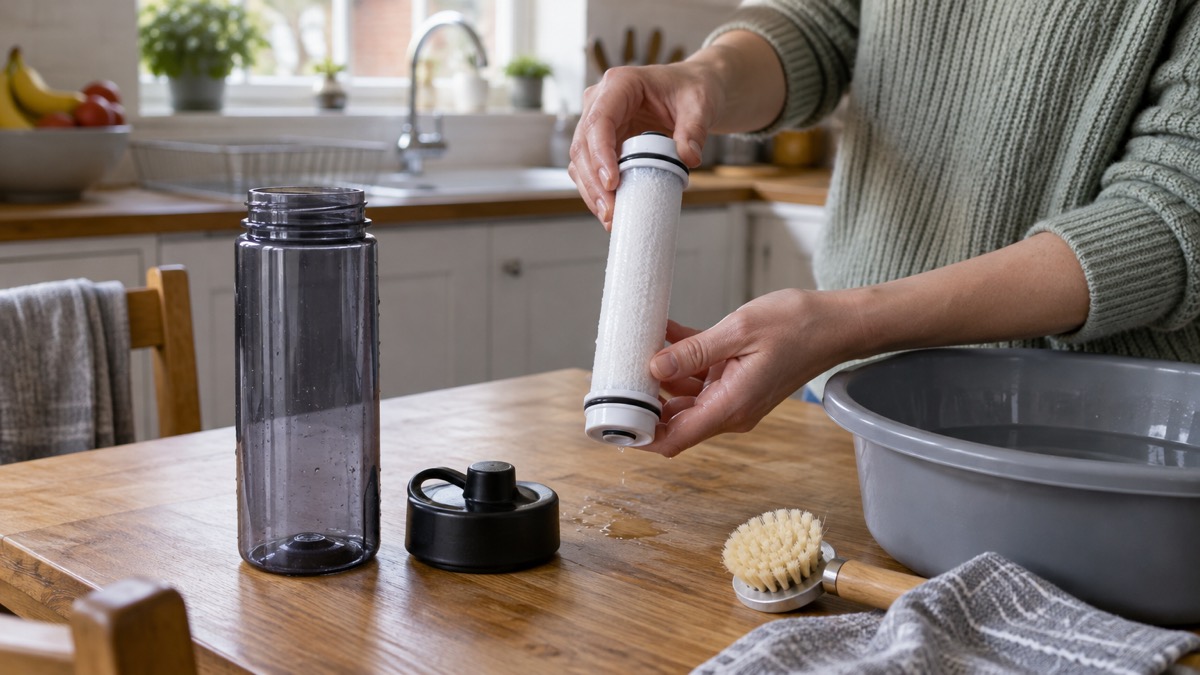
That matters for two reasons. First, priming and cleaning are not optional extras: a filter that has not been primed, or has been stored dirty, will not behave as the specifications describe. Second, the advice is specific to each product, so follow the page or video for the exact item you own rather than a general routine. The maker's own maintenance guidance for the Jerrycan shows how to take it apart, clean the components and put it back together23. That is the pattern worth copying: clean after use, store dry, and re-prime before the next use.
The maker's own invitation to ask is repeated across its care pages: "If you need any further advice on how to use or care for you[r] LifeSaver products, please don't hesitate to get in touch"24. In a household emergency context, the same discipline applies to the rest of the kit: Nottinghamshire County Council's emergency preparedness guidance lists a first aid kit among the contents a household should keep ready27, and every item in that kit, water purifier included, deserves the same after-use check. Our emergency kit guide covers the rest of the list.
Support: how to contact Icon LifeSaver
The routes are simple. The company's website is www.iconlifesaver.com5, and its email address for enquiries that third-party sellers cannot resolve is info@iconlifesaver.com15. The care pages direct anyone needing further advice on using or caring for LifeSaver products to get in touch via the company's contact page24. For purchases made through Amazon or any other third-party seller, the maker's stated position is that the enquiry goes to the seller first, and to info@iconlifesaver.com only if that is exhausted15.
The maker describes itself as offering "Fast delivery, excellent customer service with responsive support for product issues"1, which is its own characterization of its service rather than an independent assessment. The review counts on its product pages are the closest thing to customer feedback in the company's own materials: 310 reviews across the site, with 170 on the Jerrycan7, 170 on the Wayfarer8, 44 on the Cube13 and 30 on the Bottle maintenance pack20, all as shown in late October 2026. On the Lifeline, the maker's page shows a rating breakdown of 5 stars from 8 reviewers (89%) and 3 stars from 1 reviewer (11%), with no other ratings6.
No safety notices or product recalls affecting LifeSaver products appear in the material reviewed for this page. The general safety points that apply to any household emergency kit still apply: keep a first aid kit ready as official guidance advises27, and if you are preparing for specific events, use the matching guide, whether that is flooding, storms and snow or power cuts.
Sources (26)
- Icon LifeSaver homepage, Icon LifeSaver, 2026
- Failsafe technology, Icon LifeSaver, 2026
- Preparedness advice, Icon LifeSaver, 2026
- Wayfarer testing summary document, Icon LifeSaver, 2023
- LifeSaver Liberty product manual, Icon LifeSaver, 2020
- LifeSaver Lifeline product page, Icon LifeSaver, 2026
- LifeSaver Jerrycan product page, Icon LifeSaver, 2026
- LifeSaver Wayfarer product page, Icon LifeSaver, 2026
- LifeSaver Cube pump product page, Icon LifeSaver, 2026
- Features and benefits, Icon LifeSaver, 2026
- Independently tested (NA), Icon LifeSaver, 2026
- Independently tested (EU), Icon LifeSaver, 2026
- LifeSaver Cube product page, Icon LifeSaver, 2026
- Large scale water purifiers, Icon LifeSaver, 2026
- Info and FAQs, Icon LifeSaver, 2026
- Lifesaver learning, Resuscitation Council UK, 2026
- RevivR, British Heart Foundation, 2026
- LifeSaver Bottle product page, Icon LifeSaver, 2026
- LifeSaver Bottle maintenance pack, Icon LifeSaver, 2026
- LifeSaver Lifeline gravity bag bundle, Icon LifeSaver, 2026
- LifeSaver C1 product page, Icon LifeSaver, 2026
- LifeSaver Jerrycan maintenance pack, Icon LifeSaver, 2026
- How to clean your LifeSaver Wayfarer, Icon LifeSaver, 2026
- How to clean your LifeSaver Jerrycan, Icon LifeSaver, 2026
- How to prime your LifeSaver Cube, Icon LifeSaver, 2026
- Preparing for an emergency, Nottinghamshire County Council, 2026
 LifeSaver Bottle
 LifeSaver Liberty
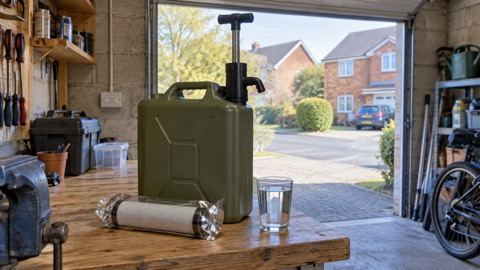 LifeSaver Jerrycan
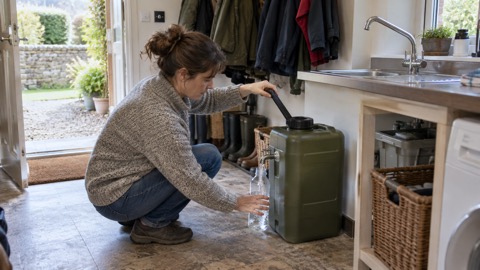 LifeSaver Jerrycan Graphene:Ultra
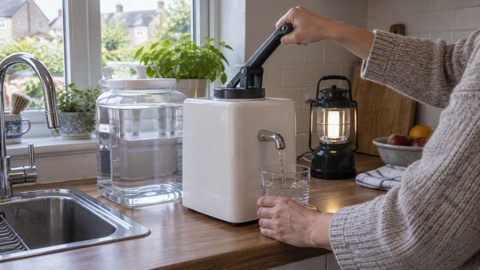 LifeSaver Cube
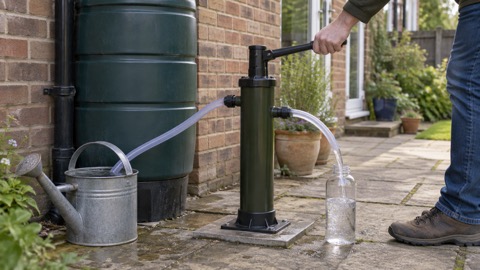 LifeSaver Wayfarer
 LifeSaver Lifeline
 LifeSaver C1
 LifeSaver C2
 LifeSaver Bottle Starter Pack