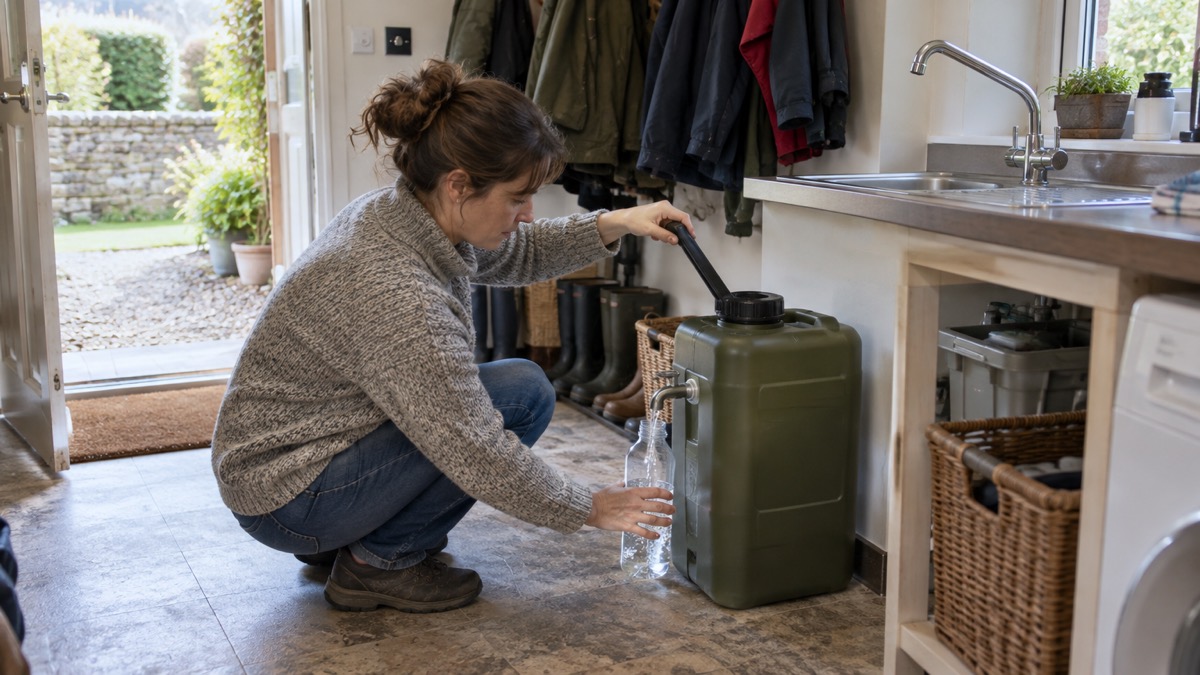
If the mains supply fails, or your water company issues a do not drink notice, the LifeSaver Jerrycan Graphene:Ultra gives a household a way to turn collected water into drinking water without chemicals, electricity or a wait. You fill the 18.5 litre container, pump the handle and draw water from the tap. The maker states that all figures quoted for the filter are taken from the stressed challenge phase of the test imitating sewage contaminated water1.
The figure that matters most for planning is the cartridge life. The maker states the Graphene:Ultra cartridge is effective for at least 1,000 litres, and that the microbiological core is rated to filter up to 20,000 litres1. Those two numbers describe different jobs, and the section below explains why. A foil-wrapped spare cartridge has a shelf life of 10 years, so a household can keep one in the cupboard and forget about it until it is needed3.
This page sets out what the Jerrycan does, its specifications, what it removes and on what evidence, how to fill and use it, the one part that users report breaking, and how to store spares. It is a named product page: it describes this unit and what it suits, and does not rank it against anything else.
What the Jerrycan does for a household
The unit is a water carrier and a water purifier in one container. It holds 18.5 litres, which is enough for a family to draw drinking water from over a day or more without going back to a source, and it is the same size as standard military-style water and fuel jerrycans, so it fits standard jerrycan vehicle mounts1. That matters if you are collecting water from a bowser, a standpipe or a stream some distance from home: the container can be carried, strapped into a vehicle rack, or left in place and pumped.
The maker's own description of use is three words: fill, pump, drink5. There is no measuring, no wait time and no chemical taste, which is the practical difference between this and purification tablets. Tablets work, but they need dosing and waiting, and the maker notes the unpleasant taste that chlorine and chlorine dioxide can leave6. If you want to understand how tablets compare as a method, our guide to purification tablets sets out the chlorine, chlorine dioxide and silver options.
What the Jerrycan does not do is find water for you. It treats water you have collected, so the household still needs a plan for where that water comes from: a stored supply, a bowser, a neighbour's tap, or a natural source. Our page on drinking from streams, rivers and other sources safely covers the judgement calls around collection, and how much drinking water to store per person helps you work out what to keep in before an incident.
It also does not need to be the only filter in the house. A household that already stores tap water in bottles may never need it; a household in a rural area on a private supply, or one that expects to be collecting from whatever is available, will get more from it. The maker sells it as part of emergency preparedness packs, which bundle spare cartridges and carbon filters for exactly that kind of planning7.
Specifications
The maker's figures for the Jerrycan and its cartridge are set out below. Where the maker lists two figures for the same attribute on different pages, both are given.
| Specification | Figure |
|---|---|
| Model number | JGA7021 |
| Capacity | 18.5 litres (625 oz)1 |
| Flow rate | 4.0 l/min (1 gallon/min)1 |
| Cartridge initial flow rate | 3.2 litres/min at 0.9 bar2 |
| Filter media | Graphene-enhanced ultra filtration2 |
| Microbiological core life | Up to 20,000 litres2 |
| Cartridge effective life | At least 1,000 litres1 |
| Heavy metal reduction life | Up to 700 litres8 |
| PFAS/PFOA reduction life | Up to 1,000 litres8 |
| Antibiotics reduction life | Up to 1,200 litres9 |
| Spare cartridge shelf life | 10 years, foil-wrapped3 |
| Warranty | 2 years2 |
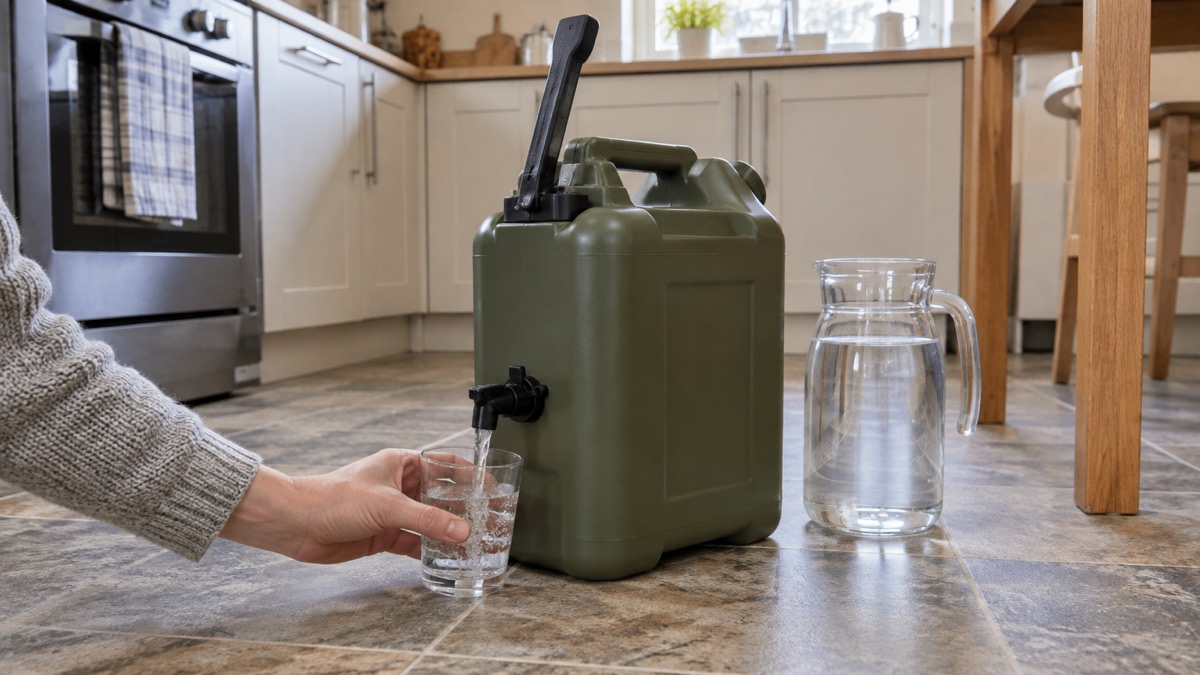
The maker lists the initial flow rate of the cartridge as 3.2 litres/min at 0.9 bar on its replacement cartridge page, and the Jerrycan's fast flow rate as 4.0 l/min on the product page1. These are different measurements taken under different conditions, so treat the 4.0 l/min as the headline figure for the unit and the 3.2 litres/min as the cartridge's own test figure.
The dimensions of the Virus Survival pack, which uses the same Jerrycan body, are given as 349mm x 171mm x 476mm10. That is a container roughly the size of a standard jerrycan, which is the point: it slots into the same racks and mounts.
What it removes, and the test water behind the figures
The maker states that the Jerrycan removes 99.99% of viruses, bacteria, parasites and microplastics4. The cartridge page gives a finer breakdown: bacteria are removed at 99.9999%, and the microbiological core is rated to 20,000 litres for bacteria, viruses, parasites and microplastics2. Sediment and particulates are removed at 99%8.
The chemical figures are separate and lower. The maker states the cartridge reduces lead to below 0.01mg/l, and PFAS/PFOA to below 20ppt, both described as safe drinking water guidelines2. Heavy metals including lead, vanadium, copper and chromium are reduced by over 30%, up to 700 litres8. Antibiotics are reduced to a safe level up to 1,200 litres9. The maker describes the graphene technology as designed to remove or reduce to safe levels PFAS/PFOA, heavy metals, pharmaceuticals and more11.
The test conditions matter as much as the percentages. The maker states that all figures quoted are taken from the stressed challenge phase of the test imitating sewage contaminated water12. That is a deliberately harsh test: water contaminated with sewage is about as bad as a household is likely to meet, so the figures are not drawn from clean-ish water.
On certification, the maker states the Jerrycan was tested by an independent test house to exceed NSF P248 compliance standards for virus, bacteria and protozoan cyst reduction, by the US Army Public Health Center1. Separately, the maker states testing was carried out by BCS laboratories on behalf of the Water Quality Association, issued 13/05/241. The maker's own collection page records that the Jerrycan passed compliance testing for NSF Protocol P248 Military Operations, Microbiological Water Purifiers, in 201913. All figures quoted are taken from the stressed challenge phase of the test imitating sewage contaminated water14. If you want to understand what these standards and log reductions mean in plain terms, our page on filter claims and certification explains NSF standards and log reduction.
Two filter lives: 20,000 litres for germs, about 1,000 litres for chemicals
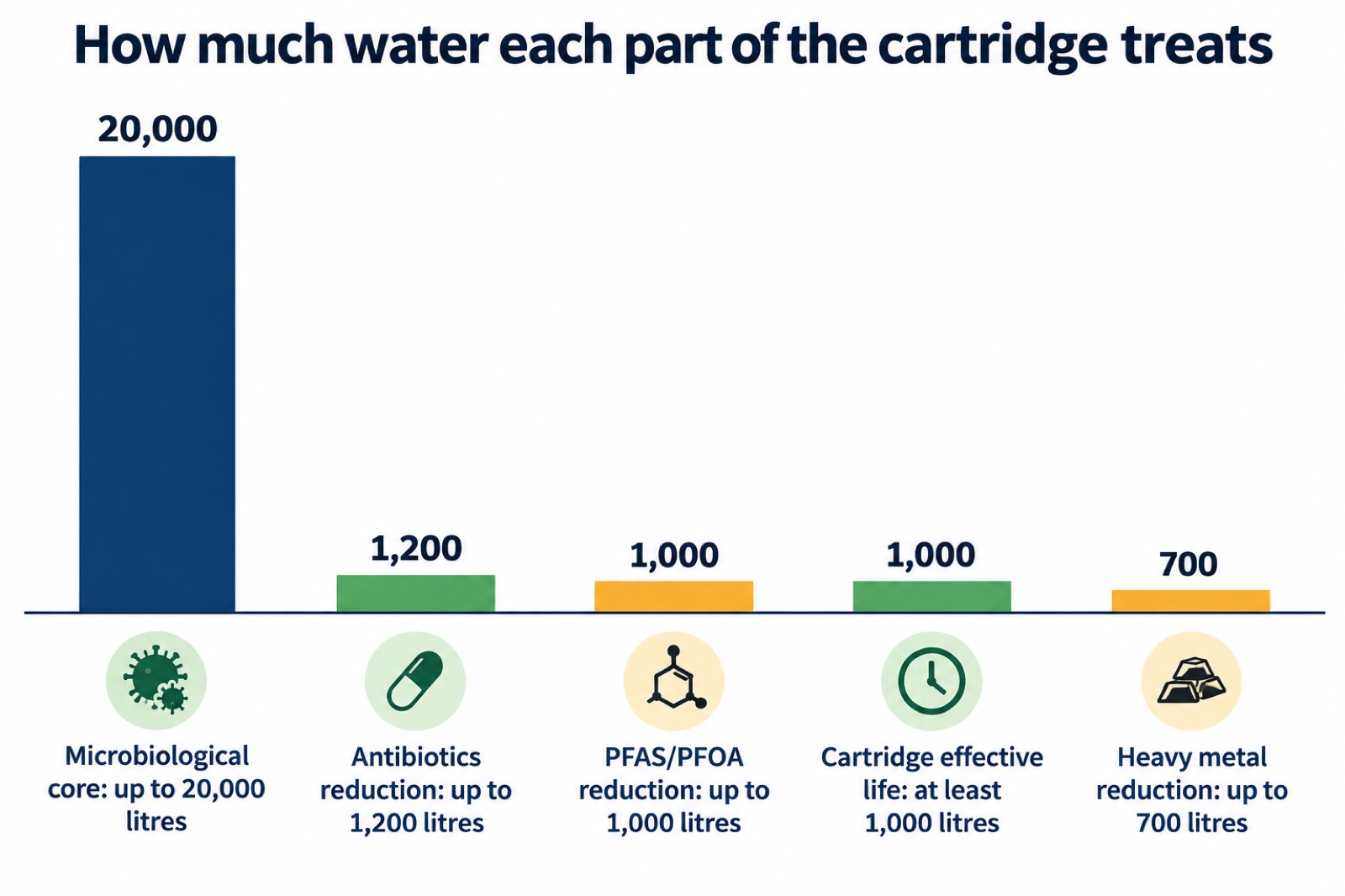
The single most confusing thing about this product is that it has two lives, and they are not the same number. The microbiological core, the part that removes viruses, bacteria and parasites, is rated to filter up to 20,000 litres2. The cartridge as a whole is described as effective for at least 1,000 litres1. The chemical reductions have their own limits: 700 litres for heavy metals, 1,000 litres for PFAS/PFOA, 1,200 litres for antibiotics8.
The reason is that the two jobs are done by different parts of the cartridge. The graphene ultrafiltration membrane handles the microbiology and lasts a very long time. The activated carbon disc handles taste and chemical reduction, and carbon is used up faster. The maker states that water is still safe to consume without an Activated Carbon Disc installed1. That is the key sentence for anyone planning supplies: if you run out of carbon discs, you can still drink the water, because the microbiological filter is doing the safety work.
In practice, a household using the Jerrycan for a few weeks during an incident will not come close to either limit. The 20,000 litre microbiological figure is effectively a lifetime of emergency use, and the maker's own minimum figure for the cartridge is 700 litres8. The chemical figures matter more if you are filtering water you suspect is contaminated with metals or industrial chemicals, which is a different scenario from a burst main.
The maker's larger packs make the arithmetic explicit. The Virus Survival pack includes a foil-wrapped replacement cartridge to filter up to an additional 20,000 litres, giving a total of up to 40,000 litres across two cartridges7. The Ultimate pack includes two spare cartridges to filter up to an additional 40,000 litres, giving a total of up to 60,000 litres across three12. Those totals are microbiological figures, not chemical ones.
How to fill, pump and drink without chemicals or electricity
The maker's instruction is simple: fill, pump, drink12. There is no need for chlorine, chlorine dioxide or electricity, and no waiting1. The pump is manual, so the unit works when the power is off, which is the whole point of a container like this. The maker also states that the product materials and the water effluent are both BPA and BPS free2.
The sequence for a household is:
- Fill the Jerrycan with water from your chosen source, up to its 18.5 litre capacity1.
- Fit the cartridge if it is not already installed, and fit an activated carbon disc if you have one and want the taste and chemical reduction1.
- Pump the handle to pressurise the container.
- Draw water from the tap into a clean bottle or glass, and drink1.
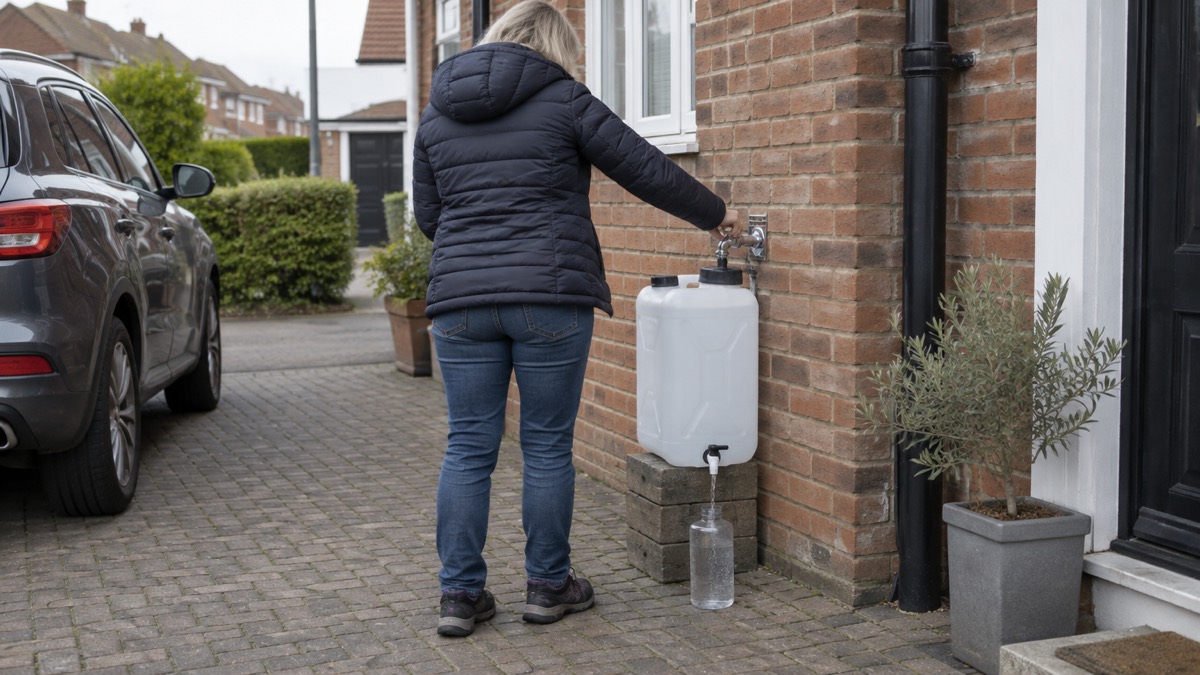
The maker recommends storing dirty water, either in the Jerrycan or in other storage containers, and filtering through the Jerrycan as and when clean water is required, to prevent recontamination of previously filtered water7. That is a useful habit: keep untreated water in the container and draw treated water off as you need it, rather than filling bottles with filtered water and leaving them next to the source.
The tap is the weak point: handle it gently
The maker's own product page carries a caution that comes from customer experience: be gentle with the tap, because if you are too rough the spring can pop out and the tap can break1. Reviewers report the tap as the weak point of the system, with one user going through two taps in two years and advising never to over-pressurise15. Another reviewer notes that once the plastic insert is fixed, it should not be touched15.
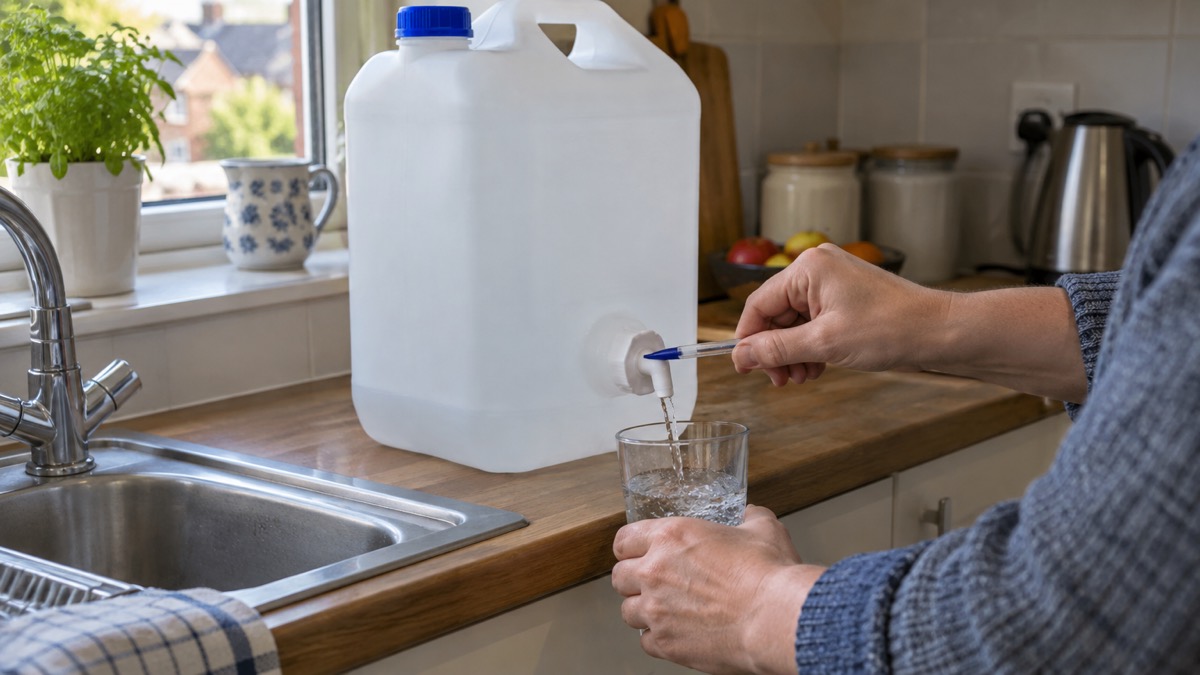
The practical advice for a household is straightforward. Do not force the tap open or shut. Do not use it as a handle for carrying the container. Do not over-pump. If the tap does break, the maker's own guidance is that you can still use the Jerrycan in an emergency by inserting a pen into the hole and opening the tap using it as a handle3. That is a workaround, not a repair, so keep a spare tap or a maintenance pack if you rely on the unit.
The maker's maintenance pack includes two O-rings, a dome valve and a flat pump seal14. Those are the parts that wear, and having them in the cupboard means a small failure does not take the whole unit out of service. The maker also states that customers have been sent a replacement tap on proof of purchase, so keep your receipt16.
Storing spare cartridges for 10 years or more
A spare cartridge is only useful if it survives storage. The maker states that replacement Graphene:Ultra cartridges are supplied foil-wrapped, giving them a shelf life of 10+ years1. The replacement cartridge page lists the shelf life as 10 years3. The Family pack notes that the LifeSaver Jerrycan and the Activated Carbon Filters are foil wrapped to give a 10 year shelf life, and that all other components are packaged within sealed polythene tubing17.
That means a household can buy a spare cartridge, put it in a cupboard and leave it there for a decade. The same applies to the activated carbon discs, which are foil wrapped in the packs17. Store them somewhere dry and out of direct sunlight, and keep the foil intact until you need them.
The maker's packs are built around this. The Virus Survival pack includes one foil-wrapped replacement cartridge7. The Ultimate pack includes two12. If you buy the Jerrycan on its own, a spare cartridge is a sensible addition, because the failsafe will stop the unit delivering water when the cartridge is spent, and you do not want to discover that in the middle of an incident.
Fit in vehicle mounts and jerrycan holders
The Jerrycan is the same size as standard military-style water and fuel jerrycans, so it fits into standard jerrycan vehicle mounts1. The maker also states that it fits perfectly into standard jerry can racks for attaching to a range of overlanding vehicles, 4x4s and SUVs18. There are two holes going through the Jerrycan that allow you to secure it to your vehicle18.
For a UK household, that matters in two situations. The first is collecting water: if you are driving to a bottled water station or a bowser, a container that sits in a standard rack is easier and safer to transport than one rolling around in the boot. The second is if you keep the Jerrycan in a vehicle as part of a kit, for example if you travel in rural areas or tow a caravan.
The same standard sizing means the Jerrycan can be stored alongside other jerrycans without a special bracket. If you already have a jerrycan holder for fuel or water, this unit should fit it. Our page on containers and jerrycans for drinking supplies covers the wider question of what to store water in and how to keep it clean.
Support, warranty and what comes in the box
The maker lists a 2 year warranty on the Jerrycan and on the replacement cartridge2. Contact details are on the maker's product pages, and the maker's own pages describe customers being sent a replacement tap on proof of purchase12. Keep your receipt and note the model number, JGA702, so a support query can be answered quickly1.
What comes in the box depends on which pack you buy. The Jerrycan itself arrives with a replaceable Graphene:Ultra Filter Cartridge pre-installed, and the pump and tap are included7. The Family pack adds a shower attachment and 20 activated carbon filters19. The Ultimate pack adds two replacement Graphene:Ultra cartridges, 60 replacement activated carbon filters, a shower attachment, a replacement pump and a maintenance pack12. The Virus Survival pack adds one activated carbon filter and one foil-wrapped replacement cartridge7.
If you already own an older LifeSaver Jerrycan, the maker states that the new Graphene:Ultra Filter Cartridge is exactly the same size as the standard Jerrycan Filter Cartridge, so you can upgrade an existing unit1. The replacement cartridge is listed as compatible with all LifeSaver Jerrycans3. That means you do not need to replace the whole container to get the graphene filtration.
For the wider picture of how a filter like this fits into a household water plan, start with our guide to water in an emergency, and if you are choosing between filter types, emergency filters: gravity, pump, bottle and straw types sets out the options by what they do rather than by brand.
Sources (17)
- LifeSaver Jerrycan Graphene:Ultra product page, Icon LifeSaver, 2026-10-29
- LifeSaver Jerrycan Graphene:Ultra Replacement Cartridge, Icon LifeSaver, 2026-10-28
- LifeSaver Jerrycan Graphene:Ultra Replacement Cartridge (NA), Icon LifeSaver, 2026-10-29
- LifeSaver Jerrycan Graphene:Ultra product page (NA), Icon LifeSaver, 2026-10-28
- Family Emergency Preparedness Pack | Icon Lifesaver, Icon Lifesaver
- Graphene:Ultra Ultimate Emergency Pack | Icon Lifesaver, Icon LifeSaver
- LifeSaver Jerrycan Graphene:Ultra Virus Survival Emergency Preparedness Pack, Icon LifeSaver, 2026-10-28
- LifeSaver Jerrycan Graphene:Ultra Replacement Cartridge (MENA), Icon LifeSaver, 2026-10-28
- LifeSaver Jerrycan Graphene:Ultra Replacement Cartridge (NA), Icon LifeSaver, 2026-10-28
- LifeSaver Jerrycan Graphene:Ultra Virus Survival Emergency Pack, Icon LifeSaver, 2026-10-28
- Emergency Preparedness collection, Icon LifeSaver, 2026-10-28
- LifeSaver Jerrycan Graphene:Ultra Ultimate Emergency Preparedness Pack, Icon LifeSaver, 2026-10-28
- Jerrycans collection (NA), Icon LifeSaver, 2019
- Graphene:Ultra Family Emergency Pack | Icon Lifesaver, Icon LifeSaver
- Graphene:Ultra Ultimate Emergency Pack | Icon Lifesaver, Icon LifeSaver
- LifeSaver Jerrycan Graphene:Ultra Family Emergency Preparedness Pack (MENA), Icon LifeSaver, 2026-10-28
- Graphene:Ultra Family Emergency Pack | Icon Lifesaver, Icon Lifesaver
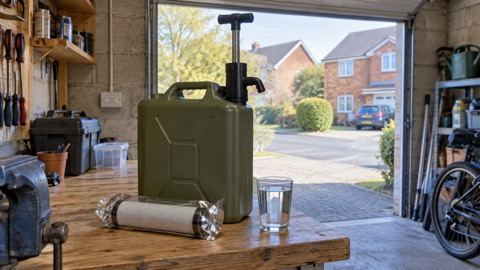 LifeSaver Jerrycan
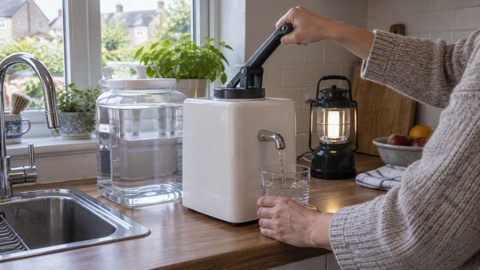 LifeSaver Cube