

Doulton is a British maker of ceramic drinking water filters. Every ceramic filter element is made in Britain, in a manufacturing facility in Staffordshire, and the brand holds the Made in Britain badge1. For a UK household thinking about water in an emergency, that matters: a ceramic filter needs no chemicals and no electricity to work, which is exactly what you want in a power cut or a disruption to your supply.
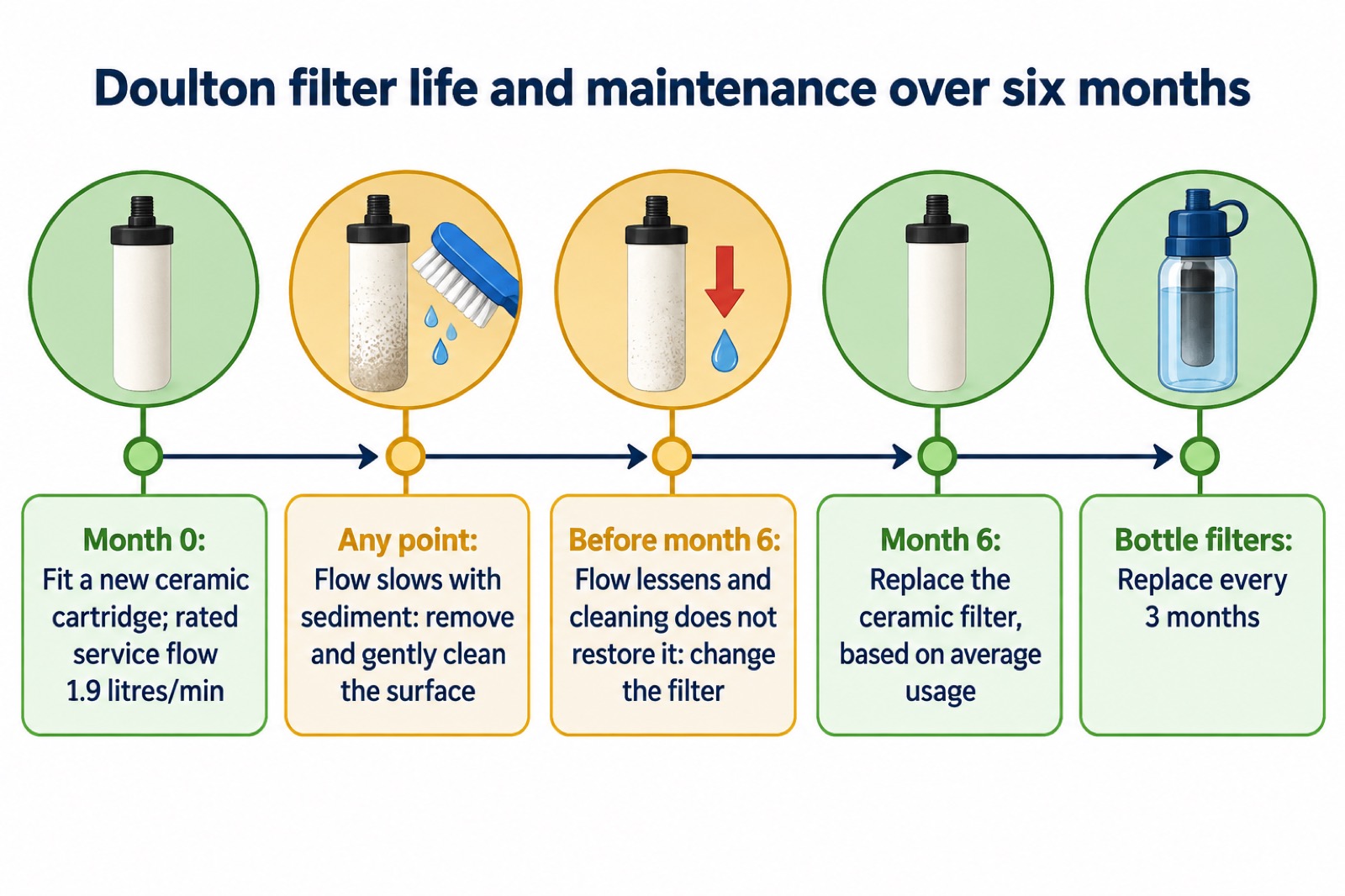
Doulton's filters are ceramic candles and cartridges with an activated carbon core, used in gravity systems, under-sink setups and tap-mounted countertop filters, plus a filtered water bottle range3. The ceramic acts almost like a sieve to reduce common contaminants, while the internal activated carbon core acts like a sponge to further reduce the effects of contaminants5. The maker recommends changing its ceramic water filters every 6 months, based on average usage and performance, and the filters can be cleaned between changes to maintain their lifespan and effectiveness4.
This page covers what Doulton makes, what its filters can and cannot stop, what the certifications mean, and how to clean, replace and get help with a Doulton system. If you are new to storing and treating water at home, start with the guide to water in an emergency and the wider emergency kit before choosing a filter.
What Doulton makes for UK households
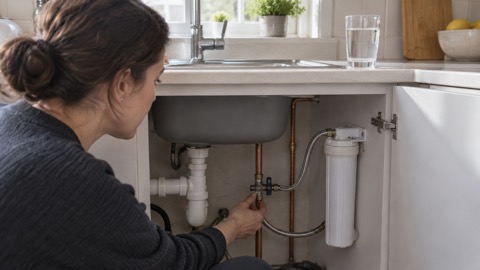
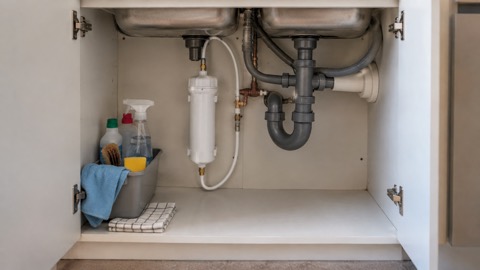
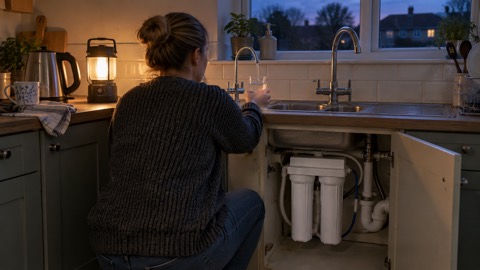
Doulton delivers drinking water filtration through a variety of systems and cartridges, and its products fall into four broad types for a household10. Which one suits you depends on whether you want a fixed installation for everyday drinking water or something you can pick up and carry when the mains supply is disrupted.
| System type | What it is | Who it suits |
|---|---|---|
| Gravity filter system | Water is pulled down from a top chamber to a bottom chamber through ceramic filters; contact time with the ceramic helps further reduce a range of contaminants4 | Households wanting a counter-top filter that needs no plumbing and no power |
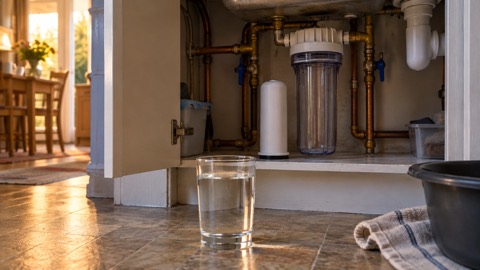
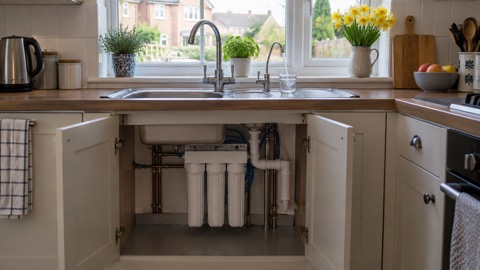
| Under-sink system | Plumbed-in systems that all feature the Doulton ceramic filter11 | Households wanting filtered water on tap at the kitchen sink |
| Tap-mounted countertop filter | A filter fitted to the tap itself | Households wanting a simple, non-permanent fitting |
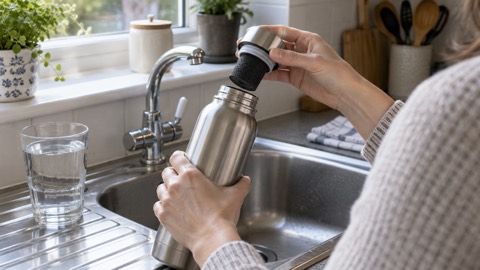
| Filtered water bottle | A bottle with a built-in filter for drinking on the move12 | Individuals wanting a personal filter for travel and days out |
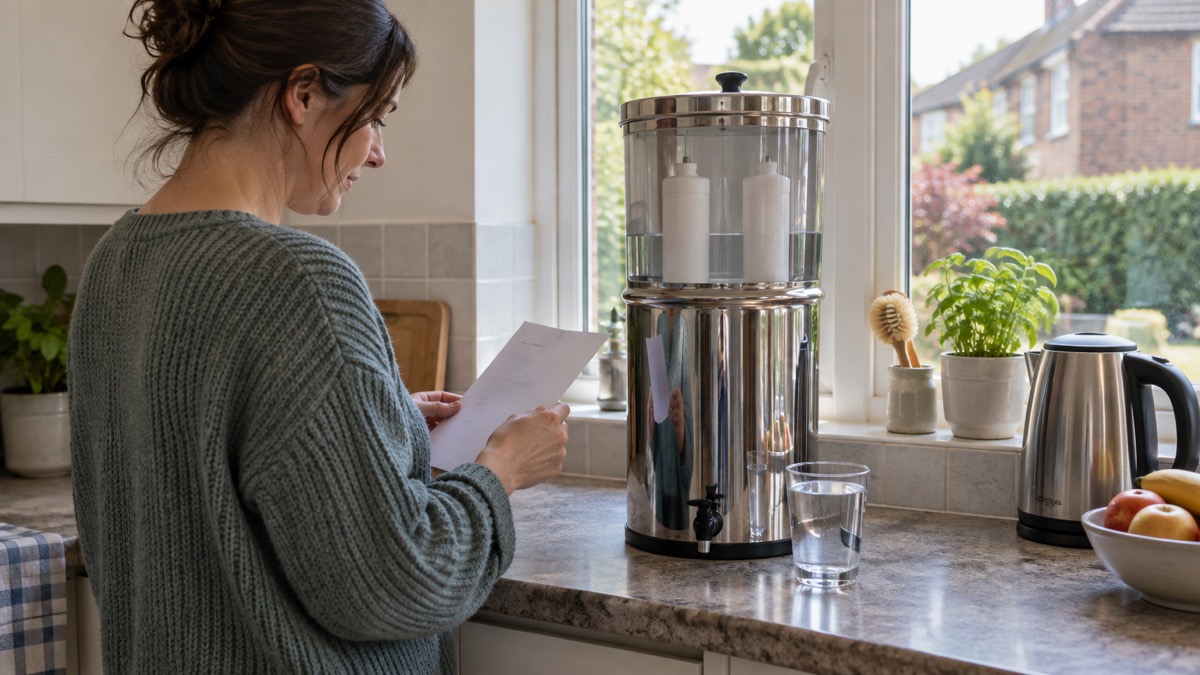
The gravity systems are the ones most relevant to preparedness, because they work when nothing else does: no electricity, no plumbing, no water pressure. The Doulton Heritage Gravity Filter System is handcrafted in Stoke-on-Trent and produced in small batches using traditional ceramic techniques in the heart of The Potteries13. Gravity water filters work by pulling water down from a top chamber through to a bottom chamber via filters, and the maker notes that contact time with the ceramic filter helps further reduce a range of contaminants4. For how a gravity filter fits into a wider household water plan, see water in an emergency.
The under-sink range is accredited by BS EN ISO 9001 international quality standards and holds NSF and WRAS certification11. The Doulton Kingfisher Under-Sink System is the named under-sink product on this site, and the Doulton Ultracarb is the cartridge many of these systems use. Doulton describes itself as having been pioneers of water filtration since 1826, with a team of experts based in its Staffordshire manufacturing facilities11.
The 580ml bottle uses a new and improved filter that uses 75% less plastic14. The replacement bottle filter is a carbon filter that reduces sediment and more than 95% of chlorine and heavy metals, tested with pH 6.5 Lead15.
How a ceramic filter works, and what it stops
A ceramic water filter uses microporous ceramic material to reduce contaminants in your water. Particles too large to fit through the pores, or unable to navigate the twisted path through them, get stuck and do not pass into the drinking water4. Doulton water filters are ceramic water filters with an activated carbon core: the natural ceramic material acts almost like a sieve, and the carbon core acts like a sponge to further reduce the effects of contaminants5.
The filter forms a physical barrier for pathogens, trapping bacteria in your water on the surface of the ceramic while allowing clear, mineral-rich water through16. Doulton also states that its ceramic filters preserve essential minerals that your body needs3. The maker says its filters use natural ceramic technology to remove bacteria, cysts, sediment and other contaminants without chemicals or electricity5.
To understand what that barrier can and cannot catch, it helps to look at particle sizes. Doulton's own test data page, referencing WQA Technical Guidance, sets out the size ranges of the main biological threats17:
| Particle | Size range | Can a Doulton ceramic filter address it? |
|---|---|---|
| Viruses which can cause disease in humans | 0.02 to 0.5 microns17 | Below the filter's rated pore size; a ceramic filter is not a barrier against viruses on its own |
| Bacteria | 0.2 to 10 microns (range 0.2 to 1 micron width and 1 to 10 micron length)17 | Within the rated filtration range; trapped on the surface of the ceramic16 |
| Protozoan cysts | 2 to 50 microns17 | Larger than the rated pores; trapped by the ceramic |
The depth of the ceramic matters as much as the pore size. Doulton asks you to consider that the wall thickness of the ceramic is 1000 to 2000 times greater than the pore size of the ceramic filter18. That means a particle has to navigate a long, twisted path through the ceramic wall, not just a single hole, which is why the filter is described as depth filtration rather than a simple sieve.
What the micron ratings mean
Doulton's ceramic filters carry two micron ratings, and the difference between them is worth understanding because the words "absolute" and "nominal" are doing real work7:
- 1 Micron Absolute Filtration, defined as >99.99%: no particle larger than 1 micron passes, at greater than 99.99% efficiency7.
- 0.5 to 0.8 Micron Nominal Filtration, defined as 99.9%: the filter removes 99.9% of particles at the 0.5 to 0.8 micron size, but the rating is a statistical measure rather than an absolute guarantee7.
Put those numbers against the particle sizes above and the picture is clear. Bacteria, at 0.2 to 10 microns, and protozoan cysts, at 2 to 50 microns, sit at or above the filter's rated range. Viruses, at 0.02 to 0.5 microns, sit below the rated pore size, which is why a ceramic filter should not be relied on alone against viral contamination.
The rated service flow for Doulton filter elements is 1.9 litres per minute (0.5 US gallons per minute)20. That figure applies to the elements under their rated conditions; a gravity system will flow more slowly, because gravity rather than mains pressure is doing the work.
Certification: NSF and WRAS testing
Doulton ceramic water filters undergo continuous, rigorous testing via external certification bodies such as NSF and WRAS, alongside continuous in-house testing and product development7. The maker's test data pages describe the filters as NSF Tested and Certified and a WRAS Approved Product8. This applies across Doulton and British Berkefeld products17.
Specific products carry specific certifications, and it is worth checking the page for the cartridge you own:
- The under-sink systems hold BS EN ISO 9001 accreditation together with NSF and WRAS certification11.
- The Ultracarb (9501) is tested and certified by NSF to NSF/ANSI Std 40121.
- The Biotect Ultra element carries WRAS and NSF quality approval18.
Doulton also describes a team of experts continuously and rigorously testing the ceramic filters and products daily, from the NSF certifications and test results onwards19. Its support pages note that certifications may include NSF/ANSI standards, among others, so check the specific standard claimed for the specific product rather than assuming the whole range shares one certificate3.
Where a test result on the maker's test data pages is shown as pending, treat it as unpublished: no completed figure exists yet for that test, and any reduction claim you rely on should be one that is stated in full, with its test conditions. The bottle replacement filter, for example, states its reduction of sediment and more than 95% of chlorine and heavy metals with the note "tested with pH 6.5 Lead"6, which tells you the exact condition behind the figure.
Made in Staffordshire: where the ceramic elements come from
Doulton's products are still Made in Britain in a manufacturing facility in Staffordshire2, and the maker states that for 200 years every ceramic filter element has been crafted in England2. The Heritage Gravity Filter System is produced in small batches using traditional ceramic techniques in the heart of The Potteries, Stoke-on-Trent13. Doulton is proud to be a Made in Britain brand, and each ceramic filter element is carefully quality-checked by in-house experts at every stage of production2.
The maker's own account is consistent on the substance: a long English manufacturing history. Doulton states that for 200 years every ceramic filter element has been crafted in England2, and its products are still Made in Britain in a manufacturing facility in Staffordshire2. Treat "around 200 years" as the honest summary of the company's stated heritage.
For a UK buyer, the practical points are these: the filters are made here, the maker says it ships from the UK to over 100 countries worldwide1, and replacement parts including ceramic filter candles, O-rings and other components are readily available through the website and authorised retailers. Doulton's advice is to use genuine Doulton parts3.
Cleaning a ceramic filter when the flow slows
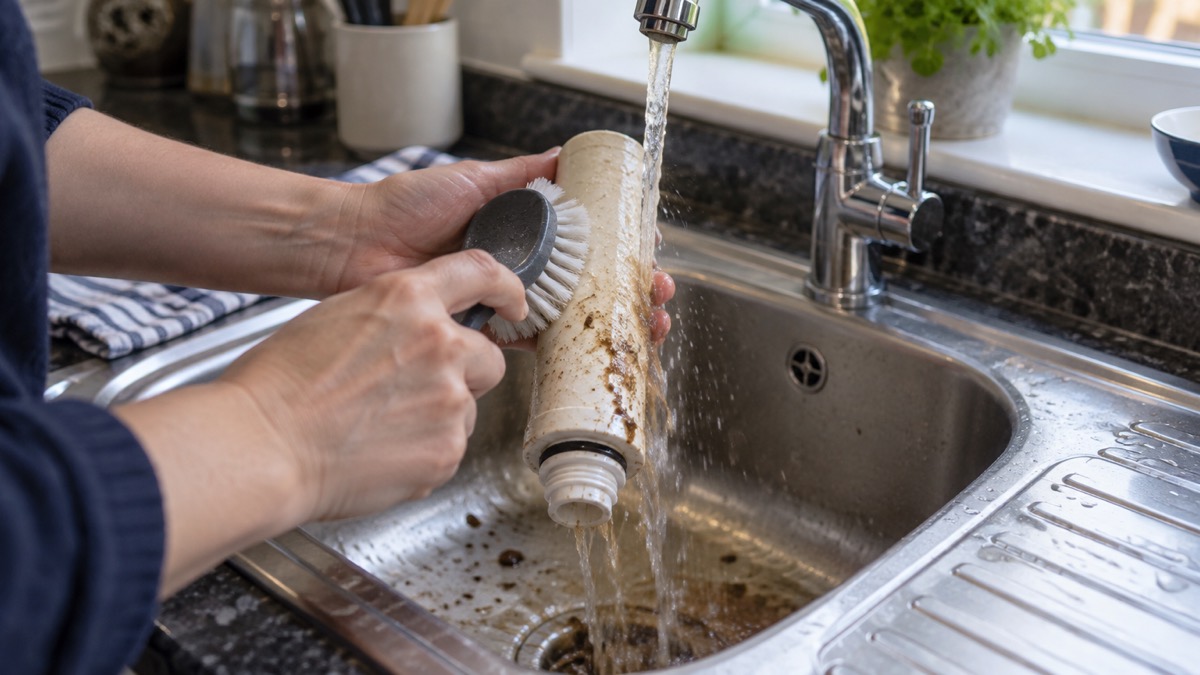
Ceramic filters are cleanable, and this is the feature that separates them from most cartridge filters. When Doulton and British Berkefeld ceramic filters see a reduction in flow while filtering water with high levels of sediment and turbidity, they can be removed and the surface gently cleaned to restore the flow rate7. Cleaning between changes helps maintain the filters' lifespan and effectiveness4.
The maker's operating instructions for its filter elements are direct:
"Hold the cartridge under running water and scour with a stiff brush or kitchen scouring pad."
Its support pages describe the same job in slightly gentler terms: gently scrub the surface of the ceramic filter under running water using a soft brush or sponge5. The two instructions differ only in the stiffness of the brush, and both are the maker's own advice; if in doubt, start soft. The steps in order:
- Remove the ceramic cartridge from the housing.
- Hold it under running water.
- Scrub the outer ceramic surface to remove the trapped sediment layer.
- Refit the cartridge and check the flow has recovered.
Do not wait for the flow to stop entirely before cleaning. Doulton's product pages advise that if your water flow lessens before 6 months, you should change your filter21, and the M15 pages add that a drop in water flow or a change in taste may mean it is time to replace22. A slow flow that cleaning does not restore is the filter telling you it has reached the end of its life.
Replacing cartridges and finding the right filter
Doulton recommends replacing its ceramic filters every 6 months, based on average usage and performance4. The M15 filter pages repeat the advice: replace every 6 months, and sooner if you notice a drop in water flow or a change in taste22. The bottle replacement filter is different: it gives effective filtration up to 3 months per cartridge6.
When you fit a replacement, the maker's instructions say to unscrew the old cartridge and place it in the household waste20. The new bottle filter cartridge is smaller than the old one, allowing for more water in your bottle and less plastic waste, and the maker describes it as an improved filter to increase flow6.
Finding the right cartridge comes down to matching the element to the housing:
- For Doulton systems, use genuine Doulton replacement parts, available through the website and authorised retailers3.
- The bottle replacement filter is recommended for use only with the Doulton Water Bottle with Filter24.
- If your filtration system model is not listed, email filtersales@doulton.com with the make, model, filter housing dimensions and any other relevant specifications, and the support team will identify the right element17.
Doulton support: how to get help
Doulton's customer support team can be reached through the online chat, the Contact Us page on its website, by phone, or by email at filtersales@doulton.com5. The support number is 0333 340 36005. For cartridge identification questions, email is the most useful route, because you can include the make, model and housing dimensions the team asks for17.
The maker also runs a subscription service. Subscribe and Save sends replacement filters automatically in the post with a discount on filter replacements25, which the maker describes as taking the hassle out of remembering your replacements12 and offering hassle-free deliveries and loyalty savings23. Given the 6-month ceramic and 3-month bottle change intervals, a subscription is one way to make sure a cartridge is never overdue.
Delivery and returns, as stated on the maker's product pages:
| What | Detail |
|---|---|
| Next working day delivery | Orders placed by 11:00, Monday to Friday, subject to destination and courier availability26 |
| After the cutoff | Orders placed after this time are processed on the next working day26 |
| Returns | 14 day returns, stated across the product range9 |
| Shipping outside the UK | Ships to over 100 countries worldwide from the UK1 |
Where a Doulton filter fits in your household plans
A ceramic filter is one piece of a household's water arrangements, not the whole of them. In a power cut or a supply disruption, the questions come in order: how much water do you have stored, how do you keep it safe to drink, and what can you treat if the stored supply runs short. A gravity system with ceramic candles answers the last of those, and needs no electricity to do it, which is why it earns its place in an emergency kit.
What it does not do is turn pond or well water into drinking water, on the maker's own advice19, and it is not a barrier against viruses on its own, given their 0.02 to 0.5 micron size against the filter's ratings17. For the full picture on storing water, treating it and coping with a disrupted supply, read water in an emergency. If a longer disruption to mains services is your concern, the guides to power cuts, heating and cooking without mains power and self-reliance at home cover the rest of the household's arrangements.
Sources (26)
- Ceramic water filters: what they are and how they work (EU), Doulton, 2026
- Kingfisher water filter, Doulton, 2026
- Doulton FAQs (France), Doulton, 2026
- Ceramic water filters: what they are and how they work, Doulton, 2026
- Doulton FAQs, Doulton, 2026
- Water bottle replacement filter, Doulton, 2026
- Doulton test data, Doulton, 2026
- Doulton test data (Canada), Doulton, 2026
- Ultracarb 9501 (Canada), Doulton, 2026
- Doulton systems collection, Doulton, 2026
- Undercounter systems collection, Doulton, 2026
- Taste 2 water bottle, Doulton, 2026
- Heritage gravity filter system, Doulton, 2026
- Water filter bottle 580ml, Doulton, 2026
- Doulton® Water Filter Bottle 790ml, Doulton
- Ultracarb 9501, Doulton, 2026
- Doulton test data (US), Doulton, 2026
- Doulton test data (EU), Doulton, 2026
- Portable water filters (Poland), Doulton, 2026
- Doulton filter elements operating and changing instructions, Doulton, 2026
- Ultracarb 9501 (France), Doulton, 2026
- Ultracarb M15 filter, Doulton, 2026
- Water filter bottle 790ml, Doulton, 2026
- Water bottle replacement filter (Poland), Doulton, 2026
- Water bottle replacement filter (Canada), Doulton, 2026
- Pillar tap (Poland), Doulton, 2026
 Doulton Ultracarb
 Doulton Kingfisher Under-Sink System
 Doulton HIS
 Doulton Water Bottle with Filter
 Doulton HIP DUO
 Doulton HIP TRIO