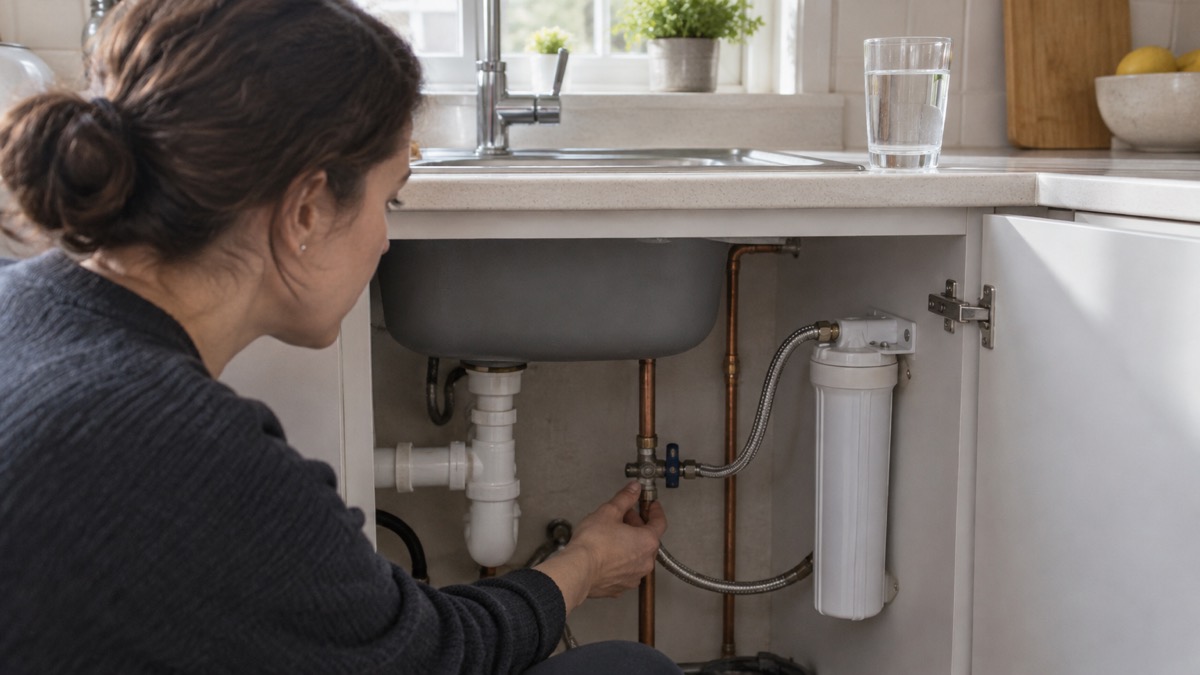
The Doulton Kingfisher is an under-sink water filter that fits in the cupboard beneath your kitchen sink and runs your cold supply through a ceramic cartridge before it reaches the tap. The cartridge fitted as standard is the Doulton Biotect Ultra, which the maker says reduces up to 99.99% of common contaminants, including bacteria and cysts, microplastics, heavy metals such as lead, cadmium and mercury, chlorine and monochloramine, and common insecticides and herbicides1.
Before you buy, do one thing: run the one litre jug test. Fill a litre jug from your cold kitchen tap and time it. If it takes 7 to 12 seconds, Doulton says your pressure should be adequate to run the system. If it takes under 6 seconds you likely have very high pressure, which is excellent for the system but may need a pressure reducer to protect it. If it takes anything over 12 seconds, the maker does not recommend fitting the system without first seeking advice on your mains water pressure2.
Fitting is typically completed in under an hour, and the maker says it suits a confident DIYer or a professional3. The flow through an existing or alternative tap is limited to a maximum of 1.9 litres a minute, which is the flow rate of the Biotect Ultra filter itself4. That is slower than a normal kitchen tap, so plan for filling a glass rather than a pan.
What the Kingfisher is and what it suits
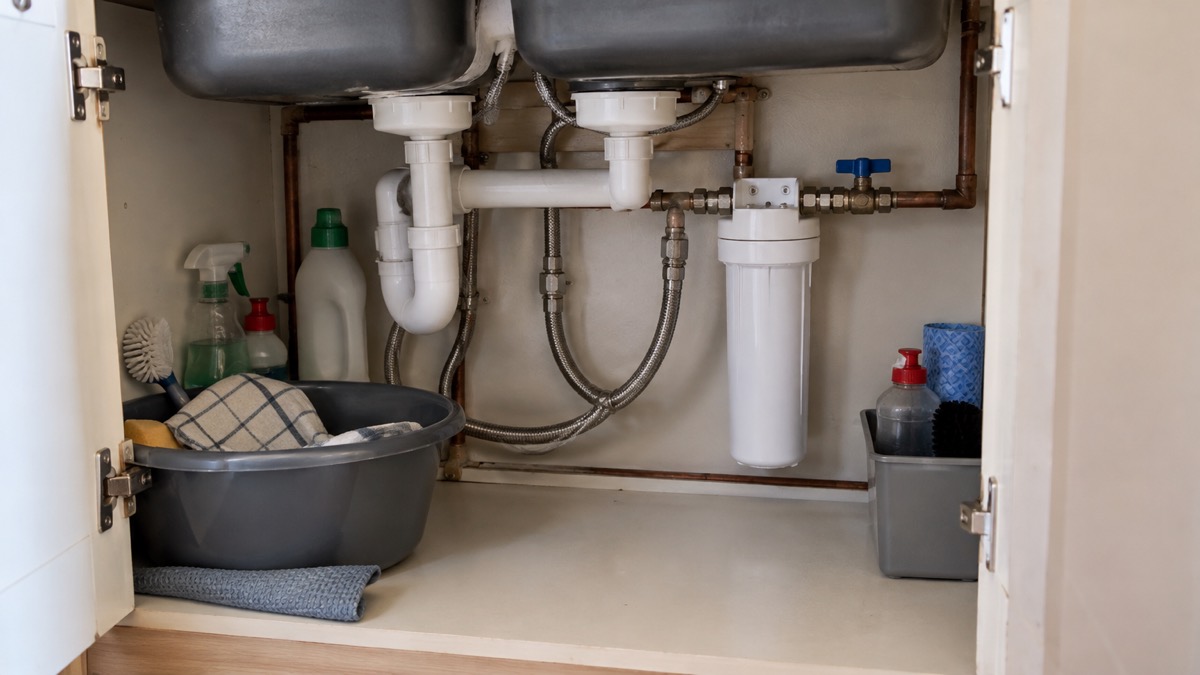
The Kingfisher is a plumbed-in under-counter system, not a jug or a gravity filter. It sits beneath your kitchen sink, out of sight, and treats the water on its way to a dedicated tap or an existing one6. The maker describes it as its "hero water filter" and lists it as new in its under-sink range4. It is made in Britain2.
The cartridge is the heart of it. The Biotect Ultra is a ceramic filter, and Doulton explains the principle behind its ceramic elements: the wall thickness of the ceramic is 1000 to 2000 times greater than the pore size, so water is forced through a deep wall rather than a thin membrane7. That depth is what gives a ceramic cartridge its working life and its ability to be cleaned and reused rather than simply thrown away when flow drops.
The system is designed for use only with the Biotect Ultra and Biotect Ultra SI filter cartridges3. Doulton says it only recommends using Doulton filters within Doulton systems6. If you are weighing up whether an under-sink plumbed filter or a freestanding gravity filter suits your household better, the gravity filter or under-sink filter comparison sets the two side by side, and the Doulton brand page covers the wider range.
Who it suits: a household on mains water with reasonable pressure, a spare cupboard under the sink, and a preference for filtered water on tap without filling a jug. Who it does not suit: a home with very low flow, a rented kitchen where you cannot alter pipework, or anyone wanting a filter they can carry in an emergency. For the portable side of the range, see emergency filters.
What it removes, and what the certifications mean
Doulton states the system reduces up to 99.99% of common contaminants8. The named list is specific: bacteria and cysts including Giardia and Cryptosporidium, common insecticides and herbicides, microplastics, heavy metals such as lead, cadmium and mercury, and chlorine and monochloramine2. The wider Doulton range is described as reducing the same headline percentage while retaining beneficial minerals9.
The percentage is a maker's claim, and it is backed by third-party certification rather than in-house testing alone. Doulton says its ceramic filters undergo continuous, rigorous testing via external certification bodies such as NSF and WRAS7. The Kingfisher system is tested and certified by NSF International and WRAS, and the maker lists the standards it meets3:
| Standard | What it covers |
|---|---|
| WRAS requirements | UK water fittings approval requirements |
| NSF/ANSI 42 | Material safety, class 1 particulate and chlorine reduction |
| NSF/ANSI 53 | Turbidity, cyst and lead reduction |
| NSF/ANSI 401 | Microplastic reduction |
| NSF/ANSI 372 | Lead-free compliance |
That table is worth reading carefully, because it tells you what has been tested rather than what has been claimed. Standard 53 covers cyst and lead reduction, which is the certification that matters most if you are filtering because of a specific concern about those. Standard 401 covers microplastics. Standard 42 covers chlorine and particulate. If you want to understand how these standards work and what a log reduction figure means, the guide to filter claims and certification explains it, and what each filter type removes puts ceramic alongside carbon, hollow-fibre and reverse osmosis.
One limit to be clear about: this is a drinking water filter for a mains supply. It is not a treatment device for flood water, stored water or a supply under a do not drink notice. If your supply is interrupted or contaminated, follow the water company's instructions and see how to make water safe to drink and do not drink notices.
Check your water pressure before you buy
This is the step most people skip, and it is the one the maker puts first. Doulton's own test is a one litre jug flow test: fill a one litre jug from the tap and time it3.
- Turn the cold kitchen tap on fully.
- Fill a one litre jug, timing how long it takes.
- Read your result against the maker's bands below.
| Time to fill 1 litre | What Doulton says it means | What to do |
|---|---|---|
| Under 6 seconds | Very high pressure, above 10 litres a minute | Excellent for the system, but a pressure reducer may be needed to protect it2 |
| 7 to 12 seconds | Medium to low pressure | Should be adequate to run the system2 |
| Over 12 seconds | Low flow | Not recommended without seeking advice on your mains water pressure2 |
Doulton says you ideally need 30 psi or 2 bar or more2. If your jug test comes out slow, the maker's advice is to seek advice on your mains pressure before fitting, not to fit and hope. If your own tap is well below what the maker expects, the problem may be inside the home rather than on the mains, and the guide to low pressure covers what to check.
For context on what a normal tap does: Doulton's own test treats a fill of under 6 seconds as very high pressure, above 10 litres a minute3, and a fill of 7 to 12 seconds as medium to low pressure that should still be adequate to run the system3. If your tap takes 6 seconds or less, the maker's reading is that you likely have very high pressure, which is excellent for the system but may need a pressure reducer to protect it3.
Fitting it under the kitchen sink
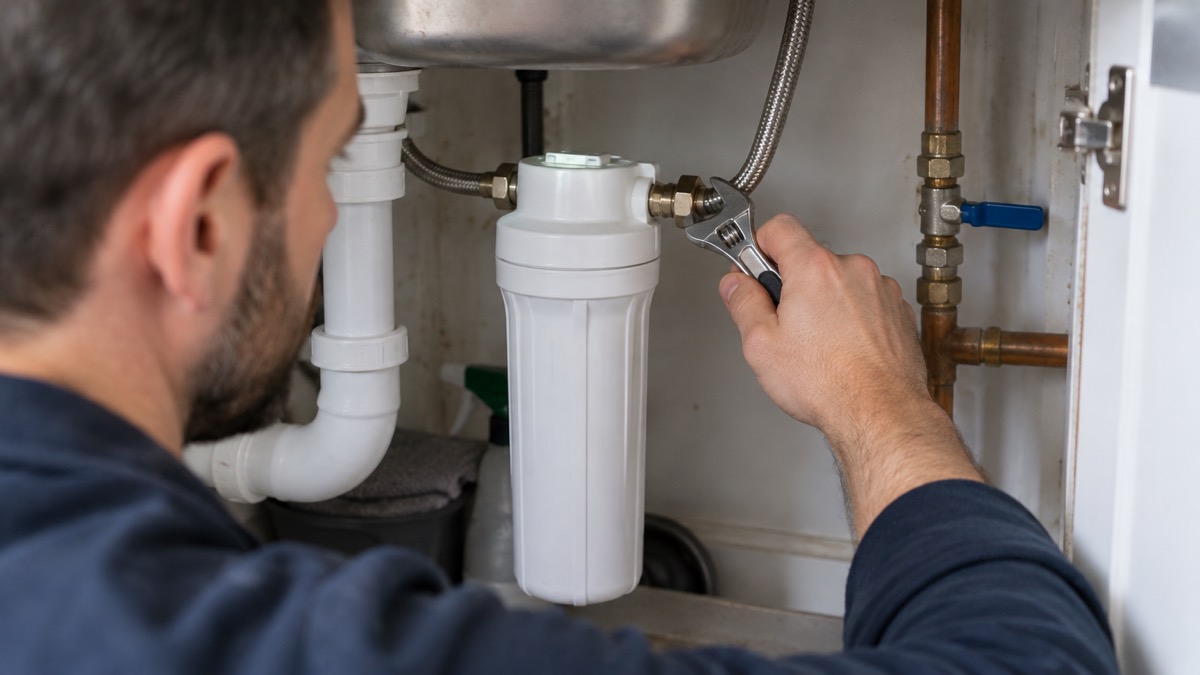
Doulton says installation is typically completed in under an hour, and that the process suits a confident DIYer or someone who prefers to call in a professional3. The box contains one Biotect Ultra (2501) filter and one Doulton Undercounter Installation Kit2.
Before you start, find your cold water mains isolator valve. Doulton's own advice is to check where it is, often under your kitchen sink unit, before arranging a fitting2. Knowing that before the cupboard is emptied saves time on the day.
The maker's general installation guidance for its systems is to connect the filter to your tap, make sure all connections are secure, and flush the filter by running water through it for a few minutes before first use10. Do that flush before you drink from the new tap.
Two connection points decide whether the job is straightforward:
- Tap connection size. Doulton taps use a 3/8 inch connection, which the maker says is engineered to maintain optimal flow with its under-sink systems6. Many third-party taps use a 1/4 inch inlet feed pipe, which Doulton says is not ideal for its systems and can result in reduced water flow6. If you are keeping an existing tap, check its inlet size before you order.
- Pressure reducer. If your jug test came in under 6 seconds, the maker says a pressure reducer may be needed to protect the system2. That is a separate part, so plan for it.
If you would rather not touch the pipework, a plumber can fit it. The maker's under-hour estimate is for the fitting itself, not for clearing a cupboard or making good.
Taps and flow: what 1.9 litres a minute feels like
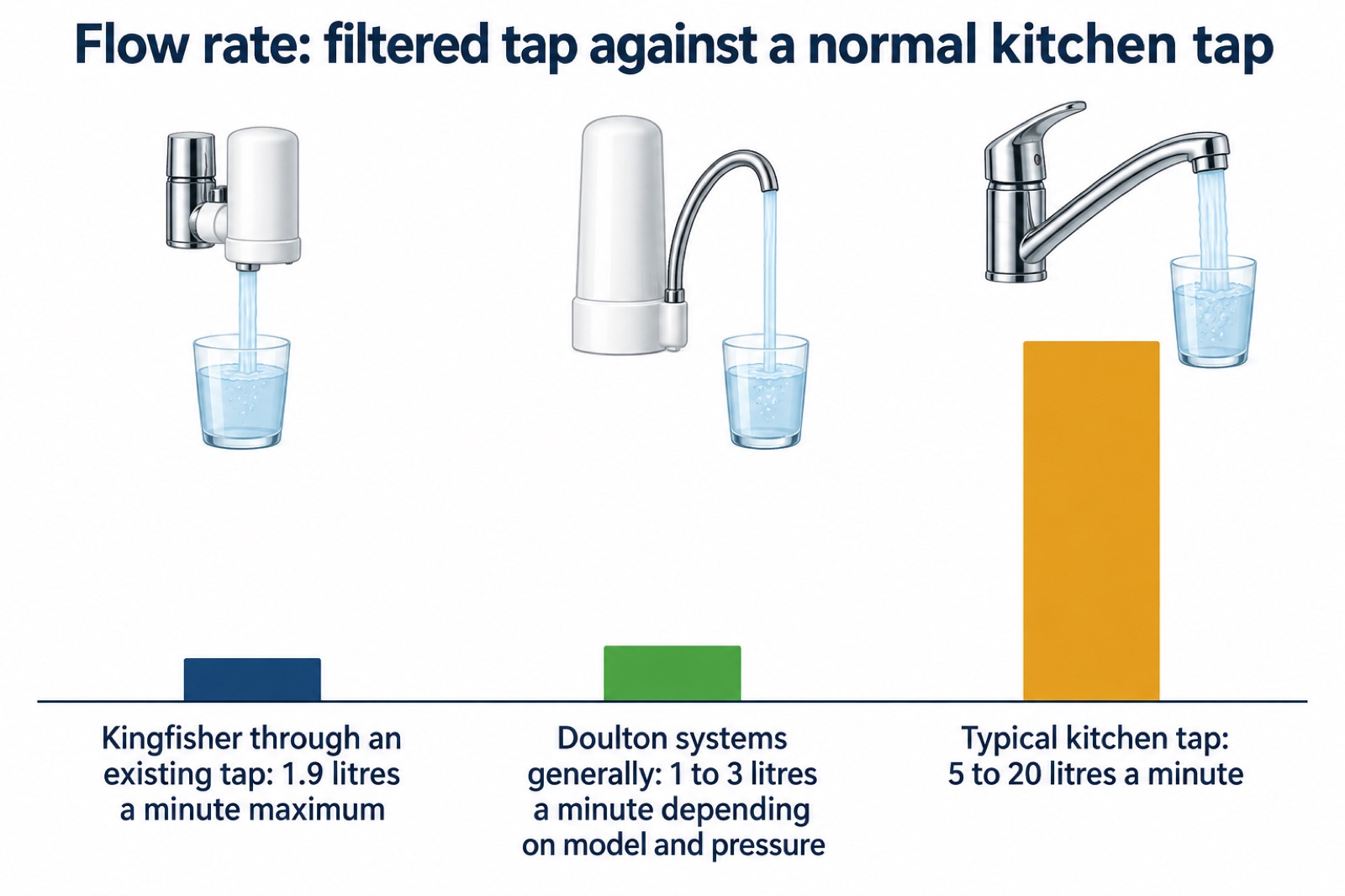
When the Kingfisher is fitted using an alternative or existing tap directly, the flow rate is limited to a maximum of 1.9 litres a minute, which is the flow rate of the Biotect Ultra filter3. The maker's manual gives the same rated service flow of 1.9 litres a minute (0.5 US gallons a minute)11.
Put that beside a normal tap. Taps run at between 5 and 20 litres per minute12, and Severn Trent describes a healthy tap as filling a one litre jug in around 7 seconds, which is 9 litres a minute13. So the filtered flow is roughly a fifth of a brisk mains tap. Doulton's general support guidance puts its systems at around 1 to 3 litres a minute depending on model and water pressure14.
What that means in practice: filling a glass takes a few seconds, filling a kettle takes noticeably longer, and filling a large pan is not what this tap is for. Most households use the filtered tap for drinking water and cooking water and keep the main tap for everything else. If you want a faster filtered flow, the answer is a dedicated Doulton tap with the 3/8 inch connection rather than a third-party tap with a 1/4 inch feed6.
Changing and cleaning the filter
The Kingfisher is designed for quick and hassle-free filter changes without having to turn off your water supply6. That is the main maintenance advantage of a plumbed system over a gravity filter: a cartridge swap does not mean draining anything.
Cleaning is where a ceramic cartridge earns its keep. Doulton says its filters can be cleaned between changes, which helps maintain their lifespan and effectiveness15. When the ceramic sees a reduction in flow while filtering water with high levels of sediment and turbidity, the maker says the filter can be removed and the surface gently cleaned to restore the flow rate7. Doulton's advice for the ceramic candle is to gently scrub the surface under running water using a soft brush or sponge, and to avoid detergents or soap as they can damage the filter10. Replace it when you notice a decline in performance or after the recommended time period16.
For the housing itself, Doulton's support guidance is to wipe the surface with a damp cloth and mild detergent, avoid abrasive cleaners or harsh chemicals, and make sure the system is dry before reassembling10.
Keeping a spare cartridge in the cupboard is the practical way to avoid a gap in supply. Doulton runs a Subscribe and Save service: by signing up you automatically receive replacement filters in the post, alongside a discount on your filter replacements17. You can also buy cartridges without subscribing. Either way, check which cartridge your system takes: the Kingfisher is designed for the Biotect Ultra and Biotect Ultra SI only3. For more on priming, cleaning and storing cartridges, including frost damage, see looking after a filter.
Support, returns and where it is made
Doulton's UK support line is 0333 340 3600, and the email address for help and advice is filtersales@doulton.com1. The maker also lists online chat and a Contact Us page10. If you are asking whether a cartridge or part fits, Doulton asks for the make, model, filter housing dimensions and any other relevant specifications18, so have those to hand.
The system carries 14 day returns2. Check the current terms on the product page before ordering, and keep the packaging until you have confirmed the unit fits your cupboard and your tap connection.
On delivery, Doulton says next working day delivery is available for orders placed by 11:00 Monday to Friday, subject to destination and courier availability, with later orders processed the next working day17.
The Kingfisher is Made in Britain2. Doulton says its products are made in a manufacturing facility in Staffordshire10, that for 200 years every ceramic filter element has been crafted in England, and that each element is quality-checked by in-house experts at every stage of production6. The company describes itself as a Made in Britain brand6.
If you are building a wider household water plan rather than just choosing a kitchen filter, the water section covers storage, treatment and what to do in an interruption, and the supply interruption checklist is a practical place to start.
Sources (18)
- Doulton Kingfisher Under Sink Water Filter System with Biotect Ultra, Doulton, 2026-10-28
- Doulton Kingfisher Under Sink Water Filter System with Biotect Ultra (Canada), Doulton, 2026-10-28
- Doulton Kingfisher Under Sink Water Filter System with Biotect Ultra (EU), Doulton, 2026-10-28
- Kingfisher Water Filter, Doulton, 2026-10-28
- Kingfisher Water Filter, Doulton, 2026-10-28
- Kingfisher Water Filter (Canada), Doulton, 2026-10-28
- Test Data, Doulton, 2026-10-28
- The Ultimate Doulton Starter Bundle, Doulton
- Buy Portable Water Filters & Systems Available from Doulton | Doulton Water Filters Ltd, Doulton Water Filters Ltd
- FAQs (France), Doulton, 2026-10-28
- Doulton Filter Elements Operating and Changing Instructions, Doulton, 2026
- Reducing water use, Centre for Alternative Technology, 2025-06-27
- Supply and pressure, Severn Trent, 2026
- FAQs, Doulton, 2026-10-28
- Ceramic water filters: what they are and how they work, Doulton, 2026-10-28
- Doulton Ultracarb M15 Filter, Doulton, 2026-10-28
- Water bottle replacement filter, Doulton, 2026-10-28
- Water Filter Test Data | Doulton Water Filters Ltd, Doulton Water Filters Ltd