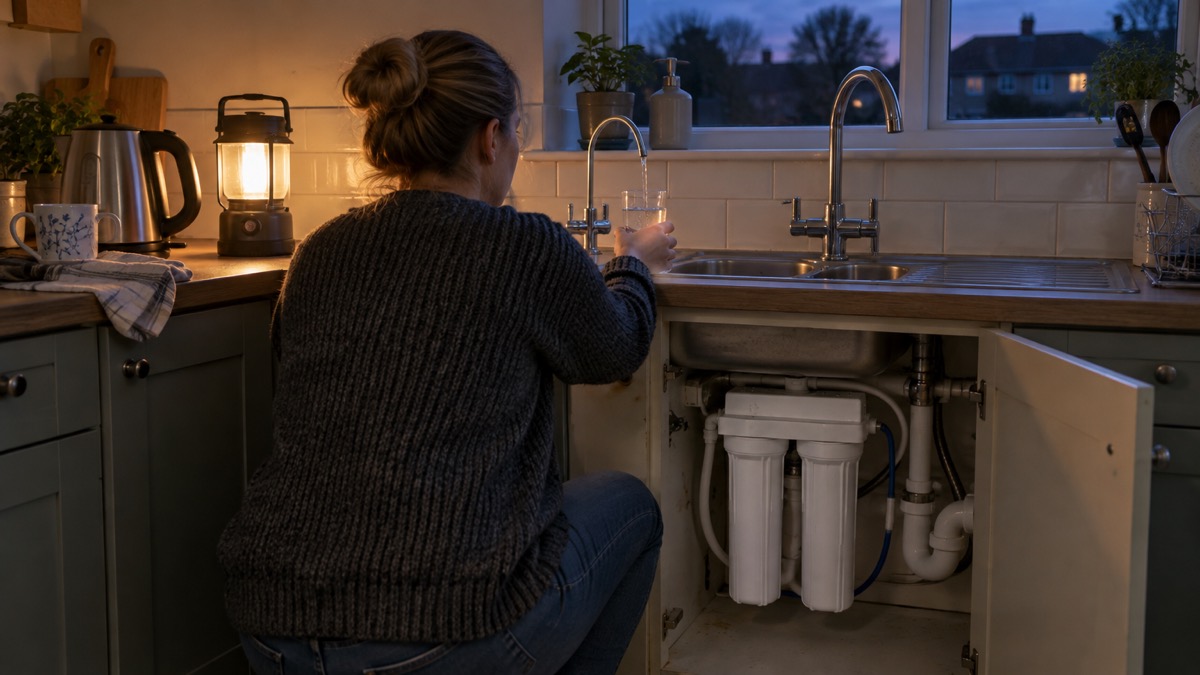
The Doulton HIP DUO is an under-sink water filter system made in Britain, fitted beneath your kitchen sink and plumbed into your mains supply. It uses a two-stage filtration process: a pre-filter of your choice and a Doulton Biotect Ultra (2501) ceramic filter. The maker states it reduces up to 99.99% of common contaminants1.
For a household preparing for emergencies, the HIP DUO is a permanent piece of kitchen equipment rather than a portable survival tool. It gives you filtered water at the tap every day, and it keeps working during a supply interruption only for as long as water is still reaching your pipes. It does not make water safe during a boil water notice, and it cannot filter water when the mains supply has stopped. Its value in a prepping plan is as a reliable everyday filter that reduces reliance on bottled water, backed up by stored water and a separate way to treat water when the supply fails.
This page sets out what the system is, its specifications, what it can and cannot do in an emergency, and how to keep it ready.
What the Doulton HIP DUO is
The Doulton HIP DUO Under Sink Water Filter System with Biotect Ultra is a plumbed-in filter that sits out of sight under the kitchen sink. Doulton describes it as giving "additional peace of mind" and says it delivers "exceptional water quality by using a two-stage filtration process"1. The first stage is a pre-filter chosen to suit your water; the second is the Biotect Ultra ceramic filter.
The system is made in Britain, a point Doulton repeats across its product pages1. It is tested and certified by WRAS and by NSF International against NSF/ANSI Standard 372, the US low lead requirement1. That certification matters to a household because it is independent confirmation of the materials the water passes through, not just the maker's own claim. For more on what certification does and does not tell you, see filter claims and certification.
In the box you get one Doulton Biotect Ultra (2501) filter, one Doulton Undercounter Installation Kit and one pre-filter of your choice1. The installation kit is included free of charge at checkout3. Doulton offers 14 day returns3.
The HIP DUO is one of a family. The same maker offers the Doulton HIP TRIO, which takes the same range of pre-filters, and the Doulton Kingfisher Under-Sink System. If you are weighing a plumbed-in filter against a freestanding one, gravity filter or under-sink filter sets out the trade-offs. Doulton's own range is described on the Doulton brand page.
Specifications and filter performance
The maker's figures give a compact unit that fits into a standard kitchen cupboard. The dimensions are width 193 mm, depth 320 mm and height 98 mm3. That shallow height is what allows it to sit under a sink alongside the waste pipe and stop tap.
| Specification | Detail |
|---|---|
| Type | Under-sink water filter system1 |
| Filtration | Two-stage: pre-filter plus Biotect Ultra (2501) ceramic filter1 |
| Dimensions | Width 193 mm, depth 320 mm, height 98 mm3 |
| Made in | Britain1 |
| Certification | WRAS; NSF International against NSF/ANSI Standard 3721 |
| Minimum pressure | Ideally 30 psi / 2 bar2 |
| In the box | Biotect Ultra (2501) filter, undercounter installation kit, pre-filter of choice1 |
| Returns | 14 day returns3 |
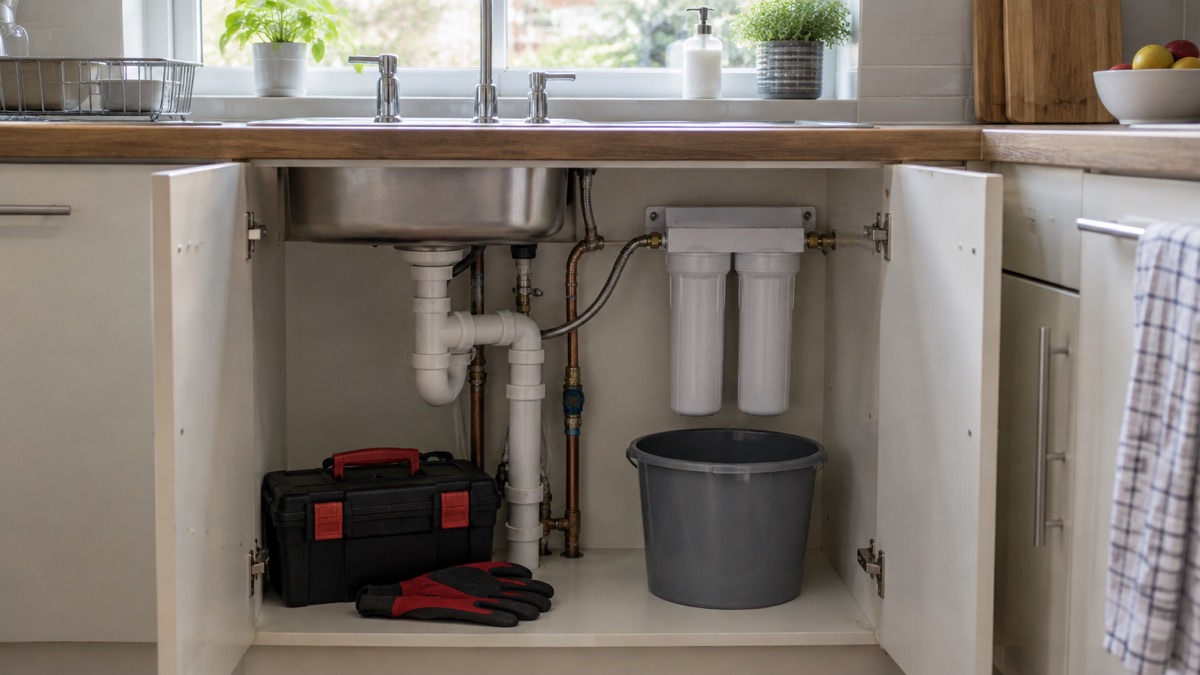
The pre-filter is the part that tailors the system to your water. Doulton lists five compatible cartridges for the DUO and TRIO systems: the Limescale Reduction Cartridge (9A04), the PFAS Chlorine Reduction Cartridge (9H04), the Nitrate Reduction Cartridge (9F04), the Sediment Reduction Cartridge (9E04) and the Fluoride Reduction Cartridge (9B04)1. Each addresses a different problem, so the right choice depends on what is in your supply. If you are in a hard water area, limescale reduction protects the ceramic filter; if your supply carries more sediment after mains work, a sediment cartridge keeps the ceramic element cleaner.
The pre-filters have a ¼" BSP thread, so they will only fit into the slot closest to the incoming water supply3. That is a physical constraint worth knowing before you buy spares: the pre-filter has one home in the housing.
The maker states the system reduces up to 99.99% of common contaminants2. That is a broad claim, and the detail of what a ceramic and carbon filter removes, and what it does not, is covered in what each filter type removes. A filter is not a licence to drink any water; it is a barrier that works best on water that is already reasonably clean.
What it does for your household's water in an emergency
The honest answer is that the HIP DUO is an everyday filter with a limited emergency role. It filters water that is already reaching your tap. When the mains supply stops, it has nothing to filter. When the supply is running but under a notice, the notice overrides the filter.
That does not make it useless in a prepping plan. It means you should understand exactly where it sits.
What it does well. In normal times it reduces the contaminants the maker lists, which cuts how much bottled water a household buys and stores. During a short interruption, if your home has a cold-water tank in the loft, that tank will allow you some water for a short period; official guidance says to use it only for critical purposes7. Water drawn from a tank is not the same as mains water, and a filter is not a substitute for boiling if you are unsure of its quality.
What it cannot do. It cannot make notice-affected water safe. A boil water notice tells customers not to drink tap water without boiling it first4. South West Water, during the Brixham cryptosporidium incident, asked customers not to drink tap water without first boiling it and allowing it to cool8. A Do Not Use notice is stronger still: it means do not use the water at all. Research into a January 2024 Do Not Use Notice issued to consumers on the Marleigh estate in Cambridge shows how disruptive these events are, and how firmly the instruction must be followed9.
Where it fits. Treat the HIP DUO as your baseline water quality, and build a separate emergency layer on top: stored water, a way to boil, and a portable filter or purification tablets for water you collect. The water in an emergency guide sets out the whole picture, and how much drinking water to store per person tells you the quantity to aim for.
Boil water notices and the HIP DUO
A boil water notice is issued when the supply may be contaminated. The instruction is to boil water before drinking, brushing teeth, making ice cubes, preparing food, cleaning feeding equipment or giving it to pets4. Anglian Water's notice advice is that you simply bring the water to the boil and use or cool as required, and that prolonged boiling is not necessary10.
The maker's product information does not state that the HIP DUO makes notice-affected water safe without boiling. Do not assume it does. Follow the notice. For a full walk-through, see what to do if you get a boil water notice and the boil notice checklist.
There is one useful exception to know about. The Breastfeeding Network advises that you can use tap water with a boil notice for making up infant formula, unless your water company has advised you otherwise11. Always check the specific notice, because companies can and do vary the advice. For more, see babies and formula feeds when the supply is off or unsafe.
Private supplies, wells and boreholes
If your water comes from a private supply such as a well, borehole or spring, the HIP DUO's role is different again. The maker's information here does not state that the system is suitable for private supplies. Private water supplies can carry contaminants that mains water does not, and the treatment needed depends on testing your own supply. Cumberland Council explains that a private water supply is one not provided by a water company, and that different types carry different risks12. Get your water tested and take advice before relying on any filter. The private supplies guide covers wells, boreholes and springs in more detail.
Water pressure: the test that decides whether it will work
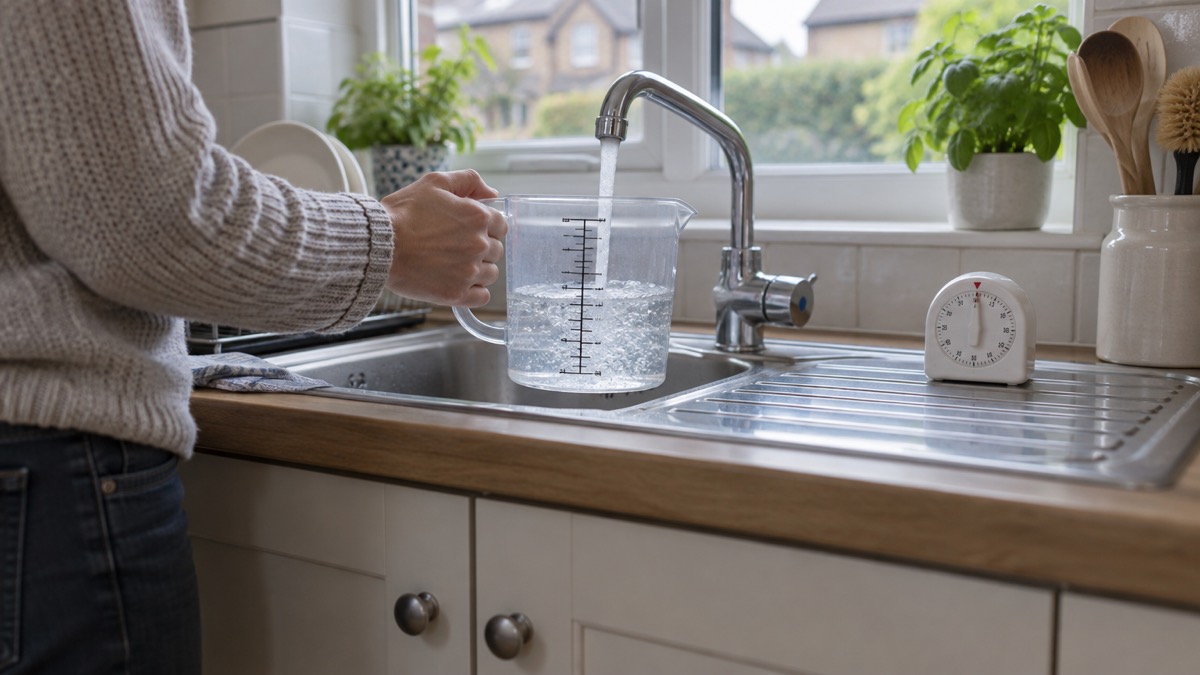
An under-sink filter needs enough pressure to push water through a ceramic element. Doulton states you ideally need 30 psi / 2 bar2. If your pressure is too low, the system will trickle and may not perform as intended.
You can test your own pressure with a jug and a timer. The maker's thresholds are clear2:
- Under 6 seconds to fill one litre: you likely have very high pressure (over 10 litres per minute). This is excellent for Doulton systems, but a pressure reducer may be needed.
- 7 to 12 seconds: medium to low pressure, which should be adequate to run the system.
- Over 12 seconds: the maker would not recommend a Doulton under-sink system without advice on your mains water pressure.
If your test comes out slow, a freestanding gravity filter needs no plumbing at all. The gravity filters and ceramic candles guide explains how they work, and the British Berkefeld SS2 is one example of that approach.
Fitting it, and keeping it ready
The HIP DUO is a plumbed-in appliance, so installation is a job for someone confident with pipework, or a plumber. The maker includes an undercounter installation kit3. Doulton advises against connecting the system directly to your existing kitchen tap, because that does not separate filtered water from the mains supply and may compromise water quality2. Instead, the maker highly recommends using the Doulton Pillar Tap or integrating with the Doulton Three Way Mixer Tap, each sold separately3. A dedicated tap is what gives you a clean separation between filtered and unfiltered water.
Before any plumbing work, know where your stop tap is. The internal stop tap is the first line of defence against plumbing emergencies, and turning off the mains supply can prevent property damage if a pipe leaks or bursts13. Check it works regularly, because you may need it in an emergency13. If the internal tap fails, the external stop tap outside your home turns the water off14. For the full procedure, see home emergencies: burst pipes.
Replacing filters and storing spares
The good news for maintenance is that the housing remains in place when filters and cartridges are replaced; you only have to change the filters themselves1. That makes a filter change a straightforward job rather than a plumbing exercise.
Keep spares. A spare Biotect Ultra (2501) filter and a spare pre-filter of the right type mean you can change them without waiting for a delivery, which matters if a supply incident coincides with postal disruption. Store cartridges as the maker instructs on the packaging, and keep them clean and dry. The filter care guide covers priming, cleaning, cartridges and frost in detail.
For replacement cartridges and advice, contact Doulton on 0333 340 3600 or at filtersales@doulton.com1. The maker offers 14 day returns on the system3.
Spotting a genuine filter
The product information here does not describe how to identify a counterfeit cartridge. The practical safeguard is to buy from Doulton or an authorised stockist and to check the packaging and cartridge markings against the maker's own guidance. If anything looks wrong, contact Doulton before fitting it. A filter of unknown origin gives you no assurance of what it removes, which defeats the purpose of having one.
Where it fits in a household emergency plan
The HIP DUO is a sound choice for a household that wants filtered water at the tap every day and is prepared to keep a separate emergency supply for the times the mains fails or a notice is issued. It is not a substitute for stored water, a boiling method or a portable filter.
A sensible plan layers these together:
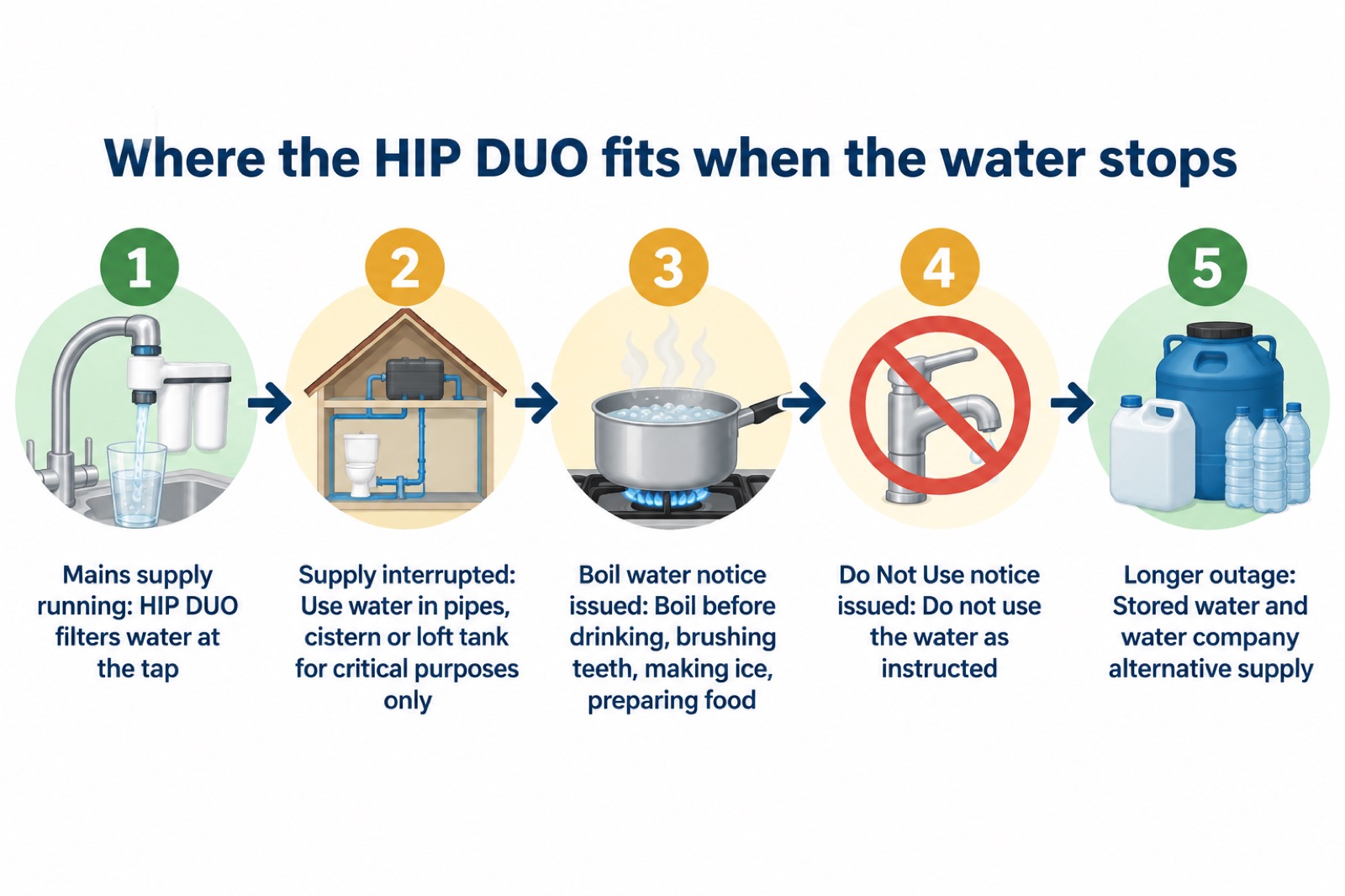
- Everyday: the HIP DUO filters your mains water and reduces how much bottled water you buy.
- Short interruption: use water already in your pipes, cistern or a loft tank for critical purposes only7.
- Notice issued: follow the notice. Boil water as instructed, or do not use it at all4.
- Longer outage: rely on stored water and your water company's alternative supply. Water companies can provide an alternative supply in an emergency16, and households with medical needs such as home dialysis can register for priority services, including an emergency water supply17.
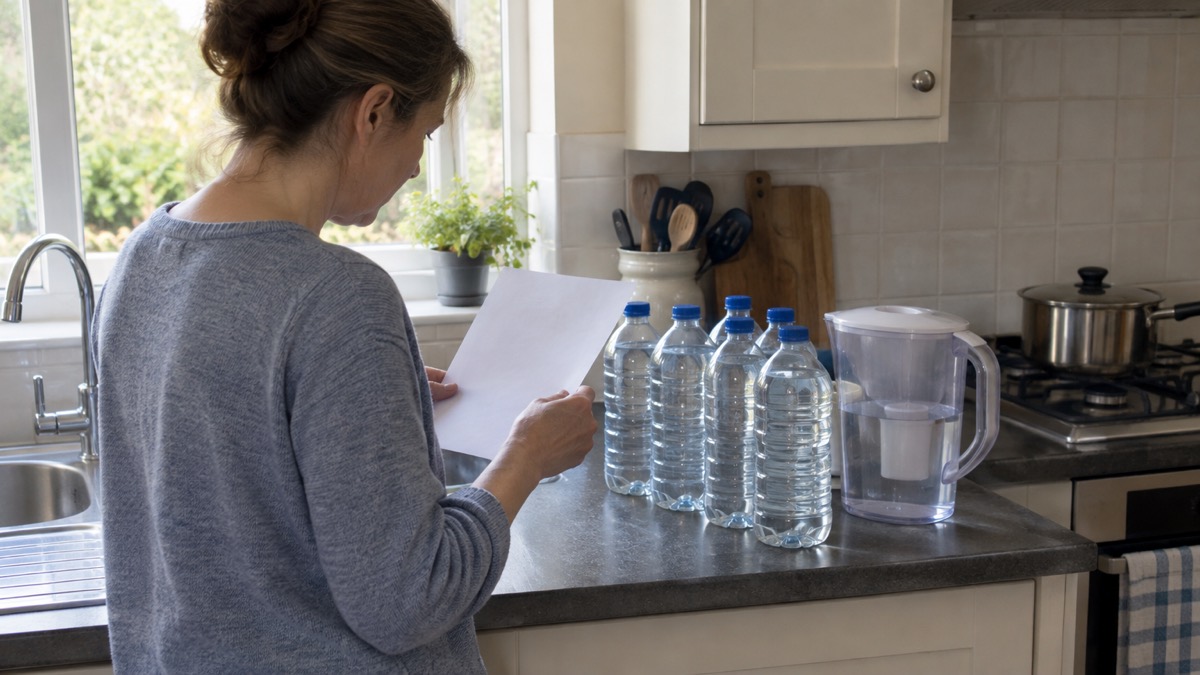
If you have a medical condition, check whether you qualify for your water company's Priority Services Register. United Utilities explains that it provides extra help if you need dialysis at home, including contacting you as soon as possible if the water supply must be turned off and planning shut-offs to avoid dialysis days17. The home dialysis and medical needs guide and the extra help section explain how to register. For the wider picture of how companies respond, see how water companies respond to a major incident.
Sources (18)
- HIP DUO Biotect Ultra product page, Doulton, 2026-10-28
- HIP DUO Biotect Ultra product page, Doulton, 2026-10-28
- HIP DUO Biotect Ultra product page, Doulton, 2026-10-28
- Receiving a boil water notice, Drinking Water Inspectorate, 2024-05-16
- British Berkefeld Stainless Steel Stand, Doulton, 2026-10-28
- British Berkefeld 8.5L Insulating Gravity System Sleeve, Doulton, 2026-10-28
- Failure of Water Infrastructure or Loss of Drinking Water, Wiltshire and Swindon Prepared, 2026-10-25
- Boil water notice: Alston and the Hillhead area of Brixham, South West Water, 2024-05-15
- CCW and Ofwat joint research into Do Not Use Notice, Consumer Council for Water and Ofwat, 2024-08-15
- Boil notice FAQs, Anglian Water, 2023-07
- Feeding your baby in an emergency situation, The Breastfeeding Network, 2026-10-13
- Types of private water supply, Cumberland Council, 2026
- Stop tap check, WaterSafe, 2026-10-29
- Our water visit, Southern Water
- Leaks FAQs, Cambridge Water, 2026-10-28
- Supply interruptions, Hafren Dyfrdwy, 2026
- About Priority Services, United Utilities, 2026-10-28
- Priority services, Consumer Council for Water, 2026-07-08

 LifeSaver Bottle
 LifeSaver Liberty
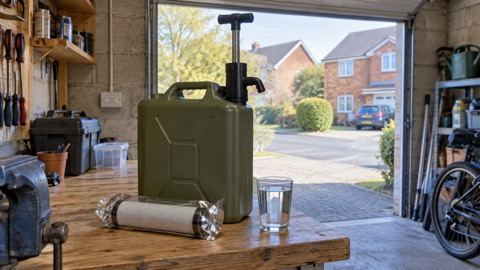 LifeSaver Jerrycan
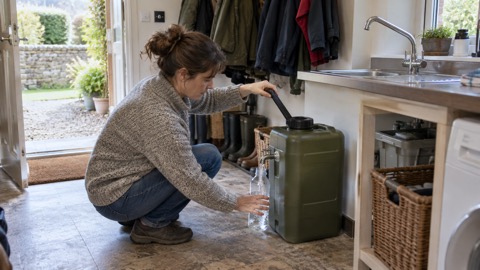 LifeSaver Jerrycan Graphene
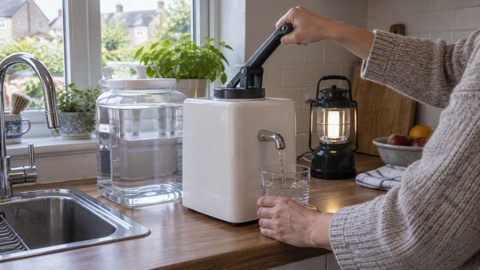 LifeSaver Cube
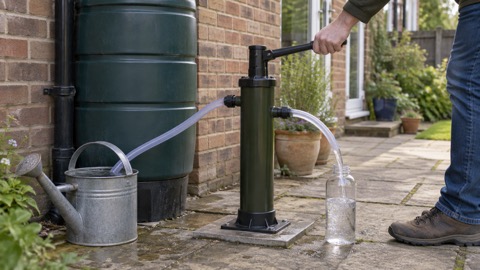 LifeSaver Wayfarer
 LifeSaver Lifeline
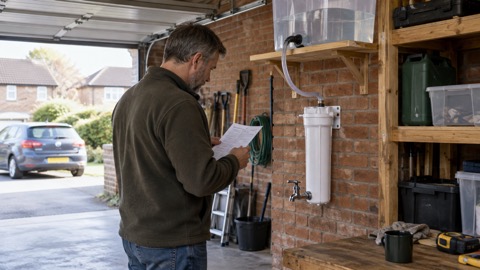 LifeSaver C1
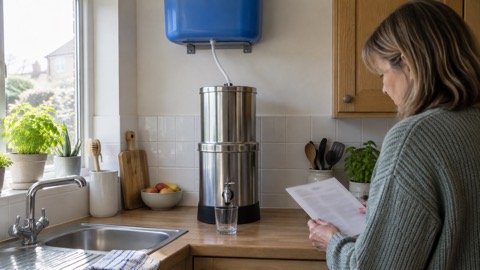 LifeSaver C2
 Katadyn Micropur Classic
 Katadyn Micropur Forte
 Katadyn Micropur Antichlor