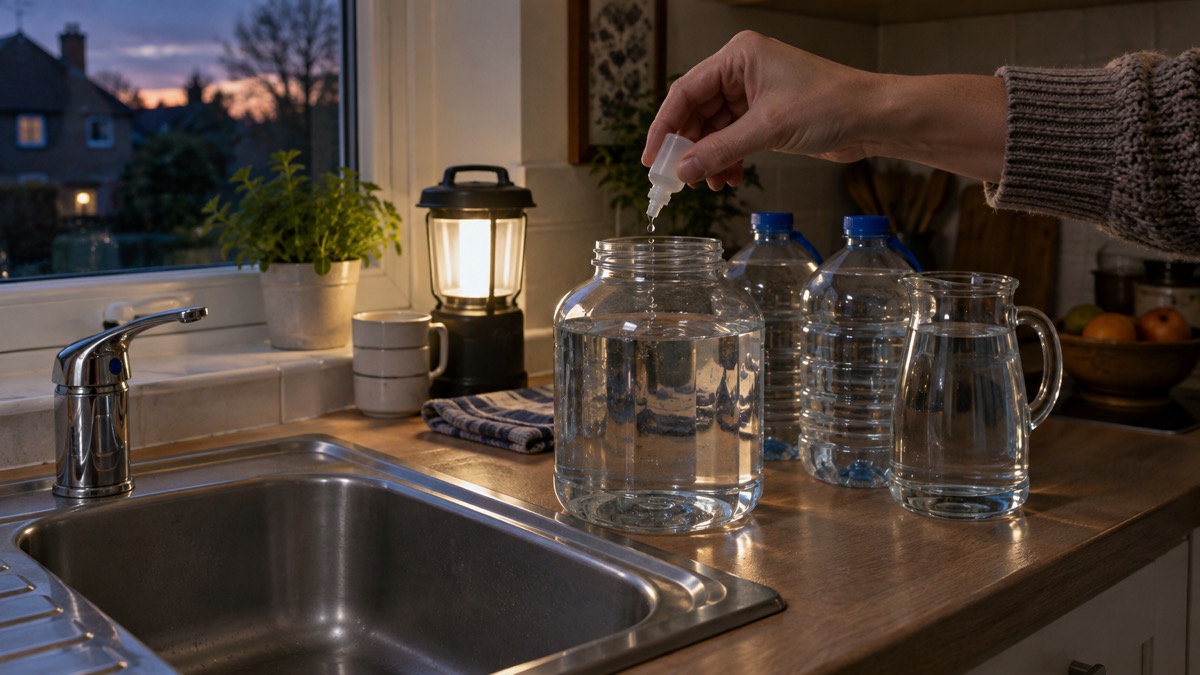
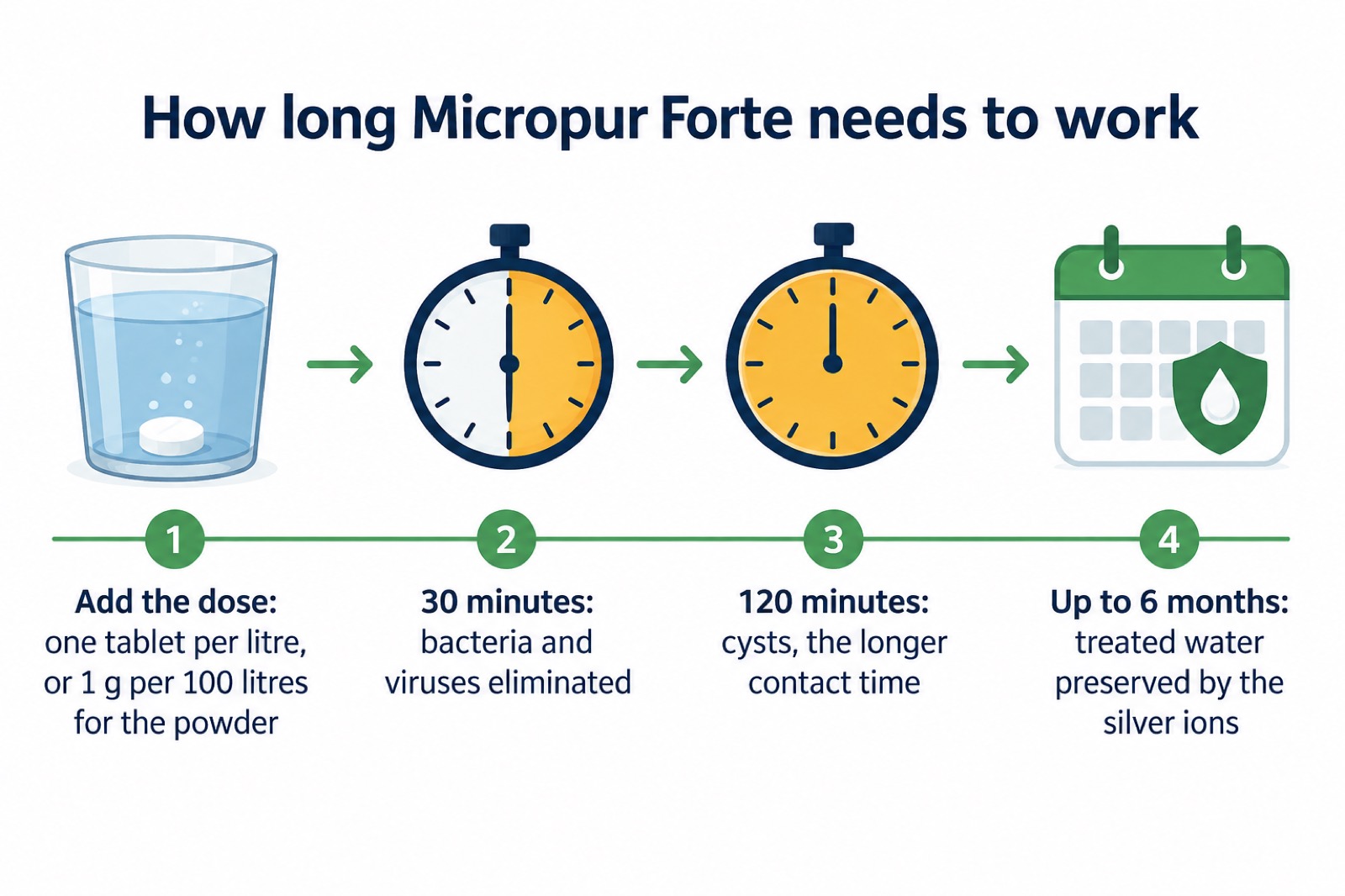
Katadyn Micropur Forte is a chlorine and silver water treatment sold as tablets, as a liquid and as a powder. It is made for clear water, and the maker's own figures say it does two jobs: it disinfects, and the silver ions then keep the treated water good for storage. The maker states that bacteria and viruses are eliminated after 30 minutes of contact, and that cysts need 120 minutes1. It also states that treated water is preserved for up to 6 months3.
For a household, that makes it a storage product as much as an emergency one. You treat a batch of tap water, seal it, and it is there when you need it. The maker lists tap water as the water source for every form1. The catch is cloudiness: suspended matter weakens the effect of the chlorine and silver ions, so cloudy water has to be filtered first4.
This page sets out what each form is, how much to dose and how long to wait, how to store treated water and the product itself, and how to handle it safely. It covers the maker's instructions for its own product. For the wider picture, start with how to make water safe to drink in an emergency and storing tap water safely at home.
Three forms: tablets, liquid and powder
The range covers the same job at very different scales, and the form you choose decides how much water you can treat and how easy it is to measure. The tablets are the simplest for a household: one tablet treats one litre, so there is nothing to weigh or pour2. The maker lists the tablets in packs of 50 and 100 tablets1.
The liquid is the middle option. The 100 ml bottle treats 1,000 litres, and the maker lists it for a group of 2 to 5 people3. It suits someone treating a larger store in one go, or refilling containers regularly, where counting tablets for every litre would be tedious.
The powders are for volume. The maker lists the 100 g powder for 2 to 5 people and the 500 g powder for 2 to 5 people and for more than 10 people4. A 500 g tub is far more than most homes will use in years, so it is a choice for a group, a community store or a very large household supply.
| Form | Pack | Treats | Dose | Maker's group size |
|---|---|---|---|---|
| Tablets | 50 tablets | 100 litres | 1 tablet per litre | 1, 2 to 5 people1 |
| Tablets | 100 tablets | 100 litres | 1 tablet per litre | 1, 2 to 5 people2 |
| Liquid | 100 ml | 1,000 litres | as labelled | 2 to 5 people3 |
| Powder | 100 g | 10,000 litres | 1 g per 100 litres | 2 to 5 people4 |
Dose and wait: 30 minutes for bacteria and viruses, 2 hours for cysts
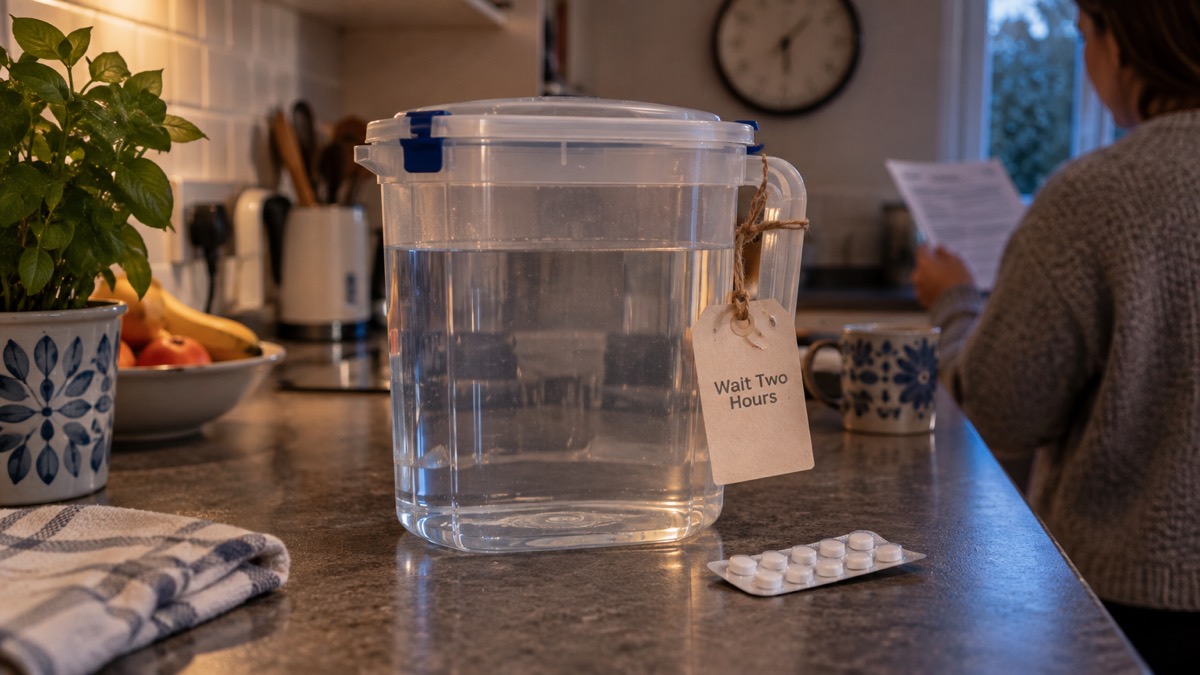
The maker's contact times are the part people get wrong, because the two figures are different and both matter. For bacteria and viruses, the maker states 30 minutes: the tablets kill bacteria in 30 minutes and viruses in 30 minutes, and the liquid eliminates viruses in 30 minutes1. For cysts, the maker gives a contact time of 120 minutes1. Cysts are the tougher target, so the water needs the longer wait if you want the full claim.
The dose is simple for tablets: one tablet per litre2. For the 100 g powder it is 1 g per 100 litres4. Measure carefully, because the maker's treated volume figures assume the stated dose.
A few practical points follow from those figures. Treat the water in a container you can close, add the dose, and leave it for the full contact time before anyone drinks. Do not top up a treated container with fresh water and assume it is still protected: treat the new water as a new batch. And do not shorten the wait because the water looks clear; the contact time is what the maker's claim rests on.
Clear water only: filter cloudy water first
Every form of Micropur Forte is made for clear water, and the maker says so plainly: use it for clear water and filter turbid water first1. The 100 g powder page explains why: suspended matter can weaken the effect of chlorine and silver ions4. That is the mechanism behind the instruction. Cloudiness shields germs and uses up the disinfectant, so the dose that works in clear water may not be enough in cloudy water.
The maker's own suggestion for cloudy water is a Katadyn microfilter4. If you do not have a filter, let the water stand and settle, and pour off the clearer water, but treat that as a partial measure rather than a guarantee. The reliable route is filtration first, then treatment. Our guide to emergency filters sets out the types, and what each filter removes explains the difference between them.
This is also where Micropur Forte sits in the wider toolkit. It is a chemical treatment, so it is a different approach from boiling or from a filter. Boiling kills germs with heat and needs fuel; a filter removes them physically. Micropur Forte's advantage is that it leaves a residual that keeps working in storage, which is why the maker can claim up to 6 months of protection3. Its limit is that it needs clear water to start with.
Keeping stored water safe for up to 6 months
The storage claim is the reason many households buy this product. The maker states that silver ions preserve water for up to 6 months, and gives that figure for the tablets, the liquid and both powders3. That is a maker's claim for water treated to its instructions and stored in a suitable container. It is not a licence to store any water any way you like.
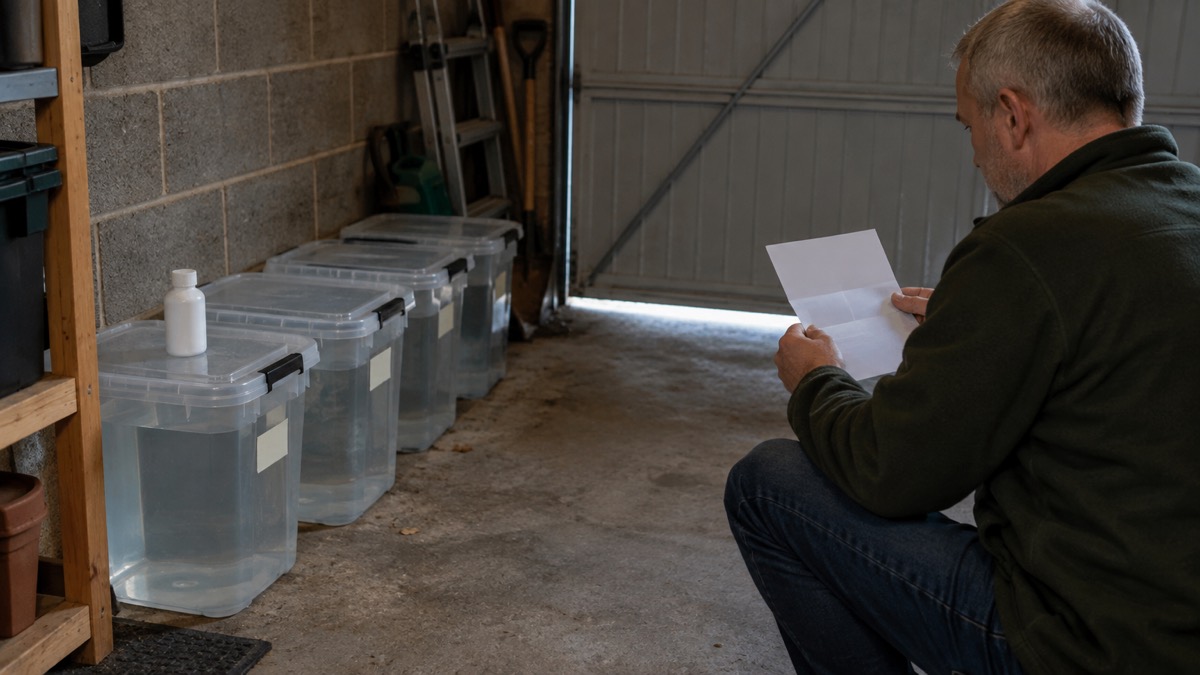
The conditions matter. Start with tap water, which the maker lists as the source for every form1. Use a clean container with a lid, and keep it out of sunlight and away from heat. The maker states that silver ions preserve the treated water for up to 6 months3. Label the container with the date you treated it, so you know when the 6 months runs out.
For how much to keep, see how much drinking water to store per person and the home drinking supply storage checklist. For the containers themselves, containers and jerrycans for drinking supplies covers what to look for. If your supply is under a do not drink notice, follow the water company's instructions rather than treating your way around it; our guide to do not drink and do not use notices explains what those mean.
Shelf life and storage: keep it dry and below 25°C
The product keeps far longer than the water it treats, but the two forms differ. The maker gives the tablets a shelf life of 5 years1. The powders are listed at 3 years from the date of manufacture4.
Storage instructions are consistent across the range. Keep the product in its original packaging in a dry place under 25°C5. The liquid and the 500 g powder should go in a cool, dark place below 25°C3. The reason is the same as for many household chemicals and medicines: heat and moisture degrade them. NHS guidance on storing medicines at home makes the same point, to keep them in a cool, dry place away from direct sunlight, heat and moisture8, and Age UK's heatwave guidance notes that most medication should be kept below 25°C9. A cupboard in a cool room is better than a shed or a car.
Safe handling: eye and skin irritation, and never mixing with other products
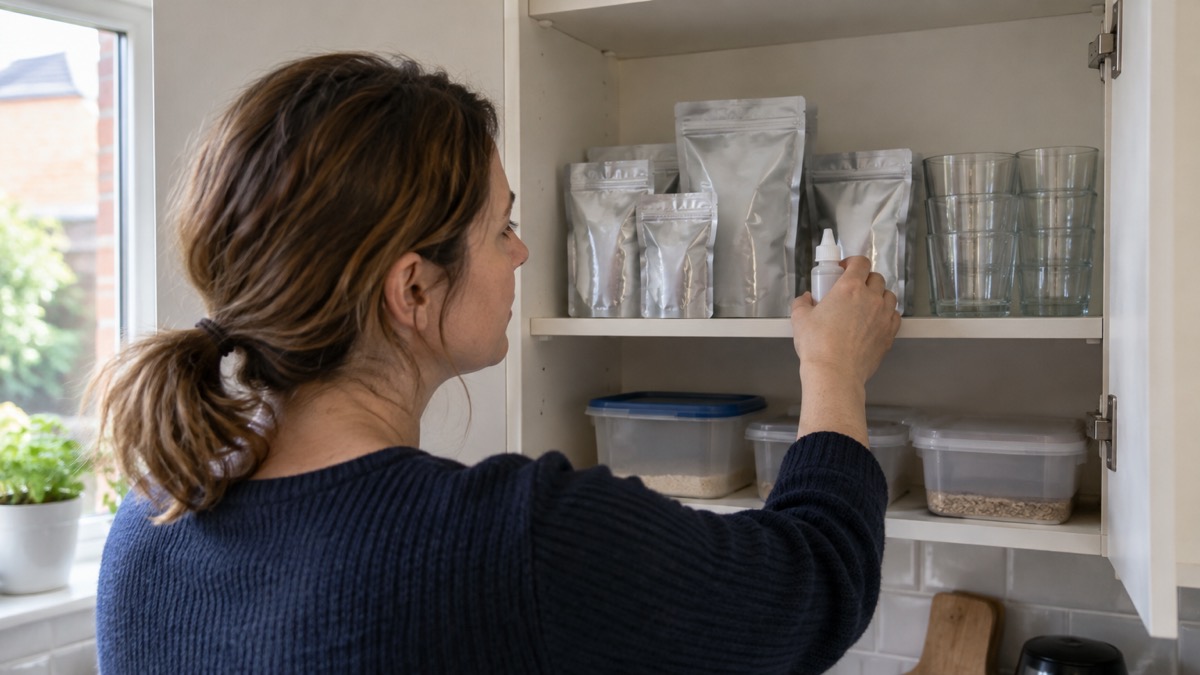
Micropur Forte is a biocide, and the maker's hazard labelling is worth reading before you open it. The liquid carries H315 (causes skin irritation) and H319 (causes serious eye irritation), and is labelled very toxic to aquatic life with long lasting effects (H410)3. The powders carry H319 and H4104. The tablets carry H3197. Handle the product carefully, keep it away from your eyes and skin, and wash your hands after use.
The most important warning is about mixing. The maker states: "EUH206 Warning! Do not use together with other products. May release dangerous gases (chlorine)."1. That means do not add Micropur Forte to water that already contains another treatment, and do not mix it with other cleaning or disinfecting products. Chlorine gas is dangerous, and the warning is there for a reason.
The maker's general instruction is to use biocides safely and always read the label and product information before use4. That is not boilerplate: the dose, the contact time and the storage conditions all come from the label, and they differ between the forms.
Containers and disposal
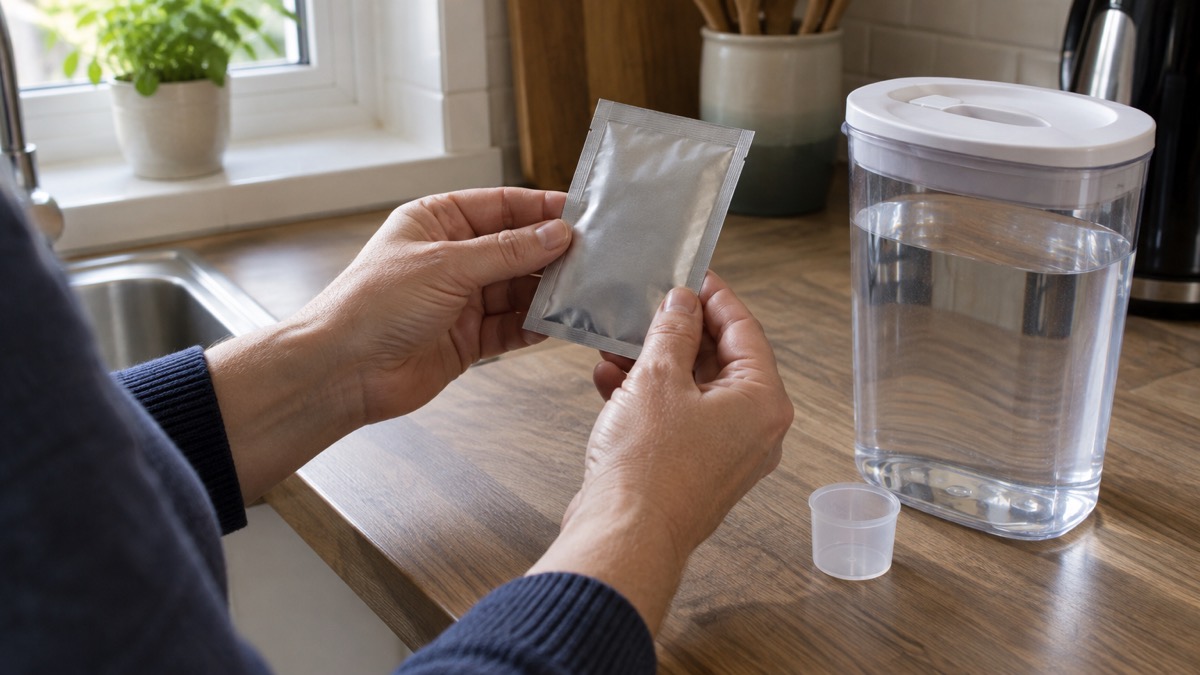
The maker says the product can be used in plastic or glass, and that metals should be checked before use4. For most households that settles it: a clean plastic or glass container with a lid is the straightforward choice for treating and storing water. If you want to use a metal jerrycan or tank, check with the maker or the container supplier first. Our guide to containers and jerrycans covers the practical side of choosing and cleaning them.
Dispose of the product and its container in accordance with local legislation, which is the maker's instruction across the range1. In the UK that means following your council's household waste rules for chemicals rather than pouring leftovers down the sink3.
Where Micropur Forte fits in a household plan
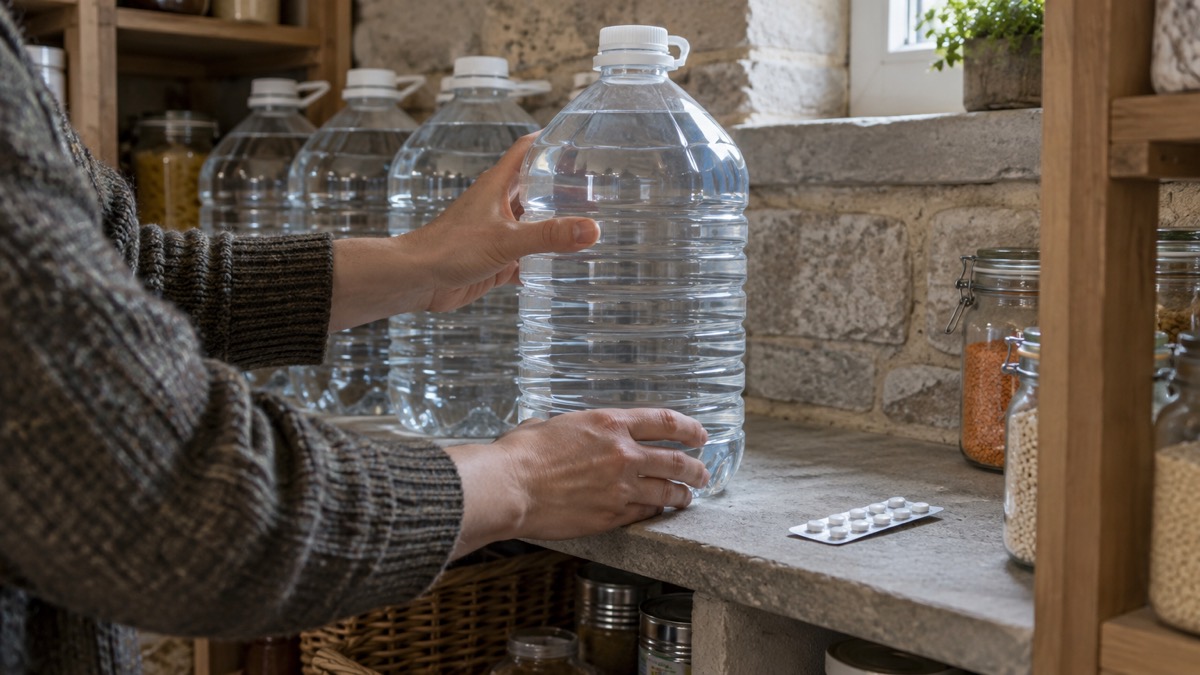
Micropur Forte is a storage treatment, not a filter and not a boiling pan. It suits a household that wants to keep a batch of tap water ready and safe for months, and it is simple enough to use in a power cut or a supply interruption when you want a job that takes a minute. The tablets are the easiest to dose; the liquid and powders suit larger volumes.
It does not replace the basics. You still need containers, a way to filter cloudy water, and a plan for how much to store. Start with water in an emergency and the supply interruption checklist. If you are weighing up chemical treatment against a filter, purification tablets or a gravity filter sets out the trade-offs, and purification tablets: chlorine, chlorine dioxide and silver explains how the chemistries differ. For the maker's wider range, see Katadyn.
Sources (9)
- Micropur Forte MF 1T 50 Tab, Katadyn, 2026-10-28
- Micropur Forte MF 1T 100 Tab, Katadyn, 2026-10-28
- Micropur Forte MF 1'000F 100 ml, Katadyn, 2026-10-28
- Micropur Forte MF 10'000P 100 g, Katadyn, 2026-10-28
- Micropur Forte MF 50'000P 500 g, Katadyn, 2026-10-28
- Micropur Forte MF 1'000F 100 ml (French), Katadyn, 2026-10-28
- Micropur Forte MF 1T 100 Tab (ES/DK/S/N/FIN), Katadyn, 2026-10-28
- Storing medicines at home, United Lincolnshire Hospitals NHS Trust, 2026
- Staying cool in a heatwave, Age UK, 2026-06-25
 Katadyn Micropur Classic