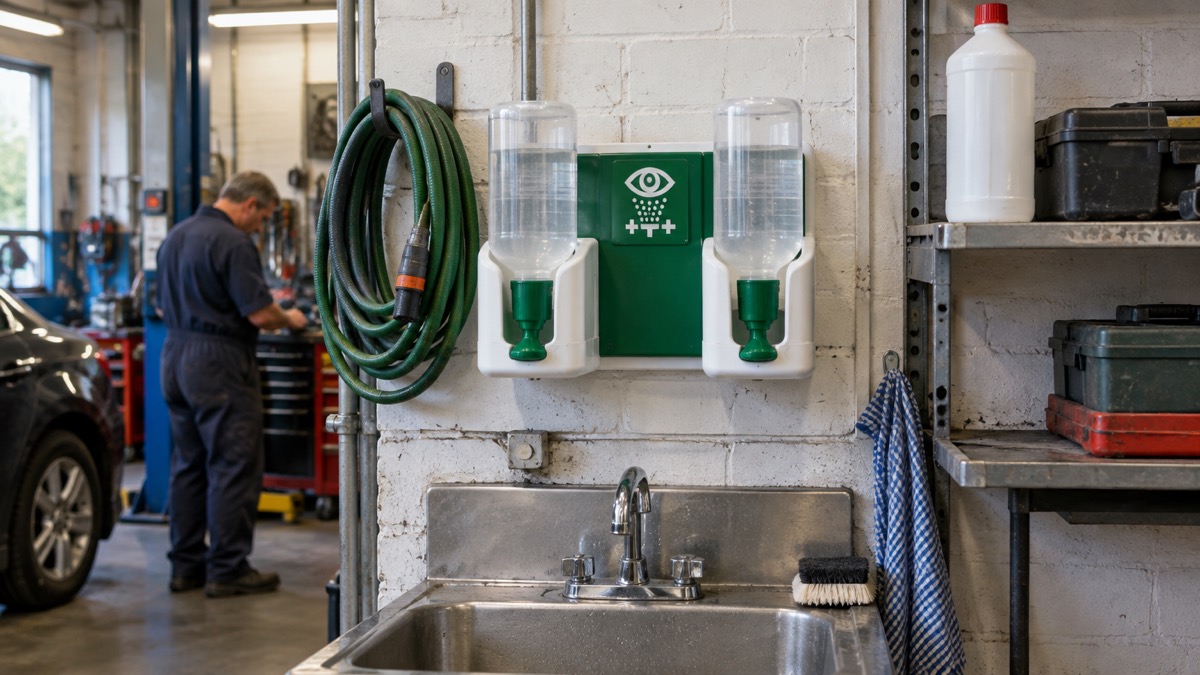
A chemical splash in the eye is one of the few household accidents where the first minute decides how much damage is done. The instruction is simple and it is the same whoever you ask: wash the eye out straight away with clean, cold water, and keep going for at least 20 minutes1. Do not stop after a minute because it feels better, and do not wait to find a special eyewash. Official guidance is explicit that you should not delay immediate irrigation while you assess the person or look for a particular fluid2.
The rinsing has to reach the whole eye, not just the front of it. Hold the casualty's eye under gently running water for at least 20 minutes and make sure the outside and inside of the eyelid is washed3. That means lifting the lid gently so the water gets underneath, where chemical can sit against the eye long after the surface has been flushed.
A chemical splash is also one of the eye injuries that warrants emergency help rather than a wait-and-see approach. For major eye injuries, including chemical splashes, call 999 or 112 or go to an Emergency Department or Eye Casualty Department3. Rinse first and keep rinsing while help is arranged; the two happen together, not one after the other.
Rinse a chemical splash in the eye for at least 20 minutes
Twenty minutes is the figure that comes up again and again, and it is a minimum, not a target to stop at. The NHS advice for a chemical or something in the eye is to flush it immediately with clean, cold water for at least 20 minutes, then lightly cover the eye to stop yourself rubbing it1. The cover matters: a rubbed eye is a further injury on top of the chemical one.
Why so long? A splash does not sit in one place. The chemical spreads across the surface of the eye and collects under the lids, and a short rinse dilutes what is on the front without clearing what is trapped at the edges. The aim is to dilute and disperse the chemical, which is exactly how the St John Ambulance describes the job3. A brief splash of water does neither properly.
The same 20 minute figure appears in the wider burn advice, which is a useful cross-check. Hold a burn or scald under cool running water for 20 minutes, as soon as possible and within 3 hours of it happening; if there is no running water, cool bottled water or a wet towel can be used4. For a child, the NHS advises putting a burn or scald under cool running water for 20 to 30 minutes to reduce the heat in the skin5. The eye is not skin, but the principle is the same: sustained cooling and dilution, not a quick splash.
What goes wrong is stopping early. The eye starts to feel less painful after a minute or two, and the temptation is to call it done. Resist it. Keep the water running for the full period, and if you are in any doubt about the chemical, keep going while you arrange medical help. The rinsing and the phone call are not alternatives.
How to hold the eye under running water
The mechanics decide whether the rinse works. The eye needs a gentle, steady flow of clean, cold water, directed so that it runs across the eye and away from the face rather than into the other eye or down the throat. A tap running gently is the usual way to do it at home; a clean jug or bottle poured slowly works if a tap is awkward to get to.
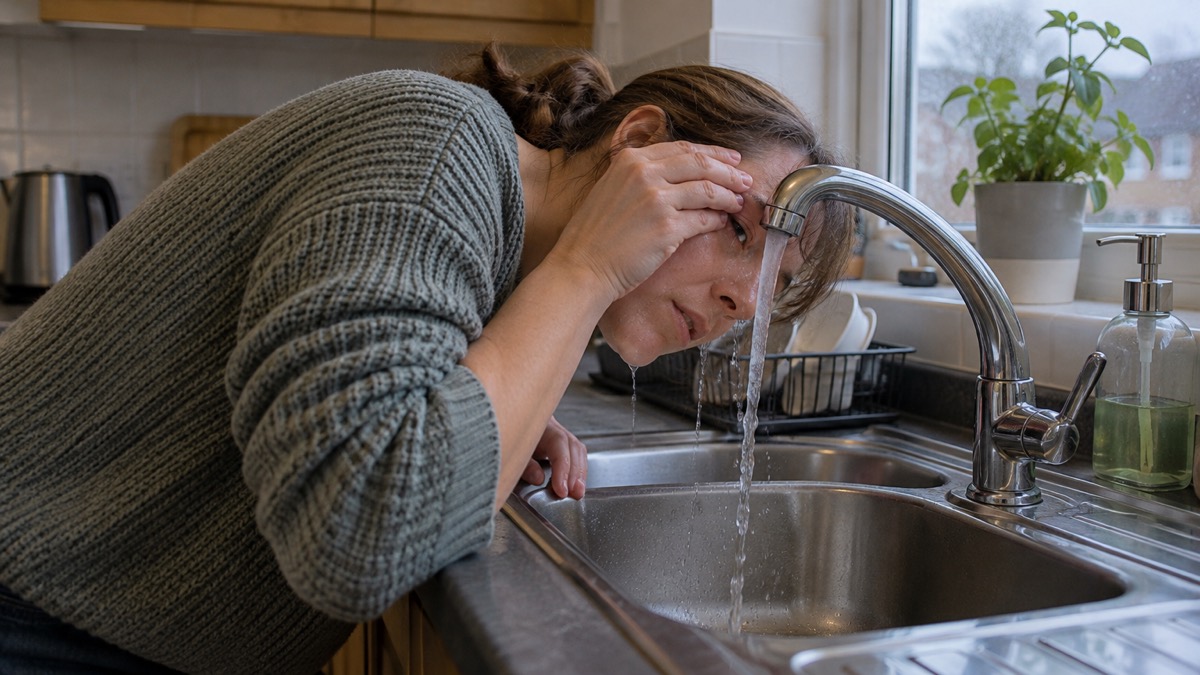
Position the person so the affected eye is lower than the other, with the head tilted towards the injured side. That way gravity takes the contaminated water away from the uninjured eye. The St John Ambulance is direct about this: make sure the contaminated water does not splash the uninjured eye, you, or the casualty3. If you are helping someone else, stand to the side rather than directly in the splash zone.
Keep the eyelids open. This is the part people find hardest, especially with a child or with an eye that is screwed shut with pain. Gently hold the lids apart with clean fingers, and let the water flow over the surface. Do not press on the eyeball itself. If the person can do it themselves, so much the better, because they will judge the pressure.
If you have sterile saline eyewash, it is made for this job. Saline pods provide quick, sterile eyewash6. But they are a convenience, not a requirement, and a 20ml pod is a small volume against a 20 minute rinse. Use what you have and do not delay for a product. The same applies to an eyewash solution kept in a first aid kit, which is there to help wash out grit or dirt in the eyes7; for a chemical splash, the volume of clean water and the time spent rinsing matter more than the container it comes from.
Rinsing the inside and outside of the eyelid
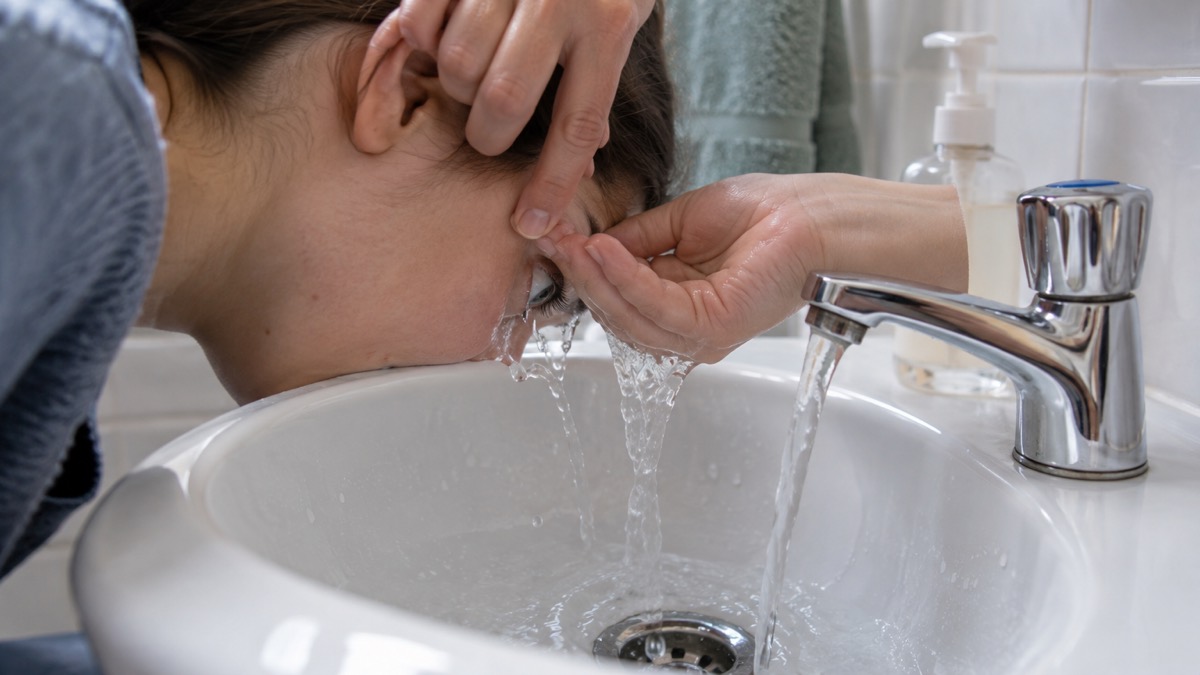
The lids are where a chemical splash hides. The front of the eye is easy to rinse; the inside of the upper lid, which rolls back over the eye, and the inside of the lower lid, which forms a small pocket, both hold liquid against the eye. Washing only the visible surface leaves chemical in contact with the eye long after the tap is turned off.
The instruction is to make sure the outside and inside of the eyelid is washed3. In practice, that means gently lifting the upper lid away from the eye and letting the water run underneath, then easing the lower lid down so the water reaches the pocket below the eye. Do this slowly and with clean hands, and keep the water flowing throughout. It is uncomfortable, and it needs to be done anyway.
Do not use anything to prise the lids apart other than your fingers. Do not put drops or ointment into the eye, and do not try to neutralise the chemical with anything. Water is the fluid; the aim is dilution and removal, not a chemical reaction on the eye.
If the eye is held tightly shut by pain or by the person's fear, keep the water flowing over the closed lids and keep encouraging them to open. Water running over a closed eye still cools and dilutes what is on the lashes and lids, and it keeps the person in position while they gather themselves. Then try again to open the eye under the water.
When to get medical help after an eye splash
A chemical splash is not a wait-and-see injury. For major eye injuries, including chemical splashes, call 999 or 112 or go to an Emergency Department or Eye Casualty Department3. That is the default, not the fallback. Rinse on the way, or rinse while someone else makes the call.
The general NHS poisoning advice sets out the same escalation in more detail. If there are red features, go to the nearest Hospital Emergency (A&E) Department or call 999, and consider using What3words to describe your location to the ambulance service1. The same advice applies to a child who has been exposed to a chemical: go to the nearest A&E or phone 999 if red features are present10. A splash to the eye from a strong household chemical is exactly the kind of exposure that warrants that call.
If the exposure is milder, or you are unsure, the NHS advises contacting your GP practice or calling NHS 111 the same day, and if symptoms persist for 4 hours or more without speaking to either, rechecking for red features1. For a child, the equivalent advice is to monitor them for the next 1 to 2 days after seeking advice or discharge, let them eat or drink normally, and follow the earlier steps again if you are concerned10. The same monitoring advice applies to an adult: keep an eye on yourself for the next 1 to 2 days and seek medical help again if you feel worse1.
After any chemical eye injury, take the container or label with you. The product name tells the treating team what the chemical was and how urgently the eye needs to be seen. If you cannot take the container, photograph the label.
Chemical burns to the skin
The same principles apply to skin, with one addition: some chemicals have to be removed before you rinse. Make sure the area around you and the casualty is safe, and wear protective gloves and, if available, an apron and eye protection too8. Then carefully try to remove the chemical and any contaminated clothing, and rinse the affected area using as much clean water as possible11.
For a powder, brush it off first. The official hazardous materials advice is to remove the substance from your skin using a dry absorbent material to either soak it up or brush it off, then rinse continually with water if the skin is itchy or painful12. Rinsing a powder straight away can spread it across more skin; brushing first removes the bulk.
For the burn itself, hold it under cool running water for 20 minutes, as soon as possible and within 3 hours of it happening4. For a child, use cool running water for 20 to 30 minutes5. Rinse the affected area thoroughly with cool water to remove the chemical13. If there is no running water, cool bottled water or a wet towel can be used4.
After a chemical burn has been treated, the follow-up matters. A dressing will be checked after 24 hours for signs of infection, changed again after 48 hours, and then every 3 to 5 days until completely healed14. During the first few years after a burn, avoid letting direct sun onto the damaged skin, because it may cause blistering, and the skin is especially sensitive in the first year after injury14.
Chemical splashes and children
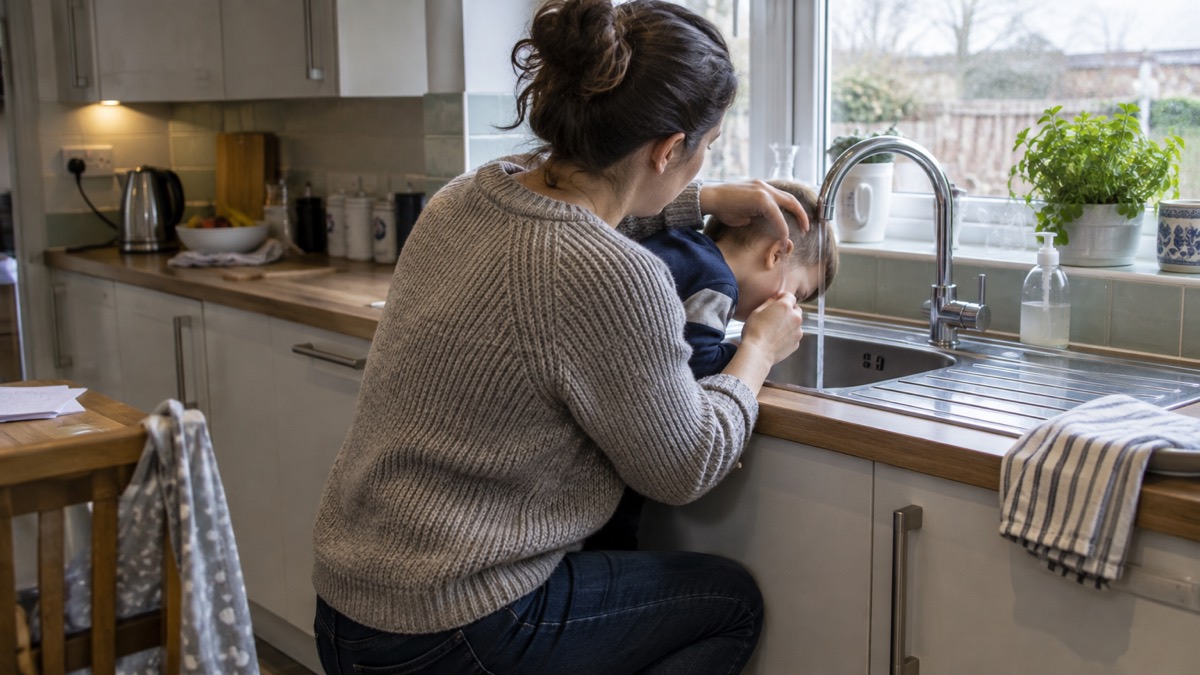
Children are the group most likely to get a chemical in the eye at home, because cleaning products and laundry capsules are at their height and their hands go everywhere. Cleaning products can cause serious harm if swallowed, inhaled, or splashed into the eyes15. Laundry pods are a particular risk: a 3-year-old had a chemical burn on his eye after bursting a laundry pod, and it took all night flushing out his eyes with 22 litres of fluid before finally getting the ph down16.
The first aid for a child is the same as for an adult, with more holding. Wash out the affected eye with clean water if there were chemicals or something in it, and lightly cover the eye17. Hold the child's eye under gently running water for at least 20 minutes and make sure the outside and inside of the eyelid is washed3. A child will resist, and the rinse still has to run its full course.
If a child has got a washing pod or cleaning product on the skin or in the eyes, rinse cautiously with water for several minutes16. That is the product-level advice; for a chemical splash to the eye, the 20 minute figure applies. If you are unsure what the child has been exposed to, call 999 or take them to an emergency department, and take the container with you.
Sources (17)
- Poisoning and accidental swallowing, Healthier Together, 2026-10-29
- Chemical injury first aid guidance, London South East Burns Network, 2026
- Eye injury first aid advice, St John Ambulance, 2026-10-28
- Burns and scalds, NHS, 2026-03-31
- What to do if your child has an accident, NHS, 2025-12-18
- Personal first aid guide, Steroplast, 2026-10-28
- Self care advice, Birmingham and Solihull ICB, 2026-10-28
- Chemical burns first aid advice, St John Ambulance, 2026-10-28
- Flooding aftercare advice, Runnymede Borough Council, 2026-10-26
- Poisoning: accidental swallowing, Frimley Healthier Together, 2026-10-29
- Burns and scalds self-help, Andaman Surgery, 2026
- Hazardous materials incident, Prepare campaign, 2026-10-13
- Burns prevention and tips, Mid and South Essex NHS, 2026-10-25
- Burns and scalds, NHS Inform, 2026-07-31
- Child safety hub: poisoning, RoSPA, 2026-10-26
- Washing pods and capsules, CAPT, 2025-01-20
- Staying safe over the summer, Healthier Together, 2026-10-29
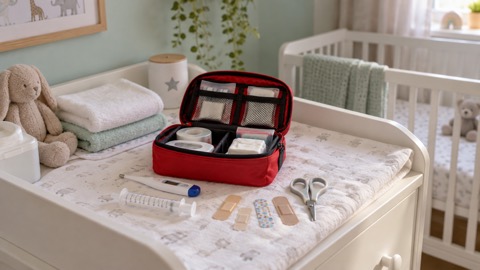 Baby and Child Kit Checklist
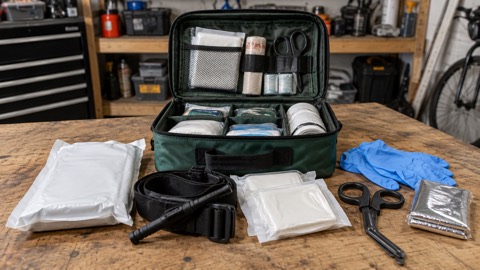 Bleeding Control Kit Checklist
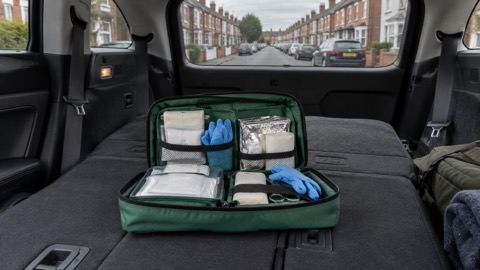 Car Kit Checklist
 CPR on a Baby
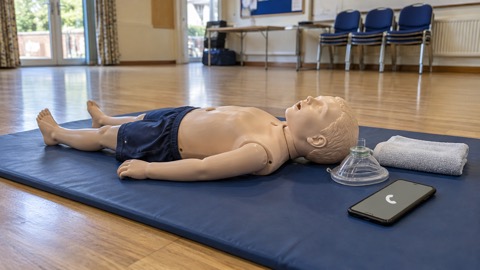 CPR on a Child
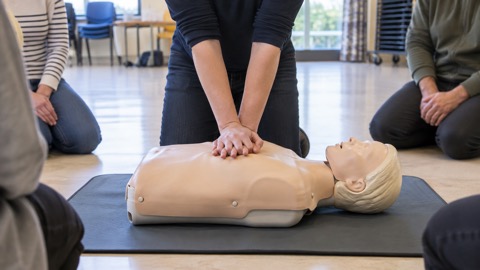 Chest Compression Rate and Depth
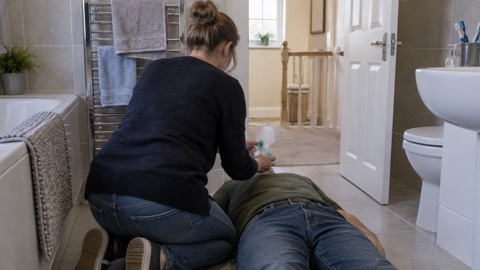 Rescue Breaths or Hands-Only CPR
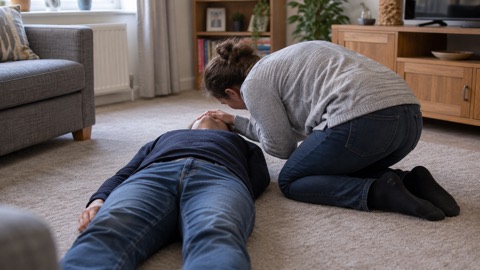 Checking Breathing
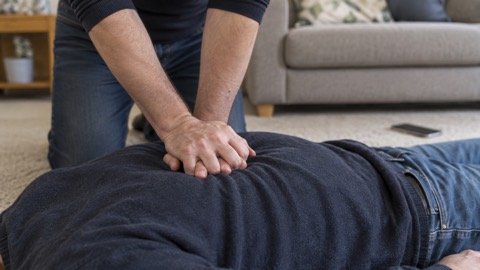 Agonal Breathing and CPR
 Breathing During CPR
 Recovery Position and Spine
 Cardiac Arrest vs Heart Attack
 Heart Attack First Aid
 Defibrillator Pad Placement
 Defibrillator on a Child