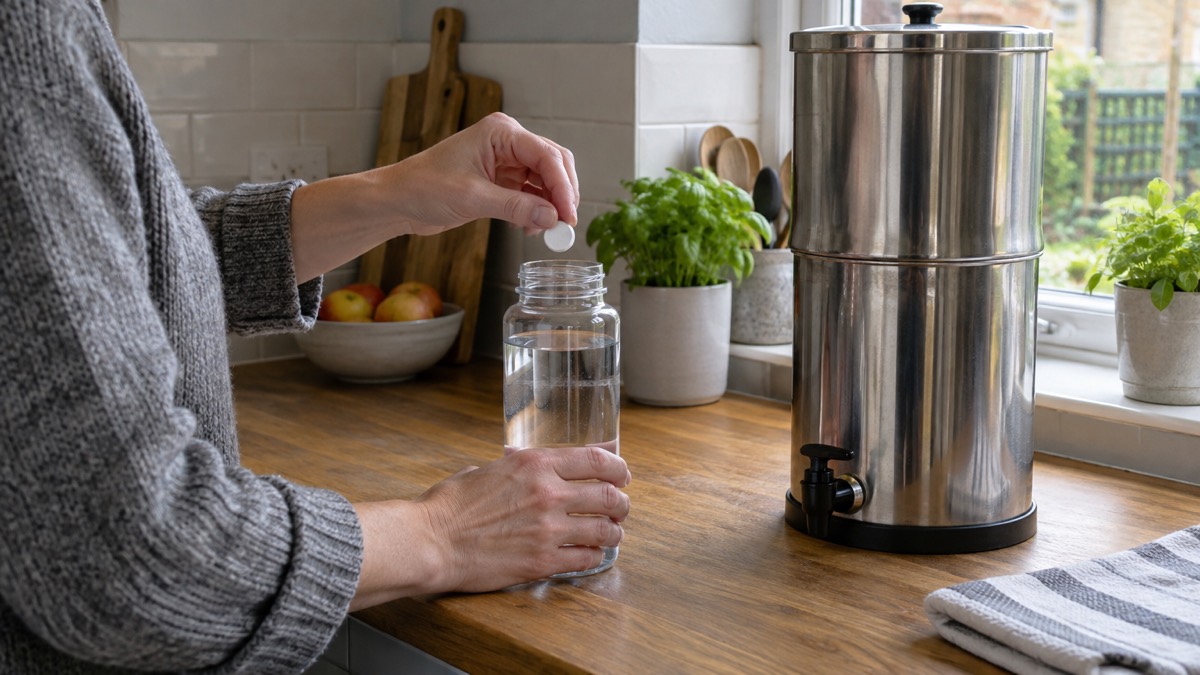
If you are choosing between purification tablets and a gravity filter for water you have collected or stored, the honest answer is that they do different jobs and often work best together. Tablets are small, light and need no power, but the official advice is that most alternative water sources will also need to be filtered before you use the tablets1. A gravity filter clears the water and runs without electricity, but it cannot do everything a chemical treatment can.
So the practical order for collected water is: get the worst of the dirt out, filter it, then treat it. A gravity filter does the first two steps in one, and tablets finish the job. If you only want one piece of kit, choose by what your water is like. Clear-ish water and limited space point to tablets. Muddy, silty or gritty water points to a filter, with tablets as the second stage.
This page sets out what each does to the water, how to use them together, where tablets alone fall short, and how to store tablets and keep their safety information current. For the wider picture, start with Water in an Emergency: A Household Guide.
| Gravity filter | Purification tablets | |
|---|---|---|
| Power needed | None, works under gravity2 | None |
| Removes silt and sediment | Yes, particulates such as sediment and silt4 | No |
| Kills bacteria and viruses | Depends on model; a filter alone may not remove viruses5 | Chlorine kills bacteria and viruses9 |
| Speed | Slow, filters gradually7 | Quick to dose, then wait |
| Suits | Cloudy or gritty collected water, households | Clear water, limited space, a second stage |
Most collected water needs filtering before tablets will work
The starting point is the government's own preparedness advice. It says plainly that most alternative water sources will also need to be filtered before using the tablets1. That single line settles the order of operations for anyone collecting water from a stream, a butt or a stored container of uncertain quality. Tablets are a chemical treatment, and chemicals work best on water that is not full of grit and silt.
Why does it matter? A tablet has to get at the germs in the water. Silt, sediment and organic matter give those germs somewhere to sit and shield them, and they also use up the active ingredient. Clear water gives the tablet a fair chance. This is why the same official guidance points people towards filters as well as tablets, and why the two are usually sold to the same households.
There is a second reason to filter: the things a filter removes that a tablet never will. A filter takes out particulates such as microplastics, sediment and silt4. Tablets do not. If your water is gritty, no amount of tablets will make it pleasant to drink.
The distinction between a filter and a purifier is worth knowing before you buy. As one maker explains it, a water filter removes bacteria and cysts or protozoa, while a water purifier removes bacteria, cysts or protozoa and viruses5. That difference decides whether you need a chemical stage as well.
- Clear-ish water, limited space: tablets alone may be enough, following the label1
- Cloudy, silty or gritty water: filter first, then treat1
- Water that may carry viruses: a purifier, or a filter plus a chemical stage5
- No power, no fuel: a gravity filter keeps working2
What each one actually does to the water
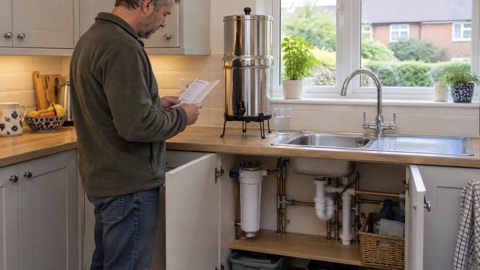
A gravity filter is a passive system. Water is pulled down from a top chamber through a filter into a bottom chamber, and the contact time with the filter medium helps reduce a range of contaminants6. The Scottish drinking water regulator describes filter candles, made of porous materials such as ceramic, cotton or paper, as removing impurities, and notes they need no electricity because the water is filtered under gravity2. That is the great strength of a gravity system in an outage: it keeps working when the mains do not.
The trade-off is speed. One maker notes that a gravity system filters through much slower than a pressure system such as a tap-mounted filter7. Another says gravity filters, especially ceramic ones, are among the slower methods, though fitting more filters speeds the flow8. Plan around that: fill it before you need it.
Tablets are the opposite: fast to deploy, tiny to store, and chemical rather than mechanical. Chlorine tablets kill bacteria and viruses9. Chlorine dioxide tablets kill bacteria, viruses and cysts including Giardia and Cryptosporidium, and the maker says they leave no noticeable aftertaste, unlike chlorine10. Both types are widely available online, from pharmacies and from outdoor and camping retailers1.
Using both together on collected water
The combined method is straightforward once you know the order. Filter the water to clear it, then treat the filtered water with tablets, following the label. Some makers build the chemical step into their instructions for their own filters, which shows the sequence is sound.
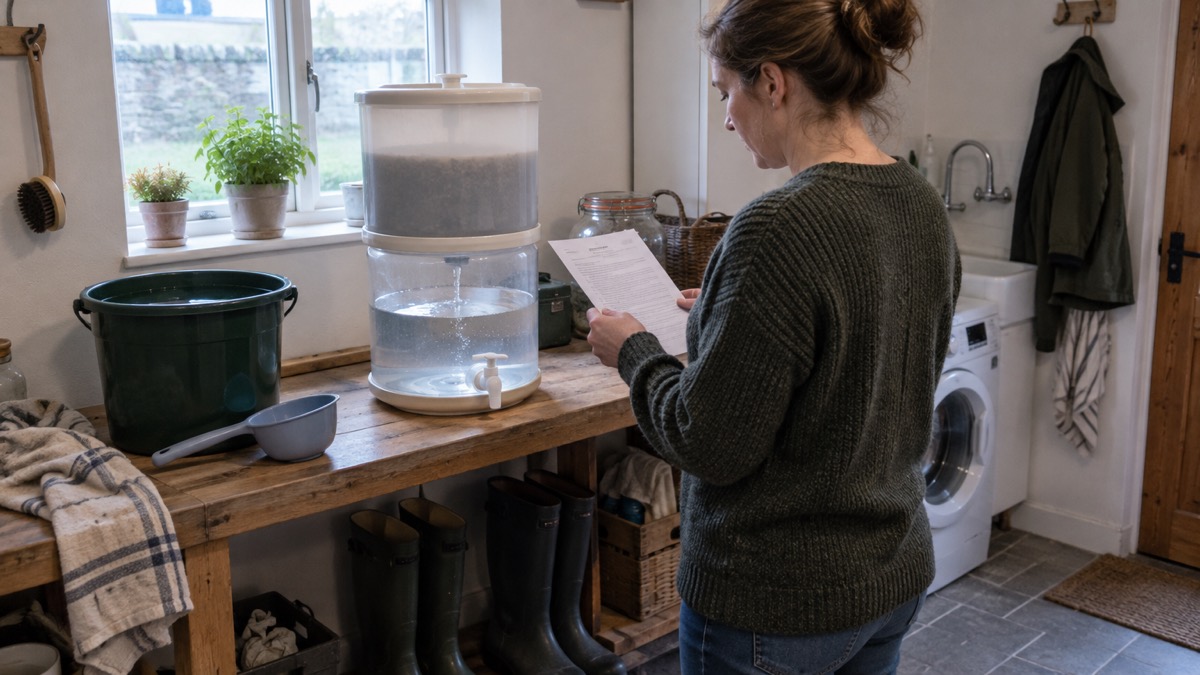
One filter maker states that source water can be pre-treated with a suitable chlorine or chlorine-dioxide treatment, allowed to stand for at least 30 minutes before filtering or drinking, in a separate container, and that you should never exceed the recommended dose3. The same instruction appears for the maker's soft flask version11. Note the detail: pre-treat in a separate container, not inside the filter.
If your water is very cloudy or silty, the maker's advice is to let the sediment settle and collect the clearer water from the top, or pass the source water through a clean cloth before filling. Pre-filtering only removes larger particles, and the water must still pass through the purifier cartridge3. That is the same logic as filtering before tablets, applied inside one product.
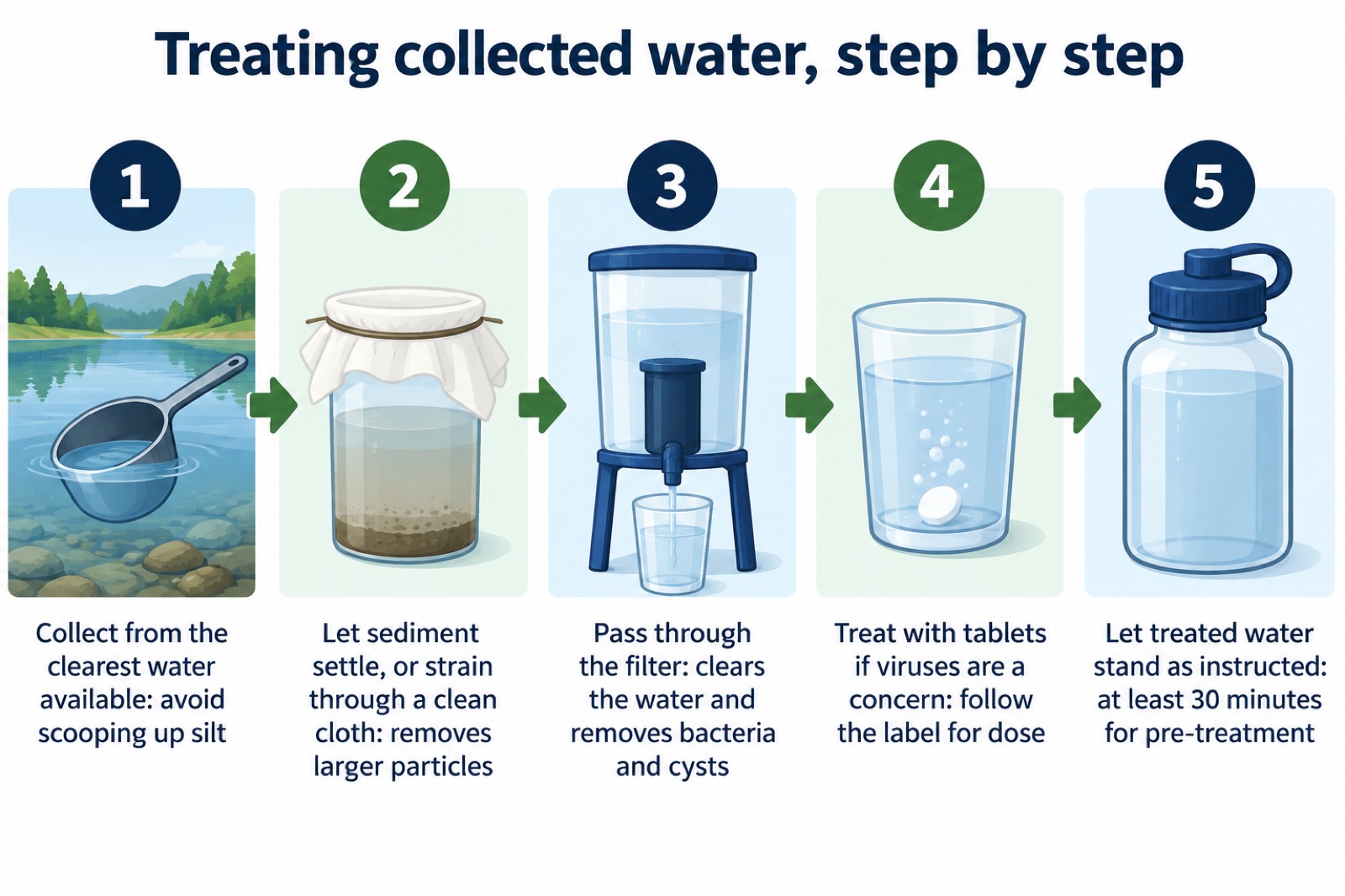
A note on containers: whatever you collect into should be clean. Use sterilising tablets or fluids, following the manufacturer's instructions, to clean bowls, buckets and other containers12. A dirty bucket undoes good treatment.
Where tablets alone are not enough
Tablets are excellent, but they have limits you should know before you rely on them. The clearest warning comes from a water company's boil notice guidance: water purification tablets cannot be relied upon to remove the bacteria and the water still needs to be boiled before use14. That is the position when the mains supply itself is under a boil notice. In that situation, boiling is the instruction, and tablets are not a substitute.
The second limit is physical. Tablets do not remove silt, grit or cloudiness. If the water is dirty, you are drinking the dirt along with the treated water. Filter or settle it first.
The third is the range of germs. Chlorine tablets kill bacteria and viruses9, and chlorine dioxide tablets also deal with cysts such as Giardia and Cryptosporidium10. But a mechanical filter's job is different: it removes bacteria and cysts, and a purifier adds viruses5. Neither approach is complete on its own for every possible source, which is why the combined method is the sensible default for collected water.
There is also the question of what you are treating. Tap water and bottled water are not sterile, and both need boiling before preparing baby formula15. If you are making up feeds, follow the boiling route rather than reaching for tablets. For that situation, see Babies and Formula Feeds When the Supply Is Off or Unsafe.
Finally, tablets are a consumable. A pack treats a set volume, and when it is gone it is gone. A filter cartridge also has a life, but it is measured in litres treated rather than doses used.
Storing tablets and checking the safety data sheet
Tablets store well if you keep them sealed and dry. An unopened chlorine tablet will last up to 5 years from date of manufacture9, and the same figure is given for one maker's chlorine tablets16. Chlorine dioxide tablets are shorter lived: an unopened tablet will last up to 2 years from date of manufacture10. Write the date on the pack when you buy it, and rotate your stock so the oldest is used first. For more on this, see How Long Do Purification Tablets Last?.
Dosing is not one-size-fits-all. The official advice is to always follow the instructions on the product label, because tablets come in different strengths1. A pack of 60 chlorine tablets treats up to 60 litres of water9, but check your own pack rather than assuming.
Safety data sheets change. One maker's Purisaf chlorine tablets sheet was revised to revision 3 on 27 May 2025. If you hold older stock, check you have the current sheet, and follow the label that came with your tablets.
When tablets are out of date, do not tip them down the sink. Dispose of out of date tablets at the chemical disposal section at your local waste or recycling centre16.
Cloudy water: when it is harmless and when it needs treating
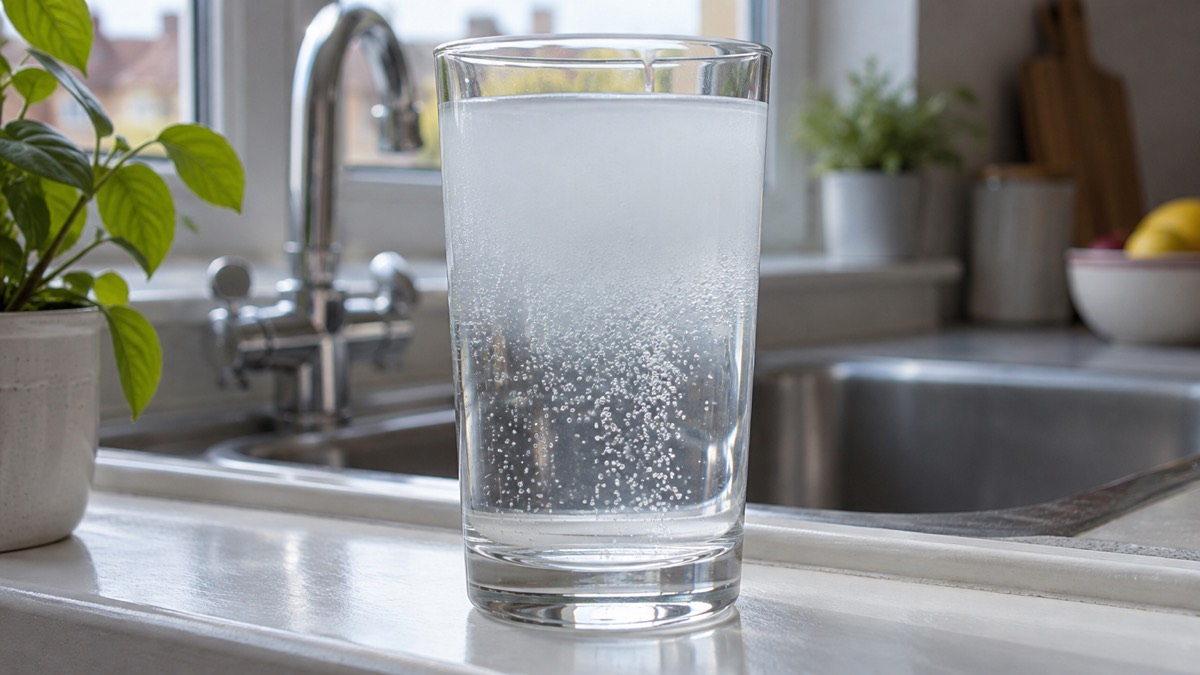
Not all cloudy water is a problem. If your mains tap water looks milky, the Drinking Water Inspectorate says white or cloudy water is likely to be caused by air trapped in the water and is not harmful to health17. Water companies across the UK say the same: it is usually tiny air bubbles and completely harmless18. Leave it to stand for a minute or two and the bubbles should clear, and you do not need to flush your taps19.
You can test it yourself. Fill a glass and let it sit: if the cloudiness clears from the bottom upwards, it is just air bubbles20. Air can get trapped after work on the network, and following significant bursts this can cause spluttering at your taps21. If running the tap briefly clears it, you may need to lag your pipes22.
That is mains water. Collected water is different. Cloudiness in a stream or butt usually means silt, and silt is exactly what reduces a filter's flow and shortens cartridge life11. Let it settle, take the clearer water from the top, or strain it through a clean cloth before it goes anywhere near your filter3.
Rainwater, streams and other sources
A filter bottle or purifier is intended for freshwater from rivers and streams, lakes, freshwater springs, campsite and mountain-hut taps, public taps and drinking fountains, hotel and hostel taps, and bottled water of uncertain quality3. That list is a useful guide to what these products are designed for, and what they are not.
Stream and river water carries grit and organic matter as well as germs, so a filter is the natural first stage. A gravity filter suits a household because you can fill it and leave it. A bottle or straw filter suits one person on the move, filtering instantaneously as you drink6. For more on sources, see Drinking From Streams, Rivers and Other Sources Safely.
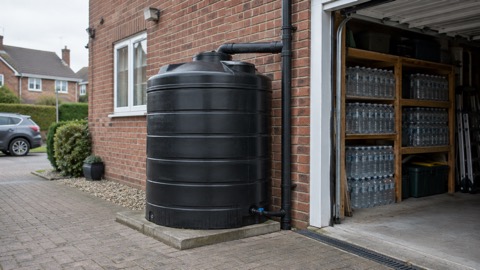
Rainwater from a butt is best treated as collected water: strain or settle it, filter it, then treat it if you are unsure. Do not assume it is clean because it looks clear.
If you are weighing up which filter type suits your home, the section pages on Emergency Filters: Gravity, Pump, Bottle and Straw Types and Gravity Filters and Ceramic Candles Explained go further. For the chemical side, see Purification Tablets: Chlorine, Chlorine Dioxide and Silver.
Boiling instead, and when it is the better answer
Boiling is the fallback that needs no consumables and no filter. It is also the instruction during a boil notice, where tablets cannot be relied on14. The NHS advises boiling water in a kettle rather than a pan, because water could become contaminated while it cools23. That is a small detail with a real safety point behind it.
Boiling does not remove silt or cloudiness, so strain or filter dirty water first if you can. It also uses fuel and takes time to cool, which matters in a long outage. Keep tablets and a filter as backup for when power or fuel is short. For the method, see Boiling to Kill Germs: How to Do It Properly.
Stored tap water does not need tablets
If you have stored tap water cleanly, you do not need to add tablets to it. Tablets are for water of uncertain quality. What matters for stored tap water is the container: clean bowls, buckets and other containers with sterilising tablets or fluids, following the manufacturer's instructions12. Store it covered and cool, and rotate it. For the method, see Storing Tap Water Safely at Home.
If you are storing water for a household, work out how much you need first with How Much Drinking Water to Store per Person, and use the Home Drinking Supply Storage Checklist to keep track.
Sources (23)
- Water supply interruptions or outages, UK Government Prepare campaign, 2026
- Water filter candles, Drinking Water Quality Regulator for Scotland, 2026
- Water Filter Purifier Bottle FAQs, Lifesystems, 2026
- Water Filter Plus Purifier Bottle, Lifeventure, 2026
- LifeSaver FAQs, LifeSaver, 2026
- Portable water filters, Doulton, 2026
- Countertop water filter systems, Doulton, 2026
- British Berkefeld, Doulton, 2026
- Chlorine tablets, Lifesystems, 2026
- Chlorine dioxide tablets, Lifesystems, 2026
- Water Filter Purifier Soft Flask FAQs, Lifesystems, 2026
- Weather and health, Public Health Wales, 2026
- Water Filter Purifier Bottle FAQs | Lifesystems, Lifesystems
- Letter Wizard, Anglian Water
- Bottled Water, Bristol Water
- Chlorine tablets, Lifeventure, 2026
- Water appearance, Bristol Water, 2026
- Discolouration, Northumbrian Water, 2026
- My water looks unusual, Hafren Dyfrdwy, 2026
- My water is milky or cloudy, Yorkshire Water, 2026
- White water, United Utilities, 2026
- Water appearance, Affinity Water, 2026
- Water risks message, NHS Scotland community pharmacy, 2024
 Storage Tank vs Bottled Water
 Gravity vs Under-Sink Filter