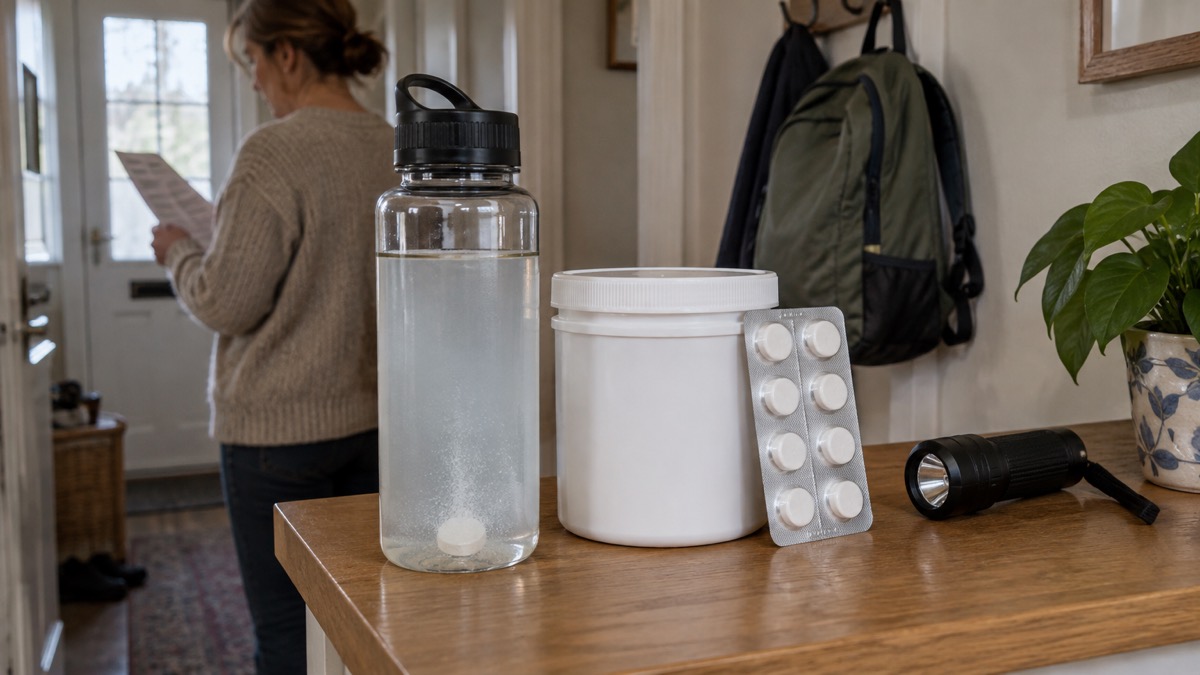
Purification tablets are a small, light way to make collected or stored water safe to drink, and most of them keep for years if you leave the pack sealed. The makers' own figures put the common range at 2 to 5 years from the date of manufacture: LifeSystems states that an unopened chlorine tablet will last up to 5 years from date of manufacture1, while its chlorine dioxide tablets are quoted at up to 2 years2 and Lifeventure gives up to 3 years for its chlorine dioxide tablets3.
The differences matter because the date on the pack is the point at which you should replace your stock, not a rough guide. Katadyn quotes 5 years from date of manufacture for its Micropur MP1 tablets4 and 10 years for its Micropur Classic MC 1T tablets5. A household that buys a pack, puts it in a bag and forgets it can end up with tablets that are years past their stated life.
This page explains what the makers say about how long each type lasts, how to find and record the date, how to store a pack so it keeps, and what to do when the supply is disrupted and you need to use what you have stored.
How long each type of tablet lasts
The headline figure for most households is 2 to 5 years from manufacture, but the type of tablet decides where in that range you land. Chlorine tablets are the longer-lived of the two common kinds. LifeSystems states that an unopened chlorine tablet will last up to 5 years from date of manufacture1, and Lifeventure gives the same figure for its chlorine tablets7. Both makers also state that a pack of 60 tablets treats up to 60 litres of water, so a single pack covers a useful amount of drinking water for a household1.
Chlorine dioxide tablets are shorter lived, and the makers do not agree on the figure. LifeSystems states that an unopened chlorine dioxide tablet will last up to 2 years from date of manufacture2. Lifeventure states that an unopened tablet will last up to 3 years from date of manufacture3. Both are the makers' own figures for their own products, and the two figures disagree, so treat the shorter figure as the one to plan around if you are unsure which pack you hold.
| Tablet type | Stated shelf life | Whose figure |
|---|---|---|
| Chlorine tablets | Up to 5 years from date of manufacture, unopened | LifeSystems1, Lifeventure7 |
| Chlorine dioxide tablets | Up to 2 years from date of manufacture, unopened | LifeSystems2 |
| Chlorine dioxide tablets | Up to 3 years from date of manufacture, unopened | Lifeventure3 |
| Katadyn Micropur MP1 | 5 years from date of manufacture | Katadyn4 |
| Katadyn Micropur Forte MF 1T | 5 years | Katadyn8 |
| Katadyn Micropur Classic MC 1T | 10 years | Katadyn5 |
The Katadyn range shows how much the formulation changes the answer. The Micropur MP1 tablets are quoted at 5 years from date of manufacture4, the Micropur Forte MF 1T at 5 years8, and the Micropur Classic MC 1T at 10 years5. If you are choosing what to store, the shelf life is one of the specifications worth comparing alongside what the tablet treats.
Finding the date and rotating your stock
The date you need is on the packaging, and the makers quote their shelf lives from the date of manufacture rather than the date you bought the pack1. That means the clock started before the tablets reached your shelf. Read the foil or tub when the pack arrives, note the date somewhere you will see it, and write it on the outside of the pack if the print is small.
Rotation is the habit that keeps stored tablets usable. Steroplast advises that it is good practice to check a stored kit at least once a year and replace any items that are near or past their expiration date6. The same routine works for water treatment: once a year, take out every pack of tablets, read the date, and replace anything that is close to its limit. Put the newer packs at the back and the older ones at the front so you use them first.
A simple rotation routine for a household:
- Check the date on every pack of tablets in storage, and replace anything near or past its stated shelf life rather than keeping it "just in case"6.
- Use the oldest first so that stock turns over rather than sitting.
- Record the date you checked, so the next check is easy to remember.
Opened packs and using tablets past their date
Every shelf life quoted on this page is for an unopened pack. LifeSystems is explicit that its chlorine tablet figure applies to an unopened tablet1, and Lifeventure uses the same wording for its chlorine dioxide tablets3. Once the seal is broken, air and moisture reach the tablets, and the maker's date no longer tells you what the pack can do.
No maker in this guide says that tablets remain effective past their stated shelf life. The figures given, such as 5 years from date of manufacture for Katadyn Micropur MP14 and up to 5 years for unopened chlorine tablets1, are the maker's own limits. If a pack is out of date, replace it. An out-of-date tablet may not disinfect water properly, and a household has no easy way of telling whether it has worked.
There is a second timing point that catches people out. The makers quote how long a tablet takes to work, and it is not instant. Katadyn states that its Micropur MP1 tablets kill viruses in 4 hours4. That waiting time is part of the treatment, so plan for it: treat water in the evening for use the next day, or treat a batch early and leave it while you do other things.
"Kills viruses in 4 hours"
If you are treating water for the first time, the wider guide to how to make water safe to drink in an emergency sets out the methods side by side, and the page on purification tablets explains how chlorine, chlorine dioxide and silver tablets differ.
Storing tablets in a grab bag
A grab bag is the pack you take with you if you have to leave, and water treatment belongs in it. Hampshire Fire and Rescue Service lists bottled water among grab bag contents9. Tablets are a sensible addition because they are light and treat a set volume: a pack of 60 chlorine tablets treats up to 60 litres1, and a pack of 30 chlorine dioxide tablets treats up to 30 litres2.
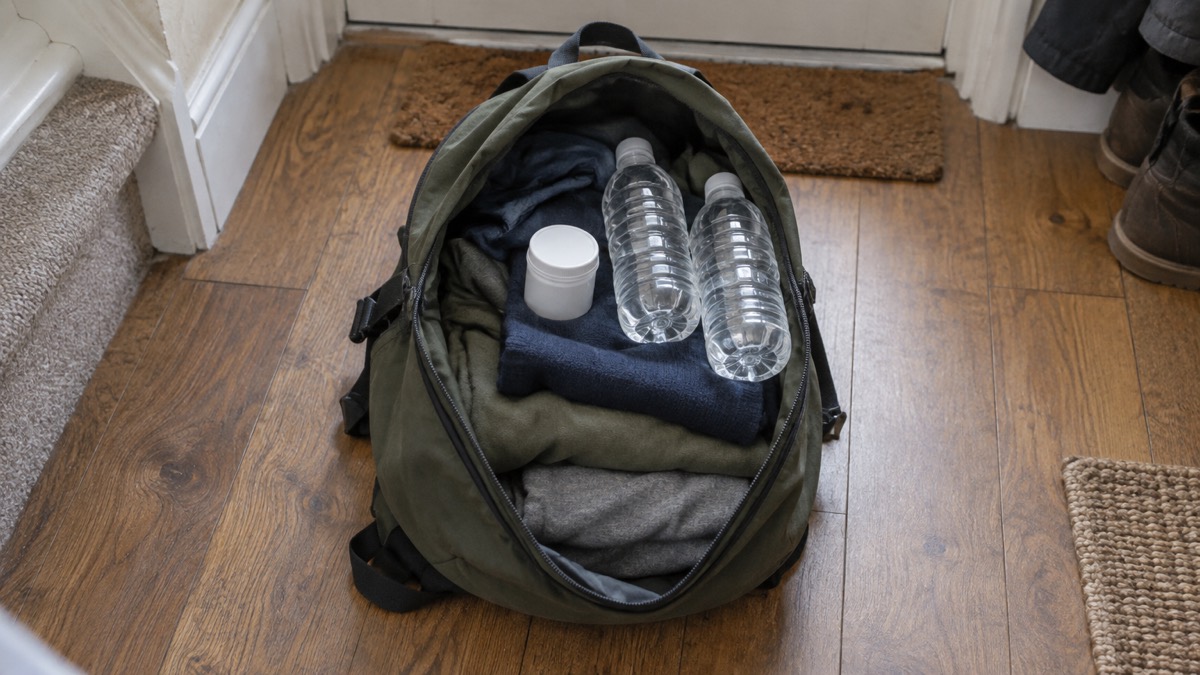
Store tablets in their original sealed packaging, dry, and away from damp and heat. A sealed tub in a bag is fine; a loose handful of tablets in a pocket is not. Check the pack whenever you check the rest of the bag, and replace anything near its date6.
What to keep with your tablets in a grab bag:
- The tablets themselves, in their original sealed pack1.
- Bottled water, which Hampshire Fire and Rescue Service lists as grab bag contents9.
- A written note of the date on the pack, so you can check it without opening the bag.
- The maker's instructions, kept with the pack so the dose and waiting time are to hand4.
Tablets or a filter jerrycan
Tablets and a filter jerrycan solve different problems, and many households keep both. Tablets are light, need no maintenance and treat a fixed volume of water: a pack of 60 chlorine tablets treats up to 60 litres1. A filter jerrycan holds and filters much larger volumes, and its cartridge has its own shelf life to plan around.
The LifeSaver Jerrycan's replaceable filter cartridge has a shelf life of 3 to 5 years from date of purchase, and once primed, if stored correctly, the cartridge will last indefinitely or until it reaches capacity10. The foil-sealed replacement cartridge can be stored for 10+ years11, and the Graphene:Ultra replacement cartridges are supplied foil-wrapped giving them a shelf life of 10+ years12. The Liberty bottle's ultrafiltration cartridge has a shelf life of 3 to 5 years from date of purchase, indefinite once primed and stored correctly13.
| Option | Stated shelf life | What it suits |
|---|---|---|
| Chlorine tablets | Up to 5 years from manufacture, unopened1 | A grab bag, a small household, treating a set volume |
| Chlorine dioxide tablets | Up to 2 years2 or up to 3 years3 | A grab bag where a shorter, simpler pack is enough |
| Katadyn Micropur Classic MC 1T | 10 years5 | Long-term storage where the date matters most |
| LifeSaver Jerrycan cartridge | 3 to 5 years from purchase, indefinite once primed and stored correctly10 | A household filtering larger volumes at home |
| Foil-sealed LifeSaver cartridge | 10+ years11 | Long-term storage of a filter for later use |
The choice comes down to volume and weight. A jerrycan is a home item that holds a lot of water; tablets are a bag item that weigh almost nothing. The comparison page on purification tablets or a gravity filter sets out the trade-offs in more detail, and the LifeSaver Jerrycan page covers that product's own specifications.
When the supply is disrupted
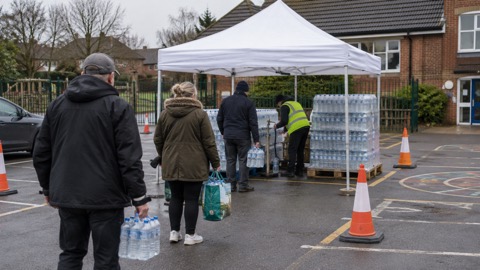
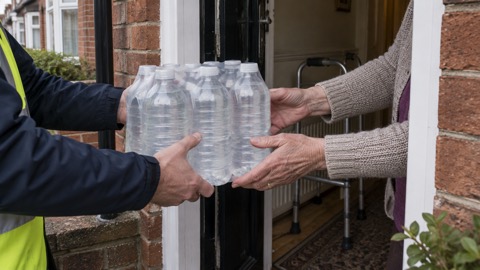
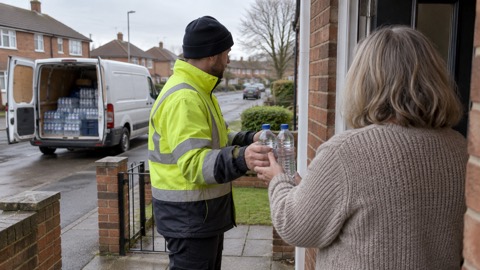
If your water supply is interrupted, the first steps are to reduce what you use to conserve the supply and to work out where you could get drinking water if it stops, as Argyll and Bute Council advises for private supplies14. Water companies deliver bottled water to residents during interruptions6. Keep your stored water and your treatment kit where you can reach them, and follow any notice from your supplier about whether tap water is safe.
Tablets earn their place in exactly this situation. If bottled deliveries are delayed or you need to treat water from another source, a sealed pack of tablets and a written note of its date let you make water safe without power or equipment. Check the date before you rely on the pack, and if it is past its stated life, use bottled water instead and replace the tablets when you can.
The wider guide to water in an emergency covers storing supplies, what the water companies do during an incident, and how to get help if you are vulnerable. The supply interruption checklist is a printable list of what to have ready before the taps run dry.
Sources (14)
- Chlorine Water Purification Tablets, LifeSystems, 2026-10-28
- Chlorine Dioxide Water Purification Tablets, LifeSystems, 2026-10-28
- Chlorine Dioxide Water Purification Tablets, Lifeventure, 2026-10-28
- Katadyn Micropur MP1 Water Purifier Tablets (20 Tab), Katadyn, 2026-10-28
- Katadyn Micropur Classic MC 1T (100 Tab), Katadyn, 2026-10-28
- Steroguard Biohazard Spill Kit (1 Application Pack), Steroplast, 2026-10-28
- Chlorine Water Purification Tablets, Lifeventure, 2026-10-28
- Katadyn Micropur Forte MF 1T (100 Tab), Katadyn, 2026-10-28
- Reduce the Risk of Wildfire Damage to Your Property, Hampshire Fire and Rescue Service, 2026-08-27
- LifeSaver Jerrycan, LifeSaver, 2026-10-28
- LifeSaver Jerrycan Replacement Cartridge Foil Sealed, LifeSaver, 2026-10-29
- LifeSaver Jerrycan Graphene:Ultra, LifeSaver, 2026-10-28
- LifeSaver Liberty Bottle, LifeSaver, 2026-10-29
- Private Water Supplies, Argyll and Bute Council, 2026
 Supply Interruption Checklist
 Boil Notice Checklist
 Drinking Supply Checklist
 Boil Water Notice Advice
 When Supply Is Restored
 Check for an Outage
 Report No Water or Burst Pipe
 Bottled Water Stations
 Bottled Water Delivery Help
 Flushing the Toilet in an Outage
 Washing Without Running Water
 Combi Boiler When Water Is Off
 Water Company Incident Alerts
 Checking a Water Company Caller
 Brown or Discoloured Tap Water